
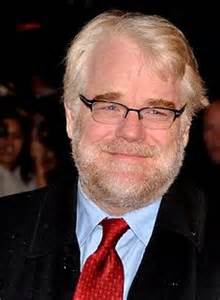
 We first spied him in a sharp supporting role in “Scent of a Woman,” first “noticed” him in an absurdly showy bit part in “Twister,” and then, pretty much from “Almost Famous” onward, saw him step into the spotlight and remind people of Brando and DeNiro, a name uttered with the greatest actors not of his own generation, but of generations past — all generations.
Philip Seymour Hoffman, larger than life in films from “Capote” to “Charlie Wilson’s War,” was found dead in his New York apartment today, according to the Wall Street Journal. He was just 46.
A great character actor, a generous and serious performer he brought a stage actor’s loyalty into the movie business. In the tradition of John Malkovich, Gary Sinise and others, Hoffman wasn’t shy about supporting friends (pal Bennett Miller became a director, on “Capote,” thanks to Hoffman) and lending his name to projects that would launch careers. Hoffman is remembered for everything from “The Big Lebowski,” to “Jack Goes Boating,” a “Mission: Impossible,” “The Ides of March” and “Moneyball.” A stellar career, but one absurdly cut short.
No definitive cause of death, but this is a grim shock to anybody who loves movies.
His friend Bennett Miller, talking about the inner resources the actor called on for his Oscar winning work in “Capote,” referred to “dark places” in Hoffman’s psyche and his past. The New York Post has come out and said “apparent drug overdose.” And The New York Times, citing a single unnamed police source, echoes that. Doesn’t make it any less sad.
It’s hard to know what someone who appears to have it all is thinking when they feel the need to escape their reality through hard drugs. Maybe a lot of people are depending on you. Maybe you can’t trust anybody once you’ve gotten that famous, because so many want a piece of that fame and perhaps the cash that comes with it. You can’t meet a potential lover without wondering “Are they just a star f#$@%^?” Reading the new J.D. Salinger biography, I am amazed that anybody is able to handle fame and privacy and manage a life that makes them happy once they’re that well known.
So many great performances — “The Master,” “Magnolia,” “Savages,” “Men Who Stare at Goats.” A stellar career, with perhaps one hollow note (“Twister” saw him try to chew the scenery).
Below the page break I’ve re-posted my last chat with him, about “Jack Goes Boating” — a little film that he gave his all to. Amazing artist.
Here’s that story.
In the scene, Philip Seymour Hoffman, a swimmer since childhood, has to pretend to be a man in his 40s just learning to swim.
And it wasn’t easy.
“I wasn’t worried about that when the time came,” he says. “I tried to tap back into that time when the water was a big unknown for me, too. Jack’s got all these unknowns he’s facing, and he’s scared of all of them. And yet he’s made up his mind to face them. That’s what I wanted to play.”
For “Jack Goes Boating,” the Oscar-winning actor for once wasn’t obsessing about nuances in the character, ways to flop and founder and stick his head under water as if he had never done that before. Hoffman had his own “big unknown” to deal with.
“I was more worried about all the stuff a director has to worry about,” he says.
Hoffman has an Oscar (“Capote”) and a formidable reputation on stage and screen. He’s been a film producer and a stage director but not a director for the big screen.
“In my 20s, I realized I didn’t just want to act,” he says. “I didn’t know what that meant back then, but I recognized the ambition. I have a bug for it all. It’s too interesting to just act.”
Directing for film meant “answering 8,000 questions a day, signing off on everything and anything. All these people work for you and you’re the boss,” he says.
And it meant finding jobs for his friends. He’d played Jack in the stage version of Robert Glaudini’s script, and he wanted to people his first-screen directing job with friendly faces – John Ortiz and Daphne Rubin-Vega from the stage production, and another friend from the theater and film, Amy Ryan (“Gone Baby Gone”). They’ve known each other for years and worked together in “Capote.”
“We had the blessing of rehearsing this like a play, two weeks of rehearsal with the director of photography, the script supervisor and our first assistant director,” Ryan says. “That made a strong feeling of company. So there was already a sense of community, of these people on the screen who have known each other for years.”
Hoffman picked up that idea from Sidney Lumet, his director in “Before the Devil Knows you’re Dead.”
“Every film has this rehearsal time set aside, and all you have got to do is use it,” Hoffman says.
It’s more common in the theater, this “family” of actors, creative people who meet, connect and set out to make work for one another and create a collaborative ensemble, on and off the stage. Hoffman is one of the few who is actively managing to make a film career out of it. He just finished a role in his “Capote” director Bennett Miller’s baseball economics dramedy, “Moneyball.” Ryan’s working on “Win Win” with “Jack Goes Boating” colleague Thomas McCarthy, also an actor and director.
Working with friends was key to “Jack Goes Boating,” a modern day “Marty” story about two shy and lonely working-class people (Ryan and Hoffman) who are brought together by mutual friends (Ortiz and Rubin-Vega). In the middle of winter on their first date, Jack and Connie (Ryan) make a second date to “go boating” on the lake in Central Park – in spring.
It’s a screen romance that captures people at their most vulnerable, and Ryan says she just swoons at that. “I mean, a man who will learn how to swim because of this date that’s still months away? That’s so romantic.”
And Ryan had the added vulnerability of being pregnant as they filmed “Jack Goes Boating,” a movie with sexual intimacy and violence. Just another reason, she says, she was happy to be making a movie among friends.
Reviews for this small-scale film have been enthusiastic, with Peter Travers in Rolling Stone raving that “Hoffman directs like he acts, with a sharp eye for the small details that cut to the soul of a character.”
Hoffman will take that praise for a movie he put a lot of himself – and people he cares about – into. “This is what happens when you work together with people,” he says.
And Ryan? She’s spoiled. She admits it.
“A movie like that makes you think long and hard about the next choice you make,” she says.”Make something you love, with people you love. What could be better?”



