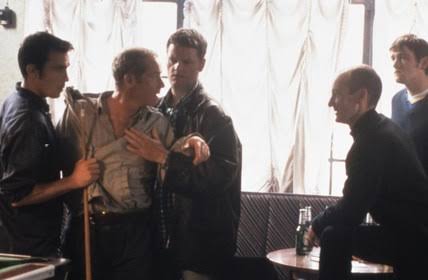
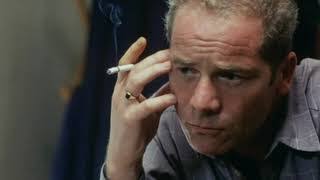
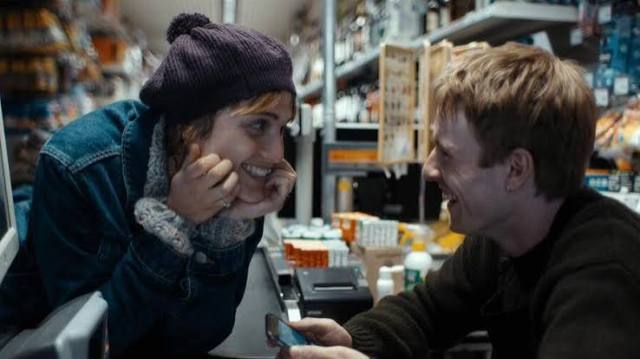
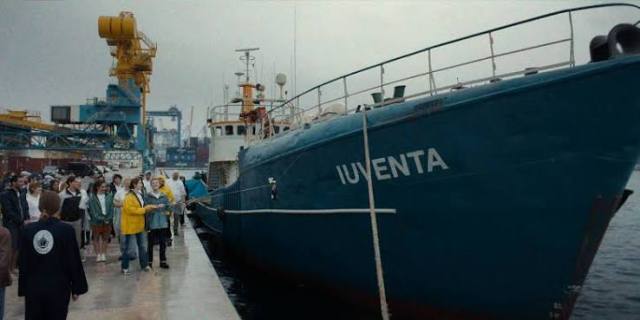
Movie Review: This “Tuner” has an Ear for Safecracking

It’s built around a methodical, arcane and dying artistic profession set in a digitized, short-attention span world.

There’s a love story whose backdrop is the classical music where virtuosos practice their art, and piano tuners practice theirs.

And a heist — or heists — threaten to come between our mismatched but complementary lovers.

As the kids used to say back in olden times, “Tuner” is a movie that hits all the notes to be “my jam.”

But an untidy narrative cluttered with loose ends and wildly illogical twists and a lead scripted and played as “passive” spoil veteran documentary maker Daniel Roher’s fictional feature film debut. “Tuner” sings, here and there, but musical montages of a love affair and the crimes that accompany it never let it jell or jam.

Director and co-writer Roher, who did “Navalny,” “Once Were Brothers” and “Blink,” gives us a “hero” with hyperacusis — accute hearing sensitivity that forces him to wear constantly wear earplugs and even noise-canceling headphones to cope with New York at its loudest.

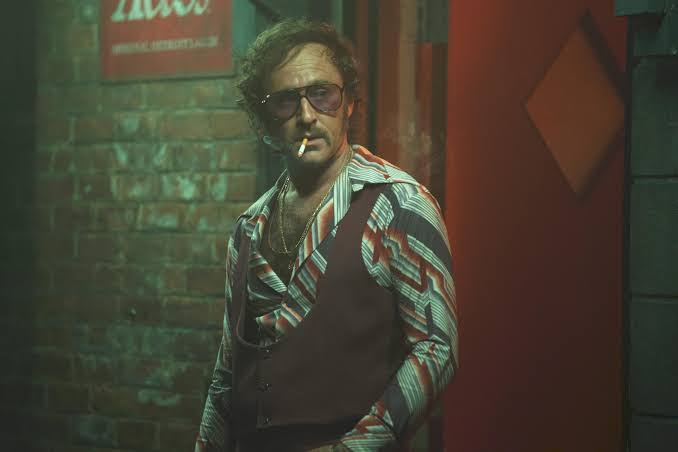
That forced Niki (Leo Woodall) to give up a promising performing career. Now pushing 30, he’s the long-serving apprentice to Harry Horowitz (Dustin Hoffman), an ancient and talkative mentor who rides along with his protege as he services New York’s better Bösendorfer’s, Steinways and Yamahas and gets them into tune with his experience and his unerring but over-sensitive ears.

Niki has “perfect pitch.” Give him a piano and a room that’s quiet enough and he can make all 88 keys sing perfectly on key, even though “We never use the ‘p’ word” in his line of work. Tuning is own art, with imperfections and idiosyncratic biases distinct to each tuner.

Old school Harry charms the well-heeled and often rude customers — this one has Billy Joel playing at a benefit at his house, that one would love for them to fix the toilet, while they’re at it. Niki does his work in the isolation of a condition that seems comparable to deafness, with silence an elusive goal of his work and his life in a cacaphonous city.

When Harry, a bit deaf himself, locks his hearing aids in an old safe by mistake, he and adoring but scolding wife Marla (the great Tovah Feldshuh) implore Niki to give it a try.

A Youtube tutorial or two, a little listening and a bit of fiddling later, Niki succeeds. He doesn’t need a safecracker’s stethescope. His faulty ears turn out to be his superpower.

Those ears and his self-effacing manner and expertise are what get the attention of musical composition student Ruthie (Havana Rose Liu), manic to get a piano sextet finished and calmed out of her fury by Niki’s cool, professional and very musical sensitivities.

Harry tried to set them up, but that didn’t play. But Niki’s chance to be her knight in tuning armor — a disabled knight she learns soon enough — triggers a love affair.

As Niki has stumbled into some shady security company thieves who can’t crack a safe without making a racket in Niki’s workplace one evening, that’s going to get complicated. Bullying goon Uri (Lior Raz) and his Israeli henchmen and relatives lure Niki into some easy money.

They set up security systems for clients, know when the entitled rich are out of town, and then pilfer their safes — taking care to not steal things traceable to them.

“Tuner” kind of goes off the logical rails right from the moment Niki starts stealing to buy Harry’s tuner biz van and pay his mentor’s medical bills.

These are sloppy, casual burglaries. Uri & Crew are unconcerned about noise, finger prints, who sees them or who knows they know what’s in these safes, and Niki follows their lead.

As the “jobs” grow more frequent, matters escalate and violence enters the picture. Niki’s hearing is easily emperiled, and once Uri figures that out, an air horn is the only weapon he needs.

Luckily for Niki, his condition conveniently comes and goes when the script requires it. And it turns out he’s got another “superpower,” which could come in handy down the line.

Woodall’s passivity in the part was a scripted choice and any resemblence to early films of Tom Hardy — for instance — vanishes as Niki may look brawny and tough, but is just a sensitive musician with vulnerable hearing and a lost cause in a fight.

Woodall, of “Bridget Jones: Mad About the Boy” and “Nuremberg,” is more convincing than compelling in the lead role.

Liu (“Bottoms,” “No Exit”) is utterly convincing as a frazzled musician calmed by this handsome working class bloke who knows a lot more about music than she first guesses.

The Israeli Raz, of “Operation Finale” and “Six Underground,” is perfectly cast as a heavy and a guy in the right place at the right time. Israeli villains are all the rage these days.

But Hoffman can’t tone down the “cutesey” in his performance to save his Oscar-winning butt. He’s made “grating” the calling card of much of his late career work.

The jazz and classical musical milieu with underworld grit flourishes pulled me into “Tuner.” Jazz great Herbie Hanock even has a cameo. But every few minutes, a contrived scene, a hammy flourish of performance or some other false note took me right out of it.

Rating: R, graphic violence, sex, nudity, profanity

Cast: Leo Woodall, Havana Rose Liu, Lior Raz, Tovah Feldshuh and Dustin Hoffman.

Credits: Directed by Daniel Roher, scripted by Daniel Rober and Robert Ramsey. A Black Bear release.

Running time: 1:47

Posted in Reviews, previews, profiles and movie news | Tagged , , , , | Comments Off on Movie Review: This “Tuner” has an Ear for Safecracking

Movie Review: The Earth Stands Still for “Disclosure Day”

A vast conspiracy battles militant truth tellers to keep The Biggest Secret of All as the world hurtles towards World War III in Steven Spielberg’s third crack at a “Close Encounters” story, “Disclosure Day.”

It’s predicated on the belief that the title of a Robert Wise film from the 1950s would still hold true in today’s conspiracy-riddled, scandalized coverup, with “wag the dog” geopolitical violence — “The Day the Earth Stood Still.”

The premise is that “We’ve been lied to for 79 years,” that the government and government entities have kept “the truth” “out there” and not owned-up to the presence of other life in the universe, that aliens have been visiting, watching and carelessly crashing on our little green planet on the regular since Roswell.

Spielberg brings his usual technical prowess and directorial sizzle to some impressive chases, 360 degree pans covering impressive sets and suspenseful escapes of the cliff-hanger variety. But what’s jolting about this big budget epic is how utterly conventional it all is.

And as it whelms and more than occasionally underwhelms, we’re forced to chew on the questions “Would this news interrupt TV coverage of a World War about to start” and “Would anything like this cover-up shock anyone gaping in awe at treason and naked theft in plain sight engineered by a covered-up international pedophile ring with Russian and Israeli fingerprints all over it?”

We’re living in an “abandon hope, all ye who enter here” era. Would “Oh, we’ve taken aliens hostage” even move the needle?

Josh O’Connor of “Challengers” and “Wake Up Dead Man” plays Daniel, a cyber-security insider who has skipped off with digital “archives” of the epic coverup, of Mother Ships encased in boiling thunderstorm clouds, crash sites, alien bodies and alien autopsies. He’s fleeing with his newish girlfriend Jane (Eve Hewson) from the head researcher and point man on all things aliens, Scanlon, given a sinister fanaticism by Colin Firth.

As Daniel and Jane fall into and out of mecenary hands, bubbly Kansas City weather bunny Maggie (Emily Blunt) is just trying to “weather shimmy” her way into an anchor’s chair before she ages out of that opportunity. And then something happens and she starts speaking in alien tongues during a live shot, collapsing with what looks like a seizure.

Some understand her clicking, clucking chatter, but most don’t. That “something” has changed her. She reads minds, empathizes herself out of work jams and traffic tickets. Her boyfriend (Wyatt Russell) is at a loss. And then “agents” show up at the hospital where she’s treated and her new extra-terrestrial instincts take over and they’re on the lam, too.

Nobody’s chances ot getting away in a surveillance state can be that good. But Scanlon has an ace in the hole. There’s this alien tech that allows him to reach out via ESP and hunt his prey, sometimes through the weak links in their lives — their romantic partners.

Meanwhile, all the leader of this “Get the truth out there” underground, Hugo (Colman Domingo) wants is to keep his people out of Scanlon’s clutches long enough to get them to meet, tell the world and make history.

The script, co-written by Spielberg and longtime collaborator David Koepp, shows us crop circles in the making, symbols explained and a vast parade of myths, “encounters” and lore of the UFO to UAP eras.

I half expected Richard Dreyfuss to make a cameo, if not Henry Thomas.

But this largely humorless thriller is generally as serious as a heart attack. And that’s a problem, as it doesn’t sell its premise or the long-held belief that civilization will be unmoored once we find that there are others out there, “superior beings” who aren’t Old Testament mythology.

“Animals” are vessels for alien interaction with the human race. Having the fakest looking CGI birds, deer and foxes since “Call of the Wild” is a real show-stopper in a $115 million thriller.

Suggesting UFO believers were “right” about “everything” is problematic, as their ranks are riddled with loons and charlatans and every year’s UFO documentary releases are riddled with provably false crap peddled by the credulous and assorted con artists.

The latter acts of “Disclosure Day” are a jumble of information overload as the picture flashes on bits of video “proof” that characters have to ask “Is that AI?”

Exactly.

Plot contrivances have desperate, high-stakes gamblers risking everything only to throw up their hands and an Alfa-Romeo hit by not one but TWO passing trains, with neither stopping to assess or whatever because we need to get our escapees further down that rail line to safety.

All that said, I went along with “Disclosure Day.” It’s suspenseful enough and within the broad realm f plausibility. Blunt, Firth and Domingo make us believe and stick around for the hopeful message we’re sure is coming because we need it.

But Spielberg’s best statement on this subject was the epic “Close Encounters of the Third Kind” of 49 years ago, with “E.T.” selling the same “You’ve gotta believe” ethos to kids. If an actual “Disclosure Day” is coming, chances are it won’t be as epochal as all that, as we’ve seen those movies, watched the “Signs” and sung along with “E.T.I.”

As with the covered-up Trumpstein files, we’ll believe it when we see it. Maybe it’ll even lead the newscast.

Rating: PG-13, violence, bloody images, profanity

Cast: Emily Blunt, Josh O’Connor, Colin Firth, Eve Hewson, Henry Lloyd-Hughes, Wyatt Russell and Colman Domingo

Credits: Directed by Steven Spielberg, scripted by David Koepp and Steven Spielberg. A Universal release.

Running time: 2:25

Posted in Reviews, previews, profiles and movie news | Tagged , , , , | Comments Off on Movie Review: The Earth Stands Still for “Disclosure Day”

Netflixable? A World Cup that Almost Wasn’t — “Mexico ’86”

What might have been a comical lark about a “villain” who was actually a “hero” in shepherding the World Cup to Mexico becomes a stumbling, ungainly grind in “Mexico ’86,” a Netflix soccer film about the dirty dealing it takes to become the host country of the world’s biggest sporting event.

It spoils a decent performance by Diego Luna, although to be honest, it takes him a long time to get a bead on Martín De La Torre, the Mexican soccer federation accountant who boldly staged a leadership coup, secures Mexico’s bid and clung to it like grim death as the country reels from a deadly earthquake shortly before the matches begin.

Over the course of the few years it took for De La Torre to take over, take charge and take most of the credit for making the impossible happen, he became a national hero, which the money men behind the scenes figure is what he wanted. Then it all came undone as the most devoted soccer fan in soccer-crazed Mexico overreached, got found out and got caught.

That soccer fandom is presumed from the start in this Gabriel Ripstein sports dramedy. But it proves hard to make the case that Mexico wasn’t nearly as soccer mad before De La Torre came along. And it’s damned near impossible to organize this narrative into something that makes sense to outsiders unfamiliar with the history and historical figures who made it happen.

Martín De La Torres is a numbers guy with FEMEXFUT, the football federation, who sees his lax, non-believer boss as the wrong man in the wrong job at the very worst time when, in 1983, Brazil had to back out of hosting football’s “greatest spectacle,” set to be held in 1986.

Martín has an unhappy wife (Diana Sedano) and a beautiful, connected mistress (Karla Souza) who reserves her Thursday lunch hours for their weekly fling. He needs a job to keep both women in his life, but his fury at the lazy defeatism of boss Don Gustavo (Enrique Arreola) drives him to impulsively pitch a “scoop” to a TV sports reporter.

He goes on TV and calls the jerk out, all but kissing his job goodbye. But the mogul (Daniel Giménez Cacho) who “owns” the federation, a big stadium and assorted other businesses that benefit from soccer sees this as “ballsy.” Martín’s desperate, seat-of-the-pants pitch earns him the chance to go to Switzerland to convince soccer’s governing body, FIFA, to give the games to Mexico.

He’ll need guidance from the impressario (Álvaro Guerrero) who helped land the 1970 World Cup for Mexico. He’ll need all his powers of persuasion, as the U.S.,, with billionaire backing and Henry Kissinger on board to armtwist “allies” into voting for its bid, seems to have it in the bag.

A few bribes — FIFA was and is notoriously corrupt — and a few bits of gamesmanship later, and “You screwed the gringos, you rascal (in Spanish with subtitles, or dubbed into English)!”

But merely landing the games was not the end. Because a tragedy threatened to unravel this Third World country which wanted so desperately to take its place among First World nations. Might more bribes, more impassioned speeches and more gamemanship win the day?

“This country needs something to cling to!”

“Some of these events actually happened,” an opening credit comically reassures us as Luna voice-over narrates Martín’s story. We can only guess how much of this biography of a juggler who drops too many balls in his mad pursuit of the impossible is straight up fiction.

Casual North American soccer fans like myself might remember how ’90s U.S./Mexico tilts were hyped to the moon and how shocking it was when the norteamericanos won. That was not nearly as shocking as realizing that Mexico has never been among the elite of the beautiful game, and only once came close to greatness.

“Mexico 86” gives us a glimpse of that glory, with our soccer federation clerk mastering the art of pep talks with the Mexican rich and with FIFA members before trotting out his spiel for the team and its capable foreign coach (Davor Tomic).

But it takes a good 50 minutes before all those juggled balls are in the air. A few warm and winning moments of the sort you find in any good sports movie finally show up. The picture is too short to tell its story with any thoroughness or room for wit after wasting too much time getting started.

And then it all unravels again and we wonder who this fellow really was and how accurate the openly corrupt depiction of the contest for the cup and attempts at “rigging” a match in it — so that the rich impressario can cash in on having all of Mexico’s games at his stadium — are.

Luna flounders at first, finds his footing, and then the story yanks the rug out from under him in the last act.

The figures involved and FIFA chicanery depicted will play a lot clearer to your average impassioned Mexican soccer fan over age 50. But “Mexico ’86” feels as anti-climactic as USA ’26” already does before one match is played or one team is kicked out of the country by the corrupt clowns running it, with the corrupt clowns at FIFA sitting idly by to let it happen.

Rating: TV-MA, sexual situations, smoking, profanity

Cast: Diego Luna, Karla Souza, Daniel Giménez Cacho, Davor Tomic, Memo Villegas, Álvaro Guerrero and Diana Sedano.

Credits: Directed by Gabriel Ripstein, scripted by Daniel Krauze and Gabriel Ripstein. A Netflix release.

Running time: 1:35

Posted in Reviews, previews, profiles and movie news | Comments Off on Netflixable? A World Cup that Almost Wasn’t — “Mexico ’86”

Documentary Review: Regenerative Farming Catches a Wave — “Groundswell”

“Groundswell” is another upbeat sermon on the ecological, personal, cultural and global benefits of turning the world back towards “regenerative agriculture,” the idea that “the old ways” were better. Because farming on a smaller scale, with a mix of pastures, cultivated fields, varied types of livestock and patches of trees has always been more efficient, more productive and healthier for farmers, customers and Mother Earth.

The third film in a trilogy that began with “Kiss the Ground” (2020) and continued with “Common Ground” (2023), this Golden Globe winner captures a changing tide in attitudes towards soil preservation and nurturing via carbon and water sequestration.

This outing just bubbles over with hope for a planet overheating and losing arable land to deserts and vital rain forests to short term oligarchical cashing in. Because regenerative farming — crop and cattle pastures, pig pen etc. rotation — is catching on.

The Demi Moore-produced doc — she and lifelong eco-activist Woody Harrelson narrate it — takes us to pilot projects that have morphed into policy and practice, with efforts to re-green Australia, Kenya, Uganda, Colombia, India, Brazil, the U.K. and the U.S. pushing back or shoring up the “green wall” on the edge of deserts as farmers discover better lives and bigger profits from higher yields, “carbon bank” incentives and the like all over the world.

“Soil is not your property,” Indian activist/eco-guru Sadhguru preaches. “It is your legacy.”

We meet the Harris family of White Oak Pastures in Bluffton, Georgia, lifelong industrial farmers who converted their, huge, inhumane “industrial:” cattle operation into a multi-livestock and grain rotation enterprise that feeds the soil and generates profits.

They literally tower over their not-yet-converted neighbors. Will Harris stands on the edge of his ranch turned farm, where the soil is several feet deeper and higher than the monocultural industrial farm operation next door.

Scientists and activists by the score preach this message — healthy soil, healthy food, healthy people, healthy planet. And despite everything awful going on in the world with anti-science ignoramuses running too many countries to count, it’s evolved from a dream into a plan that farmers working some 250 million acres worldwide are putting into practice. .

Books and news articles in the ’60s heralded “The Green Revolution,” which was about chemical science’s ability to raise food production all over the world and feed a growing world population. But some while back, that fertilizer/hybrid species revolution hit the wall and the declining returns and desertification of Australia, India, parts of America and most of sub-Saharan Africa were proof.

We see Indian planners re-direct land-use energy and policy towards preparing for a “once in thirty years” rain event, capturing a monsoon downpoor and allowing arid land to revert to green even in a drier climate.

Ugandans and Kenyans reintroduce grasses and carve “smile berms” — crescent shaped dirt eddies — into any slope, slowing rainwater so that it sinks into the soil, making grasses grow which reflect light and deflect heat and preserve moisture as well.

Elephants’ role in grassland creation and maintenance is discussed and charted.

And married filmmakers Rebecca and Joshua Tickell treat us to a parade of “before” and “after” footage, letting us see Niger and “the green ocean” of Brazil, Kenya and Australia turn green in places that were all but lost to encroaching desert and/or deforestation.

Some of the more damning statistics trotted out here by farmer turned activist Gabe Brown and “that soil guy from ‘Clarkson’s Farm'” (Andy Cato) and others have to do with farmers’ health.

All these pesticides, all that plowing, all stress and working in the baking sun has been killing farmers. All that debt Indian farmers had to take on to become “green revolutionaries” led to vast spikes in the suicide rate.

The film’s rhetorical “action step” is aimed at consumers, who can start with “buy local” behavioral changes with regards to meat and produce and vote with their wallets with their morning addiction by drinking coffee grown in diverse, recreated rainforest environments.

It’s never as easy as documentaries like “The Biggest Little Farm” and its many “back to the old ways” imitators make it seem. Markets, labor costs and fickle consumers play their roles in whether this revolution in eating-our-way-out-of-climate change comes to pass.

But as I write this review in the middle of a soybean farm in south central Virginia, staring down what looks like another drought summer with exhausted soil you’d need a hammer and chisel to crack, “Groundswell” does give one a “part of the problem” pause.

The “Groundswell” of change may be getting us there, but there’s no sugar coating that we’re still several shades shy of realizing the “forest of green” it will take to slow climate change. Making carbon banks a worldwide phenomenon would be a big help.

Rating: PG

Cast: Gabe Brown, Santa Aber, Andy Cato, Salina Abraha, Jemma Allen, Lucy Abwo, Ruth Bennett, Jennie Harris, Will Harris, Sadhguru and many others, narrated by Woody Harrelson and Demi Moore.

Credits: Directed by Joshua Tickell and Rebeca Harrell Tickell, scripted by Johnny O’Hara. An Amazon/MGM release on Amazon Prime.

Running time: 1:33

Posted in Reviews, previews, profiles and movie news | Tagged , , , , , , , | Comments Off on Documentary Review: Regenerative Farming Catches a Wave — “Groundswell”

Classic Film Review: Life Lived on the Margins on an Island off Ireland — “Man of Aran” (1934)

Hard lives the way they used to be lived are the subject of documentarian Robert Flaherty’s classic “Man of Aran,” a fictional film capturing the traditions of the past on Ireland’s Aran Islands in the 1930s.

A black and white film of poetic power, few movies have since captured the primitive past and the primal nature of subsisting on what the torn, unforgiving sea gave these hardy islanders. The director of “Nanook of the North” felt it was almost enough to just show the crashing seas and three fishermen battling it in their tiny curragh rowboat as they hunt for “monsters” who congregate near the shore in certain times of the year.

As the “monsters” described here are giant, plankton-eating basking sharks, modern viewers may see the hunt for them in a different light. They’re more like whales, with the fishermen enduring days-long harpoon hunting them for “oil for their lamps,” placid creatures hunted for the film. But this practice had died out decades before the movie was filmed.

That’s one of several liberties the pioneering Flaherty took with documentary realism to create this film. The “rules” were different, and as he was the filmmaker who helped make those rules you take the unrelated Araners “cast” as a family (Colman “Tiger” King, Maggie Dirrane and Michael Dillane) and other documentary deviations with a grain or two of sea salt.

The island that the pounding, relentless waves that “Tiger” and his mates beach their fragile, traditional boat on has no trees and almost no soil. Flaherty’s film treats us to how the islanders fished, made lamp oil and created soil for gardens and pastures for sheep to graze on outside of their ancient, thatched and turf-heated cottages.

Maggie rocks her toddler, and puts her down for a nap in rocks among the shallows as she and “son” Michael fish kelp out of the sea to lay on plant beds that Tiger — when he’s not fishing — pounds out of the rocky clifftops with a sledge hammer. It’s a laborious process practiced on greenery-starved islands the world over, and a vivid reminder of how clever and enterprising our ancestors were.

Michael fishes for dinner from the cliff tops, catching and keeping a crab in his Aran Islander’s cap until he’s got a line — with a rock as “sinker” — which he artfully winds up and hurls into the shallows to hook a fish.

Tiger and his crew battle the waves rolling into a lee shore, timing out their arrival to spare the boat a beating, patching it with cloth and pitch in The Olde Ways when it gets stove in.

Much of the film is taken up with shark hunting, an “Old Man and the Sea” ordeal of harpooning, tying off and riding out the fish’s efforts to escape until it gives up. As few seaquarium visitors today would be fooled into thinking of these huge, toothless sharks are “monsters,” this dated practice weighs on a film that is otherwise most illuminating in its quaint folkways.

The looped sound — with dialogue scripted and “performed” — gives away the “not a documentary” game early on.

But the portrait of these thin-margin lives lived on a stark rock in the Atlantic remains eye-opening, even if we suspect a movie about the making of it (there’s already been a documentary about the documentary) would be more revealing nowadays.

Rating: shark hunting violence

Cast: Colman “Tiger” King, Maggie Dirrane and Michael Dillane.

Credits: Directed by Robert Flaherty, scripted by Robert Flaherty and John Monck. A Gaumont British release on Tubi, TCM, other streamers.

Running time: 1:16

Posted in Reviews, previews, profiles and movie news | Tagged , , , , , , , | Comments Off on Classic Film Review: Life Lived on the Margins on an Island off Ireland — “Man of Aran” (1934)

Netflixable? “Ladies First” remakes “I’m Not an Easy Man” in Sexist Shades of British

One of the most popular Netflix films from France, “I’m Not an Easy Man” earns a British-accented remake with “Ladies First,” a gender-reversing Sacha Baron Cohen/Rosamund Pike rom-com.

Seems to me I traded cars on the review traffic from the original film (“Je Ne Suis Pas Un Homme Facile”). Throwing Cohen, Pike, Fiona Shaw, Emily Mortimer, Richard E. Grant, Bill Paterson and Charles Dance at the same plot can’t go far wrong, can it?

Sure, it’s more cloying and the BIG laughs prove impossible to repeat. But it still plays, more or less.

Cohen plays an ad-agency creative director and CEO in the making who presides over a boys’ club at the office, with Pike a long-overlooked token-female “optics” account exec who can’t make herself heard in this tsumani of testosterone.

“Misogynistic” crosses her lips when the “lads” interrupt and shout her down with their ideas of making Guinness beer more appealing to women. I can’t recall if “the M word” comes before or after boss Damien (on the nose) and his mates have trotted out how “emotional” she seems and that she needs “to calm down.”

Remember the plot twist? Damien the sexist pig wakes up in a role-reversed world where women are on top and men are dismissed and/or objectified.

Men are the sex objects, the ones on “the pill.” Women are in charge — from bosses to Burger Queens, “Harriet Potter” novels to the wisdom of Pope Beatrice.

Yes, the street signs point to “Queens Cross” instead of Kings. A funeral prayer “In the name of the mother, the daughter and the Holy Ghost” ends with “A-WO-men.” I thought having Rozzi Crane cover the acrid and sarcastic pop anthem “Creep” on the soundtrack was an inspired touch.

Grant is a homeless madman who remembers the “man’s world” it used to be. Dance and Paterson play the Old Boys at the head of this corner of Britain’s “Old Boys Network.”

There’s even a visit to a private island stocked with compliant 20something (too old for TrumpStein) females for powerful men to have their way with.

It’s more cute and glib than out and out funny or seriously clever, this remade world Damien must navigate to understand the repressive nature of sexism and become “a better man.” In this universe, he’s “just another childless cat-man.”

“I’m Not an Easy Man” seemed a tad dated, coming out years after “What Women Want” and the like. And a lot has changed for women’s rights in much of the Western world in the eight years that have passed since then, changed for the worst.

So “Ladies First” can’t help but play as read-the-room tone deaf, a comedy spitting in the wind in a time of crisis. Rank sexism isn’t as funny as it used to be.

But Pike and Shaw throw themselves at this even if Mortimer has almost nothing to play, even if Cohen’s funny moments are few and far between, straining for humor in a movie that probably came along five years too late to deliver.

Rating: R, sexual situations, profanity

Cast: Sacha Baron Cohen, Rosamund Pike, Fiona Shaw, Feruche Opia, Tom Davis, Bill Paterson, Charles Dance, Richard E. Grant and Emily Mortimer.

Credits: Directed by Thea Sharrock, scripted by Natalie Krinsky, Cinco Paul and Katie Silberman, based on the film “‘Je Ne Suis Pas Un Homme Facile’ (I’m Not an Easy Man”). A Netflix release.

Running time: 1:30

Posted in Reviews, previews, profiles and movie news | Tagged , , , , , , , | Comments Off on Netflixable? “Ladies First” remakes “I’m Not an Easy Man” in Sexist Shades of British

Series Review: Snails, AgBots and Rich Farmer Guy/Old Guy Problems — “Clarkson’s Farm 5”

The novelty’s mostly worn off but some of the charm remains on “Clarkson’s Farm” as the British TV series about a rich and famous novice farmer’s misadventures in Oxfordshire returns for its fifth season.

Veteran TV presenter and “Top Gear” star Jeremy Clarkson‘s curiosity and attraction to the “new” has him experimenting with “farming’s future” via a self-driving AgBot tractor and other gadgets, partner Lisa brings snails into the “livestock” selection and guinea fowl are pranked onto Clarkson by a clever daughter.

The Farmer’s Dog pub venture that he started last season is a going concern — so popular that it’s losing money at a quicker clip.

And professional farmer Kaleb Cooper‘s youthful celebrity has worn thin and kind of gone to his head as he becomes the John Henry foil to Clarkson’s efforts to automate farming in the new Dutch style.

There’s less injury-prone slapstick and matters turn sentimental as our star learns hard lessons about the heirloom pigs he’s been raising and having butchered for the pub. There’s a reason some fruit, vegetable and livestock varieties popular in the past passed from farming favor.

And things get political as the privileged Boris Johnson-bro Clarkson wades into Labour tax schemes designed to penalize rich gentlewoman and gentleman farming dilletantes like himself which might (we can’t take his word for this) also have a negative impact on legacy farms and more marginal operations than ones owned by a rich guy and partically subsidized by Amazon.

As someone who’s moved “back to the land” myself, with farms and farmer friends all around us, the most interesting diversion in this series is a trip to the famously-productive farm country, The Netherlands, to see and then try-out the latest innovations in hi-tech ag.

The Dutch historically have gotten more out of every acre of hard-won land diked-off from the sea, and that disparity is growing as they take soil analysis, micromanaged fertilizer and digital, driverless planting, fertilizing and harvesting into the future.

Growing up in Virginia’s “Heart of Tobaccoland,” we’d hear teachers talk about the poor local soil where I live and how the Dutch were able to grow damn near anything in abundance by intensive soil preservation, fertilization and close and careful attention to every square centimeter of arable land.

Clarkson and the naif Kaleb experience this first hand as Clarkson buys into “game control” farming on some of his fields, altering the crops he cultivates even as he has to adjust the livestock selection and mix on the Diddly Squat Farm.

We don’t hear prices or even confirmation that Clarkson has to buy this pricey looking AgBot gear and the tech support the Dutch offer. That’s a staggering amount of “kit,” as the Brits might put it.

We aren’t given the numbers that the pub — barely tolerated by its neighbors, apparently a target for those who like to exploit ancient rite-of-way rights and disgruntled employees — does that are putting it in the red.

The new sheep and new fowl brought in present their own inconveniences. A “dare night” at the pub tries to challenge invited guest’s tolerance for the less palatable portions of livestock (brains, ears) is a cute stunt.

But a rather gratuitous sheep autopsy is served up to…prove it died?

The pragmatic truths of farming sometimes rear their head on this show, an important reminder that those chops and that steak once lived, had a name, a personality and affectionate regard by the city slicker couple (Clarkson and Irish TV presenter Lisa Hogan) before it turned up as your menu option.

But by and large, they’re running low on new things for Clarkson to mess up doing and new tricks to try on the 1000 acre Diddley Squat “working” hobby farm.

The overarching aim of the show might be said to poke fun at the notion of “gentleman farmer/dilettantes,” while embracing the practice.

Every so often, we hear or see the company or at least platoon strength corps of camera operators, sound folk, continuity, producers, et al it takes to capture this “experience” and serve up these spectacular production values. Most every other farmer on Earth labors in solitude, even as he or she says the same prayers for rain.

Every now and then, they cast the most fetching female veterinarian, sheep expert, tractor driver in the county. For this series, she’s a hyphenated last name (“privilege”) bird watching expert.

The hype about Clarkson’s “heart attack” results in a less hands-on experience for the ageing TV star in this collection of episodes, and the politics never escape the “Tory spin” on what’s really going on in a country that xenophic and racist conservatives voted out of Europe and into chaotic transitions and a hobbled economy that served no one outside of The Kremlin.

But at least the old dog “petrolhead” is finally talking about climate change, “new tricks” for a new farmer to struggle with as farming faces a future where machines take over jobs that fewer and fewer people are willing to do.

And if his latest health crisis is crafted into another cliffhanger, that’s just television, kids. Put down the smokes, blokes.

Rating: TV-PG, profanity, animal deaths and butchery

Cast: Jeremy Clarkson, Kaleb Cooper, Lisa Hogan, Gerald Cooper, Annie Grey, Dilywn Evans and Charlie Ireland

Credits: Created by Jeremy Clarkson and Andy Wilman. An Amazon Prime release.

Running time: Eight episodes @:45-52 minutes each

Posted in Reviews, previews, profiles and movie news | Tagged , , , , , , , | Comments Off on Series Review: Snails, AgBots and Rich Farmer Guy/Old Guy Problems — “Clarkson’s Farm 5”

Book Review: A Star Director Remembered in his Own Words — “Sydney Pollack: Collected Interviews”

I’m really enjoying and learning a lot about the celebrated, Oscar-winning director Sydney Pollack through the assorted journalist interviews, public Q & As and filmmaker-to-filmmaker chats gathered in “Sydney Pollack: Collected Interviews. “

This University Press of Kentucky publication reminds us that Pollack was never just a filmmaker who had a way with actors and a feel for stories that would become hits. He was, as he might have put it, a smart cookie — an articulate craftsman who was not just a throwback to the entertainer/directors of Hollywood’s first Golden Age. He could wax theoretical and philosophical about his medium, his art form and what his movies said about his business, his art form and his country.

Some professor I once had, almost certainly quoting Pollack-punisher Pauline Kael, labeled the South Bend Indian native, Sanford Meisner acting protege and Oscar winner mister “middlebrow” way back when. And that’s the way a lot of critics who followed Kael regard Pollack.

He settled into making pop hits in the ’70s and on into the ’80s and ’90s — “Three Days of the Condor,” “Jeremiah Johnson,” “The Electric Horseman,” “The Way We Were,” “Tootsie,” “The Firm.” He hitched his wagon to Robert Redford, a lifelong friend he made when they acted together in Redford’s first film — 1962’s “War Hunt” — and they made each other’s careers, from “This Property is Condemned” to the enduring classic filmed in great difficulty on Redford’s piece of Utah, “Jeremiah Johnson,” to the blockbuster “The Way We Were” all the way through “Out of Africa” to “Havana.”

And he went back to acting once he became a famous director, delivering a handful of performances that captured his voice, his wit (he was Dustin’s Hoffman’s agent in “Tootsie”) and his unsentimental bluntness in his own films and movies by Robert Altman, Stanley Kubrick and Woody Allen among others.

The Pollack-on-Making-Movies chats assembled in this book go back as far as 1970, and remind us and of the sexism of that age, of the lingering influence of Great European Auteur Filmmakers on the directors of Hollywood’s last Golden Age — the ’70s.

The director of “They Shoot Horses, Don’t They” could name drop Italian and French directors who influenced him, and assuredly declare “The era of big studios is over…There aren’t really Hollywood films any more.”

Because “Jaws” hadn’t happened, Coppola’s “The Conversation” hadn’t yet flopped and “big Hollywood studios” hadn’t discovered the pop culture allure of “Star Wars,” comic book adaptations, cheap horror blockbusters and the like.

Nobody “got” Redford like Pollack, a director who recognized underacting and making the viewer come to you as a strategy that helped turn his friend into an enduring matinee idol.

I had to laugh at his repeated references to The New Yorker critic Kael, who eviscerated most of his films and whom he described as “smart” but “hysterical,” never moreso than when he corrected her blundering take on the last scenes of “Jeremiah Johnson.”

Sure, she was an ardent fan of some filmmakers and witheringly dismissive of others. Her biases were well-known and her blind spots well documented and laughed over. But Pollack, who got his share of good to great reviews over the decades, bluntly called her out way back when for not knowing much about how movies are made or how actors act.

Most of these conversations date before the oversaturation of film-obsessed media — the explosion of critics and film journalists that reached full flower in the ’80s and hasn’t abated in the online age. Not every question he considered was worth asking, but every Q & A produces insights and revelations, and not just how excited he was to be making a statement on “police brutality” with “my next picture, ‘Dirty Harry.'” No, he didn’t make it. No, his ardent fan Burt Lancaster didn’t star in it.

Among the filmmakers Pollack was interviewed by was the great British action auteur John Boorman, whom Pollack championed from “Deliverance” onward.

The limitations of the Q&A interview format — awkward, clumsy, dead-end questions not edited out — stand out. It can be lazy journalism if you don’t do enough homework, relying on your subject’s glib gift of gab, her or his expertise, anecdotes and ability to summon them on the spot. But someone as articulate as Pollack was a natural at collecting his thoughts and expressing them, remembering the messaging of one of his personal favorites among his films — “Castle Keep” — the difficulty of mastering his beloved “helicopter shots” and hand-editing and matching music to suit the tone, mood and point of a sccene in the decades before drones and digital filmmaking.

I gained a deeper appreciation for those films of his that remain among my favorites — “Jeremiah Johnson” and “Three Days of the Condor.” The former film captured the zeitgeist of the Earth Day counterculture via a 19th century drop-out who ventures into the mountains and goes native. The latter was a movie that came out just as CIA lawlessness took over the headlines in the last throes of the malignant Nixon presidency.

But I could never sit through “The Way We Were” with a straight face. And I remember how washed-out and ugly “Out of Africa” looked on the big screen, a product of the passionate photographer and lifelong celluloid technician’s mania for messing with film in the processing stage.

Casual fans will find new titles to hunt down. I never got through the “extremely talkative” “Castle Keep,” and Pollack’s deconstruction of “They Shoot Horses, Don’t They” makes me want to give that another try. And hardcore cineastes might revel in the fact that “middlebrow” or not, a director often compared to the master movie craftsmen of the ’40s and ’50s finally gets his turn to have his say, nearly 20 years after his death.

Sydney Pollack: Collected Interviews, edited by Patrick McGilligan and Paul Cronin. 293 pages. University Press of Kentucky. $35.

Posted in Reviews, previews, profiles and movie news | Tagged , , , , | Comments Off on Book Review: A Star Director Remembered in his Own Words — “Sydney Pollack: Collected Interviews”

Movie Review: “Carolina Caroline” and Her Man Oliver Rob their Way through the 1990s South

“Carolina Caroline” is a rigidly formulaic romantic thriller about a couple who meet as grifter-and-trainee and abruptly graduate from picking pockets and quick change scams to bank robberies.

It’s dogmatic to the point where any potential surprise is smothered out of it, starting with an opening scene narrative framing device that gives away who’s still on the lam after it all hits the fan.

Screenwriter Tom Dean follows the outline of a hundred “Bonnie and Clydes” and “Dirty Mary and Crazy Larry’s” before him. Director Adam Carter Rehmeir (“Snack Shack”) can’t inject much novelty or suspense into that, and manages only one nervy getaway amid the mandatory waypoints of such sagas.

But it stars “Ready or Not” queen Samara Weaving and “Strange Darling” demon Kyle Gallner, so we hold out hope for sparks that rarely fly and fireworks that never go off.

Caroline is a convenience store worker who picks up on the handsome stranger’s bit of short-change trickery with her boss, and that leads to a honky tonk pick-up and a midnight swim down’tha quarry in this corner of BFE, Texas.

Oliver (Gallner) asks her the Big Question straight off.

“What are you still doing here?

Potential beauty queen or not, Caroline’s dreams are as limited as her possibilities. She’d love to “travel,” maybe go as far as South Carolina.

When he asks her to “go out on like 500 dates with me,” she counters by requesting that her philospher grifter to “teach me how to con.”

Thus begins a criminal odyssey across the early 1990s/early-2000s South — stealing from high end department stores and businessmen on trains, living big in nice hotels, eating in good restaurants and filling out wardrobes well beyond the means of the petty thievery they’re carrying out.

But if they want to up their game, they’ll have to swipe getaway cars because even 25 years ago, Oliver’s 1970 Chevelle was too conspicuous for any thief — petty or GTA or armed robber — to manage a getaway.

As the story is saddled with a “three months earlier” timeframe in the opening, we’re meant to buy into Caroline’s impulse-driving escalations in crime. Weaving’s performance, washed out and reduced to Daisy Dukes and boots and bare midriff-wear, doesn’t make that sale.

Gallner’s playing a 30something grifter who reads people and memorizes IDs and has figured out to “exploit flaws in a given system” by recognizing and preying on human flaws.

“Everybody lies. Especially to themselves.”

He can guess that lie and use it to his advantage. Caroline? She’s just Margot Robbie-distracting by birth.

Weaving loses the Oz accent but doesn’t replace it with a Texas one.

Little insights like sharing the “fear that we’ll end up like the parent that left” each of them in childhood aren’t deep.

Caroline’s devotion to her daddy (Jon Gries) is taken as a given, even as he lets her take off with a goateed stranger — from California, no less. And the family joke about “Ecuador” is so dull and uninteresting that it must be foreshadowing.

Kyra Sedgwick breathes some fire into this road picture with careless, sloppy bank robberies as a defiant barfly.

But this narrative is so worn and this variation on it so watered-down from the decades of genre pictures that preceded it that the filmmakers and actors have to convince us that “60 second” robberies are casually planned, practiced and carried out.

“It’s easy, right?” No, it isn’t.

And setting your movie in the pre-CCTV surveillance state/phone booth/no cell phones seen/stealable-with-a-screwdriver cars era doesn’t make it more plausible. Not in the least.

Rating: unrated, violence, sex, profanity

Cast: Samara Weaving, Kyle Gallner, Jon Gries and Kyra Sedgwick.

Credits: Directed by Adam Rehmeir, scripted by Tom Dean. A Magnolia Films release.

Runnin time: 1:45

Posted in Reviews, previews, profiles and movie news | Tagged , , , , | Comments Off on Movie Review: “Carolina Caroline” and Her Man Oliver Rob their Way through the 1990s South

Movie Review: Travolta’s “Propeller: One-Way Night Coach” is One for the Ages — All Ages

Back in the good ol’days — the ’90s — John Travolta would love to get off the topic of “Michael,” “Pulp Fiction” or “Get Shorty” in interviews with film journalists like me and regale us with how utterly besotted he had been with his first flying experience, how that drove his passion for piloting and buying planes and airfield-adjacent luxury houses.

He didn’t even seem to mind having to move house when this or that development balked at him flying his Boeing 707 out of there on the way to locations.

Travolta would tell any journalist who asked that he was writing a kid-friendly book, “Propeller: One Way Night Coach,” based on his first flights as a child in old propeller driven airliners — cheap red-eye overnight treks with too many connections for your average jet age traveller to tolerate.

I remember picking up the book when it came out later in the ’90s — at an airport gift shop — and thinking “Well, that’s as cute as I figured.”

And now, decades later and trapped in the B-movie hell of his post “Gotti” career, Travolta’s turned that cute book into the most delightful, fanciful and colorful bon bon of a movie.

“One Way Night Coach” is a child’s fantasy of flight and flying the way it used to be — with pristine, uncrowded, futuristic airports, an early ’60s era of jets and prop planes with over-uniformed stewardesses in white gloves, the days “Back before every Joe Sweatsock could wedge himself behind a lunch tray and jet off to Raleigh-Durham,” as Sideshow Bob memorably sneered on “The Simpsons’.”

It’s a fictionalized account of Travolta’s childhood about an only child (at least two Travolta siblings have bit parts in this movie) of a never-made-it/never-will actress/single-mom (Kelly Eviston-Quinnett) who indulges her aviation-obsessed eight-year-old with a cheap cross-country overnight flight.

Little Jeff (Clark Shotwell) will revel in almost every Idlewild to Pittsburgh to Dayton to Chicago to Kansas City to Denver and Los Angeles minute. He strolls into the cockpit to meet pilots, charms the stewardesses and checks out the sleeping bunks on the TWA Lockheed Super Constellation, loving even the delays if not the Chicken Cordon Bleu he’s offered on legs of the journey that offer a meal.

And as he’s an observant child, he comments (Travolta narrates) on his 50ish mother’s vamping and posing, her choice of cigarettes (Newports) and drinks, the solo traveling men whose attention she pursues and earns.

“I was her best audience,” adult Jeff remembers of the mother who’d read him plays as bedtime stories and delusionally hopes that this trip to Los Angeles might be her “big break” even though she’s pushing 50.

Hollywood called,” she’d explain about their overnight cheap flight arrangements to ticket agents and crew. “They told me to take the next flight!”

At every turn, Jeff meets or sees kindness — stewardesses who indulge his many questions and bump them up to first class on the mostly-empty planes, a captain who fixes his toy model of a Constellation, a mentally ill flyer who flips out but is calmed by a flight attendant who isn’t overworked and frazzled in jet-powered tin-can jammed with Joe and Jane Sweatsocks who think nothing of traveling in their pajamas.

Normally, I cringe at pictures this reliant on voice-over narration. I recoil from stars who populate their picture with Sandler etc. offspring. But “Propeller” is unfailingly sweet and never cloying.

Sure, it’s fictionalized. But if you’ve followed Travolta’s life and career, a lot of him is in this — his raptoruous engagement with flying, an indulged child who developed a taste for fine food and creature comforts, a mother who was his guiding star as an actor.

I get why there are less adoring reviews than mine floating around “Propeller.” It’s unfailingly sweet. Mom’s man-hunting is seriously dated. This TWA tale is decorated with Gershwin’s majestic “Rhapsody in Blue” — United Airlines’ signature tune. And Travolta’s been around long enough for recent generations to come up and not feel a connection to the “Saturday Night Fever/Get Shorty” star whose career has fallen off and life has been visited by too much tragedy.

But I’d hate to be seated next to anybody who doesn’t appreciate this adorable, pristine and nearly perfect aviation fantasy on any flight, much less an overnight one.

Rating: TV-PG

Cast: Clark Shotwell, Kelly Eviston-Quinnett, Ellen Travolta, Ella Beau Travolta, Olga Hoffmann and John Travolta.

Credits: Scripted and directed by John Travolta, based on his book. An Apple TV+ release.

Running time: 1:01

Posted in Reviews, previews, profiles and movie news | Tagged , , , , , , , | Comments Off on Movie Review: Travolta’s “Propeller: One-Way Night Coach” is One for the Ages — All Ages