

The grim finality of loss hangs over legendary filmmaker Ross McElwee’s “Remake.”
A meditation on grief, guilt and an obsession to honestly and frankly document one’s life and share it with the world, it may not be the last film of the director and star of “Sherman’s March.” But in its sober reflection and heartbroken mourning, it feels like his last statement on living one’s life publicly, and imposing that always-filming ethos on everyone you love.
“Sherman’s March” (1986) was McElwee’s playful, deadpan stroll through one 30something’s search for love and meaning. The documentary made him that turned out to be a lot more personal and interesting than the simple “The Lingering Impact of Gen. George T. Sherman’s lethally destructive ‘March to the Sea” doc that he set out to make.
Released years before social media and the narcissistic “attention economy” that launched, that film is revisited in “Remake,” and commented on. And in ways that McElwee seems too emotionally raw to fully reckon with himself, “Remake” shows us consequences of the redefininition of “fame” and “success,” and what that did to his family.
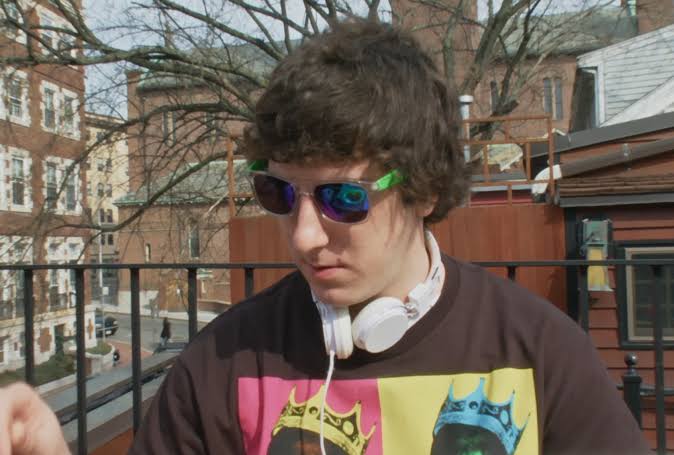
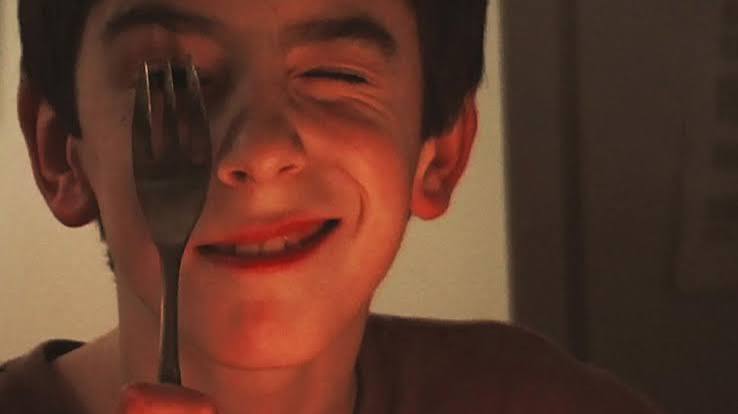
The filmmaker lets us know early on that his son Adrian, whom he filmed “a few minutes a month” for most of his life, is dead. We meet the precocious infant turned precosious child in that footage. And in McElwee’s most nakedly honest work yet, we see that child turn troubled in ways too many parents will recognize.
The child “lives on” in this old footage, and is in every way a delight and the apple of his parents’ eye. But as we know from McElwee’s musings in voice-over narration, every home movie — fishing and crawdad trapping, traveling and playing and painting and toying with dad’s camera himself — McElwee is moving himself, his boy and us “closer to the day you would die.”
In classic McElwee fashion, this documentary is conjured up in the editing of the hours of footage McElwee has shot, both in the making of documentaries and indulgently documenting his home and family life. The “Remake” hook comes from an early 2000s effort to turn his honored and iconic “Sherman’s March” into a fictionalized feature film.
Hollywood director/producer Steve Carr (“Next Friday,” “Daddy Daycare,” “Dr, Doolittle 2”) was and is no Scorsese (“Movie 43” was also his. Oy.). But he was an avid fan of “Sherman’s March” and was sure this mopey, deadpan doc could be a hit big screen comedy. Or sitcom. Something.
McElwee agonized over the whether or not to sell the rights to his prized work, his “life,” in essence. But his then-teenaged son helped convince him. McElwee would make a documentary on the elusive pursuit of that stillborn “March” project. That turned out to be but one element of “Remake,” a movie about an indulgent filmmaker seeing the self-destruction of his indulged son.
We get a glimpse of McElwee’s privileged life — born into “a family of doctors” — and an implied taste of Adrian’s. As his son became the focus of some of his lesser-seen documentaries (“In Paraguay,””Photographic Memory”), the kid accompanied dad onto the film festival circuit.
Premieres, parties, press conferences where reporters asked Adrian questions and took his answers seriously, cruising the canals of Venice in posh speedboat, we see it all turn the kid’s head.
He’s asking Dad for a leg-up in the industry. He’s hunting for a shortcut to the “hard work” as a film production flunky that his father and legions of film folk like him endured, and whining when he doesn’t find one. He’s criticizing his father for not “making me a child star” when he was a cute, too-camera-friendly kid.
Through it all, McElwee’s marriage suffers from his incessant filming. His own health deteriorates (McElwee turned 79 in July) and his son flails and fails at college and life in Boston, and develops — as Adrian confesses on camera — a $50,000+ a year drug habit, on his own in Colorado.
We see the conclusion McElwee is dancing around but afraid to confront. But parents might stop short in their second guessing as McElwee forces us to walk a mile in his shoes.
The film charmingly revisits a few of the ageing figures from “Sherman’s March” — that poetry teacher/matchmaker Charleen Swansea, old and losing her memory of ever being filmed by Ross, here, his sister DeDe and the “hippy” linguist/scientist Wini, just as intellectually out of his and our league now as she was back in the ’80s.
But the point of it all has to be some sort of commentary on “hiding behind your camera” and craving the attention and lifestyle that fame offers without fully weighing that commitment’s psychic and emotional cost.
“Selfie Sticks” and “influencer culture” were decades away when “Sherman’s March” through the South was undertaken on almost no budget and a worn out MG-TD roadster. In “Remake,” McElwee’s life of filmed navel-gazing is both celebrated and questioned in this, his most personal film yet. He takes stock and asks hard questions of himself and by implication, the personal essay “attention culture” he helped create.
And if he never asks or answers the hardest questions, we can still sense the regret that if he had it to do over, he most certainly would leap at the chance, even if it meant putting the damned camera down for a while.

Rating: unrated, substance abuse scenes
Ross McElwee, Adrian McElwee, Charleen Swansea
Credits: Scripted and directed by Ross McElwee. A Music Box release.
Running time: 1:53



