
It’s hard to remember how “out there” Ross McElwee’s landmark “personal journey” documentary “Sherman’s March” was in 1986.
A confessional, cutesie, creepy and revealing snapshot of the South and one privileged movie maker’s revisiting of his romantic past and revelation of his romantic present, there was nothing like “Sherman’s March” when it came out.
Long before “the attention economy” of Youtube, “look at ME” video selfies and Facebook Reels, its two and a half hour blend of performative narcissim was an eye-opener, and an invitation to “become” your own documentary.
Before Michael Moore’s first person jeremiads and the scores of “personal essay” docs to come, McElwee laid it all out there in a musing and amusing drift through the question of “Is romantic love possible” in an age hanging under a nuclear cloud (the “brinksmanship” of the Reagan era).
“Sherman’s March” was so revolutionary that it was selected for the National Film Registry of essential American cinema preserved by the Library of Congress. The functional dysfunction on display and droll commentary on a region determined to drag America into the racist, superstitious, conservative Confederate stupor to come seems prophetic today.
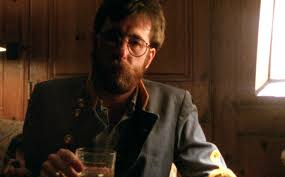
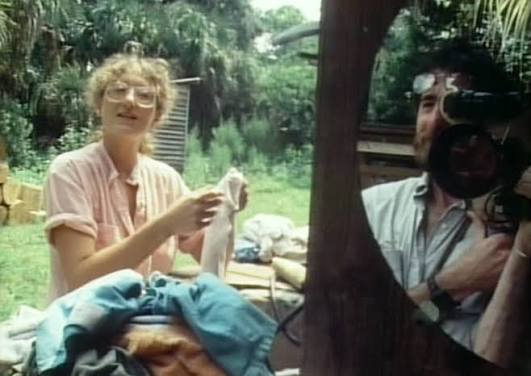
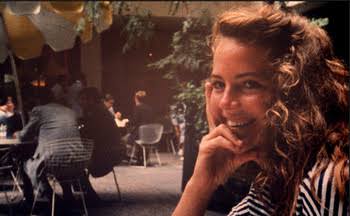
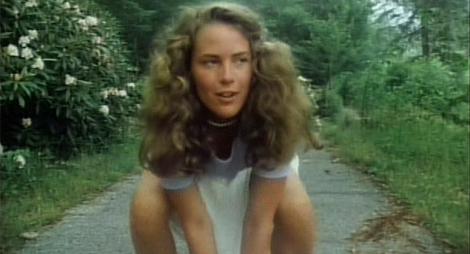
With McElwee, who’d go on to make the similar and more pointed “Bright Leaves” some years later, now releasing an update on his life and movie making, “Remake,” it’s the perfect moment to re-release “Sherman’s March” in all its quirky, restored glory.
I first caught the film in an art cinema in the Northern Plains (Madison, Wisnconsin) when “Sherman’s March” was released, a movie trumpeted by magazine critics and “Siskel & Ebert” as essential viewing of that era. I don’t remember it being over two and a half hours long, but the word “indulgent” has been attached to most every review of it, then and now.
McElwee was a Charlotte, N.C. native doc filmmaker at the tail end of the shooting-on-celluloid era, living n Boston when he got the idea of revisiting General George Tecumseh Sherman’s “scorched Earth” march through the South in the backbreaking campaign that concluded the Civil War.
With legions of white Southern relatives, teachers and acquaintances who still referred to the Civil War as “the late unpleasantness,” in a region that still spat at the mention of Sherman’s name, his plantation, church and city burning march of 120 years before burned into the collective white Southern memory, McElwee was definitely onto something.
The first tone-deaf/slavery-denying 40something blonde who lets slip “I still don’t think we were wrong,” confirms it.
But those unreconstructed Confederates, the daffy, drawling first generation of “preppers” planning cultish survivalist compounds in the Appalachian Mountains, and the “elite” Confederate costume ball crowd (McElwee dresses appropriately for it) turn out to be a sidebar to the “real” movie he’d make.
He’d follow Sherman’s path, sure, from Atlanta to Savannah, Sumter to Columbia and on to Bentonville. But his Boston girlfriend had just ditched him. Self-absorbed McElwee’s movie would be an attempt to dip into his psyche to ask “Why?”
Is it all on him, an angsty, bearded over-thinker who “hides behind (his) camera?” Or is the existential angst of a feminist era, with the last sputterings of liberated “free love” hippydom smothered by a “Me Decade” (the ’70s) that never morphed into the “Us” decade (the ’80s) that the most naive had prophesied?
As family hurls him into the path of a newly-divorced high school flame and he and his sister paddle by a fetching swimmer who turns out to be a confident, assertive and earthy would-be actress hellbent on getting into the next Burt Reynolds movie, the mid-30s McElwee finds himself drawn to Atlanta and half-heartedly begining his Sherman project.
We hear McElwee telling Sherman’s own tragic story and connections with the South in narration and see him trying to convince assorted Steel Magnolias (the film is overwhelmingly female) that Sherman wasn’t the monster the reenactment-crazed region made him out to be.
And we see McElwee drawn to and smitten with women like no-deep-thinker actress Pat and out of his intellectual league linguist Wini, living on her own and often au naturel on deserted Ossabaw Island off of Savannah, Georgia. He visits “compoinds” in the mountains and gets a little theology from a preacher and a lot more from Mormon DeeDee.
She’s a woman “marriage broker” (Teacher? Friend?) Charleen is determined to fix McElwee up with.
Jackie the anti-nuclear, pro-women’s rights activist is just one of McElwee’s versions of “the one that got away.”
The movie’s downmarket lifestyle is something of a pose, even if the surgeon’s son from Charlotte grew up in the sort of privilege that produces lake houses and documentary filmmaker children, then and now. Making a movie on a shoestring, he bums his brother’s rattletrap 1950s MG TD (it could be a TC) to make his journey, a ride that leaves him stranded hither and yon, accepting late night accomodaations in a town jail in tiny Adrian, Georgia and Spartan sleeping quarters elsewhere.
Viewing “Sherman’s March” now, one is struck by the “male gaze” focus of it all. The camera embraces all the women and leers at more than a few. The point of view can seem voyeuristic, and McElwee’s “innocent in the land of women and ‘unresolved’ romances” act makes one wonder if this hapless romantic dweeb has a whiff of “stalker” about him.
But as we see Confederate women financing and finishing up a monument to the Confederacy in South Carolina, visit Stone Mountain, Georgia’s biggest Confederate monumber of them all (dedicated in 1970), McElwee can seem as prophetic as any movie maker who picked up his own 16mm camera and belt-held Nagra tape recorder and simply recorded what was right in front of him.
While our self-absorbed culture fretted over love, getting ahead, mind-expanding travel and “following your bliss,” the look-backward unreconstructed were setting the stage for a MAGA coup in which the South DID “rise again.” And not in a good way.
Seeing this film anew, I had forgotten the ways my own path crossed McElwee’s during his years of filming. I worked in Charlotte in public radio at the beginning of my career, and like McElwee, spent too much time trying to score an interview with Burt Reynolds as he filmed “Stroker Ace” there.
I covered the same “End of the ERA (Equal Rights Amendment)” rally McElwee followed his activist ex to Raleigh to film.
And like McElwee, whom I interviewed when “Bright Leaves” came out, I’m a product of a family deeply invested in the South’s demon weed, tobacco, before anybody knew it kills people.
So there’s more to “Sherman’s March” than prophecy and a startlingly accurate snapshot of doggedly embittered white South (there are several of Black folks in it, old mechanic friends and new musicans).
The navel gazing boomer nostalgia of it all, looking for a mate in a post free-love culture, will appeal to some. How this undeniably important and influencial film has aged will vary by generation.
Because whether we’ve marched forward since this groundbreaking film came out, or off a cliff, is very much in the eye of the beholder.

Rating: unrated, brief nidity, mild profanity
Cast: Ross McElwee, DeDe McElwee, Patricia Rendleman, Wini Wood, Charleen Swansea, DeeDee Geraty, Joy Perrin and Burt Reynolds.
Credits: Written, directed, filmed and edited by Ross McElwee. A Music Box re-release.
Running time: 2:37



