
Aliens? In LA? Go figure.
May.
Aliens? In LA? Go figure.
May.
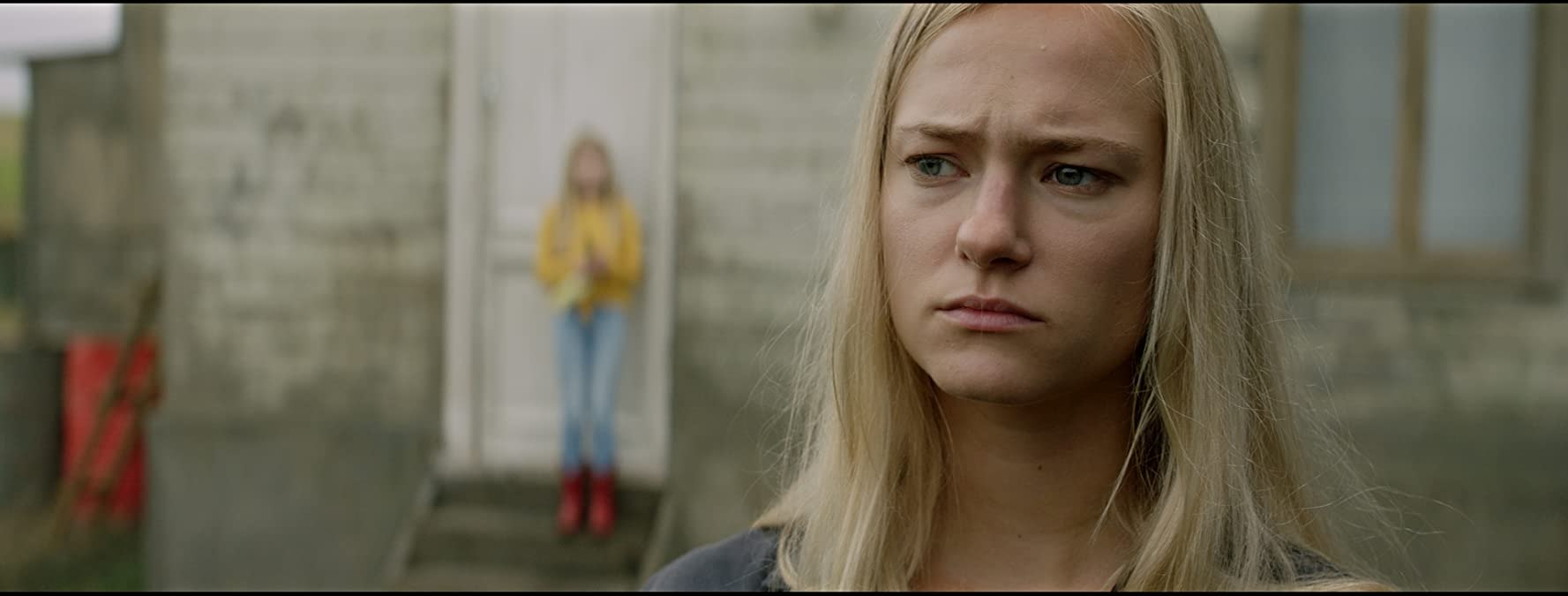
A juvenile in jeopardy, impressively dark and gloomy production values and a leading lady who delivers bug-eyed alarm with the best of them give “Dark Light” a fighting chance.
It’s a creature feature with a silly but scary enough “creature concept (by Aaron Sims) and a few good jolts trapped in a dumb and desultory plot. I can’t say it wholly comes off, but it’s a far piece from a total write-off. Genre fans could dig it.
A single set dominates it — a spooky old frame farmhouse in Mississippi, cloaked in fog and gloom, the place where post-“nervous breakdown” Annie (Jessica Madsen) grew up, the place that her mother was dragged from on her way to a mental hospital.
But when your husband’s cheating on you, where else do you take your little girl (Opal Littleton) to start over? That creepy unused elevator? That moved granny up and down the stairs. That scratching in the wall? Yeah, me too.
Those too-bright lights out in the cornfield? Teenagers with halogen spotlights? Nah.
The kid is being pursued by something which only an Internet visit can (insanely) explain. There’s a lot of lights and scratching, biped figures only glimpsed in a “Signs” sense, an “expert (Gerald Tyler)” who thinks he knows what’s going on and a lot of blood and mayhem and shotgun shooting before that inevitable confrontation.
“Annie, put the gun down.”
“Sheriff, you don’t understand.”
They never do. Never ever.
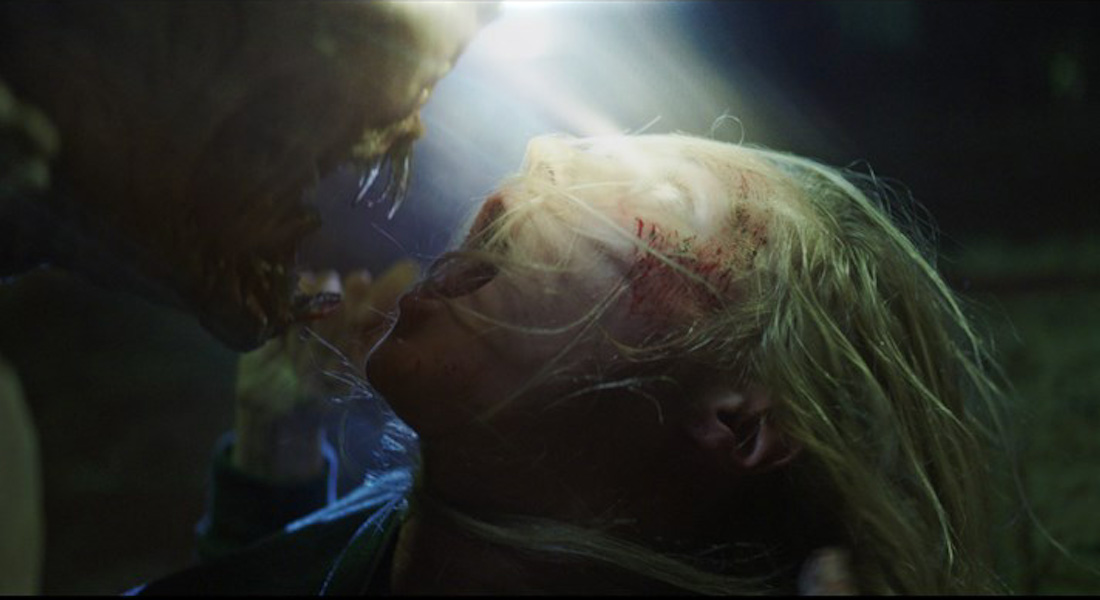
It’s a humorless fright fest with corpses, mildly-impressive effects, a Big League string orchestra score and sturdy work by Madsen (“Leatherface”) in the lead.
She doesn’t give us panic, just fright. The weeping moments don’t sell the picture. And not giving anybody anything cool or clever quippish to say robs her performance, and those in support, of any “pop” the picture might have had.
But as creature features go, any given weekend we can say “Hey, I’ve seen worse.”

MPAA Rating: Unrated, bloody violence
Cast: Jessica Madsen, Opal Littleton, Ed Brody, Kristina Clifford, Gerald Tyler
Credits: Written and directed by Padraig Reynolds. A Zee Studios/Netflix release.
Running time: 1:28
If only every comedy had the surprise twist that the Czech road picture “Winter Flies” saves for its finale.
It’s simple, and simple-minded, and it so upends expectations that it leaves you the way every comedy should — tickled.
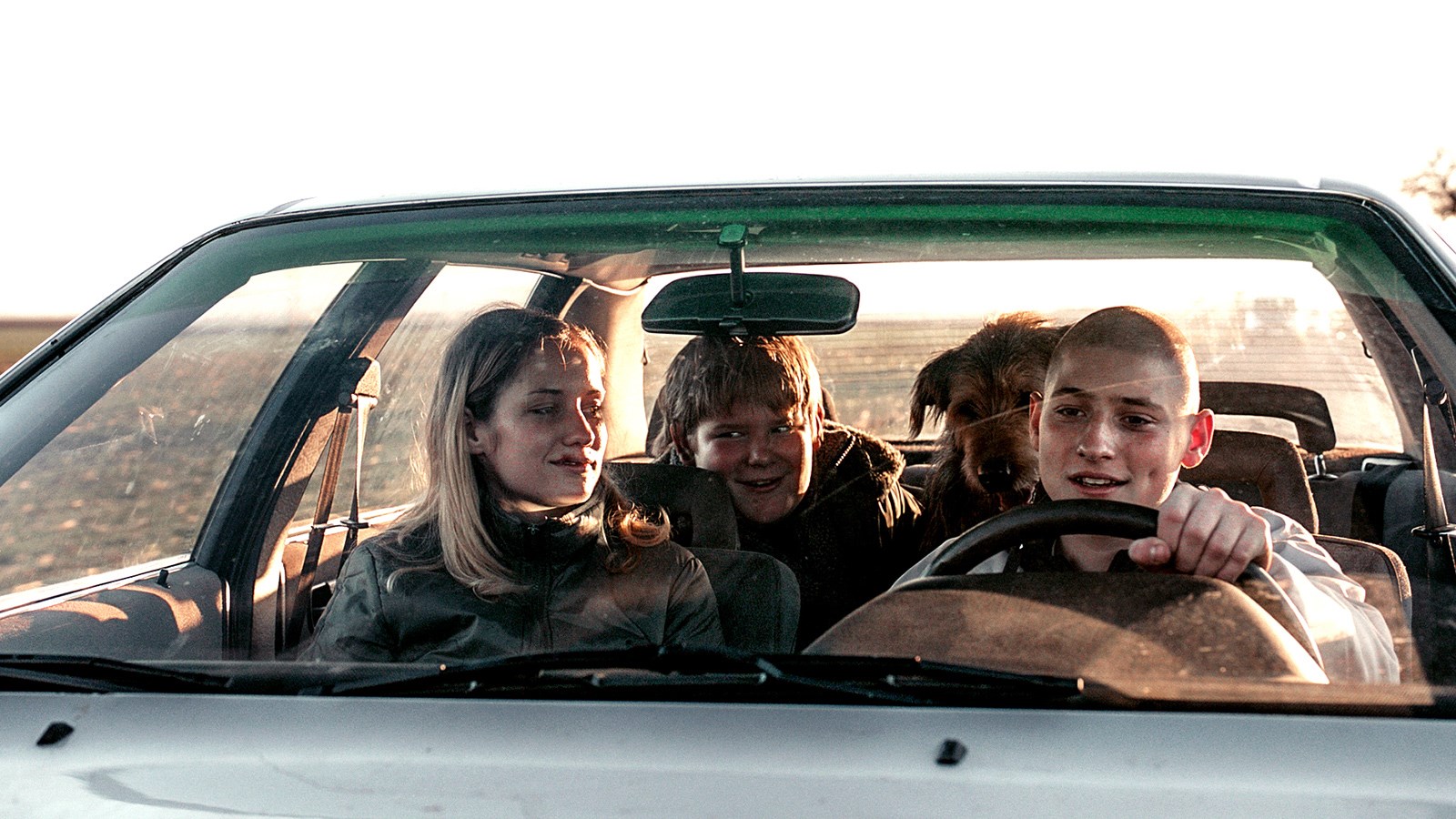
It’s about two dorky teens sprinting across the country in a stolen late-model Audi. They’re headed…somewhere. To France? Or maybe some place Heduš (Jan Frantisek Uher) can “join the French Foreign Legion.”
Why? When we meet him he’s covered in camo, paintball-sniping passing cars. He may be plump and clumsy, but he’s a good shot. Besides, he tells Mára (Tomás Mrvík), the slightly older friend he flags down in that Audi, “they don’t ‘bully’ in the Legion.”
Kid’s seen a few movies, but how he missed the ones with all the Legion bullying going on remains a mystery.
Their trip is an odyssey interrupted by a series of flash-forwards. Mára’s been caught, and a couple of cops (Lenka Vlasáková and Martin Pechlát). He won’t spill his name or hometown. But by Václav Havel, he has a tale to tell.
Mára’s more mature. Or at least he seems that way. Heduš is downright childish.
They hit the open road, dodge the big cities and stop to ditch their phones so that they’re not tracked. They’ve both seen those movies.
Along the way, they’re hassled by some creep who proceeds to try and drown the dog they refuse to take off his hands, they practically kidnap a pretty hitchhiker (Eliska Krenková) and try to impose their crude, childish notions of sexuality upon her and Mára tells tales of his beloved grandpa, who taught him “to drive before I could walk.”
The cops, who are dishonest, faintly corrupt and homophobic (“Are you a ‘tranny’ in training?”) decide he’s got “an active imagination and a sentimental side” (in Czech, with English subtitles). But we can see that.


At every step of the way, we fear for them. With Heduš’ ungainly cluelessness and Mára’s misguided confidence, what else could we do?
We know it all came to an unexpected end. One kid’s being grilled by the police. But it isn’t until that ending arrives that we see how unexpected it is.
“Winter Flies” — the title is a snowy insect metaphor — is short, sweet, kind of crude but always to the point. That’s the thing about road comedies. Even when they’re meandering, it’s never an aimless wandering. They’re always taking you somewhere, and in this case, it’s a destination you never see coming.

MPAA Rating: unrated, crude language, sexual content, animal cruelty
Cast: Tomás Mrvík, Jan Frantisek Uher, Eliska Krenková, Lenka Vlasáková
Credits: Directed by Olmo Omerzu, script by Petr Pýcha. A Film Movement release on Film Movement Plus, Amazon Prime.
Running time: 1:21
, Jan Frantisek Uher, Eliska Krenková, Lenka Vlasáková
Credits: Directed by Olmo Omerzu, script by Petr Pýcha. A Film Movement release on Film Movement Plus, Amazon Prime.
Running time: 1:23

The portrait of the Hasidic community that’s emerged in films paint it as an insular, secretive and virulently patriarchal cult — a combination of the worst theocratic fundamentalism of the Amish, Islam and Mormonism.
Documentaries such as “93 Queen” capture the vicious, bullying pushback Hasidic New York women faced for starting a female ambulance service (Hasidic men run their own private ambulances, serving the community). “Disobedience” dramatized women struggling with their sexuality in a culture of arranged marriages and rigid intolerance of the very idea of same-sex attraction.
Netflix’s “One of Us” tries to add something new to the conversation by showing the experiences of three members who left New York’s politically powerful and influential Ultra Orthodox community.
It’s as damning as most such portraits have been, though hardly representative and on occasion, somewhat deceptive.
Ari Hershkowitz was a teenager when he discovered the Internet, which we see Hasidic leaders railing against in public appearances. Stumbling through the world of knowledge — and opinion — there opened Ari’s eyes to options outside the dictatorial theocracy of his community.
“Wikipedia was a gift from God.”
He didn’t leave Judaism or the city, but he faced shunning by his family and former friends, something he’s young enough to be surprised by (plenty of Internet info on this “circle the wagons” mentality) and naive enough to remain hurt by. In a couple of scenes, we see him insistently questioned by various older men, empowered by Hasidic privilege, in public, about his choice. They wonder how he could have made it.
Luzer Twersky is an actor who talks about “living a double life” after marrying at 19, having two children and struggling in a supportive (clannish hiring practices, financial aid) but suffocating world where he knew he didn’t fit in.
He comes off as superficial and self-absorbed. He’s had roles on “Transparent” and in films But he has no contact with his former life, former wife or children.
The most troubling portrait is the one of Etty Ausch and her struggles against the financial, legal and bullying might of the collective, just to gain a divorce from an abusive husband and take custody of the seven children she had in their twelve year marriage.
The connective thread to these “cases” is the organization that tried to help all three — a “survivors” support and assistance organization called Footsteps.
Etty, who attends group therapy meetings and tells her story, and who strategizes with counselor and former Hasid Chani Getter in the film, is their toughest case.
Getter attributes the fund-raising that Hasidic leaders authorized, the stalking and threats (911 calls are heard) and “massive resistance” to her case to an attempt to “make an example of her” tied to the movement’s post-Holocaust “mission” to be fruitful and multiply and repopulate The Chosen people.
Her they hate and they don’t want any other women — watched, overseen and slaves to husbands who demand children — to get the idea they can escape. But they are hellbent on keeping her kids.
“One of Us” veers between the mildly unpleasant experiences of the two men portrayed to the infuriating treatment Etty endures. A team of high-priced lawyers and a stunningly biased judge (we only see court transcripts, and hear no names) are a lot for a woman who never learned a marketable skill, with no financial support, to fight.
The virulence of the legal, social and personal attacks are alarming and are presented as perhaps representative of what a woman has to go through to escape.
But Etty has since come out as gay and told interviewers that scenes of her “with my girlfriend” were cut from the film. Her transformation, post-divorce, includes a buzz cut and lots of piercings and even though we see no signs of a new support system, viewers could run with the assumptions the film invites us to make.
Omitting that detail, given the community’s homophobic reputation, is cheating.


The movie’s narrow focus — just these three and Footsteps counselor Getter – limits the portrait that’s painted and leaves us with questions about its accuracy. Which, it turns out, are justified.
No lawyer could weigh in on what it’s like to face the limitless resources of this community (which is but one of a group of sects labeled “Ultra Orthodox” and “Hasidic”)? No psychologists or outside critics could make the comparison of the born-in-the-18th-century group to religious extremist/fundamentalists in other religions?
These sins of omission weigh on “One of Us,” even though most viewers will have had enough exposure to journalism and other films to fill in some of the blanks.
We expect documentaries to tell us the ugly, unvarnished truth, although that’s generally a futile hope and a goal rarely achieved. In this case, selective editing stigmatizes its heroine and avoids the more interesting wrinkles in the story, which — difficult as it was to tell — feels incomplete.
Cast: Etty Ausch. Luzer Twersky, Ari Hershkowitz , Chani Getter
MPAA Rating: unrated
Credits: Directed by Heidi Ewing and Rachel Grady. A Netflix release.
Running time: 1:31

With its sequel, “Peninsula,” in the can and slated for release whenever the REAL viral invasion lets up (Fall?), I guess I’d best catch up on “Train to Busan,” the movie that inspired it.
“Train to Busan” (2016) didn’t reinvent the zombie genre or best “World War Z” and make anybody forget that zombies have been utterly beaten to death (tee-hee) by the Sons and Daughters of George A. Romero when it came out.
But it bested most zombie stories in its humor, pathos and novel setting. An outbreak explodes out of a lab in the Exotic East. A KTX bullet train departs for points South just as the TV news catches up to a calamity exploding across the “peninsula.” And on board, a collection of character archetypes.
Who gets to live, who will perish and how many of the Walking, Stumbling, Jerky Dead will they take down with them when they do?
Two things stand out, catching up to this 2016 release in the middle of a real-not-sci/fi pandemic. One is the general simplicity of Sang-ho Yeon’s film. Zombies can be created with effects or performances, and this one leans heavily on actors mastering that angular, herky-jerky, head-snapped-back lurch, the blank-eyed foaming at the blood-spattered mouth fury. Couple that to pixelated movement — deleting frames to accentuate the jerkiness (an “in camera effect,” in essence) and you’ve got convincing menace, peril that comes from a recognizably “human” monster.
Nothing digital about it. The waves of people, the flood of zombie-lemmings tumbling out of a train station window, are real. None of this animated “World War Z” ants piling up in front of Israeli walls.
And the second stand-out trait, seeing this in the middle of an epidemic that Korea responded to and the Trump Sycophancy did not, is the pathos. Many a movie in the genre has focused on parents and doomed children, or vice versa. The more recent turn towards “zombies have feelings too” — an unfortunate outgrowth of films like “Warm Bodies” and the endless “Zombies Went Down to Georgia” TV series — is ignored.
“Train to Busan” has a distracted, workaholic divorced dad (Yoo Gong) forced to pay closer attention to his “I want my mommy” daughter (Su-an Kim).
There’s the bickering teen couple (Sohee and Woo-sik Choi) traveling with their high school baseball team.
The very-pregnant wife (Yu-mi Jung) who bitches about her “idiot” muscle-head husband (Dong-seok Ma).
We see doting, elderly sisters, efficient and courteous conductors, stewards and stewardesses, and that one “Save my own skin, SCREW you all” fat cat conservative (Eui-sung Kim).
They’ve all missed the hints, the warnings. Maybe they caught the first news reports. Little Soo-an saw crowds gathering around some incident at the train station as they were departing.
Mr. Suh (Gong) got alerts from his office about a “strike” at a facility his firm is invested in.
“I’ll be back before lunch,” he says (in Korean with English subtitles).
And nobody saw the staggering, bloodied coed who slipped onto the train, her veins blackening, her eyes not-quite the pale while of the infected.
But within minutes of leaving the station, the rail car’s TV screens start to tip them off. Their phones ring. The conductors make “please return to your seats” and “we WON’T be stopping” at the next city announcements.
All hell breaks loose, and it’s a brawl — car by car, row by row — with passengers stunned into shock, then forced into action. There’s improvising, do-it-yourself tactics, name-calling and figuring out who you can trust in a pinch.
The “idiot” husband makes up a nickname for Mr. Suh, who almost locks him and his pregnant wife out of the “safe” compartment —“Hangmum.”
But the father and the father-to-be need each other if they’re going to protect the little girl and the pregnant wife. Who cares if “Hangmum!” is how the guy tells at you, calls to you and begs for your help?
There’s a cynicism about government that plays as doubly ironic now — officials in yellow emergency service jackets asking citizens to “Please refrain from reacting to baseless rumors…To the best of our knowledge, you safety is NOT in jeopardy. TRUST the government.”
A government whose competence you can trust is what spared South Korea what Italy, Spain and the United States are enduring.


The set-pieces here are better than average for the genre — a tidal wave of troops in camo turned zombies overrunning a train station, a furious “Old Boy” charge through zombie-infested passenger cars.
As I say, “Busan” doesn’t reinvent the zombie movie so much as make it work well enough that you buy in — good performances, a nice selection of moments of “sacrifice,” the usual “What are they THINKING?” twists.
But I was surprised at how touching a couple of moments were, delighted by how badass some of the action beats played out, the suspense of some moments and vicarious fury of others.
There’s not much room within the genre for invention and novelty, something that works against “Busan” and hangs over “Peninsula,” pre-release.
The “rules” vary from picture to picture, but one new “what separates us from them” pays off, and we can only hope “Peninsula” remembers it.
Zombies don’t sing.

MPAA Rating: unrated, gory, graphic violence, profanity
Cast: Yoo Gong, Yu-mi Jung, Dong-seok Ma, Su-an Kim , Eui-sung Kim
Credits: Directed by Sang-ho Yeon, script by Joo-Suk Park, Sang-ho Yeon A Well Go release on Tubi, Amazon Prime, elsewhere
Running time: 1:57


The school monitors treat the morning Meet and Greet with the kids as an insult contest.
Unstylish back pack? Just make sure your “parachute” doesn’t open in the middle of class.
Asian kid’s late? Don’t they have buses in “Chinatown?” And “I think he made my (sneaker) shoes!”
The kids are a non-violent collection of smart alecks and misfits, the cutest punks this side of “West Side Story.” Even their insults are adorable — “Corn eater” for a Black kid, “You bunch of kebobs” and “dirty Arab” for the Algerians.
Welcome to middle school, 9th grade, in Saint-Denis, that troubled northern suburb of Paris where many a French crime drama is set, but also the home to “School Life,” a French “Dangerous Minds” that is more comic than “Dangerous.”
It’s the where the new school counselor, Samia Zibra (Zita Hanro) would like to make her mark. We see the school year through her eyes. She’s not fresh out of school, but the tidal wave of French education acronyms — PEZ, PEN, NEC and the French SAT (BAC) — are defined for her, and us, during morning faculty meetings.
They joke about the pathologically tardy pathological liar Farid…”On my mother’s life…” or this Miss Goody-two-shoes or that miscreant.
Everybody’s favorite “problem” student is Yanis (Liam Pierron), a mouthy 15 year-old who is blowing the “key year” of his education. Ninth grade, freshman year, is when your educational course is set — college track, trades, or “assembling furniture for IKEA.” Yanis insults teachers, always quick “with a comeback,” stares out the window and gives the impression that he’s smart but too cool to care.
Like Michelle Pfeiffer’s character in “Dangerous Minds,” Ms. Zibra isn’t fresh out of college and naive. She is fighting fires, just like everybody else — a daily parade of ill-mannered, whiny, interrupting and tuned-out teens who have to be managed, re-directed and brought to their Go Big or Go Home moment.
She’s as ready as anybody else to give up on Yanis, although not as ready as the “You look like Van Gogh!” history teacher, Thierry, who hates him. But running into him after school one day makes her take an interest. His random “change the subject” interruptions convince her that he’d be a natural for film school.
In the U.S., only lazy rich kids with ADHD get into film school. Vive la dif·fé·rence!
Everything seen here seems derivative of a hundred Hollywood “school” dramas and comedies, with novel French touches. If the kids’ abuse of the history teacher (Antoine Reinartz) doesn’t stop, “I’ll do what everyone ELSE does, take a leave of absence.”
The PE teacher is bored with conventional sports. He teaches Roller Football (soccer), kids kicking a ball, and each other, on skates. What could go wrong?
One faculty member protects his student drug connection from discipline, the music teacher discovers a rap prodigy in the middle of his class’s “Learn to play the recorder” months (in the US, that’s an early elementary school instrument).
The parent-counselor/teacher meetings are funny and biting. Ms. Zibra is appalled when a father first learns of his son’s tendency to get up in class and show off by dancing. “DANCE for ME, SHOW me!” No no, Ms. Zibra, LET him show Dad his go-to stunt. It’s humiliating and funny, and in spite of her “humanist” discipline bent, we sense it’ll be effective.
But with every brief and melodramatic off-campus dalliance in a student or Ms. Zibra’s home life, “School Life” points out what a long and wildly uneven movie experience it is.
No matter what your French skills, I’d suggest watching it dubbed into English, with the subtitles on. Both translations add to the hilarity. The subtitled insults are colorful and distinctly French. They’re dirtied up with extra profanity for the dubbed soundtrack. And kids bickering about soccer stars are dubbed into have Kevin Garnett NBA debates.
Seriously?
The biggest problem with the picture is obvious in my choice of photos parked at the top of the review. I NEVER post ad images from a film, but Netflix makes this point graphically in the picture on the left. Girls are all but INVISIBLE in this movie — a good student here, an empathetic busybody (“You don’t know what Lamine is GOING through!”) there.
The only female student in this sexist enterprise to get her own session with the school counselor is the one who dresses “like a whore” whose mother shows up in a short-shorter-shortest skirt flashing cleavage.
So I won’t recommend “School Life” on its meager merits. It’s derivative, uneven, clumsy and absurdly sexist. But educators, stuck at home, will get a few laughs out of the differences and universalities of middle school, over here and over there.

MPAA Rating: TV-MA, profanity
Cast: Zita Hanrot, Liam Pierron, Soufiane Guerrab, Moussa Mansal, Alban Ivanov
Credits: Written and directed by Mehdi Adir and Grand Corps Malade. A Netflix Original.
Running time: 1:52
 |
Georgian Scott Teems, who first gained notice with the Faulkneresque Southern Gothic “That Evening Sun,” gives the genre a Hispano-Southern Gothic updating with “The Quarry,” a dark and blood-stained morality tale set in remote, rural “Reconquista”Texas.
The script, with its Biblical parable story arc and pithy monologues peppered with sharp observations about humanity, the changing world and changed South, attracted a dazzling trio of leads. And the result does not disappoint — well, not much anyway.
A priest (Bruno Bichir, brother of Demián), interrupts his wine-swilling drive through the barrens of East Texas when he spies a body beside the road. It’s a man, passed out and broke. He does the priestly thing. He picks him up, loads him into the old van, drives him down the road and feeds him.
He also offers him a drink, because “I am an alcoholic,” he confesses. “Confession” saves the soul, he counsels. And he gets a little pushy about it.
But the sour-faced drifter (Shea Whigham) isn’t having it — isn’t having it with EXTREME prejudice. That’s how Father David winds up dead. An impulse killed him, and then a practiced panic kicks in. The drifter dumps the body in an abandoned quarry.
For reasons only a novelist (Damon Galgut wrote the book this is based on) can justify, the drifter drives the van to the village where they’re waiting on their new priest.
He takes up the stole and vestments, cracks open the priest’s Bible to Timothy, Chapter One.
“I thank Christ Jesus our Lord, who hath enabled me, for that he counted me faithful, putting me into the ministry; Who was before a blasphemer, and a persecutor, and injurious: but I obtained mercy, because I did it ignorantly in unbelief.”
His humorless, deadpan sermon — in English, which few of his congregants speak — touches the faithful in its lack of judgment, forcing them to read passion and life lessons into it because the priest isn’t providing those. He’s an instant hit.
“I just say the words. It’s not me that you’re here for. It’s the words, the Book.”
But when he arrived in town, his van was ransacked. Apetty drug dealer, Valentin (Bobby Soto) got hold of wheels, a suitcase, and stuff the cops call “evidence.”
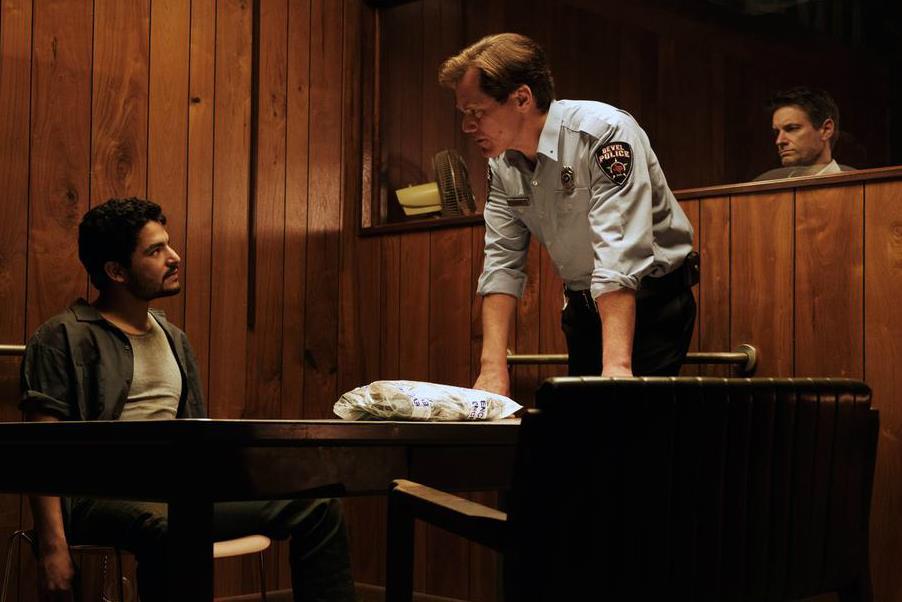
So maybe reporting the crime to the police chief (Michael Shannon) isn’t the smartest play. The lady who runs the rectory (Maria Sandino Moreno of “Che” and “Maria Full of Grace”) insists on it.
Just hope the drawling good’ol boy doesn’t eyeball the “Wanted” posters on the wall behind him too carefully.


Shannon eats characters like this bad-“good” man cop alive. A prisoner gripes, “Gimme a CIGARETTE, Chief.”
“Naaw, you know me. I don’t SMOKE, ‘cabrón!'”
Whigham and Shannon go way back — “Boardwalk Empire,” “Take Shelter,” etc. Whigham’s work in their scenes together largely consists of keeping a guilt-ridden poker face, and under-reacting to Shannon.
“Not much in the collection plate? Maybe you should watch them TV preachers, get some tips.”
Nothing.
“You’re not much on smilin’, are ye?”
Everybody, from the congregation to the chief, reads more into the “priest” than this unGodly man has in his background. It’s “I know what you’re thinking…’Turn the other cheek. (But) forgiveness only works in a world where people learn their lessons.”
“The Quarry” stumbles and shows its malnourished nature in the third act, when little conveniences like the lack of a courtroom (“hold it in church”) and lack of an actual local prosecutor (Let the Chief prosecute the case?) are explained away in a most half-assed way.
The sordid underbelly of this recently-Hispanized town is touched on, the Chief’s “not entirely legal” methods, etc., are but background to the relationship dynamics that are hinted at but somewhat undeveloped.
But Teems and his team get a nice spin on Southern Gothic tropes and types, and “The Quarry” makes for a slow, simmering tale that has glorious performances and rewards, even in its noticeable shortcomings.
MPAA Rating: R for some violence and language
Cast: Michael Shannon, Shea Whigham, Maria Sandino Moreno, Bobby Sotoa and Bruno Bichir.
Credits: Directed by Scott Teems, script by Scott Teems and Andrew Brotzman, based on the novel by Damon Galgut. A Lionsgate release
Running time: 1:38
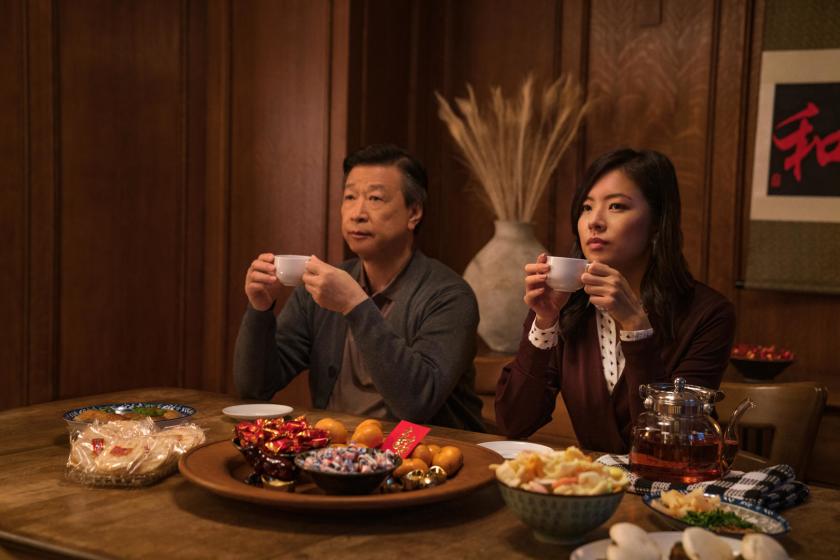
Forget the “Parks & Rec” and “Master of None” credits on “Tigertail” writer-director Alan Yang’s resume. Don’t put too much stock in the more downbeat and thoughtful “Forever,” either.
With this short but plays VERY long Netflix drama, he takes his shot at a memory play. It’s a story of Taiwan and America, first love and regret and the chill that pragmatism can cast over life, and pass from generation to generation.
It’s doesn’t wholly come off, with ambitions exceeding its reach. But it has enough of that “How my family got here” “Joy Luck Club” essence to make it worth checking out.
“Tigertail” gives a rare (in this country) leading man turn to the formidable character actor Tzi Ma, of “The Farewell” and the upcoming “Mulan” remake.
He is a sad old man, living in a cozy New York brownstone, all alone in a diminished life and surrounded by regrets.
He’s not warm enough to be a comfort to his sad but successful daughter, Angela (Christine Ko), who could use a shoulder to lean on. He didn’t even bother to tell her his mother died. She finds out when she picks him up from the airport on his return home from Taiwan.
He has gone by “Grover” in the United States. He thinks back to his childhood, when he was Pin Jui, raised by his grandmother in the days just after Chiang Kai Shek and his Kuomintang Party and army took over the island of Formosa and made it Mandarin and Chinese.
Pin Jui grew up in the middle of a sea of rice paddies and met the love of his life as a child. Years pass, he moves in with his mother (Kuei-Mei Yang) and works with her in a local factory. But Pin Jui (Hong-Chi Lee) and Yuan (Yo-Hsing Fang) are hot are heavy, poor but dating — perfecting the “dine and dash” as they do.
They long to go to America together.
But there is no OSHA to protect workers in Taiwan, and the factory work is dangerous. Pin Jui wants to get his mother out of there, and when the boss suggests he take up with his daughter (Kunjue Li), duty calls. He will marry her, go to America and make enough money to send for his mother.
And he won’t bother telling Yuan this when he does.


Yang sets up a cause and effect — the years and burdens it took for Grover to grow this thick skin and become the emotionally unavailable old man he now regrets being.
The pain of the practical marriage cut both ways, and the years did not lessen it.
That leaves Tzi Ma, screen newcomer Ko (of TV’s “Dave” and “Hawaii Five-O”) and Fiona Fu, as the older wife Zhen Zhen, each one note to play.
Even the blessed third act arrival of the radiant Joan Chen (“Heaven & Earth,” “The Last Emperor”) cannot lift the pall that’s been cast over the picture by the overlying tragedy.
In screen storytelling, there’s “understated” and “subtle” and “OK, we get it, get ON with it,” and Yang’s overly somber memory play, laden with regrets, comes entirely too close to generating that last reaction.
Character arcs are thin to non-existent. Yang gives his fine cast of players too little to play for us to grab hold of, and the leaden pace just highlights that.
It’s beautifully mounted, with lovely recreations of late 1960s Taiwan. But the downbeat story in the present day offers too little, and nothing even remotely as hopeful as Yang seems to think it is.
This isn’t Netflix’s “The Farewell,” which would be expecting too much. But it’s not too much to expect a more revealing and rewarding story than this.
MPAA Rating: PG for some thematic elements, language, smoking and brief sensuality
Cast: Tzi Ma, Christine Ko, Hong-Chi Lee, Yo-Hsing Fang and Joan Chen.
Credits: Written and directed by Alan Yang. A Netflix Original.
Running time: 1:31
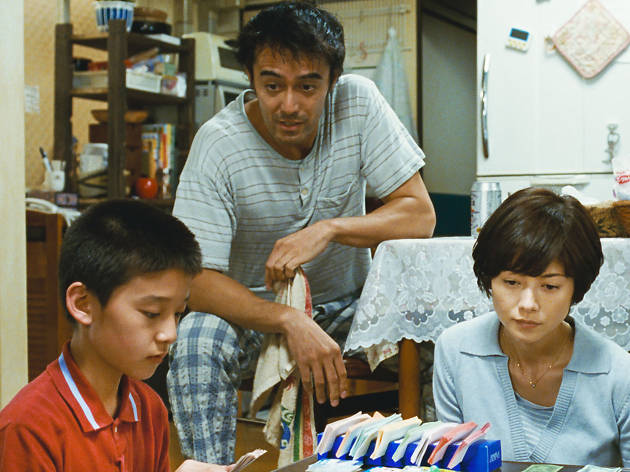
The greatest pleasure in the films of Hirozaku Kore-eda is the way they unfold, or rather unwrap. The films — “Shoplifters” is the most famous in the West, but “Our Little Sister” and “Like Father, Like Son” have also reached these shores, come in layers, telling one story, revealing another, another underneath it and so on.
“After the Storm” is one of his subtlest works, a beautifully layered and light, bittersweet and forlorn story built on a phrase anyone over 40 has heard or uttered.
“Why did my life turn out like this?”
When we meet Ryôta (Hiroshi Abe), he’s the second visitor to his mother’s flat after the death of his father. Neighbors treat him like a prodigal son, even though he doesn’t live that many neighborhoods away from Kiyose, Tokyo.
He’s tall, not at all well-dressed. And every time his mother’s back is turned, he’s rummaging through their apartment, hunting for cash or something of value “to remember him by.”
We learn he’s a novelist. He’s won prizes. He was “the star” of his high school class, and almost famous — at least in the old neighborhood. He says he’s fine for money. But he grimaces when all he runs across are pawn tickets. Dad, it turns out, was a gambler.
It turns out, he is, too. A little ready cash and he’s off to bet on the bike races, or buying LOTTO tickets. He lives in a hovel and doesn’t pay his bills. It turns out “he USED to be a novelist.” Now, he’s with a low-rent private detective agency, not above shaking down clients for extra cash.
It turns out he’s divorced, and he’s in the habit of spying on his beautiful, remote and OVER his nonsense ex (Yôko Maki), their ball-playing son (Taiyô Yoshizawa) and the ex’s new beau. About all he truly has left is his pride. One of his many lies is to his publisher, who’d love for him to script a new manga (comic book). But no, Ryôta is still “researching and writing” his latest book. That’s how he explains the private eye work.
He hears a LOT of quotable profundities from his holding-up but broken mother (Satomi Kobayashi), his boss, his younger partner (Sôsuke Ikematsu).
“Men only realize they’re in love after they’ve lost their beloved.”
He writes some of them down, only to ball up the paper. He declares “I didn’t want to turn out like Dad,” but he has, right down to buying his kid his first LOTTO ticket, just as his father did.


Abe is a mesmerizing presence, not entirely stoic as Ryôta hides his pain, strings people along and tries not to show how he’s at the end of his tether.
Kore-eda peels away the layers of this family and Ryôta’s story building towards the latest typhoon headed their way. It is the third act’s riding out of that storm that this light and faintly despairing tale, with its almost-comic anti-hero, turns poignant.
“After the Storm” lacks the deep mystery and hard edge of “Shoplifters,” which rivaled “Parasite” in its bitter, satiric bite. But it heralded Kore-eda’s arrival as one of Japan’s most thought-provoking filmmakers, and most exportable. It should send you, as it did me, into the assorted streaming services hunting down his back catalog and waiting eagerly for his next.

MPAA Rating: unrated
Cast: Hiroshi Abe, Yôko Maki, Satomi Kobayashi, Sôsuke Ikematsu, Taiyô Yoshizawa
Credits: Written and directed by Hirozaku Kore-eda. streaming Film Movement Plus release.
Running time: 1:57
 Lemme guess…they”ll leave out the Roger Miller et al songs.
They’re calling it “Live Action.” So.”The Lion King” model it will be.
Soulless CGI animation of a minor classic in the Disney canon? Bring it on.
https://t.co/0MDpDJ4JoC https://t.co/bCXwvfq0zZ https://twitter.com/Variety_Film/status/1248717527863021569?s=20


