Movie Review: Dinesh D’Souza tells “America” what’s wrong with it, again

Image

It takes 90 minutes for Dinesh D’Souza’s rambling, mistitled “America: Imagine the World Without Her,” to get to its REAL point. There’s D’Souza, arch-conservative Ivy League immigrant, creator of the popular anti-Obama screed “2016: Obama’s America,” in handcuffs.

“I made a mistake,” he says to the conservative choir he’s preaching to. We’re supposed to know he pleaded guilty to felony Federal campaign finance law violations back in May, and that he faces prison time when he’s sentenced later this year.

Snippets of assorted Fox TV commentators link that conviction to his earlier film criticizing Barack Obama. He’s a martyr to the cause is the implication. And for those in his choir a little slower to catch on, he cuts to an actor playing Abe Lincoln, giving his “farewell address,” a speech freighted with symbolism.

“I now leave, not knowing when, or whether ever, I may return.”

Cut to John Wilkes Booth, an assassination, and a great Republican lost to history.

What doesn’t matter is that Lincoln actually gave that address as he left Illinois for Washington in 1861, four years before his assassination.

What does is D’Souza’s almost comical gall at daring to make the comparison. Lincoln was murdered by a conspiracy of racist Southern conservatives, D’Souza may be jailed for making up fake campaign contributors to try and buy a U.S. Senate race.

“America” sets itself up as a piece of documentary counter-history, opening with George Washington not surviving the 1777 defeat at the Battle of Brandywine, which causes Mount Rushmore and the Statue of Liberty to dissolve. Where would the world be if America wasn’t here? Interesting. The execution promises to be sort of History Channel lite — middling production values, but a worthwhile subject.

But D’Souza then instantly abandons that as he posits his main thesis — that a conspiracy by academics and activists have created a culture of “shame” about American history. He lists five “indictments” that Native American activists, Mexican-American academics, African American leaders, leftist historians and the Occupy Movement have sold the American public — that we stole Indian land, Mexican land, African slaves, global colonies (and oil) and that capitalists are stealing from each and every one of us, even today. Then he sets out to dismiss each of those indictments.

He’s on his safest ground going after historian Howard Zinn, whose “People’s History of the United States” is a de-mythologized look at assorted American wrongs, dating from European settlement of the New World, to slavery, Indian “genocide” and through Vietnam and today’s “Oil Wars.”

Zinn is darling of the left — Hollywood liberals embraced him — which makes him a good conservative whipping boy. Yes, his book is taught in a lot of America’s colleges and universities. No, D’Souza doesn’t mention that it’s typically taught as an added text to counter the standard narrative of American history. Using the shrill Zinn along with more conventional texts teaches students critical thinking.

D’Souza takes issue with the notion that keeping “conquered lands” was something we invented, punctures the use of “genocide” to describe the impact of disease on Native American populations in the early years after European settlement, and counters the idea that the Sioux Nation, for instance, should refuse compensation for lands they had taken from them in violation of treaty because they expect the lands to be given back to them. The Sioux themselves seized those lands from other tribes, so maybe they should cash Uncle Sam’s check and shut up, is the suggestion here.

D’Souza whines that “capitalists are under fire” and flings the usual hero entrepreneurs up on screen (Steve Jobs, et al) while avoiding mentioning rapacious corporate compensation culture, Wall Street chicanery or high finance gambling.

He dismisses the notion of any lingering impact of slavery on African Americans, 150 years after the fact, with a couple of up-by-their-bootstraps anecdotes, and sidesteps the fiasco of Vietnam by interviewing a pilot who was shot down, held prisoner and tortured by the Vietnamese.

His reenactments include a somewhat undersized Lincoln, and a more spirited impersonation of that one Frenchman conservatives love, Alexis de Tocqueville, who wrote so admiringly about our “character” — 175 years ago. D’Souza could probably have found better credentialed historians to weigh in on his side of these topics, making for a serious and civil debate, but is generally content to aim lower in that regard. Canadian-born Sen. Ted Cruz is tossed up as an expert on Texas history, one of the few laughs in “America.” A few academics, a few ideological hacks, and Alan Dershowitz.

What he’s doing, it turns out, is lowering the viewer’s standards of proof for a vigorous return to “2016” territory, a hatchet job on Obama and Obamacare that tries to tie everything to a 1960s “radical” organizer who might have influenced the president and, of course, Hillary Clinton, with only a lone right wing ideologue on camera, backing him up.

D’Souza cannot help himself. He’s discovered a way to get rich hurling red meat Obama-baiting to an audience that cannot get enough of that. So he abandons any pretense of making a movie about how this country should have a more vigorous debate about its image, its principles and just what the truth is about its history.

Well, don’t begrudge him that. He will need a conservative financed nest egg when he gets out of prison.

ImageImage

MPAA Rating: PG-13 for violent images

Cast: Dinesh D’Souza, John Koopman, Ted Cruz,

Credits: Written and directed by Dinesh D’Souza and John Sullivan. A Lionsgate release.

Running time: 1:40

Posted in Reviews, previews, profiles and movie news | Comments Off on Movie Review: Dinesh D’Souza tells “America” what’s wrong with it, again

Steve James and Chaz Ebert talk about Roger Ebert and “Life Itself”

ImageHe could be generous and petty, competitive and nurturing, absurdly public and ferociously private.
And given access to a soap box, you could be sure Roger Ebert would scramble on top of it. Quite aside from being America’s most famous film critic, Ebert was a film enthusiast, a critic who championed films in print and on TV, cajoling-begging-demanding that America sit up and pay attention to a movie he loved.
It happened to Oscar winning documentary filmmaker Errol Morris (“The Fog of War”), whose work Ebert championed all his career. And it happened to another documentarian, Steve James, who owes his career to the attentions of Ebert and his TV foil, Gene Siskel.
“Their impact on ‘Hoop Dreams’ (1994) was remarkable,” James remembers. “This was a three hour documentary about basketball and two kids and their families from Chicago, people nobody had ever heard of, and when we got the film into Sundance, we submitted it to distributors. Didn’t hear a peep…But when Roger and Gene reviewed it on the show, during the Sundance Film Festival, they said ‘We really think it deserves wider distribution’ during the review, suddenly, the Sundance showings were sold out and we got distribution.”
That long-ago endorsement made James famous. And it made him the natural choice to make a documentary about Ebert, based on his memoir, “Life Itself,” a film that would, of course, turn out to be about Siskel as well.
After Siskel died and as Ebert faced his own mortality — losing his voice and much of his face to cancer, before finally succumbing in 2013 — James and Ebert discussed documenting the life Ebert described in his 2011 memoir.
“I told him I wanted input, but that I would have final say,” James recalled. “Roger and (his widow) Chaz understood that. But as that one email that he sent me that’s in the movie is the most important.
“He said, ‘This is not just your film, it’s mine.’ I love that. I want every subject to feel that way about a documentary I make with them.”
James captured the last months of Ebert’s life and had access to decades of Ebert TV appearances and his newspaper cronies and college pals. He filmed the movie’s anchoring event, the Chicago Theatre memorial service that drew moviegoers and movie makers, singing Ebert’s praises.
“I’m puzzled by how beloved he seemed to be,” Chaz Ebert says, noting how “beloved” and “critic” rarely turn up in the same sentence. “I think he was extremely likable, down to Earth, charismatic and very funny. But he also could connect with people. He was real. That’s how he did it.
“He only had a competitive edge when he was around Gene Siskel. With others, he seemed very generous – moviegoers, other critics, actors. He didn’t seem to feel threatened by them, and that disarmed people. That’s the kind of guy he was. What you saw with him was what you got.”
That line filmmaker Oliver Stone used about Ebert stands out — he was “Midwestern fair” in his assessments.
As “Life Itself” notes, Ebert became a critic at what James calls “a golden moment,” 1967, as “Bonnie and Clyde” and “2001” were launching American “cinephile culture.” Ebert championed films, first for the Chicago Sun-Times, and then on assorted TV shows paired with Siskel, and James says “helped shape the cinema” over three of the most important decades in Hollywood history. An early adapter to the Internet — Ebert saw the potential in Google so early, and put money into it, that he was invited into its IPO (Initial Public Offering) when the company went public and offered stock — Ebert talked movies, politics and eventually, his illness, on his wildly popular blog.
Even critics who didn’t grow up with Ebert’s decades-long TV presence have been touched by “Life Itself,” an “impressively clear-eyed and deeply moving portrait” (Amber Wilkinson, Britain’s Daily Telegraph).
“I want people to know that he grabbed life with both hands, with gusto and joy, right up to the end,” Chaz Ebert says. “That’s a model for anybody who had good fortune in life, as he certainly did, and then illness, surgeries. He was someone who never lost that gusto.”

Posted in Reviews, previews, profiles and movie news | Comments Off on Steve James and Chaz Ebert talk about Roger Ebert and “Life Itself”

Movie Review: “Tammy” goes all soft and gooey

ImageSay this for Melissa McCarthy. A couple of years into her stardom, and not all that far past the dust-up over critics’ deriding her comic reliance on the sight gag that is her physique, she puts it all out there in the opening moments of “Tammy,” a star vehicle she co-wrote for herself.
From the moment we meet her, Tammy is a slovenly, morbidly obese vulgarian, from the top of her home-dye-job mop to the bottom of her omni-present Crocs.
She’s not just another nametag at Topper Jack’s, the bottom step on the ladder of American fast food. Stuffing her face with Doritos, distracted, she runs her ancient Toyota into a deer. She’s late for work — again — and fired for it.
Her gross and profane “exit interview” is the highlight of the movie. Because whatever those riotous opening moments promise — swearing, food-abuse — “Tammy” and McCarthy have their sentimental side. This is a rude, crude comedy with a hard candy shell on the outside, soft and squishy on the inside.
Tammy catches her husband (Nat Faxon) sort-of cheating with a neighbor (Toni Collette) and tosses a fit. She rants to her mom (Allison Janney), and tries to storm out. But she has no money and no car.
Enter Granny, played by Oscar winner Susan Sarandon. Tammy needs a change of scene. Granny has always wanted to see Niagara Falls. And Granny has an old Cadillac and a few thousand dollars saved up. How hard can it be to get from small-town Illinois to the New York/Canadian border? When you’re an idiot with anger-management issues, pretty hard.
They stumble south into Missouri, where Tammy lets on she’s never heard of the guy the Mark Twain National Forest is named for. But she has heard of the Allman Brothers, when Granny brags that she used to date one of them (“the dead one”).
Much of the pleasure from “Tammy” derives from Sarandon, decades removed from playing someone this uninhibited, learning to let her hair down from McCarthy — a butchered duet of the Allmans’ “Midnight Rider,” a “most outrageous thing I’ve done” confession contest, lots of drinking.
Tammy drinks and drives. And Granny washes her pills down with cheap bourbon, so Tammy’s got nothing on her in terms of “outrageous.”
The joy of McCarthy’s comedy is the way she ignores the fact that she’s as wide as she is tall, even if we can’t. She’s cocky about her sexuality. Hit a bar, a BBQ joint, she thinks she owns it.
“I can get ANY guy in this room.”
When Granny Pearl is pursued by a randy farmer (Gary Cole), Tammy figures the farmer’s son (Mark Duplass) should be a pushover. Not so fast. Indie screenwriter/actor Duplass has a deer-in-the-headlights look about him opposite McCarthy, which undercuts the chemistry the script insists they have.
All Tammy has to do is lose the “ugly inside” and he’ll see the real her, right? And maybe ignore the stupidity that’s as obvious as every sentence she utters.
“I’m kinda like a Cheeto,” she purrs. “Ya can’t eat just one.”
That’s Lay’s Potato Chips.
“Noooo. Me? I love a Cheeto!”
There are health issues, mean drunk moments, a “lesbian Fourth of July party” (Kathy Bates is Tammy’s hip aunt, with Sandra Oh in the mirthless role of Auntie’s partner), a stick-up, jail time.
All packed into a movie, co-written and directed by her husband, Ben Falcone, that’s more sentimental than sloppy silly. Because we all just want to be loved, deep down, right? Especially the more outrageous among us.
It is crowd-pleasing, in its own way, mixing girth gags and slapstick with clueless come-ons.
But for a movie that comes out swinging, “Tammy,” in the end, feels like a pulled punch. McCarthy promises a haymaker she never quite delivers.

Image

MPAA Rating: R for language including sexual references
Cast: Melissa McCarthy, Susan Sarandon, Kathy Bates, Gary Cole, Mark Duplass, Sandra Oh, Alison Janney
Credits: Directed Ben Falcone, written by Melissa McCarthy and Ben Falcone. A New Line release.
Running time: 1:37

Posted in Reviews, previews, profiles and movie news | 2 Comments

Movie Review: “Heatstroke”

ImageA veteran cast not given to overplaying, a competent director and striking desert Africa settings are the chief recommendations of “Heatstroke,” a survival thriller with murder, poaching, gun-running and hyenas as its active ingredients.
Paul, a hyena expert (Stephen Dorff) reluctantly drags his insolent teenage daughter (Maisie Williams) along on safari as he heads back to Africa to track his beloved laughing predators.
Dad, the iPad addicted teen complains, is all about “Hyenas, hyenas hyenas.”
Complicating matters is dad’s girlfriend, Tally, a crisis-hardened Russian search and rescue specialist used to being dropped into the world’s disasters to help out.
Jo is spoiled, rude and acting out, especially against Dad’s paramour.
“I wouldn’t mess with Tally, Jo,” he dad warns. “She’s tough.”
How tough? Since we’ve seen Tally, played by Svetlana Metkina (“Slingshot”, “Bobby”) in the opening scene, battered and bloodied and being chased across the desert by a Cessna, we’ve already figured that out.
Events conspire to put the teen and Tally on their own, with almost no water, in a desperate trek to survive. Gun runners led by the movies’ favorite Nordic villain, Peter Stormare (“Fargo”) are after them. But Tally is no pushover. Like Liam Neeson in “Taken,” she has “particular skills” that could serve them well.
Director Evelyn Purcell, whose decades of credits include “Borderline” and the romantic comedy “Nobody’s Fool” and whose ex-husband is Oscar winner Jonathan Demme, would have been better served doling out more examples of Tally’s survival skills — little “Survivorman” tidbits about getting water, how to ride out a sandstorm, what to do if a scorpion bites you and you have no first aid kit, etc. The few times she does, “Heatstroke” becomes more interesting. The annoying, accident prone and headstrong kid wants to rest more.
“Each hour we walk,” Tally snaps, “we are widening the (villains’) search area.”
But the film is far more conventional than that, relying on a leading lady without a lot of charisma or acting-in-English chops to enlist our empathy and make us her partner as she thinks and hikes her way out of this tough spot.
With villains cribbed from the generations of cheap thrillers that precede it and action scenes that have no novelty to them, “Heatstroke” starts looking like Adam Sandler’s “Blended” more by the minute — a movie the cast signed up for to get a free working African vacation out of it.

Image
MPAA Rating: unrated, with graphic violence, profanity
Cast: Svetlana Metkina, Brad Dorff, Maisie Williams, Peter Stormare
Credits: Directed by Evelyn Purcell, screenplay by Anne Brooksbank and Evelyn Purcell, based on the Hannah Nyala West novel, “Leave No Trace.” A Phase 4 Films release.
Running time: 1:33

Posted in Reviews, previews, profiles and movie news | Comments Off on Movie Review: “Heatstroke”

ImageImage

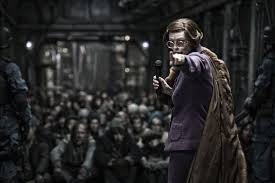
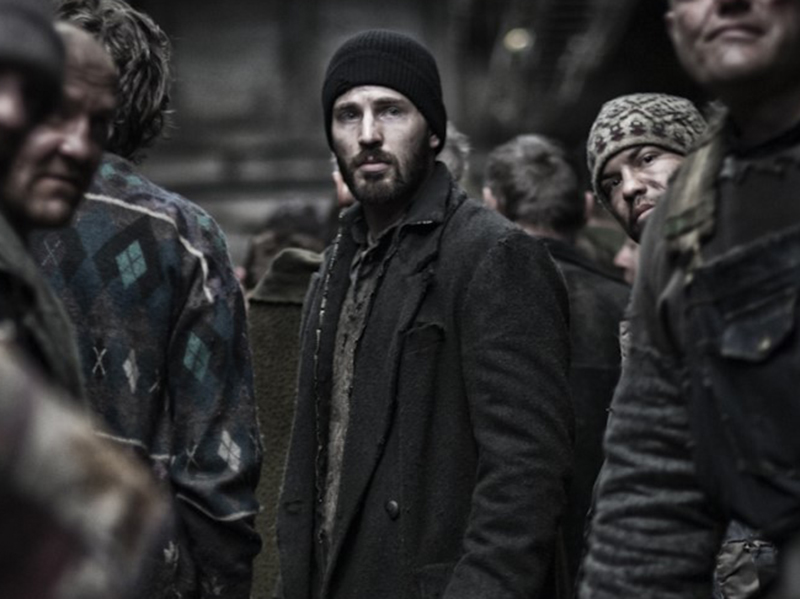
“Snowpiercer” is a veritable United Nations of sci-fi films. Directed by the Korean Bong Joon-Ho (“The Host”), based on a French graphic novel and with a cast built around Captain America (Chris Evans), Oscar winner Octavia Spencer, Tilda Swinton, Jamie Bell and Song Kang-Ho (of “The Host”), it’s a visceral, exhilarating action satire set aboard a train — the last train, the only train on an Earth that has frozen over thanks to a botched effort to stop global warming.

The politics are as simple as the plot. The train powered by “The Eternal Engine” has to keep moving to keep the last survivors on Earth from freezing. In the front are the rich, the powerful. They have servants, armed protection and control of all the resources. In the back, “The Tail Enders,” “free-loaders” in this society, are fed gelatinous protein bricks, beaten down, abused and misused, constantly reminded to maintain their “pre-ordained particular position.”

“Order” is what this train needs, the martinet Mason (Tilda Swinton, doing a Margaret Thatcher without the polish) barks. It’s what the mysterious Mr. Wilford, “the divine keeper of the sacred engine,” demands.

It has been like this for 17 years, ever since the Earth froze over and life went extinct. The train, a stop-gap built to pierce snowdrifts on a vast track that spans the continents, rattles and hurtles on. But Curtis (Evans), his sidekick Edgar (Jamie Bell) and their guru Gilliam (John Hurt) have other ideas. They plan to lead the latest attempt to storm the engine and take over.

Curtis may say “I’m no leader.” Heroes in movies and the comic books they’re based on often do. And he may “suffer from the misplaced optimism of the doomed.” But when the Front fascists come, measuring tape in hand, and grab a few right-sized children (Spencer if the fierce mother of one of them), the revolt begins.

Bong Joon-Ho stages the bloody brawls, confined to the narrow cars of a very long, very fast train, as thrilling set pieces. They’re little slices of “300” or your favorite samurai or sword fighting movie. This is fast-motion or slow motion slaughter with clubs and axes, in the light or in the dark. The deaths are gory, personal and excruciating.

The quest of the bedraggled tail-enders feels like a bloody “The Wizard of Oz” set on a “Runaway Train,” with each section they assault a revelation.

The anti-hero of “The Host,” Song Kang-Ho, plays an electronic security “specialist” addicted to the drug of choice on this eternal train, opening security gates to cars with food and water, luxury and comfort, hedonism and health care.

“Snowpiercer” was delayed due to a rumored battle over the final edit and running time, and it does tend to dawdle as it rattles toward the climax we can see coming. It’s more an instant cult film than a picture with any prayer of reaching millions.

But for all its lapses in logic, all its lunatic touches, you have to appreciate the sheer audacity of any action movie that starkly lays out the planet’s growing gap between the have-nots, and the “haves,” who stress “order” and “balance” and stability as priorities everyone should share.

“That’s what people in the best place say to people in the worst place.”

Image

MPAA Rating: R for violence, language and drug content

Cast: Chris Evans, Song Kang Ho, Tilda Swinton, Octavia Spencer, Jamie Bell, John Hurt

Credits: Directed written by Bong Joon-Ho, scripted by Bong Joon-Ho and Kelly Masterson, based on the French graphic novel “Le Transperceneige.” A Radius/TWC release.

Running time: 2:06

Posted on by Roger Moore | Comments Off on Movie Review: “Snowpiercer” is exhilarating sci-fi with a sharp satiric bite

Movie Review: “Earth to Echo” is an “E.T.” knockoff that works

EARTH TO ECHO“Earth to Echo” is an engagingly unassuming “E.T.” knockoff, a kids’ movie that serves up a similar alien-with-kids story in “Blair Witch/Paranormal” shaky cam package.
It’s been over 30 years since “E.T. the Extraterrestrial,” so why not?
Disney produced it, but then sold it to Relativity. Cast with cute, likable kids, given a few decent effects and having that found-footage “reality” of “The Blair Witch Project,” it doesn’t have the financial or emotional heft of the mythic “phone home” tale. But it works well enough.
Three tweenage pals are about to be split apart forever. Their Nevada subdivision is being demolished for some sort of bypass. It’s not fair, but what do you do?
Nervous tech nerd Munch (Reese Hartwig), boisterous camera buff Tuck (Brian “Astro” Bradley) and shy, sad-faced Alex (Teo Halm) make the most of their last days together. And when their electronics start going kerfluey and their cell phones start showing this blotch shape, they have purpose. What’s going on, and why is this construction site so…Men in Black-like?
The blotch shape is a map, and that sets the lads off on their bikes for a nighttime scavenger hunt with Tuck capturing it all on his GoPro Hero cam, narrating our story as he does. He likes to upload conspiracy videos to the web. They’re onto one, and how.
First, they find a canister, and then they figure out who’s in it. And then they find other five places on the map that tend to deepen the mystery.
First-time director Dave Green finds plenty of novelty and fun in what is, let’s face it, a pretty derivative script by Henry Gayden and Andrew Panay. The creature is like the shiny, digital owl from “Clash of the Titans.” Adorable.
But it’s the kids and their reaction to this extraordinary encounter that sell this. Communicating with the…thing…is paramount. And what’s their first question?
“Do you eat humans?”
I like the childlike problem solving that goes on and the PG “breaking curfew” edge to the story, which takes the boys all over their corner of the world, into all sorts of places where they could get into trouble — a bar, an arcade, a pawn shop. Oh, and they have to venture into the house of their prettiest classmate, the one none of them have the guts to approach — “manikin girl.”
When she (Ella Wahlestedt) turns out to have a name — Emma — and to be friendly, gutsy and just as curious as the rest of them, there’s another little lift that the movie needs to at least get into the same league as “E.T.”
The no-name cast spreads from the kids to the adults, but the parents find a laugh, here and there. The one grownup most of us will recognize, veteran character actress Mary Pat Gleason, shows up as a biker. Which once you see her and remember the million other movies she’s been in is worth a chuckle. Wahlestedt and the kid who wants to go by the stage name “Astro” stand out among the child actors.
The plot elements swiped from “E.T.” are many, but are given tiny twists that rule out plagiarism charges. “Earth to Echo” has lots of blown opportunities, but developing any single stop on the kids’ night-long adventure would have added minutes to its lean, 91 minute run-time.
And the spooky, nighttime bike ride (handlebar camera) and assorted whiplash-quick action beats serve it well.
Generations removed from Elliot and E.T., there’s no sense kvetching about a new, pale imitation of it, pimped-out for today’s kids. Adults? You’ll be underwhelmed. But remember, we’ve seen worse fake-“E.T.’s” , especially in the years right after Spielberg’s Reese’s Pieces masterpiece came out. And your kids? They will be tickled.
2half-star6
MPAA Rating: PG for some action and peril, and mild language
Cast: Reese Hartwig, Teo Halm, Brian “Astro” Bradley, Ella Wahlestedt
Credits: Directed by Dave Green, written by Henry Gayden and Andrew Panay. A Relativity Media release.
Running time: 1:31


Posted in Reviews, previews, profiles and movie news | 2 Comments

Why are there no black pop and doo-wop acts in “Jersey Boys”?

ImagePlease consider the headline as it was intended, a question which group sourcing may help me answer. If I was trolling for controversy-driven pageviews, I’d have posted “Is Eastwood’s ‘Jersey Boys’ racist?”

Clint Eastwood’s film of the Broadway bio-musical about Frankie Valli and the Four Seasons follows them from 1951 through their 1991 induction into the Rock and Roll Hall of Fame.

And until that induction, where there are a couple of black faces in the ranks of reporters covering the event, this is a racially monochromatic film. Sure, there’s that token gay guy who influenced their career. But how can you cover doo wop vocal groups in the ’50s, pre-Beatles rock and pop, without touching on the desegregation that was part and parcel of that scene? Youth culture trumped conservative desegregated culture, in that regard.

Go to the Wikipedia entry for the group, and it firmly places them within that ’50s vocal group tradition — Four Freshman, the Platters, etc. As they broke big AFTER Elvis, after Chuck Berry, you’d think they might occasionally share a bill with other performers and vocal ensembles, black and white. The film suggests that they were more of a band — playing instruments — so perhaps that explains how I couldn’t find a lot of showbills that make this point. Perhaps booking more than one vocal group wasn’t smart booking back then, and segregation kept guys like Bo Diddley and Jackie Wilson and Sam Cooke off of bills with white acts during this era, as often as not. Overseas, it was a different story.

Frankie Lyman, Little Richard and others shared bills with white acts on the big screen and on tour. Not sure how common that was.

Why not the Four Seasons? Their heydays were early ’60s. They headlined once they had a couple of hits, and they had a lot of hits. Did they never share the bill with black acts as they were coming up, or with lesser known black acts after The Four Seasons were a big deal?

Your typical rock biography of that era is a more integrated affair. The Stones were eager to bring their favorite black acts — their inspirations — to the bill. The Beatles, playing it safe, weren’t known for that.

But look at any Elvis bio-pic, at “Great Balls’o Fire,” at “La Bamba,” at “The Buddy Holly Story” (Buddy Holly accidentally booked into the Apollo). The bills were integrated, young people being more receptive of this idea than their parents.

Which is why the whiter than white “Jersey Boys” calls attention to itself for showing none of the black (and white) street corner singing context that launched them.

By the time Valli, with or without his Four Seasons, was a ’70s lounge act, I wouldn’t expect integrated audiences, integrated show bills. He was appealing to people too young for Sinatra, Dino or Jerry Vale (their parents’ favorites), but fans who grew up in that Italian-American crooner tradition he was trying to be part of.

And there is clear evidence that as an oldies act, Frankie and the Four Seasons toured with black groups in the late 70s through the 80s.

Clint Eastwood took some foolish abuse from Spike Lee when Lee demanded to know where the black Marines were on his Iwo Jima movies. Historically, there weren’t any on the island during the fight.

But here, you’ve got to wonder how or why the director of “Bird” failed to see  the need to pay any regard to these “Jersey Boys'”  musical context, and the vast majority of their vocal group peers. An oversight on Eastwood’s part? Actual historical truth, because perhaps The Four Seasons or their audience wouldn’t stand for sharing the bill with black acts? I am looking for evidence, one way or the other, and not finding enough to reach a conclusion.

The movies and TV stereotype Italian Americans as much as any ethnic group, and among those stereotypes is the suggestion, from “The Godfather” to “The Jersey Shore,” that  this ethnic group is racist. Is Eastwood embracing that the way his movie embraces the talking with the hands, diving into pasta, peacocking in showy clothes, switching from English to Italian stereotypes? I wonder.

Posted in previews, profiles and movie news, Reviews | Comments Off on Why are there no black pop and doo-wop acts in “Jersey Boys”?

Movie Review: Ebert documentary equates a love of movies with a love of “Life Itself”

ImageThere’s a lovely sentiment that the late movie critic Roger Ebert expressed when describing what movies were to him and why this medium that he spent his life covering still mattered.
“The movies are like a machine that generates empathy.” A good film takes you into another point of view, into an alien place and puts you in someone else’s shoes.
Ebert championed such films and those who made them. That’s one reason his death, in 2013, was widely mourned, and why he merits a Steve “Hoop Dreams” James documentary,”Life Itself.” It celebrates Ebert’s life and times, and documents the last months of his battle with cancer-stricken.
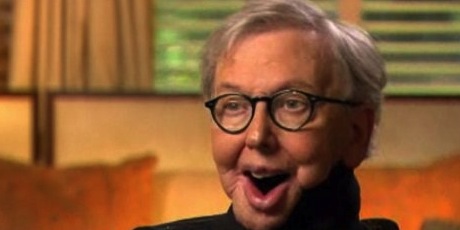
That very public death, in which he revealed the extent of his suffering and the damage cancer did to his jaw, robbing him of his speaking voice and much of his face, is another reason for that mourning. He faced the end, online and in public, with guts and grace.
“Life Itself” takes us through Ebert’s career, his drinking years, the “unspeakably romantic” life of newspapering and the Pulitzer Prize that life gave him. Then it pairs the longtime Chicago Sun-Times critic up with cranky crosstown Chicago Tribune rival Gene Siskel, and “Life Itself” turns funny.
Those two Heartland reviewers lorded over the Golden Age of American Movie Reviewing, when every magazine and newspaper had a critic or two and many of them turned up on TV as well. Starting their debate on Chicago public TV, spreading nationwide, then going into syndication and earning big bucks, they became a brand — “Siskel & Ebert” — and every movie studio wanted its wares to wear their “Thumb’s Up.”
Did they dumb down their writing, pander to the TV audience and reduce reviewing to something simplistic, as Richard Corliss (Time Magazine) and others complained? Sure. Were they as testy to each other off camera as they seemed on the show? Anybody who has trolled Youtube for cutting, profane bickering out-takes from their shows doesn’t need testimony from the TV producers they worked with, interviewed here, to know that was true.
“Life Itself” is built on the framework of Ebert’s memoir, with fresh interviews with Ebert (he used a computer voice synthesizer, like Stephen Hawking) and Ebert’s own book-on-tape narration, and gives us the guy behind the critic. Far more beloved than Siskel, he was a “populist” critic whose approachable tastes and style flew in the face of the snobbier Grande Dame of Critics, the New Yorker’s Pauline Kael, who ruled the roost when Ebert’s career began.
The surprises in the documentary are the frankness with which both Ebert and his wife, Chaz, speak of his (and her) alcoholism and lovely passages with the Chicago newspaper barflies who used to regale each other and be regaled by Ebert during the ’70s.
And his early ’60s college newspaper writing, about race and the Civil Rights Movement, is a revelation. The passion and skill with the language were there, from the beginning. He just turned his focus to the movies.
The “balance” of “Life Itself” comes from suggestions that he sold out, was compromised by his access to the people he covered. Several former colleagues discuss his “only child” petulance, as remembered during the years he did the TV show but also evidenced by defiant footage of his last days — hellbent on hearing “Reeling in the Years” by Steely Dan before he’ll sit still for more treatment.
The best interviews are the filmmakers, young ones such as Ava DuVernay (“I Will Follow”) and Ramin Bahrani (“Man Push Cart,”Chop Shop”) who received direct, personal encouragement, and legends such as Werner Herzog and Martin Scorsese, appreciating that even when when he criticized them, he did it gently.
Unlike Ebert himself, “Life Itself” is a bit long-winded. And some of the “final days” footage is hard to watch — unpleasant, and kind of manipulative. Even that approach connects to Siskel, who died a very private death of cancer years before, as if Ebert was having one last “I can do it better” contest his frienemy/co-host.
But in the digital media/movies-on-cell-phones era, “Life Itself” is a grand testament to a life lived loving movies, on screens that were larger than life and were reviewed by a couple of genuine characters.
 ImageImage
MPAA Rating: R for brief sexual images/nudity and language
Cast: Roger Ebert, Chaz Ebert, Gene Siskel, Martin Scorsese, Werner Herzog, Errol Morris
Credits: Directed by Steve James. A Magnolia/CNN Films release.
Running time: 2:00

Posted in Reviews, previews, profiles and movie news | 3 Comments

Box Office: “Transformers 4” goes for-$40, huge Friday points to $100 million open

ImageThe reviews were scathing, the buzz seemed weak. But there’s a reason studios recycle titles, reboot franchises and deliver a stack of sequels every summer.

That reason is you. You keep showing up, despite all evidence and logic that suggest you shouldn’t. And “Spider-Man” gets away with a cynical cash-flow driven reboot.

The “X-Men” will not go away.

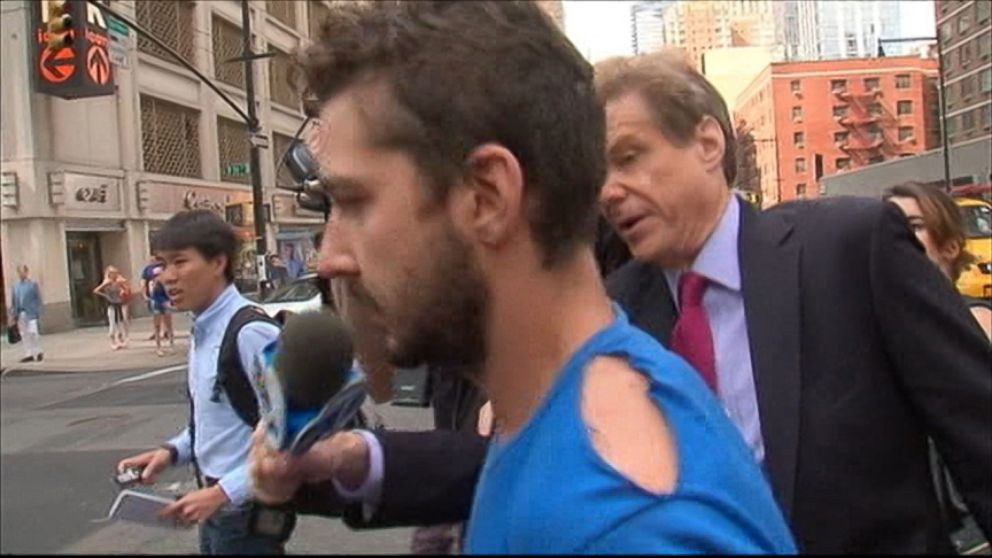
And “Transformers” can survive the loss of Shia and come back just as big with Mark Wahlberg. Maybe that’s why Shia got blitzed and went berserk on Times Square last week. He knew Hollywood goes on without him.

“Transformers 4” had a big Thursday night, and a huge Friday — $40 million, all in. That points to a $100 million+ weekend, depending on Saturday’s take (Sunday is always a steep drop off).

As I said in my review, the effects were much sharper than in the original trilogy, and adding Stanley Tucci to any movie gives it a lift.

But you will be stupider, measurably so, walking out the theater than you were walking into it.

“22 Jump Street” continues to pull in the comic cash, it’s number 2 at the box office. “Think Like a Man Too” plunged in its second weekend.

“Maleficent” just keeps earning and earning, and sticks to the top five.

“Jersey Boys” slid backwards, as well, but the fall-off was less severe. It could stick around until August as its audience gets around to finding it.

“Chef” is still in the top ten. Week in, week out new films open and open big, “Chef” just clings to the bottom of that list and is closing in on a fairly healthy $20 million. $30 seems to be where it could end up.

“Spider-Man–the latest” will clear $200 million this weekend. At last.

Posted in Reviews, previews, profiles and movie news | 1 Comment

Box Office: Will “Transformers” clear $100 million?

ImageThe $billion dollar “Transformers” franchise returns to screens with no Shia, no Megan Fox, no Turturro or any of the humans from the first three films.

New lead, Mark Wahlberg, new younger short-short wearing hottie, Nicola Peltz. Better, more legible digital effects.

Stanley Tucci, T.J. Miller, a lot of Chinese pandering (Beijing, Hong Kong finale). Weak to terrible reviews (Was I too kind? I hope not).

What does this weekend hold? It opened Thursday night with a healthy $8-9 million.

Box Office Guru figures the terrible reviews will help dampen this “been there, seen that” franchise. $90 million.

Box Office Mojo is guessing $90 million.

“22 Jump Street” will hold a lot of its audience, “How to Train Your Dragon 2” a bit less, “Maleficent” will hang around. And “Jersey Boys,” despite the legions of irate seniors and defensive Italian Americans who sent me hate notes for panning it, will die a quick death. It should stick around, if the older folks love it that much. They need a few weeks to discover it. The box office prognosticators say that isn’t happening. We’ll see.

Posted in Reviews, previews, profiles and movie news | Comments Off on Box Office: Will “Transformers” clear $100 million?