Movie Review: Spanish period piece shows that “Living is Easy With Eyes Closed”

Image
Antonio is a balding, 40ish English teacher in 1960s Spain. Franco and his fascists are still in power, and the burden of that oppressive rule is felt throughout the culture — nuns quick to slap students at his school, quicker to seize the babies of unwed mothers, cops not afraid of getting rough, either. Comedies and dramas about heroic priests fill the cinemas.
And radio? It’s all Catholic Mass, all the time.
But at night, Antonio (Javier Camara) listens to Radio Luxemburg. He loves The Beatles. He reaches his tween-and-teenage boys by having them learn their English through the lyrics to “Help!” And the kids dig it. He wants to share this with John Lennon, who just happens to be filming the anti-war comedy “How I Won the War” in Almeria. Antonio will take off, on school break, and meet his idol.
“Living is Easy With Eyes Closed” (“Vivir es fácil con los ojos cerrados”) is a picaresque Spanish road-trip comedy with subtexts as serious as a Spanish history lesson. It touches on a Spain where everyone who was “different” lived in fear, where decades of censorship and cultural repression sat bottled up until the day Franco died. Wonder where those outrageous films of Pedro Almodovar came from? It was the cork popping on a vibrant country freed from a dictatorship.
As shy, bookish and unfailingly kind Antonio makes his fool’s errand way to Almeria, he picks up Belen (Natalia de Molina). She needs to get to Malaga, and bachelor that he is, Antonio knows what her little vomiting episodes signal.
The viewer has seen the facility she escaped from, where Belen watched another unwed mother-to-be step up on and jump off a chair, repeatedly, in an effort to induce a miscarriage.
“Better to lose it than to wonder what happens to it.”
Juanjo (Francesc Colomer) is staging his own mini-rebellion in the fasion of millions of teens the world over. He’s grown his hair into a mop top. His bully-cop father isn’t having it, so he’s run away.
The two teens have a ride all the way to the coast, so long as they share Antonio’s passion for the Fab Four. Not a fan?
“Let Mick Jagger drive you!”
Antonio has written John a note which is he certain will get him past movie production security. Lennon’s songs are “life saving songs,” cries for freedom and “help” that the songwriter himself is answering.
Writer-director David Trueba’s “inspired by a true story” film cleaned up at the Goyas — the Spanish Oscars — and it’s easy to see why. It’s visually lovely, and the performances are subtle, sunny and sympathetic. Camara lends a playful touch to Antonio’s Beatle-mania.
Half a century after The Beatles, here’s a film in Spanish (with English subtitles) that reminds us just what that music represented to its first generation of fans — freedom, and a connection with others touched by the same songs, the world over. Lonely, isolated, stiffled by culture? “Help!” was as near as a local record store, or Radio Luxemburg, should the music be banned by the grownups.

Image
MPAA Rating: unrated, with sex, corporal punishment and bullying, cigarettes and alcohol
Cast: Javier Cámara, Natalia de Molina, Francesc Colomer
Credits: Directed by David Trueba. An XLRator Media release.
Running time: 1:48

Posted in Reviews, previews, profiles and movie news | 3 Comments

Movie Review: “Supermensch: The Legend of Shep Gordon”

ImageYou may feel you’re a better person, just for having watched “Supermensch: The Legend of Shep Gordon.” Gordon, personal manager to musicians, celebrity chefs and film royalty such as Michael Douglas and Sylvester Stallone, and friend to everybody, especially the Dalai Lama, is a Hollywood “type” worthy of a documentary by virtue of the way he made his clients his family.

Nurturing, ethical and compassionate, he helped exploited rock groups collect their bookings from shady promoters and club owners, helped exploited black entertainers break the extortionate powers of the “Chitlin’ Circuit” and “invented” the concept of “celebrity chef” — when cooks used to be treated as just “the help” in the dark days of American dining.

A balding Larry David look-alike with a rumpled, unassuming demeanor and an always-ready “seal bark” of a laugh, Gordon reflects on his life’s work and the price of fame. Adoring client Mike Myers, filming Gordon in “take this to heart” close-ups, lets the manager relate “the talk” he gave clients at the height of his fame and influence.

“If I do my job perfectly, I will probably kill you.”

Myers’ engaging documentary about the way Hollywood really works lets Gordon fill the screen with anecdotes, backed up by interviews with his clients, about coming up with the gimmicks and connections that made Alice Cooper an early ’70s “Horror Show” rock star, the way he got Alice’s fame to rub off on his next client, Canadian soft-pop crooner Anne Murray, his dabbling in the early days of indie film distribution and his onetime enthusiasm for drugs, sex and the money to buy a beachfront home on Maui.

He stumbled into managing after abandoning a hoped-for career as a probation officer by checking into the right Hollywood hotel and having a generous supply of drugs, which got him in good with Jimi Hendrix, Janis Joplin and Jim Morrison, which in turn put him on the road with Alice Cooper, working at it until “we were both millionaires.”

Gordon chuckles over what could have been a more guilt-wracked origins story. Yeah, he was a drug middleman, and Janis, Jim and Jimi are all dead. Cooper went through an alcoholic spiral and came out the other side a wrinkled old golfer with long hair and a course-appropriate Bob Hope wardrobe. “Fame” did it. But having a fellow imbiber and sometime supplier of goodies helped. The word “enabler” would be a more frank way of treating the reservations he has about his career. He lured Teddy Pendergrass into the fold by daring him to keep up with him as a partier. Much later, he tried and failed to save Pendergrass from an accident Gordon suggests was “karma.”

Friends, from Willie Nelson to Michael Douglas, talk about his love of the ladies — multiple marriages — his love of children, which he’s never had. Tom Arnold gives lots and lots of testimony.

Gordon has, by his own admission, “spent my life living other people’s lives,” and the flurry of still-photos of parties, concerts, cookouts, hotel rooms and chartered jets backs that up. That level of service to his “family” he traces to the French chef he studied under,

“It’s never about what YOU want.”

But seeing a partial laundry list of his wives and lovers (Sharon Stone is the most famous), we can’t feel sorry for him. And none of them were interviewed for the film.

And thanks to his famous clients, he got cozy with the sage and yet starstruck Dalai Lama, who collects celebrity worshippers the way Billy Graham collected Republicans.

Cooper dominates the first third of “The Legend of Shep Gordon,” and we learn how Gordon put Cooper and Mike Myers together on “Wayne’s World.” Michael Douglas is the main interview subject, the one who calls Gordon a “mensch,” a compassionate guy his friends can rely on.

Stallone, Willie Nelson, basketball coach Don Nelson and Emeril Lagasse sing Gordon’s praises.

Aerosmith’s Steven Tyler labels Gordon a “Jew-Bu,” a Jewish Buddhist, to underline Gordon’s humanitarian nature.

The overall portrait of Gordon that emerges is of a laid-back hustler who never lets you see him sweat, or get tough with the people taking advantage of his clients. A guy who “knows EVERYone,” he’s had a model career, turning favors (“coupons,” he calls them) into good karma for his clients, and clients into the only real family he’s ever needed.

 Image

MPAA Rating: R for language, some sexual references, nudity and drug use

Cast: Shep Gordon, Alice Cooper, Sylvester Stallone, Michael Douglas, Emeril Lagasse, Mike Myers

Credits: Directed by Mike Myers. A Radius/TWC release.

Running time: 1:25

Posted in Reviews, previews, profiles and movie news | Comments Off on Movie Review: “Supermensch: The Legend of Shep Gordon”

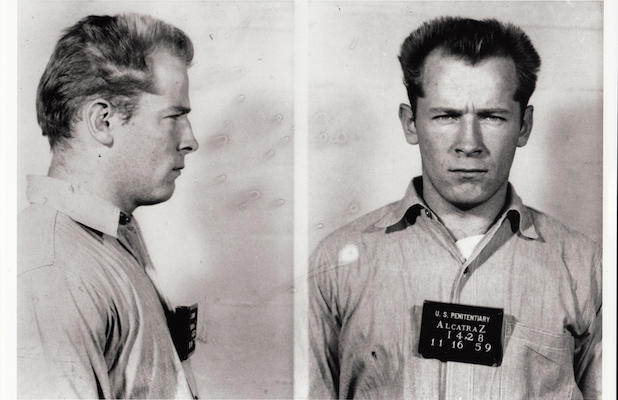
Joe Berlinger talks about Whitey Bulger and the Boston media’s role in covering up how he stayed out of jail

ImageDocumentary filmmaker Joe Berlinger is no stranger to the subject of crime. The film that launched his career, “Brother’s Keeper” (1992, co-directed with Bruce Sinofsky), was about a semi-literate New York farmer railroaded into jail for murder. The “Paradise Lost” trilogy, three films about teens known as “The West Memphis Three,” dug into kids accused of killing other kids by prosecutors and local media all too willing to believe they were part of some Satanic cult.
His documentaries, be they about those criminal cases or an oil company behaving badly in the Amazon (“Crude”) are exposes of a broken “system,” civics lessons and pieces of rhetoric, movies with a call to action attached.
“An informed citizenry is a basic function of our democracy,” Berlinger, 52, says.
But informing that citizenry and urging action was trickier in his latest documentary, “Whitey: United States of America v. James V. Bulger.” Writing in The Playlist, Drew Taylor acknowledged “that same strain of antsy, activist spirit” common to many of Berlinger films, even though this time his “target is more elusive and the goal harder to pin down.”
Whitey Bulger, for those not from Boston and unfamiliar with the inspiration for “The Departed,” was boss of the Irish mob in New England for decades. Master of assorted criminal schemes, his hand was seen in many a mob murder in greater Boston. He seemed untouchable, which some attributed to his politically powerful brother, Massachusetts Senate president Billy Bulger. And when he was finally indicted, somehow he slipped away and lived on the lam for 16 years.
“How was this guy allowed to operate?” Berlinger wanted to know. “The victims’ families deserve closure and compensation for wrongful death. We need to understand how our institutions of justice operate so that this sort of thing never happens again.”
Not content with earlier reporting, which took the F.B.I.’s version of how Bulger eluded capture — that Bulger was “an informant,” Berlinger set his sights on the case the defense was never allowed to bring at trial — that Bulger somehow had been granted “immunity” by an F.B.I.
“In their zeal to bring down the Italian Mafia, perhaps a noble objective, they allowed the Irish gangsters to run roughshod through the city.”
Berlinger wondered why the Feds broke their own rule for who to turn into an informant — typically someone much lower on the chain of command.
“If you are targeting the head of the gang, it means the FBI is endorsing and running that gang,” Berlinger says. “Bulger was using his connection to the Feds to eliminate other mobs, his competition.” But Berlinger thinks that it stands to reason that after reigning in the Italian mob, that Bulger would have been next. Instead, he was still on the streets.
“People died. The families of those people deserve answers.”
Berlinger’s film, which gives voice to both the leaked F.B.I. explanation for Bulger’s years of freedom — “Did they leak that he was an informant thinking somebody would kill him, and cover their tracks?” — and others, that Bulger had exchanged protection with a prosecutor whose life was under threat because of years of prosecuting mob cases.
“I’ve been exposed to the argument that the chain of command at the F.B.I. had this institional knowledge that these guys, the Irish mob, were doing bad things,” Berlinger says. “The government decided who should live and get to run a mob, and who should die. It wasn’t just a few bad apples, it was institutional and it wasn’t isolated to Boston.”
The pushback against “Whitey,” the movie, has come largely from the local Boston press, which reported government leaks and, Berlinger says, “bought into the narrative” that the Feds sold. Careers were made, book deals came from it. After a screening of the film in Boston, Berlinger got a taste of that from all those who got book deals, consulting deals and sold a lot of newspaper reporting and fleshing out the government’s version of events.
“There’s been a blind spot to looking at the other possibilities of how he stayed out of prison all those decades,” all of which played out in a trial in which Bulger’s efforts to tell his version of how he dodged the law all those years were thwarted by a judge, Berlinger says.
“To me, it’s the height of intellectual dishonesty to be unwilling, as a journalist, to look at the other side. You’ve made your reputations on this story and you can’t accept the possibility you were misled and got it wrong?”
This time, Berlinger wasn’t making a film trying to free someone wrongly accused. “He’s a brutal killer and deserves to be behind bars,” the filmmaker says of Bulger. He was just looking for answers, digging into what he believes is a larger conspiracy.
But interviewing mobsters, picking at the case of a very dangerous man and the dangerous men he ran with surely posed risks. Did Berlinger ever fear for his life?
“People keeping asking me that,” he says, laughing. “I wasn’t concerned. I had more fear of being sued by Chevron or with what could happen to me in the jungles of Ecuador filming ‘Crude’ than I did making a movie about Whitey Bulger.
“But raising the question about a deeper government conspiracy that allowed him to operate? If anything, I’m afraid of ending up on a government ‘No fly’ list, somewhere, for asking questions about that.”

Posted in Reviews, previews, profiles and movie news | Comments Off on Joe Berlinger talks about Whitey Bulger and the Boston media’s role in covering up how he stayed out of jail

Movie Review: “Transformers: Age of Extinction”

Image

The special effects are sharper, less blurred, and the robots far more defined in “Transformers: The Age of Extinction.” Four films into this series and the giant thinking, wise-cracking, lecturing alien robots have a look that finally suggests weight and metallic wear and tear.
Stanley Tucci and T.J. Miller come in as human comical relief, and John Goodman and Ken Watanabe provide new voices, sometimes used for comedy, as new Autobots.
And if “Age of Extinction” makes you feel dumber just for having watched it, well that’s the price of popcorn these days. If it keeps Michael Bay out of trouble for years at a time (this is the start of a new trilogy), we’ll just grit our teeth and bare it.
Five years since “The Battle of Chicago,” and the Decepticons have been wiped out, their metal salvaged by a rich industrialist (Tucci). But an alien robot bounty hunter named Lock Down has come in and teamed with a rogue C.I.A. megalomaniac (Kelsey Grammer) to try and wipe out or capture the last of the Autobots. All aliens must go.
Meanwhile, in rural Texas, inventor/scrap collector Cade Yeager (Mark Wahlberg) is trying to save the farm and his hotsie-totsie daughter’s virtue by salvaging a crashed semi he found stuck in an abandoned cinema. When he and his partner Lucas (T.J. Miller of “She’s Out of My League”) resurrect the old truck and it burbles to life as an outraged Optimus Prime (voiced by Peter Cullen, the luckiest man in show business), their world gets complicated. And deadly.
Middle age has not dulled Michael Bay’s passion for photographing nubile starlets from the midriff down. Thus, does Nicola Peltz’s bottom take on the Megan Fox role of hottie-du-jour. Her character, Tessa, spends the movie in heavy make-up and Texas style Daisy Duke cut-off shorts so short her dad (Wahlberg) urges her to wash them in “cold water, and AIR dry.” Because they’re “shrinking by the minute.”
Jack Reynor plays the beau the high school senior is not supposed to be dating. Luckily for everybody, this Irish-accented lad is a rally driver, and in the film’s best chase, saves father and daughter’s bacon hurtling through the cornfields of Texas. That doesn’t mean Dad’s not calling him “Lucky Charms” as an insult.
The humans and their gathered robot teammates crash from Texas to Chicago, Beijing to Hong Kong, transforming from Camaro Pagani/Bugatti etc. into Autobots as they battle Lock Down’s metallic minions and trash assorted those cities as they do.
The wise cracks are pretty worn out, by now. But Goodman, as a portly Autobot sergeant chomping an electronic cigar (the one product placement the movie missed), spits out a few in between gunfights.
Which are plentiful in this “Transformers,” a movie with a staggering, mostly unseen body count. The language is rougher, but it’s the mayhem — much of it on the crowded streets, apartment high rises, ferries and trains of Hong Kong — that boggles the mind. Thousands must be dying as all this real estate and transit is squashed. We almost never see people, even in the Winnebago crushed on an Interstate brawl.
They’re running out of lectures for Optimus to give us about our treacherous, violent nature, running out of ways to transform (digital disintegration in some scenes, here), running out of Transformers to be turned into toys (Metal dinosaurs? Space ships?).
Yet “Age of Extinction” runs on and on, popcorn piffle without end. Two hours and 45 minutes is a pretty steep price to pay for keeping Michael Bay at bay.
 Image
 
MPAA Rating: PG-13 for intense sequences of sci-fi violence and action, language and brief innuendo
Cast: Mark Wahlberg, Nicola Peltz, Stanley Tucci, Kelsey Grammer, Jack Reynor, Li Bingbing
Credits: Directed by Michael Bay, written by Ehren Kruger. A Paramount release.
Running time: 2:45

Posted in Reviews, previews, profiles and movie news | 2 Comments

Movie Review: “Radio Free Albemuth”

ImageRevered sci-fi writer Philip K. Dick’s posthumously-published “Radio Free
Albemuth” earns a somewhat straightforward and updated screen adaptation from
committed Dick fan John Alan Simon.
And therein lies the problem.
Simon gives us a film that, unlike other Dick adaptations (“Blade Runner”,
“Total Recall”, “Minority Report” and “A Scanner Darkly”), is more invested in
themes, prophecy and ideas than effects. But the result is a dramatically flat
movie that drones on and on, endless stretches of exposition, from beginning to
end, interrupted only occasionally by menace, violence and very cheesy special
effects.
Jonathan Scarfe, a Canadian actor best known for playing Mormon prophet
Joseph Smith in the “Work and the Glory” films some years back, plays another
sort of prophet here. It’s 1985, America is living under a perpetual “terrorist”
threat drummed up by its Reaganesque president (Scott Wilson). And Nick Brady
gives up the record store (where those newfangled “CDs” are pooh-pooh’d) in
Berkely to move to Los Angeles and become a record producer. Because of a dream.
He had a vision, and on waking up, saw a ghostly hologram of himself. He’s sure
his wife (Katheryn Winnick) saw it too.
The only guy who can offer explanations for this is his sci-fi writer pal,
Phil (Shea Whigham). Maybe he’s seen “an alternate universe.” Maybe it’s “the
future” Nick come back to lead him. Perhaps it’s “something evil, like the
voices that told Mark Chapman to shoot Mick Jagger.”
Yes, this is that sort of sci-fi. Maybe Jagger died and John Lennon
lives.
Just because I write science fiction doesn’t mean I believe in this stuff,”
Phil (Dick) cracks.
Nick has more dreams and wrestles with their meaning, is inspired to hire an
office assistant (Alanis Morissette), to record a song that might be secretly
subversive enough to start a revolt against the fascist police state America has
become under a president 15 years in office with no end in sight.
Think of “Albemuth” as a left-wing version of the right wing “Atlas Shrugged”
movies — more fascinated with its sermon than with entertainment value or
production values. “Albemuth” sat on the shelf for years. It was filmed in 2007,
back when people remembered who Alannis Morisette was, back before Shea Whigham
became a “Boardwalk Empire” star.
Simon re-creates an ’80s tech world run by a uniformed “Friends of the
American People” (FAP) which is obsessed with drugs, God and racial purity.
Civil liberties are a myth.
Nick’s visions, from someone who might be God, or might be a sci-fi
explanation for God (aliens), are trouble.
Whigham has the right degree of cynicism to play a version of Dick, the
author, but seems entirely too sane and not nearly strung out enough to make him
interesting. Scarfe has no screen charisma.
Which means that the arrival of Morissette, the singer-songwriter who owned
American Top 40 radio in the ’90s, has to be the emotional, intellectual and
spiritual highlight of the film. Even a great actor would have had trouble
pulling that off.
So “Albemuth” just stumbles on and on, introducing new theories and facts and
then explaining, explaining explaining them, right up to the closing credits. It
may feel like unadulterated Dick, but you kind of understand why Hollywood feels
the need to tart up his fiction after seeing this tepid thriller.
Image
MPAA Rating: R for some language, drug use and brief violence
Cast: Jonathan Scarfe, Shea Whigham, Katheryn Winnick, Alanis Morissette,
Scott Wilson
Credits: Written and directed by John Alan Simon, based on a Philip K. Dick
story . A release.
Running time: 1:51

Posted in Reviews, previews, profiles and movie news | 1 Comment

Movie Review: “Begin Again” revisits the charms of “Once”

ImageWriter-director John Carney re-plays his greatest hit with “Begin Again,” a semi-successful attempt to recreate the magic of the Oscar-winning musical “Once” in New York with a big name cast.
Get past the wildly improbable “music biz” moments and impromptu performances that feel anything but impromptu and this all-star cast and several utterly charming scenes give it a sparkle that overcomes the manufactured/trying-too-hard feel of it.
Keira Knightley is a British singer-songwriter summoned, reluctantly, on stage by a busker-pal who is performing in an intimate, downmarket bar in Manhattan. Mark Ruffalo plays the only guy paying attention, standing, staring, transfixed by her performance.
A flashback takes us through the bad day Dan Mulligan’s had, leading to that moment. He’s a drunken has-been of a music “A & R Man,” an “artists and repertoire” guru who had the record label he started snatched away from him by his partner (Mos Def).
Carney and Ruffalo give this guy a colorful story in just a few short scenes. He drives a battered ’60s Jaguar (the “Car with Character”) that he probably bought the one time he had some money, flinging inferior demo CDs out the window as he rumbles down the street, a “prospector mining for gold.” He’s broke, separated from his wife (Catherine Keener) and distant from his tarted-up teen daughter (Hailee Steinfeld of “True Grit”).
Another flashback shows us the singer’s day. Greta (Knightley) came to New York with Dave, her singer-songwriter beau (Maroon 5 singer Adam Levine), just tagging along, sharing songs and ideas with him. But on this day he dumped her.
So it’s desperate music industry dude grabbing for sad-eyed, rejected Brit, with promises of making her the Next Big Thing. If only she’ll have him, and maybe sell out a little. If only he can find a way to make a demo with her. If only every single obstacle can be kicked aside with no more effort than it takes for a movie star to fake playing a guitar.
Carney wrote some lovely, music-savvy scenes, and this cast plays the heck out of them. Greta’s discovery that Dave is cheating on her comes from her realizing he didn’t write his new song for her. Ruffalo makes Dan’s drunken A& R sales pitch patter sing.
And Carney finds novel ways to film the familiar road signs of the many “How I broke into the music biz” scenes. Dan hears and visualizes Greta’s first song, seeing and hearing the drums (no drummer), violin (not played by anyone), cello and other instruments fleshing the tune out. No recording studio? They’ll cut her demo on the streets of New York — in Washington Square Park, on a Central Park lake — on the fly.
Winning moments aside, “Begin Again” is an uneven, slick and gimmicky picture, with pleasant alt-pop songs and lovely suggestions of how people passionate for music relate to each other. Knightley, doing her own singing, has never been more charming.
But Ruffalo’s Dan, wearing his headphones and staring out at a typical New York street corner, delivers the a backhanded compliment that captures the movie’s shortcomings in a sentence.
“With music, even the most banal scenes are invested with magic.”

Image
MPAA Rating: R for language
Cast: Keira Knightley, Mark Ruffalo, Adam Levine, Hailee Steinfeld, Catherine Keener
Credits: Written and directed by John Carney. A Weinstein Co. release.
Running time

Posted in Reviews, previews, profiles and movie news | Comments Off on Movie Review: “Begin Again” revisits the charms of “Once”

Movie Review: Poehler and Rudd riff and romp through rom-com cliches in “They Came Together

ImageAmy Poehler and Paul Rudd are such reliably funny actors that you’d be safe
betting they could perform an instruction manual and still be amusing doing
it.

Which is kind of what “They Came Together” is, a How-to-Make-a-Romantic-Comedy primer.
Think of it as a self-aware 80 minute R-rated “Saturday Night Live” sketch —
more than a few laughs, more than a few sharp observations about the
conventions/cliches of the genre, more than a few “SNL” and”The Office” alumni
as stars or co-stars.
Molly is the “cute, kinda klutzy” one, a bubbly goof who runs a sweets shop
named “Upper Sweets Side”, a gal who can say “New York City was almost like a
boyfriend for me.”
Joel is her “just Jewish enough” date, an office drone at the “faceless, evil
conglomerate,” CSR — “Candy Systems & Research.”
And “They Came Together” is them telling the story, in long flashbacks, about
how they met in that “typical, corny, romantic comedy kind of way.” Bill Hader
and Ellie Klemper are the dinner date couple who insist hearing the tale.
The Michael Showalter, David Wain script almost blinds itself with its
knowing winks. There’s the revelation that, just as in such films as “You’ve Got
Mail” and its antecedents, Joel’s company is a threat to Molly’s shop, and
“disclosing this information was a huge turn of events.”
Kenan Thompson of “SNL” plays the one friend who urges Joel to propose to
Molly. “Being married is great. That’s the point of view I (his character)
represent!”
That shtick wears thin quickly, but throw-away moments and the odd zinger
really goose this farce. Ed Helms (“The Office)” is into Molly, but also Molly’s
accountant.
“You have breast cancer…corporately speaking.”
Whenever Joel’s boss (Christopher Meloni) enters a meeting, there’s a
secretary to squirt hand sanitizer into his waiting palm.
Every so often, some R-rated jolt rattles the sketch-comedy cage this is
trapped in — Joel’s acrobatic sex scene with his ex (Cobie Smulders), Molly’s
thank-you kiss to her obligatory black best friend/assistant (Teyonah Parris), a
kiss that goes on a little too long.
“Just thought I was…gettin’ a vibe.”
But Poehler and Rudd riff and banter like old marrieds, and make even the
cheesiest lines funny, make even the cliched dating montages set to syrupy pop
music feel — if not fresh and new — at least funny enough to mock.

Image

MPAA Rating:R for language and sexual content
Cast: Paul Rudd, Amy Poehler, Cobie Smulders, Bill Hader, Ed Helms
Credits: Directed by David Wain, written by Michael Showalter, David Wain. A
Lionsgate release.
Running time: 1:23

Posted in Reviews, previews, profiles and movie news | 2 Comments

“Teenage Mutant Ninja Turtles” — the new trailer

Still having a lot of trouble not rolling my eyes over this remake, but if you’re a fan, go nuts.

Posted in Reviews, previews, profiles and movie news | Comments Off on “Teenage Mutant Ninja Turtles” — the new trailer

Movie Review: “Whitey: The United States of America vs. James V. Bulger”

Image

We only hear his voice, running underneath mugshot photos and the occasional
bit of silent black and white surveillance footage. Convicted crime boss and
murderer Whitey Bulger comes off as articulate and calm, with that polished
voice having a “Who, me?” quality of martyred incredulity.
“Do what youse want with me.”
But nobody comes off well in Joe Berlinger’s intricate, troubling crime
documentary, “Whitey: United States of America vs. James J. Bulger.” Not the
cops, who profess frustration at the decades they were unable to bring Bulger to
justice, not the Massachusetts prosecutors who finally had him in hand and in
court, not the F.B.I. and Justice Department, which allegedly protected him from
jail during a murderous, extortionate crime spree that ranged from the ’60s to
the ’90s.
Not even the families of the victims, united in grief, eaten up by outrage, a
little slow to recognize that, in some cases, the relative they lost was playing
with fire — dating mobsters, hanging out with them.
A tangled web? Put it this way, they had to simplify, in the extreme, the
movie “The Departed” to make this “vicious, venal murderer’s” tale easy to
follow and understand. But at least the fictionalized “Hollywood version”
offered closure.
Berlinger, a veteran filmmaker with the acclaimed “Paradise Lost” films about
the unjustly convicted West Memphis Three as the crown jewel of his resume,
wades into the morass of the Bulger case, giving us the highlights, speaking to
most everybody involved and straining to draw conclusions where the evidence is
clearest.
Bulger “ran amok” in Boston for decades, strong-arming businesses, murdering
rivals and cultivating a ridiculous “Robin Hood” image, that of “a gangster with
scruples.” Someone or some institution was protecting him. The culprit was the
F.B.I., the one organization that refused to cooperate with Berlinger’s film.
They had Bulger on the books, they say, as an informant. Nobody knows how far up
the chain of command this deal went, but Bulger was untouched by the law for
years and years, until local authorities finally came for him in 1994. But he
fled and hid out for 16 years before his final capture in California.
Berlinger focuses on a protege of Bulger’s and picks up the thread of the
story from assorted reporters who covered the case and the scandal that arose
from it. One of those books about the case, “Black Mass,” is being made into a
feature film starring Johnny Depp as the infamous mobster.
But mainly, Berlinger spends his screen time with Patricia Donahue, whose
husband was killed in a drive-by over thirty years ago, with Steve Davis, whose
sister Debra was murdered, and with Stephen Rakes, whose version of the American
Dream was owning his own liquor store, but who had Bulger, in his place and in
his face, basically taking the business from him within days of opening.
The prosecution team sits, in a row of three, trying to explain why justice
was so late catching up to “this monster.” Reporters have trouble containing
their fury at the injustice of it all, having the local F.B.I. protect Bulger
because they were frantic to have some insider give them apparently useless
gossip about what the Italian mob, or competing Irish mobs, were up to.
And the survivors weep and long for their day in court, with even that
falling short of their hopes for revenge. They, like the viewers of “Whitey,”
have to feel frustrated by the scope of this case, the lack of comeuppance for
so many involved in it.
The fact that Bulger, at long last, is rotting in jail, is little
consolation. Perhaps only a Hollywood version of this story, one starring Johnny
Depp, can give it a satisfying conclusion.

Image
MPAA Rating: R for language and some crime scene images
Cast: Steve Davis, Stephen Rakes, Patricia Donahue, Shelley Murphy, Kevin
Cullen, J. W. Carney, Jr., the voice of James “Whitey” Bulger
Credits: Directed by Joe Berlinger. A Magnolia/CNN Films release.
Running time:1:47

Posted in Reviews, previews, profiles and movie news | Comments Off on Movie Review: “Whitey: The United States of America vs. James V. Bulger”

Movie Review: Minimalism and morality make “Drones” compelling

ImageIn “Drones,” a man and a woman sit in an air conditioned trailer in Nevada,
working joysticks and making life-or-death decisions about the people they’re
keeping an eye-in-the-sky on, eight thousand miles away.
One’s the pilot, the other the officer in charge. And they’re watching a
house, waiting for an accused terrorist to make an appearance. Their job is to
“V-ID” (visually identify) this “HVT” (high value target) and “drop iron” on
him.
Collateral damage? Civilians, children of the target?
“Just don’t think too much” about that.
America’s “Air Force of the Future” may not be exactly like this, but the
jargon, slang, demeanor of the team and the environment they’re working in feel
right in “Drones.”
Rick Rosenthal’s film, based on a Mark Witten script, is a real-time mission
structured like a two-person “Twelve Angry Men,” that classic jury room drama in
which characters debate, persuade, deduct and reason out a decision that some in
their number want to rush through. So the story arc, the ebb and flow of the
argument between trigger happy Airman Bowles (Matt O’Leary) and Lt. Lawson
(Eloise Mumford) feels familiar, even if the milieu is new.
“Drones” is basically a two-person morality play, with the new officer, “a
general’s daughter” who could not cut it as a fighter pilot, using common sense
reasoning to decide whether or not this Afghan house they’re watching is about
to host a terrorist’s birthday party. Her blue collar, sexist video game addict
triggerman, Bowles, just wants another “money shot,” another “successful target
prosecution” to notch on his belt. What’s a few more dead “towelheads” or
“Hajis”? Lt. Lawson, on the other hand, may not have the stomach for warfare of
this or any type.
Witten’s script is a competent collection of platitudes and cliches —
college educated liberal guilt vs. never-question-orders soldierly conservatism,
female “sensitivity” vs. macho remote control murder.
But as Rosenthal and his cast click through the protocols of how the Air
Force goes about this sort of deadly business, false leads passed up the chain
of command (orders delivered by phone, or Skype), downward pressure to register a “kill,” even if they’re not positive
they’ve got their man, and possible reasons beyond “keeping America safe” that
people might become targets, you can’t help but be sucked in.
Mumford and O’Leary get beyond the cardboard character “types” and make these
people more interesting and conflicted than they first seem. And the
claustrophobic milieu, just two people staring at long range video, punching
buttons, maneuvering their Reaper and trying to make snap decisions that won’t
haunt them, serve the movie well.

ImageMaybe these sorts of morality plays don’t figure in the day-to-day operations
of drones, keeping watch over those who may or may not be a threat to America.
But after this intimate indie film takes us into that world, you kind of hope
they do.

MPAA Rating: unrated, with violence, profanity, sexual innuendo
Cast: Eloise Mumford, Matt O’Leary
Credits: Directed by Rick Rosenthal, written by Mark Witten. A Phase 4 Films
release.
Running time: 1:19

Posted in Reviews, previews, profiles and movie news | Comments Off on Movie Review: Minimalism and morality make “Drones” compelling