So is there Actual, Real Pushback on “The Last Jedi?”

jediAs I was one of the first to pan the latest “Star Wars” film in the J.J. Abrams’ universe, “The Last Jedi,” comments on my review have revealed what seems to be a healthy level of discontent on this (thanks heavens) Death Star lacking, more visually dazzling, more expositionally confusing, more verbally clunky, increasingly diverse, increasingly wussy (Kill a principal or two, for Pete’s Sake!) franchise.

I thought little of it. Haters’gon’hate, after all. Critics know that. Sometimes, the critics are the haters (not this time, the cheerleading little dears).

But the blowback from fans who aren’t of the same mind has been ridiculously muted. I expected worse. You know, “You’re LYING, ‘Star Wars’ RULES! Rian for President!'” Stuff like that.

Because I got a lot of heat because I didn’t care for “The Force Awakens,” either, and find both of those “Skywalker” story continuances grossly inferior to “Rogue One,” which had cooler characters, better actors, noble sacrifice, higher stakes and genuine heart. Female heroine or not, it had balls. The J.J. “Wars” are so emasculated that it’s as if the whole affair has devolved into toy selling uber alles.

I thought little of it, even as commentors and others noted the lowering “audience review” scores and anecdotal complaints piling up on the Internet Movie Database (which links to Metacritic reviews, where it has a score of 85) and on Rotten Tomatoes (93% of critics endorsed it, relatively few fan reviews are agreeing).

Deadline.com says that those self-posted “reviews” can be gamed. There’s no guarantee the person actually saw it, and a complainer can post multiple times (that seems like a lot of trouble, and a flaw in those platforms’ review system). And that also sounds like Deadline is parroting Disney’s official “spin” on the reception of this money-minting operation.

Pieces of all sorts are turning up on the subject. 

It’s even got The Times of London running (stealing, as all British newspapers do) a story on it.

The only way to tell is if next weekend is on any sort of scale as the $220 million or so Disney collected on its investment opening weekend.

It’ll be Christmas, people will be off and have the time to take the family (if “Jumanji” doesn’t suck away a big chunk of that business).

And even if the most-interested fans have already been (more than once, in some cases), if they stop repeat viewing on weekend two, the numbers will fall precipitously. 

So we’ll see. Nothing against the studios making money hand over fist, but I have a hunch this blowback is a lot more real than Disney would like the general public believe.

And they’re stuck with Adam Driver, Daisy Ridley, John Boyega, that Asian character actress who made no impression, and a trying-too-hard Oscar Isaac.

Posted in Reviews, previews, profiles and movie news | 3 Comments

Movie Review: One of Modern Art’s Greatest Figures is remembered in “Beuys”

beuys1

The German sculptor, conceptual artist and performance artist Joseph Beuys once secured Japanese funding and legions of volunteers to help him plant “7000 Oaks,” each with a rough-hewn basalt obelisk at its base, in Kassel, Germany.

He wanted to contrast the unchanging permanence of the stones with the growing trees, “a living form of sculpture.”

Adding to the “Situationist” art of this years-long process, the basalt stones were kept in a pile in front of the city’s ornate, gilded-age Museum Fridericianum. Over those years, the pile shrank with each planting, and each planting, the artist proclaimed, was an act of “parking lot wrecking.”

Whatever you think of the various incarnations of modern art, that piece — combining invention, creation, organization, performance and politics — stands out, even if it is little known outside of serious art circles. At least part of that is because of the genius, showman/raconteur who created it.

Filmmaker Andres Veiel uses decades of Beuys TV interviews, profiles and good-natured if combative public debates for “Beuys,” his somewhat meandering and diffuse but still fascinating portrait of the unconventional artist, who died in 1986.

Professor Joseph Beuys was a World War II Luftwaffe veteran whose major combat wounds came when the Stuka dive-bomber he was tail-gunner in was shot down over Crimea. “A screw came loose,” he joked. “I was SHOT into shape.”

And with that, his myth began and he used to say, his art. The artist as poseur was not invented in the 20th century, but artists like Picasso, Warhol and Beuys, who created a fanciful tale of his survival from that crash involving Tartar healing, fat and felt, turned that into a lifetime of art, once this philosopher, lecturer, political activist and sculptor  became famous.

He used felt in installation after installation — felt curtains surrounding a piano, weathered board and thermometer in “Plight,” rolls of felt lashed to 40 tiny sleds tumbling out the back of a VW Microbus in “The Pack.”

And rarely was the man photographed or seen without a felt fedora or porkpie hat, part of a uniform that included a white shirt and ever-present vest, making him easy to pick out at his assorted “happenings.”

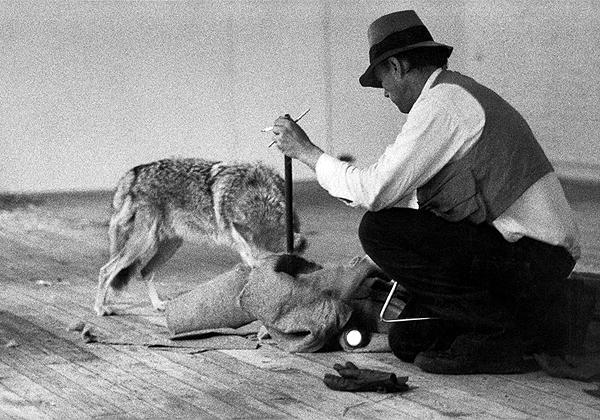
Not that you’d miss him. A practioner of the Picasso-perfected “Artist as a Character” school of branding, Beuys came to America for a show at the Guggenheim. For his “I Like America, and America Likes Me” piece, he showed up at an exhibition-space in an ambulance, rolled up in felt, which he unraveled to then interact, on camera (on film) with a coyote.

beuys2

In the scads of interviews sampled here (the only modern interview is with the British newspaper art critic who became his champion and his lover, Caroline Tisdall), Beuys, speaking German and occasionally English, resisted labels of every type, including “artist” but also more pointed jabs like “Don Quixote.”

If we think of “art” as more than “something you hang on your living room walls” today, it has a lot to do with Joseph Beuys. So his influence is undeniable.

If we think of “modern conceptual art” as mostly hype, filled with a lot of artistic explanation for “What I am really saying here,” we can thank Beuys for that, too.

“Beuys” isn’t a film that lays out, in simple, clear terms, what he and his work are about. But Veiel does manage to refresh our memories of Beuys, and let the man — in his own (subtitled) words, re-make the case that art is “a blow against the enemy,” a revolution.

And as he was the first to joke, back in the day, “I want to get my money’s worth out of this revolution.”

3stars2

MPAA Rating: unrated

Cast: Joseph Beuys, Caroline Tisdall

Credits:Directed by Andres Veiel. A KinoLorber release.

Running time: 1:46

Posted in Reviews, previews, profiles and movie news | Comments Off on Movie Review: One of Modern Art’s Greatest Figures is remembered in “Beuys”

Movie Review: Payne Wastes a lot of Talent in the Process of “Downsizing”

down1.jpg

You think about Alexander Payne’s other films, comic satires, a lot during “Downsizing.” You remember the political parody “Election,” the hot-button abortion comedy “Citizen Ruth,” the wine snob pretensions of “Sideways” and the pleasures of “The Descendants,” “Nebraska” and “About Schmidt.”

Because “Downsizing,” a bleak, over-reaching mangled mess of a satire, is none of those. Still, the inclination is to give one of our greatest directors the benefit of the doubt is strong.

It’s a sci-fi comedy about a future in which the logical solution to planet over-population, pollution and over-consumption of limited resources is to “get small.” Literally.

Payne’s getting at half the population, dimwits not “accepting” a coming climate crisis, at do-gooders who embrace the abstract “Save Humanity” vs. those smart enough to deal with hunger, pain and loneliness they see right in front of them. He’s ripping the “laziness” of affluence, and the indolence that settles in when working class folks are within reach of that big brass ring. And he’s puncturing any notion of a Utopian future. Class divisions and the working poor will always be “necessary” to pop up the idle rich.

And if all that sounds like an overreach, it is. Payne’s solution is to waste famous character players in bit parts in a tedious, detailed “history” of Norway’s discovery of this process (Do tiny Norwegians still kill whales?), the lengthy development of shrinkage from lab rats to people, the recruitment/timeshare style sales pitches to lure people to spend their modest savings, which multiply in scale so that they can “live like kings” once they’re five inches tall.

Matt Damon and Kristen Wiig are Paul and Audrey, a struggling couple we follow for years, working at frustrating jobs with too little pay — Paul, looking after his long-suffering (fibromyalgia) mom who wonders how this new discovery will make anybody better off.

“I’m in pain. I can’t breathe. Doesn’t that matter?”

Meeting his high school pal who got small (Jason Sudeikis) convinces Paul, and eventually Audrey, that there’s a better way. They’re not “saving the planet.” “You’re saving yourself.”

But Paul’s angst at a life of lost opportunities is greater than Audrey’s. She bails out on him, leaving her divorced husband in the enclosed, environmentally-controlled community of smalls called Leisure Town, to date dull women and endure the put-downs of his brusque but conciliating party animal/entrepreneur neighbor, Dason, played with his usual sadistically funny flair by Christoph Waltz.

Hong Chau plays an almost stereotyped Vietnamese refugee and village activist whose sing-songy bark “You stupid!” makes him re-assess his priorities.  Activists at that level worry about the small picture, not the big one. Her direct acts of kindness and her perspective dominate the second half of the movie. Her pidgin English is borderline racist.

Rolf Lassgard of “A Man Called Ove” plays the soulful Norwegian who invents this process and begins the “Downsizing” movement.

While I’m at it, I’ll mention that Sudeikis has virtually nothing to play, that Joaquin Almeida has a single scene and single line, as a scientist introducing the Norwegians, that James Van Der Beek plays a single-scene snooty anesthesiologist who went to school with Paul, that Margo Martindale has a single scene as a small reassuring Paul and Audrey that they’re doing the right thing, and that the great German actor Udo Kier plays Dason’s sad-eyed ship’s captain sidekick.

The waste here isn’t limited to the actors. Payne squanders the first hour of the movie with processes– showing the “science,” the vast team of salespeople (Neil Patrick Harris, Laura Dern) and medical technicians it takes to operate this vast new enterprise. We don’t just see Paul undergoing the shaving, enema, etc. to prepare for being small, we see a dozen extras go through it, too. It’s infuriating.

Every scene — the pointed and the pointless — goes on too long. No character is wholly motivated or explained, even the “Me love you LOooong time” stereotype Hong Chau has to play. No actor, save for the scenery-chewing Austrian Waltz, makes much of an impression.

After “Promised Land” and “Suburbicon,” this is the last movie Damon should have signed on for. Satire, even environmentally-oriented satire, hasn’t been kind to him.

But Payne at least has earned the benefit of the doubt, and the freedom to turn out a dud. Let’s hope he’s figured that out for himself.

2stars1

MPAA Rating: R for language including sexual references, some graphic nudity and drug use.

Cast: Matt Damon, Kristen Wiig, Christoph Waltz, Honh Chau, Jason Sudeikis, Rolf Lassgård

Credits:Directed by Alexander Payne, script by Alexander Payne, Jim Taylor. A Paramount release.

Running time: 2:15

Posted in Reviews, previews, profiles and movie news | Comments Off on Movie Review: Payne Wastes a lot of Talent in the Process of “Downsizing”

Movie Review: Hugh Jackman is “The Greatest Showman”

GSOE_D32_013117_9584.cr2

We used to call them “triple threats,” these wonders who walked among us. They could sing, dance and act, and do each equally well.

Gene and Debbie are gone, Shirley and Rita pretty much done with hoofing it. But Hugh Jackman, that “Boy from Oz,” is still belting, hoofing and emoting, a triple talent treat whose chief screen threat has come via a set of knives for knuckles.

If you’ve ever wondered why Jackman moved so fluidly as The Wolverine, what all that physical grace under the sideburns was about, that was your explanation.

“The Greatest Showman” is a Jackman screen showcase like no other. A fellow could get lost in the pageant of “Les Miserables,” take a back seat to the action in “Wolverine.” Not when he’s got the title role in a new musical, written for him and for the screen.

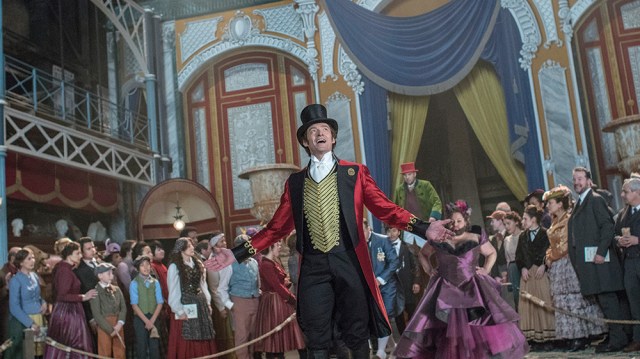
It’s about that first Hero of Hype, Master of Ballyhoo and High Priest of Publicity, P.T. Barnum. And for Jackman, no mere “Barnum” adaptation would do. This musical co-written by Bill Condon, who adapted “Dreamgirls,” and Jenny Bicks, who wrote for “Sex and the City” and “The Big C,” is more up to the minute in its themes, more up to the second in its “American Idol” era anthems.

If Jackman parlayed one last turn as “Logan” for Fox to get this made, more power to him. It’s not a great film, but musicals are all about big dreams, your grasp exceeding your reach, show-stoppers and foot-stompers. This is all that. I’ll bet Barnum himself would have approved.

“Showman” follows Barnum, a shoe-repairman’s son who dares to love above his station, and eventually marry that first love (Michelle Williams). But he doesn’t really find his niche until he spies his first “extraordinary” person, a “star” for his Manhattan “Museum” of “oddities.”

Meeting the dwarf he renames (and uniforms) as “General Tom Thumb” (Sam Humphrey) is a revelation.

“They don’t know it yet,” Barnum says of the paying public, “but they are gonna love you.”

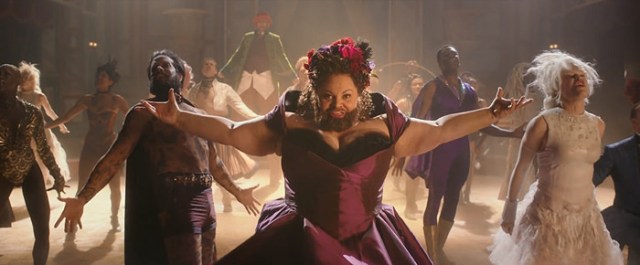
It’s a pitch he repeats to one and all, to the “Dog Boy,” the Siamese Twins and the Bearded Lady (Keala Settle, soulful as the heart of the piece). And it’s irresistible to the people he tells “They’re already staring at you. Why not get paid for it?” and to the paying public.

“Hyperbole isn’t the worst crime.”

As he recruits his menagerie, hypes and becomes famous for what a critic of the day dismissed as “a circus of humbug,” Barnum, his wife and his new “family” of performers sing about “A Million Dreams,” and a visit and revisit their anthem of defiance and acceptance — “This is Me.”

The tunes are from Justin Paul and Benji Pasek of “La La Land,” and lean a tad too heavily on the “anthem” thing, though I found “This is Me” thrilling and everything else a pleasant time-passer, much the way “City of Stars” stood out alone from the “La La Land” lullabies.

We watch the showman’s meteoric rise — entertaining Queen Victoria because “If you want to impress society, might as well start at the top!” — and fictional prescribed fall. The script soft-sells the “freak show” element, but faces head-on Barnum’s arms-length attachment to this “family” as he sought fame in polite society via the “legitimate” theater, partnering with the rich, semi-successful “legitimate” producer Carlyle (Zac Efron).

“I can’t just run away and join the circus!”

“Why not? “You clearly have a flair for show business.”

“There’s a show…business?”

“I just invented it.”

greatest2

The real Barnum got his start with “The Oldest Woman in the World” (she wasn’t) and lived long enough to have a notable career in politics. And that’s where the film’s story, of tolerance and acceptance ahead of its time, is on firm ground — fictionalized or not.

“A human soul, ‘that God has created and Christ died for,’ is not to be trifled with,” the real Phineas Taylor Barnum said. “It may tenant the body of a Chinaman, a Turk, an Arab or a Hottentot – it is still an immortal spirit.”

That statement’s as liberal and tolerant as any made by an American in public life in the late 19th century. It doesn’t matter that the movie ends before this corner of his extraordinary life is explored, that ethos — modern as it seems in the movie (most critics didn’t bother reading up on him), lends a little truth to all the “humbug.”

Art director and digital compositor turned first-time director Michael Gracey is in over his head here (Did being Australian get him the gig?). His picture lumbers along, with a very predictable love story (an inter-racial romance between Carlyle and a trapeze artist played by the singer Zendaya) and even more predictable is the “Great Man’s Downfall” in the form of an all-consuming tour by “the Swedish Nightingale,” Jenny Lind (Rebecca Ferguson).

But Gracey keeps the camera moving, whirling through the cast and the dance numbers, turning several into amusing, athletic “seduction” scenes — Barnum enchanting his wife, Barnum luring Carlyle into the business (a bar-top stomp), Carlyle reaching out for the tiny aerialist, Anne (Zendaya).

It’s not a brand-name musical, not newfangled and hip-hop based and politically edgy like “Hamilton.” But “The Greatest Showman” is, like the singing, dancing, versatile actor who stars in it, larger than life. And if this is the only screen musical we can get out of the last of his peak performing years, it’ll do. Hugh Jackman is too much the showman to promise any less.

2half-star6

MPAA Rating: PG for thematic elements including a brawl

Cast: Hugh Jackman, Michelle Williams, Zac Efron, Rebecca Ferguson, Zendeya, Keala Settle

Credits:Directed by Michael Gracey, script byJenny BicksBill Condon . A 20th Century Fox release.

Running time:

Posted in Reviews, previews, profiles and movie news | Comments Off on Movie Review: Hugh Jackman is “The Greatest Showman”

Movie Preview: “Ocean’s Eight” Lady-Splains the Caper Comedy

First thing that made me laugh here was Anne Hathaway playing around with her hated image. Gwyneth Paltrow wasn’t available? Bullock’s deadpan is as solid as ever, as is her obsession/vanity over her hair.

Blanchett and Helena Bonham Carter and Mindy Kaling — funny on their own.

Using “These Boots Were Made for Walkin'” is, as the comics say, “a little on-the-nose.”

It’s opening in June and is earning all these hot takes that it arrives “just in time.” Could be a hoot, but the trailer doesn’t really do it for me.

Posted in Reviews, previews, profiles and movie news | Comments Off on Movie Preview: “Ocean’s Eight” Lady-Splains the Caper Comedy

Movie Review: History is Written as Democracy is Defended by “The Post”

post3

Harry Truman once said that “The only thing new in the world is the history you do not know.”

And in our inter-connected, up-to-the-moment, instant-gratification seeking culture, what we “do not know” seems to grow by the hour.

As necessary as a history lesson we’ve forgotten and as timely as the day’s latest Trump or sexual harassment (or both) scandal, “The Post” is a newspaper movie about a turning point in political history and the legacy of the news organization whose motto in these trying days is “Democracy Dies in Darkness.”

Steven Spielberg’s sturdy, gripping film is about the “Pentagon Papers,” a secret history of the Vietnam War which the government compiled, laying out the schemes, blunders and lies to cover all that up, and which that government never wanted to see the light of day — especially not while the national nightmare of Vietnam was still going on.

And it’s about America’s loss of innocence, a reminder of the temptations of quaint and parochial Washington, where the powerful enjoyed and sometimes still enjoy entirely-too-cozy relationships with those in the media whose job it is to hold them accountable to the American public.

“Who’s the longhair?” some GIs in Vietnam in 1966 want to know. He’s Daniel Ellsberg (Matthew Rhys), an academic and government analyst embedded with the troops on patrol on this day, eyewitness to an awful ambush, and truth-teller to Robert McNamara (Bruce Greenwood), a clear-eyed Secretary of Defense on a “fact-finding” tour of America’s growing involvement in Southeast Asia.

Troop buildups, vastly increased bombing, more “training” of the South Vietnamese Army — “Are we making progress,” McNamara wants to know?

What strikes Ellsburg, he tells his boss, is “how much things are the same.

Watching McNamara then lie to reporters at a press conference completes Ellsberg’s disillusionment. We see his covert efforts (with other “radicals”) to copy this “secret history” he’s been writing. Americans need to know their government has been lying to them — for decades.

Years later, Washington Post publisher Katherine Graham (Meryl Streep) is struggling to overcome her reputation as a D.C. socialite and hostess and well-earned label of “lightweight” as she takes the newspaper company she inherited public.

We see a woman of power and wealth talked-over by boorish bankers and her boorish board (Bradley Whitford is boor-in-chief). Only her lawyer, ally and confidante Fritz Beebe (Tracy Letts) has her back. Even with his support, she’s still too meek to make her own case to the money men.

So it’s no surprise that her employee, gruff bull-in-a-D.C. china shop Ben Bradlee (Tom Hanks) doesn’t so much as bother to get up when she joins him for their weekly breakfast meeting. Her urging him to “cool it with the White House,” which is denying gossip columnist Judith Martin (later “Miss Manners”) access to a Nixon daughter’s wedding, gets Bradlee’s dander up.

“Katherine, keep your finger out of my eye!”

There it is, centuries of sexism summed up in a single scene. As her dogged, principled and idealistic employee puts Graham in her place, the dynamic of “The Post” becomes clear. Streep plays the character with a story arc, the shallow social insider who grows a spine to become the Iron Lady of newspaper, Watergate and  film (“All the President’s Men”) legend.

What takes us and her there is the tale of how the world-beating New York Times got the scoop on Ellsberg’s “Pentagon Papers,” how paranoid, profane and punitive President Richard Nixon (glimpsed in silhouette, heard on the infamous “tapes”) and his Justice Department stopped it, and how the Washington Post stepped in, found its edge, voice and spine and took up cause, fighting (with the Times) all the way to the Supreme Court for “the public’s right to know.”

post1

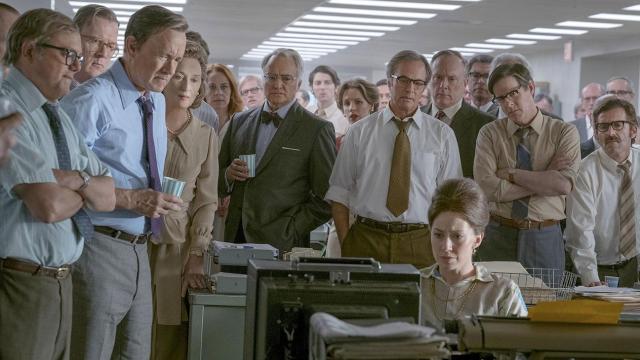
Spielberg’s picture is a shiny showcase of reportorial intrigues. The Post spying on the Times when Bradley realizes he hasn’t seen a story by star Times Vietnam reporter Neil Sheehan in months (something must be up), editor Ben Bagdikian (Bob Oedenkirk) working his own sources to figure out where the leaks came from, a competitive newsroom straining to play catch-up on the biggest scoop of the year.

And “The Post” is about a heroic — yes heroic — intellectual and ethical tug of war, with Graham sentimentalizing the Washington that will vanish for her as she gets tips from and confronts her “old, dear friend” McNamara, endangers her newspaper and its public offering over her newly-realized principles.

A favorite scene — Graham and Bradlee go toe-to-toe over who is more “compromised,” the social butterfly, or the hard-drinking, hard-charging Bostonian who cozied up to Kennedy in the most infamous example of media/government cronyism of the era. (See HBO’s fine documentary “The Newspaperman”HBO’s fine documentary “The Newspaperman” for more on Bradlee and that ethical lapse.)

As the lawyers (Jesse Plemons, adorably cast as in over-his-head) and Old Boys of the Board clash, and tensions and threats rise, we wonder just what it will take for Graham to, in a Shakespearean sense, grow into the crown?

If there’s a failing to the film, which has the frisson if not the urgency of your typical “ticking clock” newspaper drama, it’s the lack of grit. The cinema’s great visual stylist didn’t go for a ’70s cinema film stock look. The cars and costumes are right, but the reporters aren’t sweaty enough, the newsroom not smoky enough, the streets (and street protests) too clean and calm, the gloom just isn’t there.

But Hanks does a splendid Bradlee, or at least Bradlee as Jason Robards (“All the President’s Men”) played him, bluff and profane and antsy (We don’t have to be told his latest wife, Toni — Sarah Paulson — won’t last.). Streep offers another sublimely subtle turn as Graham, making the journey from Julia Child to Margaret Thatcher in such understated steps that we almost can’t see the transformation as it happens.

They, Spielberg and screenwriters Liz Hannah and Josh Singer never for an instant let us lose sight of why this history has to be remembered, and why a trustworthy press is even more important in an era when too much of it is being lumped in with “fake news.”

3half-star

MPAA Rating: PG-13 for language and brief war violence

Cast: Meryl Streep, Tom Hanks, Bob Oedenkirk, Bruce Greenwood, Sarah Paulson, Tracy Letts, Bradley Whitford

Credits:Directed by Steven Spielerg, script by Liz Hannah, Josh Singer. A 20th Century Fox release.

Running time: 1:55

Posted in Reviews, previews, profiles and movie news | Comments Off on Movie Review: History is Written as Democracy is Defended by “The Post”

Movie Review: Churchill’s “Darkest Hour” is Gary Oldman’s Finest

dark2

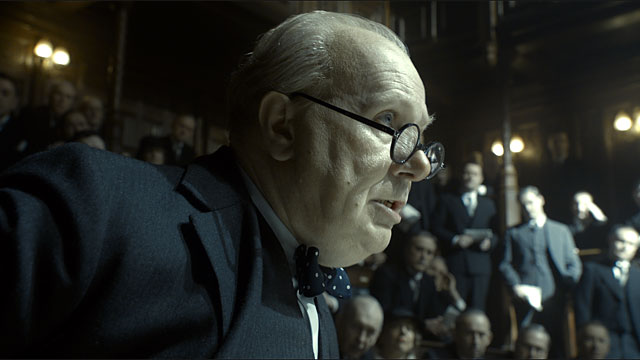
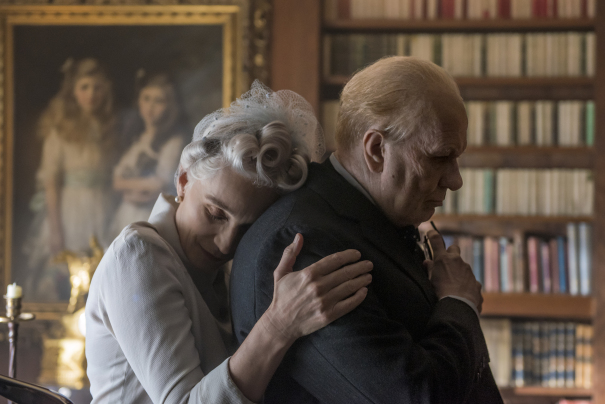
From the instant he appears, in the flash of a match in an unlit room as he lights his cigar in bed, we forget Gary Oldman is playing a part. He transforms into Winston Churchill, the bulldog face and jowly rumble of a voice immortalized in history, the wordsmith with Shakespeare and Cicero committed to memory — a quip, insult or neatly-turned phrase always on his tongue.

In “Darkest Hour,” Oldman, director Joe Wright and screenwriter Anthony McCarten give us the iconic Churchill, and the one his contemporaries and peers will recognize as well — hard-drinking, mercurial, “in love with the sound of his own voice” and sure his soaring rhetoric will be enough, when plainly, at first at least, it wasn’t.

Britain’s “Darkest Hour” came in May and early June of 1940, when the appeasing Conservative government of Neville Chamberlain collapsed, along with France. And the only acceptable alternative for the opposition parties joining a coalition government was the bellicose and often-blundering First Lord of the Admiralty, Churchill.

His own party preferred the unctuous Viscount Halifax (Stephen Dillane), a practical man whose practicality sounded a lot like the appeasement of the unpopular Chamberlain (Ronald Pickup). The lisping Halifax (Churchill calls him “Holy Fox,” and not admiringly) was a great favorite of the stammering King George (Ben Mendelsohn), who despised Churchill.

But even his enemies wanted the Goat of Gallipoli (Churchill’s greatest World War I blunder), with a failed Norwegian intervention freshly added to his resume, to take power. Things were so bleak that he was sure to fail, leaving the way open for more reasonable leadership.

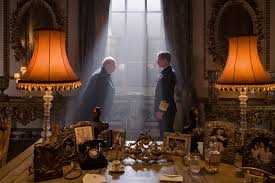
Wright (“Atonement,” “Hanna”) and cinematographer Bruno DelBonnel (“Inside Llewyn Davis”) give us a gorgeously literal “Darkest Hour,” showing us the raucous debates of a dimly-lit parliament, a world pre-florescent (or LED) lighting in Buckingham Palace, Churchill’s country estate (Checkers) and the underground bunkers of his war rooms.

The gloom infects Churchill as well, a man who has lived “since the crib” for this moment, who spent the 1930s shouting into the void that Britain needed to prepare to defend itself against global fascism (and communism). Screenwriter McCarten (“The Theory of Everything”) gives us his stumbles, his high-handedness, loopy impulses and drunken, slurred speech, letting all comers name the old man’s shortcomings.

“I wouldn’t let him borrow my bicycle!”

His one champion lives under his roof, the mother of his children, wife Clementine (a steely Kristin Scott Thomas).

“When youth departs, may wisdom prove enough.”

DARKEST HOUR

The story is more or less seen through the eyes of the mumbling old grump’s new secretary, played by Lily James, as a young and over-matched typist forced to endure tongue-lashings and insults because she comes to recognize the dire straits they’re in. She’s the very embodiment of “Keep Calm and Carry On.”

Oldman lets us see the despair as Churchill pleads with President Roosevelt (David Strathairn, uncredited) over the phone and cajoles the unimpressed, defeatist French. We hear the stumbling thoughts and incoherent sentences that take over as the repeated doses of whisky take hold.

Still, Oldman’s Churchill carries the weight of the world right to his breaking point, while never losing sight of the infamous wit.

“Will you stop interrupting me while I am interrupting you!”

And McCarten humanizes that wit by showing the careful deliberations of Churchill dictating, editing and polishing his speeches, “deploying the English language” as a weapon of war.

Oldman is blessed with a better movie than Brian Cox, whose “Churchill” captured the leader as he wavered and meddled with invasion plans, losing his nerve right before D-Day. But Oldman’s performance goes beyond uncanny impersonation and into the realm of inhabiting a man. Watch the playful way he and Mendelsohn exchange formalities when he’s summoned to take control of the government, the sentimentality he gives this patrician blowhard who ruled a country whose working class people he had virtually no connection to.


dark4

The story overlaps, neatly, with Christopher Nolan’s brilliant “Dunkirk,” the year’s best film. “Darkest Hour” is more a character portrait than a cinematic immersion in a place and time. But thanks to Oldman’s unerring portrayal of a deeply flawed man rising to face a crisis and inspiring a nation to rise with him, it’s an equally worthy reminder that there have been bad times before today’s, and that people, great and small, saw them through.

3half-star

MPAA Rating:PG-13 for some thematic material

Cast: Gary Oldman, Kristin Scott Thomas, Ben Mendelsohn, Stephen Dillane, Lily James

Credits:Directed by Joe Wright, script by Anthony McCarten. A Focus Features release.

Running time: 2:05

Posted in Reviews, previews, profiles and movie news | Comments Off on Movie Review: Churchill’s “Darkest Hour” is Gary Oldman’s Finest

Movie Preview: Peter Jackson “presents” “Mortal Engines”

You’d think the guy who finally freed himself of Middle Earth would want to cut loose, maybe do that “Dam Busters” remake he’s talked about. But no. Peter Jackson’s got “Mortal Engines” on his mind. He wrote the script,produced and we can assume oversaw the production. He’s not the director, but he’s hoping this is the movie that Eats Christmas — in Dec of 2018.

Impressive, even if you know nothing about the source material.

Posted in Reviews, previews, profiles and movie news | Comments Off on Movie Preview: Peter Jackson “presents” “Mortal Engines”

Movie Review: Another Drunken ex-Cop is on the case in “Small Town Crime”

crime2

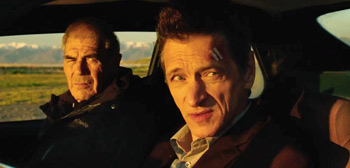
It’s no stretch to think of the rawboned character actor John Hawkes (“Winter’s Bone,” “Three Billboards Outside Ebbing Missouri”) as an unrepentant alcoholic, and the sort of man who’d bring that up in a job interview.

That’s how we meet Mike Kendall, the “hero” of “Small Town Crime,” an engaging swing-and-a-near-miss at film noir.

Jack is willing to say, “I have a problem with alcohol” to any potential employer. He’s willing to say he’s “not much good” until he’s had that first beer, that as long as he’s not required “to operate any heavy machinery in the morning,” he’ll be fine.

Even if he’s disguised it well enough to get a job offer, he won’t lie about this one thing.

“There a reason you’re not still a cop?”

“Yeah.”

Broke and jobless, tossed out of any bar he frequents, he’s so far down the rabbit hole that he’s all “Let’s hit the Dead Dog (bar)” to a friend after an AA meeting.

But we quickly learn that’s about the only thing Jack won’t lie about. He’s delusional about getting back onto the police force in the unnamed small town at the foot of the mountains where he lives, drinks and drunkenly drives his hot-rodded ’70 Nova. He fibs about his prospects to his sister (Octavia Spencer, he was adopted) and brother-in-law (Anthony Anderson).

And when he  stumbles across a bloodied and battered prostitute, lying in the ditch, it’s got to be the booze thinking for him as he sees this as his way back to his badge. Although he shares his information, somewhat freely, with the dismissive “real” cops (they know why he was fired), he lies and lies to the victim’s family, to possible suspects, to anybody who takes the business card with the made-up name on it announcing that he’s a private investigator. That’s bound to get him into trouble.

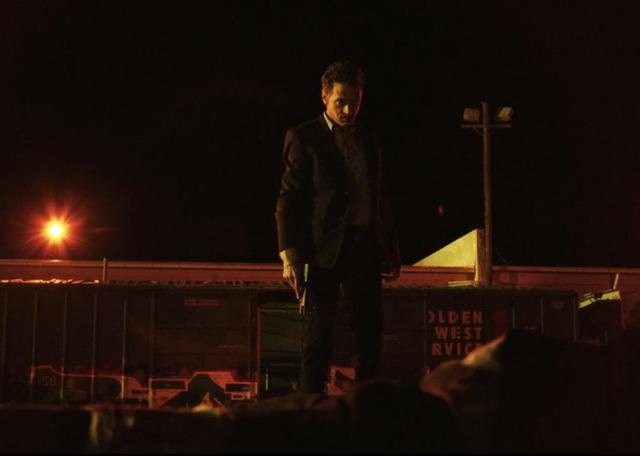
“Small Town Crime” is set in a sort of “Twin Peaks Lite” — a piece of the not-quite-urban West where hookers abound, blackmailers ply their trade, something bigger must be afoot because everybody’s packing heat, and more than willing to whip it out. Hookers are dying and the cops are slow-footing their way to solving the murders.

crime1

This is a genre picture that leaves logic in the dust, here and there, but fills the screen with watchable character players, from Clifton Collins, Jr. (“Capote”) as a drawling pimp with a “code,” Robert Forster as the grandfather of the crime victim and Dale Dickey and Don Harvey as hard-bitten bartenders.

The Oscar-winning Spencer gets a few chewing out scenes and Anderson does his usual, light “I got you dog” sidekick turn.

The filmmaking Nelms brothers tap into one unerringly accurate piece of small-town life. You are what you drive. They become enamored of Kendall’s Nova, filling the dead-time between scene after scene of peel-outs and rumbles through town. The pimp drives an absurdly distinct purple ’68 Impala. It’s how the locals know each other.

The climax is straight out of the Old West, or Old Noirs. But the picture’s little lapses — as bodies pile up Kendall isn’t one of those bodies, which makes little sense — send it adrift some while before that climax arrives.

Still, the players keep us intrigued, and unlike the endless “Fargo” and “Twin Peaks” and “True Detective” variations on the small screen, “Small Town Crime” keeps its scale small and its storytelling compact. It doesn’t transcend its genre, it wallows in it. Sometimes, that’s almost enough.

2stars1

MPAA Rating: R for strong violence, language and some sexual references

Cast: John Hawkes, Octavia Spencer, Anthony Anderson, Clifton Collins Jr., Robert Forster

Credits: Written and directed by Eshon and Ian Nelms. A Saban Films/DirectTV release.

Running time: 1:31

Posted in Reviews, previews, profiles and movie news | Comments Off on Movie Review: Another Drunken ex-Cop is on the case in “Small Town Crime”

Movie Review: Cage is Uncaged and Unhinged for “Mom and Dad”

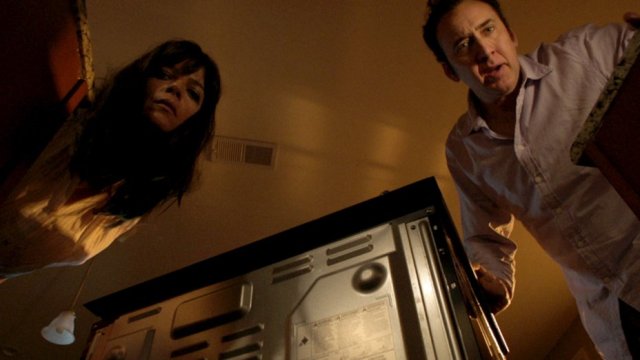
Mom1

You could cast other actors. ut if the role you’re filling calls for a coiled-spring of psychosis, generating dread as we know this guy is going to awaken one day, having dozed off watching porn on his work computer, and go on a killing spree, why would anybody look further than Nicolas Cage?

He’s the second most affordable Oscar winner these days (after Cuba Gooding Jr.). And if anybody’s screen persona screams twitchy, ranting, Trans-Am wrecking/Reciprocating Saw whacking spree slaughtering ill-mannered teens that they’ve raised, it’s an uncaged Cage.

Maybe there are actors who could have made this fusion of “The Purge” and “Living Dead” titled “Mom and Dad” funnier than Nicolas Cage. But Brian “Crank” Taylor knows a thing about gonzo, violent and hilarious. And so does that “Kick Ass” bug-eater, Mr Cage.

“Mom and Dad” is a jaw-dropping horror farce about American parents, waking up nationwide (It seems to have something to do with static, which is what your TV did pre-HD) and murdering their kids.

In quick, broad strokes basically focusing on one family headed by Selma Blair (as scary as those bangs suggest) and Cage, we’re reminded that today’s kids may have it coming. Indulged, rude, electronically independent and out of control on a cellular and cell-phone level, they’re labeled narcissistic little monsters because sometimes the label fits.

Carly (Anne Winters of TV’s “13 Reasons Why”) is a rude, profane and self-absorbed high school sophomore who keeps her school uniform skirt too short and her temper shorter. She steals from her parents, ignores them in favor of social media and is planning on something sexual with her forbidden beau, the upper-classman Damon (Robert T. Cunningham).

The stealing? It’s so her out-of-control pal Riley (Olivia Crocicchia) can score some Molly for them.

Younger brother Josh (Zackary Arthur) is Dad’s little man. The movie’s first big laugh is Cage charging in on the boy for an enrage…tickle fight.

Then, one school day, kids are called out of class, one by one. They’re greeted by a deranged mob of parents, screaming for them on the other side of the gate. A couple answer their parents’ summons. One is jabbed to death with car keys, another suffocated with a garbage bag, a third impaled by a yardage marker on the football field.

This “Purge” of those we’ve given birth to? It’s on.

Carly and Riley make their getaway, with Carly freaking out over what’s happening — turning on the TV to news crawls of “”Terror Attack or Mass Hysteria?”

Parents are warned, by radio, “Do NOT go near your children!”

Which they ignore. Carly, Josh and Damon try to survive the slaughter. Their parents seem to have no control over these deep impulses, though flashbacks do tell them (and us) how they’ve doted on these kids, no matter how big their respective childhood mistakes.

Cause and effect, we wonder? That, and maybe a certain bitterness about the lives that were lost when new life was brought into a family.

“I used to be Brent. You used to be Kendall. And now we’re just…Mom and Dad.”

Taylor treats us to a series of show-stopping scenes — a hospital childbirth  that climaxes with the new mother trying to murder her newborn babe, a grim glimpse of new fathers, staring through the window of the hospital nursery, longing to “get at” their children.

“Mom and Dad” (opening in limited release and VOD Jan 19) is peppered with tasty, nasty lines. The teacher in Kendall’s Zumba class is a player.

“He’s making his way through that class like stomach flu!”

TV quack Dr. Oz tries to explain away the crisis. And the third act of this brisk little nightmare? It features the dazzling arrival of Lance Henriksen.

The performances are somewhat uneven — young Josh (Arthur) is the only character to exhibit genuine terror. The climactic struggle is packed into the suburban family home, much like “The Purge.” a

It’s not ambitious and not particularly deep. It’s all about the one-liners, with Dad Brent and Mom Kendall (“That’s not even a REAL NAME!”) breaking out their trusty reciprocating saw, “It’s a SAW ALL. It saws ALL!”

But “Mom and Dad” is a reminder of how much gonzo fun a B-movie can be, how hilarious “Crank” was and what a hoot Nicolas Cage — who makes almost entirely B, C and D movies these days — is when he’s uncaged and unhinged.

2half-star6

MPAA Rating: R for disturbing horror violence, language throughout, some sexual content/nudity and teen drug use

Cast: Selma Blair, Nicolas Cage, Anne Winters, Lance Henriksen, Olivia Crocicchia

Credits:Written and directed by Brian Taylor. A Momentum/eOne release.

Running time: 1:24

Posted in Reviews, previews, profiles and movie news | Comments Off on Movie Review: Cage is Uncaged and Unhinged for “Mom and Dad”