
There was a time when movies could create an international furor that could last for years — decades, even.
If you think North Korea’s war on Sony over “The Interview,” racist YA sci-fi fans fuming over the fact that Black people exist in the Future America of “The Hunger Games” or Marvel casting a woman as “Captain Marvel,” were big deals, you must have never crossed a picket line to see “The Last Temptation of Christ,” “Cruising” or “Caligula.”
And the biggest outrage of all might have been over the 1978 Alan Parker/Oliver Stone classic “Midnight Express,” which stirred up a stink at Cannes and went on to draw racist condemnation far and wide, and led to years of Turkish-led boycotts, which they talked racist Israel among others into piling onto.
It was an international incident which the Islamic world took seriously, at Turkey’s insistence, for decades.
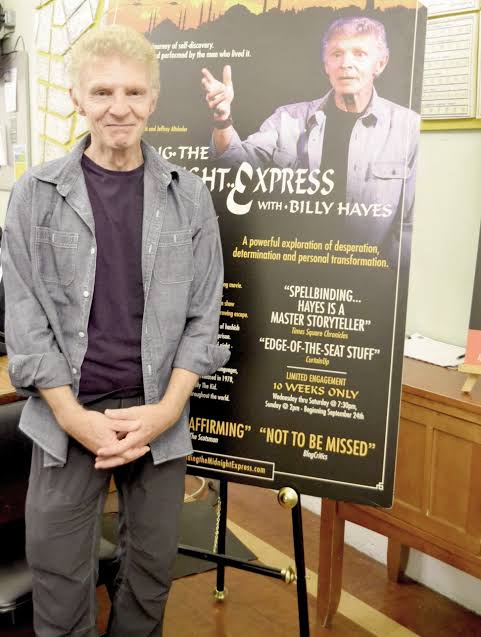
That’s all remembered in “Midnight Return: The Story of Billy Hayes and Turkey,” filmmaker Sally Sussman’s fine “as remembered/told-to” recounting of an American’s life imprisonment and escape and the making of one great films of that Great Film decade, the 1970s.
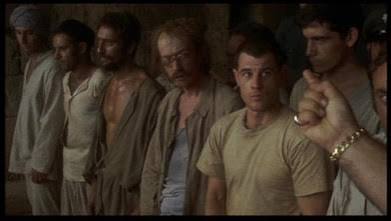

This documentary was finished and never really released outside of film festivals in 2016 but is now streaming.
It’s about a “true story” movie that had a real life “hero” drug smuggler and fantasist, Billy Hayes, who has never tired of telling and retelling his exploits, a narrator so “unreliable” that huge elements of his escape-from-a-Turkish-prison-tale absorbed inventions of Oliver Stone’s Oscar winning script and director Alan Parker’s revisions of it.
Hayes recounts his privileged upper middle class life and post-college exploits here, which climaxed with his encounter with Turkish “justice,” inhumane imprisonment and a harrowing escape, which everyone interviewed here admits was far less violent than the movie suggests.
Producers Peter Gruber and David Puttnam recount the media tsunami that drove them to get Hayes to put his story on paper (with a co-writer) for a book in a rush and their race to get the film in production once unproven screenwriter Stone (“Platoon,””Born on the Fourth of July,” “Salvador”) got his hands on that book.
Parker (“The Commitments,””Fame”) recalls “the greatest screenplay I’d ever read” while Stone remembers — smiling — the way the Brits Parker and Puttnam shunned him once he turned that script in, never inviting him to the Malta sets or to Cannes, shunning which the laugh-it-off Brits freely admit only ended when Stone took the Academy Award on Oscar night.
But the blowback on the film had already started, as we’re taken back not just to Cannes, but to the geopolitics of poppies — Nixon’s efforts to convince staunch ally Turkey, a rare secular state in the increasingly-hostile-to-the-West Islamic World, to stop growing the plants that heroin comes from.
Hayes was caught smuggling hashish (concentrated marijuana resin) — not his first time, he admits, something nobody knew until after the movie proclaiming his naivete was already out. At some point, the Turks decided to “make an example” of the young American who made the same pilgrimage as many of his classmates, to Istanbul — where scoring hash was easiest.
Life imprisonment was the judge’s reconsidered verdict.
Hayes’ friends, family and ex-girlfriend note his youthful bravado (recklessness) and the toll his actions took on them as a family as his imprisonment became its own international incident, a fact verified by U.S. consular officials of that region of that era.
But through it all, the Turks were raging at “this monster” and liar being treated as a “hero,” fuming over the movie’s negative depictions of Turks, the Turkish justice system and “Turkish prisons,” which became a cultural punchline that lasts to this day. It wasn’t just “The Simpsons” and “Seinfeld” that made “Turkish prison” jokes and “Midnight Express” homages.
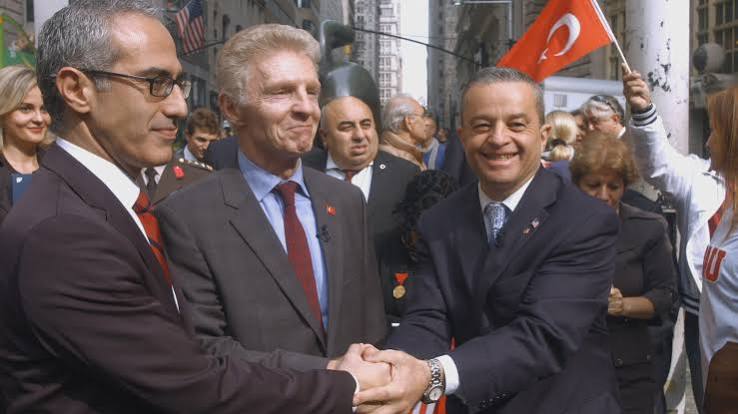
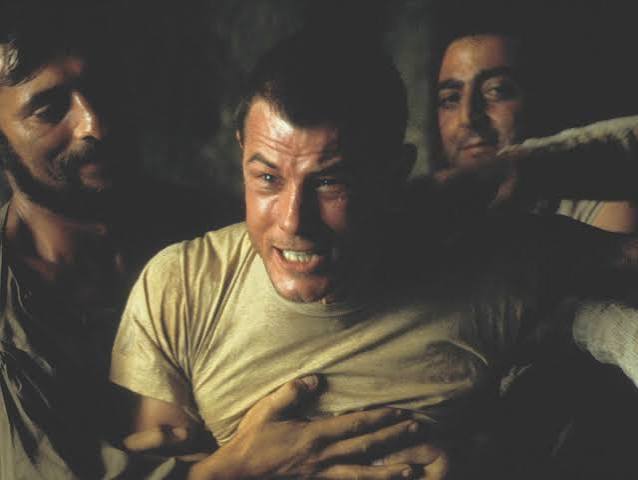
The depths of the outrage — Turkish and Turkish American representatives talking about the “hurt” the film caused, the fictional speech Billy (played by the late Brad Davis) screamed in court about a nation of “pigs,” the lack of a single redeeming Turkish character (Wasn’t there a sympathetic inmate or two?) in a world of corrupt lawyers, nationalistic prosecutors and anal-raping prison guards — are surprising to see, now.
Turkey strong-armed other countries, from Ireland to Israel, to ban the film. They made threats about any Hayes plans to travel anywhere near the Middle East. And this went on for decades.
That was, to a lot of people, telling. And it points to the film’s great unasked question. No, Hayes never made that speech and Stone if not Parker (“Never apologize.”) has been apologetic about the film’s racial biases. No, the movie wasn’t wholly factual. Ex-girlfriend Barbara Belmont laughs off Hayes’ insistence that she bared her breasts to him while he was in prison, a scene Stone invented for the movie.
Hayes, as we watch “Midnight Return,” absorbs more and more of the movie as his “real experience,” never missing a chance to cash in and stay relevent by repeating the Hollywood exaggerations. I was reminded of Rudy Ruettiger, the real-life inspiration for “Rudy,” who validated his childhood obsession with playing for Notre Dame into a sentimental, fictionalized movie and who continues to live that fantasy to this day.
To her credit, Sussman doesn’t so much come out and say Hayes is a fantasist who can’t tell the difference between what really happened and what Hollywood exaggerated about his otherwise inconsequential life. She shows us these delusions as he finally returns to Turkey decades later and “remembers” this place or that one — not so much in reality, but in its cinematic production values — as he takes his “Midnight Express” tour.
But all these members of the Turkish diaspora kind of dance around the reasons for their depths of loathing for a movie that wrecked hashish tourism and most certainly had an impact on how Westerners perceived Turkey and avoided visiting the wonders of Istanbul for years.
It’s easy to conflate Turkey’s “massive resistence” to admitting it committing genocide against the Armenians with “proud” Turks insisting a movie exposing corruption and inhumane prison (and mental hospital) conditions and its role in the international drug trade as “offensive.”
I have thought, all along, that what really set these “proud” Turkish Muslims off was a plot element that Stone and the movie borrowed from “Lawrence of Arabia.” Sussman never asked the many Turks who appear on camera, “Wasn’t it the Turkish same sex rape that got your dander up?”
If they’re so resolvedly, uncompromisingly touchy about a fictionalized film with a lot of ugly truths tucked into it, might it be that Islamic homophobia was why Turkey took so very long to let its “Midnight Express” hatred go?
Turks may be relieved that “Midnight Return” dodges that as it transcends its “The Making of” documentary origins and asks non-Middle Eastern viewers to ponder the ancient prejudices that linger about Turks — who once overran Constantinople and Greece, enslaved European captives and threatened Europe for centuries.
But a more complete film would turn a mirror on the outraged and ask, “If your prisons and mental hospitals and courts were really like this, what is it that really set you off?”

Rating: unrated, graphic violence, drug content, profanity
Cast: Billy Hayes, Alan Parker, Oliver Stone, Barbara Belmont, David Puttman, Brad Davis, Turan Ayaz, Ahmet Ertegen, Robert Hayes, Dorothy Hayes and Michael Griffin.
Credits: Scripted and directed by Sally Sussman. A streaming on Tubi, Pluto TV and Plex.
Running time: 1:39



