Movie Review: A fable of fascism from Civil War era Spain, “The Bastards’ Fig Tree”

fig1.jpeg

With Europe and America flirting with fascism in ways we haven’t seen since the McCarthy Era, here’s a sour and generally unsatisfying parable set in the Spanish Civil War to remind us of how these things go down and how quickly their lessons are forgotten.

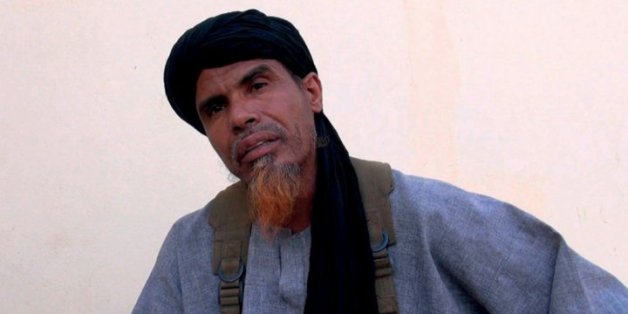
Ana Murugarren’s Spanish film, “The Bastards’ Fig Tree,” based on a Ramon Pinilla novel, is about a members of a fascist murder squad so shaken by a child who watched him kill his parents that he becomes a hermit and nurtures the fig tree the boy planted over their graves — for decades.

The promise of that title, of a modern man becoming a hermit to spare himself the revenge of a child who will grow up determined to avenge his family, is one of poignant reflection, repentance and maybe a hint of whimsy.

But it’s hard to lighten the tone after we’ve watched Rogelio, played with a guilty grimace and a twinkle by Karra Elejalde of “Timecrimes,” dispatch multiple “Reds” in the brutal late-night murder missions Franco’s Falangists carried out against teachers, activists or anybody else fingered by a snitch whose motives were never questioned.

Rogelio wasn’t an officer, he was just one of the trigger-men. The rich hidalgo in charge (Mikel Losada) did the driving. And sniveling Ermo (Carlos Areces) was the snitch, who denounced anybody whose land or house he coveted.

Don Pedro Alberto may declare, “We don’t kill kids, and that’s that,” (in Spanish, with English subtitles) sparing the little boy (Marcos Balgañón Santamaría). But Rogelio knows knows better. He insists they shoot the child as well.

“You’re going to kill me…in six years, when you turn 16, aren’t you?” Rogelio demands of the child. “Have you chosen a method?”

The boy just fixes him with a “Danny doesn’t live here Mrs. Torrence” stare — hate and accusation incarnate.

When the right wing hit squad took his brother and father, he slipped out after them. When they gunned them down in the rain, he watched. And when they left, the ten year-old spent all night digging their graves. He planted a fig sapling there to remember them.

fig2

Rogelio isn’t exactly wracked by guilt and doesn’t show a great deal of fear. But he takes the implicit threat in the child seriously. It’s the wife of the newly-converted (insincere) Falangist mayor, Cipriana (Pepa Aniorte of “Volver”) who gets in his head. She’s sure he’s had a graveside conversion.

“Our Lady spoke to you tonight?”

No, she didn’t. No, he hasn’t repented. No, the kid isn’t speaking. So Rogelio fixates on that damned tree, which cows or wildlife might munch to death and Ermo is anxious to pull up. He takes on the job of ensuring it gets watered and becomes round-the-clock guardian of a fig sapling in a remote field outside of Getxo, Bilbao.

He abandons his murderous duty, but not his Make Spain Great Again hat, uniform or pistol.

He’s entirely too profane and trigge- happy to admit it, but Cipriana knows.

“You’re a hermit paying for your sins!”

Murugarren, an editor turned writer-director, finally hits on a tone that suits this dark but potentially comic subject in the ensuing decades of the story, as Rogelio becomes a famous “tourist attraction” hermit, adopted by the town but keeping the dark secret of why he’s really guarding this fig tree.

His beard grows, the kid leaves home to go to seminary (at Rogelio’s desperate, self-serving insistence) and festivals and fairs are thrown on his hermitage, this plot of land with the fig tree and two ugly reminders of Spain’s past hidden beneath it. Pilgrims seek “miracles” at the hands of this cynical assassin, who never really reforms.

There are many places she could have taken this story of guilt, redemption, the lack of remorse of the “winners” and the short memories of everybody else. Perhaps they were all too conventional for the novel and the script she wrote from it.

What all concerned wound up with was a parable without a righteous payoff, a frustrating film that seems more aimless than it rightfully is, that plays darker than it wants to be.

As Rogelio takes on the hermit’s rags, he almost grasps the search for truth that comes with the job. Questioning a priest is as close as “The Bastards’ Fig Tree” (“La higuera de los bastardos”) comes to delivering a moral to the story.
“What do priests do when they get the urge to kill?”
The priest answers, “Cause a war so others kill for you.”

Mururgarren has made a “Belle Epoque” for time too dark to support it, a grim grasp at whimsy that isn’t there and probably not the fable about fascism that Western Civilization needs or even wants to see right now.

2stars1

MPAA Rating: unrated, graphic violence, nudity, sexual situations, profanity

Cast: Karra Elejalde, Pepa Aniorte, Carlos Areces, Mikel Losada, Andrés Herrera

Credits: Written and directed by Ana Murugarren, based on a Ramon Pinilla novel. A Dark Star release.

Running time: 1:43

Marcos Balgañón Santamaría
Posted in Reviews, previews, profiles and movie news | Comments Off on Movie Review: A fable of fascism from Civil War era Spain, “The Bastards’ Fig Tree”

Movie Review: Octavia unfurls her frightening side in “Ma”

ma1

Oscar winner Octavia Spencer brings it, and how, in “Ma,” a real world horror tale blessed with a top-drawer cast and a grimly satisfying third act.

But you know that if you’ve seen the trailers. Two Academy Award winners, plus Juliette Lewis, Luke Evans and Missi Pyle, an up-and-coming young actor contingent headed by Diana Silvers of “Booksmart,” all fodder for the vengeance of a woman who never got over her high school disappointments.

It’s a screenplay that gives away its mystery fully and all too easily, and as directed it just sort of ambles along — flashbacks over-explaining the motivation of the villain, her history. The fact that we’ve seen the money shots in those trailers makes “Ma” play longer than its 100 minute running time.

It’s just that there’s much to recommend it outside of those failings, sharp observations about the trap of small town life and the persona you take on in your teens than you never escape, the casual cruelty of teenagers that can (in the movies, anyway) leave scars that linger forever, the craving for acceptance that once denied, you never outgrow.

Maggie (Silvers)  and her divorced mother (Lewis) move back to mom’s old hometown in Ohio. Mom’s too old to be wearing cocktail waitress fishnets, but here she is, starting over at the casino that popped-up near where she grew up.

Maggie? She’s cute enough to make friends easily.  Haley (McKaley Miller) may be a born mean girl, but she and her crew (Dante Brown, Gianni Paolo, Corey Fogelmanis) invite her in. Parties, cruising around town in cute-guy Andy’s van, drinking binges and bonfires at “The Rockpile,” an abandoned industrial site outside of town, are sure to follow.

If they can only score some booze! It’s just that every customer they approach to make the purchase for them at the local liquor store blows them off. Even the lady in nurse’s scrubs (Spencer). But Sue Ann lets us see the wheels turning, the thinking that moves her from “You want to spend the night in jail?” to “I used to do the SAME thing when I was your age.”

She fills their shopping list, but she also talks them into a “safe” place to party. It’s her basement, but it can be their hangout. Just a few rules. Surrender your car keys, for starters. She wants to ensure no drunk get behind the wheel, she says.

“Don’t take the Lord’s name in vain. Don’t spit on my floors,” and above all, “DON’T go upstairs.”

Thus is the bond made between a bunch of tipsy teenagers and the veterinary nurse they call “Ma.” It starts out looking like charity and quickly turns to something darker and more desperate.

Ma is all “Now you know where the PARTY is!” and flirting with Maggie and the guy who has Maggie’s interest, Andy (Fogelmanis), telling them “I don’t drink. You REALLY don’t want to know,” and social media blasting them with the only question that matters, if they’re “all down to clown?”

ma2

The signs that Ma isn’t what she seems are everywhere. The audience gets flashbacks, sees Sue Ann swiping phones to grab numbers, social media stalking and skulking around their homes and school.

The kids? They’re subjected to a temper that flashes in view and a practical joke that involves a gun — right at the outset. And still they’re slow to catch on. That’s liquor for you.

The backstory stuff is how actor-turned-director Tate Taylor and screenwriter Scott Landes landed Spencer, her fellow Oscar winner Janney (playing her mean-with-good-reason veterinarian boss), Lewis, and quintessential Mean Girl Grown Up Missi Pyle and Luke Evans as locals who peaked in high school and never moved away.

But all that stuff, the flashbacks, the relationship dynamic that hasn’t changed since the ’80s, explains too much. It gives away the whole game.

Ma’s little mood swings may tease us into thinking “Here we go,” but we don’t. It takes an hour of stripping away mystery and “motivating” everybody for this picture to truly get on its feet.

Better to leave Ma’s tricks and her backstory for the third act? I think so.

Spencer makes “Ma” malevolent and motivated, but there’s little shock value to the character’s plunge into “unhinged.” The adult stories are interesting, if on the nose, trite and true. And that strips screen time from the kids, who are just pawns in the Big Game and are so underdeveloped that rooting for them takes effort.

The finale may fool you into thinking all that came before was necessary, even if you’ve forgotten it as soon as you toss your popcorn box. But the preliminaries slow “Ma” down and soften its blows for far too long to make that final punch the knockout this might have been.

2stars1

MPAA Rating: R for violent/disturbing material, language throughout, sexual content, and for teen drug and alcohol use

Cast: Octavia Spencer, Diana Silvers, McKaley Miller, Corey Fogelmanis, Juliette Lewis, Missi Pyle, Allison Janney and Luke Evans

Credits: Directed by Tate Taylor, script by Scotty Landes. A Universal release.

Running time: 1:39

Posted in Reviews, previews, profiles and movie news | Comments Off on Movie Review: Octavia unfurls her frightening side in “Ma”

Why the Memorial Day Box Office Isn’t What It Used to Be

Interesting analysis of the changing economics of blockbusters and the shifting calendar of the comic book movie era.

https://www.thewrap.com/why-the-memorial-day-box-office-isnt-what-it-used-to-be/

Posted in Reviews, previews, profiles and movie news | Comments Off on Why the Memorial Day Box Office Isn’t What It Used to Be

Director Luca Guadagnino Defends Woody Allen

It’s all just man/boy sex with peaches to some folks.

https://ohnotheydidnt.livejournal.com/114916965.html

Posted in Reviews, previews, profiles and movie news | Comments Off on Director Luca Guadagnino Defends Woody Allen

Next Screening? Octavia Spencer is an Oscar winning scary party animal in “Ma”

Some days — or nights — present you with a dilemma.

Tonight, for instance, Warners’ “Godzilla” with Millie Bobby et al is previewing.

But so is Universal’s “Ma.”

Two studios who like to camp their films on the Tuesday night before opening, and won’t budge from there. Not for me, anyway.

I am more interested in “Ma,” so I will catch that now and “Godzilla” later. Maybe I’ve seen too many bloody “Godzilla” movies already, and no — covering Blue Oyster Cult’s “Godzilla” song over the closing credits can’t change that. Could be good, but I will find out about that later.

“Ma” it is.

Posted in Reviews, previews, profiles and movie news | Comments Off on Next Screening? Octavia Spencer is an Oscar winning scary party animal in “Ma”

Movie Review: The meek but romantic inherit Mumbai in “Photograph”

photograph1.jpeg

She didn’t want to have her picture taken next to the Gateway to India monument like a tourist or pilgrim to Mumbai. But something about his pitch, about how she’d “look back, see the sun on your face” and have a memory she’d never forget worked.

She didn’t mean to stiff him and not pay for it, but that’s just what she did when friends called her away.

It’s just that the photo left him transfixed.

Maybe she’s feeling guilty, as her friends are all stunned at how flattering the shot turned out as well.

And in one of the most crowded cities on Earth, all they’ve got to do it, you know, run into each other again.

That’s the twitter-length set-up of “Photograph,” Ritesh Batra’s colorful but tepid and utterly inconsequential follow-up to the chaste romance of “The Lunchbox.”

Rafi (Nawazuddin Siddiqui) is a dark-skinned provincial, 30ish and still hustling up money to pay off an old family debt back in Balia. Miloni (Sanya Malhotra) is a painfully timid college coed, studying to be a chartered accountant.

Whatever Rafi doesn’t have in his life, sharing a railside attic with four friends, at least he can call himself a photographer, at least he can send money home to buy back the family home for the grandmother (“Dadi”) who raised him.

Miloni? We’re told she was a student actress, but that dream is as unlikely as Malhotra’s interpretation of Miloni. She is meek as a mouse, bending to whatever her family’s will might be, rarely speaking at all and never speaking in anything above a timid monotone.

“Actress?” Far-fetched.

The first act has them meet-but-not-meet, and sets up an amusing community support system of cousins, uncles and anybody who relocated to Mumbai from Balia, ALL of whom know way too much of Rafi’s business.

Specifically, the taxi driver, the street cart kulfi seller, the shop stall owner, the roommates, each and every one repeats his dadi’s demand that he “find a wife.” Dadi, they tell him, has stopped taking her medication, such is her woe at his lack of urgency in providing her with a great-grandchild.

He sends her a terse note to knock that off, as he’s met someone in the city. Noorie, he says, has “eyes full of questions, but also full of answers.” He sends along the unclaimed photograph of Miloni (he doesn’t know her name) as “proof.”

That’s all Dadi (Farrukh Jaffa) needs. Next thing he knows, the pushy old crone is on a train, coming to meet them, withholding her approval until she does.

Other versions of this old “fake fiance” trope are filled with panic and urgency as the liar (Rafi, in this case) must secure the cooperation of the young woman he’s only met once and whose name he doesn’t know set against the ticking clock of Dadi’s impending arrival.

Batra’s solution to this fraught situation is to skip over it, pretty much, finesse it with some cultural quirks that serve as shortcuts. It’s not the first time he cheats us of “the good parts.”

The second is Miloni’s acquiesence. A lovely moment on a bus, a boldly proffered seat next to her, seemingly wholly out of character for the mousie Miloni.

Batra’s film, in English, Gujarati and Hindi with English subtitles, takes some pointed jabs and Indian pigment prejudice. Every friend, cousin or working slob on the street feels he has the license to question why fairskinned, cosmopolitan Miloni is hanging with a “raisin…your face is black as doomsday.”

Miloni is, conversely, “too delicate” for the street-life and street cuisine he can offer her. “Delhi Belly” isn’t confined to New Delhi. “Ice Candy,” basically a snow cone? You’re asking for intestinal issues, dear.

I love Indian cinema that gives us a sense of the ecosystems of the street, Rafi’s world. That’s the best element of “Photograph.”

But I puzzled and puzzled over the connection between the two. All they seem to share is the sad eyes of resignation. The tiny droplets of empathy that pass between them feel almost meaningless, simply not consequential enough to merit her hiding this play-acting she’s doing with the village guy from her family. What is she playing at, here? Is it nostalgia, a longing for the righteous ruralism of Gandhi?

So much is undeveloped or under-developed. Miloni’s guide to this peasant world might have been her family’s village-born servant. Rafi’s ambition is fired by their meetings, and that has potential, too, only to be dispensed with in cryptic, unsatisfying way.

Only the fiery nuisance Dadi pays off as a character, unschooled and untraveled with wise to the ways of her family.

“Why should I be a bone in your kebab?”

It’s unfair to impose Western standards of screen “chemistry” on movie couples on the Subcontinent, but we’ve got to buy in to the relationship, root for the couple to find common group and hunt for the character arc that will let each grow in the direction of the other.

This couple and this “Photograph” remain undeveloped.

2stars1

MPAA Rating: PG-13 for some thematic material

Cast: Sanya Malhotra, Nawazuddin Siddiqui, Farrukh Jaffa, Jim Sarbh

Credits: Written and directed by Ritesh Batra. An Amazon release.

Running time: 1:50

Posted in Reviews, previews, profiles and movie news | Comments Off on Movie Review: The meek but romantic inherit Mumbai in “Photograph”

Next screening? “Photograph”

Late getting to this Amazon Studios release, as Amazon is something of the “Witness Protection Program” among film distributors. And they’re not alone.

A “here’s today in a photograph” romance — strangers who take on something like a relationship thanks to a photo.

From the folks who gave us the sublime “The Lunchbox.”


Posted in Reviews, previews, profiles and movie news | Comments Off on Next screening? “Photograph”

Documentary Review: Animal lover’s devotion is “For the Birds”

birds1.jpeg

Traditionally, and by long-established cultural cliche, it’s cats that “little old ladies” hoard. Or dogs.

But it can be pigs. And in extreme, but seemingly more readily “diagnosed” cases, it can be tigers — large cats kept, by and large by rural, disabled hoarders.

“For the Birds” is about an Upstate New Yorker who developed a passion for living with farm fowl — turkeys, and as the song goes, “chicks and ducks and geese better scurry” when visitors to Kathy Murphy’s trailer and mini-farm in Wawarsing, N.Y.

But “visitors” are plainly rare in Kathy’s world. We may meet her and husband Gary in old home videos in the film’s opening scene, cooing over a lost duckling they’d had to take in. Ten years later, the place is overrun with animals that she’s bought and hatched, adopted or picked up — hundreds of them.

“Found a little duck in the yard one day, and that was all she wrote,” Kathy grins.

She loves her birds, gives each a name and picks up and hugs this duck or that rooster to underscore that affection. But she’s “overwhelmed,” others note. The county has taken notice. Husband Gary Murphy is scheming behind her back to get the birds moved elsewhere — some of them, ANY of them.

Richard Miron’s film doesn’t pretend to psychoanalyze Kathy’s mania for mallards, wood ducks, geese and the rest. She’s caring for them, but not all that expertly. She’s doing better by the fowl than she is for herself. Her teeth are a wreck. She’s estranged from their daughter over this, and Gary’s got to know where Kathy’s priorities are, and resent them.

“He knows that I would chose them over him!”

It is the way of such documentaries that things start out looking cute, quaint, eccentric and sweet, even if we see the words of the police report that underscores the trouble on the horizon.

Reasonable, patient, well-intentioned people from the Woodstock Farm Animal Sanctuary pay a visit and ever-so-gently persuade Kathy to let them take some of the more malnourished or eye-infected ducks and chickens to their big farm. Ulster County leaves this “problem” up to them. For now.

But something in Kathy’s cooperative, sympathetic yet increasingly manic manner tells us this is the easiest it’s going to be, relocating some 150 fowl from a place that might more comfortably hold a dozen.

Miron’s film sets up our characters, Kathy with her “Who cares?” what other people think attitude, Gary with his indulgent, “indifferent” and remote attitude towards the whole thing, a guy whose fondest “wish is that they was a little…bit further away.”

Her “hobby,” the reason she gets up in the morning, “It’s interesting, to say the least.”

We meet Scottish Sheila from the Sanctuary, and Elana and other volunteers, delicately negotiating the release of two turkeys, finding Kathy increasingly difficult to deal with, calling Gary inside the trailer (by phone) begging for him to intervene.

She gets angrier and angier, Gary turns more and more remote — “You think you’re going to grow old with someone…” and then a heavy handed SPCA coordinator with the county shows up, barks “I own this property right now. OFF the property!” and the film crew are chased off, a folksy but tactless “old country lawyer” named Bill brags about how she “takes better care of those chickens than Col. Sanders, or Tyson” and a boy prosecutor who hasn’t shaved yet face off in court.

birds2

The closest this charming films gets to “revelatory” is when the lawyers bicker over the label “hoarder.” Is there not one person who can point to what’s really going on here? Kathy seems reasonable enough, sane enough. Is this, pardon the pun, a dark turn in an “empty nest” syndrome situation?

Of course, there are no pat answers in a single-case/single person profile film like this. Films I’ve reviewed about Big Cat collecting visit scores of people, almost all on disability, filling some “control” and “strength and power” hole in their lives by keeping tigers and lions.

Maybe it’s as Kathy says, she just fell in love with them and had to have lots and lots of each species. But as “For the Birds” unfolds its increasingly bittersweet story and we see the problem and the destructive nature of the solution to it, one can’t help but wish there’d been a tad more attention paid to “What’s going through the bird lady’s head?”

2half-star6

MPAA Rating: unrated, profanity

Cast: Kathy Murphy, Gary Murphy

Credits: Directed by Richard Miron. A Dogwoof release.

Running time: 1:32

Posted in Reviews, previews, profiles and movie news | Comments Off on Documentary Review: Animal lover’s devotion is “For the Birds”

BOX OFFICE: “Aladdin” over-performs expectations, @$113 over Memorial Day weekend

The actual tally was $112.7.

Big news. Bigger news? The busts that “Booksmart” and “Brightburn” turned out to be.

“Brightburn” was critically dismissed and only managed $9.5.

“Booksmart” earned effusive praise from critics, but under $9 million from paying patrons. $8.5. Maybe it’ll stick around and do well enough, maybe it should have been platformed. I saw it a second time over the weekend in a small town cinema, sparse turnout and it didn’t play for that crowd. So that might be l she wrote. No “Superbad” momentum.

https://t.co/O5KCH9VqhW https://twitter.com/THR/status/1133368083010265088?s=17

Posted in Reviews, previews, profiles and movie news | Comments Off on BOX OFFICE: “Aladdin” over-performs expectations, @$113 over Memorial Day weekend

Good Indiewire overview of Hollywood’s “Sea changes” in production, distribution and representation

An overnight shift in professions, outmoded or newly in demand, the power of agents and the simple metrics of what constitutes cinematic success is about to roil Hollywood, on top of the changes already on progress.

https://www.indiewire.com/2019/05/hollywood-changing-fast-can-film-industry-lifers-change-too-1202145060/

Posted in Reviews, previews, profiles and movie news | Comments Off on Good Indiewire overview of Hollywood’s “Sea changes” in production, distribution and representation