Movie Review: South Korea remembers its Alamo in “Battle of Jangsari”

jangsari1.jpg

In America and much of the rest of the world, the Battle of Inchon is celebrated as the masterstroke of General Douglas MacArthur’s career, a surprise United Nations amphibious assault behind enemy lines on a beachhead with some of the highest tides in Asia.

But in Korea, they remember a pivotal diversionary attack that made Inchon (or Incheon) possible. That’s why “Battle of Jangsari” is already a blockbuster south of the 38th parallel on that peninsula.

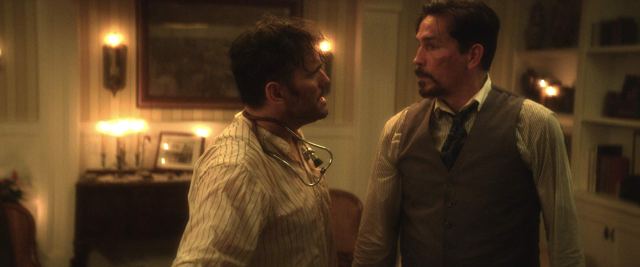
It’s a solid combat film, a visceral, sentimental account of that assault by the Republic of Korea Army, another battle against impossible odds and one fought by teenaged volunteers, most with only 10 days of training, soldiers too green to even have been issued service serial numbers.

Releasing it in North America (in Korean, with English subtitles) reminds us that whatever the differences in training and tactics from nation to nation, modern war films have the same tropes, values and action beats the world over.

In combat film buff shorthand, it’s a a “Saving Private Ryan” styled story of ptriotism, heroism, sacrifice and viscious hand-to-hand combat on the beach at Jangsari and in the trenches that overlook it. The youth of the “assault team” is treated with “Field of Lost Shoes” reverence. And there’s plenty of “Gallipoli/Hamburger Hill” cynicism, too, the callous high command, the ally (the United States) that might not be the omnipotent, righteous savior that we here in the U.S. like to attach to our intervention there.

The “men” of Captain Lee (Kim Myung-Min) are not even old enough to wear that label with confidence, most fresh-faced kids not even of shaving age yet. The 772 student volunteers are seasick as they ride out a typhoon on their way to the beachhead.

The ship’s captain can’t believe the “suicide mission” these kids have been ordered to undertake, distracting the North Koreans, who’d invaded South Korea three months before, while MacArthur’s armada slipped north to cut most of the enemy off, a trap that would all but destroy the North Korean army.

Neither can an American reporter, Marguerite Higgins (Megan Fox) embedded at HQ and privy to the particulars of the attack. The CO (Robert Eads) she gets her scoops from tells her to “keep your bags packed.” If this attack, and then MacArthur’s fail, the North Koreans will finish overrunning the country.

There’s talk of spies everywhere in this newly-independent, newly-divided country. “Battle of Jangsari” reminds us that this may have been a Cold War “test” between the US and Russia and China. But in Korea, it was brother against brother, cousin against cousin — personal and bloody and bitter.

There’s promise of air support and a naval bombardment. But mere radio contact is hard to maintain en route. Captain Lee knows its all on them and trots out the “Can you exist without a country?” pep talk. The boys are fired up, if not exactly “ready” for all this.

The first big act of sacrifice is when the ship’s captain is convinced to run his vessel aground rather than let the troops be slaughtered on their way to shore in the few tiny inflatables they’ve been alloted for this attack.

Just getting to the beach is as nightmarish as every resisted beach assault in history, “Iwo Jima” awful.

And once there, the carnage doesn’t let up. We’re treated to a truncated version of “The Longest Day” as the Captain and an enterprising sergeant or two strategize, improvise and give their young charges a fighting chance.

jangsari2

The uniforms are different, but so much of what’s shown here will be familiar to anybody who’s ever seen a combat film. Grunts boast of their sharpshooting prowess, curse and bully each other and make clumsy mistakes the way kids who have never held a rifle before 10 days do.

There’s more weeping than your average American war movie, and a little hand-holding. The Captain administers corporal punishment, at one point.

One of the recruits, the one who can recall his “northern accent,” is Choi Sung-pil (Choi Min-ho), a refugee from the north. Some don’t trust his loyalty, but the Captain leans on him to fool North Korean patrols when he leads a foraging party into the nearby town.

“Are you guys butchering that dog? Could you share?”

Relax, ASPCA fans.

The fighting? In your face, gory, with action broken up into groups of two, three or four, comrades saving each other, or failing to. We get back stories from the plump private who worries about the lack of food, from the bully with a sad back story that explains his bullying, a sad story that will change “when I come back home a hero.”

Yes, some of the cast is fleshed out with K-Pop stars turned actors, just as in Christopher Nolan’s “Dunkirk.”

And then there’s the whole “suicide mission” that the pushy American reporter keeps throwing at American and Korean brass. They’re under-equipped and under-supplied, with no prospect of evactuation, resupply or reinforcement, with only a badgering journalist to appeal to the conscience of HQ.

There are some grand action sequences, an “ambush” built on a ballsy bit of bluffing from a sergeant (Kim In-Kwon) who’d be right at home in a John Wayne movie.

And it’s striking how much the real Korea looks like the one most Americans have seen in reruns of the movie or TV series “M*A*S*H” — shot in Southern California.

There’s little here that any Westerner who’s seen a few combat films won’t recognize.  The effects and production values (convincing digital transport ships) are pretty good, of a Hollywood B-picture caliber (a film like the Nicolas Cage thriller “U.S.S. Indianapolis: Men of Courage”).

“Jangsari” is immersive and involving, the way the best combats are, and jjust Korean enough to make us appreciate the differences between cultures and alternate views of the history of the war. Sometimes, the country known for coining the phrase, “the cavalry comes to the rescue” doesn’t live up to that.

That’s a message that speaks to audiences in modern Korea and present day America just as loudly.

2half-star6

MPAA Rating: unrated, graphic violence, profanity

Cast: Kim Myung-Min, Cjhoi Min-Ho, Kim Sung-cheol, Kwak Si-EYang, Lee Jae-Wook Lee, Megan Fox and George Eads.

Credits: Directed by Kyung-taek Kwak. A Well Go USA release.

Running time: 1:45

Posted in Reviews, previews, profiles and movie news | Comments Off on Movie Review: South Korea remembers its Alamo in “Battle of Jangsari”

Movie Review: Dapper Nighy shines in “Sometimes Always Never”

never3

British to a “T,” and so twee you’d swear Wes Anderson had a hand in it, “Sometimes Always Never” makes for a perfectly wistful Billy Nighy star vehicle.

It’s so soft spoken and so little happens in this story of the emptiness brought on by loss, fine tailoring and Scrabble that you might miss its whimsy. But it’s there, blended in delicate proportions with the bittersweet.

The sartorially celebrated Nighy plays a quietly-obsessed Scrabble-hustling tailor in “Sometimes Always Never,” a man we meet on a lonely beach, waiting for his son.

Sam Riley (“Pride and Prejudice and and Zombies”) is that son, Peter. Peter’s not quite as buttoned-down as his dad, but neither is all that demonstrative. Peter, the composer of commercial jingles, takes the wheel of Dad’s immaculately-kept vintage Triumph Herald convertible and motors down the coast to the town where they have an appointment.

Government austerity means the office they’ve been called to is closed, but father Allen ( has anticipated that. He’s booked them a room at The Royce, a B & B. He’s methodical, meticulous and fastidious, as you might expect from a man in his profession.

And he’s comfortable with every one of those synonyms, because he is, in American parlance, a word freak. He’s deep into Scrabble.

We aren’t so much told this as we quickly figure it out as he play-acts his way into a hustle at The Royce. It begins when he asks for the Muzak to be turned down.

“I always say, ‘The only good thing about ‘jazz’ is that it scores very highly in Scrabble!”

That prompts a correction from a husband (Tim McInnerney of “Notting Hill”) Arthur, who soon suggests a game to Allen and Arthur’s wife (Jenny Agutter of “An American Werewolf in London”). When Margaret isn’t listening, Arthur proposes that “we make” the game “interesting.”

But it’s only after the hustle is set in motion that Allen figures out they they’re here for the same reason as he and Peter. They’ve been called to identify a body. Their 19 year-old son went missing. Allen’s did, too, some years before.

Whatever the loss of his brother did to Peter — and the uncertainty of his fate is grasped as a last straw — Allen seems lost, embracing the distraction of Scrabble, online mostly. He goes on and on about words, strategies, big-scoring plays and the “101 two letter words” in the English dictionary, because “two letter words are your friends.”

never2

He prattles on to Peter’s wife, Sue (Alice Rowe) and their son (Louis Healy) after passive-aggressively inviting himself to stay with them. He’s full of useless trivia about the reasons Canada doesn’t allow the import of a certain vile English spread for toast.

“The people of Canada,” and all their vast land mass, “don’t have Marmite!”

“How DO they get by?” Sue plays along.

Vegemite,” Allen says, weighed down with resignation. “Poor substitute.”

That’s the tenor of the humor here — subtle. Words matter to Allen, and they come to matter to his role-playing game-addict grandson. Before we know it, young Jack is correcting his mother’s use of how “inconvenient” it is to have his granddad sleeping in his room. No, it’s “disquieting, disorientating, awkward, destabilizing, unsettling…”

And that’s accompanied by dapper Allen giving a makeover to the kid, making him “spruce” enough to tickle the kid’s girlfriend (Ella-Grace Gregoire).

The mystery at its heart doesn’t so much drive this story as chases that missing-son from a B & B to a marina, never quite achieving closure. It’s based on a script by Frank Cottrell Boyce, the British screenwriter of “Goodbye Christopher Robin,” “Millions” (for Danny Boyle) and many Michael Winterbottom films such as “Welcome to Sarejevo” and “24 Hour Party People.”

Director Carl Hunter cut his teeth on British documentaries, and seems ill-suited for the material — leaving laughs on the table like a poker player lacking nerve. The central relationship wanders off screen for the middle acts, and for all the minor delights that assorted scenes and the wonderful players hired to perform them (Agutter and Lowe stand out), it isn’t the most coherent story, “mystery” or not.

But Nighy brings so much of himself to Allen that many of those rough, expositional or inconclusive edges are rubbed off, or at least shoved into the background.

Whatever its value to a British audience, “Sometimes Always Never” has enough outside-looking-in charm, and Nighy, to make it nice fit to any Anglophile filmgoer.

2half-star6

MPAA Rating: PG-13 for thematic elements and some sexual references

Cast: Bill Nighy, Sam Riley, Jenny Agutter, Tim McInernney, Alice Lowe

Credits: Directed by Carl Hunter, script by Frank Cotrell Boyce. A Blue Fox Entertainment release.

Running time: 1:31

Posted in Reviews, previews, profiles and movie news | Comments Off on Movie Review: Dapper Nighy shines in “Sometimes Always Never”

Netflixable? “In the Shadow of the Moon,” the murders begin

shadow2.jpeg

Dystopian and topical as hell, “In the Shadow of the Moon” lacks nothing to be a science fiction film that “speaks to our times.”

It’s a murder mystery that holds our interest long after the mystery — mysteries — have revealed themselves to us, if not our intrepid hero.

Still, the film’s failings, knocked out by two first-produced-film screenwriters, connect to its perceived strengths in ways that are just too pat to ignore.

The viewer is always two steps ahead of it, and it’s SO topical, speaks so directly to America on the cusp of an impeachment, as to (hopefully) be instantly dated, holding little interest for future generations of Netflix streamers.

Boyd Holbrook is Tommy, a Philly cop whose wife (Rachel Keller) is expecting a child just as he hunts for a way off the graveyard shift. “Detective’s just around the corner,” he reassures her on the night that a little slice of Hell breaks loose in Philly, in 1988.

A bus driver, a concert pianist and a short order cook die, each in gruesome fashion — their brains bleeding out from their orifices.

Officer Lockhart (Holbrook, of “Logan” and “The Predator”) arm-twists his partner (estimable screen vet Bokeem Woodbine) into ignoring the chain of command and chasing the clues that connect these deaths on a single night.

That leads them to the mysterious “black woman in a blue hoodie.” And this wily escape artist and trained fighter (Cleopatra Coleman of TV’s “Last Man on Earth”), with her gadget for putting punctures in her victims, gives away the game.

Or rather she does via the script’s opening scene. Usually, you can mention anything up to the one third to halfway through point of a movie and not be guilty of a “spoiler.” Not here. The prologue and our first hard look at the “villain” are blunt, obvious “tells.”

Opening her mouth finishes the job.

“Hello, Thomas. Is this where it happens?”

Lockhart and his partner Maddux get their promotions to detective, and then nine years later, the same crap hits the fan, with a killer sporting the same MO.

The now-grizzled detectives ignore the Cameron-esque warnings of a physicist (Rudi Dharmalingam) who speaks of the same “Moon” of the film’s purloined title — the same as a fine documentary about the Apollo program — and get deeper into the mystery, with more victims to connect to the original crimes.

And this continues to happen every nine years as this “epic” tale unfolds.

shadow5

Director Jim Mickle did the little-seen horror movie “We Are What We Are” and does entirely too little here to hide his cards. “Moon” manages to throw a feint or two at us in its opening act, and Mickle stages and shoots a couple of really good chases. The first act is far and away the best act of the movie. Pacing is a problem exacerbated by the film’s easily solved Big Mystery.

The casting pays off, with Holbrook and Woodbine in a battle of wits against Lockhart’s brother-in-law, a detective (“Dexter’s” Michael C. Hall) on the force who lets two beat cops beat him to the crime-solving punch.

And if you’re a genre fan, as I am, you’ll stick around even if the 110 minute movie shows you “the future” before 30 minutes have passed.

Despite my relief that my “Oh hell, this isn’t about vampires, is it?” fear was unfounded, I still found “In the Shadow of the Moon” a watchable failure, at best.

2stars1

MPAA Rating: TV-MA, violence

Cast: Boyd Holbrook, Cleopatra Coleman, Bokeem Woodbine, Michael C. Hall

Credits: Directed by Jim Mickle, script by Geoff Tock, Gregory Weidman.  A Netflix release.

Running time: 1:55

Posted in Reviews, previews, profiles and movie news | Comments Off on Netflixable? “In the Shadow of the Moon,” the murders begin

Movie Preview: “Burning Cane” is the quintessence of sugar-cane-country indie melodrama

Perhaps the biography, the background, the fact that a 19 year old filmmaker directed this, will overwhelm it with hype.

That could turn this atmospheric, setting-centric debut feature into this year’s “Beasts of the Southern Wild” or “Florida Project.” That’s a double-edged sword.

Wendell Pierce is the big name in the cast, a nice break and what looks like his most challenging role in ages. Karen Kaia Livers, Dominique McClellan and Braelyn Kelly are also in the cast of “Burning Cane,” opening Oct. 25 in limited release.

Posted in Reviews, previews, profiles and movie news | Comments Off on Movie Preview: “Burning Cane” is the quintessence of sugar-cane-country indie melodrama

Movie Review: Sometimes, a “Wallflower” can’t be saved

wall3

Can this mass murderer be saved?

That’s the rhetorical question of “Wallflower,” a dreamy docudrama about a Seattle mass shooting that is equal parts evocative and provocative.

The “dreamy” part is the setting. This 2006 shooting happened at a rave after party, and writer-director Jagger Gravning goes to great pains in taking us inside Seattle’s rave scene of the day. Whatever else it has going for it, “Wallflower” is the most immersive, critical and flattering picture of the Techno Fans/Friends of Molly ever.

Jumping back and forth in time, losing itself in the asexual sensuality of a vast, supportive crowd, each member dancing with her or himself — lost in MDMA, mushroom and marijuana augmented bliss — “Wallflower” parks a future mass shooter (David Call) in their ranks.

And they reach out to him, welcome him and try to encourage him to embrace their version of chill and mellow.

“You look kinda bummed out,” Noob Girl (Hannah Horton) says, expressing concern.

“We’re trying to create a safe space,” explains Strobe Rainbow (Atsuko Okatsuka, the stand-out in this cast), a lesbian trying to assauge the “bummed” one’s natural suspicions. Young women and underage girls are in the mix, stoned enough that if other ravers don’t look out for each other (they do), seem like rapes waiting to happen.

It’s just that there’s no erasing his general paranoia. “What’s really going on in here?” he asks, more than once.

His permanent scowl didn’t keep the stoner-philosopher Link (Conner Marx) from inviting him, on first meeting, to the rave in the first place, and then to the after party, Sharpie writing the address on his arm, where our would-be killer tries his worst not to fit in.

“I brought enough ammunition for ALL of you,” he hisses into a mirror in a flash forward, as he fetishizes his firearmsloads up his “street sweeper” shotgun and dons his bandoliers loaded with shells.

Tip to America’s gun dealers. Young, frowning white guy in a hoodie wants bandoliers, and/or 100 round magazines for his semi-automatic weapon? Might want to call the cops.

Gravning, with his time skipping — “five years before” the film’s “present,” and years after it — is underlining the blamelessness of the victims here.

The film’s humor comes from the level of conversation one overhears from the juice-boxed, hydrated and apparently inexhaustable ravers and they come down from their all-night “peaking” — mainly at the after-party.

Inane chatter about “D.W. Griffith’s ‘Intolerance'” and things of an arty-ethereal nature dominate conversations. Hard relationship counseling? That’s only for much later, long past the peak.

Link goes on and on about time. “The universe became very CLEAR to me,” he pontificates, although the “I was really high” footnote is all we need to hear.

“It’s sooo not cool that it’s cool” declares the teen who names herself “Noob Girl” amongst the group that includes Optima Prime, Shroom Fairy, Cheshire Kitty and Power Ranger. “I take a lot of Molly ironically,” she rationalizes.

The “sketchy” interloper wanders from room to room, gets embraced and kissed by the friendly stoners and samples a “shroom” himself from the lazy Susan of drugs in Link’s basement.

“Why are you just sitting there like a creeper?” is the rare challenge he hears. Considering his awkward come-ons to various women (none of the onanistic hedonists there seem the least bit interested in hook-ups), he gets off easily.

Call’s “murderer” is a brooding one-note character and is never humanized by the flashing back and forward shown here. The film gives him the luxury of judging the behavior of the others, but not the viewer.

We’re entranced by the pulsing, self-generated light show (glow sticks, glowing hula hoops, glowing gloves) of the rave, the Woodstock Revisited innocence of its inhabitants.

“Wallflower” is a “docudrama,” and while there are righteous reasons for not naming the murderer here, it also excuses any inaccuracy or point-of-view bias the filmmaker might introduce.

But Gravning gives us a fever dream of blameless remorse, guiltless survivor’s guilt and a broken Montana soul that was lost long before he was invited into a world that he chose to shatter, lost at the very moment he stopped in a gun shop and asked for bandoliers.

3stars2

MPAA Rating: unrated, graphic violence, drug abuse, profanity

Cast:  David Call, Atsuko Okatsuka, Conner Marx, Hannah Horton, Cequoia Johnson, Molly Tollefson

Credits: Written and directed by Jagger Gravning. A Passion River release.

Running time: 1:24

Posted in Reviews, previews, profiles and movie news | Comments Off on Movie Review: Sometimes, a “Wallflower” can’t be saved

Movie Preview: Will “The King’s Man” be better than “Kingsman:Golden Circle?”

Hard to tell, based on this latest trailer. A February sleeper?

Posted in Reviews, previews, profiles and movie news | Comments Off on Movie Preview: Will “The King’s Man” be better than “Kingsman:Golden Circle?”

Netflixable? Mackenzie Davis has the title role, and journey, in “Izzy Gets the F— Across Town”

izzy1

The Canadian actress Mackenzie Davis was “This year’s tall, willowy and funny blonde” oh, about five years ago — in the midst of a run that included TV’s “Halt and Catch Fire” and movies that peaked with “The Martian” and “Tully.”

She’s the co-star of the next “Terminator,” remade as a new Charlize Theron in action mode.

“Izzy Gets the F**k Across Town” is an LA ramble of a comedy, an indie version of a hundred other “Get Him to the Greek,” “Saving Silverman” romantic comedies.

She plays Izzy. Her ex-fiance is about to marry a former friend. She’s pissed. She’s woken up in a stranger’s bed, her catering waitress faux-tux uniform covered in wine stains. Her car’s been in “the shop,” “shop” here meaning a stoner friend’s off-the-books “garage” for weeks. She has no money, has worn out her welcome with the friends she’s staying with.

And she needs to “get the f–k across town” to this engagement party/pre-nuptials event.

The movie is about that jaunt, and Mackenzie Davis, still in that ruined uniform, calling in favors nobody owes her, collecting a beater of a car that may never get fixed, swiping a Schwinn, refusing bus rides, catching a lift with a onetime client’s (Haley Joel Osment) “girlfriend” (Alia Shawkat), “but first, I’ve just gotta make this one stop (B& E?), shrieking “F–K!” at every fresh foulup, as Izzy.

That’s it. That’s the movie.

izzy2

Davis is perfectly pleasant to spend time with, has a nice series of meltdowns as we pick up on what brought her to LA, her “peak” moment (years before, a musical showcase at South by Southwest), and the swath she’s cut through a side of LA the movies rarely show.

“Cyrus” and “The Big Lebowski” are two slices of that “dull, sprawling suburbia gone to seed” Greater Los Angeles. But even their versions of the “seedier, duller side” are funnier than this, which looks as if it was filmed, pretty much start to finish, at 7:20 on a Sunday morning.

The video game director turned writer-director, Christian Papiernak, was worth taking a flier on with this close-to-home, shot on the cheap comedy.

But it didn’t pay off. Not many scripted funny moments, and the funny folks involved rarely rise above them.

That makes “Izzy Gets” the classic “Let’s try this” on Netflix, Amazon, Hulu or what have you, a film that starts feebly, gets its feet under it, but never goes anywhere.

1half-star

MPAA Rating: unrated, adult situations, profanity

Cast: Mackenzie Davis, LaKeith Stanfield, Haley Joel Osment, Alia Skawkat, Carrie Coon, Annie Potts.

Credits: Written and directed by Christian Papierniak. A Shout! Factory release.

Running time: 1:26

Posted in Reviews, previews, profiles and movie news | Comments Off on Netflixable? Mackenzie Davis has the title role, and journey, in “Izzy Gets the F— Across Town”

Book Review — “Funny Man: Mel Brooks” gets at the wit and the warts of the legendary comic, playwright and filmmaker

It’s no secret that many of the great comics are and were never the most pleasant people to deal with.

I remember a confab of critics I was part of in a hotel bar in LA one time when we started swapping notes on “the worst” interviews we’d ever been a part of. “Early Jerry Seinfeld,” before the vast wealth, before the mellower years AFTER “Seinfeld,” was hands-down the consensus winner.

And that was before I tracked down Jackie Mason for a phoner. Rude, bitter and a bigot, to boot.

mel2

Patrick McGilligan’s “Funny Man: Mel Brooks,” punctures some of Mel Brooks’ lovable, “always on” manic public persona. It’s a classic “warts and all” biography, that taps into the published and unpublished memoirs of his “Club Caesar” colleagues — the writers, some of whom became famous a lot earlier than Brooks (playwright Neil Simon, playwright and curator of TV’s “M*A*SH” Larry Gelbart, Carl Reiner and”Bye Bye Birdie” and “Hello Dolly” librettist Michael Stewart) on Caesar’s various 1940s, 50s and ’60s TV shows — as well as court records, letters and reminiscences.

Arrogant, ill-tempered, a “credit thief” without peer, brown nose, “serial cheater” and “deadbeat dad” are the descriptions that make one flinch in the book. Yeah, he’s lovable and now in his ’90s, but maybe the anecdotes and spin that he’s woven into his life story are largely bunk.

Or at least exaggerated.

He got his big break by becoming Sid Caesar’s clingiest acolyte, paid to be a sidekick and eventually Sid’s personal writer even though he regarded many “real” comedy writers as “typists.” He was a “talking writer,” his colleagues (Carl Reiner is the most charitable) suggest, antic while bouncing off the walls of the writer’s room, grabbing others’ ideas and pitches as his own by attempting to “top” them. Couldn’t be troubled to write them down. He was too busy kissing Caesar’s behind.

Sometimes he did top them. A lot of times, he just collected more than his share of credit for the funniest bits. This became his MO throughout his career — cheating other writers out of credits.

But he learned the business on those early TV shows, transitioned to theater, where he failed several times, failed and failed again in Hollywood before he finally created his own breaks and uh, learned to TYPE.

The portrait of Brooks that emerged from the movie “My Favorite Year” and the Neil Simon play “Laughter on the 23rd Floor” was entirely too sweet, naive and charitable, in other words.

He paid his penance, though. He “wrote” for Jerry Lewis. Briefly. Got a taste of what somebody like the man he was then was to deal with from the other side of the equation.

One of Brooks’ biggest breaks was his “2000 Year Old Man” shtick, born as an impromptu party routine with lifelong pal Carl Reiner (check out the “Comedians in Cars Getting Coffee” with Brooks and Reiner. Still going.).

That led to sequel LPs that kept him going before his TV and film career and all that followed blew up.

And more directly, it led to his share of the credit for an Ernest Pintoff Academy Award winning short film. This 1963 short is still the funniest embodiment of “Everybody’s a critic” I’ve ever seen, shown on art film cinema screens for years and underscoring Brooks’ lifelong antipathy for critics — TV, theater and film.

He basically improvised the material, did a couple of takes of “watching” the “art film” depicted, and they edited together his funniest responses.

McGilligan points to the role Johnny Carson, a contemporary of Mel’s and a huge fan, played in making the behind-the-scenes “talking writer” famous for being funny before he got Get Smart” (written with Buck Henry, with Brooks taking more of the credit than he deserved), and then his long-dreamed-of “Springtime for Hitler” (the working title) film, “The Producers,” was financed, produced and directed by tantrum tossing Mel.

Carson gets “The Tonight Show,” the unknown Brooks becomes a favorite guest. That helped keep his name out there, his antic funnyman image in the public eye, until his big “Producers” break.

After those breakthroughs, as McGilligan notes, Brooks leaned on all those Sid Caesar shows and their 1950s writers’ room creations — movie parodies, silent film sendups — to become the King of Comedy in the 1970s.

When he ran out of those recycled ideas, including recycling a “Robin Hood” parody for TV, Brooks was lost. A remake (“To Be or Not to Be”) looked like his last hurrah.

Until taking “The Producers” to Broadway made him the grand old man of the theater he’d long wanted to be.

McGulligan has books about Clint and Jack Nicholson, the Hollywood Black List and Hitchcock under his belt. So he’s used to doing research without actually interviewing the book’s subject. Mel’s spun his image so well and so long, that distance certainly helped here.

“Funny Man” (Thorndike Press) is good book, an easy read that is well researched and annotated, and one that benefits from not having extensive Brooks cooperation and “control.” He didn’t kvetch his way out of this one.

Posted in Reviews, previews, profiles and movie news | Comments Off on Book Review — “Funny Man: Mel Brooks” gets at the wit and the warts of the legendary comic, playwright and filmmaker

Weekend Box Office: “Judy” overperforms, “Abominable” hits its mark

DreamWorks’ underwhelming “Abominable,” which stands to make most of its money in China, managed nearly $21 million on its opening weekend in the US, the weakest Dreamworks opening in decades.

“Downton Abbey” plucked another $14.5 from the swells buying tickets this weekend.

And the Judy Garland Near the End biopic “Judy” did a robust $3 million and change on a fraction of the screens that the big pictures are playing on.

Oscar contender? Maybe.

https://www.boxofficemojo.com/weekend/chart/

Posted in Reviews, previews, profiles and movie news | 1 Comment

Movie Preview: Dakota Johnson and Armie Hammer discover the horrors of “Wounds”

This Annapurna picture is warning a Hulu release.

It looks creepy enough to merit theatrical, but Oct. 18 Hulu lets us decide if smaller screen is enough.

Posted in Reviews, previews, profiles and movie news | Comments Off on Movie Preview: Dakota Johnson and Armie Hammer discover the horrors of “Wounds”