Thanksgiving BOX OFFICE: EVERYbody is going to the movies as “Frozen 2” and “Knives Out” make bank

knives2

Opening movies with critical buzz a week or three before Thanksgiving as “Ford v Ferrari” and “A Beautiful Day in the Neighborhood” are seeing big bumps to their bottom lines this five-day holiday weekend.

Of course“Frozen 2” is piling up the cash, another $96 million over the five days, Deadline.com says. Of course it’ll win the weekend.

“Knives Out,” the fun whodunit/comic thriller from Rian Johnson, is managing a robust $35 million. But “Ford v Ferrari” is also racing along, holding onto audience on its way to that $100 million total take finish line, which it could cross next weekend.

“A Beautiful Day in the Neighborhood” is atoning for a weak opening weekend with a $16-17 million five day second weekend.

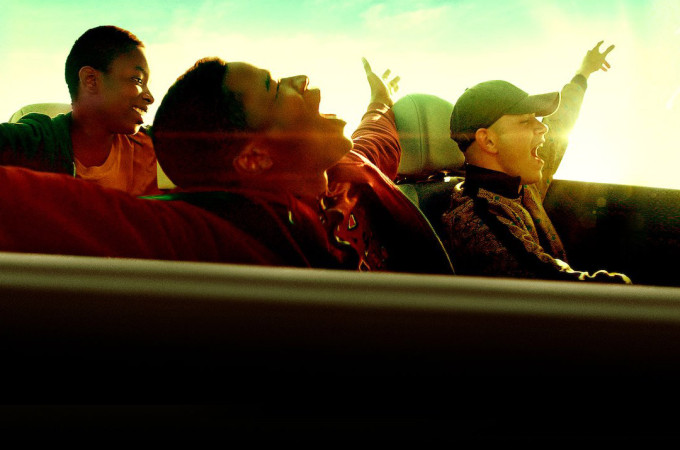
And that should be just behind newcomer “Queen & Slim,” which could clear $17 million despite not having a marquee star in its cast, an arty/poetic on-the-lam blaxploitation drama with Black Lives Matter topicality.

Even “21 Bridges” is cashing in, another $11-12 million this weekend, as everybody who missed this mixed-reviewed cop thriller last weekend is taking a gander this time out.

The newcomers should push “Joker” and “The Good Liar” out of the top ten,but not “Midway,”which is still playing well in the provinces (I took my elderly Navy vet Dad to it Wed., half-full theater). It will clear the $50 million mark by midnight Sunday.


Posted in Reviews, previews, profiles and movie news | Comments Off on Thanksgiving BOX OFFICE: EVERYbody is going to the movies as “Frozen 2” and “Knives Out” make bank

Netflixable? Scorsese’s eulogy for “The Irishman”


irish1

Martin Scorsese’s “The Irishman,” his epic telling of one mobster’s rise through the ranks to the moment Jimmy Hoffa disappeared, is his coda, his final statement on the mob movies he built his career on.

It’s Scorese’s “Unforgiven,” a Catholic’s atonement for all the gilded Oscar glory that was a byproduct of his decades of gangland epics, from “Goodfellas” and “Casino” to “The Departed.” His charismatic monsters and amoral lowlifes burned themselves into the popular consciousness, and maybe — all these decades later, he’s ready to pass a harsher judgement on them.

There’s a hint of “mea culpa” to this curtain call, a recognition that audiences ate up these dead-eyed murderers, extortionists and English-and-fashion-butchering creeps. Here he acknowledges that as colorful as they might seem, the “made men” were never “men of honor,” living by a “code,” loyal to their “brothers.” They were the very essence of Hannah Arendt’s“The Banality of Evil.”

Scorsese goes Biblical, here, a mob movie maestro who wants to make his last statement on the subject — not wholly a departure from his earlier films, just UNDERLINED here — easily understood. When he puts intertitles, peppered throughout the film, of how this goon or that one met an untimely end, we’re reminded of Romans 6:23 —“the wages of sin is death.”

Scorsese and his “Schindler’s List” screenwriter frame the story with a lonely, elderly mobster, Frank Sheeran, voice-over-narrating from his wheelchair, trying to give meaning or at least importance (thus his extraordinary claims) to his awful life. As if his abandonment and loneliness were  punishment enough for decades of violence, thievery and betrayals. Truthfully, that “sentence” is not much of a reward for three hours and 29 minutes investment.

Why did I keep thinking about Steven Spielberg through Scorsese’s funereal mob film finale? Because Spielberg opposed allowing Netflix epics like this bloated, under-edited indulgence into the Academy Awards. A blank check from the streaming service to our greatest living director to tell the mob tale to end all mob tales only meant he’d never hear a Studio Voice of Reason suggesting he thin out the repetition, give it clarity and PACE while losing some of the staggering number of “travel” scenes.

Maybe rely a little less on a repertory company so old he had to “de-age” them for scenes from their early days. Because any way you cut it, “Irishman” is an old man’s movie, and not just in the scenes where Robert DeNiro is meant to be 45 years younger than his 76 years. De-aged DeNiro punches and kicks like he’s scared he’s going to break a hip.

Does this stylistically unstylish picture stand with the lurid glories of “Casino,” the pulse-pounding narrative drive and cinema semiotics of “The Departed,” or the charismatic cynicism of  “Goodfellas?” Give me a freaking break.

The same people who soiled their Underoos over “Roma” are throwing confetti at “The Irishman,” as if excessive running time alone conveyed gravitas. It doesn’t.

Still, I enjoyed it, wrestled with the film’s “one man’s explanation” of the mob’s ties to the Teamsters, the Kennedys and Nixon, and that one “made man’s” utterly unverifiable claims about the end of mob-tied Teamsters chief Jimmy Hoffa. I relished going back into Scorsese’s “Casino” era world of plush leather banquettes in candlelit Italian clam bars and ristorantes, the ritualistic sips of wine and fresh supply of Mafia euphemisms — “I heard you paint houses,” somebody needs to visit “Australia” — mixed in with anachronisms from the mid-2000s.

Hearing “It is what is it” is like seeing a cell phone whipped out in Philly traffic in 1960.

But that enjoyment, unlike the movie, has its limits. Netflix is the perfect place for it. It’s a talky, borderline-plodding two-part mini-series of a mob movie, peppered with Oscar winners from DeNiro and Pacino and Pesci to Anna Paquin as well as an underused Harvey Keitel, with Ray Romano and Bobby Cannavale and even Little Steven Van Zandt as the mob’s favorite lounge singer, Jerry Vale.

“Indulgent?” It’s even longer than the Marvel movies Scorsese has been bashing as “not cinema.” He’s not wrong in his criticisms, and “Irishman” is actually about something — unlike your average comic book movie. But he is pandering to the fans with this cast, even if he is trying to make them question, as he apparently does, why we admire these goons and love immersion in this “tough guy” world.
irish3

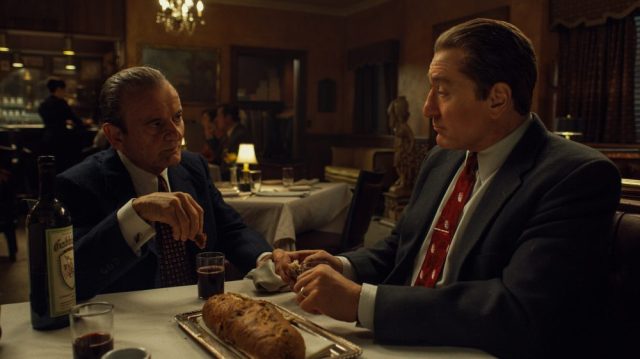
We follow World War II vet turned refrigerated truck driver Frank Sheeran (DeNiro) to his introduction to Russ Bufalino (Joe Pesci, out of retirement and back in the mob).

“I met what was going to turn out to be the rest of my life,” Frank narrates.

Stealing meat for the mob, running errands, moving into debt collecting and then the rough stuff, we see Frank’s story unfold as a flashback on a cross-country road trip that he and his wife and Russ and his wife took in the red letter year 1975.

The women are introduced, and shoved into the background. As Frank’s complicity grows, his quick turns to violence to settle any beef set in, and his involvement with Jimmy Hoffa (Al Pacino) just immerses him deeper into “our thing.”

His only judge? His daughter Peggy (Lucy Gallina, later Anna Paquin) recoils at his rare displays of violence, his creepy employers and the secrecy she starts to sense is hiding the ugliest truths about her father.

DeNiro’s performance is of a piece with his Jimmy Conway (“Goodfellas”) and Ace Rothstein (“Casino”), a man caught up in his circumstances, but one who only occasionally questions them. His remorse is scattered throughout “The Irishman.” He picks up on his daughter’s judgement, which she demonstrates from an early age. He’s trapped. I have to say I find Frank less interesting as a character than DeNiro’s comical mockery of a mobster, Paul Vitti in the “Analyze This” movies. Vitti, like Frank, is not a deep man, not someone who lets himself think too much about what he does. He can’t. He’s more Michael Shannon’s “The Iceman,” a pitiless dullard. Frank’s only pathos comes in his grasping at fame, telling his story from that wheelchair. We’re allowed to think how full of it he probably is.

Pesci gives a more interesting performance here, totally stripped of the amusing, over-the-top rage that characterized his earlier Scorsese mobsters. Russ has mob myopia. He sees protecting Frank as making himself righteous, even as he’s pushing his protege into mass murder.

Pacino is a lot more Hoffa-like than I expected, less of the “Hoo hah” Al of too many performances in recent years.

Paquin is a visual archetype, a silent judge parked in the middle of a movie where everybody talks too much, drinks too much and does what’s expedient, never what’s right. There is no forgiveness here, no Virgin Mary to pray to. Only condemnation.

The peripheral characters played by Romano, Keitel and Cannavale come and go with such little fanfare that one wishes they’d been left out if you’re not going to do much more than introduce this universe of infamous mobsters — Giancana, Salernos, Genoveses and Columbos — and colorfully-named also rans — “Whispers” DiTullio, aka “The OTHER Whispers.”

The exposition isn’t quite endless. But with so many characters, blending the Kennedy election “fix,” the mob’s loss of Cuba to the Bay of Pigs and the Kennedy assassination to Hoffa’s corrupt Teamsters war with Robert F. Kennedy and a drawn-out finale — the film’s only moments of suspense — Scorsese and screenwriter Steve Zaillian have a lot to juggle and we have a lot to chew on.

Too many “Goodfellas,” it turns out, don’t spoil the broth. But they damn sure water it down.

And an epilogue that meanders past the climax and all but peters out doesn’t leave one so much fulfilled as deflated. That adds up to an OK picture, I thought. Not a great one, and not one of Scorsese’s best even if I’m glad he got to make it.

And I’m glad it’s on Netflix, where one can take it in at leisure, in smaller bites than the Feast of the Seven Fishes Scorsese has insisted we all sit down for, where nobody can hear my “Jesus, Marty, GET ON with it!” but me.

2half-star6

MPAA Rating:R for pervasive language and strong violence.

Cast: Robert DeNiro, Al Pacino, Joe Pesci, Anna Paquin, Harvey Keitel, Ray Romano, Bobby Cannavale

Credits: Directed by Martin Scorsese, script by Steve Zaillian, based on the Charles Brandt book.

Running time: 3:29

Posted in Reviews, previews, profiles and movie news | 22 Comments

Netflixable? “Holly Star” tries to put the “cute” back in Christmas comedy

Here’s what the holiday romance “Holly Star” has going for it.

There’s an exotic setting — coastal Maine at Christmas.

The heroine, Sloan (Katlyn Carlson), has an unusual career. She’s abunraku stick-puppet puppeteer. Speaking from experience as a journalist, I can tell you puppeteers are as rare chimney sweeps, with less job security. Puppetry is a visual component of the movie.

Christmas tree growing and sales are another profession explored.

The plot hinges on a childhood memory of a hidden treasure in that corner of Maine (Winter Harbor, the place is called. They filmed in Portland.).

And a clever hook in that plot? Local Santas getting together Christmas Eve for an evening-long pub crawl.

What works against this actor-turned-writer/director Michael A. Nickles comedy is the romance, which, as played by Carlson and “The Guy She Left Behind When She Moved to New York” Christmas tree seller played by Brian Muller. No sparks.

Carlson, of “The Jim Gaffigan Show,” doesn’t so much act as look cute and mug. A lot.

The puppetry interludes have charm, but we realize what the advertising agency that’s employed Sloan to use her puppets in a soft drink campaign figures out. They’re uncinematic and don’t look that interesting on camera.

holly3

Sloan’s best friend from home is a paintball warrior played by Teya Patt, a character who is whismical by design, but not in practice.

And Santa’s on a pub crawl? THAT’s your movie, dude. Nothing here comes close to the promise of that as comedy fodder.

Sloan has returned to Winter Harbor, tail between her legs, no job, no money, no love life. Her parents are off on a cruise, but they leave her Grandma’s 1963 Rambler American 220. It’s just that they didn’t tell Granny (Pamela Chabora) that they were taking away her wheels.

Old pal Kay Kay (Patt) is up for snowball fights and paintballing, but nothing else.

Tweenage crush Andy Skillin (Muller) has a job for her, which will entail learning the virtues of various types of Christmas trees — Fraser fir to Balsam.

But a slip on the ice gives Sloan flashbacks, acted-out with puppets. She sees a Santa burying treasure, muttering “Holly Star” as he does. If she can figure out what he was burying, and where, money problems solved, right?

Maybe it’ll take a near-death experience, her life “flashing before my eyes,” to recall the clues she needs to summon up. Causing a near death experience?

“You know how crazy that sounds, right?”

Yes. Yes we do.

The only funny moment in this 91 minute “comedy” is when the paintball queen consults with her “commanding officer” (Lonnie Farmer), who hypnotizes Holly. That little trick is quick and quite amusing, and over so fast that wish they’d repeat it.

Or that Nickles had workshopped this mirthless script and figured out that Farmer and the drunken Santa pub crawl and Sloan’s puppetry were his movie, and rebuilt this entire joyless affair around all that.

1star6

MPAA Rating:  PG for language, some thematic elements and smoking

Cast: Katlyn Carlson, Teya Patt, Brian Muller, Pamela Chabora

Credits: Written and directed by Michael J. Nickles. An Orchard/Netflix release.

Running time: 1:31

Posted in Reviews, previews, profiles and movie news | Comments Off on Netflixable? “Holly Star” tries to put the “cute” back in Christmas comedy

Movie Review: Ruffalo and a fine cast navigate the legal hazards of “Dark Waters”

dark2

In your typical legal thriller, John Grisham or Scott Turow steer us from explosive twist to twist, finishing with a courtroom coup de grace and some version of justice achieved.

But in the real world, the law can involve tedious detail work, patience-exhausting delays, legal obfuscations and “justice” just as often denied. Because in America, she or he with the deepest pockets can outlast your average Jane or Joe.

“Dark Waters,” like a lot of legal thrillers, fictional or reality-based, is about another instance of corporate malfeasance, a big chemical company that knowingly poisoned a corner of “Wild, Wonderful” West Virginia — and the American consumer as well. But here it’s not leggy, sassy “Erin Brockovich” delivering quips to the bad guys and justice to the little guys. Here, our hero is a “plugger” who suffers for his efforts to bring chemical giant Dupont to court and get some relief for people who lose their lives, their livestock and their livelihoods to methodical, underhanded corporate folks who shuffled papers, did the math and decided what we didn’t know about Teflon couldn’t hurt…them.

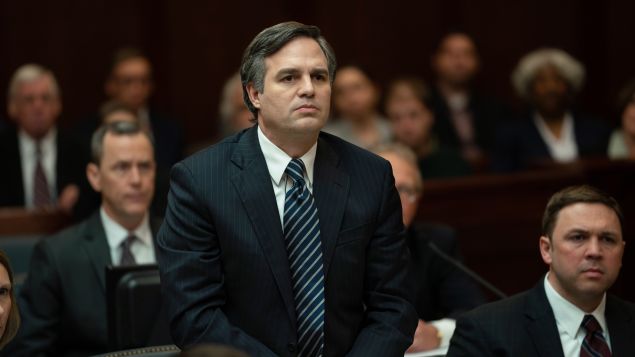
Mark Ruffalo is Robert Bilott, a Cincinnati lawyer at the prestigious Taft law firm. He’s made partner, even though he went to a “no name law school,” even though his lack of charisma is off the charts. Rob has no swagger, drives an old Toyota and doesn’t know what “black tie” means. But Rob is an expert on defending the firm’s big chemical company clients from litigation, patent violations and the like. He’s a rainmaker.

That changes the day his past reaches out and grabs him by the lapels. A farmer from Parkersburg, W.Va. shows up with a box of videotapes and a furious chip on his shoulder. The great character actor Bill Camp is Wilbur Tennant, a dairy farmer, son and grandson of dairy farmers, a man who is losing his herd to what he suspects is something that the local Dupont plant is dumping in the landfill next door.

Bilott can’t shake him, can’t shoo him away. Tennant is there because he knows Bob’s “granner” (grandmother). Bob frets about disappointing her, even though the LAST thing he wants the head of the firm (Tim Robbins) to know is that he (partly) grew up in West “By God” Virginia.

Bob makes a visit to Tennant’s farm on a snowy day in 1998, and what he sees rattles him, and then appalls him. The little kids in town have black teeth. So do the cows, and Tennant’s German Shepherd. The animals have tumors all over them, and seeing Tennant have to shoot a cow that’s gone mad and charges them is Rob’s call to action.

But over what?

“Y’BLIND, boy?” The creek has stones bleached white by something in the water. The evidence is all around them. Rob, with just enough clout with the firm to give this thankless case a “surgical,” short-term glance, takes it on.

Dupont may not be a client, but that doesn’t mean the Armani suits in the office don’t covet them. It doesn’t mean Rob doesn’t know the Dupont VP (Victor Garber) he approaches at a convention. Rob’s always very apologetic, but he needs to file a claim, “trigger discovery,” and figure out why this Tennant fellow’s farm “is a graveyard.”

“Dark Waters” is about the 15 years-and-counting can of worms that opens up, the pushback from Dupont and a too-compliant state, an EPA that has been content to let the chemical giants of America “regulate themselves” on chemicals that predate the creation of the EPA, from Rob’s buttoned-down lawfirm and its greedier partners, and from his wife (Anne Hathaway), a lawyer herself who has given up her career to become a stay-at-home mom, left at home with their growing brood as Rob becomes so obsessed with single-handing this case into court that he develops tics, twitches and spasms.

Ruffalo leaves little trace of any other role in this performance, a head-down, grind-it-out guy who will not lose his cool, will not be brushed off and won’t get all Erin Brockovich, even when his target calls him a “hick.”

Hathaway gives a little law school polished fire to wife Sarah, a person who knows how this firm works (it’s where they met) and just what Rob’s jeopardizing, tilting at the gigantic Dupont windmill.

Robbins gives a nuanced flavor to a role that John Grisham would have rendered as a straight-up villain. Garber is the ultimate callous, denial-spouting corporate hack, and Bill Pullman ignites a fun and furious third act as the good ol’boy brought in as trial attorney for the growing case.

But it is Camp, a character actor who burst on the scene half a dozen years ago and who has dazzled every single time out of the gate, who gives “Dark Waters” its enraged heart. He’s so deep into the accent he needs subtitles, so at home in bib overalls and worn Wellingtons that you believe him. And when he struggles to compose himself over what is happening to his livestock, his dog and his family, he will break your heart.

Director Todd Haynes (“Carol,” “Far from Heaven”) ensures that there’s an Oscar nomination or two in this actor’s film. One of them has to be for Camp.


Make no mistake, “Dark Waters” is a movie about something, with Dupont, Dow, Union Carbide each having ugly things that put them back in the news on a regular basis. It’s not just this case, not just Flint, Michigan’s drinking-water scandal that makes this seem topical.

Watch the court scenes and realize how important every judge appointed to the Federal courts is, and how putting incompetent, bought-and-paid-for corporate hacks by the hundreds on every lifetime-appointment court all the way to the Supreme Court these past three years makes every one of us less safe, less able to defend ourselves and or rights.

The U.S. Supreme Court has even ruled that corporations are “like people,” with rights to free speech, etc., just like American citizens. But if they truly are just like “people,” justices, why isn’t Dupont subject to the death penalty? Why wasn’t Union Carbide fined out of existence after the Bhopal disaster?

Which wing of which the Federal prisons in Beckley, Martinsburg or Alderson, W. Va. should we set aside for the Dupont team that covered up its crimes?

We might remember the wave of news stories that blew up out of this scandal when it became public, even if we forget exactly how certain cooking products disappeared from store shelves.

A great movie like “Dark Waters” reminds us of what happened, of just what the “system” failed to do to safeguard us. And it reminds us of what a legal crusade looks like — a years-long grind of discovery, depositions, evidence and trials, and to be thankful for dogged, dull pluggers like Robert Bilott who stopped a mass murder in progress, armed with only a degree from “a no name law school.”

4star4

MPAA Rating: PG-13, thematic content, some disturbing images, and strong language

Cast: Mark Ruffalo, Anne Hathaway, Bill Camp, Mare Winningham, Bill Pullman, Victor Garber and Tim Robbins

Credits: Directed by Todd Haynes, script by Matthew Michael Carnahan, Mario Correa, based on a New York Times Magazine article. A Focus Features release.

Running time: 2:06

Posted in Reviews, previews, profiles and movie news | Comments Off on Movie Review: Ruffalo and a fine cast navigate the legal hazards of “Dark Waters”

Netflixable? Kerry Washington wants to know where her “American Son” is

AMERICAN SON

And here we thought Netflix was just “disrupting” TV and film distribution!

They’re going after The Theatre, too. Or they might as well be, taking on a preachy, stagey, acting (and over-acting) showcase like “American Son.”

It’s a tale told on a single set, just actors and lines –some shouted, some pleading, some weeping. It looks and sounds like a play.  Close your eyes, and it’s a radio play.

Not that it isn’t worthwhile. “American Son” is about gender, race, class, black lives matter and America, 2019. You can see why Kerry Washington got on board and got behind it.

But any movie you can enjoy with your eyes closed has a problem. Any conflict you can map out on graph paper, footnote with lines and words you expect to hear, isn’t going to surprise anybody.

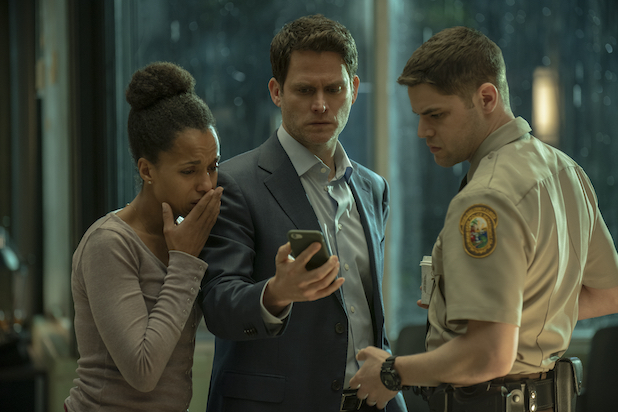
The “Scandal” star plays Kendra, a Miami mom at a small precinct that looks like a mid-century modern living room. She’s desperate to find her teenage son. And she’s getting nowhere with this “low level newby (Jeremy Jordan) who ain’t very bright” in a uniform.

It’s all she can do to add “Officer, all due respect” to her increasingly agitated pleas and demands. His questions? By the book, maybe. But they’re triggering her. She may look and sound like Kerry Washington, put-together, educated and upper middle class. She corrects his (and everybody else’s) grammar.

But “any priors” and “street names” queries and the like certainly sound racist when you’re talking about a six foot tall eighteen year-old black kid in the Lexus his daddy bought him for graduation.

“He’s never so much as torn the tag off a new mattress!” is sarcasm lost on the cop.

She’s been leaving Jamal voice mails, alternately furious and pleading. She’s barking at the kid’s dad to meet her at the station. She can’t understand why, if the police know his car was pulled over, why there’s nobody who can tell her what happened, where he is and what is going on.

It’s a showy role, as Kendra rattles off Jamal’s description, starting with “glasses, corn-rows and light-green eyes” and breathlessly adds “loves Emily Dickinson” and “cries at ‘Puff, the Magic Dragon.'”

We hang on every word, because this is the quietest, emptiest Miami police station that ever was.

That doesn’t change when her husband shows up. But Scott (Steven Pasquale of TV’s “Rescue Me”) gets answers, just by being a man. And being white. Damned if the baby cop doesn’t let slip a “keep the natives at bay” and “She went from zero to ‘ghetto’ in…” in front of him.

Yeah. That’ll go in his file. Or not.

Scott ratchets up the tension, and still nobody can tell them exactly what’s going on.

AMERICAN SON

“American Son” never for a second feels like anything but a filmed play, despite the intimacy of the camera and blocking that takes us on the “stage” with the cast.

The script is a dramatic crucible for the couple talking through their bi-racial marriage, her Liberty City upbringing and the kid’s increasingly rebellious — stereotypically so — behavior.

Dad’s all about the “loose pants and that loping, surly walk he’s suddenly developed,” Mom’s defensive about the prep school they sent him two — with virtually no African American peers in it — and the bumper sticker he’s put on the car Dad, who moved out two months ago, bought him.

You know “uppity” is coming, that any request for coffee will be a loaded “I like it black,” and that the Irish cop will have a colorful expletive just for his wife’s increasingly shrill pleas and grievances.

“Sweet, sweatie Jesus, Kendra!”

As with a play, we’re meant to imagine much of what’s taking place off stage, with a lone close-up flashback filling in Kendra’s state. As with a play, characters take unnatural lengths of time off-stage — getting coffee, digging up more info — while those left behind have their little arguments, their big arguments and long verbal walks down memory lane.

Like a play, it’s a little claustrophobic, limited, “theatrical.” Washington, in particular, goes over-the-top — as if she’s “playing to the back row.”

But that’s what you get when you choose material that doesn’t feature movement and alternate settings and when you hire Broadway vet Kenny Leon, whose recent specialty has been TV productions of plays (“Hairspray: Live,” “The Wiz: Live!”) to direct it.

“American Son” never quite lapses into terrible, but as with a play that needs another week of out of town tryouts, it “never gets on its feet,” either.

2stars1

MPAA Rating: TV-MA, profanity

Cast: Kerry Washington Steven Pasquale, Jeremy Jordan

Credits: Directed by Kenny Leon, script by Christopher Demos-Brown.  A Netflix release.

Running time: 1:30

Posted in Reviews, previews, profiles and movie news | Comments Off on Netflixable? Kerry Washington wants to know where her “American Son” is

Michael Caine, Lena Headey, an “Oliver Twist” sells to a small distributor

Variety is reporting this latest telling of Dickens’ classic is going to Saban Films. It’s a modern say version, so fear of finding an audience for a period piece doesn’t figure into why a major studio didn’t grab it. https://t.co/VR4gJau9Jc https://twitter.com/Variety/status/1199058001698705413?s=20

Posted in Reviews, previews, profiles and movie news | Comments Off on Michael Caine, Lena Headey, an “Oliver Twist” sells to a small distributor

Movie Review: James’ Addiction tears him into “A Million Little Pieces”

million1

James Frey’s “A Million Little Pieces” has been discredited as a memoir of addiction. He made too much of it up for it to be “non-fiction.” “Confessional novel?” Maybe. Got him kicked out of Oprah’s Book Club, because gosh darn it, she ALWAYS wants to believe. That doesn’t seem to have dinged his career at all.

But does a film of that tainted best seller have value on its own merits? I mean, even assuming that the most melodramatic touches are made up?

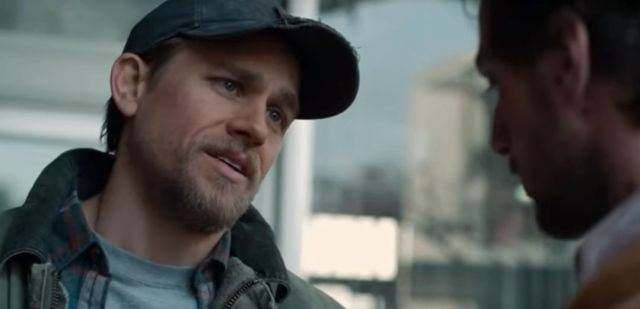
Not a lot, it turns out. Although “Kick Ass” alumnus Aaron Taylor-Johnson and his director-wife Sam Taylor-Johnson saw enough in it to turn it into a star vehicle, and stars from Billy Bob Thornton and Juliette Lewis to Giovanni Ribisi and Charlie Hunnam were happy to sign on.

What they produced is the ultimate “addict revolts against rehab” drama, a tale of a young man fighting “the cure” every single step — 12 of them, remember — along the way. Because that’s what Frey was selling and what is debated in the film’s group therapy scenes, its “inventory” confession to a Catholic priest (a non-starter). He, as a character, is anti-Alcoholics Anonymous, anti “addiction is a disease.”

“It’s a decision, NOT a disease,” he says defiantly. Perhaps he is living, walking, getting-rich proof of that. Then again, when you’re caught making stuff up, who’s to say?

“Million Little Pieces” introduces Frey (Aaron Taylor-Johnson) in the middle of that one last binge, complete with crack smoking, booze guzzling, nude dancing and falling out of a second story window.

He’s hustled onto a plane, blitzed — where he steals from the liquor cart — and into Minneapolis. That’s where the famed rehab hospital/halfway house/”facility” Waldensen (Hazelden, renamed for the movie) is.

Staggering off the plane, hallucinating a jetway oozing brown liquid from the walls, he doesn’t want to be there. Because, you know, he’s NOT an addict. “I’m not like THOSE people.”

It’s 1993, and this place is too strict for a guy who loves crack as much as James. No booze, no unprescribed medications and NO “fraternizing.” Ignore the hard-mileage young woman (Odessa Young) who comes on to him that first day.

“Wanna do some BLOW?”

She’s persistent.

“Are you deaf or retarded? I’m finding it really hard to tell.”

James doesn’t want to stay, doesn’t want to get kicked out, and kind of wants to stop vomiting. That doesn’t mean this “Christian” program is for him.

He rebuffs her, fends off a too-pushy convict (Giovanni Ribisi, born to play this guy), bristles at his clarinet playing roomie (Charles Parnell) and ignores the profane, sage sarcasm of Leonard (Billy Bob Thornton).

“Work the steps. Trust the process.”

Most everything that follows is straight out of every rehab drama ever filmed — combative group therapy, “cheating” the system, conflict with the resident “weasel” (David Dastmalchian), guilt over the family (Charlie Hunnam plays his older brother) he has wrecked with his addiction.

“God grant me the serenity…”

million2

James rejects “the process,” resists help in sessions with his counselor (Juliette Lewis) and hurls Bibles out the window every time one is offered.

Maybe a shorter book, “Tao te Ching,” will do it for him? You know, “fortune cookie s–t?”

“If you have nothing, you have nothing to lose.”

“Addiction” is every actor’s license to take it over the top and down the drain, and Aaron Taylor-Johnson does that. It’s not a bad performance, just an over-familiar one. Thornton stands out among the rest of the cast, but nobody does colorfully crude colloqualisms like Billy Bob. Teasing a prize-fighter he knows, he stops well short of making the guy mad.

“I’ve got ribs like a f—–g blue jay!”

The Taylor-Johnsons hit just about everything here dead on the nose. That includes the music, lots of variations of “Everybody Hurts” by R.E.M. James walks into a bar, perhaps the only bar in America to put the rasping odes to alcoholism of Tom Waites on the jukebox.

But even a movie otherwise devoid of surprises finds at least one. Here, it’s a beautifully choreographed dance of co-dependency and romantic self-control, James letting himself care about that one junkie who came onto him that first day, not wanting either of them kicked out for caring.

Otherwise, “A Million Little Pieces” is little more than a million little melodrama rehab cliches.

1half-star

MPAA Rating: R for drug material, language throughout, some graphic nudity and sexual content

Cast: Aaron Taylor-Johnson, Billy Bob Thornton, Odessa Young, Juliette Lewis, Charles Parnell, Giovanni Ribisi and Charlie Hunnam

Credits: Directed by Sam Talor-Johnson, script by James Frey and Aaron Taylor-Johnson. An Entertainment One release.

Running time: 1:53


Posted in Reviews, previews, profiles and movie news | Comments Off on Movie Review: James’ Addiction tears him into “A Million Little Pieces”

Netflixable? “Brother (Mon frere)” tells a tale of juvenile justice in France

brother1

The French drama “Mon frère” (“Brother”) is a “boys in juvie” drama, a genre pic about what happens in juvenile detention, or “Youth Custody Center” as the French call it.

It’s a sympathetic portrait about a system built to intervene just before a kid is given up on and sent to prison. And it’s a character study in what one troubled boy endures when he is hurled into this environment after a violent crime.

There’s not much new here, just a couple of plot twists that we kind of see coming. But it’s always interesting to note how another culture handles criminals, especially young ones.

Teddy (MHD) is a teen hurled into this fenced-in “center, not jail,” one of a dozen boys who face six month sentences to see if they are worthy of rehabilitation, or prison. He is challenged the instant he walks in.

“Gimme a cigarette,” (in French with English subtitles). There’s an implied threat behind every action, every remark. “Why so quiet? Spill your guts!”

They want to know why he’s there. The movie uses flashbacks to show us that. We see Teddy’s troubled home where he and his younger brother Andy (Youssouf Gueye) endured the terrors of their brute of a father (Mark Grosy), something even their mother (Neva Kehouane) couldn’t manage. She fled. Andy is being raised by their grandmother, their father’s mother (Lisette Malidor).

Teddy’s new environment is operated by case workers, counselors and teachers, but is run “Lord of the Flies” fashion. The psychotic Enzo (Darren Muselet) lives his days in one long lashing-out. The way the adults tolerate empowers him.

Enzo and Teddy are going to tussle. We know it.

The boys attend classes, get pep talks from the case workers — “I believe in you. I believe you’re the future of France.”

That future is troubled, with racial strife, abused kids and out-of-control sociopaths in the making, from the looks of things.

Teddy is identified as smart, but is resigned to his future. The counselor called Claude (Aïssa Maïga) tries to bring him out of his perpetual crouch. She uses soft-punch boxing sessions to identify what Teddy went through and if a talking cure will change him.

The first thing Teddy protects in the ring is the back of his head. It’s where his father used to hit him.

Teddy stands up to bullying, sort of. Then he uses his smarts to try and outfox the raging Enzo. And then an even bigger brute, Mo (Najeto Injai) shows up and upsets the dynamic.

Mo is all “Look DOWN,” as in “Don’t you DARE make eye contact,” and “No one here impresses me.” Will he be useful to Teddy?

Director Julien Abraham (“Made in China,” “Asphalt Playground”) never quite immerses us in this center and its world of fear and violence. The flashbacks to Teddy’s home life interrupt that.

The counselors tolerate entirely too many challenges to their authority and come off as weak. The power struggle there is the most interesting part of the movie, as it is with any “in the joint” tale. But that’s abandoned for a more fantastical turn of events. Or two.

MHD is a quiet presence in this, allowing most every other actor to overwhelm him in one-on-one scenes. There are reasons for that, but structurally, it knocks the film off balance.

“Brother” is more interesting in presenting a contrasting way of dealing with wayward youth than in showing us new variations on age-old genre tropes. The characters and situations are over-familiar, even if the language and setting are not. That makes for a generally dull, by-the-numbers take on the “boys in prison” genre, with only a couple of novel French twists to recommend it.

2stars1

MPAA Rating: TV-MA, violence, nudity

Cast: MHD, Darren Muselet, Aïssa Maïga, Youssouf Gueye, Najeto Injai, Mark Grosy and Neva Kehouane

Credits: Directed by Julien Abraham, script by Julien Abraham, Almamy Kanouté and Jimmy Laporal-Trésor. A BAC/Netflix release.

Running time: 1:36

A BAC/Netflix release.

Running time: 1:36

Posted in Reviews, previews, profiles and movie news | Comments Off on Netflixable? “Brother (Mon frere)” tells a tale of juvenile justice in France

Next screening? “DARK WATERS

A little righteous legal crusade for your holiday awards season enjoyment.

Sell out lawyer finds his soul in fighting a company that kills people.

Good to see Mark Ruffalo joint Scarjo and Chris Evans in finding worth while films outside of the Marvel universe.

Posted in Reviews, previews, profiles and movie news | Comments Off on Next screening? “DARK WATERS

Movie Review: The epic awfulness of “The Madness Within”

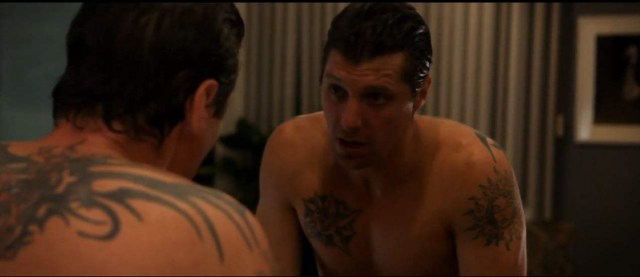
mad1.jpeg

It’s not the constant snorting, sniffing and nose-rubbing after the snorting and sniffing.

It’s not drinking, the endless, pointless sexcapades and grasping for ‘decadence.’

It’s not the vomiting after indulging, either. Vomiting and vomiting and sniff sniff sniff more vomiting.

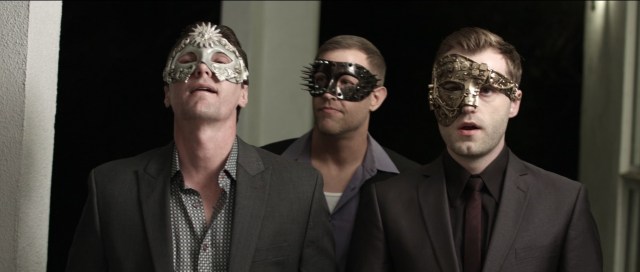
No, the excesses of “The Madness Within,” the most misguided indie drama since “The Room,” are only signs of the power trip a deluded writer/director/star with cash backers was on.

It’s the sheer incompetence of it all, the “Room” level staging blunders, the boom microphone slipping into the frame, the movie posters on the office walls of coke-and-molly-maniac Russ Washington (writer/director/star Hunter G. Williams). They’re the completed films of this Hollywood producer, addict and all around rhymes-with-gas-pole shaker-and-mover.

The title of the biggest hit, the poster hanging right over Hollywood player Russ’s shoulder?

“Corpotate Games.”

That’s right. These dipsticks wrote themselves a “cautionary” Hollywood tale of drugs, sex and the piper wanting to be paid. They hired set dressers who commissioned graphic designers and a print shop for posters for “deadly.” and “From Another Dimension.” And the one that stands out is the one with the misspelled word in the title.

“Corpotate Games.”

Williams’ producer-Russ is out of control, and his production partner Marcus (Edin Gali) is not there as a sobering influence. This isn’t “Simpson/Bruckheimer.” There is no responsible sober partner. They’re both indulgent junkies who burn through production cash the minute they have a deal.

Every bit of good news deserves a bump. Every bit of bad news deserves a bump. Sniff sniff.

They get the deal even though they’ve shown up for their distribution/financing meeting late. Even though Russ declares he has stars lined up (he doesn’t) and presales of $22 million overseas, and $18 million in the U.S. He’s the last guy you’d lend $50 million to for a movie.

There’s little time spent on the set with temperamental stars, a little more spent trying to badger a movie star (Lily Tomlin, as herself) you’ve had a fling with into making your movie.

OK, that was funny.

Mainly it’s about Russ falling for his very own “Pretty Woman” (Tessa Farrell), a hooker who doesn’t charge him. Because like every other woman in the picture, she is compliant and eager to degrade herself to be with these two degenerates.

mad2

“In Hollywood, everyone’s a hooker, in one way or the other. Sniff SNIFF.”

“I’m starting to think you have a PROBLEM. SNIFF SNIFF.”

Restaurant bathroom sex, autoerotic asphyxiation in a Darth Vader mask sex, “Eyes Wide Shut” orgy sex.

Golly. At least there’s a little courtship, a montage of trips and sex and hot air balloon rides.

Sniff sniff sniff.

“The hero’s journey” here lacks a hero, or a journey. The performances are competent but not compelling, the dialogue profane and never profound. The sexism and sexual misuse rampant.

“EASY, Weinstein!”

It’s an appalling film on pretty much every level, and one only hopes that all involved — save Lily Tomlin — changed their names in the credits to escape blame.

Of course, it could’ve been worse. They could have signed on to “Corpotate Games.” As it is, they just made what might be the worst film of 2019.

star

MPAA Rating: R, drugs, sex, profanity

Cast: Hunter G. Williams, Edin Gali, Tessa Farrell, Arber Mehmeti and Lily Tomlin.

Credits: Written and directed by Hunter G. Williams. A Midnight Releasing release.

Running time: 1:37

Posted in Reviews, previews, profiles and movie news | 1 Comment