Movie Review: The life of a refugee and work of art, a Tunisian satire– “The Man Who Sold His Skin”

For my money, the cleverest movie plot of 2020 belongs to Tunisia’s submission for inclusion in The Academy of Motion Picture Arts & Sciences’ “best international feature” contest at the upcoming Oscars.

“The Man Who Sold His Skin” is political and playful, romantic and ironic. It’s about the Syrian Civil War, art and art collecting, human rights and the life of a work of art. And it’s a provocative and darkly amusing delight.

A famous artist contracts a Syrian refugee to let him create a work of art on his back. That artwork –a tattoo of a Schengen Visa, detailed down to the serial numbers. That’s what refugees coming to Europe crave and absolutely must have to relocate there, escaping civil wars, drought, poverty and oppression.

A human being becomes a sitting, seething embodiment of a global crisis and a cause celebre amongst the artsy cognoscenti. How’s that for a “clever hook?”

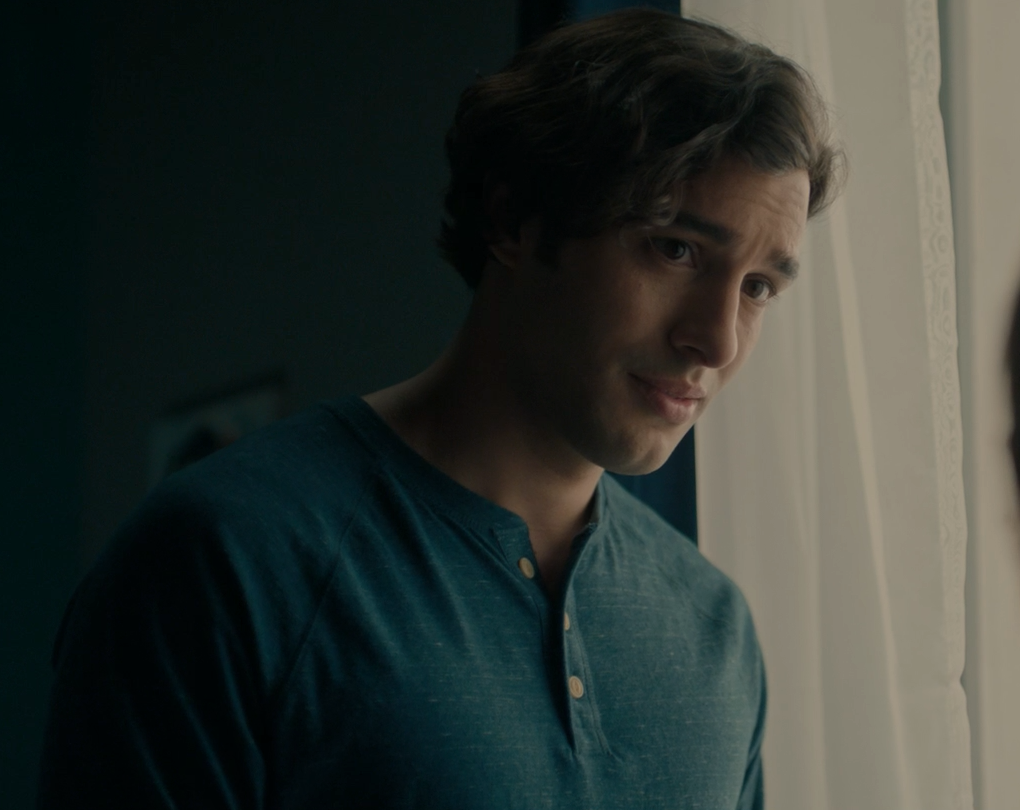
Sam Ali (Yahya Mahayni) only wanted to be “free” to love Abeer (Dea Liane). She’s from a higher social class, and she hasn’t told her mother about this classmate she’s fallen for. But that doesn’t stop Abeer from declaring her love on a Damascus commuter train.

It’s just that this admission sends lovestruck Sam into ecstasy, announcing his love to everybody on board, dancing and singing to the claps of their fellow passengers. Damned if the sullen old man taping this on his cell phone didn’t rat them out to the authorities. Sam’s arrested, shirtless and facing interrogation when miracle of miracles, the interrogator turns out to be related.

“Run away,” the government goon hisses between threats.

Sam does, all the way to Beirut. Abeer? She’s married off to a member of the Assad autocracy, an official with the consulate in Brussels.

What can save Sam from his despair, his life of menial labor inspecting freshly-hatched chicks? He finds an answer when he and a pal crash an art opening. He likes art, and he likes cadging free food more. But when the manager (Monica Bellucci) running the opening catches him and confronts him with kindness, he turns surly. That gets the attention of her client, Belgian-American artist Jeffrey Godefroi (Koen De Bouw).

The faintly-flamboyant Jeffrey LOVES surly, and he is inspired by this angry refugee.

“I want your back,” he purrs. And as he’s contracted to do a show in Brussels, lovesick Sam sells it to him — for a piece of the action.

Writer-director Kaouther Ben Hania (“Beauty and the Dogs”) takes a real-life incident involving a tattooist and art subject “contract” and turns it into this send-up of the poseur-packed art world, the fluid nature of what we call art these days, a humanitarian crisis and the professional protesting classes who “defend” the rights of the displaced.

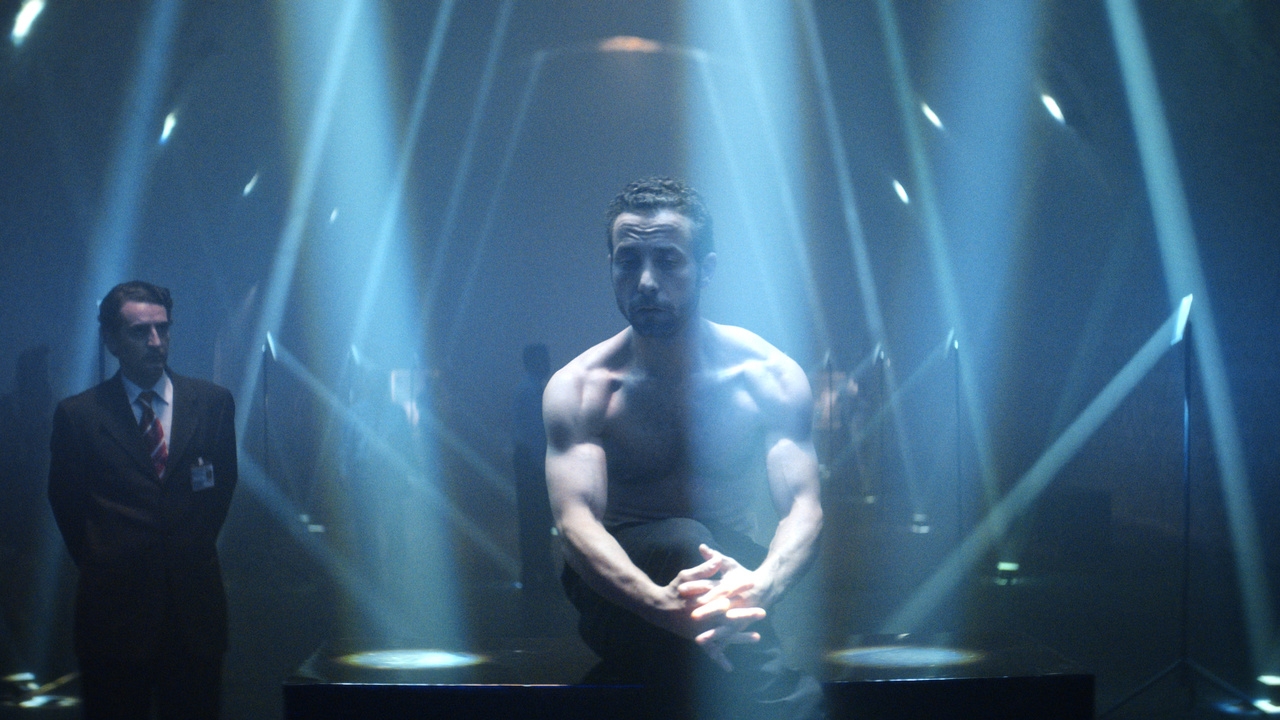
But Sam doesn’t want to be “defended.” He’s being well-compensated and is living in a five star hotel. He wears a silk robe to work each day like a prize-fighter, removing it to settle into a darkened museum grotto of light and mirrors.

The film never crosses into out-and-out farce, even as it lightly cuts every group Ben Hania holds up for skewering. She never lets us forget that this is, at heart, a love story, filled with longing and growing bitterness. That gives “Sold His Skin” its gravitas.

The tragedy of the last decade in Syria is kept in the background for the most part, as increasingly rebellious Sam struggles to maintain his humanity through the life cycle of a “hot” work of art. There’s celebrity and its downside, the inevitable “controversy” and blowback, sales and auctions, each more humiliating than the last.

And hell and damnation, his woman’s gone and married a thug with an Assad office job.

As dark as Ben Hania lets things turn — this is, after all, a form of slavery, “human trafficking” and “prostitution” — she’s never lets her film sit and curdle.

No, there’s always a new crisis when the portrait develops a pimple, another quip from the provocateur who designed the art, Jeffrey.

“I’m not cynical. The WORLD is!”

In his feature film debut, Mahayni gives dignity, pettiness and raging frustration to Sam. Liane is the very picture of winsome unattainable desire. De Bouw is an oddly-accented hoot, and Bellucci classes-up everything and everyone around her, as usual.

And when it’s all over, the viewer gets to wrestle with everything everyone here does — the plight of Syria, the nature of art, “exploitation” and the nature of “freedom.”

Not bad for the first Tunisian film much of the world will have ever had the chance to see.

MPA Rating: Unrated, violence, profanity

Cast: Yahya Mahayni, Monica Bellucci, Dea Liane, Koen De Bouw

Credits: Scripted and directed by Kaouther Ben Hania. A BAC/Tanit Films release.

Running time: 1:43

Posted in Reviews, previews, profiles and movie news | Comments Off on Movie Review: The life of a refugee and work of art, a Tunisian satire– “The Man Who Sold His Skin”

Movie Review: Transgender anti-heroine says “Open Up to Me”

She wasn’t always a cleaning lady. And from the liberties she takes with one client’s lipstick, makeup and clothes — trying them on — you’ve got to wonder if this is a job she’ll hang on to for long.

Still, she’s educated and put together well, and you’d never know her financial and employment situation at first glance.

So when a patient at the psychotherapist’s office she cleans mistakes her for “an associate” of the doctor, reaches out in a sort of resigned despair upon learning the doctor has just left town for two weeks, Maarit listens and puts on her compassionate face.

And seeing as how Sami is kind of cute and wounded, she does more that feign sympathy. She’ll have a session or two with him.

“Can you keep this between us?” is her condition. Oh, and one other thing, Maarit used to be Mauritz. She’s transgender. Is that going to be a problem?

That’s the implausible and highly ethical set-up to “Open Up to Me,” a Finnish drama with a trangender heroine (played by Leea Klemola) we’re supposed to root for, but who is plainly problematic.

She is discriminated against, something we pick up on in job interview scenes and one brutally bigoted encounter with police. She hasn’t openly identified as a woman for long, so she’s just now figuring out how that sort of courtship might work and who might be “into” who she is now and who she was before.

“My problem is I’m too honest,” she tells one prospective employer (in Finnish with English subtitles). That goes for her love life, too.

But damn girl, this isn’t how you do it — pretending to be a shrink, listening to a lonely soccer coach (Peter Franzén) lamenting how cold his marriage has turned, how he’s seeing a shrink at the insistence of his control-freak wife (Ria Kataja). That’s downright predatory.

Writer-director Simo Halinen puts Maarit in a hole, straight off, and takes the dramatic strategy of building sympathy for her afterwards. She’s estranged from her daughter (Emmi Nivala), employed far beneath her station. She used to be a school social worker.

And she’s not just counseling Sami, bonding over football (most implausible of all, they once played against each other in junior leagues) and flirting. She’s “open” with him about being transgender and he’s accepted that, and isn’t repelling her advances.

But she’s also stumbled into his wife Julia under the same circumstances (at that office) and given her advice, too. That is lawsuit level out-of-bounds and makes it that much harder to sympathize with our heroine.

And she needs sympathy. When the cops call her in, what they’re questioning her about is plainly more a potential civil liability. They’re just grilling her, using her abandoned name, as harassment.

Maarit’s obsession with “my needs” and her desires has blinded her to what she’s put her daughter through, as well.

Writer-director Halinen has picked a slippery fence to park his picture on, showing us a little romance mixed with a few ugly attitudes. Many wincing moments, such as teen soccer tyro Teo’s blunt “Are you a man or a woman?” question to Maarit on their first meetings, are defused, in that case, with Teo’s Italian macho flattery.

“You kind of dig your body too much,” Teo (Alex Anton) tells her , “the way Finnish women never do.”

Klemola, a veteran Finnish actress, gives the barest hint of gender dysphoria, and is just convincing enough as a woman who used to identify as a man. We don’t hear about surgery or hormones, any of that. The movie’s far more interested in her midlife mental adjustment to the change.

She’s focused on what she wants to the exclusion of how that might hurt others. She’s a tad aggressive.

Maarit is not bellwether transgender character, and not necessarily that likeable. Her daughter pops in for a visit, and Maarit leaves the teen in a parking garage at night while she runs upstairs to change.

Maybe in Finland that’s OK, but come on.

That makes Maarit something of a trailblazing figure in transgender cinema representation — not pitiable or annoying and grating, in an over-compensating way. She’s just selfish and reckless, something everybody else is to a greater or lesser degree.

MPA Rating: Unrated, sexuality, profanity, adult situations

Cast: Leea Klemola, Peter Franzén, Ria Kataja, Alex Anton and Emmi Nivala

Credits: Scripted and directed by Simo Halinen. A Corinth films/Film Movement+ release.

Running time: 1:35

Posted in Reviews, previews, profiles and movie news | Comments Off on Movie Review: Transgender anti-heroine says “Open Up to Me”

Movie Preview: Tunisia’s quest for an Oscar? “The Man Who Sold His Skin”

Monica Bellucci stars in this tale of a tattoo superstar and looks like nothing you’d expect to see from any North African cinema. Wow.

Posted in Reviews, previews, profiles and movie news | Comments Off on Movie Preview: Tunisia’s quest for an Oscar? “The Man Who Sold His Skin”

Movie Review: “Psycho Goreman” qu’est-ce que c’est?

My stars and garters, what manner of Z-movie mayhem is this?

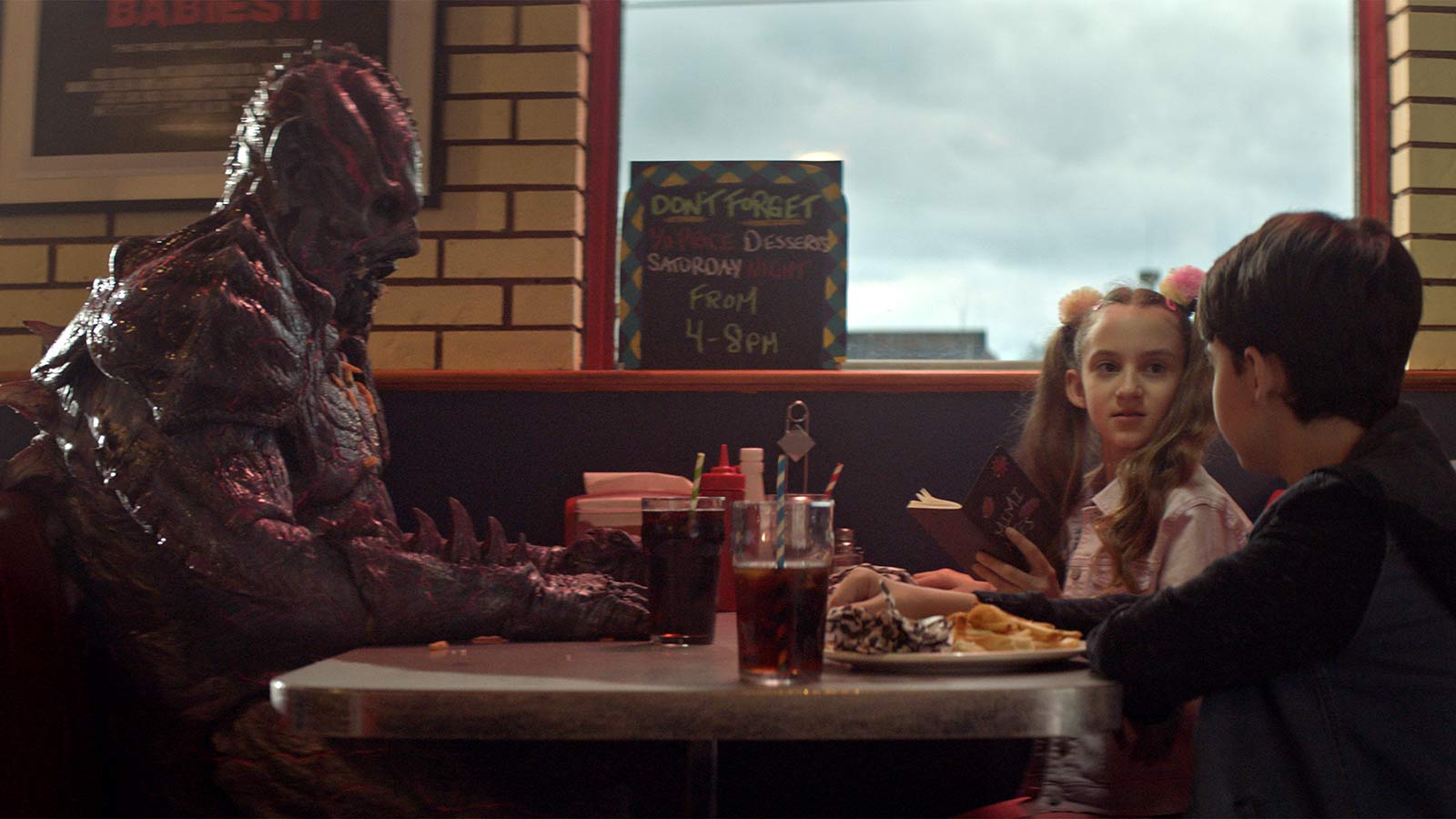
A little nacho cheese from the makeup maestro turned director of “Leprechaun Returns,” complete with all the digestive tract burps and toots that label entails, “Psycho Goreman” looks and sounds like it was cooked up by people the age of its stars.

It’s a tween’s sci-fi/fantasy/horror mashup, with monsters, beheadings, made-up games, sibling bullying, magical orbs and talking back to your parents.

Gory and a tad psycho? Truth in advertising!

And even if it sags in the middle like your Dad once he hit 50, it’s still cheerful enough to come off, or come close enough.

Siblings Mimi and Luke go at it, hammer and tong, in their muddy suburban back yard every night. The game is “crazy ball,” a “dodgeball” variation with a lot of creative enhancements.

That’s how Luke (Owen Myre) ends up digging that hole as punishment. That Mimi (Nita-Josee Hanna) is a tiny terror, with her foot on his neck and quite the mouth on her as well.

“Check the TAPE,” she bellows at her intimidated parents (Alexis Kara Hancey, Adam Brooks). “Luke SUCKS!”

She pushes around Luke’s BFF Alastair (Scout Flint) as well — treats him like a USDA Grade A slice of meat, too.

“Why don’t you give us a little ‘hunky boy’ spin?”

The hole is where they find this giant amulet thing with a glowing gem in its center.

“Is that a coffin? Is THIS where they buried Grandma?”

No, that’s a charm that’s kept “a nameless evil” whose escape would mean “doom for all existence.” And you know kids. They let him out.

When he emerges, in all his giant-sized Satanic Demon glory, he doubles down on that “nameless” thing, as “No name can encompass my Dark Will!”

He says stuff like that, and “Is that fear I smell?” Prepare for “the sweet release of death!” He kills and destroys at will, but that doesn’t phase Mimi.

“SHUT it!” She proceeds to name him Psycho Goreman, PG for short. And as she has that “Gem of Proxidite” thing that they used to unleash him, PG (Matthew Ninaber) has to take it.

Those who imprisoned PG, The Templars, have to send Pandora Warrior Princess (Kristen MacCulloch) to fetch him. PG summons his “Palladins” to defend himself, and take care of the “two brainless meat children” so that he can be truly free.

Can Mimi keep him in line, keep the peace and keep “all the hunky boys” out of PG’s clutches?

“I do not care for Hunky Boys!”

“PG” sprints out of the gate with childish whimsy, goofy dialogue and spectacularly inventive monster costumes. PG has a hint of The Creature from the Black Lagoon about him, Pandora’s made up like the God George Lucas’s Storm Troopers would worship, or have pin-ups of in the barracks.

There’s one creature that looks like a glass windowed pressure cooker that Oscar the Gory Grouch lives in (We see blood and entrails bubbling out the top, and through that window.).

The acting is deadpan passable. The jokes are childish — little kids making an “existence” ending monster play “Knock, Knock,” the monster taking out his frustration by only introducing one of the “two brainless meat children” to his minions.

“This is Mimi….and her brother.”

Yes, it gets gassed about a half hour in, with things not picking up much until the Big Finale.

But those who like this sort of thing — horror played for laughs, a cult-movie by design — will surely find this the sort of thing they like.

MPA Rating: unrated, profanity and uh, gore

Cast: Nita-Josee Hanna, Owen Myre, Matthew Ninaber, Kristen MacCulloch and Adam Brooks

Credits: Directed by Steven Kostanski, script by An RLJE release.

Running time: 1:35

Posted in Reviews, previews, profiles and movie news | Comments Off on Movie Review: “Psycho Goreman” qu’est-ce que c’est?

Movie Review: An Angelina, an Italian and a Franco-Iranian fall in love, “Show Me What You Got”

Not every film that’s all about a menage a trois aims to be the next “Jules et Jim.”

Some have a hint of “Summer Lovers” or “Y Tu Mama Tambien” about them, and so go for playful “Vicky Cristina Barcelona” touches.

But when they’re shot in black and white and when the story is bathed in poetically pretentious French voice over narration, you know somebody fell in love with the François Truffaut classic.

So, cinematographer Svetlana Cvetko (“Red Army,” “All Things Must Pass” and “O.J.: Made in America”) — “Show Me What You Got.

She co-wrote and directed this Gen Z romance of three free spirits who meet, hook up and take “group hug” to the next level in Los Angeles. It’s a lovely, somewhat empty affair, crowned as it is with that French narration that underscores the events, actions and thoughts of those we see on screen.

Marcello (Mattia Minasi) is a vapid Italian pretty boy, son of a soap star and in Los Angeles on Daddy’s credit card to get away from a clingy girlfriend. Dad arranges all these meetings with agents and deal-makers, pitching reality series and the like at the kid. But the tantrum-tossing “freeloader” can’t be bothered to show up for all of them.

“Life is all about good times,” is his credo, as related by our French femme narrator.

Nassim (Neyssan Falahi) is a Franco-Iranian/American hipster hunk Marcello meets on the Malibu pier. Nassim is a martial artist and workout coach and would-be/might-be actor. He’s getting nowhere.

“He realizes that LA wouldn’t notice if he was gone,” the narrator reveals.

They strike up a conversation, as young guys do, and do a little mock sparring, as young guys only in the movies do. That’s how they end up in the Back on the Beach Cafe, spilling ice on waitress Cristina (Cristina Rambaldi).

She flirts and bats her eyes, “curious if they will follow her blindly” into the LA evening. Damned if they don’t, which is convenient because Marcello has a rented SUV and the credit cards that will finance their adventures and coming love affair.

Cristina has been sleeping under her grandpa’s bed at the nursing home, and he’s just died. Nassim has been couch-surfing.

Marcello isn’t just attractive to them both. He’s loaded. So they’re off, seeing the city, visiting an art installation at Joshua Tree and sharing a bed, shower or what have you whenever the opportunity arises.

The two guys are lumps — aimless Marcello, barked at by his fed-up parents, gig economy Nassim urged home to Tehran by family. Cristina is a classic LA “type.” She rescues dogs and discarded house plants, goes to all the right protest marches, makes art and takes photos “to show my grandpa” what she’s doing and who she’s with — even though he’s dead.

There’s enough here for a movie, but just barely — three young people with nothing tying them down seeking “life filled with support and no judgement.”

But we know that “their bliss can continue, if only for a short time more.” Because the narrator says so. That narrator just won’t shut up.

The experienced but undiscovered cast is interesting, but the characters barely have enough going on to draw us in. The situations — save for their Joshua Tree jaunt — are trite and barely hold the attention. The friction that creates drama is generally on the other end of a phone line — Nassim and Marcello each hearing from parents who want/need them to do something with their lives, preferably someplace other than Los Angeles. The three lovers? They get along, seemingly without jealousy.

It’s all lovely to look at, as you’d expect from a movie directed by a camera operator/DP. But it has all the nutritional value of an orchid blossom.

That makes “Show Me” a film festival movie, the sort of thin entertainment that only warrants attention in that rarefied air. Anything narrated in French passes muster with that crowd, no matter how pretentious or trivial. But outside that environment, in the harsh light of day, this hothouse flower wilts.

MPA Rating: unrated, nudity, sex, profanity, marijuana use

Cast: Cristina Rambaldi, Neyssan Falahi, Mattia Minasi

Credits: Directed by Svetlana Cvetko, script by Svetlana Cvetko, David Scott Smith. A Level Forward/Synkronized release.

Running time: 1:38

Posted in Reviews, previews, profiles and movie news | Comments Off on Movie Review: An Angelina, an Italian and a Franco-Iranian fall in love, “Show Me What You Got”

Netflixable? “Sightless” and paranoid — maybe with good reason

As paranoid thrillers go, “Sightless” isn’t half bad before it — pardon me — loses its way. And even after that, it manages a moment or two even as it frustrates you with its many blown possibilities.

The story of a concert violinist blinded in a seemingly random attack ,who starts to wonder if it was random at all during a strange “arranged” convalescence, the debut feature of writer-director Cooper Karl gets all wrapped up in its implied conspiracy, in “the mystery.”

And then, in resolving that mystery, it goes completely off the rails. I mean, we can’t expect “Wait Until Dark” or “In Darkness” every time out. But come on.

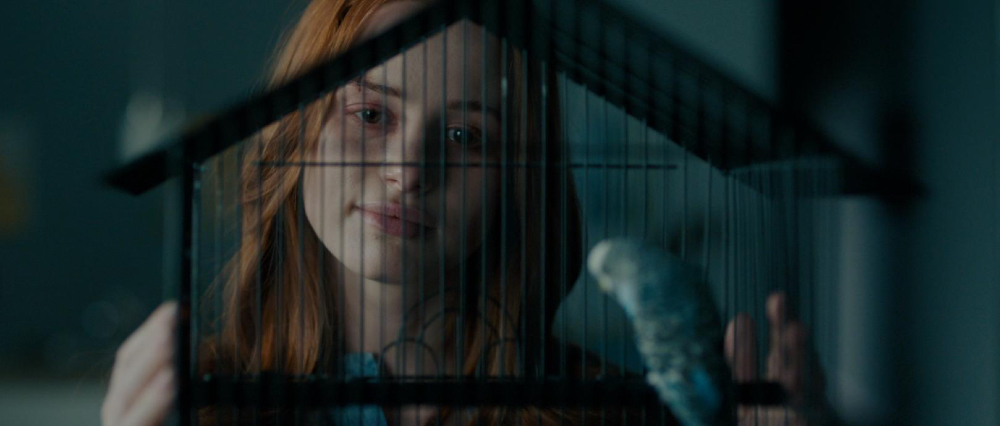
Madelaine Petsch of TV’s “Riverdale” stars as Ellen, battered and sprayed in the face in an attack that leaves her blind. She can’t get a hint of “Who DID this to me?” from the cop (Jarrod Crawford) on her case, or anybody else.

But her brother overseas arranges for a caregiver and a new apartment “downtown” (Seattle). And this new guy, Clayton (Alexander Koch of “Black Bear”) is all empathy and expertise when it comes to dealing with how to condition someone for a new life without sight — giving her that first cane, instructing her on text-to-voice/voice-to-text emailing, etc.

But lost in her head, Ellen ponders who might have a grudge against her, or her ex-husband. She wonders why she can’t reach her best friend, Sasha. Brother Easton is still in Japan and hasn’t come home to help.

“I can’t get ahold of…ANYone!”

And with her new heightened focus on sound, Ellen wonders about the background noises she hears and the creepy stuff going on next door. Lana (December Ensminger) and Russo (Lee Jones) are having…problems. Is Clayton her savior, she wonders? Or she should trust him at all?

Clever touches include the way Ellen imagines this or that person as she speaks to them and visualizes the new world surrounding her. Might a violinist have more acute hearing?

Clayton’s suggestion that her world’s images can be “whatever you want” now seems neither helpful nor on the up and up.

Koch gives us a hint of mystery if not menace as the caregiver, and Petsch plays petulant diva well enough.

But writer-director Karl doesn’t make the imagined threats palpable and the peril logical in the least. News flash, shouting “I can hear you BREATHING” is not going to save you from an intruder when you’re a petite fiddle player.

And that finale… Somebody’s been watching Christopher Nolan pictures and not taking away the right lessons in plot twist tricks from them.

MPA Rating: TV-14, violence

Cast: Madelaine Petsch, Alexander Koch, December Ensminger and Lee Jones.

Credits: Scripted and directed by Cooper Karl. A MarVista film on Netflix

Running time: 1:29

Posted in Reviews, previews, profiles and movie news | Comments Off on Netflixable? “Sightless” and paranoid — maybe with good reason

Movie Review: A son with few “Identifying Features” goes missing in the Borderlands in this haunting odyssey

Three movies set in “the troubles” along the Border have come out in same week. “The Marksman” is a generic Liam Neeson action picture without the nerve to be either a racist redemption tale or a meaningful look at a political hot button issue. “No Man’s Land” has better intentions but a much muddier and patronizing story.

“Identifying Features,” by Fernanda Valadez is far and away the best of the lot. Lyrical and understated with a cruel beauty and story laced with allegory and a hint of magical realism, it lets us see the rippling trauma of this place and this time through the eyes of mothers.

And it’s totally a Mexican tale, from its point of origin — coincidentally, the same town that is the final destination in “No Man’s Land” — to its finish line, a story told entirely from the Mexican point of view.

This is the horror of Northern Mexico as seen through the eyes of those living through it, families disrupted by the desperation of trying to flee to Los Estados Unidos and the murderous gang gauntlet those undertaking this journey must pass through to just reach the border.

Two teens from outside of Guanajuato make plans to leave. We don’t hear the name “Jesús” (Juan Jesús Varela) when he tells his mother he’s going with Rigo. We don’t see who his mother is.

That’s the first way Valadez, who co-wrote the script, makes us reach out for the film. Nothing in this story drops in our lap.

Chuya (Laura Elena Ibarra) and Magdalena (Mercedes Hernández) fret over not hearing from their boys for months and go to the police. The cops shrug them off with a “if you gave consent (for them to leave) there’s no crime to report.”

But then they’re handed the book– a big fat photo file of bodies that have turned up in the north just in the past two months. One mother will get an awful moment of closure, the other will have to go north herself to try and track her son.

Olivia (Ana Laura Rodríguez) is also headed north. But as we’ve seen her performing eye surgery, she’s going by plane. She too has a missing son. Being affluent, he didn’t try to cross the border, so far as she knows. He disappeared on a drive back from Monterrey.

Miguel (David Ilescas) we meet in a U.S. immigration court as he’s being summarily deported. He’s an “IA,” an illegal alien. He has money and he was heading home anyway. Now he’s on the books as an “illegal” and on foot, trying to get back to his village near Ocampo.

The story weaves these lives together through the odyssey Magdalena embarks on to find her son or get closure about his fate.

Valadez, who co-wrote the script, shows us a sample of the terrors people face on the trail. Take a bus, run the risk of it being hijacked with all the passengers robbed, raped and ransomed or murdered. Road block “checkpoints” are run by gangs with, it’s implied, police assistance.

The confused, half-blind old man (never seen) who narrates in an untranslated dialect the story of the bus he was on says “El Diablo” committed the crimes that followed. And through his eyes we see the horns and pointy tail of a murderer outlined against a bonfire’s light.

We don’t need his words translated. We can see the horror, in silhouette, for ourselves.

Valadez lets her actor’s faces do most of the talking here. It’s a music-free film of long, tense silences and splashes of fraught shakedowns and terror. Legions of innocents can only avert their eyes when the Men (or boy soldiers) with Guns show up to search, harass and menace everyone with impunity.

She captures the harsh beauty of the region and the ugliness that is emptying it out and filling mass graves.

But the most haunting images of all are still shots — Polaroids of the dead, their clothing and baggage, their “Identifying Features” — which the police show to Chuya and Magdalena. It’s the cinematic equivalent of that rail car filled with rotting shoes of the doomed at the Holocaust Museum in Washington — heart-breaking and horrifying at a primal level.

And it brings home the ugly truth to the parents of the dead and the governments complicit in this cross-border disaster. There’s no closing your eyes or blocking it out with a wall. And it won’t stop until we all have the guts to stare at it and take the first serious steps to do something about it.

MPA Rating: unrated, violence

Cast: Mercedes Hernández, David Illescas, Juan Jesús Varela, Ana Laura Rodríguez

Credits: Directed by Fernanda Valadez, script Astrid Rondero, Fernanda Valadez. A Kino Lorber release.

Running time: 1:37

Posted in Reviews, previews, profiles and movie news | Comments Off on Movie Review: A son with few “Identifying Features” goes missing in the Borderlands in this haunting odyssey

Netflixable? Sentiment and swear words give “Tribhanga” its melodramatic edge

Samuel L. Jackson has been King of the on-Screen F-word forever.

But who could have guessed that when a queen was crowned, she’d be from the Subcontinent, and not Dorchester, Park Slope or Culver City?

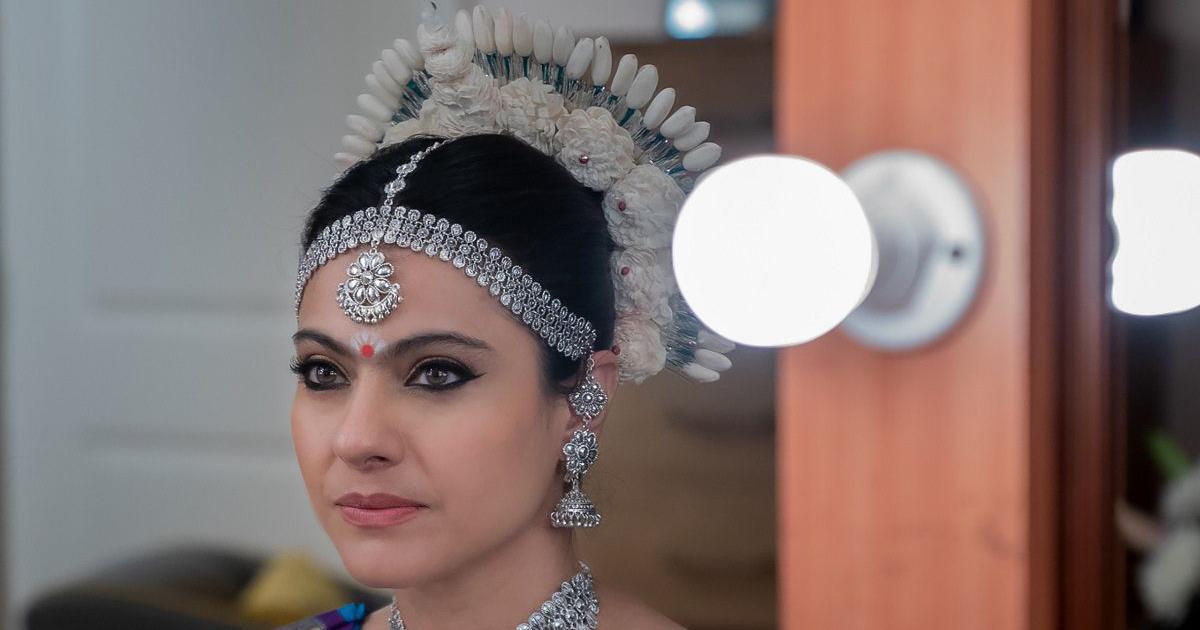
The Indian actress Kajol (Kajol Mukherjee) seizes that tiara in “Tribhanga: Tedi Medhi Crazy,” hurling F-bombs hither and yon and spicing up a formulaic and soapy but engaging story of three generations of women coping with the mothers who made them who they are.

Kajol (“My Name is Khan”), playing an actress and dancer, mother to 20ish Masha (Mithila Palkar) and daughter of famous writer Nayantara (Tanvi Azmi), has her reasons for cursing.

Anu (Kajol) is famous, and thus hounded by the press. Her mother is beloved, a much-honored novelist finishing up a biography with being written by an academic fanboy (Kunaal Roy Kapur) who is always under foot. And her daughter’s married and expecting, and maybe not the liberated woman she herself is, and her divorced mother is famous for being.

Not that Anu speaks to her mother. They’re estranged, and Anu has legitimate grievances with that “b—h,” f—-r! Don’t try to tell her she doesn’t.

Then Mom has as stroke, and the three generations are in the same hospital room — one comatose, one who has never met her father or the grandfather that grandma scandalously divorced in “conservative” India back in the ’80s.

Anu? She’s in a foul-mouthed fury, never moreso than when she’s dealing with Milan (Kapur), an irritating interviewer/biographer, and a non-drinking/non-swearing Muslim, to boot. Anu lets the ass-this and f-thats rain on the poor man, who only wants a little participation from her in the book. She is sure he’s a “golddigger” and Mom’s new heir.

Through interviews, ventings and flashbacks, each of the women reveals to Milan their past, with him sharing revelations to the others that maybe things aren’t as cut-and-dried as each believes.

Nayantara was a driven writer driven out of her own house by a shrewish, backward mother-in-law.

Did “Naya” know that one of her later lovers molested Anu, “right under her nose?”

And does Anu have a clue about how her Bollywood lifestyle and abusive relationship with Masha’s father scarred her own kid?

Sure, this is straight-up melodrama, an old fashioned “Women’s Picture” of the “Joy Luck Club” school — a “Stella Dallas” or “Mildred Pierce” in modern India, in Hindi with English subtitles. And lots of swearing.

No, it’s not as emotionally draining as any of those three classics. But it’s engrossing and touching and very well-acted, with Kajol taking this star vehicle as far as her temper, her chastened rage and her skill in applying that Old English word that starts with an F can take it.

Anu even gives Milan a George Carlin-style lecture in its proper usage. Nicely f—–g done there, sister.

MPA Rating: TV-MA, violence, and lots of profanity

Cast: Kajol, Mithila Palkar, Kunaal Roy Kapur, Tanvi Azmi and Vaibhav Tatwawaadi

Credits: Scripted and directed by Renuka Shahane. A Netflix release.

Running time: 1:35

Posted in Reviews, previews, profiles and movie news | Comments Off on Netflixable? Sentiment and swear words give “Tribhanga” its melodramatic edge

Documentary Review — “Babenco: Tell Me When to Die”

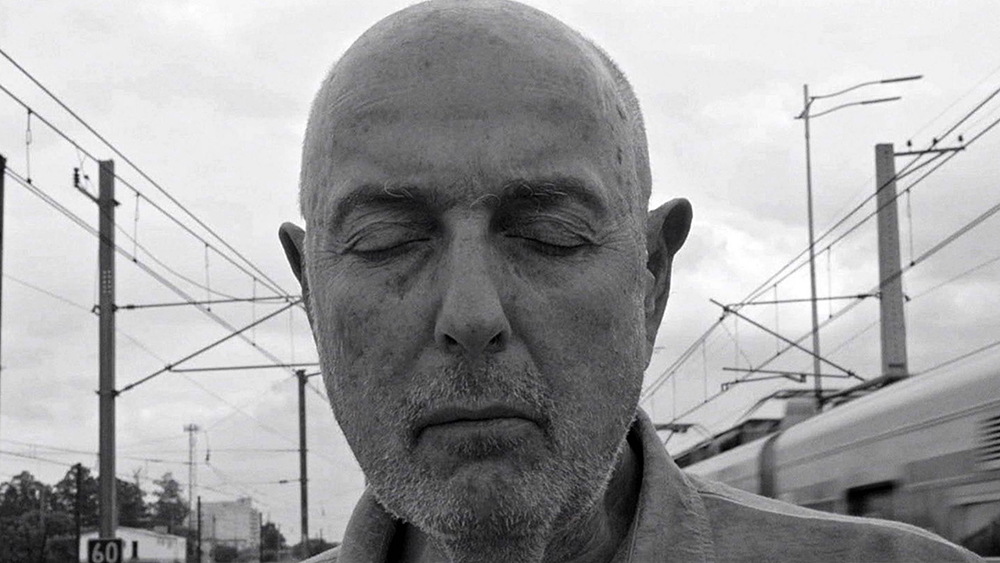
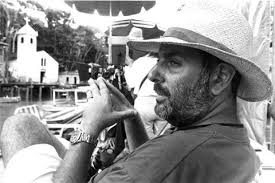
As he fusses over close-ups, how the camera frames him, and muses about how he’ll be remembered, Hector Babenco scripts, blocks and produces his “final film.” But he doesn’t direct it.

On the documentary, “Babenco: Tell Me When I Die,” that job belongs to his wife, the actress Bárbara Paz. It’s a lovely, poetic black and white memoir of the director’s career tucked within the last months of his life.

Babenco, director of “Pixote,” “Kiss of the Spider Woman,” “Ironweed” and “Carandiru,” died of cancer in 2016. He was 70 years old.

He is a collection of close-ups, tucked in amongst clips from his dozen films, and a mostly disembodied voice, musing over “the end,” making suggestions, mostly in Portugeuse.

“Don’t waste time romanticizing every moment.”

It’s an impressionistic portrait, tidbits of autobiography, little snippets of audience Q&As, a little documented South American acting career that predated his directing, revealing that he was imprisoned in Spain in his younger days, which explains his fascination with and unique grasp of the mental journeys one takes in confinement. His three greatest films had prison settings.

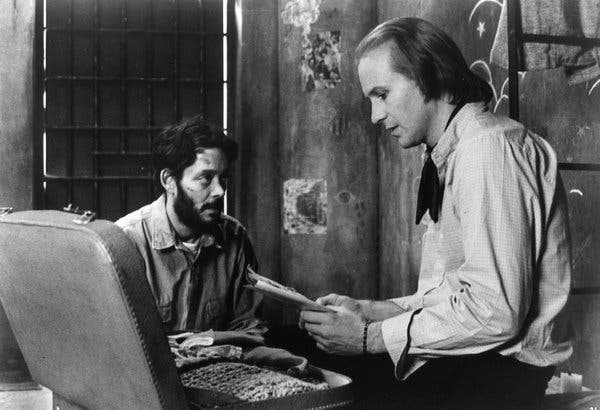
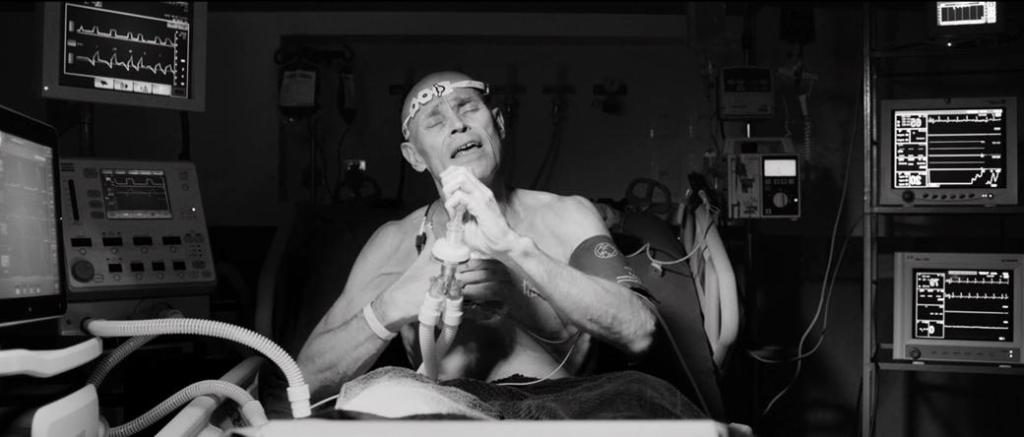
His last one, “My Hindu Friend,” had Willem Dafoe playing a version of Babenco, a famous filmmaker facing death, acting out his death bed “finale” — pulling out a ventilator and singing “Cheek to Cheek.”

With 1981’s “Pixote,” a film that single-handedly revived Brazil’s cinema, the Argentinian-born filmmaker invited comparisons to the greats of Europe — Bunuel and Visconti.

There’s even a genuine grimace of a moment for film fans here, Barbara Streisand reading out the august list of nominees for Best Director that year, with Babenco up for “Kiss of the Spider Woman” up against John Huston, Akira Kurosawa, Peter Weir and the winner — for “Out of Africa” — Sydney Pollack. How’s that “holding up?”

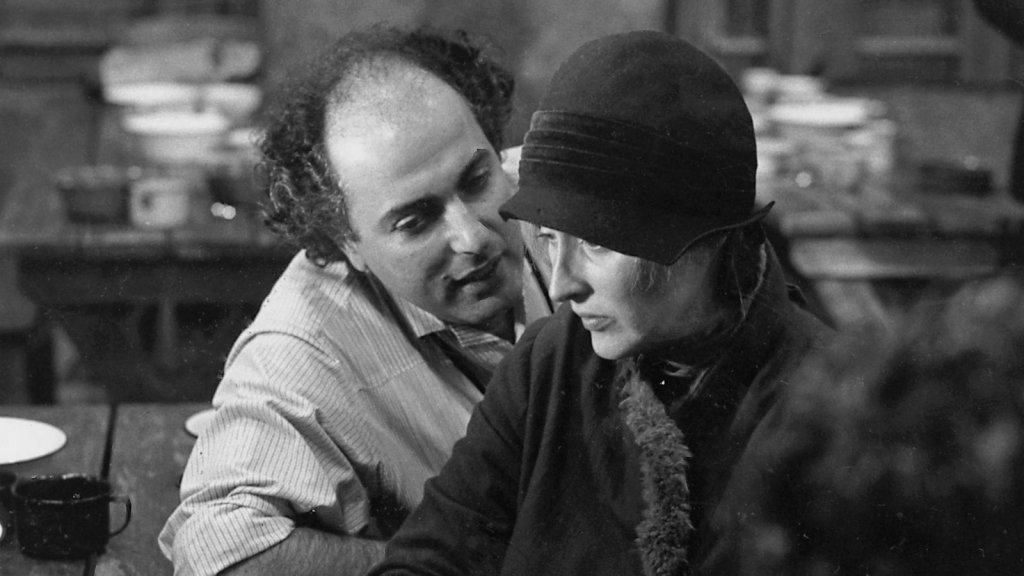
Babenco was first diagnosed with cancer back then, “four to six months to live,” he boasts. He did “Ironweed” with Streep, Nicholson and Tom Waits. He went into the jungle to film “At Play in the Fields of the Lord,” and he lived another thirty years.

This isn’t a straightforward biography, but “Tell Me When I Die” is how many a filmmaker of an artistic bent would love to go out and hope to be remembered — with a little philosophy, a little sadness and a smile of reminiscence.

MPA Rating: Unrated, nudity, smoking

Cast: Hector Babenco, Barbara Paz, Willem Dafoe

Credits: Directed by Bárbara Paz, script by  Maria Camargo and Bárbara Paz. A Taskovski Films release.

Running time: 1:15

Posted in Reviews, previews, profiles and movie news | Comments Off on Documentary Review — “Babenco: Tell Me When to Die”

Movie Review: Kiwi Climber is preggers and in denial — “Baby Done”

Right.

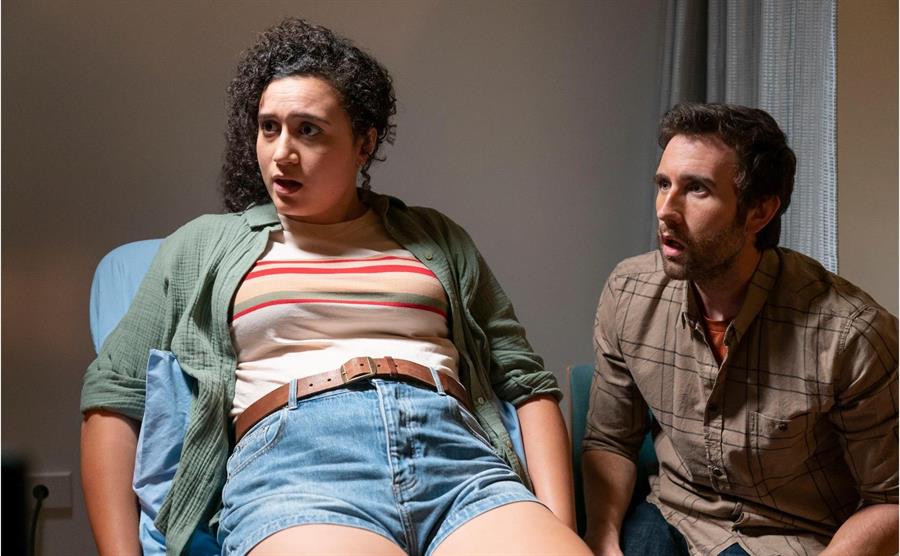
So what do you make of a pre-natal comedy where Mum’s in denial and Dad’s a weeper, Mum’s making a bucket list of all the “fun” stuff they should do before the due date hits and “I’m not ME any more” and Dad’s asking her “Will you marry me?” And Mum’s reply?

“Not in a million years!”

What DO you call a “having a baby” comedy with a “threesome” fantasy and a character named “Preggophile Brian?”

Call it “Baby Done,” and call it damned adorable, for starters.

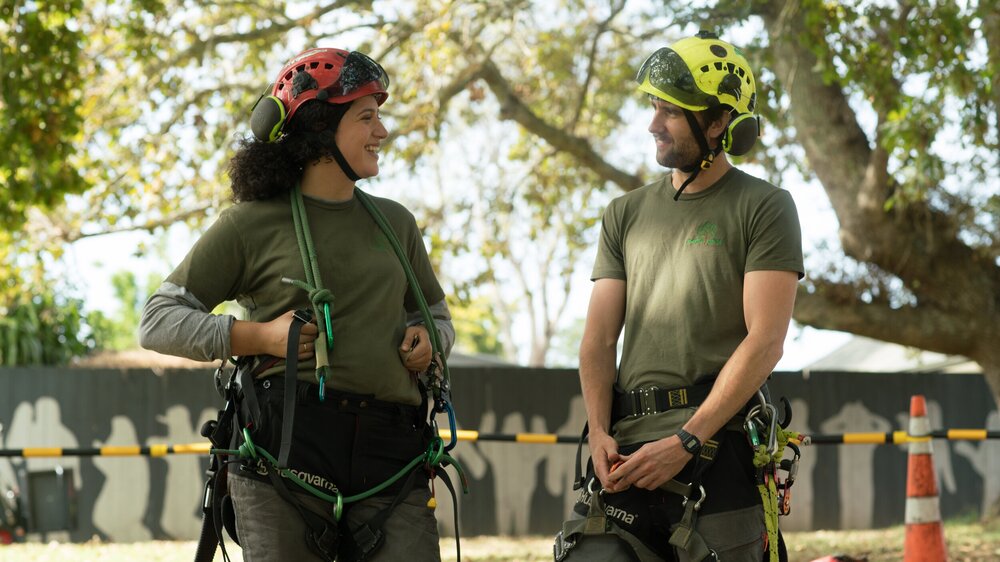
This Rose Matafeo farce is light on its feet and quick with a quip, and it’s all about an arborist — which we call “Tree Surgeons” in the States — getting pregnant just before the world tree climbing championships. She stumbles from not telling anybody she’s expecting to “I can do anything pregnant” denial, or as her BFF Molly (Emily Barclay) puts it, “You’re a baby having a baby!”

Tree climbing to bungee jumping, booking flights to British Columbia to cooking up that threesome that’s on the “wild things we regret not doing” that beau Tim (Matthew Lewis) mentioned and getting kicked out of pre-natal (Called “ante-natal” Down Under) class, these two are hellbent on “having it all” before the “fun” ending arrival of “Speck,” which is what they nickname their fetus.

Zoe calls this the “grace period” of a pregnancy. She’s inventing a new thing.

New Zealand TV star Matafeo is Zoe, whose denial starts with the test administered by the obstetrics nurse.

“I Googled it…Usually it’s a tape worm.

“Not a tapeworm. It’s a BABY.”

She hides the news from Tim, her partner in business as well as life. A “gender reveal” shower for their pregnant friends, surrounded by everybody else who’s just had babies, just brings out Zoe’s competitive side.

But Tim picks up on her oddly-distracted visit to the fruit aisle at the market — trying to decide if the grape, plum or pineapple is what’s in her belly at the moment. Next thing you know, they’re springing the news on her folks via a puzzle (a bun, literally, in the oven) and her OB-GYN dad (Fasitua Amosa) is slinging jargon and acronyms at her — “What’s your LMP (Last Menstrual Period)?”

Mum (Loren Taylor) just notes that having a baby “doesn’t suit you.” And their trials have just begun.

Matafeo just bubbles off the screen here, a cluelessly confidant young woman just oozing snark and misguided notions of how “This changes nothing.

Lewis makes a fine straight man for her to bounce off of. And throughout the picture, little bon bon character turns abound — annoyed nurses, flummoxed friends and of course, “Preggophile Brian” (Nic Sampson). Don’t ask.

“Baby Done” doesn’t cover a lot of new ground in the “We’re having a baby. What do we DO?” genre. But it covers that ground aloft — in trees, jumping off cliffs, picking fights at ante-natal classes — so much so that the entire affair is light as a feather, and just as ticklish.

MPA Rating: unrated, sexual situations, profanity

Cast: Rose Matafeo, Matthew Lewis, Emily Barclay, Nic Sampson, Fasitua Amosa and Loren Taylor

Credits: Directed by Curtis Vowell, script by Sophie Henderson. A Gravitas Ventures release.

Running time: 1:31

Posted in Reviews, previews, profiles and movie news | Comments Off on Movie Review: Kiwi Climber is preggers and in denial — “Baby Done”