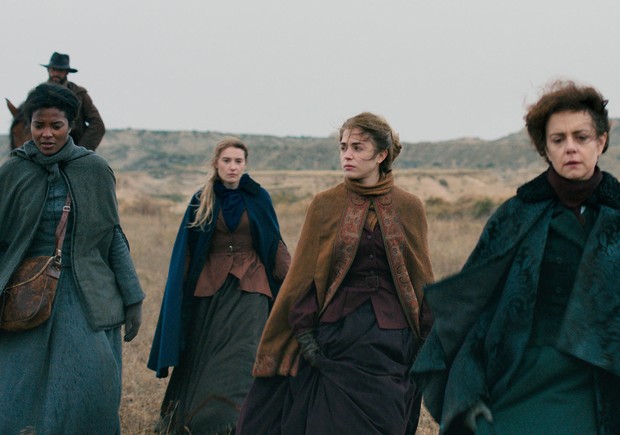
Movie Review: A still-life Western in French — “Savage State (L’état sauvage)”

I blame karma for “Savage State.”

You spend a lifetime bitching about “pace” and “urgency,” the notion for motion pictures to remember the “motion” part, and you’re punished with a French-Canadian still-life like this.

“Savage State” is a Civil War era Western about French transplants to the South fleeing West when their bubble is burst by those damned uncouth Yankees. It devolves into a slow-motion chase led by a lady brigand/smuggler (Kate Moran) in pursuit of five beautiful women, the quartet of men taking them overland to San Francisco.

French director David Perrault (“Our Heroes Died Tonight”), cinematographer Christopher Duchange, production designer Florian Sanson, costumer Véronique Gely and art director Sylvain Dion ensure that most every frame is just gorgeous to behold.

The hair and makeup department make certain that every woman in the cast — especially the fleeing family played by Alice Isaaz, Déborah François, Maryne Bertieaux and Constance Dollé and their voodoo practicing hired (not enslaved) servant “Because we are not like those (racist) savages” — are “Project Runway” perfect in every damned frame as they stumble, on foot, from Missouri to California.

Isaaz, playing the brooding but plucky youngest sister, smitten with their smuggler/guide Victor (Kevin Janssens) is stunning in every frame, nary a hair out of place.

It’s based on the historical effort of Napoleon III to recruit French colonists to move to America and help finance the Confederacy, with smugglers dabbling in pearls, diamonds and perfumes as part of that. Missing diamonds are what drive the brigands led by Bettie (Moran) to hunt the family once they’ve lost their insulated St. Charles, Missouri lives of dress balls and luxury.

That “hunt,” crossing much of the country, is “slow-walked” in the extreme. The few shootouts are well-staged, but far between.

“Savage” is more a movie of women reading French novels by candlelight in a tent, brooding (mostly in French, with English subtitles) over missing lovers or would-be “bad boy” crushes, and beautiful actresses and actors set against beautiful scenery.

Suffice it to say, there’s a reason the French aren’t known for their Westerns. And it isn’t just because they have a trail guide singing “Home on the Range” a decade before it was composed. This is pretentious, chatty and maddeningly slow.

“Savage State” is a Western as animated as a Daguerreotype.

MPA Rating: unrated, violence

Cast: Alice Isaaz, Kevin Janssens, Déborah François, Armelle Abibou, Maryne Bertieaux, Bruno Todeschini, Constance Dollé and Kate Moran

Credits: A Samuel Goldwyn release.

Running time: 1:58

Posted in Reviews, previews, profiles and movie news | Comments Off on Movie Review: A still-life Western in French — “Savage State (L’état sauvage)”

Movie Preview, First look trailer– “Jumbo” starring Noémie Merlant…

A Sundance film from Belgium.

Posted in Reviews, previews, profiles and movie news | Comments Off on Movie Preview, First look trailer– “Jumbo” starring Noémie Merlant…

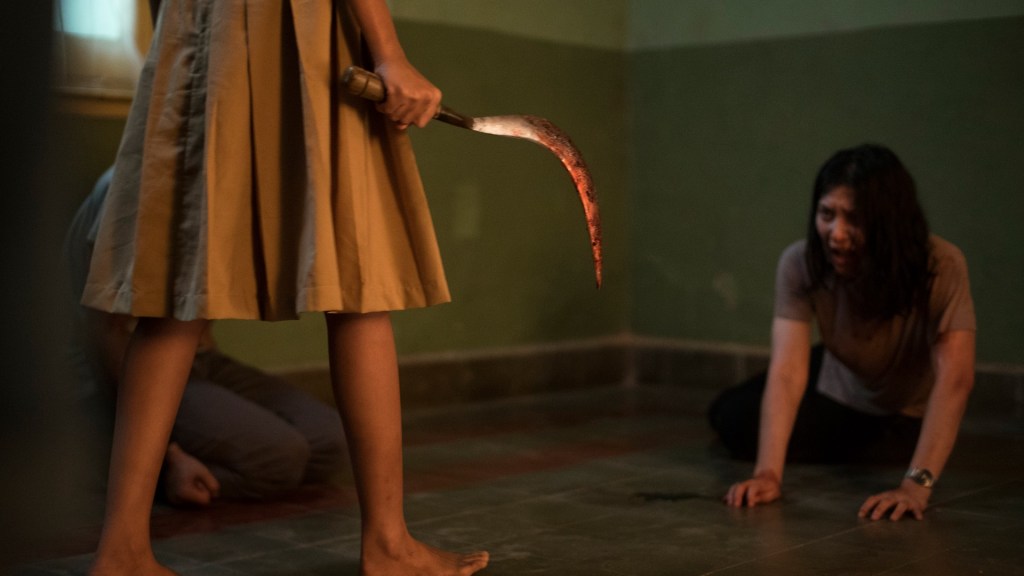
Movie Review: A Ghostly curse in Indonesia — “The Queen of Black Magic (Ratu Ilmu Hitam)”

The first hint I had of Indonesia’s thriving horror scene was the best segment of one of those horror anthologies that have been turning up in recent years. I think it was “V/H/S/2.”

“The Third Eye (Matin)” is another iHorror feature that sticks in the mind. The film doesn’t have to be the most original to leave a lasting impression, and the limited sample of bloody Indonesian exports I’ve watched have fit both descriptions.

There’s a healthy dose of “nothing new to see here” to the plot of Kimo Stamboel’s “The Queen of Black Magic.” Story beats and key components of the tale are familiar from many a film that’s preceded it.

But the simple, chilling effects — think “When Millipedes Attack!” — and not-quite-over-the-top gore set “Queen” apart and deliver a memorably gruesome moment or two.

It’s the story of an orphanage haunted by the horrors of its past, terrors visited on those who left there when three of them return, with their families, for a little reunion celebrating the dying old man who has long owned and run the place.

Scores of films have been built on those “Ghost Story” bones.

Those three “alumni” — Hanif (Ario Bayu), Anton (Tanta Ginting) and Jefri (Miller Khan) seem enthusiastic about being there, even if the old man who ran it (Yayu A.W. Unru) is confined to his bed, facing his final hours.

Two disfigured orphans who never left (Ade Firman Hakim, Sheila Dara Aisha) married and now run the place. They’re here to greet the three guys, their wives and Hanif’s three kids.

The place is empty because all the orphans went on a bus field trip and are due back. Hanif’s little boy (Muzakki Ramdhan) hears why one room has remained empty forever, and wants to hear all about the former employee who “practiced black magic” and had to be removed.

But those who used to live there know there’s more to the story. And the viewer knows that wasn’t a “deer” Haniq hit on the way there on their long drive through the country.

Pretty soon everybody else does, and some even know what’s become of that busload of children.

A “demon,” vengeful ghost or something is out for revenge. And with assorted employees, guests and family members always finding an excuse to separate — See? It’s not just ditzy Americans in “dead teenagers movies” who do that. — the bugs overwhelm this guest, instill the need to harm oneself to another, and so on.

This isn’t going to be pretty.

The cast is required to mime that “demon has me but I WON’T point the gun at that child” self-struggle shtick. One is moved to attempt self-surgery with a kitchen knife. The horrors pile up quickly.

I liked a couple of effects — that bugs-crawling-all-over-people and into somebody’s mouth is good, and there’s a demon-throws-her-across-the-room stunt that’s as impressive as any I’ve ever seen.

But Joko Anwar’s script leaves a bit to be desired — twists that seem trite, counter-twists that are even worse, over-explaining things to the point where the forward motion is lost.

And the near-pointless epilogue had me shaking my head.

I’m the first to admit this isn’t my favorite genre. But anybody can tell when a horror movie works. The few chills hand one or two almost jaw-dropping moments of gore delivered in the most predictable ways don’t quite get the job done here.

“The Queen of Black Magic” herself isn’t a letdown, but how she’s dealt with is.

MPA Rating: Unrated, gory as all get out

Cast: Ario Bayu, Hannah Al Rashid, Adhisty Zara, Muzakki Ramdhan, Ade Firman Hakim, Sheila Dara Aisha, Tanta Ginting and Miller Khan

Credits: Directed by Kimo Stamboel, script by Joko Anwar. A Shudder release.

Running time: 1:40

Posted in Reviews, previews, profiles and movie news | Comments Off on Movie Review: A Ghostly curse in Indonesia — “The Queen of Black Magic (Ratu Ilmu Hitam)”

Movie Preview: “Godzilla vs. Kong” first trailer

We all have an idea of what this going to be like, but let’s try and keep an open mind, eh?

Release dates are flexible, so you’ll have to watch the trailer to get an idea of when they pray they’ll be able to release this Indie Spirit Award contender.

Posted in Reviews, previews, profiles and movie news | Comments Off on Movie Preview: “Godzilla vs. Kong” first trailer

Movie Review: Korean Immigrants are tested by the American dream in “Minari”

“Minari” is a near classic of the timeworn “troubles on the farm” drama, a story of a family of non-farmers facing the whims of nature and the widening fracture in a marriage as they set out to work the land and grab The American Dream.

It’s “Country” or “The Southerner” or “Jean de Fleurette” but with Korean immigrants tested this time, a family whose problems arrive with them when they got their 50 acres of Arkansas in the mid-1980s.

Delicately acted by leads Yeri Han and Steven Yuen and vividly-detailed, it covers familiar ground for the genre, with the odd moment of novelty here and there, much of that coming from the locals they interact with.

The fissures are there the day we meet them, rolling up in a station wagon and moving truck onto a piece of land with a double-wide on it in rural Rogers, Arkansas.

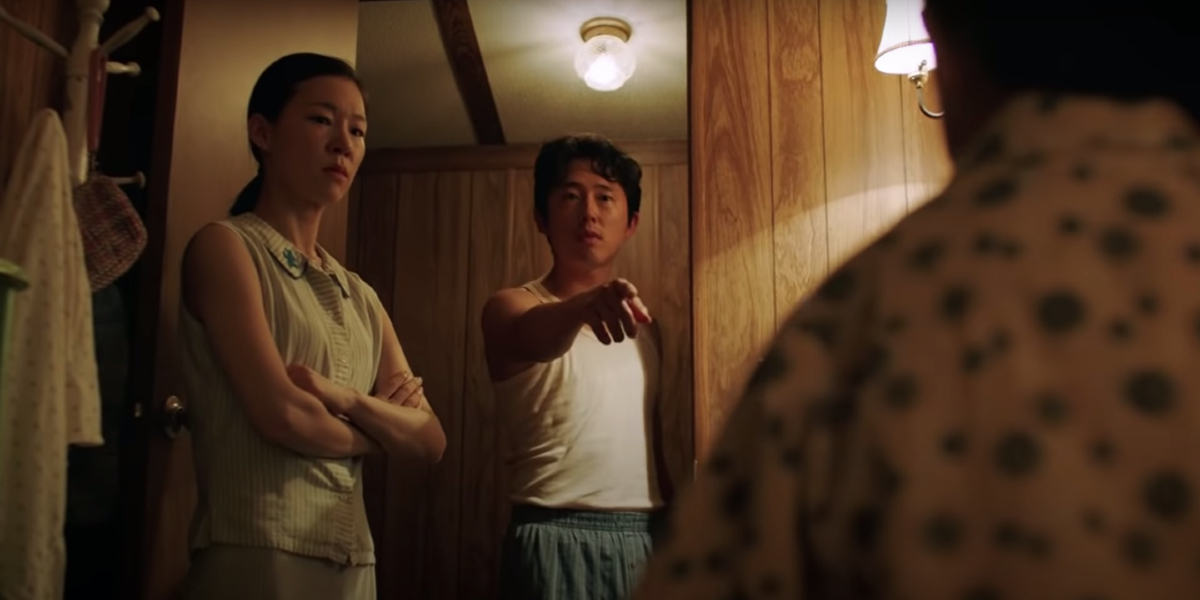
Jacob (Yuen, of “Okja” and “The Walking Dead”) wants to show Monica (Han of “Worst Woman”) “the best soil in America.” She’d like a word (in Korean, with subtitles, and in English) about this “house.”

“It has…wheels.” As the kids adapt and unpack, Mom is quick to say “We’re not saying long.”

Whatever their history — California was their previous stop — this latest move is not one she’s on board with, hissing at his “Garden of Eden” description of the 50 acres he’s dreamed of owning.

They’ve been hired as chicken sexers at a local hatchery, because Jacob is “one of the fastest” at this — picking up chicks and determining their gender with a quick glance — that anybody has ever seen. Lots of first generation Korean-Americans will be their co-workers.

The work is drudgery itself, and towering over the building is a chimney, smoking like a crematorium. Male chicks are “disposed of” they tell their kids.

But Dad dreams of lifting them out of this labor. He will farm a huge truck garden on their land and raise vegetables. His “better mousetrap idea?” They’ll be Korean vegetables which he’ll sell to burgeoning Korean markets servicing the growing Korean immigrant communities in nearby large cities.

But first, he’s got to find water. The land has “history,” something a slightly-crazed neighbor (Will Patton) reminds them. They should get it exorcised. Jacob should probably hire a douser, the locals figure. But he’s quick to dismiss all that as primitive “nonsense.”

“Korean people use our minds,” he tells his doted-on little boy, David (Alan S. Kim) . “Never pay for anything you can find for free.”

Foreboding and foreshadowing are one in the same in this story, from the creepy crematorium to the first night they experience the difference between a “tornado watch” and “tornado warning.” Monica frets constantly about how far away the nearest hospital is, because David is doted-on for more than just being a prized son. He’s sickly.

And Jacob is awfully quick to dismiss the idea that they’ll need babysitting for David and tweenage Anne (Noel Cho).

“There’s no one around. What could happen?”

Monica semi-silently fumes at the myriad risks they’re piling into this life inside a tornado magnet and fire trap, with a weak child who needs surgery and jobs that hold no future.

Maybe church will help, although Jacob’s not keen on that, either. Maybe the arrival of Monica’s Mom (Yuon Yuh-jong) will improve Monica’s mood and improve their odds.

One pleasant surprise of “Minari” is the tactless but warm embrace of the locals. Patton’s neighbor (and farm help) Paul embodies that with his “The minute I saw you, I knew we were going to be friends.” His eccentricity may stand out, but from the banker who buys into their business plan to the church that welcomes them with applause, Chung ensures that his film reminds us of America’s long history of welcoming immigrants.

But just as much care is put into the multiplying perils facing the family. David is quick to dislike his new “not a real grandmother,” and Monica makes no effort to hide “I’m sorry you have to show you our lives now” pain at being here. She visibly winces when little David gushes at the land, the creek and woods with “I’m going to live here until the day I die!”

That’s what she’s worried about.

The title is the name of a Korean vegetable, one that “grows like weeds,” and it’s meant to be a metaphor. Because when the dream cracks, bends and breaks, when the water dries up and crises pile up, remembering weeds survive where hearty plants fail is a straw worth clinging to.

Chung (“Lucky Life”), filming a tale both familiar and alien and a story not far removed from his own childhood, has made a breakout film of brittle tenderness, heart and hope — one that we hope makes him a filmmaker to watch from here on out.

MPA Rating: PG-13 for some thematic elements and a rude gesture 

Cast: Steven Yeun, Yeri Han, Alan S. Kim, Youn Yuh-jung, Noel Cho and Will Patton

Credits: Scripted and directed by Lee Isaac Chung. An A24 release.

Running time: 1:55

Posted in Reviews, previews, profiles and movie news | Comments Off on Movie Review: Korean Immigrants are tested by the American dream in “Minari”

Netflixable? Well, at least the Canary Islands glow in “So My Grandma’s a Lesbian”

Netflix should have kept the original title to this Spanish comedy.

“Salir del Ropero” translates to “Leaving the wardrobe.” It’s a running gag in the film. Celia, one of the two senior citizens who are in love and hope to marry with “the blessings of Pope Paco” (one’s nickname for Pope Francis) confuses “coming out of the closet” for “leaving the wardrobe.”

And “So My Grandma’s a Lesbian” makes a middling comedy worse.

Here’s the best thing in the film — the glorious, exotic Canary Islands location. Volcanic hills, sun-soaked waters, whitewashed Spanish architecture. Who wouldn’t fall in love around all that?

That may be why Celia (Rosa Maria Sardà) fell for Sofia (Verónica Forqué). Her son, a primate researcher in the Congo doesn’t see that. Jorge (David Verdaguer) takes Celia to see a neurologist. She claims to be chatting on the phone with Pope Francis in an effort to get his blessing, after all.

But this late-life “change” and marriage is a far bigger concern for Eva (Ingrid García Jonsson). She’s a young lawyer marrying into a rich family of Brexit-backing/Trump loving Scottish conservatives.

Considering Scotland’s moves to stay in the EU and ban Trump from moving there, that seems far-fetched.

They’re a whole clan of homophobes, well save for the guy (Leander Vyvey) she’s marrying. The shock of Grandma Sofia’s news sends her jetting off to the Canaries to try and stop the wedding.

She’s got a gay granny, Muslim stepbrother and her oft-married mother’s (Mónica López) in show business.

How do you say “Skeletons in the closet” in Spanish?

There aren’t many laughs in this, and most of them come from the physical tomfoolery of Verdaguer, who’s a Spanish Jemaine Clement look-alike/pratfaller.

Writer-director Ángeles Reiné comes up with a lot of disparate characters and complications, but fails utterly to build this into a farce of rising confusion, pace and mayhem.

You’ve got a reluctant coach/city councilman/priest who won’t perform the ceremony without orders from the Vatican, a media scandal that blows up when news gets out about these two sweet little old discriminated-against Catholics can’t get a Church-sanctioned wedding, Scottish hypocrisy and Jorge and Eva — who keep meeting cute, with Jorge imitating the Great Apes he studies in his version of a mating ritual.

“Cute” is about as good as it gets in “So My Grandma’s a Lesbian.” Sweet, even. But funny? Almost never.

But I”ll say this for all that. Come pandemic’s end, the Canaries are going on my bucket list.

MPA Rating: TV-MA, adult themes, drinking

Cast: Rosa Maria Sardà, Verónica Forqué, Ingrid García Jonsson, David Verdaguer

Credits: Scripted and directed by Ángeles Reiné. A Netflix release.

Running time: 1:35

Posted in Reviews, previews, profiles and movie news | Comments Off on Netflixable? Well, at least the Canary Islands glow in “So My Grandma’s a Lesbian”

Movie Review: The Tender Mercies of Facing Cancer with “Our Friend”

As acting “baggage” goes, you could do worse than be saddled with the rep Jason Segel takes with him from film to film.

He’s carved out a niche playing softies, pushovers, semi-lost souls who go through life always erring on the side of “sweet.” From “Forgetting Sarah Marshall” to “Jeff Who Lives at Home,” years on TV’s “How I Met Your Mother” and in the new film, “Our Friend,” he’s the best friend you’d ever want to have, the sensitive one who may be “lost” but who always has time to help you find yourself.

“Our Friend” doesn’t lose track of its title character, but it does wander around him an awful lot as it skips through time, tracking a marriage from its early days through the terminal cancer that takes the life of the wife and mother. That diffuse focus and meandering narrative is the only real shortcoming in this consequential and touching weeper, a film inspired by a true story written by the magazine journalist who survived that loss, largely through the semi-divine, half-aimless intervention of “Our Friend.”

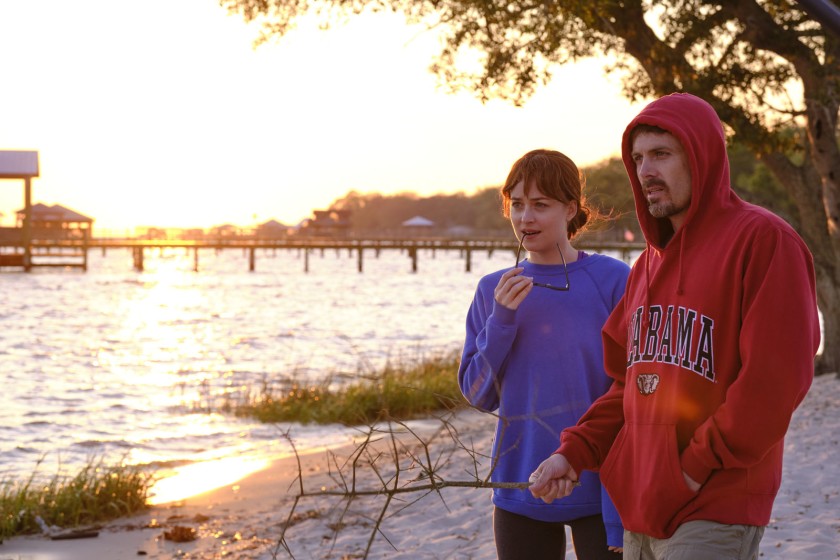
Dane (Segel) doesn’t make a great first impression on Matthew (Casey Affleck). He’s a stage hand at the New Orleans theater where Nicole (Dakota Johnson) is in a play, the one stage hand with the temerity to ask her out.

He didn’t know she was already married, and Dane’s disarming, hangdog self-loathing is all it takes for Matthew to take to him, just as his wife as.

In a narrative that skips back and forth through time, we see Nicole and Matthew early in the marriage, when Matthew is starting his journalism career at the Times-Picayune and she is acting, the period right after her cancer diagnosis, then back to later stops on Matthew’s globe-trotting career path, then the day a doctor tells them “It’s terminal.”

Parties and birthdays, plays and assignments overseas pass by. And Dane? The die is cast the first time he’s asked about his ambition. He’s an aspiring stand-up comic. How’s that coming?

He’s “started to think about it.” He’s looking ahead to the day when “I get a pen, get a pad,” and starts writing funny ideas and jokes down.

That’s Dane. A little dreamy, a little lonely, seriously self-defeating. That’s Dane even after he finally gets a serious girlfriend. He moves in, but almost to the day that’s when he dashes down to Fairhope, Alabama where the his friends and their two little girls have settled. Nicole’s gotten sick, and Matthew, trapped and lost in a domestic crisis beyond his grasp, has let the house go to pieces and left the girls (Isabella Kai, Violet McGraw) to half-fend for themselves.

“Would it help if I stayed for a while?”

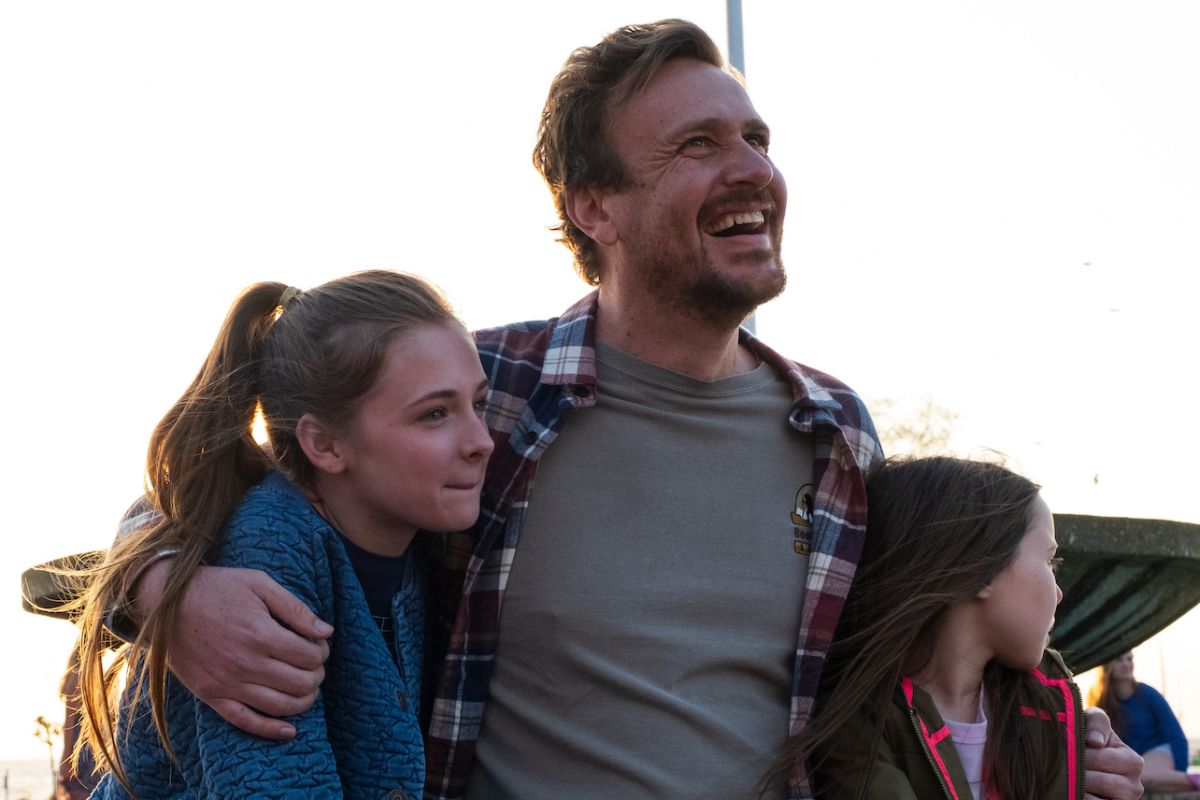
Yes. Yes it would. And as the couple wrestles over “when to tell the kids” and Nicole’s impulsive and near-impossible “bucket list,” the guy Mom nicknamed “Fruit Loop” way back when, who now insists the kids address him as “Grandma Dane,” steps into the void. He might be an aimless, rootless 30something, but he’s well-stocked with “Dad jokes.”

“Me? I didn’t do nothing. I’m like the Mona Lisa. Framed!”

He’s there to get the kids to school, leading sing alongs to “Call Me, Maybe,” to take the dying dog to be put down. His girlfriend may be frustrated, and Dane’s own issues — visited throughout the time periods of the story — make us and him wonder if he has the stamina to “help you get to the other side of this.”

Director Gabriela Cowperthwaite, who transitioned from documentaries (“Blackfish,” the movie that ended orca captivity at SeaWorld) to features (“Megan Leavey”) has her own brand, making movies of emotional substance.

She lets Segel stay in his comfort zone and do bits of cute shtick with the kids, but never lets us forget what Nicole is going through and how that is pummeling everyone around her. The oldest daughter (played by Kai) knows what is happening and is acting out. Earlier strains in the marriage might re-open. Matthew had a fainting problem earlier on, and as doctors and others (Cherry Jones plays an angelic hospice nurse) in the know realize, as the illness progresses, friends are “going to fall away, one by one.”

The downbeat tone and constant shuffling of the order of events in the narrative only makes the viewer forget where the real center of gravity is here. But as disorienting as that is, it’s reinforcing, in a way, what the laid-back manner of Dane’s introduction sets up as its message.

Sometimes, it’s the last people you expect when you first befriend them who stick around. And when the chips are down, their biggest surprise for you is that they’re the very last ones to leave.

MPA Rating: Rated R for language

Cast: Dakota Johnson, Casey Affleck, Isabella Kai, Violet McGraw, Denee Benton and Jason Segel

Credits: Directed by Gabriela Cowperthwaite, script by Brad Ingelsby, based on an article by Matthew Teague. A Gravitas Ventures/Universal Home Ent. release.

Running time: 2:05

Posted in Reviews, previews, profiles and movie news | Comments Off on Movie Review: The Tender Mercies of Facing Cancer with “Our Friend”

Pixar’s “Soul” blows up Disney Plus, Nielsen says

Big big viewership numbers as Pixar’s “Soul” makes its mark on Disney Plus.

Pixar’s ‘Soul’ Records Historic Nielsen Streaming Win In Christmas Bow On Disney+

News like this makes me wonder why Amazon or Hulu didn’t jump at the chance to buy the latest James Bond film rather than seeing it pushed back on the release calendar repeatedly.

Deadline.com reported Sony/MGM wanted $600 million for it back in the fall. Netflix doesn’t need it. Disney doesn’t. Amazon and Hulu do.

Posted in Reviews, previews, profiles and movie news | Comments Off on Pixar’s “Soul” blows up Disney Plus, Nielsen says

Netflixable? A dark saga of modern India, and a real page turner — “The White Tiger”

“The White Tiger” is a soap operatic saga about one young man’s rise to the “light” — the wealthy caste — of India. It’s a “What Makes Sammy Run?” for the subcontinent, a self-narrated tale of a hustler and how he hustled — “How to Succeed in Business Without Really Trying” without the music, and with the “trying.”

North Carolina filmmaker Ramin Bahrani has made a bluntly insightful melodrama about India beyond Bollywood, a country with grinding poverty that entraps most, the entrenched, corrupt rich and “the entrepreneur class” arising out of the “miracle” of the “outsourcing economy.”

It’s not as good as Bahrani’s more intimate indie films (“Chop Shop” and “99 Homes”). But he’s made a summer read of movie — a real page-turner (based on a novel by Aravind Adiga) — and a film that holds your interest straight through its seriously perfunctory finale.

A clumsy structure frames it. A Bangalore entrepreneur (Adarsh Gourav of “Mom” and “My Name is Khan”) writes a longflattering fan letter to a visiting Chinese premiere on the hopes that he’ll get to meet the great man on his tour of India.

“The future belongs to yellow and brown people,” our narrator crows. And in his story, he lays out how he knows this prophecy to be true.

But there’s a less clumsy second frame, an opening car accident that changes the fate of our anti-hero much later on.

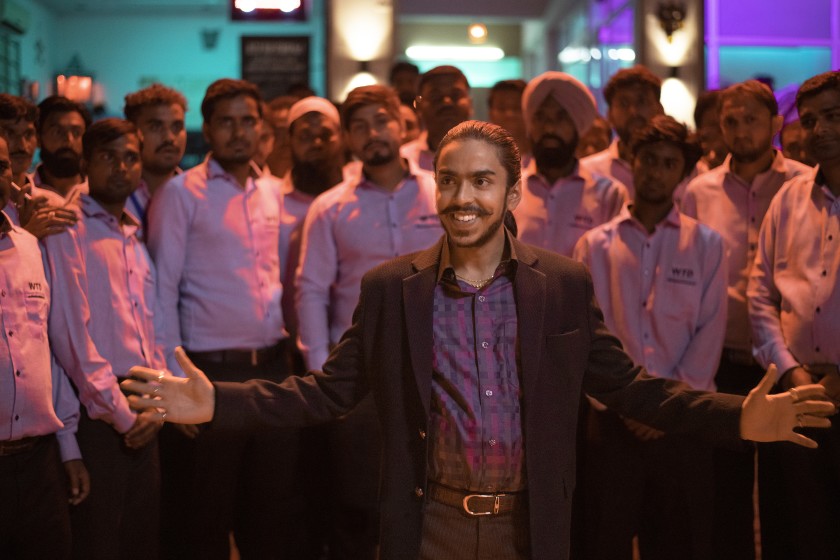
Balram was a smart but poor village kid, bound for a scholarship that politics and the generational tyranny of his family kept him from accepting. All but enslaved to a tea shop because of his father’s debts, bullied and shamed into submission by a grandmother controlling her not-quite-starving extended family’s fate, Balram grows up to recognize the many things holding him back and sentencing his father and him to a lifetime in the servant class.

Peer pressure and schadenfreude ensures that the poor hold each other back, and Balram decides he will do whatever it takes “not to be a poor man in a free democracy.”

Sly asides in this narration poke fun at China’s idea of “freedom,” and India’s laughable embrace of the title “world’s largest democracy.” Balram sees the two Indias — the “light” for the rich, connected and corrupt, and the dark for those consigned to the lower castes.

He schemes to get a job with the rich family of shakedown artists led by The Stork (Mahesh Manjrekar), cruel opportunists who started in the village and finagled their way into a virtual protection racket, taxing the poor to prop up their city lifestyle.

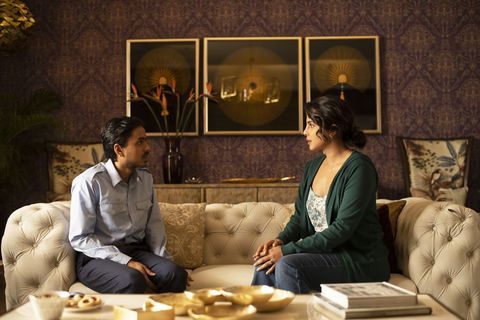
Borrowing from Granny to get driving lessons (she extorts his promise to pay her almost everything he earns), our hero wrangles the “second driver” job with the family, handling the Mitsubishi SUV that hauls around American-educated son Ashok (Rajkummar Rao) and his American-born wife Pinky (Priyanka Chopra).

They don’t like the words “master” or “servant,” don’t beat the hired help like the older generation of the family does. Balram does his job in the most servile way he can manage, listens and learns. Someday, he will get the cash and the connections together to escape this trap, where even a well-paid servant is put out to pasture in poverty once the rich are done with them.

“White Tiger” feels like a more universal “movie of its moment” in its messaging. We see the beloved politician (a composite) nicknamed “The Great Socialist,” a “champion of the poor” who takes bribes to keep taxes low for the rich. This film is all about a class war that may sound like a race war, in Balram’s hamfisted “brown and yellow future” declarations. But he sees the real enemy.

“Do we loathe masters behind a facade of love, or do we love them behind a facade of loathing?”

The script narrates its way through the many plagues of life in India — literal (tuberculosis) and figurative (lack of education, classism, the poor embracing their fate via religion and tradition).

There’s a lot to chew on and a lot to see hanging off a rise-to-riches story built on a classic model.

It’s not the most surprising story of its type, and it’s far from Bahrani’s most graceful film. His more intimate, less sprawling tales never felt this clunky, with all the seams showing.

But Gourav makes a barely-likable and yet entertaining tour guide. And the story, from its lighter delights to its grim underpinnings, holds the viewer through 125 minutes of “India in a way India Rarely Portrays Itself,” a country that owns the future by painting over the serious problems of the tens of millions destined to be left behind.

MPA Rating:R for language, violence and sexual material 

Cast: Adarsh Gourav,  Priyanka Chopra, Rajkummar Rao, Mahesh Manjrekar and Vijay Maurya

Credits: Scripted and directed by Ramin Bahrani, based on the novel by Aravind Adiga.  A Netflix release.

Running time: 2:07

Posted in Reviews, previews, profiles and movie news | Comments Off on Netflixable? A dark saga of modern India, and a real page turner — “The White Tiger”

Movie Review: Seeking salvation, finding horror instead as “Saint Maud”

“Cerebral horror” is a label — perhaps unfair, perhaps a backhanded compliment — we use for that rare tale of terror that doesn’t just get in your head. It makes you think.

“Saint Maud” is the latest brooding bit of Gothic horror from the studio that gave us “Hereditary,” “The Lighthouse,” “Midsommar” and “The Witch.” These are typically spare thrillers that flirt with the supernatural but find the worst terrors are of our own making, conceived inside our own skulls. That’s A24’s brand.

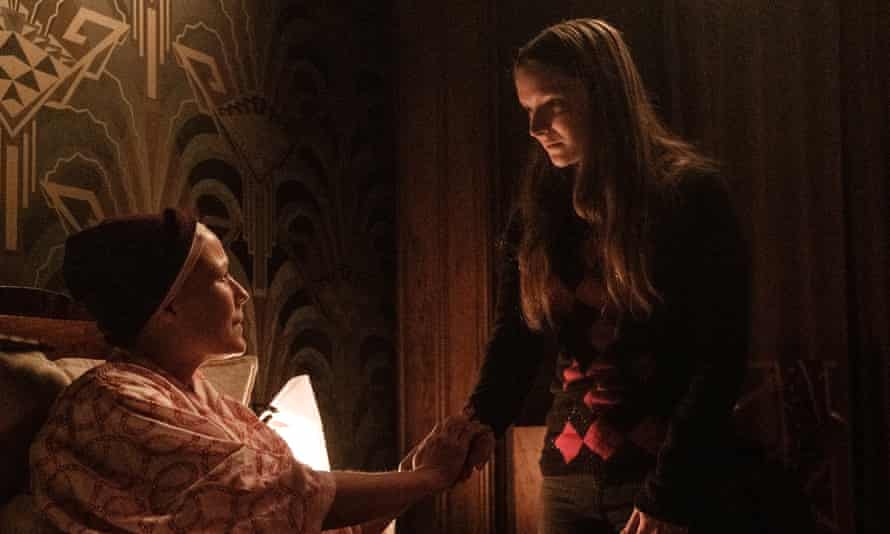
The plot couldn’t be simpler. A nurse (Morfydd Clark of “Pride and Prejudice and Zombies”) leaves a hospital job for to assume “palliative care” duties with a dying dancer and choreographer (Jennifer Ehle). The dancer, an earthy cynic and atheist, lives in an old house on top of a hill overlooking the town (Scarborough, North Yorkshire) and the sea. Maud cares for her, endures her moods and as they say in certain corners of fundamentalism “bears witness” to her patient.

Maud is Catholic. Her voice-over narration is in prayer form, earnest verbal letters to God. Maud frets about “Your plan for me. You must have saved me for something greater than this.”

The cynic, given to mood swings, lets herself seem moved by this overt piety. And facing the end, Amanda wonders about “that last moment. What will I be looking at?”

She doesn’t see the whole Maud, the one we’re privy to in her room. She’s into scourging the flesh, inflicting pain. It might be through sticking her hand on a hot stove or kneeling in front of a crucifix on kernels of popcorn that she’s spread on the floor.

That’s got to smart. — and leave a mark.

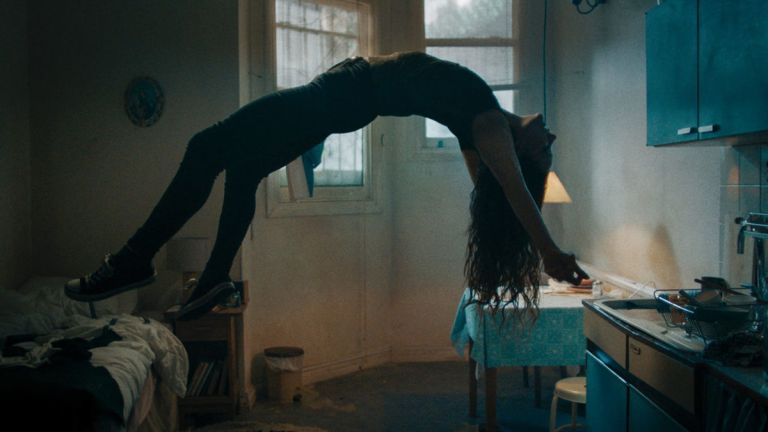
Something happened to Maud, something we get a glimpse of in the opening scene — a body on an operating table, our titular heroine crushed, confused, unable to wash off the blood. The deeper we get into writer-director Rose Glass’s tale, the more we worry for Maud’s patient and the more we fret over what Maud might have in mind to mimic sainthood.

Glass, making an auspicious horror debut, tests Maud in all manner of ways. But are the tests coming from on high, or are they all in Maud’s increasingly unmoored mind?

Clark, who shares a Jane Austen past with Ehle –they both appeared in adaptations of “Pride and Prejudice,” one of which had zombies — is chillingly all-in here. Maud is a veritable model of “good Catholic nurse” who gives us plenty of moments to doubt her sanity and wonder at the sort of young woman she was before whatever happened to make her this way.

She is earnest, but never guileless or naive. She isn’t sophisticated enough to smile when she threatens a young dancer (Lily Frazer) Amanda is having one last fling with, and walking away from a former colleague (Lily Knight) is how she copes with her past — ignoring it.

The radiant Ehle gives us hints of a grande dame of the dance — serene even in sickness, mercurial, with a beatific smile here, an acrid dismissal there.

“I’ll go to bed when I damn well like!”

Glass lets her story simmer and her characters brood for almost 80 minutes, Maud’s rapturous passion rising even as she lashes out — in sexual and self-injurious ways — at the deity who isn’t giving her direct answers.

And then the writer-director slaps us right across the face with a finale that feels harrowing and somehow right and true.

Yes, it’s more “cerebral” than it is horrific. But “Saint Maud” is just creepy enough to come off. And you’ll never look at unpopped popcorn kernels the same way again.

MPA Rating: R for disturbing and violent content, sexual content and language

Cast: Morfydd Clark, Jennifer Ehle, Lily Knight, Lily Frazer

Credits: Scripted and directed by Rose Glass. An A24 release.

Running time: 1:24

Posted in Reviews, previews, profiles and movie news | Comments Off on Movie Review: Seeking salvation, finding horror instead as “Saint Maud”