
The great ones make it look effortless, with their mere presence in a role affirming the story’s unimpeachable reality.
Charlotte Rampling started her career in the ’60s, came into her own in the ’70s (“Farewell, My Lovely”) and by the early ’80s (“The Verdict”) any sense of artifice had vanished from her performances.
Her subtlety, unhurried timing and understated performances invite us in, getting across the verisimilitude of every classic character from Dickens or Chekhov, making us come to her and believe her as a Russian spy trainer in “Red Sparrow,” callous abbesse or inscrutable conjure woman of “Dune.”
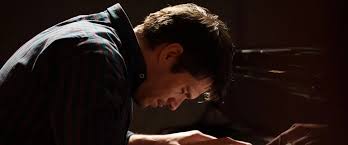
We see her play with sensitivity and the assurance of a legendary Chopin concert pianist in “Two Pianos.” We don’t need to see her fingers soulfully manipulating the keys, but we do. Her eyes and expressions have already made the sale.
Rampling never strikes a false note, even if the multi-handed and frankly melodramatic script of Arnaud Desplechin’s (“My Golden Days,” “King and Queen”) latest, has its atonal and dischordant moments.
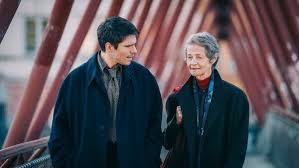
The screen legend plays the aged mentor of a once-promising pianist who returns from teaching in Japan to join her for what she’s decided will be her “farewell” concerts.
Mathias (François Civil, D’Artagnan in the recent French “Three Musketeers” movies) is the brooding sort, devoted to his demanding, self-described “monster” of a mentor Elena and to his long-suffering agent Max (Hippolyte Girardot) but someone who walked away from it all to teach.
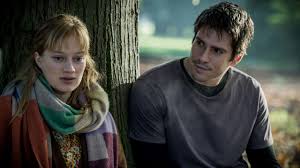
He’s barely renewed both acquaintances when a chance encounter with a former lover (Nadia Tereszkiewicz) makes him faint and her flee the scene of the fainting.
As Lyon isn’t a gigantic city, he is later haunted by the sight of her little boy, a dead ringer for Mathias at age eight.
We start to get a sense of why he says (in French with English subtitles) “I broke my life in two.” The imperious Elena’s orders that he “focus” and Max’s pleas that this “full house, cloaked in contempt” that awaits him means he has to be good enough to “crucify them” will be ignored as fragile Mathias crawls into a guilty bottle or three.
The sensitivity of the performances adorn this coincidence-riddled romance with some magical moments in between the eye-rolling turns of the plot.
A sudden trauma, a Jewish funeral, misguided sex, a concert that may or may not come off and the bizarre suggestion there might be a happy ending in all this messiness are folded into a scenario that is far less convincing than the actors starring in it.
Civil, a composer and actor, looks comfortable at the keyboard even as Mathias struggles with guilt, the knowledge of unfulfilled potential and hangovers when he is supposed to perform.
Tereszkiewicz struggles to master the script’s tricky demands of playing a flighty woman ill-prepared for reopening old emotional wounds or facing new ones.
But old pros Girardot (“The French Dispatch,” “Mama Weed”) and Rampling renew the tale’s connection to reality and our commitment to “Two Pianos” every time they join a scene.
It may be straight-up melodrama, from its lone, corny, over-explaining flashback to the cliched drunk tank our hero finds himself in to the grim hysteria of an ambulance ride. Desplechin’s film still strikes enough of the right notes to be entertaining.

Rating: unrated, sex, nudity, alcohol abuse, smoking
Cast: François Civil, Nadia Tereszkiewicz, Hippolyte Giradot, Jeremy Lewen, Alba Gaïa Bellugi, Anne Kessler, and Charlotte Rampling
Credits: Directed by Arnaud Desplechin, scripted by Arnaud Desplechin, Kamen Velkovsky, Ondine Lauriot dit Prévost and Anne Berest. A Kino Lorber release.
Running time: 1:55



