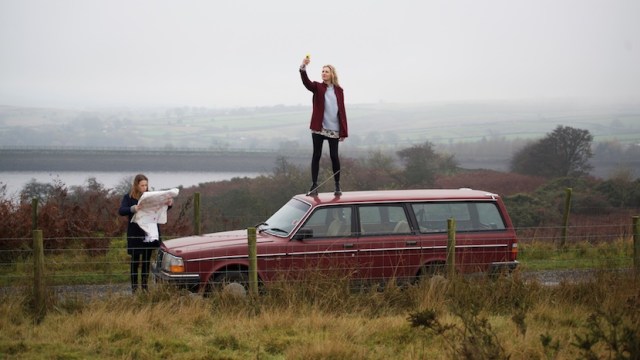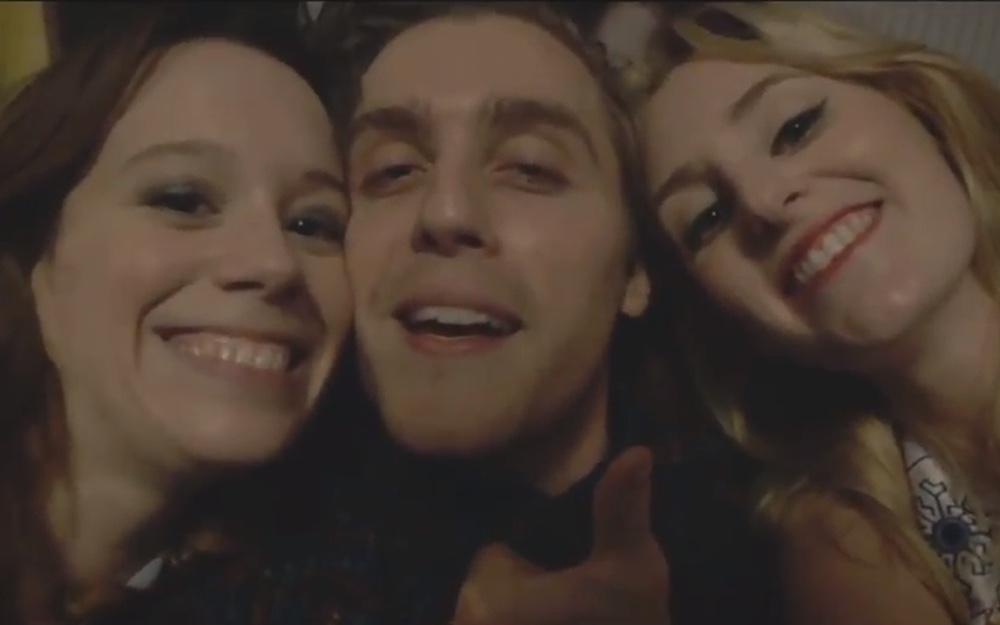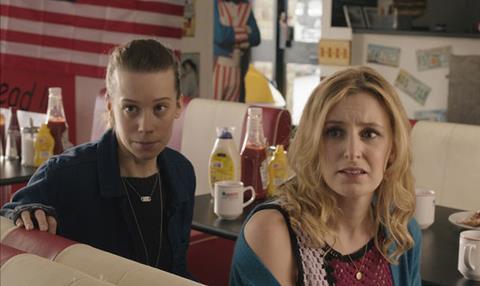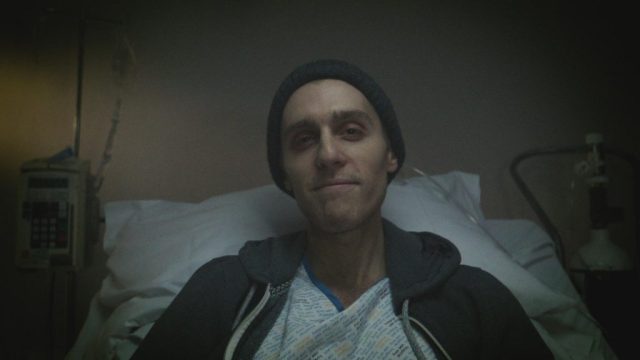

Remember this one? I reviewed it when it got a little taste of theatrical release a ways back.
May 20, if you missed it, “PG: Psycho Goreman” comes to Shudder, in all its kid sass no budget glory.
Remember this one? I reviewed it when it got a little taste of theatrical release a ways back.
May 20, if you missed it, “PG: Psycho Goreman” comes to Shudder, in all its kid sass no budget glory.


Poet, political activist, proto-rapper, stand-up, singer, musician and the original “bluesologist,” Gil-Scott Heron can be viewed in all his glory, an experimenter at his personal peak in 1983’s performance documentary/history lesson and travelogue, “Black Wax.”
Almost 40 years later, and it’s hard to think of a music doc that snaps, crackles and pops with the wit, warmth and musicality of this one.
The in-your-face poet of “The Revolution Will Not Be Televised” had hit the Reagan era with his passion intact, but his patter laid-back, his stage presence polished to perfection.
Gil Scott-Heron on the bank of the Potomac, checking out landmarks and walking “the real city” (“Tenth and Ave. V.”) with a boom box on his shoulder, singing his “Washington, D.C.” is about as cool as a performing artist doing performance art gets.
GSH was sort of Bob Marley Android Richie Havens meet Dick Gregory and Frank Zappa. As he talks about history he walks down a line of wax figure representations of America’s presidents, historical and civil rights icons, critiquing many, and tells us a little of his biography.
He was born in Chicago to an opera singer mother and Jamaican soccer star dad, raised in Jackson, Tennessee by his grandmother, and heard his first Mississippi joke there.
“What has four ‘I’s” and will never see? Mississippi.”
He went to college, got into music and then poetry, moved into academia while in DC, and kept singing, reciting and playing.
The performance part of the film has college-professor caliber rapped/rattled off riffs about “Ray-Gun” (Reagan), whitewashed history, colonialism, his hit single “Johannesburg,” and “Here’s a look at the closing stocks — racism is up, human rights are down…” “Why wait till 1984? You can panic now…and avoid the rush.”
He snaps off his poems “HIStory” and the hilarious, satiric and biting “Whitey’s on the Moon,” much of this backed by a funky nine-piece band, with horns, providing “vibemosphere.”
“Times have changed, but very few folks in America have,” he laments, a phrase we’re hearing every day now. And “Every channel I stop on got a different cop on.”
“The Revolution Will Not Be Televised” may be his ticket to pop culture immortality. And when you look at what television is broadcasting that was recorded on eyewitness cell phones, it’s hard to argue with that thesis.
Scott-Heron died in 2011 and earned a posthumous Grammy the next year. In “Black Wax,” he was at his sharpest, a film that showcases timeless music and great poet at his most prophetic.
MPA Rating: unrated
Cast: Gil-Scott Heron
Credits: Directed by Robert Mugge, scripted by Gil-Scott Heron. A Film Movement Plus release.
Running time: 1:19

It’s not often that a mere limited series can be said to “take the piss out” of an entire culture where that expression is common.
That’s kind of the goal in “Frank of Ireland,” a six-short-episode series hitting Amazon this weekend. Every installment has glimpses of the Ireland of cinematic lore — pubs, wakes, funerals, priests and “diddley aye” music, even a duck boat tour (it was shot in Dublin and Belfast).
The series co-stars and was co-created by brothers Brian Gleeson (“Peaky Blinders”) and Domhnall Gleeson (“Star Wars: Episodes VII, VIII and IX”, “Peter Rabbit”), and there’s even a bit of support by their icon Irish actor dad Brendan Gleeson.
They play co-dependents, with Brian, as the unfiltered, lazy and boorish title character.
Frank is a musician whose inspiration and career went in the crapper when he split from Aine (Sarah Green of “The Guard,” “Peaky Blinders”). Their relationship is years-gone, but he still has to scribble “Do Not Sleep With Aine” on his hand, just to make sure.
Doesn’t work.
His long-suffering best mate Doofus (Domhnall) is always at his beck and call, with Frank yanking him out of work for whatever impulse he’s acting on this time.
I described Frank as “unfiltered,” but everybody here seems as foul-mouthed and coarse as our hero. Granted, his constant profane “Taxi Driver” monologues get him banned from cabs, but the f-bombs and blunt if not exactly hilarious sex talk could come from any quarter, most any character.
Aine’s mom dies, and Frank’s persuaded to sing at the funeral. He stops cursing just long enough to try (not really) a tune.
“Here’s a little ditty for God’s sickest woman,” he offers. Doofus he assigns the task of moving merch at “the gig” — handing out CDs, selling T-shirts. Doesn’t end well.
The arc of the series is about Aine moving on, and Frank “working on new material” (NOT) and trying to placate the equally foul-mouthed mother (Pom Boyd) he mooches off as he faces a reckoning with being a 32 year-old lay-about lout.

Every episode has a cutesy movie riff title, setting up movie riff running gags throughout — “We Need to Talk About Kevin Costner,” “‘Memento’ Mary,” “You Talkin’ to Meath” (“Taxi Driver”), “A Few Good Angry Women,” “James Caan’t” (“Misery”).
The jokes can be delightfully random. A dog’s “accident” warrants a hilarious response to “You should rub his nose in it.” But “can be” is quite the proviso here.
Man, we need to talk about workshopping these scattered, frenetic and miss-or-hit scripts and indulging these siblings in this nonsense wank of a series. A “show about nothing” has been done, lads.
“Surreal” is giving “Frank” and the Gleesons too much credit for the strained mania, insistent vulgarity and blabbering, blithering unreality of it all. Don’t get too attached to any character.
The story arc of an obnoxious dead weight lead character isn’t rendered interesting, and the novelty of a family of Irish gingers teaming up wears out. Quickly.
But what do you expect for a show that sets out to “take the piss” and in which being quite Irish and utterly “charmless” is the end goal?
MPA Rating: TV-MA, drugs, nudity, profanity galore
Cast: Brian Gleeson, Domhnall Gleeson, Pom Boyd, Sarah Greene, Tom Vaughan-Lawlor, Pat Shortt
Credits: Created and written by Brian Gleeson, Domhnall Gleeson and Michael Moloney. An Amazon Original series.
Running time: Six episodes @ :25 each

Ready or not, pandemic-pounded movie year or not, here come the 93rd annual Academy Awards, Hollywood’s grasp at trying to return to something like “normal,” and hopefully with enough of a TV audience tuning in to make it worth their trouble.
Unlike the Zoomed and largely-ignored Golden Globes, in other words.
I’ve been looking at 2020 as the ultimate “asterisk year,” to use the sports analogy. There was no March Madness last year, not even a dinged-up and abortive version like the one we just witnessed. The Dodgers finally won a World Series in a shortened season.
And Hollywood spent all year postponing films, pulling releases and trying to figure out a way to get income from their pricey product out of streaming services, in most cases streamers they started up themselves. All the old rules about a movie “must play in a theater” went out the window, and that lingered on into awards season.
Like NCAA football and hoops teams, movies didn’t have a chance to go out, make an impression and make their case in this climate.
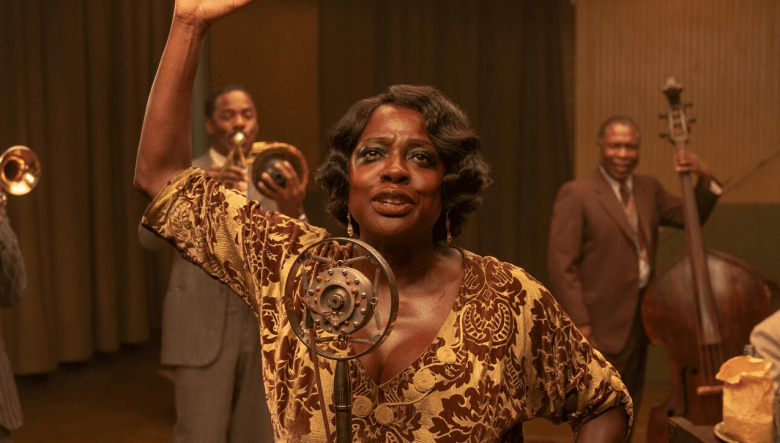
So we’ve got “Nomadland” and “Sound of Metal” and “Minari” as contenders, an actor who died (Chadwick Boseman of “Ma Rainey’s Black Bottom”) as a sentimental favorite and Vanessa Kirby (“Pieces of a Woman”) and Andra Day (“The United States vs. Billie Holiday”) as legitimate contenders in movies that almost no one has seen.
Even in a year with theaters mostly closed and heavyweight studios not putting expensive product out in time to compete, this year’s Oscars promise to promote the least popular — in terms of ticket sales and streaming views — contenders and winners in Academy history.
Still, we got something resembling a “normal” awards season build-up to the Oscars, so based on the SAG Awards and Critics Choice Awards, even with the outlier BAFTAs (ALL “Nomadland”) maybe picking the winners will still be a breeze.
Do the betting odds reflect this, this time around?
“Nomadland” is the prohibitive favorite to take Best Picture. Netflix’s “The Trial of the Chicago Seven” is the only film within laughing distance, according to the site. I don’t know. Lots of actors are in “Chicago.” And lots of actors make up the Academy.
Still, as the old Oscars’ saying goes, “Best directors direct best pictures.” Chloe Zhao is just as favored to win Best Director for “Nomadland.”
Cary Mulligan (“Promising Young Woman”), despite not winning the BAFTA last weekend, is favored to run off with Best Actress. With Frances McDormand taking the BAFTA and Viola Davis winning Screen Actors’ Guild honors this is a real horse race.

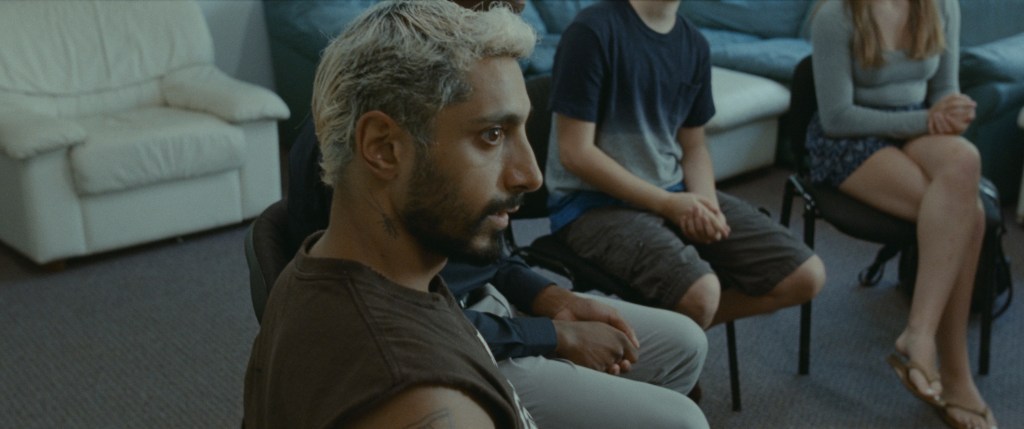
Boseman is our Best Actor winner. Bet your pink slip on that. A wonderful actor who took a lot of iconic roles — Jackie Robinson, Thurgood Marshall, Black Panther — in his too-short life, this is the way Hollywood will commemorate him, and bless them for doing it. Another great performance by Anthony Hopkins and a brilliant “Sound of Metal” turn by Riz Ahmed won’t produce Oscars for them, alas.

Putting Daniel Kaluuya in the supporting actor category for “Judas and the Black Messiah” will almost certainly pay off with the Oscar. I’d say he ended that discussion with his SAG win and glorious, fun and self-effacing turn as “Saturday Night Live” host a couple of weeks back. The Oscar is just his victory lap.
So that means that an actor who played a real Black Panther and the actor who played the comic book “Black Panther” will both collect Oscars on the same night. Pretty cool, huh?
Best Supporting Actress down to the Youn Yuh-Jung, the grandma from “Minari” and the unladylike young “daughter” (Maria Bakalova) from “Borat Subsequent MovieFilm?” Youn seems likely, based on the SAG win. I think “Minari” and the “Borat” sequel are the two most over-rated contenders in this year’s Oscars. I’d to think Glenn Close, nominated for a disastrously tone-deaf “Hillbilly Elegy,” has a sentimental shot. She’s never won. Amanda Seyfried was the best thing in “Mank.” But they’re the longer shots in that field, along with Olivia Colman (“The Father”), and we’ll never know how close it was if they lose.
“Promising Young Woman” is the best original screenplay favorite, with “Trial of the Chicago Seven” given a shot.

I’m hoping the film I think was the best movie of 2020, “Another Round,” wins Best International Feature.
Best Documentary will go to either “Crip Camp” or “My Octopus Teacher,” sentimental pics with big fanbases.
Best Animated Feature seems like a lock for “Soul,” but anybody who’s seen both knows “Wolfwalkers” is better.
I figure Best Adapted screenplay is anybody’s guess, with an odd amount of love going to the “Borat Subsequent Moviefilm Team” up to now, but I’d like to hope “The Father” has a shot. “Nomadland” is also a contender, and as its the Big Picture favorite, this could be a big night for Chloe Zhao all the way around.
“Sound of Metal” should win Best Sound, “Emma.” is my pick for Best Costume, Best Production Design might be the best shot for “Mank” to win something (“News of the World” was better designed and more challenging, in my opinion), and “Tenet” LINK should have a shot at Best Visual Effects.
In any event, Oscar night is Sunday, April 25, and socially-distanced or not, could be a fruitful evening hoping fans show up for the TV event, and then go out theaters again to see any of these worthies still showing — or re-released — afterward.

A life of toiling the land and hard drinking put the old man on a box in front of a pool hall in Montgomery, Alabama in the 1930s. He’d use pencils and children’s “poster paint” to create art out of scraps of cardboard — the back of a Philip Morris cigarette standee, a window card, soft drink posters and the like.
That was the first time anybody “discovered” Bill Traylor. It wouldn’t be the last.
Montgomery found him and feted him, in the limited ways the Deep South city could manage to acknowledge a Black genius in their midst in the 1930s. New York took notice, but only really grasped his significance decades after his death.
And now editor-turned-director Jeffrey Wolf’s spirited, adventurous documentary, “Bill Traylor: Chasing Ghosts” brings Traylor’s “crude, primitive” and “simplistic” work back into the spotlight as one of the great, not-quite-forgotten self-taught artists of American history.
Wolf uses actors reciting works by Zora Neale Hurston and Langston Hughes, snippets of the blues, interviews with family, art experts and artists such as Radcliffe Bailey, and even a tap dancer to conjure Traylor’s story and the world he lived and created in, much of it concurrent with “The Harlem Renaissance,” just a long long way from Harlem.
The film fills in the blanks of a life that began in late-state slavery (he was born in 1853) and can only be sketched in, thanks to a few family memories, rare legal papers, the recollections of Charles Shannon — the major Montgomery cheerleader for Traylor’s work during the man’s lifetime — and even excerpts from the journal/log-book of the slave owner who owned Traylor’s family before Emancipation.
As the art itself is discussed and dissected (“Chasing Ghosts” is one of his more famous paintings) a portrait emerges of a man who “seemed to live a very small life, doing something big, nurturing a gift” and bringing a lost “world back to vivid life.”
After Traylor aged out of the farm work that had supported him and his family from Reconstruction to The Great Depression, he was homeless for stretches, drawing to supplement his Roosevelt Era “relief” checks. Or he’d stay with his adult children, nailing some of his pictures — spare, stylized representations of his life and African American life in the Cotton Belt — on the wall.
“What child drew these pictures?” one descendent — many are interviewed here — remembers somebody asking during a visit, deeply insulting Traylor’s daughter.
When the last member of Traylor’s family that he’d stayed with in his last years died, much of his work was tossed. The nature of it, painted or drawn on discarded cardboard, led to most of his decades of paintings disappearing, even as the art world was starting to recognize his genius and those works’ value. Only a couple of hundred pieces exist.


Admirers say “He just made the work. He didn’t ‘think’ the work,” which seems faintly condescending. But so-called “primitive” artists always face that sort of labeling.
The soulful, vibrant, expressive art is almost documentary in nature, like great cave paintings put on cardboard. Works like “Possum Hunt” and “Blacksmith Shop” stylize folkways, and “Drinking Bout” encapsulates Traylor’s own struggles with hard liquor — giddy abandon painted in the colors of doom.
He lost a foot and later a leg to diabetes gangrene late in life.
But unmentioned through all this is the treasure hunting aspect of Traylor’s career. As much of his work as has been lost, surely there’s art still extant outside of landfills or disintegration. Flea marketers would be well-served watching “Chasing Ghosts” just to pick up on his distinct style. You just know there’s art out there somewhere, maybe not even regarded as “fine art,” in somebody’s garage sale, waiting to be added to this prolific painter’s legacy.
MPA Rating: unrated
Cast: Radcliffe Bailey, Roberta Smith, Jason Samuels Smith, Sharon Washington and assorted family of the late Bill Traylor
Credits: Directed by Jeffrey Wolf, script by Fred Barron. A Kino Lorber release.
Running time: 1:15

Allow yourself a little cringe time in the opening act of “Jakob’s Wife,” a horror tale shot and set in quaint Canton, Mississippi.
Pay no heed to the fact that every “teen” you meet is up for the “thirtysomething” reboot. Don’t get too wrapped-up in the details of the “troubled marriage” between boorish, snoring, loud-eating and constantly-interrupting Pastor Jakob and his lovely, genteel but “had-enough of this” wife.
Just take note that Anne is played by horror veteran Barbara Crampton and Jakob is the always in-demand Larry Fessenden, and as the expression goes, “WAIT for it.”
Because when then vampire is biting and Anne can’t go out during the day, or even get her teeth whitened by UV light, you’re going to laugh. And Pastor Jakob, attentive to his flock and devoted to his wife, isn’t asking “Can this marriage be saved?” He’s hunting for the Holy Water and, his hammer and stakes of holly.
The key moment to me is when preacher stops worrying about missing members of his flock and has “the talk” with Anne, who is acting…differently. She’s still revolted by the violent, messy way he brushes his teeth, his table manners and such. But she’s taken to punching him in his sleep and he’s interrupted her for the last time.
“Let me FINISH my THOUGHT, G–dammit!”
Pasty, pristine Anne tells him “I feel more alive than I have in years.” But Jakob? He’s filling that Holy Water bottle because he has figured some things out. “Don’t get USED to it.”


The first two acts establish the failed dynamics of the marriage, Anne’s temptation, the arrival of “The Master” (Bonnie Aarons), the first victim (Nyisha Bell) and the situation that gives Anne a big secret to keep from her husband.
But the third act has gloriously icky makeup, over-the-top geysers of blood goofiness, down-and-dirty vampire trash talk laughs.
“I’m gonna TONGUE-f–k a hole in your neck until I puke blood!”
Pastor’s trying to save his wife and his marriage, and keep all this from the local sheriff (Jay DeVon Johnson) as he and Anne dispose of neighbors who’ve been bitten. A little girl watches them enter a house without knocking and threatens blackmail.
“Go inside,” the pastor coos.
“Tell me a SWEAR word, first!”
Crampton turned to the dark side of cinema with “Re-Animator,” and Fessenden’s been an indie darling whose horror turns (“Satan Hates You”) are his standout credits. Watching two pros throw themselves into a low-budget movie shot, on location, in BFE Mississippi isn’t just amusing, it’s inspiring.
Love what you do kids, and you’ll never get old, with or without the vampire’s kiss.
MPA Rating: unrated, graphic, gory violence, profanity, sex and brief nudity
Cast: Barbara Crampton, Larry Fessenden, Nyisha Bell, Jay DeVon Johnson and Bonnie Aarons
Credits: Directed by Travis Stevens, script by Kathy Charles, Mark Steensland and Travis Stevens. An RLJE release.
Running time: 1:38
Dry, deadpan and sober. Not easy to watch, in other words. But on the money and on message. Gervais and Waititi are the two main voices you hear.


A cryptic, allegorical tale with a lot of intellectual ambition, “At Night Comes Wolves” takes on toxic masculinity and the cultish way religion tends to amplify it in an emotionally remote and dramatically flat thriller.
It’s got a message, but sends it in ways that prevent it from ever chilling, thrilling or even roping in the viewer.
It starts with great promise. Leah (Gabi Alves) is married and making all the effort to make it work. Testy, demeaning and bullying Daniel (Jacob Allen Weldy) has some hold on her and a way of never apologizing after every fight he’s started, every insult he’s dropped.
He the sort who says “I’ve tried” to connect with her when we can see he’s done no such thing.
Leah dresses up as Wonder Woman and greets him at the door when he comes home for his birthday. And when she catches him watching porn later, she’s the one expected to say “I’m sorry.”
At long last, she flees, dumps her old life entirely, so it seems. Thus she becomes a sitting duck for the friendly, flirtatious Mary May (Sarah Serio) when she stumbles into a diner. Mary May is all “honeybun” this and “sweetie” that, suggesting Leah join her “in the forest” because “I have someone I want you to meet.”
And then she closes the deal. Who does she to introduce to Leah?
“The Lord our God!”
Vladimir Noel is Davy, a hunter of plants, seeker of herbs and maker of potions, a healer with an intense look Mary May seems to regard as charisma, but which spooks Leah. He offers her something that can “stop all men from acting the way your husband does.” It takes a lot of selling for her to buy into that.
Writer-director TJ Marine weaves in interlocking narratives built on coincidence — Leah’s husband is “known” to her new friends — and never quite explaining what the hell is going on. “Death cult” comes to mind, as the film introduces earlier recruitments, the idea of conversing with aliens and the hold the patriarchy exerts in such organizations. These revelations emerge from a story told in chapters titled “The Future, After the Incident” and “The Past, Origin Story No. 1” and later “No. 2.”
Whispers, wolf howls, crackling crackpot short wave broadcasts lend the entire affair a no-budget dream vibe.
But the suspense of the first scenes rather dissipates as flashback within flashback introduces off-camera violence committed by other characters, other members of this cult. The story sputters along on different threads and doesn’t cohere into anything particularly deep or remotely horrific.
We lose track of Leah’s plight, and even if we’re getting a feel for how unmoored she is in this new environment, when she’s not in the story there’s no one to identify with, nothing to fear and no one to fear for.
Whatever wavelength “At Night Comes Wolves” is operating on, it never tuned in for me.
MPA Rating: unrated, violence, profanity
Cast: Gabi Alves, Sarah Serio, Jacob Allen Weldy and Vladimir Noel.
Credits: Scripted and directed by TJ Marine. A Gravitas Ventures release.
Running time: 1:17

“Godzilla vs. King Kong” rolled up another $13.4 million from ticket buyers this weekend, crushing the competition again, what little there is of it.
Globally it will clear the $360 million mark Monday. Not. Too. Shabby.
The Lionagate sci fi offering “Voyagers” didn’t even achieve liftoff, $1.35 million in proof that even having Colin Farrell in the first act was never going to make this Tye Sheridan/Lily-Rose Depp vehicle fly.
“Nobody,” “The Unholy” and “Raya” all cleared $2 million.
Figures provided by @BoxOfficePro


In villages in the hill country of extreme northwestern Italy life moves slowly, and can seem to revolve around an elite corps with names like Nina, Birba, Pepe, Leo and Siana, Tina and Jeri, Fiona and Titina.
They are the adored dogs with the million Euro noses, “The Truffle Hunters.”
Sure, their human partners are the ones who finish digging up the fungal morsels that assorted mutts and hounds locate. The old men clean the truffles with care, sell them to intermediaries who either offer them directly to restaurants, or auction their finds off. At 4500 Euros per kilogram and up, those affairs take on a Sotheby’s air.
But the dogs — coddled and nuzzled, rewarded and protected — are the stars of this charming and intimate slice-of-life documentary by Michael Dweck and Gregory Kershaw.
One fellow and his dogs have celebratory sing-alongs on the ride home from a fruitful day in the gloomy mud of early spring. His ancient Suzuki SUV saw its best days decades before, but the dogs are pampered, in the tub with him at home, cleaning off the day’s work.
Birbi gets a birthday cake. Fiona gets a rub behind the ears and cooing words of thanks. Nina is confided in. Because “If you don’t trust your dogs, you shouldn’t go truffle hunting.”
The codgers bump into each other in the woods and bitch about the “greedy” competitive nature of truffle hunting these days. They have to worry that about some resentful redneck leaving poisoned bait out to kill their dogs and thus gain a perceived edge.
“Why would they do that to the dogs?” one hunter’s companion cries. “They’re innocent!”
“Truffle Hunters” takes in a little of the root (they’re a fungus that grows on tree roots) to table life of this delicacy, the wheeling and dealing of direct sales and an auction. We see them served on this mouth-watering dish or in that one.
But mostly, this is dogs and men in the woods, the old men comparing life with a good dog to marriage, with their canine companions having the edge. And yes, most of the men we meet here aren’t married.
As one 84 year-old veteran of the forests around San Damiano d’Asti endures the pleas of a younger man who begs him, in Italian (with English subtitles), “Can you tell me your secret spots?” and replies “Never, NEVER,” you have to wonder how the filmmakers ever got close enough to these adorable curmudgeons to film the magic as it happens.
My guess? They told them, “Hey, we want to make a movie about your dogs.”
MPA Rating: PG-13 for some strong language (profanity)
Cast: Sergio Cauda, Paolo Stacchini, Carlo Gondola, Pierro Botto, Enrico Crippa
Credits: Directed by Michael Dweck and Gregory Kershaw. A Sony Pictures Classics release.
Running time: 1:24