Movie Review: New Yorkers Connect, but Avoid Attraction, Love “Or Something” Like It.

“Or Something” is a not-half-bad indie romance in the “Before Sunrise,” “In Search of a Midnight Kiss” tradition.

Two strangers are thrown together for a long day of trying to collect a debt. They talk and talk and try to make or avoid anything like a “connection” as they do.

Insights about their characters, pieces of their histories tell each other and us how they met at this Brooklyn apartment and why they have to take on this Quixotic quest from Broolyn to Harlem, home to “Uptown Mike” and their money.

Defense mechanisms go up and come down, kneejerk prejudices are offered up and swatted down, all folded into a day of generally engaging subway ride chats, diner discourse and walks through a nearly empty park mere days before Christmas.

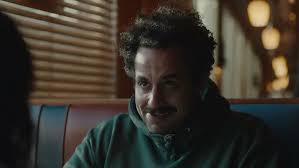
Olivia (Mary Neely) meets Amir (Kareem Rahma) as they’re both heading for the same Brooklyn apartment. We’ve just seen her selling clothes to raise cash. He’s fighting some sort of family fire via cell phone.

As he’s walking in the same direction, just a few steps behind her, he earns a New York “Hello.”

“I will f—–g TASE you!”

Relax. He’s going to see Teddy. So is she. He lets her possibly racist hostility slide. Her “Sorry” is almost sincere enough to warrant it.

She needs cash that Teddy “owes” her. So does he. They both want the exact same amount — $1200. “Synchronicity?” Maybe. But Teddy (Brandon Wardell), in a wheelchair, his foot in a boot-cast, is all about deflection and distraction.

Couldya REFILL my Big Gulp? I could “write you an IOU on the IOU.”

Teddy’s manipulative. Teddy’s privileged. What New Yorker would trust Teddy to give them the time of day, much less money?

Surely they know that “your money is with Uptown Mike” is a dodge. No, Teddy can’t give you Mike’s exact address. No, he won’t give out the man’s phone number. There’s an excuse for why Mike has no social media presence/photo for them to look at.

Mike’s a “private dude?” Sure.

But off the two of them go, as beggars can’t be choosers and each appears to have some sort of cash-starved deadline. She wouldn’t talk at all, but she burns out her phone’s battery playing Sudoku on the subway. And when Olivia does converse, her attitudes, gender dogma and generation blurt out in a single sentence.

“Guys are only nice to the girls they want to have sex with.”

Amir’s reassurances to the contrary fall on deaf ears. Citing all the social media blasts from women who don’t “want to be approached” at work, in the gym, in the park or in the pubs and clubs is why “I just don’t talk to girls in real life.”

They have a day to work past this impasse, an afternoon fraught with confrontation (David Zayas plays the anti-gentrification crusader with a baseball bat, Uptown Mike), confession and confirmation bias.

A second tradition built into this project is the “Write a script you can star in” make-your-own-break ethos that sees Neely (“Happiness for Beginners”) and Rahma, who was in a couple of episodes of “Poker Face” cook up this story built around all this conversation, New York locations and two story arcs to follow, all of it divided into time-check chapters with cutesie titles riffing on the film’s title.

“Like 2…or something.”

The characters are interesting and the conversation, ranging from one’s “everything is connected” reason for being respectful, acting with kindness and morality to anecdotes about different cultures’ reactions to death and Istanbul as “the hair transplant capital of the world.”

But Neely and Rahma and director Jeffrey Scotti Schroeder find a light tone, a “vibe,” and then betray it in an effort to “explain” this or that behavior and worldview. The ending feels plausible but not “true” to the spirit of the film.

A lot of this feels screenwriterly, which makes Brandon Wardell‘s repellent, self-absorbed and unaccountable douche-bro poster child Teddy entertaining, but the sort of character who only exists in screenplays.

Our leads, however, make these New York “types” wholly believable.

And you have to credit “Or Something” for doing what it sets out to do — introduce two characters who neither they nor we would pay any heed, and make us interested in their lives and invested in their quest, hoping for the best from Teddy, Uptown Mike or an ending we can live with.

Rating: unrated, profanity, smoking

Cast: Mary Neely, Kareem Rahma, David Zayas and Brandon Wardell

Credits: Directed by Jeffrey Scotti Schroeder, scripted by Mary Neely and Kareem Rahma. A Factory 25 release.

Running time: 1:21

Posted in Reviews, previews, profiles and movie news | Comments Off on Movie Review: New Yorkers Connect, but Avoid Attraction, Love “Or Something” Like It.

Movie Preview: Michael Chiklis is “The Senior,” a former football star looking to finish high school

Fiftysomething, a contractor, and “I’m eligible.”

“Eligible for what?”

He’s “like a 59 year old ‘Rudy.'”

Mary Stuart Masterson and Rob Corddry co-star in this version of the true “redemption” story of Mike Flynt, which was finished a couple of years back.

Faith-based or at least faith-adjacent Angel Studios has this one, which comes out Sept. 19.

Posted in Reviews, previews, profiles and movie news | Comments Off on Movie Preview: Michael Chiklis is “The Senior,” a former football star looking to finish high school

Movie Preview: Relationship Horror about what Constitutes a “Keeper”

The director of “Longlegs” and “The Monkey,” Osgood Perkins, parks Tatiana Maslany (“Stronger,” the “Perry Mason” remake) and another son of Donald Sutherland in his latest, which arrives in theaters just in time for the holidays (11-14).

The horror. The horror.

Posted in Reviews, previews, profiles and movie news | Comments Off on Movie Preview: Relationship Horror about what Constitutes a “Keeper”

Movie Preview: Colin Farrell in Netflix’s Oscar bait — “Ballad of a Small Player”

The director of “Conclave,” the presence of Tilda Swinton, a gambling milieu and a veteran player’s descent into madness?

Fala Chen, a whiff of the gambling Mecca of Macau. Because Vegas isn’t the only gaming city with a fake Eiffel Tower in it. Is it?

In Theaters, Oct. 15, Netflix streaming Oct. 29.

Posted in Reviews, previews, profiles and movie news | Comments Off on Movie Preview: Colin Farrell in Netflix’s Oscar bait — “Ballad of a Small Player”

Movie Preview: Diane Lane, Kyle Chandler, an “Anniversary”

Phoebe Dynevor, Zoe Deutch, Madeline Brewer, McKenna Grace and Dylan O’Brien also star in an edgy thriller about Her son’s new girlfriend, Mom’s scary ex-student.

“We don’t always know what our children are capable of.”

This new thriller from the Polish director of “The Hater” hits theaters Oct. 29.

Nice little bit of counter-programming for Halloween from Lionsgate, a big break for villainess Dynevor and another showcase for Diane Lane.

Posted in Reviews, previews, profiles and movie news | 1 Comment

Series Review: Returning to the Gold Standard — “The Story of Film: An Odyssey”

I reviewed “The Story of Film” back when it first made its way to the US via Netflix over a dozen years ago, and like everyone else who weighed in on it, called it “a film school” course in streaming form.

But it was a cursory review, based on the early episodes, and deadline pressures kept me from getting back to all of Mark Cousins’ fifteen (initial) episodes about film history, the innovators and revolutions and “golden ages” of the cinemas of America, Germany, China, Italy, Japan, Africa and so on.

In the years since, no series has come along — detailing the invention or discovery of continuity editing, the close-up, split screens and parallel structure narratives, the rise of this or that movie trend or national cinema or iconic, rule-inventing filmmaker — to challenge its place as The Best Film History Series of Them All.

So with the summer cinema of 2025 winding down, and that godawful “Titans” drama with a hint of “docu” series on Netflix now, I’ thought I’d track down Cousins’ series and finish it off. It’s available as part of Amazon Prime, now.

The Northern Irish Cousins is an idiosyncratic tour guide, gushing over this little seen corner of the world or that little-appreciated film or filmmaker. His quiet, flat, lightly-accented narration is somewhat sleep inducing.

And he wears out phrases like “golden age” and how this or that trend “would change the story of film.”

But this series is a film buff’s dream, a thorough, global appreciation of where the Big Ideas and storytelling novelties of cinema were first introduced. If your “understanding” of film history is warped by Hollywood mythology and an America-centric view of the movies, as mine was, you mind can’t help but have your eyes opened by learning Indian cinema beyond and before Satyajit Ray, the “revolution” that Egypt’s “Cairo Station” was and the ways Robert Bresson, Fellini, Ozu, Passolini and Kurosawa, as well as Welles, Ford and Hitchock, influenced decades of movies that followed their heydays.

Every episode roughly encompasses an era — usually about a decade long — from the earliest silents of the Lumiere brothers, Edwin S. Porter and Georges Melies to the vast leaps that German cinema and Scandinavian films made during the silent era, the earliest epics through the movies of China’s first cinematic “golden age” (the 1930s) and onward.

The French New Wave, New American Cinema of the ’60s and ’70s, Africa and South America’s earliest smashes, Japan’s pre-war films compensating for a cruel,imperialist culture and post-war embrace of the need to evolve, “An Odyssey” truly covers as many of the waypoints the movies have passed through as would seem humanly possible in one lifetime.

Here’s Cousins on the godfather of Hong Kong kung fu cinema, King Hu.

“If John Ford had been into Buddhism, ballet and zero gravity gravity (wirework flying martial artists), he might have made films like King Hu.”

“Muhammad: Messenger of God” earns a closer look for “innovations,” as do kung fu films, Bollywood action musicals and “The Horse Thief,” the “Fifth Generation” Chinese film that Cousins agrees with Scorsese was “the best film of the ’80s,” a “rebellious” decade when communism lashed out in dying gasps and conservative “lies” were challenged by an emerging indie cinema in the West.

The filmmaking team of John Sayles and Maggie Renzi are celebrated as “standard bearers” of
American indie cinema. “Intolerance” turns up as inspiration for scores of epic imitations ,”The Blair Witch Project” embraced as the ultimate “digital age” smash and Gus Van Sant appreciated for his consistently “out there” hits (“Elephant,” its inspiration and title are explained) and misses (“Gerry“).

Spielberg’s “signature shot,” that moment of “awe” in so many of his movies, is sampled. Mercedes McCambridge reveals the ways she inhabited the “entity” voice of Lucifer in “The Exorcist,” and Luke Skywalker trusting “the force,” his feelings, rather than reason and his targeting computer becomes the metaphor for American cinema in the ’70s and beyond, “feeling” no longer “thinking.”

Continue reading
Posted in Reviews, previews, profiles and movie news | Tagged , , , , , , , | Comments Off on Series Review: Returning to the Gold Standard — “The Story of Film: An Odyssey”

Documentary Review: The Psychology of “Ordinary Men” who carried out “The Forgotten Holocaust”

It can’t be a coincidence that Netflix chose this moment in time to stream the 2022 German TV doc “Ganz normale Männer – Der ‘vergessene Holocaust,'” “Ordinary Men: The Forgotten Holocaust.”

The Internet is overrun with videos of masked goons attacking, roughing up and “arresting” people who may or may not be immigrants — almost entirely “brown people” — and may or may not be documented.

They’re doing this on the payroll of a totalitarian regime put in power by hate and run on hate. American mainstream news organizations are cowed and under-covering or even normalizing the crimes and the assault on due process and the ways this violence is being used to change the subject from the corrupt regime and its leader’s deep ties to pedophilia.

The film airs at a time when the word “Holocaust” has been reduced to a “brand” that’s being tarnished daily by a “final solution” underway in the Middle East, following decades of land-grabbing and apartheidist disenfranchisement backed up by Jewish/Zionist state violence. The phrase “Never Again” is losing all its meaning thanks to an Israeli regime bent on ethnic cleansing in Palestine.

So yes, maybe the Germans still have something to teach us.

“Ordinary Men” takes its title from University of North Carolina academic Christopher Browning’s book about a Hamburg Reserve Police Battalion 101 and how mature, often academically accomplished “ordinary men” were recruited and thrust, with little training, into carrying out the early days of the mass genocide of Jews, Gypsies, Poles and Slavs to create “living space” for the Third Reich.

Browning, psychologists and sociologists discuss specific “ordinary men,” and the general process of peer-pressuring these untrained recruits, many of whom weren’t Nazi fanatics who joined up just to “police” occupied territories and avoid being conscripted into the army, into unspeakable acts.

Millions of victims were killed in death camps during the “Final Solution.” But those doing the rounding up and transporting of the doomed had already been carrying out mass killings — from shooting men, women and children to “bashing” babies heads in — in Poland and anywhere else they were posted.

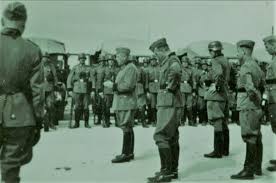
The film, narrated by Brian Cox, focuses on that Hamburg battalion, whose commander, Major Wilhelm Trapp, showed shock as he told his charges of the “terrible” orders they were given that day they were told to slaughter 1500 Polish Jews, some of them Germans who’d fled to Poland after Hitler’s rise to power.

German “efficiency” and cost-cutting didn’t yet figure into the machinery of the Holocaust. They escorted victims one by one into a forest, chatting with them (one recognized the owner of a cinema he’d attended in Hamburg) before murdering them.

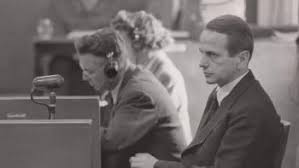
Black and white photographs and rare archival footage of such “operations” blends with reenactments to recreate the horror. Audio and filmed archives of the trials of some of these war criminals — most were never brought to justice — lets us hear surviving victims’ accounts, and the killers’ unemotional descriptions of their work, carrying out the grand scheme of their state and the fanatics running it.

None expressed remorse, something one of their surviving prosecutors (Benjamin Ferencz) says.

But as Browning asserts and German academics confirm, these weren’t do-this-or-die orders. These “ordinary men” had a choice. Some chose to endure a bit of “coward” taunting from their comrades and refused, with no official punishment or recriminations.

The “We were just following orders” defense never works, from SS, Gestapo and “Reserve Police Battalions” to ICE or IDF.

Yet Browning reminds us that it’s never been about “orders.”

“Regimes that want to commit genocide or mass murder will never fail to do so for a lack of people who will pull the trigger.”

There’ve been so many Holocaust documentaries over the decades that it’s easy to become numb to the subject and anything those who endured it have to teach us. “Ordinary Men” breaks through that with a warning to those ignoring history repeating itself, and to those who think they’re safe, hiding behind masks as they commit crimes against humanity on behalf of leaders relying on hate to avoid their own reckoning.

Rating: TV-MA, discussions of mass murder, nudity

Cast:Christopher Browning, Harald Welzer, Hilary Earl, Stefan Klemp, Benjamin Ferencz and Sefan Kühl narrated by Brian Cox.

Credits: Directed by Manfred Oldenberg and Oliver Halmburger, scripted by Manfred Oldenberg. A Netflix release.

Running time: 58 minutes

Posted in Reviews, previews, profiles and movie news | Tagged , , , , , , , , , , | Comments Off on Documentary Review: The Psychology of “Ordinary Men” who carried out “The Forgotten Holocaust”

Movie Preview: The best argument against Digital Movie Dogs — “Good Boy”

IFC has this canine horror thriller set for Oct 3.

The Horror here goes beyond house training problems and puppy chewing issues.

Or…does it?

A real dog actor. It makes a difference.

Posted in Reviews, previews, profiles and movie news | Comments Off on Movie Preview: The best argument against Digital Movie Dogs — “Good Boy”

Movie Preview: An Iranian out for revenge ponders “It Was Just an Accident”

Persian filmmaker Jafar Panahi’s latest test of the boundaries of truth telling in the Islamic State is about misunderstandings, cruelty and the choice between vengeance and mercy.

Panahi did “Offside,” “Three Faces” and “Taxi,” movies about life in Iran that say more than is obvious on first glance.

Neon picked up this Cannes hit for Oct. 15 release.

Posted in Reviews, previews, profiles and movie news | Comments Off on Movie Preview: An Iranian out for revenge ponders “It Was Just an Accident”

Classic Film Review: “The Limey” brings Terence Stamp and Cockney Revenge to ’90s L.A.

A chewy comeback role is the ultimate gift to an accomplished actor who never quite caught fire or who got older while producers and studio execs kept getting younger.

Think of what Tarantino did for Travolta, Pam Grier or Robert Forster, what “Stranger Things” meant for Winona Ryder or “The Whale” managed for Brendan Fraser.

Steven Soderbergh had just transitioned from “indie” cinema icon (“sex, lies and videotape”) to mainstream hit-maker (“Out of Sight”) as a director when he brought “The Limey” (1999) to life at boutique distributor Artisan.

A simple, bluff and brutal thriller without a lot of mystery to it became the star vehicle Terence Stamp never really had in his ’60s debut years, when “The Collector” and “Modesty Blaise” might have made him, but didn’t.

Stamp, who passed away this week at 87, passed on “Alfie,” which made his former roommate Michael Caine a superstar. He was supposedly considered a replacement for Sean Connery as James Bond.

But what never happened back then came to him with the career-extending showcase that was “The Limey,” making him a Cockney ex-con bashing and shooting his way through Los Angeles in search of answers about his daughter’s death.

Soderbergh, working from a Lem Dobbs (“Dark City,” “The Score”) script, had a tale about a “villain” as the Brits like to call him who got his start in the ’60s. Who better to renew our acquaintance with London in the ’60s than Stamp?

Stamp was one of the famous faces of ‘Swinging London.” He dated Julie Christie and other starlets of the day. His younger brother, Chris Stamp, managed mod-era rockers The Who, who earn a needle-drop (“The Seeker”) in “The Limey.”

Stamp, with that fixed, blue-eyed stare that could suggest menace or masked despair, would be our fish-out-of-water proxy, a man of violence out for revenge in a city where money and power insulated the powerful from accountability.

And he’d be our introduction to the already-faded world and rhyming, coded slang of Cockney.

“I’m gonna ‘ave a butcher around,” Wilson, his character says, puzzling any Angelino who hears him. “Butcher’s hook,” he explains. “‘Look’ around.”

Luiz Guzman, getting one of his biggest breaks, plays Eduardo, the ex-con who befriended Jennifer, the daughter who died, supposedly in a car crash, and who wrote to Wilson back in Britain about her death.

“He’s my new china,” Wilson says by way of introducing “Ed” to others. Another puzzled look. “China plate. Mate.

Wilson and his “new china” will use any name Ed can come up with to get Wilson closer to Terry Valentine, Jennifer’s much older record-producer boyfriend. The slick, oily and 60something Valentine is played by Peter Fonda, fresh off “Ulee’s Gold” and leaning into his own “comeback.”

Wilson gets in over his head, busted up by the first thugs he meets. But they let him live, which turns out to be a mistake.

He chats up LA voice coach Elaine (Lesley Ann Warren) who knew Jennifer and who provides us a peek at show biz back in the day. And before we know it, our Limey has shown up at Valentine’s designer hilltop mansion for a party and given some thought to how he’s going to kill this guy whom he’s sure had everything to do with Jennifer’s death.

But prison taught our Cockney to “make a choice” about what actions to take, to realize “when it matters, and when it doesn’t.”

There’ll be no public execution of the tanned, imperious Valentine in public. Oh no. That’d be too easy, “china.”

Continue reading
Posted in Reviews, previews, profiles and movie news | Tagged , , , , , , , , | Comments Off on Classic Film Review: “The Limey” brings Terence Stamp and Cockney Revenge to ’90s L.A.