Netflixable? Did you miss Allison Janney’s action turn as “Lou?”

Well, this probably seemed like a slam dunk movie pitch. Channel Allison Janney’s not-taking-your-s–t energy into a sort of “Gloria” meets “Hard Rain” thriller.

But as the action tropes quickly devolve into cliches and the hard-bitten dialogue lapses into a parade of eye-rollers, “Lou” — the movie, and the character named after her — loses her mojo.

Lou is a loner, living on a remote island in the Pacific northwest with her trusty cattle dog, Jax. She’s a known quantity to the locals, stalking with purpose from errand to errand, not wasting energy or words, not suffering the rude, the unreliable or strangers gladly.

As a bad storm’s rolling in, she’s tempted to say something soft and supportive to single mom Hannah (Jurnee Smollett), who’s renting a trailer from her. But Hannah’s late on the rent, and stern Lou is easier than the effort it takes to be sweet Lou, so nothing doing.

Lou’s got money buried in a box on her property. She’s handy with a rifle, and a gutting knife. And as she burns old photos, film and partially-redacted “Dept. of State” papers in the fire, we start to piece together who she was.

Her wincing at Reagan lying on national TV almost finishes the picture. It’s the ’80s, and the note she’s writing for whoever finds her as she rehearses how the rifle will fit right below her chin cinches it.

“I left the world a more dangerous place than I found it.”

As the storm pounds in, Hannah rushes in to use her phone — suicidus interruptus. Somebody’s grabbed her pre-schooler, Vee (Ridley Asha Bateman), somebody serious enough to kill a mutual friend to get to her.

“Turns out I’m not done yet,” Lou mutters to Jax the dog as she springs into action.

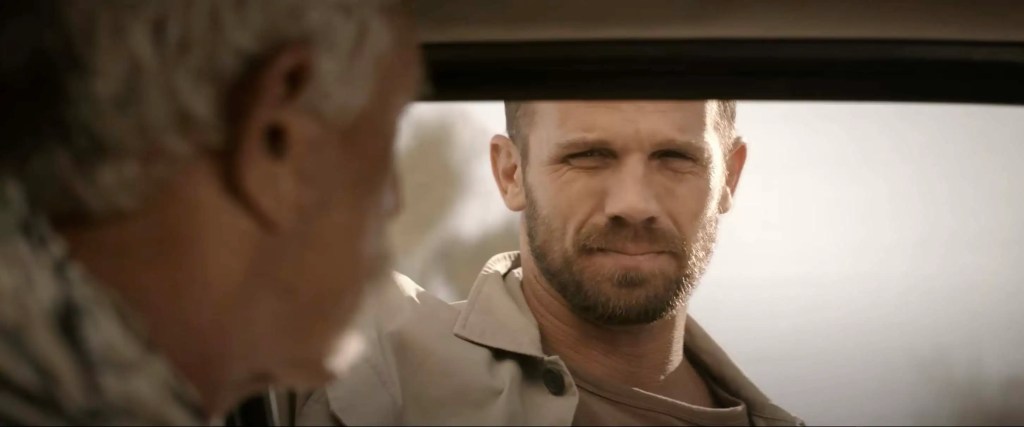
Turns out Hannah’s “dead” ex (Logan Marshall-Green) has snatched her. Inexplicably, he’s brought a “team” to carry this out. But as this is staged on an island, they can’t get away clean while there’s a storm going on. Lou, with Hannah tagging along, is dogged set on “tracking” them.

“There’s no ‘help’ coming! I’m all you’ve got!”

Janney does “mean” so well that we don’t spend a lot of time dwelling on the 60something woman pummeling, stabbing and out-punching assorted ex-military chaps that are much stronger and younger and hellbent on getting away with this little girl. A bit of an eye-roller, but so’s Eastwood, throwing punches into his ’70s and ’80s.

What’s grating is the way Hannah starts running down the resume of her murderously dangerous, disgraced ex-Green Beret husband. Yes, exposition is often handled this way — in bad B-movies.

Lou hands Hannah the rifle and asks ” You know how to use this?” when the viewer can guess the answer. Lou gives her a knife — “Go for the eyes. A man can’t kill what he can’t see.”

And you think, “All this to steal a child? What’s really going on here?”

Janney is flinty enough in what isn’t one of her best performances. Smollett, recently seen in “Lovecraft Country,” but a reliable screen presence since “Eve’s Bayou,” gives the picture its heart.

But “Lou” turns out to be one of those “once in a century storm” movies that um, forgets the storm. The story staggers from assorted body blows, and teeters over into nonsense as the pieces in the ditzy puzzle supposedly fall together, this after the action beats — a rope bridge, “the lighthouse” — start to feel like cut and paste items from a multiple choice thriller template you find online.

“It’s a trap!”

Yes. Yes it is.

Did you miss “Lou” when Netlix released it on late Sept? Turns out, you should have.

Rating: R, Violence and profanity

Cast: Allison Janney, Jurnee Smollet, Ridley Asha Bateman, Matt Craven, Logan Marshall-Green

Credits: Directed by Anna Foerster, scripted by Maggie Cohn. A Netflix release.

Running time: 1:47

Posted in Reviews, previews, profiles and movie news | Comments Off on Netflixable? Did you miss Allison Janney’s action turn as “Lou?”

Movie Review: Berenger and Gigandet disagree over a “Black Warrant”

Ever since “Platoon,” Hollywood has parked Tom Berenger behind a rifle. A string of “Sniper” movies, “Blood and Money,” assorted soldiers and shooters, on into his dotage. Sure, he’s done other films, but he’s the go-to guy when you cast an assassin, an ex soldier, an elderly hunter that bad guys under-estimate.

“Black Warrant” puts his eye to the scope one more time for a bad-guys-have-a-secret weapon thriller whose sloppy plotting causes it to bleed out in the second act, and whose lamer-than-lame “surprise twist” delivers the kill shot in the third.

Every scene in the third act goes a bit more wrong that the one that precedes it, and no amount of blandly-handled, poorly-set-up gunplay can save it.

It’s a B-action pic set in Tijuana, with the DEA chasing drug-connected mobsters who have gotten their hands on something that will “level the United States economy.”

Cam Gigandet plays a DEA agent whose partner is killed when they bust a Tijuana smuggling operation. One higher-level villain (Peter Nikkos) is caught, and he hints at something truly sinister his big boss, Hussein Bin Farri (Hani Al Naimi), is up to.

But for some other reason, some other Federal agency wants this witness dead. That’s how a grizzled control agent (Jeff Fahey) winds up at a swank Tijuana marina tracking down Nick Falconi (Berenger), a former government killer for hire, retired and living on a sailing yacht.

Here’s an odd thing about “Black Warrant.” We not only never learn why this other supposedly Federal entity wants a GOVERNMENT WITNESS dead. The reason for these “Black Warrants” is basically brushed-over as our shooter works his way up the villainous food chain, DEA be damned.

It makes less sense the longer this short and sloppy thriller goes on, because our hired killer apparently knows nothing about what the bad guys have acquired. Nor does the dude who commissioned the hit, so far as we can tell.

DEA agent Anthony joins Mexican cops on stake outs, trying to figure out what our villains are up to, only to watch them get shot up.

Anthony takes up with a cook (Helan Haro) whose help he enlists, who agrees to do it so that she can get into America’s CIA.

“The Culinary Institute of America,” Mina tells him. That’s her dream.

Great joke. About as great as all the other banter than ends up with them locking lips a scene or two later. Their scenes together are so badly blocked and scripted and shot that we think “zero chemistry” because we have no reason to think otherwise.

Berenger is never bad, and this white hair/biker’s Fu Manchu mustache he’s got going on works. Like Berenger, Gigandet, already in theaters in a scene-stealing turn in “Violent Night,” deserves better.

By the third act, everybody involved has just thrown up his or her hands as bad jokes find their way onto the set and into the script and the climax manages to be even more of a soggy tamale than everything that’s come before.

Tijuana isn’t used to great effect. But that’s a nice 44 foot sailing cutter they hired, I will say that. Too bad they never get it out of the marina. Perhaps they figured it’d sink like a stone, like the rest of “Black Warrant.”

Rating: R for violence, and language throughout

Cast: Cam Gigandet, Tom Berenger, Helan Haro, Hani Al Naimi, Peter Nikkos and Jeff Fahey.

Credits: Directed by Tibor Takács, scripted by D. Glase Lomond and Joshua A. Cohen. A Saban Films release.

Running time: 1:34

Posted in Reviews, previews, profiles and movie news | Comments Off on Movie Review: Berenger and Gigandet disagree over a “Black Warrant”

Next screening? Life around a celluloid-era British cinema, “Empire of Light”

A lot of movies this fall have something to do with The Magic of the Movies.

Filmmakers are made in “Armageddon Time” and “The Fabelmans.”

Early Hollywood invents “The Movies” in “Babylon.”

And this British awards season contender, with Olivia Colman, Toby Jones et al, is centered around the sort of carbon arc projector single screen cinema that lured in audiences before the cineplex, digital projection and Maria Menudos commercials were invented.

I worked in such a cinema in college, keeping the tips of the spark-jumping carbon arc lamps lined up, manually switching projectors and reels, trying to do it gracefully enough so that the audience wouldn’t notice, fiddling constantly with a balky sound system.

The good ol’days, in other words. Looking forward to Sam Mendes’ memories of cinema past, “Empire of Light.”

Posted in Reviews, previews, profiles and movie news | Comments Off on Next screening? Life around a celluloid-era British cinema, “Empire of Light”

Movie Review: “Terminator” Santa runs amok on “Christmas Bloody Christmas”

There are scenarios where one could see “Christmas Bloody Christmas” appreciated for what it is — a cheesy, gory, dumber-than-dumb C-movie about an animatronic Santa going on a snowy Xmas Eve rampage.

Such situations might be limited to drunken, half-stoned gatherings of C-movie cognoscenti, midnight movies at your multiplex or last-showing-of-the-day horror film fan conventions.

It begins badly and turns progressively worse before rallying, “Terminator” style, in a test of human against machine that will-not-die in a movie that does not want to end.

But hey, I’ve seen worse.

Writer-director Joe Begos did the geezer veterans vs. crazed, killer-druggies thriller “VFW,” so he’s used to this “Shaun of the Dead” formula. Eventually, survivors are going to be holed up against some monstrous menace which has slaughtered or is slaughtering one and all outside the bar, house, office or precinct that this movie uses as its “last stand” fortress.

The biggest problem with “Christmas Bloody Christmas” is the many offhand, almost-improvised, unfunny and tedious scenes that set up this inevitable eventuality.

Riley Dandy plays the randy and bawdy record store owner Tori, whose establishment is a statement in neon and Goth. Sam Delich is her mulleted minimum-wage helpmate Robbie, whose sexualized banter suggests he’d like to be another kind of “mate.”

The film’s first act is their running flirtation, metal music and horror cinema debate, pick-up-lines at closing time the Night Before Christmas.

A Metallica with hair vs. Metallica without, Chris Cornell and “Van Hagar” riffs — none of them funny — are worked into the argument over which “original” “Pet Sematary” as better, “I” or “II.”

Fred Gwynne was in “I,” kids. No debate necessary.

This low-life/low-laughs “High Fidelity” back and forth continues as they bar-hop and make their way towards the evening’s climax.

But “the news” has shown that this “military grade” animatronic Santa Claus gadget that all your lesser malls have installed to save themselves the trouble of hiring bearded and/or boozy locals, has been recalled worldwide. Let’s not give a thought to the fact that a local store had one, that it’s gone missing, and that it’s grabbed a fire ax off the wall as a weapon.

Let the holiday festivities start. Eventually.

The satanic laser-eyed Santa is created with a couple of lights, a dude in a suit and a metallic gears and servos whirring sound effects. We see many of “his” attacks through those piercing green luminescent eyes, a killer-cam eye view.

The slaughter is gruesome and perfunctory, sparing neither the unsavory nor the innocent, law enforcement or stoner, adult or child. The acting is nothing special, though our heroine works up a fine lather of panic and frenzy in fighting back, or trying to get the cops to help.

Got to love commitment from a horror movie heroine.

Begos bathes this picture in a closing-time bar or retail establishment with holiday lights gloom. And once it gets on its feet and starts chasing down victims, it’s marginally better than the dull opening scenes or the amateurish TV channel-surfing (analog era) through “local TV” commercials opening credits.

But again, in a group setting, with the right level of appreciation for C-movie cheese and/or the proper degree of inebriation, “Christmas Bloody Christmas” could go over.

Rating: unrated, graphic violence, explicit sex, profanity, alcohol abuse

Cast: Riley Dandy, Sam Delich, Elliot Gilbert, Joe Begos and Kansas Bowling

Credits: Scripted and directed by Joe Begos. An RLJE/Shudder release.

Running time: 1:26

Posted in Reviews, previews, profiles and movie news | Comments Off on Movie Review: “Terminator” Santa runs amok on “Christmas Bloody Christmas”

You’ve Got Time to Do Your “Babylon” Homework

As a film lover, you’re going to set aside part of your Christmas to New Years vacation to catch Damien Chazelle’s “Babylon,” the three hour epic set during Hollywood — and America’s — most debauched epoch (until now), the silent cinema/Jazz Age 1920s.

That’s an era when Greater Los Angeles was lesser Los Angeles, and part of the fun of an entire entertainment industry’s fleeing (motion picture patent policing) to the undeveloped, orange-groves empty real estate of the Wild West Coast was the ethos that “anything goes” wasn’t just a future Cole Porter pop hit.

Under-policed and uninhibited, Hollywoodland hadn’t become Hollywood, but the myth-making for the dream factory was well underway. The machinery to publicize and sanitize “the system” and tidy it up for American consumption was yet to come. In the interim, the orgiastic excesses of an unregulated industry made a lot of people who’d never had money obscenely rich, omnipotently powerful and desperate to shake off the endless frenetic sunrise to sundown days of film production with hairier and wilder indulgences.

Prohibition Era? You’d never know it. Moral Policing? It wasn’t invented in Iran, you know.

But in LaLaLand, things were different. Depraved? Debauched? Ancient Rome had nothing on these hard-partying, orgy-crazed, accident-prone, life-is-short hedonists. Neither did ancient Babylon.

Kenneth Anger’s “Hollywood Babylon” appears to be the inspiration for the film’s title. Read it. Scandals that studios and entertainment empires got so very good at covering up were laid bare in this seminal piece of Tinseltown scandal-mongering. Under-sourced and unfiltered, first-published in France and then — in 1965, the US — it dug deep into the gossip of the era, the Hollywood lore of “deviant” behavior, drugs, sex and covered-up deaths dating from that pre-Golden Age age of gilded excess and golden showers.

When I was a kid the book itself was so salacious and shocking that you couldn’t get your hands on it until you got to university. Which I did.

It will help the viewer of Chazelle’s film get a taste for the tasteless, the tacky and the titillating of the “Pre Code” era.

If you’ve never read Neal Gabler’s “An Empire of their Own,” it’s another early Hollywood history — a “How the Jews Invented Hollywood” that captures the flavor of that era and the touchy Eastern European Jews who colonized and to a large degree took over the film business, and became more American than Americans in their later efforts to keep its image wholesome.

They had their work cut out for them with this mob.

You’ll want to know something about Fatty Arbuckle, what he did (or didn’t) do, what destroyed him and why the motion picture industry felt a need to tidy up its image, when everybody who was anybody seemed like a role model for the Madonnas, Kardashians, Weinsteins and Armie Hammers of the future.

Brush up on Louise Brooks and other icons of the “flapper” era film business. Clara Bow is another figure to be familiar with, especially the most infamous story attached to her life and career.

If there’s a movie about “The Wild Child” of the cinematic 1920s, you’re going to want to know who might have been the inspiration for that “Babylon” character.

Read a little something about Anna May Wong, an early era Asian actress, hemmed in by what Hollywood would let her do. Chinese-American and LGBTQ filmmaker Esther Eng might be a helpful figure to have on your gaydar/raydar.

Women directed in early Hollywood. Some of them were lesbians. Shocked? Read up on that and be amazed.

Learning something about Garbo and Dietrich and their sexuality will add to your appreciation of the “Babylon” milieu.

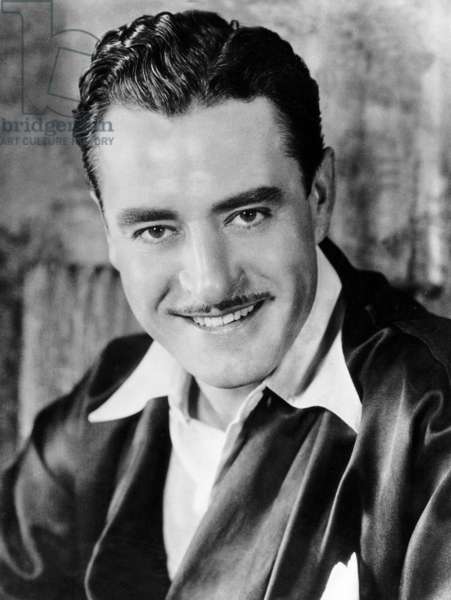
The life and career of silent screen superstar John Gilbert and media tycoon William Randolph Hearst and his paramour Marian Davies, depicted in “Mank,” are also worth knowing about as prep for “Babylon.”

Watch “Mank,” if you haven’t. And if you’ve never seen “Singing in the Rain,” it’s long past time. It is Hollywood’s affectionate, sanitized and lightly-self-mocking look back at the panic, chaos and industry-technology-career-and-life shattering change that hit the movies, all at once, when the cinema learned to “talk.”

A more frenetic and fraught version of that abrupt transition is part of the timeline of “Babylon.”

Every heard of Louella Parsons? America’s first and perhaps most infamous celebrity gossip? There’s a “Designing Woman” who could be her prototype in the picture.

Did you see Ryan Murphy’s salacious “Hollywood,” the TV miniseries that takes “Scotty and the Secret History of Hollywood” as its starting point? It waded into a later era (1940s and 50s) and underlined it with all the gay goings on in the last days when the studio system could cover up that sort of shocking-to-the-rest-of-America sexuality.

It’ll be helpful to have seen “Hollywoodland,” set in the same era as “Hollywood ” and about a much-later scandal — the death of the first TV “Superman,” George Reeves.

And if you’ve not seen Apple TV’s “Louis Armstrong’s Black & Blues,” dive in. There’s a composite figure in “Babylon” who is reminiscent of Louis — a Hollywood mainstay, back in the day — and other Black jazzmen who made it onto the screen in that era.

That’s one of the fascinating subtexts of “Babylon.” It’s another “new” history — quite ahistorical, with most every name changed — that sets out to return events that have been scrubbed-out and major figures and indeed whole corners of the population who have been “erased” from Hollywood and American history to their proper place within the story of early Hollywood at its craziest, most Bacchanalian and a lot more diverse than we’ve been allowed to remember.

Posted in Reviews, previews, profiles and movie news | Comments Off on You’ve Got Time to Do Your “Babylon” Homework

Movie Review: Beware “Bloody Mary” and her thing for “Mandrake”

The Irish do the gloom thing quite well. Poets and painters, novelists and filmmakers, they get their greys right and the grim earth tones of fall and can all but consume any notion of cheer and the Irish spring long past, or the one you hope is coming.

“Mandrake” is a moody little Northern Irish tale of spooky goings on out in th’bog, children disappearing and the “witch” the locals are convinced is behind it all, seeing as how she just moved back after serving time for killing her abusive husband.

“Bloody Mary” they call her. Not terribly original, and it’d confuse viewers if they’d titled the film this.

Deirdre Mullins plays Cathy, a divorced and dedicated probation officer who tries to keep her charges on the straight and narrow, and can fight them off when they aren’t. But this Mary Laidlaw (Derbhle Crotty) woman she’s taken on would give Freddy Krueger the creeps.

She’s blowsy and bluff and sexual, 50something and walking with a cane. When Cathy attaches an ankle monitor on her after she’s returned to the half-ruined home where she nearly died, and where she killed the man who almost killed her, the probation officer can’t help but notice scars.

Mary acts as if she knows Cathy, talks about her ex-husband, the cop Jason (Paul Kennedy), mentions their marriages troubles and even a possible cause of them. She knows.

Mary’s all about herbs and the roots of the forest, teas and potions and whatnot. And don’t get her started about mandrake.

When a couple of local kids, smart-alecks who “want to see the witch,” disappear from the woods near Mary’s place, the locals want to lynch her. Cathy and Jason intervene.

“This town thinks she’s the f—–g devil!”

But is she?

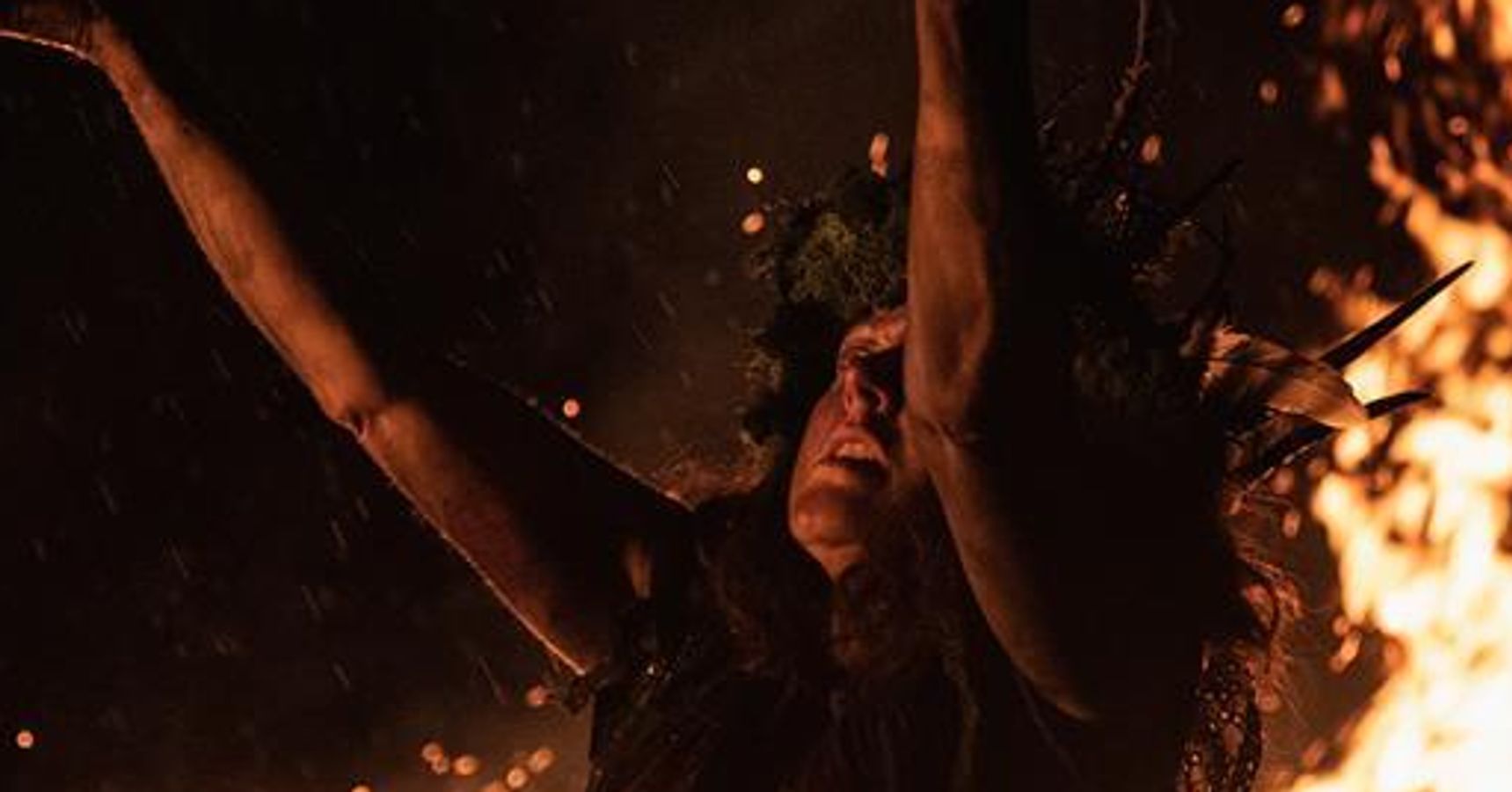
Lynne Davison’s debut feature is properly creepy and mysterious, with folk horror stick figures and even a shrubby looking beast glimpsed in the shadows, wandering the forest. That’s true all through the first act and into the second.

It’s when things head into hostage-taking/rituals and the like that the spell is broken. The best mysteries are the ones left only half-explained.

But there are kids and a woman imperiled, primitive goings on in the woods and lots of fiddling about with roots that seem kind of human when you wash and cut into them.

And a lynch mob delayed can be justice denied. Or murderous conclusions leapt to by groupthink. It’s the gloom that gets in their Irish souls and won’t let go.

Rating: unrated, bloody violence, nudity, profanity, inuendo

Cast: Deirdre Mullins, Derbhle Crotty, Paul Kennedy, Seamus O’Hara and Jude Hill

Credits: Directed by Lynne Davison, scripted by Matt Harvey. A Shudder release.

Running time: 1:25

Posted in Reviews, previews, profiles and movie news | Comments Off on Movie Review: Beware “Bloody Mary” and her thing for “Mandrake”

Is this the greatest film of all time?

The new Sight and Sound magazine “Greatest Films of All Time” list has gotten its once-a-decade updating.

It’s the list that first enshrined “Citizen Kane,” that later critics/voters replaced with “Vertigo,” and so on, down the decades since 1952.

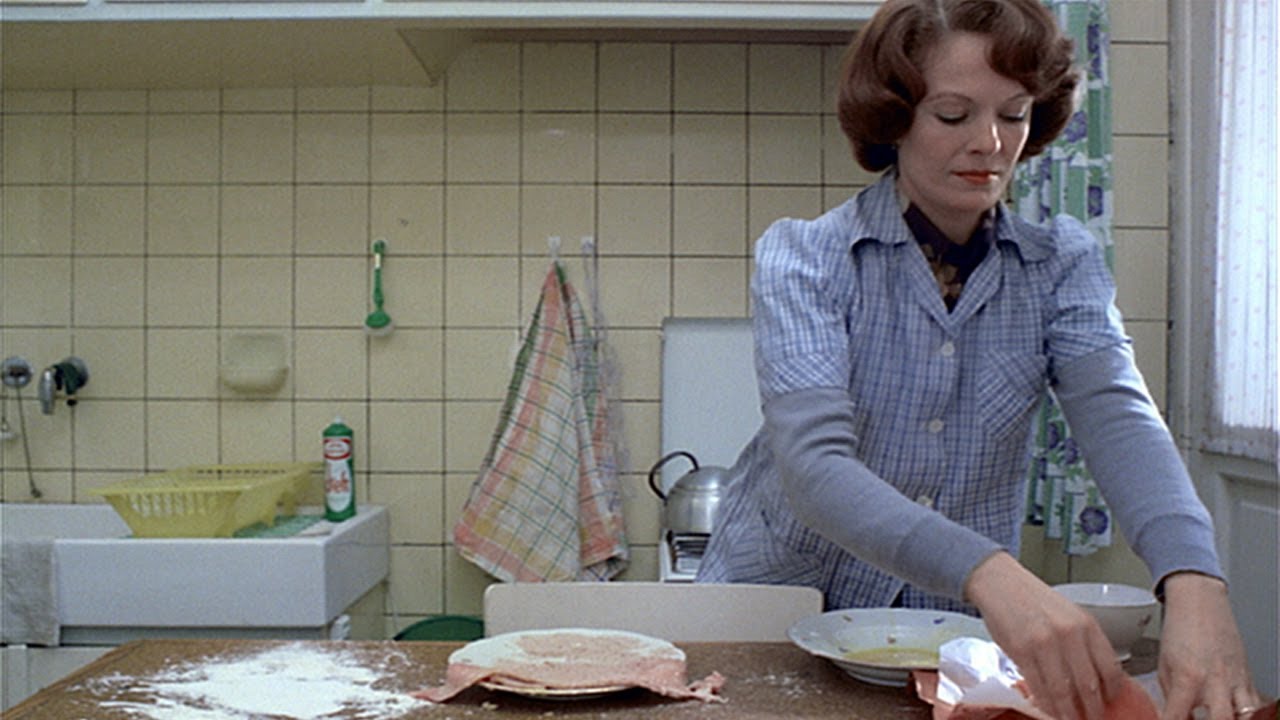
And they picked a film that has long been held in esteem, a 1975 Belgian drama that runs for three hours and 20 minutes, with the pithy title “Jeanne Dielman 23 Quai de Commerce, 1080 Bruxelles.”

Say what now?

“An epic of experimental cinema” following a widow (Delphine Seyrig) through her daily routine of housekeeping, cooking and caring for her son. Oh, and she’s a Belgian prostitute, a sex worker “turning the occasional trick.”

It was on the last version of the S&S poll at #36, but magically jumped all the way to the top when the polling sample size was greatly increased, almost certainly to diversify the demographics of those being polled.

The British Film Institute will offer it for free on its onsite player starting Thursday, since most of the world, and probably a lot of those folks casting ballots this time around in the S&S poll, have never seen it.

Filmmaker, screenwriter and critic Paul Schrader (“Taxi Driver” script, “First Reformed” writer-director) has questioned this abrupt shift, using the term “woke” in describing the sudden ascent of a film that has been well-regarded, but not deemed the cinema’s finest film in any circles until now.

Is it an anchor movie in Women in Film courses and film societies the world over? No idea. I’ve never seen it, but I plan to.

But if you don’t think “Sight & Sound” and its polling population have been patrician and hidebound for most its history, you’re almost certainly guessing wrong. Just read the polls over the decades and guess how they’re more male and Anglo-Centric than they’d like to admit, as certainly mostly European and North American voters have been predominant in the tastes reflected in what they’ve published up to now.

Did they get it wrong? Was this a grade-on-the-curve, jump an under-represented populace to the front of the line thing? Probably. Pity they couldn’t have picked a better known film and female filmmaker.

Posted in Reviews, previews, profiles and movie news | Comments Off on Is this the greatest film of all time?

Netflixable? Calabrian hitman and his daughter hunt his hunters — “My Name is Vendetta”

“My Name is Vendetta (Il mio nome è vendetta) ” is a properly blood-spattered Italian hitman thriller with a few loopy touches — and blunders — that mark it as a B-movie.

Generic as it generally is, it’s worth a look for some fine action beats and its Italian mob sense of what pitiless violence looks like.

It’s about a father and daughter who have to go on the lam when the Sicilian mafia family he once hit IDs him in the remote timber country of — Austria, I guess?

Santo (Alessandro Gassman) always told teen Sofia (Ginerva Francesconi) that he left Calabria (the toe of the Italian boot) “for love.” He fell for her German speaking mother, and that was that.

But working in a sawmill and cheering her on at her hockey games is very much a “new” life. Santo wasn’t always “Santo.” And when Sofia snaps and posts a shot of her dad against his oft-expressed “no photos” wishes, she brings the wrath of the Lo Biancos down on them.

Mom and an uncle are beaten to death. But Sofia — a bit of a jock and an impulsive hothead on the ice — makes her escape. Dad has to rescue her, take them off the grid and um, start explaining.

“I wasn’t a good person” (in Italian, or dubbed into English) should about cover it.

The rich, vengeful old man Lo Bianco (Remo Girone) will have his pounds of Santo’s flesh. His more corrupt than murderous son (Alessio Praticò) and all his minions will just have to go along with it.

A pseudo-clever touch of the screenplay is to tie this “Kill or be killed” tale to father Santo’s favorite book, “The Call of the Wild.” He was a beast in a previous life, and he’s got to return to his savage state — and to teach Sofia — if they’re going to survive.

After a LOT of bratty blowback in which the kid who got her mother and uncle killed by not accepting Dad’s “no photos” dictum, mid GETAWAY tantrums and the like, Sofia buys in. A lesson in knife fighting, where to cut to get the advantage, where to stab to kill, what to puncture if you want your foe to live long enough to have the sight of his killer be his last thoughts, because “no revenge is crueler,” is taken to heart.

Hot-wiring a car? That’s something she picks up just by observing.

There are a lot of unexplained/little-explained stashes, bits of ordnance acquisition, novice-driver in a car chase and gearing up and getting the drop on the bad guys details here. The plotting is sloppy, never more so than when we hear a hostage calling out “Please PLEASE” from a distance, only to have his captor walk up and…tear off the duct tape that covers his mouth so that he can take a drink.

Yeah.

And a lot more could have been made of “the wild” that this “Call of the Wild” riff rides on. The only connection with the book, which is quoted from in a few voice-overs, is the savagery of all involved.

Still, as it never aims to be more than a film de genere, “Il mio nome è vendetta” isn’t all bad.

Rating: TV: MA, graphic violence, nudity, profanity

Cast: Alessandro Gassman, Ginerva Francesconi, Alessio Praticò, Francesco Villano and Remo Girone

Credits: Directed by Cosimo Gomez, scripted by Cosimo Gomez, Sandrone Dazieri and Andrea Nobile. A Netflix release.

Running time: 1:32

Posted in Reviews, previews, profiles and movie news | 1 Comment

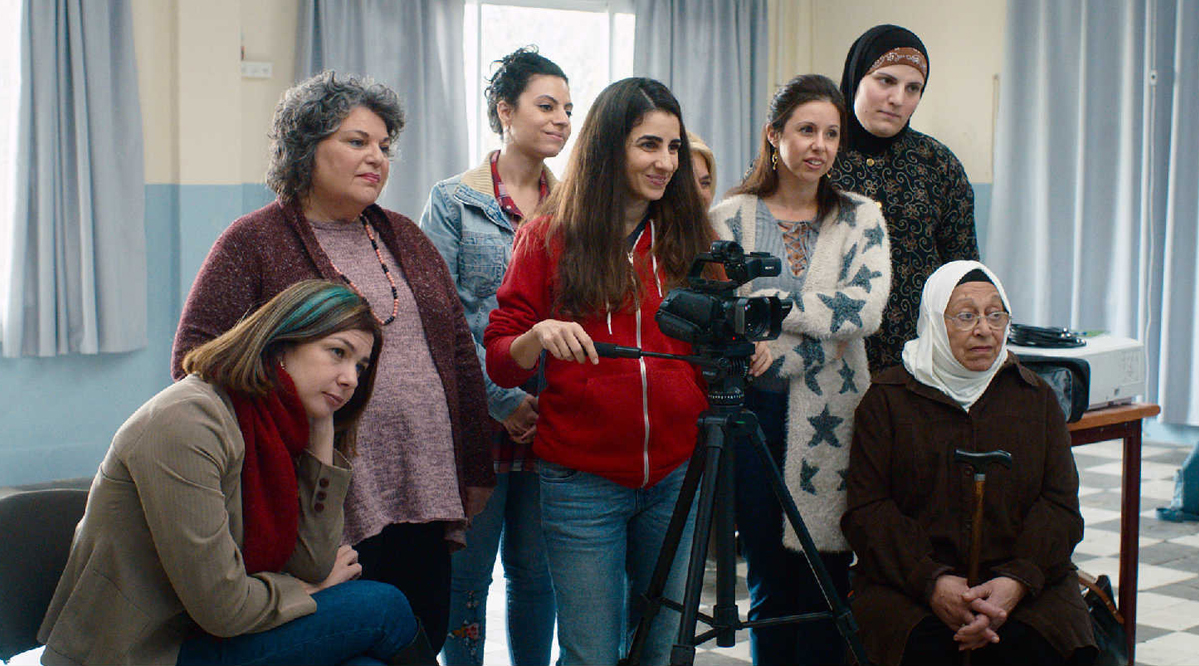
Movie Review: Palestinian and Israeli women learn about filmmaking, and each other in this Oscar Submission — “Cinema Sabaya”

Israel’s bid for Best International Feature Oscar glory this year is a charming but slight drama about a group of women who take a filmmaking course in a community center in the Israeli city of Hadera.

Eight women join a class pitched by a Palestinian course planner at the center, taught by a young Israeli filmmaker, Rona (Dana Ivgy).

Right away, there’s a tiff over how it will be instructed — in Hebrew. It’s a concession the Palestinians taking the class don’t want to grant, but must as “we all understand Hebrew anyway,” the 73 year-old keeper-of-the-peace Awatef (Marlene Bajali) shrugs. All of the paperwork, and most of the class discussions will be in Hebrew, with some Arabic (all of it subtitled in English) peppering the chatter.

It’s unavoidable. Forced to live together, of course each has at least a little understanding of “the other.”

But that word the Palestinians use to greet each other, “Sabaya?” The somewhat tactless Israeli HR director Eti (Orit Samuel doesn’t know it.

“It means ‘prisoner of war.‘”

That’s an apt title that might be more so if there was more conflict here. As you might guess, the idea is that these women — Palestinian and Israeli, married, divorced, young-and-single or gay — will learn just how much they have in common as they study the basics of camera shots, edits, writing and cinema storytelling.

Rona keeps a smile on her face as she encourages women all across the spectrum, conservative Muslim to outspoken and more agnostic Israeli, to “open up” simply by taking the assigned video cameras home and showing their classmates, and us, their lives.

Their baby steps in filmmaking are often revealing. A simple walking and talking “scene” showing us a living room, a cat and a slightly-amused but churlish husband ends with his veiled criticism.

“How about filming the kitchen?”

Carmela (Liora Levi) lives with her dog on a sailboat. Souad (Joanna Said) is 35 and is overwhelmed by six kids and a husband who won’t let her get a driver’s license. Nasrin (Amal Markus) sees this as her last shot — she’s 50ish — at a singing career. Yelena (Yulia Tagil) is newly divorced, an embittered single mom forced to live with her parents.

They get a look into each other’s lives, chide and nag one another to take action to improve those lives and share more than a few frank assessments of their marriages, mental states and “dreams.”

A background noise awareness exercise even has one capture audio of a domestic abuse situation involving her neighbors.

The acting is uniformly fine, with many characters too guarded to let their true natures show, others pasting smiles over their real feelings about the others.

Some will be timid, others brought out of their shells and prejudices aired — by Israelis who “avoid” contact with people they’re sure want to kill them, by a Muslim who declares “You’d be dead to me” if this or that member of their circle turns out to be gay.

“You think murdering children and babies is right?”

“And you have the world’s most ‘humane’ army?”

It’s another one of the many Israeli films over the years that emphasizes connection, accidental or forced, in the close-quarters of Palestine — Israel, the Occupied Territories, lands under the Palestinian Authority.

And like most of these films, it offers a glimmer of hope, even if it’s too much to expect Orit Fouks Rotem’s film to play out as wholly neutral. They really are “Sabaya” trapped in the same sunbaked camp, with shared history and shared antagonisms, with or without a class on making movies that show much they have in common.

Rating: unrated

Cast: Joanna Said, Liora Levi, Dana Ivy, Marlene Bajali, Aseel Farhat, Yulia Tagil, Ruth Landau, Amal Markus, and Orit Samuel.

Credits: Scripted and directed by Orit Fouks Rotem. A Kino Lorber release.

Running time: 1:31

Posted in Reviews, previews, profiles and movie news | Comments Off on Movie Review: Palestinian and Israeli women learn about filmmaking, and each other in this Oscar Submission — “Cinema Sabaya”

Movie Preview: “Guardians of the Galaxy Volume 3”

I’m getting a “Toy Story 3” vibe from this one. You?

Posted in Reviews, previews, profiles and movie news | Comments Off on Movie Preview: “Guardians of the Galaxy Volume 3”