
Brad Pitt, Margot Robbie, Diego Calva and Tobey Maguire, a Bowie riff backs a good on early Hollywood.
Brad Pitt, Margot Robbie, Diego Calva and Tobey Maguire, a Bowie riff backs a good on early Hollywood.

Graphic and figures from @boxofficepro

“Goddamned Asura” is a somewhat accessible but frustrating Taiwanese drama about disaffected young lives brought together in a random act of violence — a mass shooting at a night market filled with street vendors, street food and customers.
Director and co-writer Yi-an Lou (“A Place of One’s Own”) tells this story in the time-honored “strangers linked by tragedy” fashion. Only they’re not strangers. They’re all connected in a variety of ways before a miserable incel (Joseph Huang) celebrates his birthday with a social media post — “Eighteen, and already fed up.” — and a deadly, walking and shooting spree that kills one and wounds many.
It’s a hard film in which to find your moorings, as the script takes its sweet time naming characters, for starters. And after the second act climaxes with a mystery, a mystery’s solution and more violence, the third act promptly undoes all that with a “What might have been” alternate storyline, which is fitting, because our central figures have created an online comic, inspired by a third character, and “Raging Zero” impacts the lives of everyone else in this story.
One can appreciate the ambition and the tinkering with formula, while grinding your teeth at the filmmaker’s obscurant gimmicks. Which I did.
Jan Wen is the shooter, sullen and stereotypically sociopathic, even when he’s dealing with is pal, classmate and artist Xu Axing (Devin Pan). They collaborate on the comic “Raging Zero,” building it out of people and settings they know, taking it into the dark corners of Wen’s psyche as they do. He stops at the same shop every day to video a beautiful dog he names “Oreo,” an animal going stir crazy in a tiny cage.
One day, he finally does something about it and frees the dog. Yes, that’ll make the comic. But given all that we’ve seen happen in the film’s first scene — the shootings — we fret over the fate of Oreo and everyone else.
Xu Axing is Wen’s sounding board, the one guy who hears out his lost-child-of-rich-divorce’s darkest thoughts and turns them into art. Xu Axing is also gay, hitting the Taiwanese version of Grindr for hook-ups with his fellow skinny gay teens. There’s a hint of homoerotic attraction between the leads, as well.
Linlin (Yu-Xuan Wang) is a math savant and a bit of a punk, working at odd jobs and street level drug-dealing to keep a roof over her head, and that of her alcoholic ex-mobster-moll mom.
Vita (Peijia Huang) is a video game ad exec weary of her life of abusive clients and the clingy, civil servant/game-addict fiance Hu-Sheng (Hao-Zhe Lai) who pesters her day and night, and is only truly himself as Shine, a gaming/vlogging kingpin of King’s Realm, a popular game in his corner of the metaverse.
And Morning Tzu-Yi Mo is “Mold,” an apt nickname for a chain-smoking young badass of local online journalism, a guy who not only pieces together the accounts of the various people who were present or otherwise involved in this mass shooting, he was there and actively involved.
The film is about the culture and the parenting that goes into creating a Jan Wen — living with his rich, aloof and never-home father, kept at arm’s length by his mother — and the other unhappy lives spinning into collision with him on that fateful night.



Yi-an Lou gives us a peek at the sometimes supportive/often toxic online environment in gaming circles, class boundaries and all the ways people can disconnect and take their eyes off of larger goals — life, financial liberty and the pursuit of romantic and creative happiness.
He explores this world mostly through co-dependent, dysfunctional couples — Jan Wen and Xu Axing, Jan Wen and each parent, in turn, LinLin and her mother, Vita and Hu Sheng.
The comic book tie-in to the storytelling isn’t likely to delight any viewer, even if Jan Wen’s father seems out-of-step and foolish as he ridicules the form’s lack of value as “literature” and the film all but suggests comic vengeance tales as being the manifestation of what Jan Wen ends up doing.
That third act flip-the-script business serves little purpose aside from suggesting the randomness of life and the ways any of us could be the victim or a perpetrator, given the right circumstances. Yes, and?
But “Goddamned Asura” — the title comes from a game character and online gamer’s handle — taps into the same sort of existential angst we’re seeing in a lot of films these days, especially those from Asia. The rise of various economies there has led to a leap from Third World to G-20 status, and left a new generation grasping for meaning and connection and ways to tell its own stories other than social media “attention” posting.
This isn’t my favorite among the Best International Feature submitted titles I’ve seen this year. But it’s always interesting to immerse yourself in a culture we only skim the surface of in news stories and travel programs, to poke at the friction beneath the surface and see that, as the wiser among us always say, “Everybody’s going through something.”

Rating: unrated, violence, sex, profanity
Cast: Joseph Huang, Devin Pan, Yu-Xuan Wang, Hao-Zhe Lai, Morning Tzu-Yi Mo and Peijia Huang
Credits: Directed by Yi-an Lou, scripted by Singing Chen and Yi-an Lou. Distribution TBD
Running time: 1:54

This isn’t Lucio’s first scrape, and the fact he’s wearing that “Lookatme, I’m an anarchist!” beret tells us this man has never sold out and never denied who he is. They effect an amusing escape — not his first, not their last — and we’re off.
We see teenaged Lucio entrusted with begging the local bank for a loan for medicine that will allow his dying dad to pass in peace a couple of years after the Spanish Civil War. The locals don’t trust “Republicans,” the leftists who lost, and that includes the banker. Pulling a knife on the guy just makes Lucio wet his pants.
There’s nothing for it but to accept his draft notice and desert Franco’s fascist military the first chance he gets. That’s how he ends up in Paris, leaning on his now-married sister (Ana Polvorosa) and her French mint employee husband (Fred Tatien) until he can get on his feet.
Construction work is all he’s qualified for, and it’s while learning the ropes as a brick layer that he has his political awakening. His co-workers ask him a lot of questions about his opinions and his politics, and all he can say is “I don’t know.”
Well, you don’t take orders and you don’t like authority. Hijo, you’re an ANARCHIST. A quick history lesson later, and he’s attending meetings, getting irritated at the wishy washy ways this affront or that outrage is being protested. That’s how he falls in with tall, dashing and action-oriented Quico (Miki Esparbé). Quico robs banks.
One pants-wetting robbery later and Lucio is sold. He will “expropriate” bank money — not stealing from the customers. Quico teaches him how to distribute the loot — one third to “the movement,” one third to “comrades in jail, and their families” and one third they keep for themselves.
Lucio is all-in, robbing from the all-powerful capitalist construct that “creates inequality” in the world and keeps poor people poor, gaming a system built wholly for the bankers’ benefit. His views and action oriented dash are catnip to the activist college coed Anne (O’Prey) he pursues.
“I don’t play around,” he growls (in Spanish with subtitles, or dubbed English). “I don’t compromise.”
But robbing banks isn’t the smart play. Buying a print shop so that they can turn out posters and pamphlets without police interference points these anarchists in a new direction — counterfeiting.
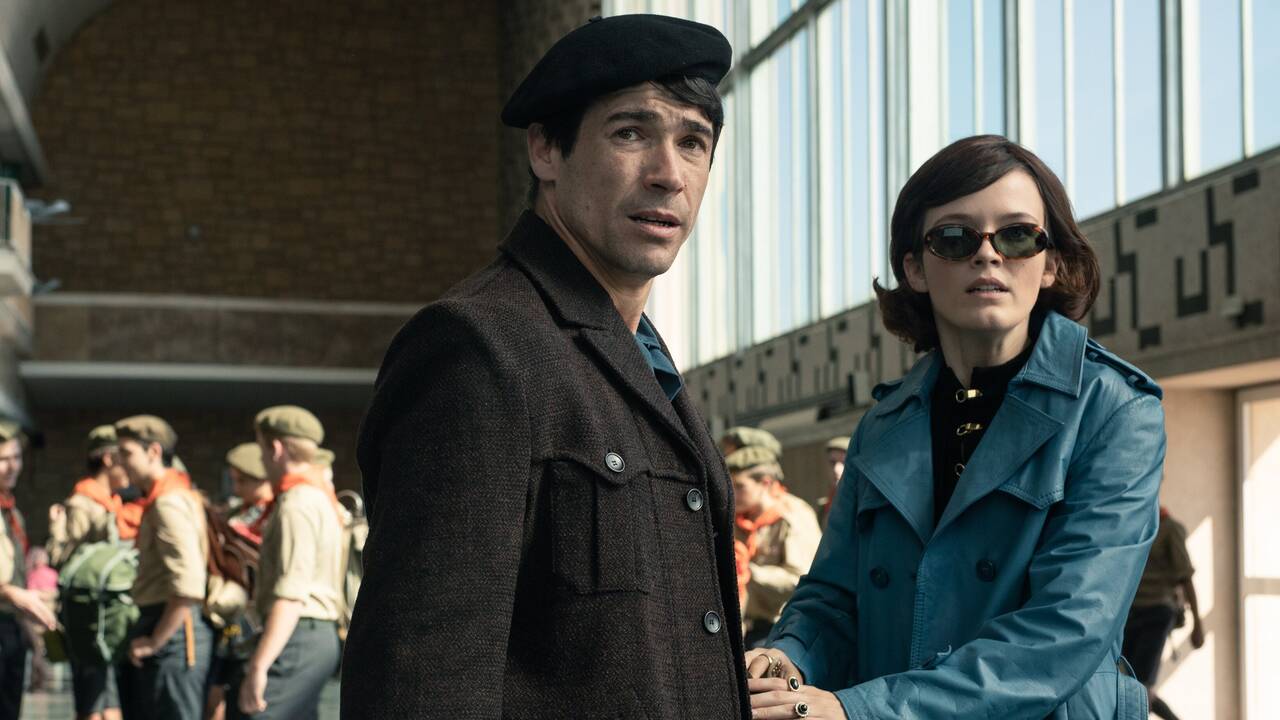
You’d think director Javier Ruiz Caldera, who has experience in the action comedy genre (“Spy Time”), would have a lighter touch with all this. “A Man of Action (Un hombre de acción)” has every ingredient necessary for a classic action comedy bio-pic, including the dogged French police inspector (Alexandre Blazy) who hounds our hero for years, trying to catch him in the act.
“Man of Action” is at its best in action. But when it’s inactive, it lumbers along, with Ballesta giving Lucio enough dash but not enough playful twinkle to compensate for that sluggish pace.
The capers are simple and daring, the hero charismatic and the story a fascinating piece of leftist history, many of them Spaniards continuing to fight the idealistic Spanish Civil War against the banks of France and later America.
But the fact that “A Man of Action” barely clears for take-off is the one crime here we cannot pardon.

Rating: TV-MA, violence
Cast: Juan José Ballesta, Luis Callejo, Liah O’Prey, Alexandre Blazy and Miki Esparbé
Credits: Directed by Javier Ruiz Caldera, scripted by Patxi Amezcua. A Netflix release.
Running time: 1:51
Ab”Boyd fron Brazil” conspiracy concerning “The Shroud of Jesus.”
So, The Shroud of Turin had a lawyer?
Jan 13. Feast your eyes on this.

Japan’s aging and shrinking population is the inspiration behind “Plan 75,” the debut feature of writer-director Chie Hayakawa. Expanding her short film of the same title, she imagines a Japan which a government program, “Plan 75,” incentivizes the elderly to choose euthanasia.
Do it for the convenience — as an agency will arrange everything, even “group cremations,” for the comfort of not being a burden on the young, and for a little cold hard “last splurge” cash.
In a world where a capital-obsessed conservative politician in the U.S. suggested that elderly Americans let themselves get sick and die from COVID, this is a totally credible concept. In divided and fractious America this would never happen. In culturally, racially and socially cohesive and “duty” conscious Japan, it’s not hard to imagine.
Hayakawa’s spare, quiet film doesn’t have to reach for “Soylent Green is PEOPLE!” to make us recognize capitalism’s dispassionate end game. She doesn’t need sentimental music or many poignant moments to pass on that funereal, doomed “On the Beach” vibe. She just introduces us to a group of little old ladies who have a work “family,” cleaning hotel rooms well into their ’70s, a young bureaucrat helping administer this new government program — which is straining the nation’s crematoria — and a single-mom Filipino retirement home caregiver who finds higher paying work in the employ of Plan 75.
Meeting 78 year-old Michi (Chieko Baishô), you wonder about the limits of Japan’s social safety net. She is all alone, save for her workmates, other widows and the unattached elderly who have to work to keep going, well after what used to be considered “retirement age.” When a friend and co-worker collapses in the middle of cleaning rooms at their hotel, all of the elderly employees are given little “retirement” tokens and put out to pasture.
A notice on her apartment building bulletin board is the first she learns that the place is scheduled for demolition. No protests, no government stopgap to protect anyone. She’s hunting for an affordable apartment, and a job to pay for it — at 78.
A rental agent tells her he’s found one place that will “take elders” — for “two years rent, up front” (in Japanese with English subtitles). Mich’s’s starting to rethink a friend’s question from when Plan 75 was first announced.
“You ready to kick off?”
Hiromu (Hayato Isomura) is one of those faceless functionaries answering potential clients’ questions, assuring everyone who calls or comes in to sign up that “you can back out at any time,” but also stressing the convenience of knowing your final “arrangements” and expense are covered. Then a long-estranged uncle, a loner, comes in to sign up. Hiromu follows him home, notes that he is still working — picking up trash — and wonders where “death with dignity” figures into any of this.
Maria (Stefanie Ariane) is one of those foreign workers who has to make up the gap in employees in an aging, dying-off populace. She has a nursing home job, which doesn’t pay enough to help her sick five-year-old. But she has a church and that church not only takes up a collection for her, a lady there gives her an inside tip on “a government job.” Maria will be helping the elderly die.
Hayakawa opens her film with a montage of “facts” and faux news interview coverage — accounts of hate crimes against the elderly, and a young person telling an interviewer, “Surely the elderly don’t want to be a blight on our lives.”
Then she shows us what Kurosawa hinted at in “Ikiru,” what Bergman showed us in “Wild Strawberries” and what any number of films about aging and the elderly underscore.
Life is lonely and only gets lonelier by the day. Even in places which don’t have Every Woman/Man for Him/Herself economies, life shrinks, financial uncertainty grows and despair closes in from every corner with every passing year.
Although the film was written and directed by Hayakawa, it’s worth mentioning that the story came from Jason Gray, for years the Japanese correspondent for Screen International and a longtime translator of Japanese films into English. That would seem to account for the film’s outsider-looking-in perspective, a foreigner seeing something unique happening to a culture that was the envy of the world 30 years ago. The first “tiger of Asia” has lost its teeth and, the film suggests, its compassion.
A favorite moment comes when the operator Michi regularly deals with has to call her with her final, legally-required “update” and “get out of this at any time” reminder. The young caller is unsettled, if not wholly upset by this part of what is otherwise a telemarketing job. She’s taking on hospice counseling duties, and even if she doesn’t know this kind, almost anonymous woman who keeps thanking her for her reassuring manner, she lets us see she doesn’t think this is the best idea.
Maybe she, unlike the culture that has resorted to this draconian act, has genuine compassion. Or maybe she’s simply thinking “Some day I’m going to be on the other end of this phone call,” and that this is no way to go.
“Plan 75” rarely manipulates and never tugs so hard at the heartstrings that it breaks your heart. Honestly, I think it needs to.
Our filmmaker keeps a safe remove from this material, mimicking the compassion/generation gap she shows us in the movie. But she’s still managed to make a film that will give you pause, make you ponder your mortality and hope that no person, politician, government or insurance oligarchy ever gets the license to suggest that your life is more useful to “society” if it ends.
Rating: unrated
Cast: Chieko Baishô, Hayato Isomura and Stefanie Ariane.
Credits: Scripted and directed by Chie Hayakawa. A Loaded Films production.
Running time: 1:45

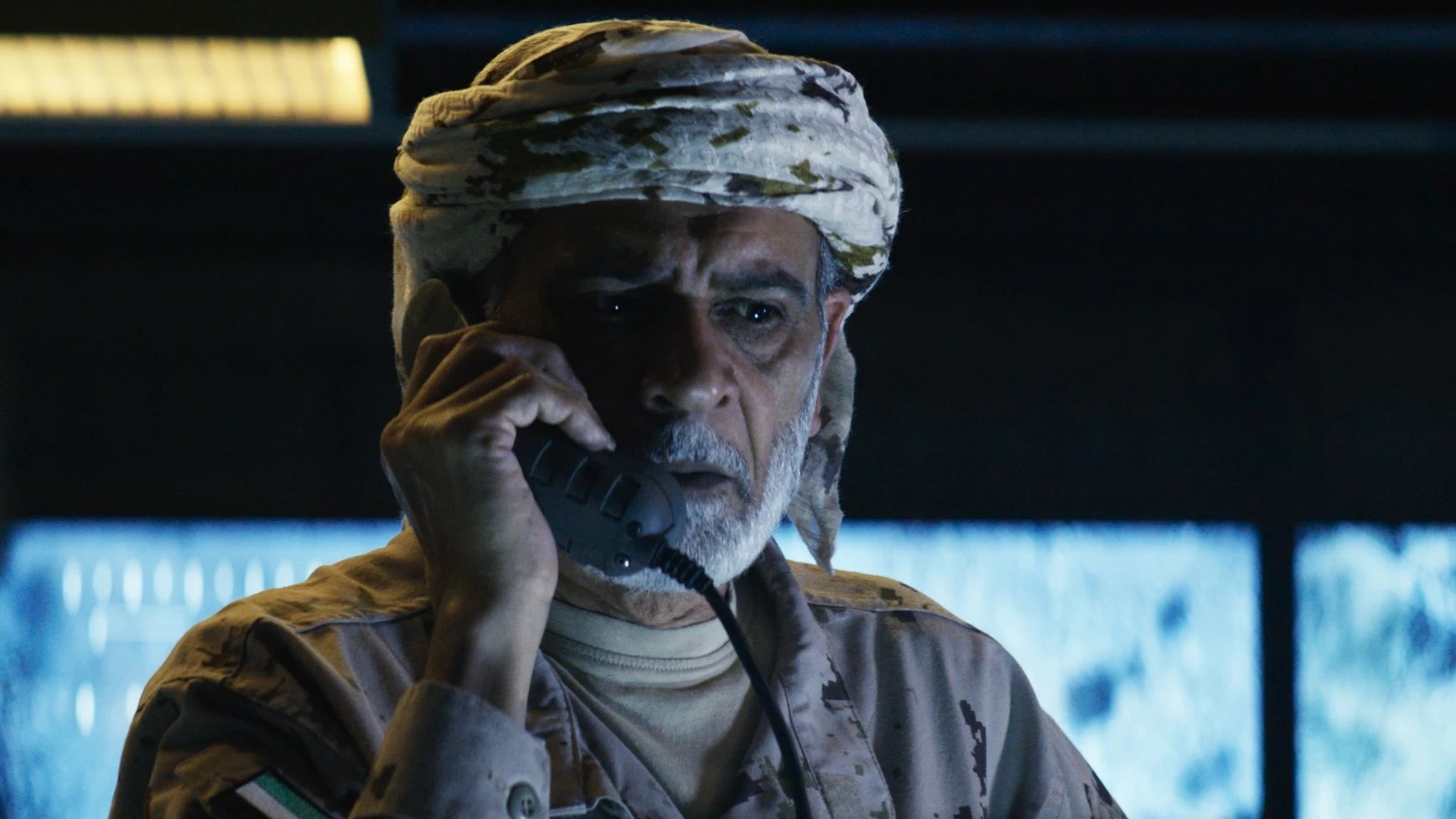

French action auteur Pierre Morel of the “Taken” movies delivers a solid, tactically-fascinating Middle Eastern combat film with “The Ambush,” a United Arab Emirates -acked account of a firefight that really happened during the Yemeni Civil War.
It’s a movie that opens with a brief explainer that reads more like a UAE apologia about its involvement there, so the viewer — like the filmmaker — is best served by divorcing this action film from Byzantine Middle Eastern politics.
It’s got a lot in common with “Black Hawk Down” — soldiers trapped, others fighting to rescue them, obvious moments of foreshadowing, mistakes made, bravery celebrated, “hesitance” noted.
Here, when we meet the beefy, camo-clad GIs in the gym tent lifting iron (Concrete barbells?), there’s no cussing in the World Cup banter and all the bickering is in Arabic.
Here’s your World Cup analogy for the mission that two Humvees are about to undertake.
“The person who wins is the one who believes they can do anything.”
As with “Black Hawk Down,” true story or not, there’s always one guy who subs in for “my last chance” to hang with his guys on patrol before heading home. One trooper has a wife he’s concerned about and swapping urgent text messages with, another is feuding with him and getting an earful about “respect,” a third is responding to his little girl’s request for a “magical horse” gift by carving her one out of wood and they’re all going on about “just one more week before we go home.”
The foreshadowing ends when they load up and move out — two Humvees wrapped in cages meant to absorb rocket propelled grenade impacts, with remote-controlled machine guns so that no soldier is exposed to direct fire in a shootout, and a dashboard complicated with all sorts of comm, engine, nav and smoke-bomb mortars buttons.
A routine patrol, dropping off supplies and a soccer ball to a shepherd and his family, starts out routinely and turns tense almost right away. A lot of Arab nation allies have been involved in Yemen, and keeping them all straight is an ongoing chore.
The Humvees get separated, and the lead one is trapped by a large cadre of rebels armed with AK-47s, mortars, mines and RPGs. It quickly turns out that it’s going to take a lot more than that second Humvee and its crew to “extract” them.
“Do you need to call your wife to ask permission? GET GOING!”
Morel emphasizes the claustrophobic nature of fighting inside a vehicle that’s meant to take a beating…up to a point. We see how limited their field of vision is, note the improvements that have been made on such fighting vehicles since the American Afghan War and Iraq War, but otherwise see familiar combat conditions — trapped in a rocky canyon, surrounded — and familiar command dilemmas.
One thing you pick up on is the sophistication of the chain of command, and the capability and bravery of the troops. The first is no different from any American film about that corner of the combat world — a CO (Saeed AlHarsh) who stoically responds, in a flash, to the danger and leads a Quick Response convoy of Humwees and more heavily armored troop transports — and his CO (Mansoor Al-Fili), making snap decisions about drones, “the Falcons” (F-16s) and Apache attack helicopter support.
A woman is in charge of communications, and the Apache in question has a female pilot, something not every Islamic state would sanction. I got the feeling, at times, that there was image burnishing going on amidst the firefights, mortar barrages and “mortars neutralized” airstrikes. Make sure that women recruits are “seen.” And every tentative action, hesitation to dash into a dangerous situation, must be excused.
“We fear nothing but Allah!”
“The Ambush” immerses us in trained troopers improvising, commanders strategizing on the fly, and combat situations being faced and confronted.
A commanding officer recognizing the difference between 80mm and 120mm (unsurviveable in a Humvee), giving a “no easy way out” speech by radio and bitter rivals making up in the flush of combat is nicely contrasted with the sort of tough-guys-in-war exchanges Hollywood genre fans know and love.
“Are you OK?
“I’m in a flipped-over vehicle with you,” the most observant Muslim in the lot barks. “Get out of my face. You reek of TOBACCO!”
The performances are solid, insofar as there isn’t a lot you’d call “great acting” in most combat films, with most of the actors playing combat film “types.” But “The Ambush” works, even if there’s little about it that’s special save for this different point of view, something one suspects was the point in financing it.
That point of view has its value, even if you suspect the picture’s motives. Reverence for fallen comrades, a “leave no man behind” ethos, esprit de corps valued and a fondness for good ol’American made military hardware make this one worth checking out. Any film that reminds us how human beings are a lot alike in dire situations is a good thing.
Rating: R, violence
Cast: Omar Bin Haider, Marwan Abdullah, Kafliffa Al Jassem, Mohammed Ahmed, Saeed AlHarsh and Mansoor Al-Fili.
Credits: Directed by Pierre Morel, scripted by Brandon Birtell and Kurtis Birtell. A Well Go USA release.
Running time: 1:51
The “Black Panther” sequel, “Wakanda Forever,” is still doing business. But the writing’s on the wall as it wins one final weekend before it starts to shed screens and give way to whatever December offerings have a prayer of challenging it.
A $15-16 million weekend, Deadline.com projects, will allow it to pass the $400 million mark at the North American box office sometime next week — Friday at the latest. It doesn’t have the legs or the culture-shifting buzz of the original film. Frankly, it’s just not as good. It’s done well, but it’s done, BO wise. Next!
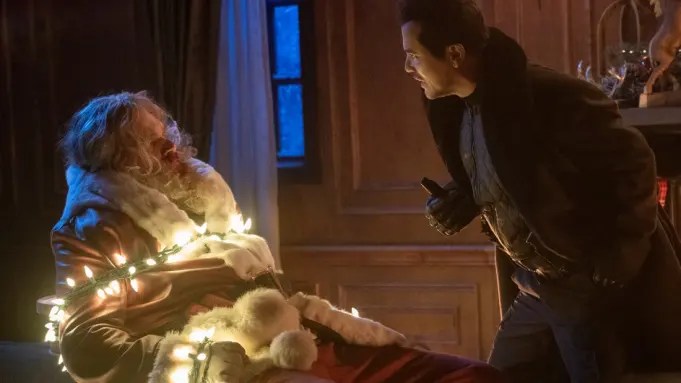
“Violent Night” proves that yes, you can release a horrific Santa Claus slaughterhouse movie in America without the sort of push-back and outrage that “Silent Night, Deadly Night” (1984) once generated. This David Harbour star vehicle has a lot more in common with “Bad Santa” than anything else — a “Bad Santa” shoot-em-up in which “Santa is REAL, you guys! And he’s got these “particular skills” that he recalls from his first career, way back in the Olde Country. It is on track to come right up to the edge of the $12 million mark on its opening weekend.
“Strange World” opened badly and slips into an instant death spiral — a $4.4 million second weekend.
“Devotion,” “The Menu” and “Bones and All” make up the second three at the box office.
“Glass Onion” is leaving theaters $14.7 million richer. Netflix streams it Dec. 23, and expects to put it back into theaters (don’t be a sucker) that same day. As if.

Full disclosure here, I had to watch Netflix’s new take on the oft-filmed “Lady Chatterley’s Lover” twice. No, not savor the sex scenes one more time. But because director Laure de Clermont-Tonnerre’s lovely, natural light and “outdoorsy” version of the most scandalous novel of the 20th century, whose very title became sitcom shorthand for coitus at its most carnal, put me to sleep.
Not exactly a ringing endorsement.
It’s a reductive adaptation, boiling the book down to British class barriers transgressed by ever-so-naughty-for-post-World War I era sex. An attractive if not exactly high-profile (not much “star power”) cast is put through its paces in a perfunctory take on a book whose notoriety is filmed, but not its subtlety.
Emma Corrin, the gamine who played Diana on TV’s “The Crown,” has the title role, a shallow young wisp of a woman who marries well, sees her officer-class husband (Matthew Duckett) off to The Great War and finds herself bereft when he returns an invalid, incapable of sexually fulfilling her in the bloom of their youth, incapable of siring an heir to the title and his estate, Wragby House and all its lands.
His casually dropped “Almost be better if you could have a son by another man” is what sets things in motion. “We ought to be able to arrange this thing as simply as a trip to the dentist.”
Yes, it’s all rather like that, cut and dried, “lie back and think of England.” Cold-blooded.
The rugged working class veteran of the trenches Oliver Mellors (Jack O’Connell of “Unbroken”), just hired as their gamekeeper, is the one who catches her thirsty eye. A stop by his cottage, weeping at pheasant chicks and the newborn she’ll never have is the impetus for all that follows.
“You all right, me lady?”
Corrin has the perfect look for a Jazz Age flapper — thin, fine featured, a Klimt chin and all. She seems right at home in the posh parties the Chatterleys throw in London, and intentionally out of place — a delicate thing — in the midlands country life, where more vigorous figures thrive in nature, a working farm and the rough and tumble and labor strife (miners) riven local town.
Duckett hasn’t much to play as Clifford, stiff upper lip, not resentful — at first — of the affair he all but invited but which he would never approve of due to the class divide. It’s not the most colorful character, and the performance makes it more colorless still.
O’Connell suggests little of the swarthy cliche “the groundskeeper” became, almost the moment the novel came out. His Mellors is fretful, deferential, a naive man with urges who cannot help but lose himself in this affair which she wants but needs to keep within certain boundaries.
It’s a handsomely-mounted production all around, if quite flatly shot and lit, British TV miniseries lighting, blocking and all that.
Joely Richardson plays the rugged, tough miner’s widow Mrs. Bolton, hired for the household staff, soon running it and these soft poshes through the power of persuasion. That’s a character and a performance that could take over an adaptation as soft and narrowly-defined as this one.
And for all the attention to the sex — “We’ll have to be quick!”– in a barn, rough and ready nudity in the woods, this “Chatterley” lacks the heat of the more sordid takes on the novel. The 1981 version starred softcore starlet Sylvia Kristel, “Emmanuelle” herself, after all.
All that said, Clermont-Tonnerre, who did the affecting convict training a horse drama “The Mustang,” hasn’t made a bad “Lady Chatterley’s Lover,” just a somewhat drab and less interesting one than the source material promises. It’s as if this production accepts that people outside of college English departments no longer read the novel, and all involved can safely assume that all anybody wants out of it are the bare bones — and bare bottoms.
Rating: Rated R for strong sexual content, graphic nudity and some language.
Cast: Emma Corrin, Jack O’Connell, Matthew Duckett and Joely Richardson
Credits: Directed by Laure de Clermont-Tonnerre, scripted by David Magee, based on the novel by D.H. Lawrence. A Netflix release.
Running time: 2:07

Really Disney?
You buy 20th Century formerly-Fox film studio for Marvel’s X-Men, “Avatar” and…remaking Jeff Kinney’s “Diary of a Wimpy Kid” movies on the cheap?
How cheap? Look at that shot posted above. THAT cheap.
Making the aesthetic choice to have the movie look like the kid-drawn art used to illustrate the books (and their covers) was…unfortunate.
This is third tier cable-channel for-kids level CGI 3D animation. And while one understands the need to create “new” content because that’s what this feed-the-beast pop culture demands., you’ve got to do better than this. Mining the new IP (intellectual property) that you now own is classic accountant-driven “content.”
So owning perfectly serviceable live-action “Wimpy Kid” adaptations from 10-12 years ago that you could cycle into your cable and streaming services would never do. That’s Walt Era Disney thinking, from the days when The House that Walt Built re-released animated classics every few years, cashing in on IP AND what you’d done with it –created a timeless animated masterpiece.
Home video killed that, but having your own channels and streaming services was plenty of consolation.
“Diary of a Wimpy Kid: Roderick Rules” re-imagines the bond-with/learn from Greg Heffley’s dopey, punk-band-drummer teenaged older brother Roderick, in 3D “stick” animation.
The hijinks begin with their parents leaving them on their own for a weekend, Rodrick planning a teen (“boy-girl,” as Greg’s wimpier pal who acts his age Rowley puts it) party, Greg and Rowley pitching in, only to have Rodrick trick them into the basement, locked in while the teen and his pals trash the house.
There’s an incident with little old ladies at the mall (Linda Lavin and Loretta Devine voice them), playing card games with grandpa (the late Ed Asner) and Greg making his mark at the middle school talent show.
The “learning” involves figuring out your older brother’s sensitivities, and being considerate of them, being loyal to Rowley (a running thread in these books/films) and Greg’s wimpy kid “diary” getting in the way of his dreams of status and fame.
Even if I could get past the (admittedly more-labor-intensive than it looks) cut-rate animation, this is thin entertainment.
Some marketing study must’ve told Disney that the real audience for “Wimpy Kid” content was pre-schoolers and first and second graders.
Nobody else would sit through this “Caillou/Arthur” on PBS level pablum. The lack of effort shows.

Rating: PG
Cast: The voices of Brady Noon, Hunter Dillon, Ethan William Childress, Erica Cerra, Chris Diamantopoulos, Loretta Devine, Linda Lavin and Ed Asner.
Credits: Directed by Luke Cormican, scripted by Kathleen Shugrue, based on the Jeff Kinney book. A Disney+ release.
Running time: 1:14

 Movie Nation