Movie Review: “Women Talking” and debating what to do about Men and their “War on Women”

“Women Talking” is a parable about feminine power. Framed as a heated debate in search of a resolution of what women can do about men and their age-old “war on women,” controlling, abusing and silencing them, Sarah Polley’s film is about how to confront an increasingly hostile patriarchy when the men in question are not just silencing and controlling thy women in their midst. They’re beating and raping them and their little girls.

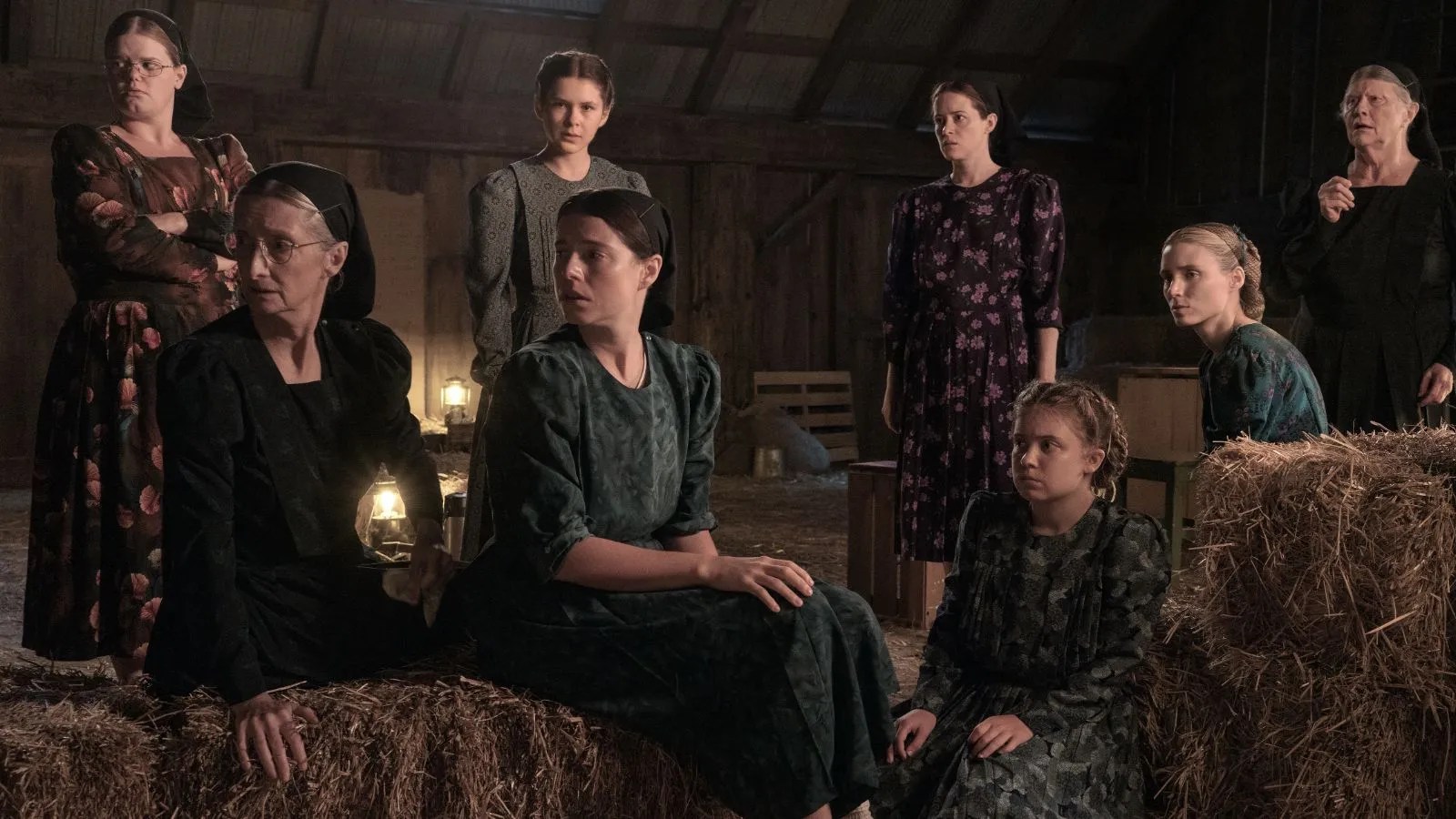
Miriam Toews’ novel may be based on a recent historic incident, but Polley’s film unfolds like Greek theater, sounds like Arthur Miller and summons up the heightened emotions of classic drama and pointed modern social ills satire. It is “The Crucible” and “Lysistrata,” reminiscent of “A Handmaid’s Tale” as it passes by “Day of Absence” (the inspiration for the film satire “A Day Without a Mexican”), as a committee of women gather in a hayloft to consider their options.

The title dictates the story, and sets its limits. This is a talking film. But an extraordinary cast headed by Oscar winner Frances McDormand, which includes Rooney Mara, Claire Foy, Judith Ivey and Jessie Buckley make it riveting, and the subject matter turns it into a movie of our moment, one not to be missed.

They live in “The Colony,” an unnamed patriarchal sect in an undisclosed corner of farm country. It is a religious community, a horse-drawn culture in a John Deere, General Electric and Monsanto world. Everyone there lives under the rule of The Elders, who enforce piety, illiteracy and total submission with the threat of excommunication, denial of entry into “the gates of heaven,” upon the women.

The men? We’re not sure of the strictures they’re supposed to live under. They’re barely glimpsed.

But the bloodied bedsheets and bruised thighs we see in a montage speak to a sinister cost of this male”control” — rape. The men have figured out something that they use in agriculture is the ultimate date rape drug, and when confronted by evidence of what’s happening, dismiss it as “wild female imagination.”

But after “we finally caught one of them,” female fury that is positively Greek in its rage is finally unleashed. Now this select group is meeting to consider and vote on their options of what to do next. Do they stay and “fight,” “flee” or “forgive” and just try to get over this monstrous, violent betrayal?

The story is framed by voice-over narration, a girlish voice passing on to a child an account of something that happened “before you were born.” The women of this debate in the past lay out the stakes, the choices and the urgency. The authorities have rounded up and arrested so many of the men that they women have a day to come to a decision before the arrested, and those scrambling to come up with their bail money, return.

McDormand is “Scarface” Janz, older, allegedly wiser and of the “forgive” and let this blow over faction.

Buckley is Mariche, enraged but realistic bordering on fatalistic. Women can’t fight men. They’re stronger. And the women can’t leave, because don’t know how to read, have no idea of the world outside of The Colony and lack even a map to get there. Mariche’s great at cutting the legs out from under every option, but her fellow females know that “all you do is fight,” and take her with a grain of salt.

Foy is in fine fury as Salome, a raging avenger with castration in her eyes. Stay and fight is her hotheaded argument.

When “we have been PREYED upon like ANIMALS,” “forgive” and forget seems a non-starter.

Agata (Ivey) and Greta (Sheila McCarthy) are older, but of the opinion that for their daughters and granddaughters, the only solution is leaving. They won’t use the word “flee” because that’s just another thing that sets Salome and Mariche off.

And Mara plays Ona, the conciliator, a patient, smiling and pregnant woman pouring oil on troubled waters to keep the debate civil and rational and fact-based. She has summoned August (Ben Whishaw), a man who grew up in the colony, who left it to go to college and came back “to help,” to teach the boys. He will take notes, keep the minutes of this meeting. As sensitive, romantic August pines for Ona, of course he says “Yes.”

Other women and girls are here, weighing in, considering this option or that faction, exasperated much of the time as anyone who’s ever had to make a decision by committee often is.

The discussion is rarely less than fascinating as the women wrangle with their “objectives,” “what it is we’re fighting for,” what will make them and their daughters safe and the “power” they feel they need. Religious dogma and doctrine will have to be reconciled, and the finer points of forgiveness and pacificism parsed, all while the clock ticks down to the moment the men start coming back.

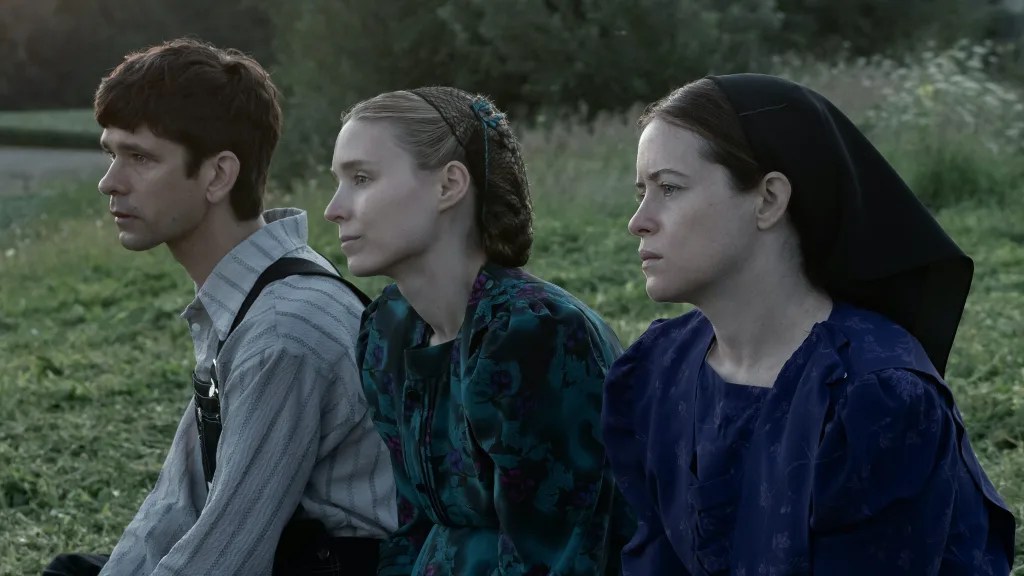
The veteran Canadian actress and director Polley — she was in “The Sweet Hereafter,” and directed by the Oscar nominated “Away from Her” — gives her actresses room to live in these characters. Foy and Buckley bring the heat and Mara touches on the idealistic and ethereal.

And Polley takes pains to keep novelist Toew’s emphasis on the myopia of such sects, how these women have to struggle with this decision, this process and this debate because they’ve been kept so uneducated that even our narrator, years later, is at a loss to give an accurate account.

“Where I come from, where your mother comes from, there was not language for” this violent predicament.

I love the way Greta uses the behavior of the horses that pull her buggy as metaphors for this or that factor in their decision and means of making that decision.

Flashbacks recount not only the violence that has visited almost every woman in this debate, they explain why the transgender man (August Winter) in their ranks no longer speaks, make us wonder who actually fathered Ona’s baby and reminds them all of a random, bizarre encounter with the outside world — a census taker driving a pickup truck with loudspeakers on the roof, calling them “out of your houses” to be counted as Davey Jones and the Monkees croon “Daydream Believer.”

Watching and listening to “Women Talking” during another fraught, fractious election year just underscores how damningly topical it is, despite every pain that’s been taken to render it “timeless.” Mormon, Amish, Baptist, Catholic, Hutterite. Muslim or Mennonite, we don’t need to know which particular sect The Colony belongs to, as the shared characteristics driven home here render that irrelevant.

“Power” and “control” through religious coercion, buttressed by the denial of this right or that one, or education or independence itself, is what these women and women everywhere confront in the ebb and flow of what’s disguised as “The Culture Wars.”

Polley has taken a pointed, of-its-moment novel and turned it into an indictment and a plea for civil discourse in a call-to-arms moment. To flee, to fight or to simply keep voting for the people who would enslave you is on the table. And until superstition is addressed and the power not being used — or worse, squandered on whatever fear and outrage the Pied Pipers in charge gin up today — is flexed, every woman is in danger and a failing culture will fall further into an ungovernable abyss.

Nothing’s going to get better without “Women Talking.”

Rating:  PG-13 for mature thematic content including sexual assault, bloody images, and some profanity

Cast: Rooney Mara, Claire Foy, Jessie Buckley, Judith Ivey, Sheila McCarthy, Michelle McLeod, August Winter, Ben Whishaw and Frances McDormand.

Credits: Scripted and directed by Sarah Polley, based on the novel by Miriam Toews. An Orion release.

Running time: 1:44

Posted in Reviews, previews, profiles and movie news | Comments Off on Movie Review: “Women Talking” and debating what to do about Men and their “War on Women”

Movie Preview: In “Alice, Darling,” is Anna Kendrick Victim, or Something more sinister?

A creepy “control freak” thriller built around Anna Kendrick in the title role sounds like Kendrick’s best role in years.

This one hits limited release at the end of Dec., opens wide Jan 20.

Posted in Reviews, previews, profiles and movie news | Comments Off on Movie Preview: In “Alice, Darling,” is Anna Kendrick Victim, or Something more sinister?

Movie Review: SOMEbody is stealing Christmas from Cindy Lou. Who? “The Mean One”

A fellow named Seuss wrote a character called “Grinch.” Mr. Jones just knew a hit cartoon would be a cinch.

But lo and behold, horror hacks “parodied” this wit. Such a pity the filmed “Mean One” turned out to be s—.

“The Mean One” is a horror spoof of a certain Universal-licensed green “mean one,” himself the subject of a movie or two, and a TV special that’s become a holiday classic.

The film’s a bloody, grim and not very funny account of Cindy Lou you-know-who dealing with ongoing issues about the mass murderer, “The Christmas Killer,” living on the pointy-topped mountain that overlooks tiny Newville and all who live in it.

That’s right, Cindy Lou (Krystle Martin) is coming back to her hometown. Dr. Seuss’s sugary account of how she converted the Christmas-hating mountain man/beast into loving Christmas wasn’t, our narrator (Christopher Sanders) rhymes, “how it went down.” Her mom died fighting the toothy, growling green creature (in a costume Jim Carrey might have worn) that came down their chimney that Christmas Eve long ago.

Dad (Flip Kobler) is driving her “home” so she can get a little closure. But the creature of her nightmares is still around. And when he starts killing again, it becomes clear the town’s in denial, or in cahoots.

Cindy Lou and the town’s lone Jew (Chase Mullins), a cop, are on the case, with everybody else in this Christmas-banning village trying to stop them.

Officer Burke sings “Dreidel Dreidel Dreidel,” makes nose jokes and takes his best shot at speaking in Woody Allenese, as he offers his help.

“That would’ve been nice.”

“Would’ve. That sounds...future imperfect!”

Ba-DOM-bum.

Slasher films aren’t the hardest genre in which to finance, film and fake the bare minimum of competence. This looks pretty amateurish, from script and settings and shot selection to the acting. The slaughter scenes are generic. What’s most amusing are the ways they work their way around intellectual property parameters to try and rustle up an anemic laugh or two.

This guy who seems to know what’s going on is named Zeuss.

“Zeuss? Like the god?”

“Everybody calls me ‘Doc.'”

Ba-DUM-bom.

“He’s a mean one, that Mister…” is interrupted by the waitress hollering out take out orders.

“FINCH! Last call for Mike Finch!”

The narration may be the most Seussian thing about “The Mean One.”

“Cindy’s nightmares continued about the blood and the beast. If she hadn’t lost her mind, she’s misplaced it, at least.”

But I did not care for “The Mean One” mess. I do not like bastardized Seuss, I confess.

Rating: unrated, bloody violence

Cast: Krystle Martin, David Howard Thornton, Amy Schumacher, Chase Mullins, narrated by Christopher Sanders.

Credits: Directed by Steven LaMorte, scripted by Finn Kobler, Flip Kobler and Steven LaMorte. A Sleight of Hand release.

Running time: 1:33

Posted in Reviews, previews, profiles and movie news | Comments Off on Movie Review: SOMEbody is stealing Christmas from Cindy Lou. Who? “The Mean One”

Netflixable? George MacKay and Kelly Macdonald match wits with Hugh Bonneville — “I Came By”

It’s nice to see Hugh Bonneville truly slip the tuxedoed bonds of “Downton Abbey” and take on a real rotter for the change.

In the thriller “I Came By,” he may be posh and entitled, if not titled. But there’s little that’s soft about this just-resigned-judge who’s run afoul of pranksters who stumbled into his “secret.”

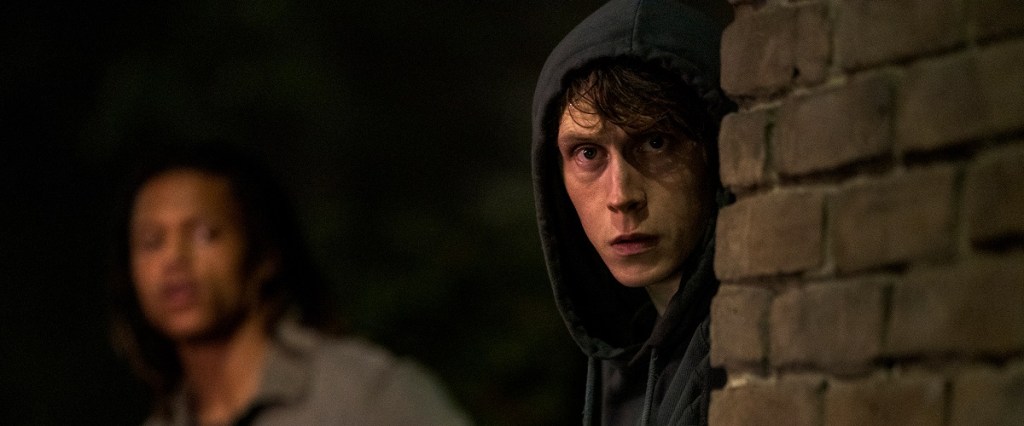
George MacKay of “1917” stars as Toby, a tag-happy graffiti artist who veers between righteous and self-righteous in his quest for attention and rough justice. Toby and his mate Jay (Brit bit player Percelle Ascott, getting a nice break) break into the houses of the rich and rattlecan-paint statement “tags” in prominent places.

“I Came By” is their signature and their message. To Toby, they’re “showing them we can GET to them.” Maybe they’re giving other graffiti artists a bad name, but the fit, anarchistic Toby is dedicated to the cause…and little else.

His psychotherapist mum (Kelly Macdonald) is at a loss and fails in every effort to make him shape up and find direction. And when Jay and his girlfriend Naz (Varada Sethu) get pregnant, his partner in political crime checks out.

But not before Jay gained access to a pricey home owned by a former judge (Bonneville) and gave Toby the idea of tagging him. Jay’s take was that the judge supported the right causes and seemed like a righteous chap. Toby, determined to carry on without him, does not care.

That’s how the punk discovers the judge’s secret, disappears and puts everyone he knows in jeopardy in the process.

Much of the film has Macdonald playing an out-of-the-loop, guilt-ridden and desperate mother trying to find her son, or what happened to him. Jay might help her, but the just-clever-enough mother Liz has a bit of her son’s rashness and recklessness. And Jay gives up what he knows far too reluctantly for Liz’s needs.

Bonneville brings on the slimmed-down and sinister as this well-connected menace, saying the right things, playing the angles, gambling that he’ll know how to handle and deflect the police when the chips are down.

The plot points and plot devices aren’t the most original in this Babak Anvari film. But I love the graffit-as-protest hook. The cast is spot-on, the action beats visceral and desperate. And the British-Iranian filmmaker works lots of inclusive touches in around the edges — the judge’s immigration connections, Naz and Jay’s interracial relationship, which her parents condemn.

It’s similar to far too many recent films to shock and impress, but “I Came By” is one of the tighter thrillers Netflix has put its money behind. And MacKay, Bonneville, Macdonald and Ascott remind us in this genre, it’s what you spend on acting talent is what matters the most.

Rating: TV-MA, violence, profanity

Cast: Tom MacKay, Hugh Bonneville, Percelle Ascott, Varada Sethu and Kelly Macdonald

Credits: Directed by Babak Anvari, scripted by Babak Anvari and Namsi Khan. A Netflix release.

Running time: 1:50

Posted in Reviews, previews, profiles and movie news | Comments Off on Netflixable? George MacKay and Kelly Macdonald match wits with Hugh Bonneville — “I Came By”

Next screening? Sarah Polley’s star studded parable — “Women Talking”

Rooney Mara, Sarah Paulson, Jessie Buckley and Oscar winner Frances McDormand star in this religious community of women menaced by toxic masculinity parable.

You had me at Sarah Polley.

Posted in Reviews, previews, profiles and movie news | Comments Off on Next screening? Sarah Polley’s star studded parable — “Women Talking”

Movie Review: “Emancipation” from the old way of looking at Will Smith

“Emancipation,” Will Smith’s first film since winning the Oscar for “King Richard,” and the ugly way that night went, is a real take-stock moment.

For Will Smith, certainly. But for critics and the audience as well.

His entire career, Smith has coasted on limited acting range, a gift for comedy, his choice of plum blockbuster roles and a cheerful charm that made whatever he couldn’t deliver on the screen less a problem and more of a simple character quirk.

Sure, a big movie star but middling actor could crave an Oscar so badly that he was quick to try his hand at material that he wasn’t able to make work — “Collateral Beauty,” “Concussion,” “Seven Pounds.” Nicole Kidman coveted Oscar glory, as did Jessica Chastain, to name two recent examples. It can seem a little unseemly, but nothing more than that.

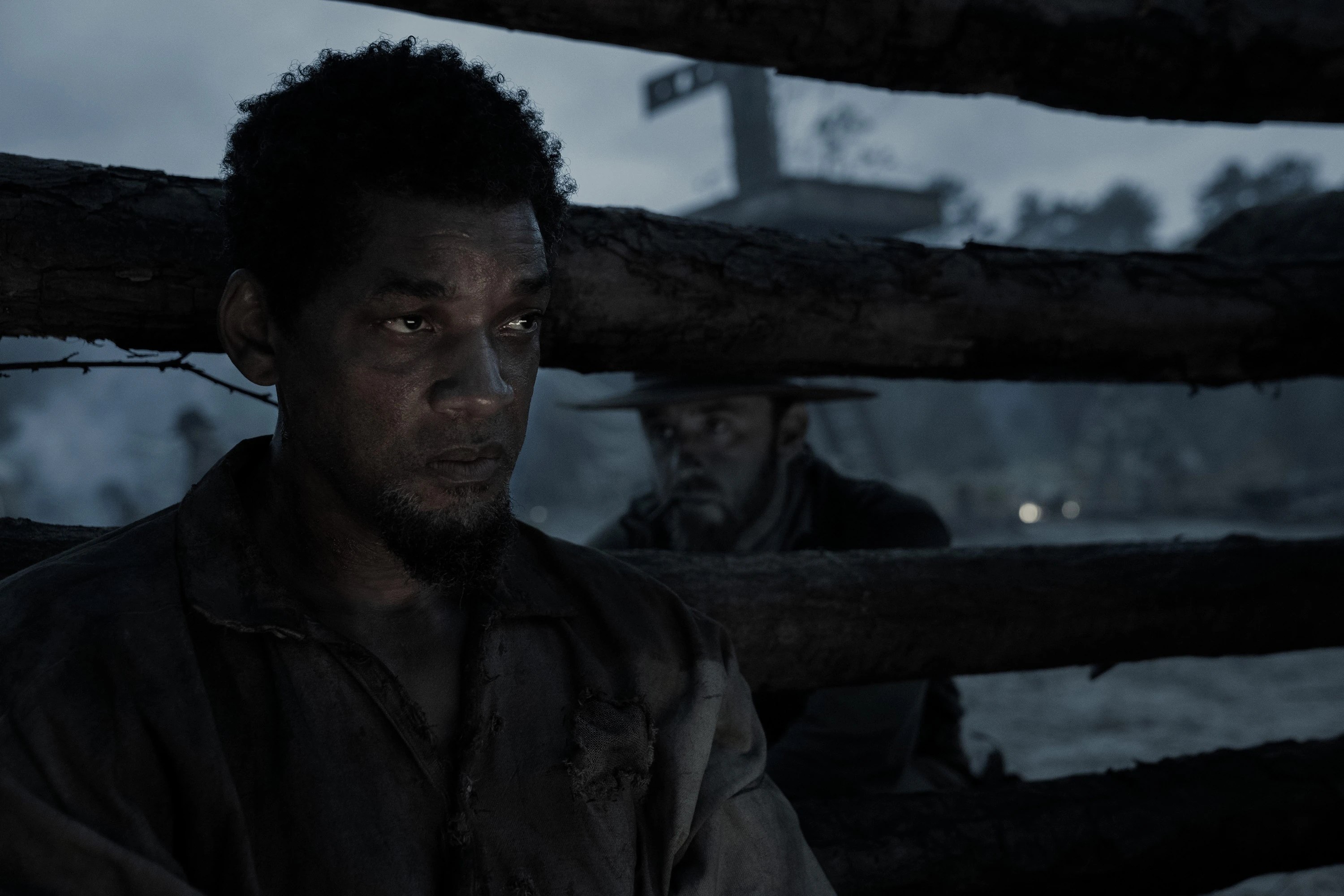
But take away the “good guy” image that Smith’s theatrical tantrum punctured and we’re staring down the simple superficialities of most every performance, and are a whole lot less forgiving of them. As an escaped slave stoically and doggedly running from hunters in Civil War Louisiana, The Shortcomings of Actor Will Smith are on full display.

Action auteur Antoine Fuqua, of “Training Day,” “The Equalizer” and “Olympus has Fallen,” keeps a gritty on-the-run narrative moving for much of this monochromatic and melodramatic thriller’s two hours and thirteen minutes. But there’s only so much he can do for a leading man who settles on an expression he plans to wear all the way through each dramatic movie, and rarely breaks it.

Peter (Smith) speaks in the Haitian/French patois of Civil War Louisiana as he washes his wife’s (Charmaine Bingwa) feet and intones “De lord eez wiss me,” to his children, urging them to be strong, and pleading with his wife to “stay together.” This is his leave taking. He’s being sent away.

“I will come back to you!”

Peter is then yanked out of the house by armed and waiting white men. He has been “requisitioned,” we learn, from the plantation owner (Barry Pepper), who delivers this “inspired by a true story’s” first factual error. He complains about the soldiers taking his “best blacksmith” under orders from “General Beale.”

General Beale was a Virginian, and never served in Louisiana.

Peter’s new life is a plunge into Dante’s Inferno, a hellish holocaust of wanton slaughter — runaways’ heads on pikes — and brutality, repairing a railroad.

But it’s 1863, and Peter overhears a Confederate tell a fellow soldier that a “gettin’ desperate” President “Lincoln freed the slaves.”

With the Union Army rumored to be in Baton Rouge, Peter resolves to escape, and in a burst of impulsive violence, he does, with many other slaves scattering. But the slave hunter Fassel (Ben Foster, sinister as ever) always gets his “boy.” He kept a soldier from shooting Peter earlier, and feels especially irked that this slave of all slaves made a break for it.

“You walk this Earth because I let you. You’re MAH dawg, now.”

The Bill Collage script takes us through an on-the-run slave’s odyssey of Louisiana — alligators to fear and fight, scenes of death and destruction all around and tone-deaf homey “sharing around the campfire” moments with our slave hunter and his mates.

The dialogue is creaky and crackling with cornpone. But “Emancipation” is about Peter’s physical and emotional struggle — against dogs, gators, injury (a little action hero self-surgery), memories of his family and the vague hope that he’s running and swimming in the right direction, that there is an army and salvation just ahead.

It’s a noble subject to take on and Fuqua keeps the picture moving between the familiar waypoints on the On-the-Lam-in-the-Swamp formula. But the third act lapses into “How do we get to the ending we have in mind?” drawn out clumsiness.

Smith? He’s wooden, scowling, determined and dogged. He brings little to the picture beyond that, overplaying Peter’s piety, going full ham when Peter lashes out at the men who have come to take him away from his family.

“Emancipation” is a decent enough slave-escape thriller, but one can’t help but wince at its lead performance and the clunky dialogue and cliched scenes that bring it to a stop, time and again. And as we’re taking in Smith’s return-to-overreaching pre-“King Richard” acting form, one can’t help but wish the far more skilled and talented Chiwitel Ejiofor had taken home an Oscar for his moving, thrilling turn in the far better “Twelve Years a Slave.” But he didn’t get the “what a nice guy” vote, apparently.

Rating: R for strong racial violence, disturbing images and language

Cast: Will Smith, Ben Foster, Charmaine Bingwa, Gilbert Owuor and Barry Pepper.

Credits: Directed by Antoine Fuqua, scripted by Bill Collage. An Apple TV+ release.

Running time: 2:13

Posted in Reviews, previews, profiles and movie news | Comments Off on Movie Review: “Emancipation” from the old way of looking at Will Smith

Movie Review: A love poem to Cinema in Soft Focus — “Empire of Light”

Sam Mendes’ “Empire of Light” bathes the viewer in the warm glow of nostalgia even as its reminds us that the Technicolor past had its sharp edges.

It’s a tale of memories and emotions, which will have to do, as the story has the studied aimlessness of a dream, and an unfinished dream at that.

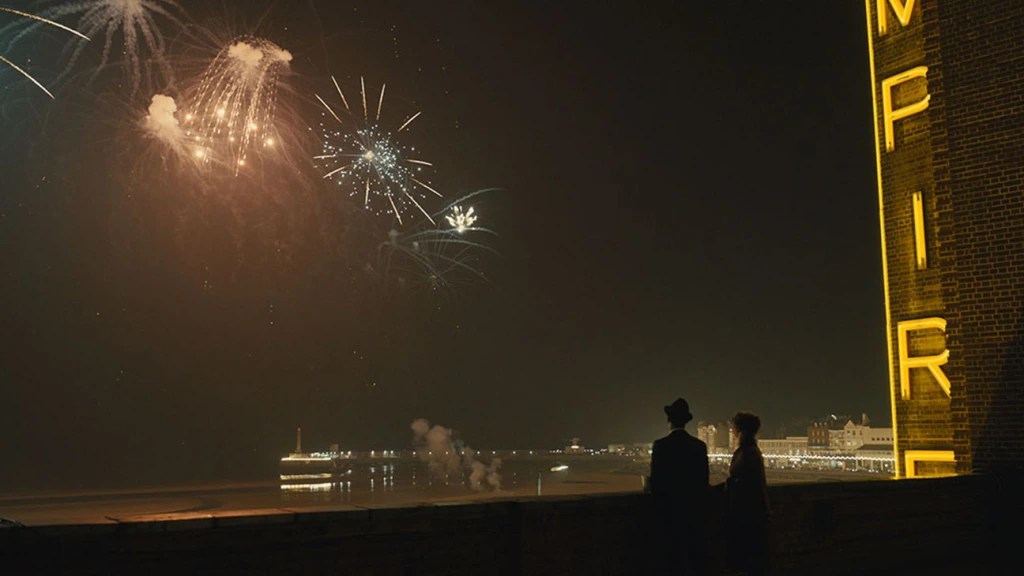
The nostalgia is for the ebbing grandeur of the cinema, exemplified by its title character, a grand old art deco movie house by the sea, in Margate on the southern English coast. Mendes (“1917,” “Road to Perdition,” and a couple of Bond films) waxes lyrical about the last years of celluloid cinema and the unifying experience of seeing epic, broad-appeal comedies, character studies and histories in the “Blues Brothers,””Being There” and “Chariots of Fire” very early 1980s.

But he doesn’t really have a coherent story that would give his movie a point.

Olivia Colman is Hilary, the “duty manager” (assistant manager) of The Empire, a regal picture palace built before “The War,” a tourist town theater which in its glory days, had a ballroom and cafe on the roof, and as many as four screens. Now it’s a faintly-seedy but still popular duplex destination for the locals who still queue up for “Stir Crazy” and each week’s new attraction.

Hilary is a sad, efficient loner, drifting through her duties, smiling just enough at the banter among the Empire’s large, friendly working class staff. We see her solitary life — meals alone, solo visits to a an old dance hall where she takes a whirl with strangers in between perfunctory summons to the cinema manager’s (Colin Firth) office for illicit sex, doctor visits which note her late 40s state, weight gains and the medication.

Hilary’s on Lithium. And whatever ails her, there’s no joy in this life. She doesn’t even watch the movies she sells tickets to, no matter how the elfish, poetic pedant of a projectionist (Toby Jones, of course) goes on about the experience, the “illusion of motion” which is “an illusion of life, so you don’t see the darkness.”

“This whole place is for people who want to escape.”

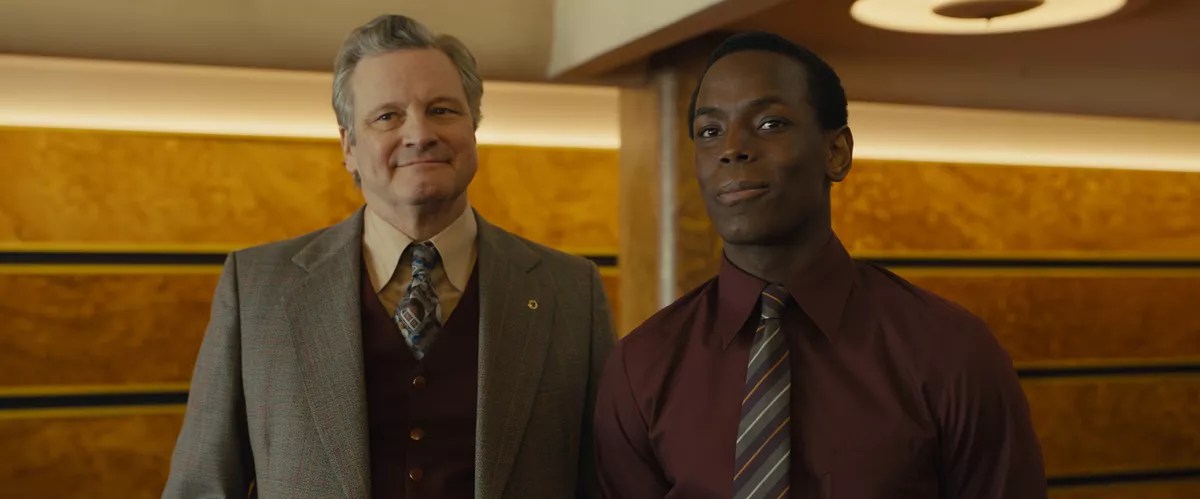
Then a new usher is brought on board. Stephen, played by Michael Ward of TV’s “Small Axe,” is young, handsome, an aspiring architect who failed to get into university and is staring at a stark future himself. If any of them seeing the impending death of their jobs and that “experience” of going to the movies, they don’t let on. Stephen’s limited future is compounded by the fact that he’s Black, and this is Margaret Thatcher’s Britain.

Stephen and Hilary start one of those circumscribed, fatalistic affairs that the theater and the movies so adore, a “Frankie & Johnny” romance between two lonely people, showing us triggered flashes of the disorder that limited her life and the ugly, skinhead racism that is his lot to face, something that she would have never recognized had they not found a connection.

“Empire of Light” is being advertised with trailers that romanticize the cinematic past and promise that, if we aren’t getting a nostalgic romp like the early Peter Sellers cinema-set comedy “Big Time Operators,” at least Mendes will treat us to something like “The Majestic,” a Jim Carrey drama that used the same, sentimentalized “good old days of the movies” as its backdrop.

Mendes invites us to dream along with him, of beach town life and its rhythms, rocksteady and ragga music, double-decker bus rides up the scenic coast, a romance in which she encourages him with “Don’t let them tell you what you can or cannot do,” and he tries to get her to lighten her mercurial moods by watching the movies she never takes the time to see.

“Honestly, anyone would think you worked in a bank!”

But dreaming along only takes this movie so far. The affair is secret. Then it isn’t. Hilary is a poetry fan. And? Stephen’s interested in learning the archaic technology and art of carbon arc celluloid movie projectors. There’s a “regional premiere” of “Chariots of Fire” that promises to be a Climactic Event, and a harbinger of The End. The movie is littered with such details and not-quite-but-close random episodes, and the picture’s meandering drift becomes wearing.

We keep waiting for that defining, lump-in-the-throat statement of what all this might mean, a sense of the cinema as a cultural touchstone, a communal magic lost in an age of streaming video, empty spectacle, comic book and horror movies which reach their narrow audiences, but not “the” audience.

And as I check my notes, hunting for some grand Toby-Jones-as-projectionist profundity, I’m sad to say it never comes.

Colman is brilliant, Ward brings a lovely wounded nobility to Stephen and the warm and cuddly Jones is set up to sum it all up. But Mendes will not or cannot take us there in this personal project that perhaps needed another person or two’s input, and loftier re-writing before the camera ever rolled.

Rating: R for sexual content, language and brief violence.

Cast: Olivia Colman, Michael Ward, Toby Jones and Colin Firth

Credits: Scripted and directed by Sam Mendes. A Searchlight release.

Running time: 1:58

Posted in Reviews, previews, profiles and movie news | Comments Off on Movie Review: A love poem to Cinema in Soft Focus — “Empire of Light”

Movie Preview: Woody Harrelson is a fired NBA coach who tries to turn Special Olympians into “Champions”

Ernie Hudson, Cheech Marin and Kaitlin Olson star in this plucky sports dramedy.

It’s from those PR and marketing geniuses at Focus Features, so who knows if anybody or any critics will see it.

Mar. 24.

Posted in Reviews, previews, profiles and movie news | Comments Off on Movie Preview: Woody Harrelson is a fired NBA coach who tries to turn Special Olympians into “Champions”

Netflixable? A Teen Tries to Remember his family’s Slaughter — “The Lost Patient (Le Patient)”

“Patient” is the operative word in the French thriller “Le Patient,” retitled “The Lost Patient” for North American Netflix release.

It takes forever to get going, seems to give away where it’s headed early on, and traffics in modestly tense moments, melodrama and the mysteries of hypnosis to such a degree that it’s never much more than a a mild mannered bore.

A young man, Thomas (Txomin Vergez) awakens from a coma three years after being the lone survivor in an attack that wiped out his family — mother, father and a cousin who was visiting.

Physical therapy is one part of what can bring him back. But it is his psychotherapist, Anna (Clotilde Hemse) who must probe his mind, lead him on hypnotic flashbacks to that day, to the life his family lived, its stresses and strains. Anna hints that he should talk to her before he is visited by the police.

Thomas has just one question he wants answered.

“Where is Laura,” (in French, with English subtitles, or dubbed)? She is his older sister (Rebecca Williams), glimpsed in theses memories of tense family dinners, spied on as Thomas saw her with her lover, another young woman.

A mysterious hooded figure haunts Thomas’s nightmares. Could he be a man his mother was taking lots of calls from, her lover? Could he be the killer, the one who knows where the gun that killed the Thomas’s family, ended up? Might he have wielded the knife that put Thomas in a coma?

Will he be the answer to “Where is Laura?”

Movies dabbling in studies and manipulations of the mind are always on shaky ground, as new research makes old depictions — Hitchcock’s Freudian “Spellbound” comes to mind — seem quaint and even daft.

Director Christophe Charrier, who co-wrote the script with Elodie Namer, focuses on the details Thomas remembers — the incessant barking from a neighbor’s dog, the testy exchanges at dinner, the way his sister hurt herself under stress (pounding her head on trees, the wall, etc.

The clues to where this is going are not obscure enough that we’re not two or three steps ahead of this all the way through it.

A few tense moments is all it manages, a mild twist or two is all they could come up with, and our patience winds up being the only thing truly tested by “The Lost Patient.”

Rating: TV-MA, violence, profanity

Cast: Txomin Vergez, Clotilde Hesme, Rebecca Williams, Audrey Dana, Alex Lawther and Stéphane Rideau

Credits: Directed by Christophe Charrier, scripted by Elodie Namer and Christophe Charrier. A Netflix release.

Running time: 1:34

Posted in Reviews, previews, profiles and movie news | Comments Off on Netflixable? A Teen Tries to Remember his family’s Slaughter — “The Lost Patient (Le Patient)”

Movie Preview: Eddie Murphy and Jonah Hill, Nia Long and Julia Louis Dreyfuss, a comedy about the Interracial Thing — “You People”

January, on Netflix, the new home to all things Jonah Hill.

There’s a laugh or at least a chuckle in this trailer.

Posted in Reviews, previews, profiles and movie news | Comments Off on Movie Preview: Eddie Murphy and Jonah Hill, Nia Long and Julia Louis Dreyfuss, a comedy about the Interracial Thing — “You People”