


Movie Review: A Child wrestles with her Demons, her Trauma and her Dragon to face a criminal — “Blaze”

The Australian dramatic fantasy “Blaze” is so unusual that there is no meeting it halfway. Either take it on director and co-writer Del Kathryn Barton’s terms, or move along.

It’s an extraordinary blend of fantasy and ugly reality folded into a story of a crime and the troubled child who witnessed it.

I’m almost at a loss as to think of analogies for it. “Birdy,” maybe? “The City of Lost Children?” “The Fisher King” might be the closest reference, a tale of madness, mental escape and a terrible crime that traps its title character, perhaps forever.

Just because Blaze is 12, neither we nor her single-dad can hold out much hope that the trauma she’s experienced is something she’ll just grow out of.

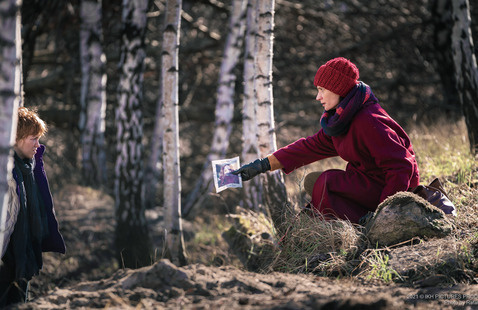
Blaze is played by Julia Savage, a gifted young Australian actress with a lot of access to her interior life and memories of tween fury. She is unforgettable as a middle school child who somehow fits in at school even though it’s obvious that she’s most comfortable tuning-out the world via her headphones. She loses herself in the fantastical reveries of her imagination, protected by “my dragon,” a vast creation spun out of the sort of feathers, tie-dye and wild fabrics of her Haight Asbury-ish bedroom.

Her father (Simon Baker, superb) indulges her collectibles and her flights of fancy. How much of her behavior he regards as quirks and how much he’s figured out is concerning is unclear. She’s going to private school, takes judo classes and has a free hand decorating and zoning out.

Then she stumbles into a reality that her headphones can’t block out. She witnesses an alley confrontation between former lovers that turns into a horrific rape and murder. The only thing that could make this awful crime worse is her knowledge that she didn’t scream, cry out for help or make herself known, actions which might have saved the victim.

Not that Blaze could know that. She is 12, after all. But the guilt is still there.

When her dad figures out there’s something wrong, the crime officially claims another victim. Blaze must be examined for evidence of sexual assault, and then persuaded to sit in court and face the murderer (Josh Lawson) and his “How do you SLEEP at night?” defense attorney.

Barton works in commentary on Australia’s justice system where it pertains to crimes against women as we see this curious child fall down the rabbit hole of Internet searches about the victim, the nature of this sort of crime and the country’s stumbling attempts to respond to it.

But “Blaze” takes its turn towards extraordinary through the interior life the film gives her. She fantasizes revenge, escaping to the moon (via step ladder), torching that defense attorney with a fire-breathing dragon figurine, one of many such dolls and toys she fantasizes are living in her stomach, ready to climb out and intervene in her life.

Her imagined giant patchwork plush-toy dragon is her true protector, and the one “friend” she can’t bear to part with, even when medication enters the picture and she and we can guess what that means. Stop-motion animated dolls, visions of descending a tunnel lined with cherries and trippy extreme closeups of her bird-eyed dragon’s eyeball lend a dreamy look to our heroine’s uncertain fugue state.

Sofia Hampson plays that middle school pal who is slightly more mature, and thus both stalwart in her support and not really qualified to talk about boys, sex and other things swirling around in this girl’s head. Not wholly a “bad influence,” but close.

I like the way the father figure is drawn here, and the fact that we and the filmmaker can see that keeping a child who’s witnessed the most brutal rape and murder in a coed JUDO class isn’t the smartest play.

Yes, maintaining routine is important. But even an idiot should fret about having to teach your kid what “triggered” means because you didn’t think that through. The idea that everybody here is kind of out of their depth, especially the father, feels like the most realistic thing in this often surrealistic film.

And that’s not destined to be his only wrong move. In this situation, every parental decision is fraught, and the consequences of something you can’t anticipate can be terminal.

“Blaze” is one of the roughest coming of age tales in memory, a movie that drags its heroine from fantasy to ugly reality time and again. Barton lets us see even those fantasies turn dark, bloody and menacing as a 12-year-old learns ugly truths about cruelty, crime and justice as it pertains to women in most of the world, even the supposedly “liberal” democracies.

And even though I think I’ve made the point in all those paragraphs above, let me reiterate. “Blaze” is really something, a riveting and challenging experience and an extraordinary film not to be missed.

Rating: unrated, graphic violence, profanity

Cast: Julia Savage, Simon Baker, Yael Stone, Josh Lawson and Sofia Hampson

Credits: Directed by Del Kathryn Barton, scripted by Huna Amweero, Del Kathryn Barton. A Gravitas Ventures release.

Running time: 1:37

Posted in Reviews, previews, profiles and movie news | Comments Off on Movie Review: A Child wrestles with her Demons, her Trauma and her Dragon to face a criminal — “Blaze”

Classic Film Review: Reviving the end of the Nouvelle Vague — “A Woman Kills” (1968)

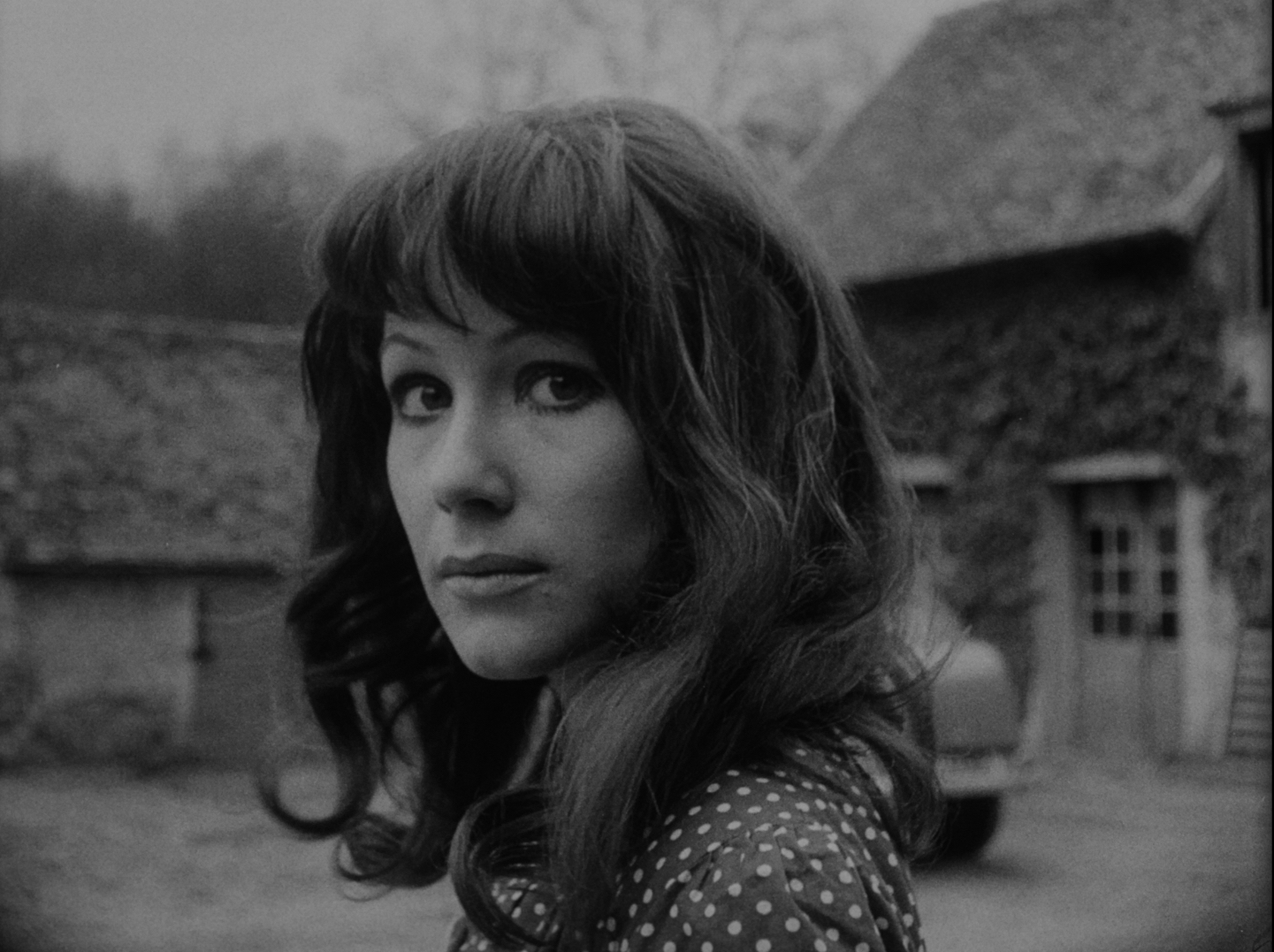
Little-seen if occasionally revived, Jean-Denis Bonan’s “A Woman Kills” is an arch, experimental and titillating French thriller from that seminal year in modern French history, 1968.

It’s not particularly revolutionary, as one might expect from an era of demonstrations and riots in the streets. But it’s a fascinating artifact, almost a spoof of French “New Wave” (Nouvelle vague) cinema style that’s more Godard than Truffaut

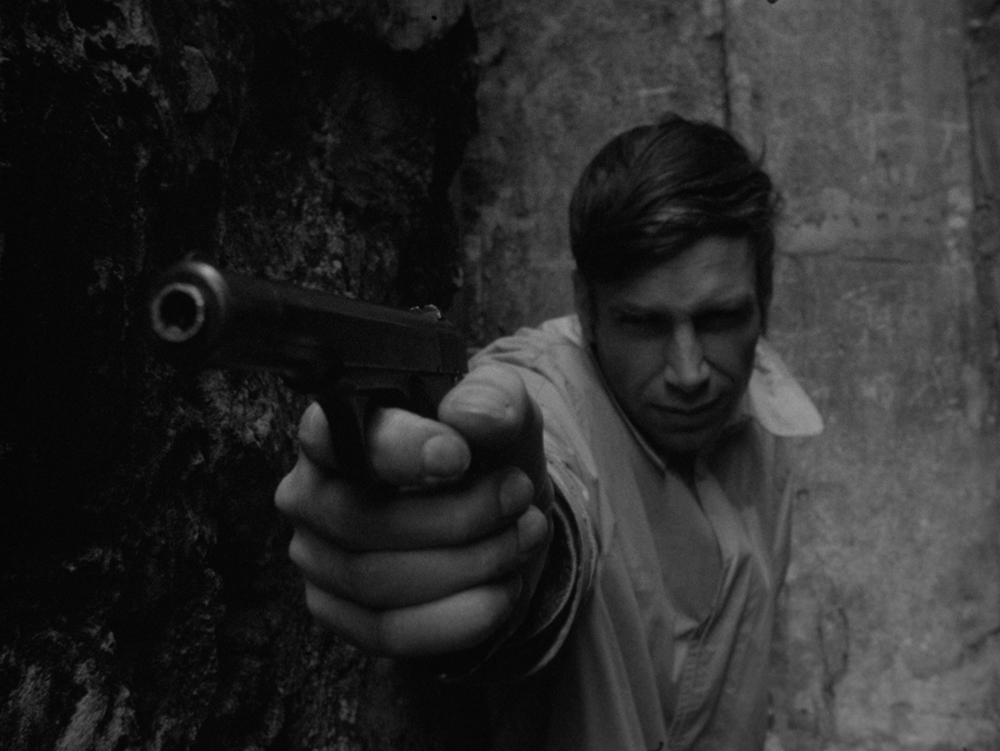
A female serial killer has been executed, our narrator tells us. Helene Picard (a fictional figure) killed prostitutes, was apprehended and got the guillotine in March of 1968. She was 25 years old.

Then street walkers start dying again. Some “sadist of the Pigalle” is chasing and strangling victim after victim.

The Algerian war vet prosecutor (Claude Merlin) who became “society’s official killer” in bringing her to justice, was troubled and is getting threatening letters now. So is an assistant to the superintendent of police, Solange Lebas (Solange Pradel).

She frets so much she goes home to shower. And then turn that into a bath. Either that’s how “dirty” she feels, or this was Paris in the ’60s, and if there isn’t nudity, what’s the point of labeling your work “a French film?”

An unseen narrator sorts through the case, listing and showing us legions of leggy victims, presenting a very myopic view of how the authorities gather evidence and mull over crime scene films in the police department’s screening room.

An unseen singer accompanies himself on guitar lamenting the vision of “a girl whose throat is being slit,” which sounds more romantic in French, because everything does.

Sound effects, of a storm that we never see happening, or a cat supposedly in this or that apartment, seem almost randomly tossed into the mix.

Our narrator seems to be piecing together a profile of a killer as he speaks of an orphaned character “with a penchant for violence and homosexuality.”

That was something like accepted-wisdom in society of that era and earlier. Think of the Leopold and Loeb murder filmed as “Compulsion,” or the homicidal homosexuals in film after film, even the James Bond epic “Diamonds are Forever.”

So the psychology introduced here, with characters talking of the trauma of their upbringing or experience in the Algerian War, is dated and crosses the line into “That’s messed up.”

It’s no shock when this short feature (68 minutes) or long short (the specialty of writer-director Jean-Denis Bonan) has a character cross-dress in the third act and lets us think, if only for a minute, that this is part of the massive police effort to capture this serial killer.

The film, finally making it onto BluRay, has all these quirky/artsy touches and a finale that is bracing and bizarre and shockingly violent.

Morality is represented, and challenged, and many touches — that voice-of-news-authority narrator, the almost random sound effects and jumping from setting to setting, shifting points of view — seem designed to undercut what we or “justice” can know about a crime or a criminal.

But it’s a fascinating black and white snapshot of1968 f Paris and an engrossing if untidy tale of injustice and second guessing justice and policing those who police us.

Rating: unrated, bloody violence, sex, nudity

Cast: Claude Merlin, Solange Pradel, Myriam Mézières, Jackie Raynal, Catherine Deville, Velly Beguard

Credits: Scripted and directed by Jean-Denis Bonan. A Radiance release.

Running time: 1:08

Posted in Reviews, previews, profiles and movie news | Comments Off on Classic Film Review: Reviving the end of the Nouvelle Vague — “A Woman Kills” (1968)

Netflixable? “The Violence Action” brings a Manic Manga Pixie Assassin to cartoonish life

A petite, kitty-and-cat-video-obsessed pixie punches, slices, stabs and shoots well above her weight in “The Violence Action,” a candy-colored yakuza-killing comedy from Japan.

Based on a comic book, cast with mostly ex-child actors who look like the figures in Shin Sawada and Renji Asai’s manga, its a violently manic, cartoonish farce cluttered with gangs, characters and agendas. It bolts out of the opening credits and quickly bogs down in dull details and wild wire-work fight choreography that can’t help but turn repetitive.

Not worth the trouble? That sums it up. But for J-action manga junkies, here’s what it has to offer.

There’s the usual young, petite, sexy-but-desexualized heroine, Kei, played by Kann Hashimoto in a succession of shorts and wigs until she settles on peach being her favorite color.

Kei has her crew, here a “club” run out of a Hello Kitty-decorated noodle shop — closed to the public and presided over by Tencho (Fumika Baba). They are The Supple and Natural Gals Delivery Service, ostensibly a call-girl operation cover for hired hits.

Zura (Takashi Okamura) is Kei’s driver, older and bald and hiding that baldness under a (literally) bullet-proof Elvis pompadour.

Kei’s a “childish” college bookkeeping student by day, assassin the rest of the time. Dopey “bowl cut” nerd Watanabe (Oji Suzuka) crushes on her and finds himself drawn into her life.

And Kei and her crew are being drawn into a multi-gang yakuza war, spinning around a punk gang boss, Ayabe (Shunsuke Daitô) who is kidnapped at one point, and a mob accountant Terano (Yôsuke Sugino), with lots of missing yen and lots of mob intrigues about where it should go.

At some point, Kei will find herself face to face with Terano and give him the goo-goo eyes that “Bowl Cut” Watanabe gives her.

No, nothing will come of that, because there’s no romance or sex in this or most action manga adaptations or — judging by its plummeting birth rate — in Japan as a whole right now.

The deadliest and funniest foil for this “delivery service” is the mob fixer/killer/goon “Mister” Michitaka, played by the towering Japanese-Spanish pretty boy Yu Shirota. Made up like the comic book character, he’s a bespectacled metallic blonde who looks like Second City Canadians Harold Ramis and Rick Moranis had a love child.

He’s funny, and menacing every time he appears.

Too many of the characters are insipid caricatures, the story is a convoluted quagmire of agendas, alliances, gangs and big, modernist gang meetings in boardrooms and the dialogue better suited to an anime aimed at the arrested-development corner of animation’s fanbase.

The funniest scenes all involve Michitaka, who can’t handle the idea of a “woman” assassin, much less two of them when Kei’s crew calls in sniper Daria (Yûri Ota).

“Know the word ‘misogynist?” the shooter asks?

“What, is that some special, spicy messed-up miso (soup)?”

I liked the cartwheeling, wall-walking, bullet-dodging nonsense of the brawls. Note the fight choreography and blur of swirling cameras and edits designed to make us think an 85 pound pixie is dropping hulking gangsters by the metric ton in every fight. It’s all too glib about the blood-letting and entirely too childish and nonsensical for me to get into. But the world’s 40 year-old virgins need movies too, I guess.

Rating: TV-MA, bloody violence and lots of it.

Cast: Kann Hashimoto, Fumika Baba, Oji Suzuka, Yôsuke Sugino Ota and Yu Shirota.

Credits: Directed by Tôichirô Rutô, scripted by Tôichirô Rutô and Itaru Era, based on the comic book by Renji Esai and Shin Sawada. A Sony release on Netflix.

Running time: 1:51

Posted in Reviews, previews, profiles and movie news | Comments Off on Netflixable? “The Violence Action” brings a Manic Manga Pixie Assassin to cartoonish life

Movie Review: Beware the D-Movie horrors of “Bermuda Island”

Tom Sizemore is decades beyond his “Saving Private Ryan” glory. But he’s top billed in “Bermuda Island,” a plane crash thriller that in no way should be confused with “Plane.”

Spoiler alert — Sizemore, playing a flight attendant (Stop laughing!) doesn’t make it…through the first act. Spoiler alert, neither does the drug and gun dealer who is second billed.

As that character’s arrest and shoot-out was the focus of the movie’s drawn out first scene, feel free to shout “What the hell was the point of HIM?”

“Bermuda Island” is every bad thing about “Lost,” everything that “Plane” got right done wrong, every “performance” no one ever bought into on “Survivor.”

It’s “Airplane” without the (intentional) laughs, a disaster film in every meaning of the word. Bad writing, bad effects, bad acting, inept directing, the whole shooting, plane-crashing, character-devouring mess is just excruciating to sit through.

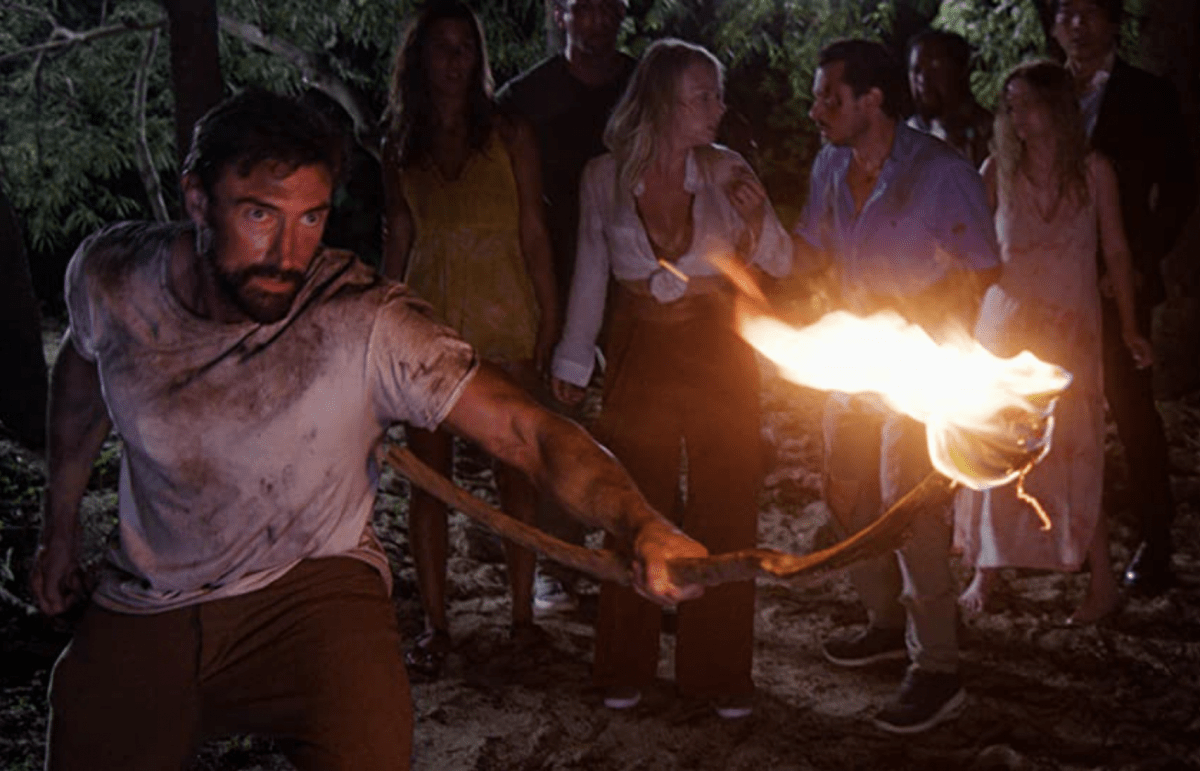
A plane loaded with aspiring-to-D-list players cast as “types” is headed for Puerto Rico when it goes down in a storm. Not before the murderer being extradited (Noel Gugliemi) breaks free of his four FBI guards and guns most of them down — mid-flight.

The jetliner is tiny, yet the passengers, once they wash ashore, keep speaking of “hundreds” of casualties.

The disorganized dunces declare “We need to start surviving!” But none knows how. They bicker over what their priorities should be.

“And who put YOU in charge?”

It’s not like the ditzy Ozzy Osborne meets Boy George rocker named Midnight (Greg Tally) has anointed himself leader. Or the pilot.

“One job! Couldn’t even keep the plane in the air!”

Wouldn’t you know it, they’re not alone. There are people there. And people in monster costumes, too.

This thriller goes from bad to worse without the good manners of providing any one element that could be latched on to as more hilariously bad than the next. I couldn’t even find the elements of a bad movie drinking game out of this.

But at least Sizemore got off lightly.

Rating: graphic violence

Cast: Tom Sizemore, Noel Gugliemi, John Wells, Sarah French, Sherri Davis, Greg Tally, Victor V. Gelsomino and Wesley Cannon.

Credits: Directed by Adam Werth, scripted by Robert Thompson. A Gravitas Ventures release.

Running time: 1:26

Posted in Reviews, previews, profiles and movie news | Comments Off on Movie Review: Beware the D-Movie horrors of “Bermuda Island”

Netflixable? A Polish mother clings to an “Illusion” that she may find her missing daughter

The Polish drama “Illusion” (“Illuzja”), like the missing person search it is about, gives up its secrets sparingly and quietly.

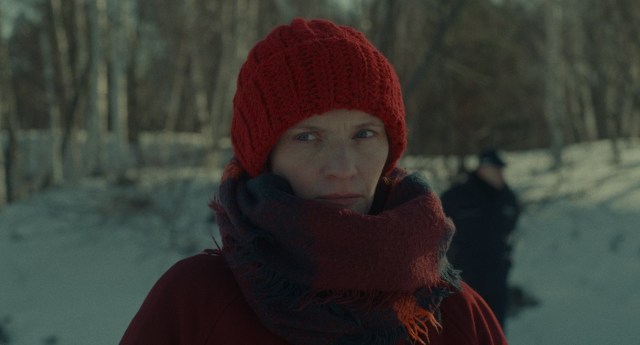
We follow a mother (Agata Buzek) who staggers from hope to despair, passing through grief to exasperation along the way, as we peer into her psyche and pass by what we might guess are clues. But this isn’t a conventional mystery. It’s about enduring the unendurable, with agonies and frustrations piling up every step of the way.

Hanna is an elementary school teacher in the port city where her college coed daughter disappeared some months earlier. The police haven’t had any answers, and they like her doctor husband Piotr (Marcin Czarnik) are giving up hope.

But Hanna persists, handing out photo fliers, frequenting her daughter’s favorite campus-side pub, taking calls from cranks who claim missing Karolina “came to me in a dream” (in Polish with English subtitles).

Still, there’s something a little off in the way her husband talks about “police questioning.” And what is Hanna doing with these buttons she seems to stumble across, matching them to the missing girl’s coat?

How much do they know? Might both of them or one of them be hiding something?

Being dragged out to the last place the girl was seen alive with a shackled prisoner who is already an accused murderer, and willing to confess to another, is bad. Talking a walk with a “police” approved clairvoyant is just “cruel.”

“Have you ever helped ANYone?”

He immediately turns to Hanna and wonders if her husband knows what happened to Karolina.

“These things, they happen in families…”

But those interludes seem closer to teases, as this story is really about Hanna’s obsession and the closure that badgering the detective on the case (Malgorzata Hajewska), questioning new tenants in the apartment Karolina grew up in because she finds a photo of her daughter as a child, or trying to talk to the onetime suspect boyfriend (Karol Bernacki) don’t provide.

This Around the World with Netflix drama reminds us that, east or west, police aren’t superhuman or necessarily perceptive or even sympathetic. Just keeping them interested in sticking with a case takes effort and extraordinary measures. And when it’s your child who’s missing, waiting for them to do their job isn’t an option.

Director and co-writer Marta Minorowicz takes care to do nothing to disturb the somber, resigned tone Buzek maintains in her performance. There’s virtually no music in this, and only occasional snappish moments with cops, Hanna’s young and sometimes callous students and her deflated and increasingly dismayed husband.

As concrete leads fail to turn up, Hanna’s credulity shifts towards the supernatural things she’s discounted. Perhaps only a mother can find her own child, she seems to believe. When all else fails…

“Illusion” isn’t a movie with a lot of highs and lows, just a downbeat tale of grief, hope and acceptance struggling mightily with defiant persistence. Buzek and Minorowicz keep us engaged almost in spite of themselves in a movie that hints it might be more conventional than it truly is, but truly isn’t.

Rating: TV-MA, dark themes

Cast: Agata Buzek, Marcin Czarnik, Malgorzata Hajewska and Karol Bernacki

Credits: Directed by Marta Minorowicz, scripted by Piotr Borkowski and Marta Minorowicz. A Netflix release.

Running time: 1:30

Posted in Reviews, previews, profiles and movie news | Comments Off on Netflixable? A Polish mother clings to an “Illusion” that she may find her missing daughter

Movie Review: Place your bets, “Kids vs. Aliens”

“Kids vs. Aliens” is a low-budget horror comedy with big “Goonies” energy, a “Psycho Goreman” riff on kids who love horror movies who find themselves living through one.

It’s the latest from Canadian Jason Eisener, who directed “Hobo with a Shotgun,” which shares some of this film’s virtues — killer title, goofy violence, no-budget minimalism, uninhibited profanity — and its shortcomings. It’s brisk, cheesy and brief to the point where it feels incomplete.

“Yeah, and?”

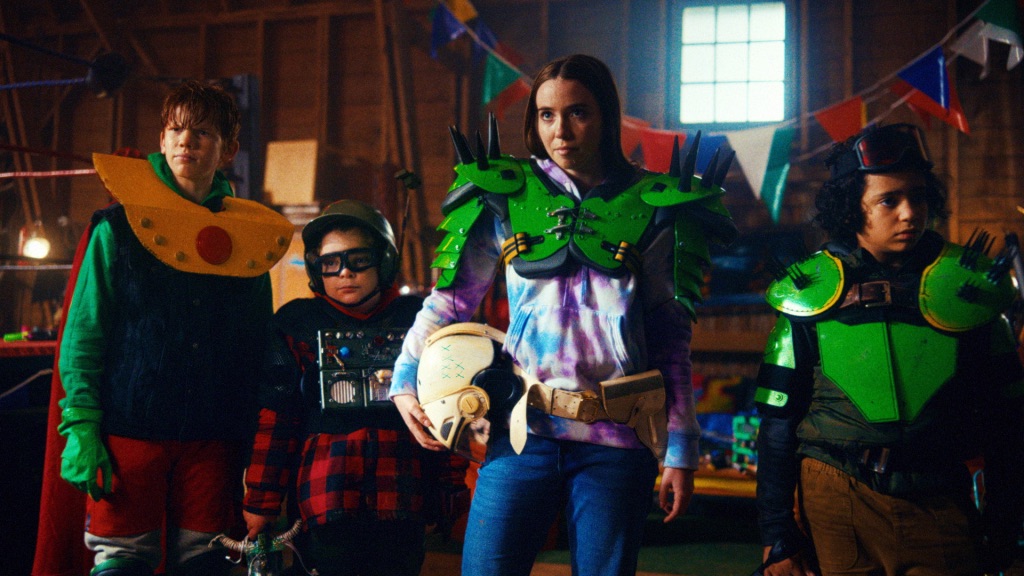
Dominic Mariche, Ben Tector and Asher Grayson play wrestling, horror and sci-fi obsessed middle schoolers who make DIY movies that feed those passions with improvised costumes, weapons and mayhem, tales that often climax in the wrestling ring rich kid and middle school Spielberg Gary (Mariche) had his parents buy for them, parked in their big, semi-abandoned barn “clubhouse” and soundstage.

Miles (Tector) is the ginger-haired would-be tough guy in their trio. Younger Jack (Grayson) is their tech and effects — think “fireworks” — expert.

But they couldn’t do jack without Gary’s older sister Sam (Phoebe Rex), a 15 year-old wrestling fan who has mastered the moves and insists she “kicks ass” with a sword, among other weapons.

Their riotous production schedule gets interrupted when high school punk Billy (Calum MacDonald) and his two running mates (Emma Vickers, Isiah Fortune) crash their latest shoot.

Billy’s a bully, but Sam is smitten. It doesn’t take much manipulation for Billy to all but end her play days with the younger kids, agree to host a rave, and consider the option of underage sex with the first creep of the opposite sex to pay attention to her.

Gary and Sam’s parents only ever drop in between “business” trips, leaving their teen in charge. As they tell her, expressly, “no having anyone over,” what could possibly go wrong?

But the opening scene is a fishing boat offshore visited by a blinding light from the sky that plunged into the sea. The crew was body-snatched, one by one. And that light inspired government men in haz-mat suits to start poking around.

Guess which party the blinding “light” and the “Signs” Slendermen we glimpse in the background of this shot or that one, which party they decide to crash?

The kids are all hilariously foul-mouthed, impulsive and focused on their own childish needs of the moment. Bratty Gary loses it over losing his star-sister to the “pervert” who’s just stormed into their lives.

We’re just kids being kids,” Miles says to comfort him. “We’re ALLOWED to be compete pieces of s–t sometimes.”

Their impulse reaction to that first glimpse of light is to heedlessly dash off to check it out.

–“Don’t go NEAR it!”

“Why?”

Eisener doesn’t get much of a jolt out of the shadowy, unfocused alien shapes that we see lurking behind this scene or that one.

And the attack of the aliens is amusingly mild compared to the utter mayhem of the rave that Billy throws at Sam and Gary’s house. “Tear it all down” is his motto.

Thank heavens the creatures with the long fingers show up and kidnap the worst of them, but also Gary and his pals. Sam needs to girl-up and gear-up and go get them, because she’s responsible for them, the little s–ts.

The viewer is keenly aware, first scene to last, just what Eisener is showing us and just how little it cost to do it. “Lights” as an effect is his byword. No-name cast, a couple of actual sets, a lot more rented locations (a real boat, barn, house). That always puts more extravagant productions to shame.

But Eisener runs up against the wall of shocks that stop being shocking and torrents of tiny tyke profanity that become repetitive and stop being funny. This isn’t “Attack the Block,” not by a ways.

His best scenes could have been his guide, the early moments of no-rules/no-holds-barred/imaginations run wild no-budget kiddie filmmaking. It’s when he tries to tie “Kids vs. Aliens” down with that three act structure that the picture becomes ordinary and, I have to say, unsatisfying.

Rating: unrated, graphic violence, profanity, sexual situations

Cast: Dominic Mariche, Phoebe Rex, Calum MacDonald, Asher Grayson, Isiah Fortune, Emma Vickers and Ben Tector

Credits: Directed by Jason Eisener, John Davies and Jason Eisener. An RLJE/Shudder release.

Running time: 1:15

Posted in Reviews, previews, profiles and movie news | Comments Off on Movie Review: Place your bets, “Kids vs. Aliens”

Movie Preview: Egypt’s Oscar hopes are pinned to “Cairo Conspiracy”

This opens in limited release in the US three days after the Oscar nominations are announced.

Egypt today, looks promising.

Jan. 27.

Posted in Reviews, previews, profiles and movie news | Comments Off on Movie Preview: Egypt’s Oscar hopes are pinned to “Cairo Conspiracy”

BOX OFFICE: “Avatar” reigns, “M3GAN” rolls, “Otto” improves, “House Party” crashes

Business is up some $30 million over last year’s dismal Martin Luther King Day four-day weekend box office take.

The reason? “Avatar: The Way of Water” ($35 million over four days), “M3GAN” in the $20-22 range over those same four days, “Puss in Boots: The Last Wish” bringing in $16 million from families and “A Man Called Otto” reaching mid-America as it opens on thousands more screens and earns $14 million for its trouble.

“Plane” might reach the $12 million mark by midnight Monday, another feather in Gerard Butler’s wee bonnet.

“House Party,” a made-for-HBO-Max remake mess that never should have been released, will pick up $4 million for its not-quite-limited 1350 theater release. Not worth it.

“The Whale,” like “Avatar” and “Puss in Boots,” a probable Oscar contender, is sticking around the top ten with another $1.5 million or so when all is said and done with this weekend.

These figures will be updated as Saturday’s take and Sunday/Monday’s projections are released. Here are the three day weekend totals from @boxofficepro.

Posted in Reviews, previews, profiles and movie news | Comments Off on BOX OFFICE: “Avatar” reigns, “M3GAN” rolls, “Otto” improves, “House Party” crashes

Classic Film Review: Hitchcock’s Jaunty Jab at Isolationism — “Foreign Correspondent” (1940)

The Hitchcock films that draw me back in, time and again, are the lighter-hearted ones. As much as I relish “Strangers on a Train,””Vertigo,” “Rear Window” or “Notorious,” it’s the murderous, mysterious larks that hold up best for me.

I can’t channel surf past “Saboteur,” “The Trouble with Harry,” or the greatest Hitchcock romp of them all, “North by Northwest,” without stopping and mumbling, “Well, there goes this afternoon/evening/planned bedtime” etc.

“Foreign Correspondent” might be the very lightest, largely because of its sense of play and the defiant optimism built into it. Filmed during the darkest days of World War II, with Hitchcock returning to Britain from America just as the “Blitz” was coming to the skies over 1940 London, the Master of Suspense was determined to do his patriotic duty, even if he was based in Hollywood.

And his duty was to get America ready for the idea of intervening in Europe with a film. There aren’t many similarities with Michael Powell’s similarly-intentioned “The 49th Parallel,” which came out in 1941, but the one important one is tone. Like Powell and his screenwriters, Hitchcock figured the cleverest way to send his “You need to be in this fight” message was in a jaunty, adventurous, fast-moving travelogue with murderous Nazis — the only kind — and their encounters with plucky, human rights-loving anti-fascists of every stripe.

Unlike the darker travelogue “Saboteur” (1942), this time the emphasis would be on optimism even as Hitch’s titular hero, given the All American George M. Cohanesque name “Johnny Jones,” is learning just how evil and treacherous fascist Germany and its treasonously proud fanboys had become.

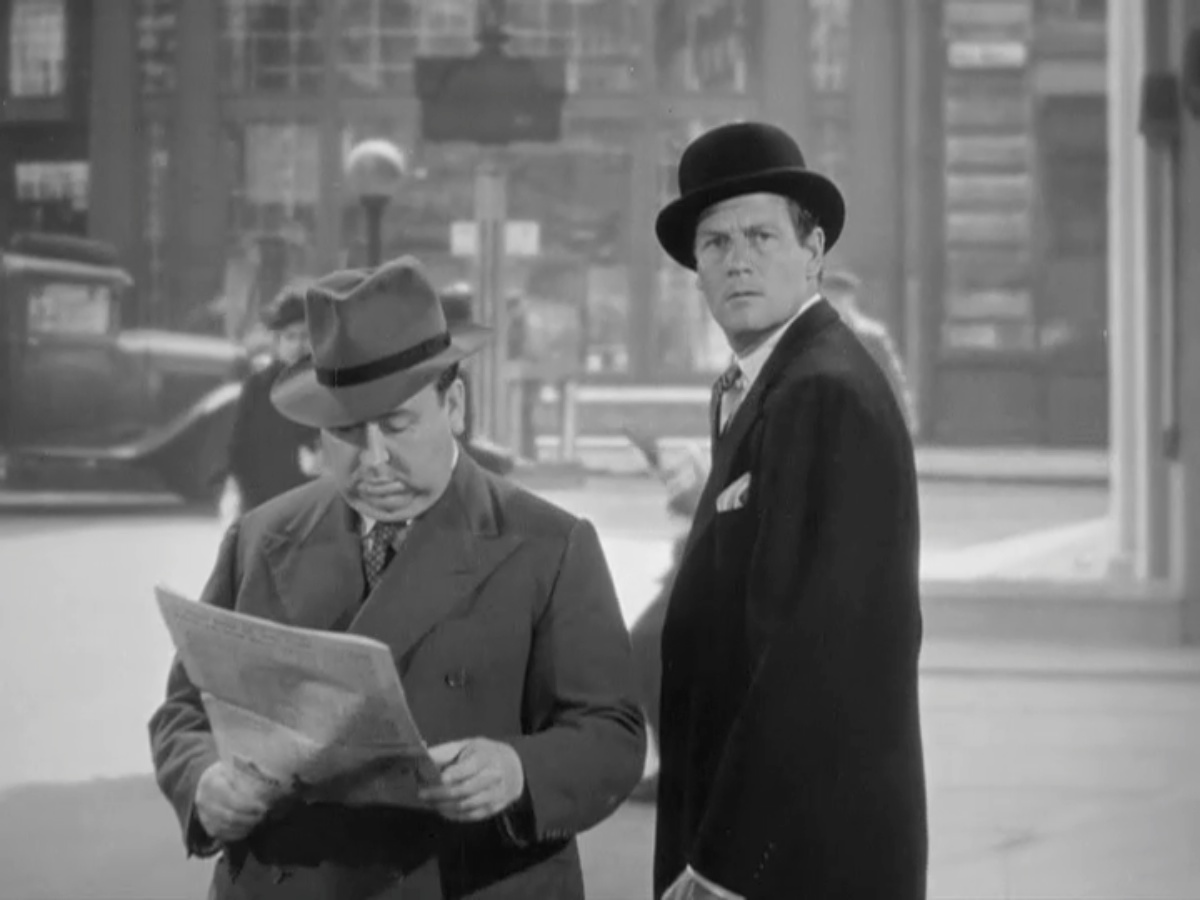
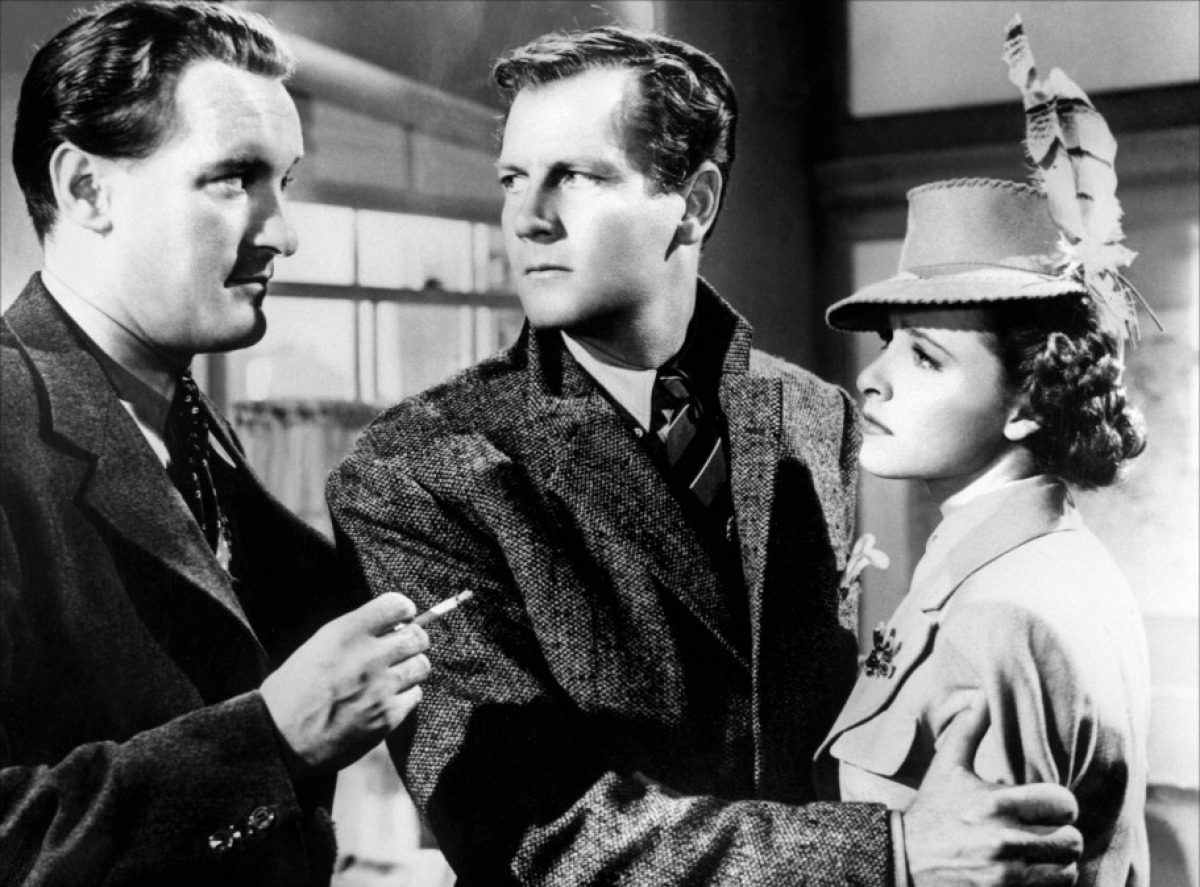
And if you wanted to print “American Optimism” in large, friendly letters up on the movie marquee, you couldn’t do much better than casting Joel McCrea, just then achieving the stardom that would make him a screen immortal, thanks to his work in the title roles of “Foreign Correspondent” and the next year’s “Sullivan’s Travels.”

McCrea would play the reluctant American, a city reporter unconcerned about events “over there,” a guy who regarded the job of “foreign correspondent” much the way his editor/boss (Harry Davenport) does, as over-educated swells too delicate to get the ‘real’ story.

— “Foreign correspondent! I could get more news out of Europe looking in a crystal ball…I don’t want any more economists, sages, or oracles bombinating over our cables. I want a reporter!”

Thus is our “crime” reporter summoned and sent, against his will, into the diplomatic thick of things. He wants instructions, and gets almost none. Jones wants to know who he should interview. And that tone Hitch was going is given away in that very scene.

— “Well how about Hitler? Don’t you think it would be a good idea to pump him? He must have something on his mind.”

That’s our movie, an American smart aleck abroad, fretting over this famous diplomat (Albert Basserman) he just happens to run into and the world of secret treaties, intrigues, war plans and assassinations that spin around him.

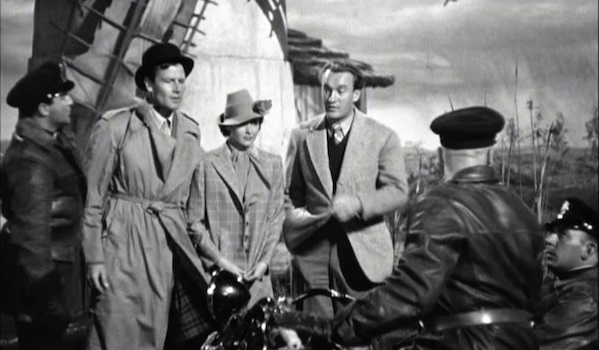
Laraine Day, most famous for this film but who worked into the “Murder, She Wrote” era, plays Carol, the daughter of the head of the Universal Peace Party. She is with our correspondent, who figures he needs a bowler hat and high-class moniker — “Huntley Haverstock” — for this new assignment, and a British reporter friend she knows when that pivotal assassination happens and the murderously merry chase begins.

That British “reporter friend” of Carol’s is an ever-so-suave, too-too-droll Continental whom Haverstock/Jones throws in with when the chips are down. I’d love to know which credited (or uncredited) writer had the brainstorm of naming George Sanders’ character “Scott ffolliott.”

— “I don’t get the double ‘F.'”

— “They’re at the beginning. Both small ‘F’s.”

— “They can’t be at the beginning.”

— “One of my ancestors was beheaded by Henry VIII. His wife dropped the capital letter to commemorate it. There it is.”

Sanders all but steals the movie with that pre-“All About Eve” snide British savoir faire. Every word out of his mouth has something amused and amusing about it, as if he’s in on the joke and “Look here, you Yanks. You don’t want to miss out on all the fun!”

Stumbling into a nest of spies, ffolliott offers to sell them life insurance policies.

“Now look, I’ll just sit here and you carry on with whatever you were doing. Don’t mind me, I sometimes sit like this for hours.

Continue reading
Posted in Reviews, previews, profiles and movie news | Comments Off on Classic Film Review: Hitchcock’s Jaunty Jab at Isolationism — “Foreign Correspondent” (1940)

Movie Review: Fellow romantics “Lonesome” in Milwaukee

“Lonesome” is a danged-near-adorable throwback romance that plays like a love letter to being single and mingling in Milwaukee.

Producer/writer/director Tony K. Hall shot it in black and white — with cotton candy and its effects on the tongue the only splashes of color. He slashes the story down to the barest of essentials and scripts more cutesy inter-titles explaining the stages of a relationship than lines of dialogue.

Obsession!” “Infatuation!” and “The seasons are changing…Weather falls from the memories of warmth and blossoming love.”

“Lonesome” is a screen romance homage to the French New Wave,” only featherweight and cutesy.

Guy (Zach McLain) and Jim (Eric Halverson) are graphic designers and roommates. Jim has a girlfriend (Carolyn Lyons). Guy would like one.

One fine summer’s day, Jim talks Guy into taking a break, ditching social media as a means of “meeting somebody,” and hitting the beach. That’s where he stumbles into Roxy (Amber DeRuyter). She is cute, laughs easily and like Guy, Milwaukee through and through.

“This gin town is fulla cocktail couples!”

They hit it off and spend a day walking and chatting. They chuckle at their shared love of cotton candy (blue tongue vs. pink tongue) and that Wisconsin way of saying “sammiches.”

“D’you work tomorrow?” she wants to know.

“No.”

“Let’s DRINK,” she suggests.

They meet in the same place, beer and shots. He takes a bathroom break that turns out to be more complicated than quick. She wonders where he’s gone. He returns to find her missing.

And they “didn’t exchange information.”

“Lonesome” is mostly about Guy’s futile efforts to track down somebody he got as far as “doggos” or “cattos” and “picket fence” with, a semi-serious connection. But he never got her last name or her number.

He hunts online to no avail. They just miss each other at a slam poetry evening at a pub, or at the street fair. Every so often, she breaks into song, a cappella.

“Lonesome” manages to be a movie long on charm and short on most everything else. The leads are pleasant “real people” and summery Milwaukee is shown off as a real city with a 30-and-under revived downtown, complete with “The Hop,” their Potawatomi light rail system.

But this movie’s shortcomings are kind of obvious, too.

It’s listed on IMDb as running 1:23. But its release length is 1:05. That’s not long enough for anybody to release it to theaters and might even discourage most streamers (Random Media has it VOD/Amazon).

The black and white gimmick is great for standing out from the crowd. One of my favorite romances ever was the 2007 indie “In Search of a Midnight Kiss,” which had edge, poignance and the underbelly of LA flipped onto its romantic head.

Here, the constant intertitles are cloying, the story is too limited to amount to much more than the basic “I hope they find each other.” I heartily endorse movies that escape from LA and feature players that aren’t dividing their time between “acting” and “modeling.” Not everybody in the world looks like a gym rat. Why should people in the movies be different?

That said, our leads are almost pleasant to spend time with, but no one anybody would chat up at a cocktail party. The dialogue, what little there is of it, doesn’t reveal anything that makes either person interesting.

And then there’s the title of “Lonesome,” utterly generic and over-used since the silent cinema era. How is anybody going to find this?

Here’s how I tracked down the photos. Dogpile or Google “Lonesome” and “Movie” and “Milwaukee.”

I liked what I saw, I just needed to see more. This is a somewhat polished “student” level indie that runs a tad long, not a feature that invites us to wholly invest in the thinly-sketched in characters.

It does make one want to Potawatomi one’s way to Milwaukee, though. Maybe wait a few months — six or so — before doing it.

Rating: unrated, squeaky clean

Cast: Amber DeRuyter, Zach McLain, Eric Halverson, Carolyn Lyons and Alexandra Peseri

Credits: Scripted and directed by Tony K. Hall. A Random Media release.

Running time: 1:05

Posted in Reviews, previews, profiles and movie news | Comments Off on Movie Review: Fellow romantics “Lonesome” in Milwaukee