
Open one’s mind to the possibilities and the possible interpretations of Yorgos Lanthimos’s latest.
Emma and Willem and Ruffalo and Ramy are the stars.
An infamous but much praised sex scene is it’s buzz right now.
Dec. 8 this comes to theaters.
Open one’s mind to the possibilities and the possible interpretations of Yorgos Lanthimos’s latest.
Emma and Willem and Ruffalo and Ramy are the stars.
An infamous but much praised sex scene is it’s buzz right now.
Dec. 8 this comes to theaters.
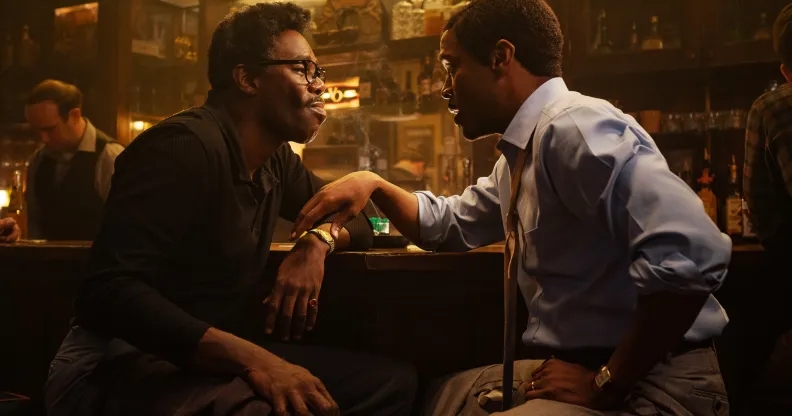
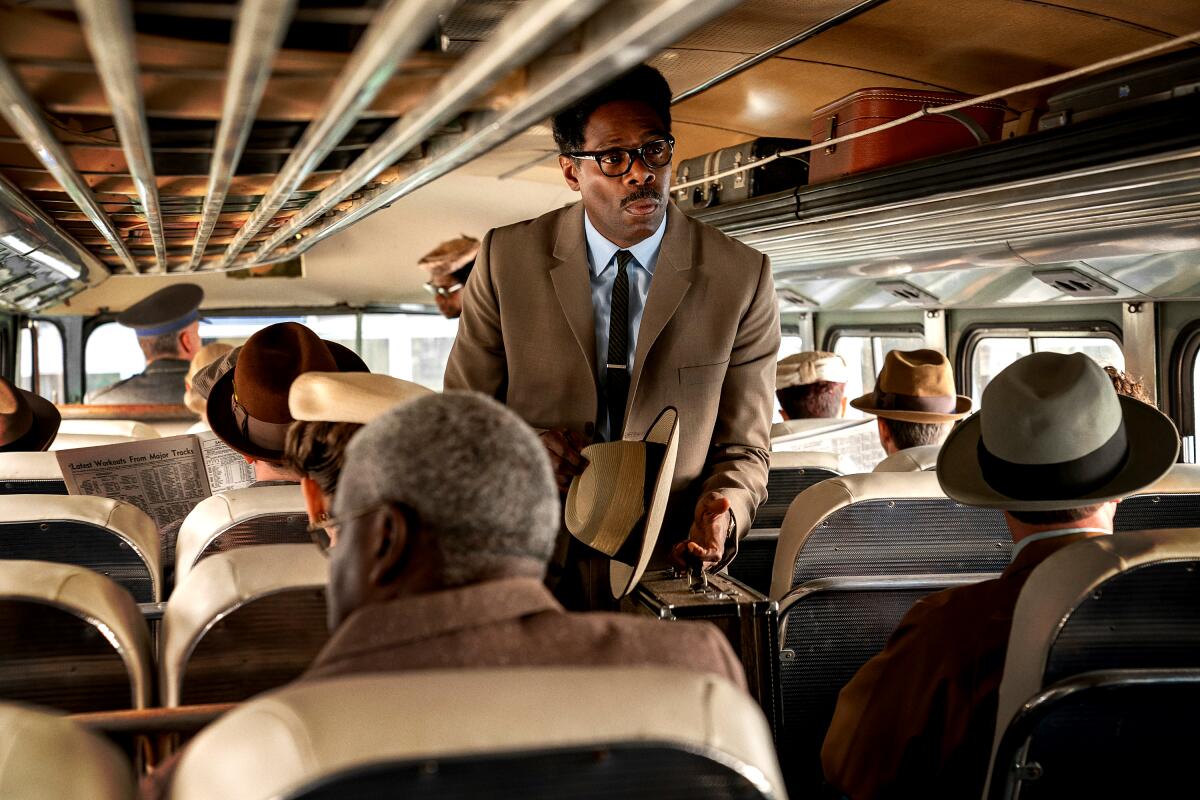

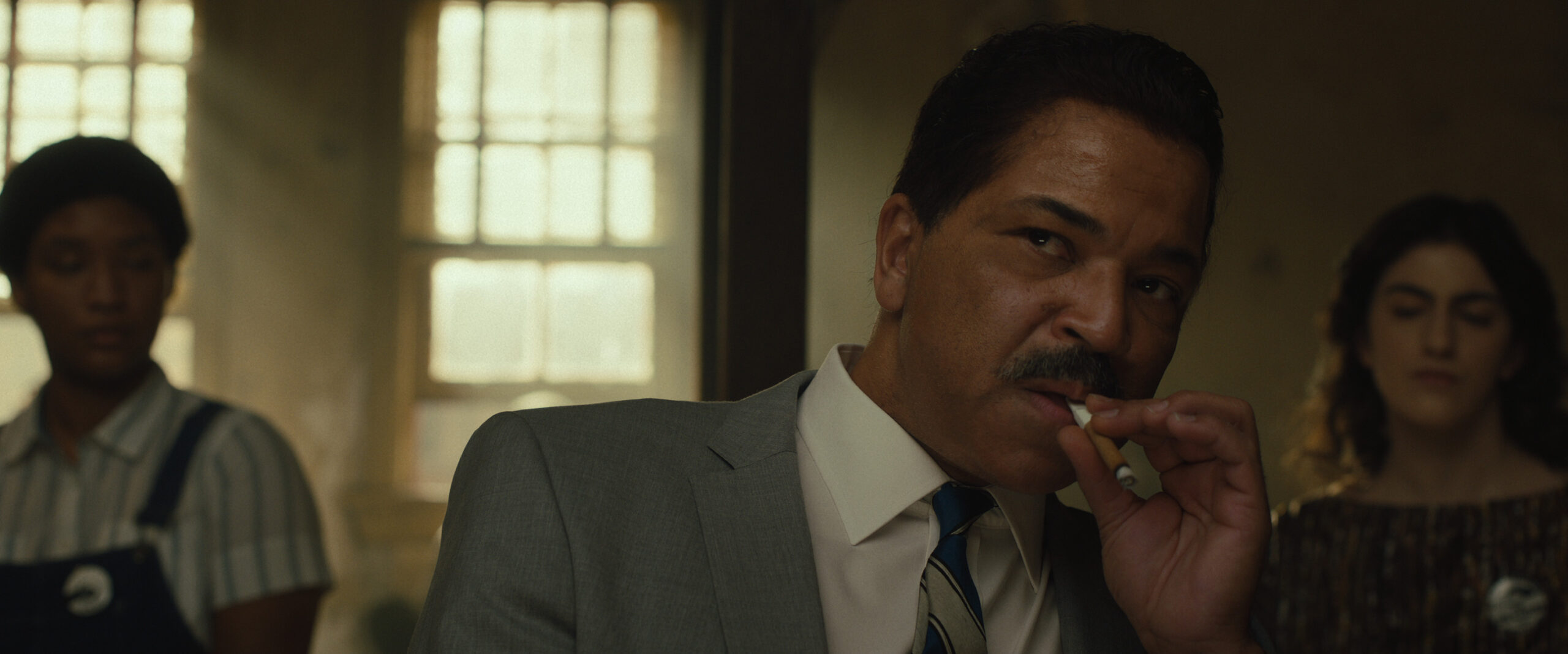
He was all but “erased” from the history of the famous 1963 “March on Washington for Jobs and Freedom” of 1963, where the Rev. Martin Luther King, Jr. took center stage as America’s greatest orator and the Conscience of the Nation, a march Bayard Rustin agitated for, planned and organized.
But that erasure didn’t take. A Black Civil Rights icon and gay man at a time when it was dangerous and even deadly to be either, Rustin’s memory was revived during the run up to the 50th anniversary of that August, 1963 protest on the National Mall. Documentaries celebrated him, and President Obama gave him a posthumous Presidential Medal of Freedom.
Now the Obamas’ production company has produced a terrific Netflix biopic, a star vehicle for a mesmerizing and righteously-animated Colman Domingo (“Fear the Walking Dead,” “Passing Strange”) and a piece of “forgotten” history brought vividly to life.
Theater and film director George C. Wolfe (“Ma Rainey’s Black Bottom”) and his cast and screenwriters bring a theatricality to the man, his famous Civil Rights contemporaries and the times, which play here as momentous — people making history, one of whom realized it more than others.
“Inspiration untethered from action loses all value!”
“Who said that?”
“I just did!”
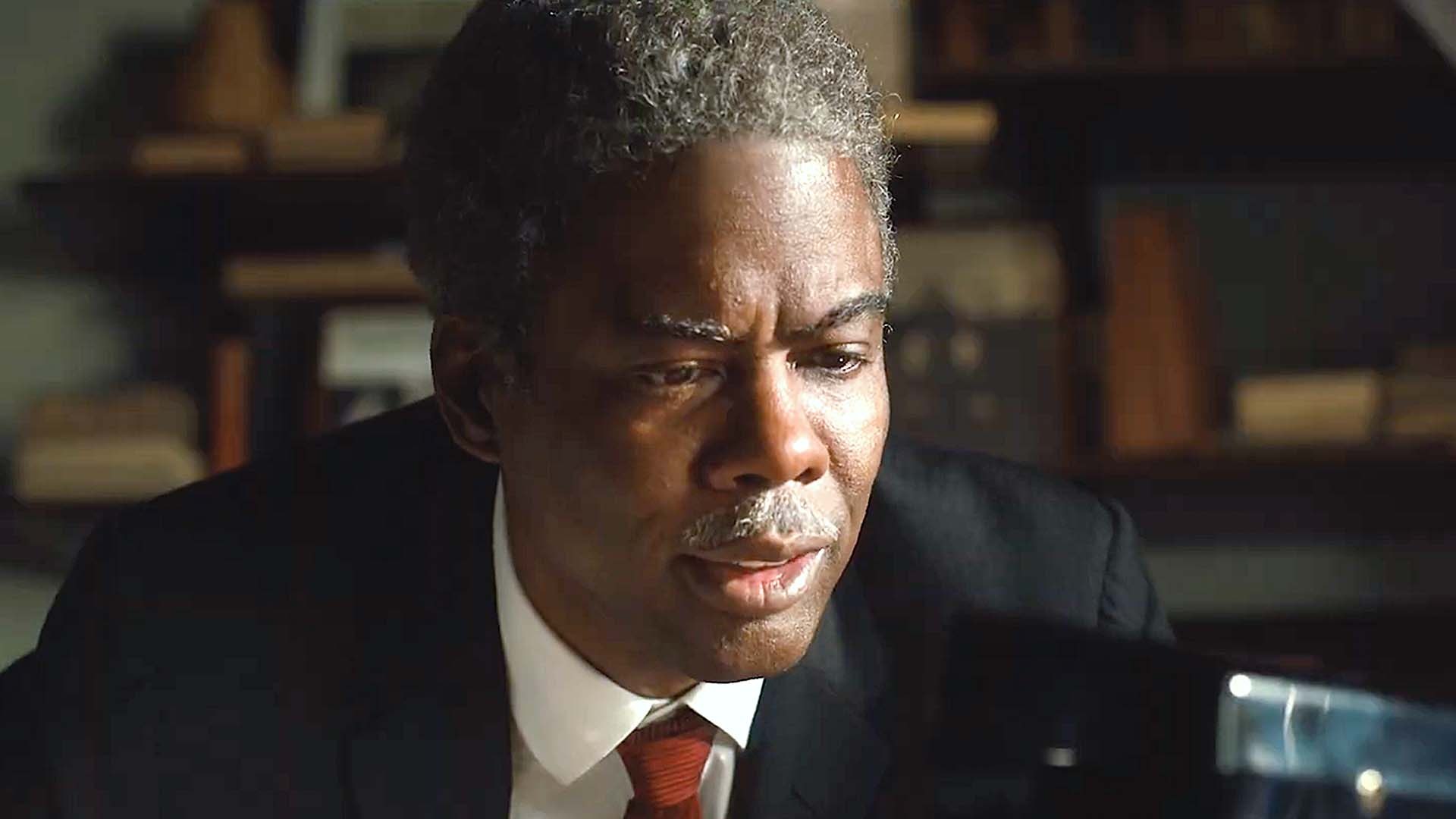
“Rustin” begins with the activist’s efforts to lead a mass protest to the 1960 Democratic National Convention in in Los Angeles, which led to a break with the leadership of “The Movement” and a rift with longtime friend Dr. Martin Luther King, Jr. (Aml Ameen). It tracks Rustin through a couple of years in the wilderness, disdained for his “communist” and “pervert” (homosexuality) associations by white racists and general disapproval by NAACP chair Roy Wilkins (Chris Rock, summoning up as much gravitas as he can manage).
Allies like Ella Baker (Audra McDonald, regal) and union leader A. Philip Randolph (Glynn Turman, terrific) urge him back into the fold of a movement whose momentum, the film reminds us, often stalled in the decade after the momentous Brown v. Board of Education ruling by the Supreme Court.
The televised 1963 police assault on marchers in Birmingham, Alabama brings Rustin back to mend fences, and inspires Rustin to push for a mass march on Washington demanding government action. They’d organize, recruit and stage a march at the end of August while “the horror of Birmingham is still on the entire nation’s mind.”
Flashbacks tell us Rustin’s early awakening to a quest for justice, and the issue of his sexuality is addressed via a lover/assistant (Gus Halper) who helped publicize the march, and a closeted pastor (Johnny Ramey) Rustin cheated with. On the record, Wilkins objected to his “promiscuity” more than his sexual orientation.
Rustin faced resistance, demotion and “outing” at every turn, with threatened smears linking him to MLK and gay bar raids seemingly aimed at catching him in the act.
The story touches on the “accepted” homophobia of the white supremacist Senator Strom Thurmond and the Black New York Congressman and power broker Adam Clayton Powell, Jr. (Jeffrey Wright) and the ramptant sexism in America and even in The Movement.
Female Civil Rights leaders like Dr. Anna Hedgeman (CCH Pounder) were furious at their near total exclusion from the dais on the National Mall. That wasn’t really down to Rustin, who had his hands full with Black New York police officers to train as marchers practicing “passive resistance,” an uncooperative DC police chief and a National Park Service that declined to so much as meet with him for planning purposes.
Domingo catches fire in a performance given to speechifying, understandable given how quotable this man was as he drove “the cause of altering the trajectory of this country towards freedom.” Rustin’s connection to the women of The Movement is underscored when Domingo duets on “This Little Light of Mine” with Coretta Scott King (Carra Patterson) as he visits her and her children.
Turman, Pounder and McDonald are the best at holding their own with Domingo, with Michael Potts lighting up a smaller role, as the fiery and florid Jamaican-American labor organizer Cleveland Robinson.
Recreating the March itself with reenactors added to extant TV news coverage is impressive. Restaging Dr. King’s “I Have a Dream” speech is a mistake, as there’s no substitute for the real thing.
But in a story decorated with white “official” villains whom history has mostly (and rightly) forgotten, Jeffrey Wright is maybe one scene shy of stealing the movie as Powell, all arrogance, peacocking and lording his status over other Civil Rights leaders.
Wright and the script give Powell’s homophobia-as-excuse-for-grabbing-the-spotlight a venomous edge.
“Is this the man we want to see labeled ‘Mr. March on Washington?'”
Wright as Powell in “Rustin” might be the year’s best bad guy in a movie.
“Rustin” is quotable, brisk and inspiring, even if it feels less epic than it should. It has the budget, cast and scale of a good made-for-TV/streaming movie, not really “theatrical” in scope.
But if ever there was a chance its title character might once again be pushed out of the picture and removed from the story of a Red Letter Date in American history, Domingo, Wolfe, the Obamas and Netflix and their powerful movie have ensured that will never happen.

Rating: PG-13 violence, profanity, drug use
Cast: Colman Domingon, Glynn Turman, Chris Rock, Gus Halper, CCH Pounder, Aml Ameen, Audra McDonald, Michael Potts, Carra Patterson and Jeffrey Wright.
Credits: Directed by George C. Wolfe, scripted by Julian Breece and Dustin Lance Black. A Netflix release.
Running time: 1:46
The effortlessly cool actor and jazz pianist Jeff Goldblum becomes literally animated for the Fernando Trueba doc about the late ’50s Bossa Nova craze, the world’s love affair with Brazilian music and a seminal figure in that movement whose life was snuffed out young.
This looks wonderful, and a perfect Goldblum vehicle,

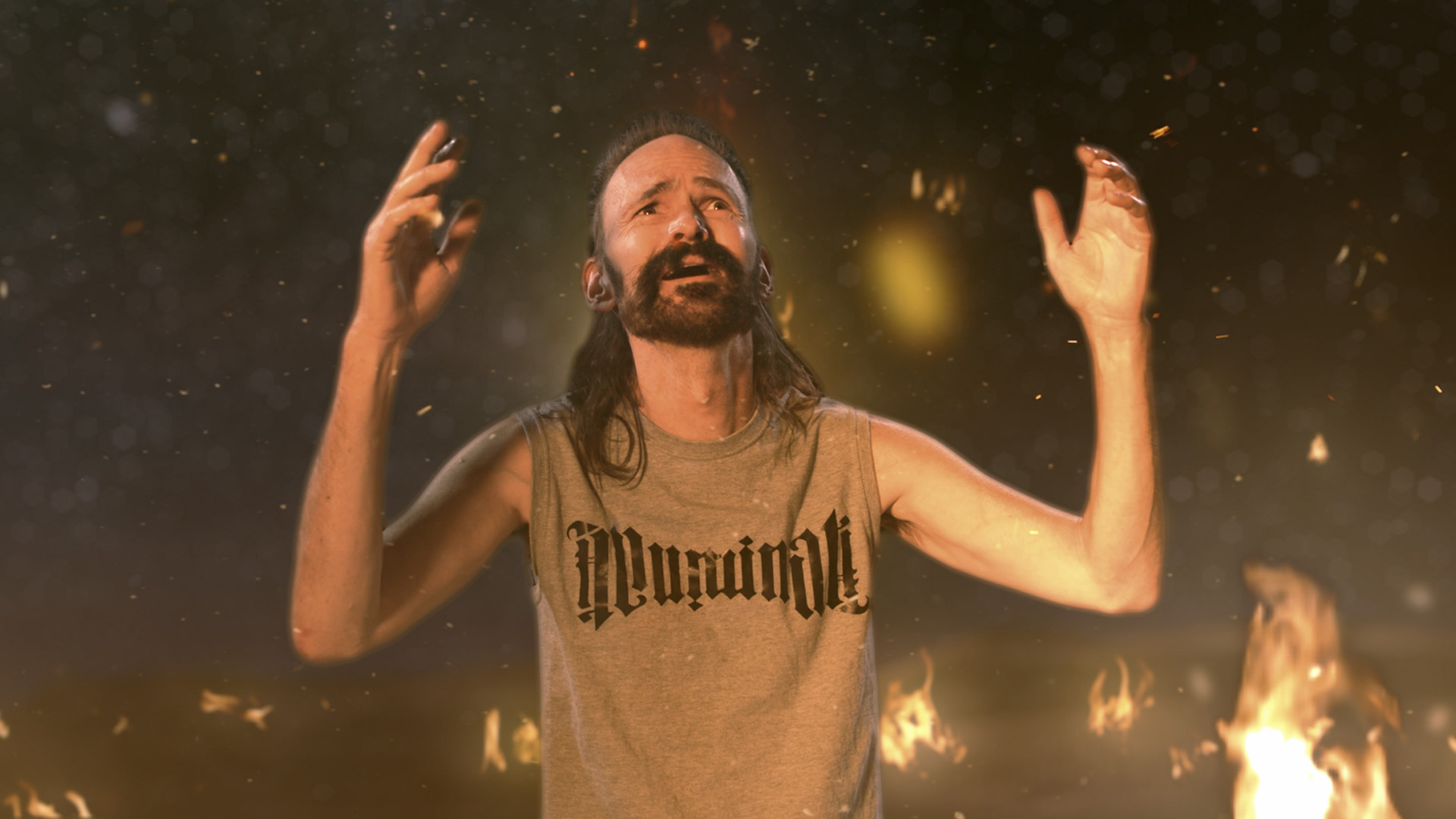

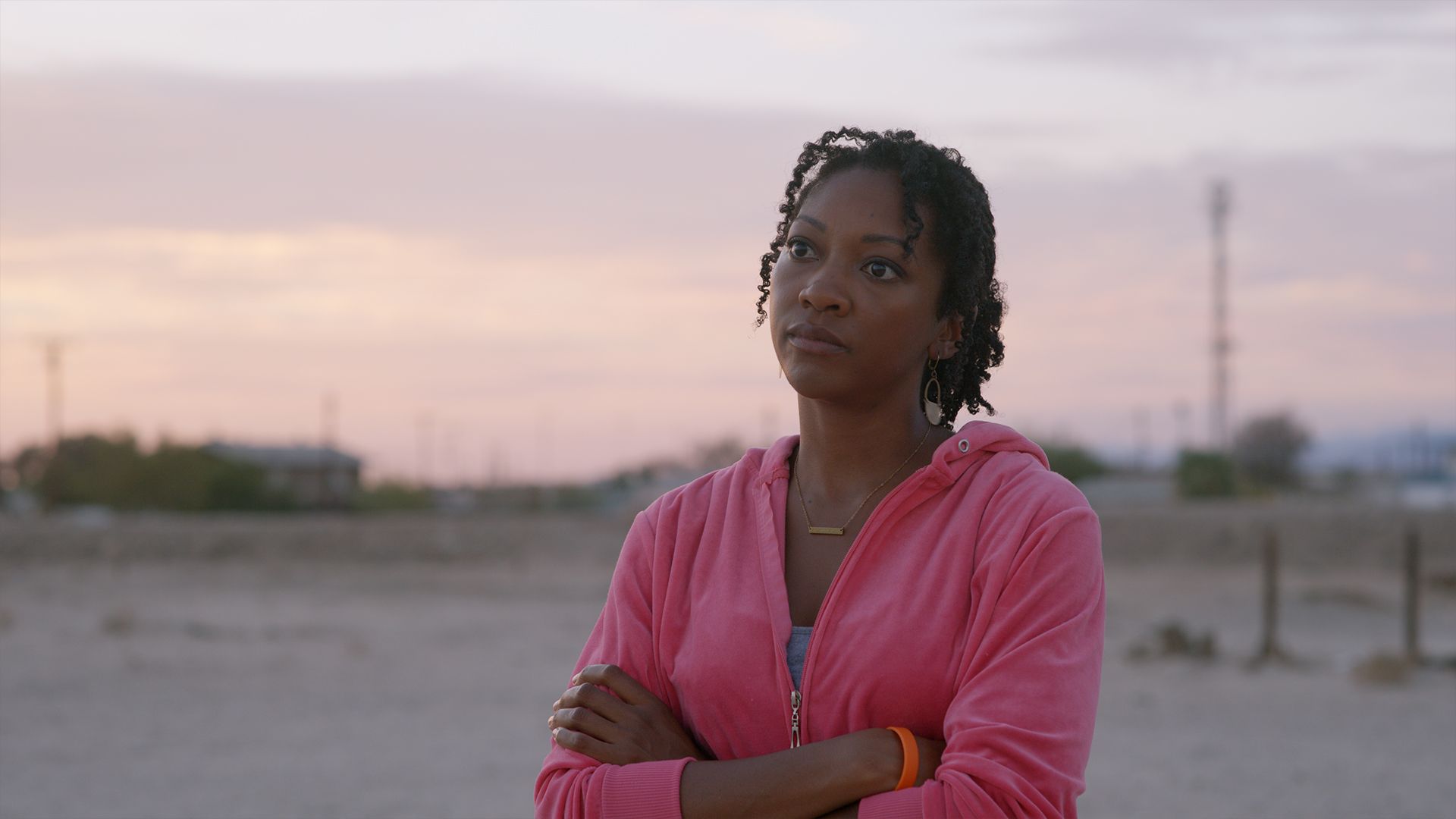
A couple of hard and fast rules of the cinema are proven again in “Adventures of the Naked Umbrella,” a dark screwball conspiracy thriller set along California’s wildly eccentric Salton Sea “coast.”
One rule says you should never ever set out to make a “cult film.” Those almost always just happen. Some fringe audience latches onto a movie and the cast can live their days doing autograph shows and conventions, if they’re lucky. Trying to write, cast and film one is like counting on a LOTTO ticket for financing.
And another rule is that true screen debacles are rarely the actors’ fault. Even if Tom Arnold is one of them.
Both are borne out in this tone deaf farce that begins with dousing live pigs with gasoline and torching them (not seen) and doesn’t end any lighter.
Whatever writer-director Gerald Brunskill (“It’s Gawd! was his) was going for when he eventually gets around to showing us what he’s going for wasn’t worth going for in the first place.
Whatever promise casting “Spanking the Monkey” and “Saving Private Ryan” star Jeremy Davies as a scrawny, mullet-haired pyromaniac and conspiracy podcaster named Samson married to religious-fanatic and trailer-mate Irene, played by “Hustle & Flow” alumna Taryn Manning, is frittered away.
And whatever happens in in Brunskill’s half-based UFO nut meets a UFO pilot narrative, while dodging his parole officer (Darnell Rhea) and taking “care” of his pet pig “Kevin,” who happens to be made of porcelein, it’s safe to say I didn’t respond to any of it.
Samson is on probation for being a firebug who torches 5G cell towers. He hosts a podast ” The Naked Umbrella” show from “my little slice of Hades,” their single-wide, where he panders to “patriots and Deep Statists, Communists and Tea Baggers” with his deranged theories, accusations and pronouncements.
All Irene cares about is that he not take “the Lord’s name in vain.” All his probie, Yolanda (Rhea) gives a damn about is that the podcast (theoretically) allows her to keep track of him without having to drive by and spy on him.
Yolanda assumes he’s fulminating “live.”
Then Sam’s generator blows out, and when he heads out to fix it, the trailer explodes. He and Irene run off to drug-addict/COVID cure hustler Granny (character actor Richard Riehle in drag), hoping against hope that this “CIA hit” Samson’s sure was intended for him isn’t blamed on him, an arsonist with a record.
Arnold plays the ready-to-retire police chief who likes dressing as Santa and singing off-color tunes (“Santa’s got a package”) at the department Christmas party.
And Bert Retundo plays a “cop who cares” who hasn’t come back to work, having just lost his daughter to COVID “during quarantine.”
As we’ve seen the abusive father who inexplicably made his boy torch a herd of swine, we can see the origins of Samson’s mania. Another flashback recreates his wacky wedding.
And there’s a saucer floating around the Salton Sea, which is handy, because Samson isn’t the only local who’s seen such spacecraft.
Movie buffs can pick up on the origins of some of the undigested ideas Brunskill tries to get a movie out of here, the “mad prophet of the airwaves” doing his shtick on that screenwriter’s favorite medium at the moment — podcasts.
Dropping that part of the plot to focus on the cops, Samson’s granny, and literally anything else acid-washes what little promise this picture had right out of it.
Davies could have been filmed in more conventional “madman at the mike” shots, and any pretense of taking this story in serious directions could have been abandoned. Though admittedly, when you start with a pig immolation, that’s a hard pivot to “comedy and nothing but” pull of.
The Salton Sea settings are a novelty, and the picture could have used more of that off-the-grid community’s eccentricity. The characters we meet aren’t all nuts, and the nutty ones aren’t nutty enough.
There’s not a laugh in here, not a whit of suspense to any of this and no third act twists can pull this pig out of the fire.

Rating: unrated, violence, drug abuse, profanity
Cast: Jeremy Davies, Taryn Manning, Darnell Rhea, Richard Riehle, Bert Retundo and Tom Arnold.
Credits: Scripted and directed by Gerald Brunskill. A Level 33 release.
Running time: 1:42


Veteran takes a road trip for “one last mission” is such a common plot that such missions have included not just visiting a fellow soldier or a fallen comrade’s family, but Channing Tatum playing a soldier delivering a service “Dog.”
As a genre, it’s been around so long Henry Winkler and Sally Field did a version of a PTSD trek (“Heroes”) in the ’70s, before “Post Traumatic Stress Disorder” became the replacement name for “combat fatigue.” And the veterans depicted on the road in such films have included service members from every conflict since World War II.
The challenge is in showing us something new in this narrative, a challenge that the somber, sometimes soulful and always-over-familiar “A Place in the Field” fails to adequately answer.
Whatever “fresh take” viewers want in such stories, you have to figure the survivors of combat — veterans themselves — deserve something more than a “triggered” flashback-littered tale of a couple of not-that-close “comrades” driving and hitching from Texas to California to scatter the ashes of a traumatized member of their company who took his own life after coming back home.
Veteran bit player Dom DiPetto plays Giovanni “Gio” Scuderi, a sticks-to-himself carpenter in rural Texas. He’s got steady work and a doctor girlfriend (Mishel Prada) way above his pay grade, a beautiful woman who frets over the stretches where he doesn’t answer his phone.
A bad day for Gio begins when he hits a coyote on the road. He buries it and pays tribute with a ritual howl. That’s the day the package comes, one with a letter and an urn. A former comrade of “I wouldn’t be here if it wsn’t for him” caliber came home, couldn’t adjust or tamp down his demons, and killed himself.
“Don’t grieve for me, brother,” he wrote. “Don’t freak out at the ashes.”
Gio has a mission, and another veteran of their outfit (Khorri Ellis, with DiPetta a credited co-writer of the script) shows up for a ride along.
The way stations on this pilgrimage will include the inevitable breakdown, a fellow veteran who picks them up in his RV, a stop at an artsy “hippy” compound where a dancer will interpret your poem for you, when you’re ready to recite it and the like.
Back in uniform, the burly (now bearded) Gio was “The Tank.” But this won’t be a tale of miles and reminiscences. Their combat experience — it’s not crystal clear where they served, a fact not helped by the obviously non-Middle-Eastern locations where they filmed this — is something Gio only revisits in abrupt flashbacks that could be triggered by a noise, a situation that resembles similar parked-beside-the-road moments in “in country,” or a phrase.
“I got you, bro,” from helpful Ashlee (Ashlee Brian) in his RV is all it takes to set Gio off.
The performances aren’t bad, just somewhat uninspired and generally uninteresting. The players look like the veterans a lot of us know, even if there’s little in the screenplay that lets them give away that status in their speech and actions. A boot camp marching chant here, a “Better to walk than to be dragged” remark there will have to do.
Occasional “soulful” moments sneak into the screenplay, which has a script-by-committee feel. The coyote metaphor is a nice if obvious touch. An out-of-left-field anecdote giving us the legend of White Sands’ Pavla Blanca — sort of acted-out and clumsily “related” to the story — stands outs as more indulgent than anything else we see here. The combat recreations are convincing enough, but just cliches when you break down what they say and why they’re in the script.
Any movie that sets out to engender sympathy for people who survived situations most of us will never face has good intentions. But not all of them are created equal, and “A Place in the Field” is as generic as its title.
A somnambulant pace that lacks anything like urgency and a half-hearted grasp of the pathos first-time feature director Nikki Mejia should have been going for parks this veterans on the road picture on the shoulder, never close to getting up to speed.

Rating: R, violence, profanity
Cast:Don DiPetta, Khorri Ellis, Mishel Prada, Ashlee Brian and Xochitl Portillo
Credits: Directed by Nikki Mejia, scripted by Bluesman del Vecchio,
Don DiPetta, Khorri Ellis and Xochitl Portillo. A Lionsgate release.
Running time: 1:23
Jan. 12, Fey and Jon Hamm and Jenna Fischer join the “Mean Girls” for the musical made from the Tina Fey/Lindsay Logan hit comedy of a long time time ago.
Fresh? “Fetch.” Jan.12.



By now, the studio-as-multiverse that is Marvel has so cluttered up its franchises, timelines, characters and platforms those characers are seen on that only hardcore devotees can come close to keeping it all straight.
God knows Marvel isn’t.
As their pictures drift clear of the debris from the Russo Brothers’ “Avengers” era, one can’t but notice how chintzy Marvel and their Disney paylords have gotten with the supporting players. A lifetime contract for Samuel L. Jackson means no room for any other big “name?”
And there’s that multiverse-driven feeling with the whole genre that maybe comic book movies are running out of things to show us long after they pretty much ran out of things to say.
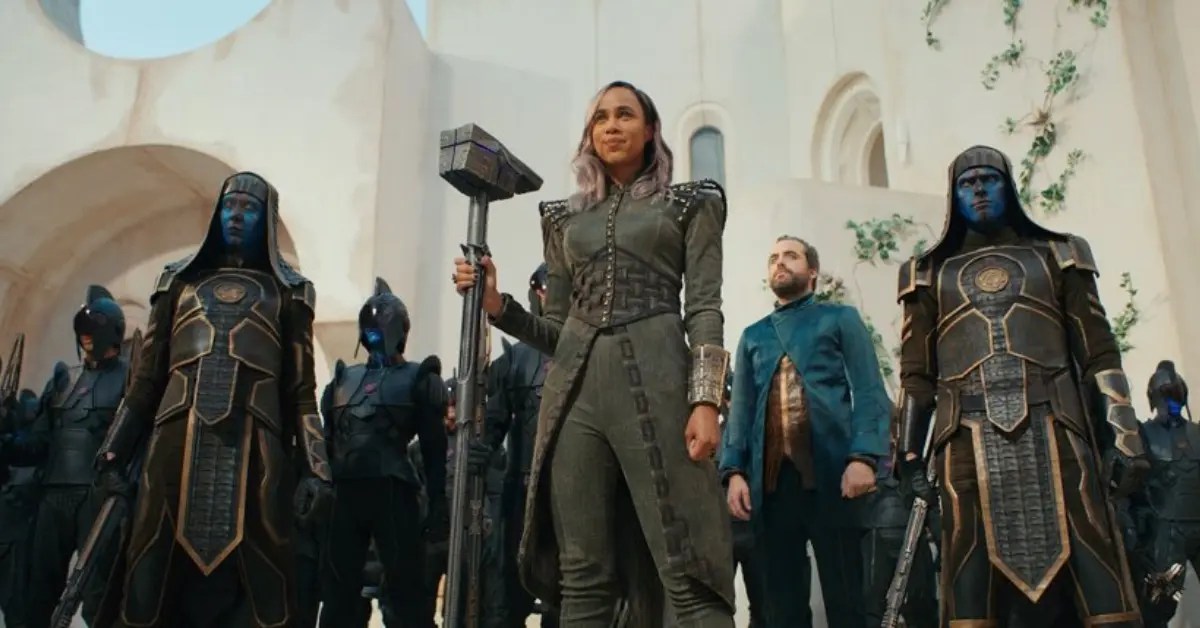
But there’s something downright fizzy about the hard left turn that “The Marvels” does to this money-minting machine. “Candyman/Little Woods” director Nia DaCosta’s film is lighthearted and sometimes laugh-out-loud funny, with dazzling spaceflight/space-fight effects that raise the bar yet again on such enterprises.
The striking difference between comic book movies directed by men and those directed by women include characters with more compassion and self-reflection, recognizing that violent actions have consequences, an effortless inclusiveness here as well as flawless glam-shot makeup on one and all with special attention paid to flattering midriff-baring attire and nary a hair out of place when the camera rolls.
“Marvels” is still a bit of a muddle, with the usual “It is what it is” story shortcomings and endless over-the-top brawls. But there are moments of playful invention that reminded me of Douglas Adams’ “Hitchhiker’s Guide to the Galaxy.”
Visiting a planet where all the beautiful people sing to communicate is a “Glee!” sized showstopper. And the biggest letdown in staying through the credits –as Marvel movies have taught us to do — is realizing that one-time girl singer Brie Larson needed a “dance double” for a hilariously out-of-character waltz.
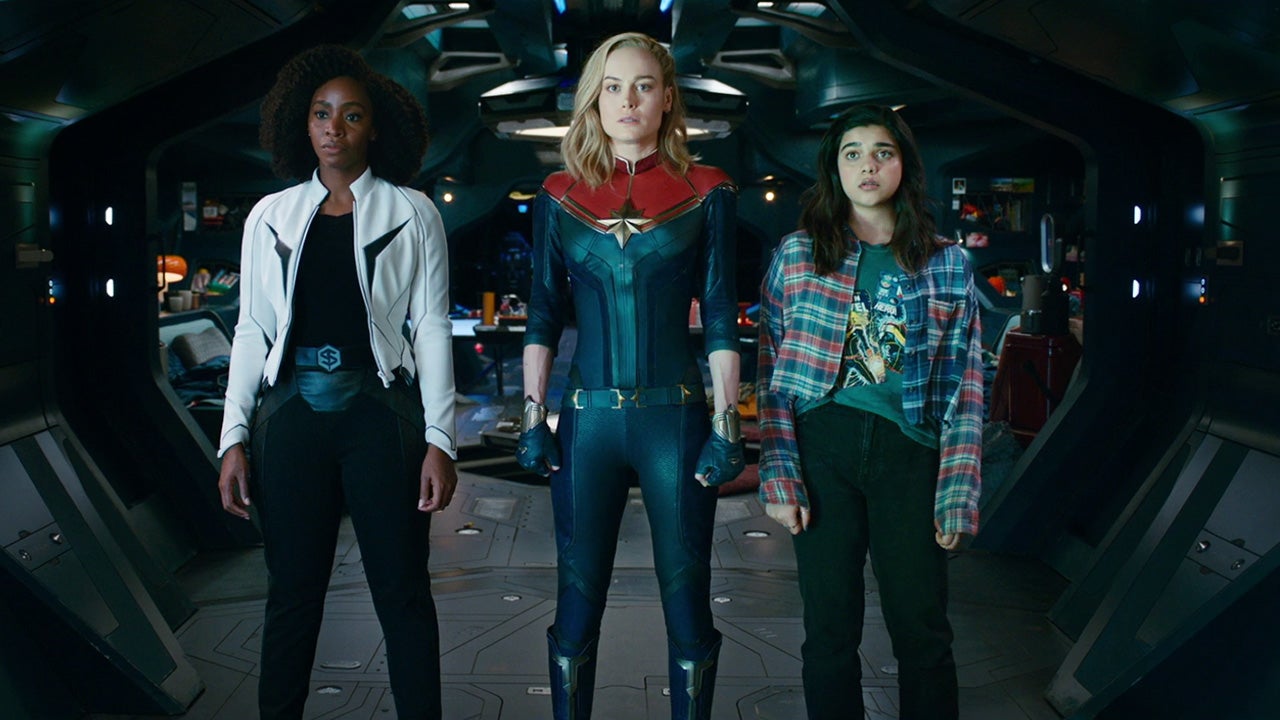
The “This is a fangirl’s movie” tone is set straight away with new not-quite-Avenger Ms. Marvel, the teen-who-saved-Jersey-City Kamala Khan (Iman Vellani) letting us into her bedroom where her teen “team” “twinsies” fantasies about her idol and role model, Captain Marvel, are in every piece of decor.
But we’ve already seen the other version of the “bangle” bracelet that gives Ms. Marvel her powers acquired by the vengeance-seeking Cree queen Dar-Benn (Zawe Ashton). Something about the way this new threat uses that bangle causes Captain Marvel/Carol Danvers (Larson), her onetime goddaughter-protege-now-astronaut with “powers” Monica Rambeau (Teyonah Parris) and Kamala to switch places any time one of them uses her powers.
A lot of bouncing through space and time — much of it played for laughs as Kamala finds herself in the middle of a Marvel fight/chase the Captain is experiencing, etc — has the two women and the teen confused, until they all wind up in Kamala’s Jersey City home with her trying-to-accept-all-this parents (Zenobia Shroff, Mohan Kapur).
The Marvels — Monica resists Kamala’s “Professor Marvel,””Frequency,” “Pulsar” and “Lady of Light” “codename” pitches — find themselves scooting around the universe trying to solve this space-time puzzle and foil the actions of the Mean Ol’Cree.
Meanwhile, Nick Fury’s up on a space station, communicating with the Marvels and coping with assorted crises — some comical — of his own.
The plot complications have a soap operatic confusion about them, something adding Marvel content and characters via streaming series is only making worse. It’s hard to give “fan service” to everybody you’ve introduced when you’ve introduced so many, virtually none of them with the star power/name-recognition/charisma that Jackson brings to his glue-that-connects-everybody, Nick Fury.
Larson’s take on her character, quick-tempered and a little rash, is interesting. But nobody else here really registers as a character with a supposed interior life. Vellani plays a lot of shrieks of shock (“Goose” the alien-shape-shifting cat is not alone) and “OhmyGodohmyGodohmyGod” fangirling, which gets old. Quick.
I kept expecting a bigger name to turn up in this surprise waltz partner (Korean pop and TV star Park Seo-Joon) or that disgruntled victim/emperor (Gary Lewis).
Even the easy laughs from the doting Indian-American family feel muted, not quite all they could have been, despite Zenobia Shroff being a familiar face and not bad at landing a stereotypical punchline.
But the fizziness of it all kind of overwhelms some of the shortcomings and distracts us from others. Maybe the actors will grow into the parts, and we aren’t looking at a Marvel Universe peopled by Terrence Howards and Ioann Griffuds — good actors bland at the Larger than Life superhero thing.
Maybe the screenwriters who just returned from the picket line have an idea or two of how to lift these convoluted, formulaic scripts to the next level.
And perhaps the whole genre, whose adherents can never get enough “content,” will migrate to streaming, interrupting the big screen assembly line long enough for all involved to figure out what’s working, what’s played-out and how to make the fizzy scenes into three acts of fizz movies for the big screen.

Rating: PG-13 for action/violence and profanity
Cast: Brie Larson, Teyonnah Parris, Iman Vellani, Zawe Ashton, Gary Lewis, Zenobia Shroff,
Mohan Kapur, Park Seo-joon, Abraham Popoola and Samuel L. Jackson.
Credits: Directed by Nia DaCosta, scripted by Nia DaCosta, Megan McDonnell and Elissa Karasik. A Marvel Studios release.
Running time: 1:45

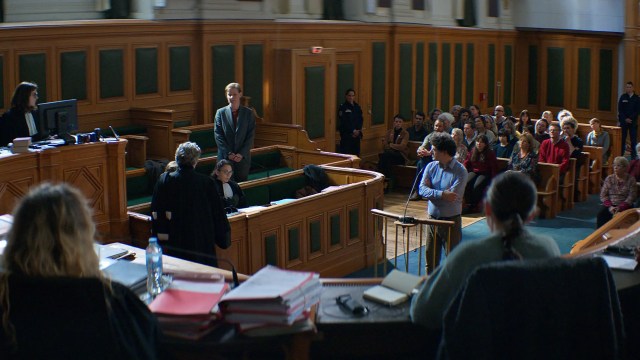
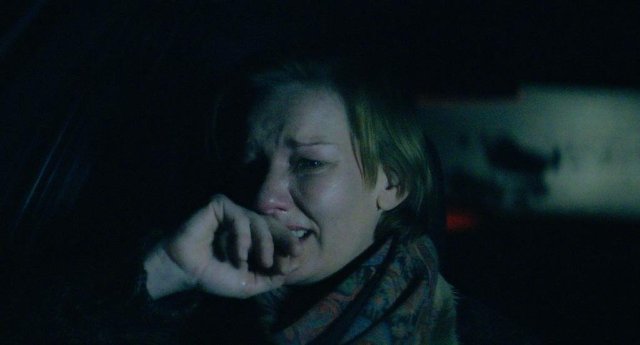
Who knows what goes on in a marriage and how others might interpret that? That’s the crux of the French drama “Anatomy of a Fall (Anatomie d’une chute),” a “Marriage Story/Scenes from a Marriage” examined by the legal system via a murder trial.
The latest from director and co-writer Justine Triet (“Sibyl,””Age of Panic”) dares to suggest there are things about how couples relate to one another that are unknowable, especially by the provable-facts standards of the courts. And she dares to dawdle about a bit as she makes that seemingly simple but actually opaque point.
Two married writers — a German and a Frenchman who also teaches — are well into the “troubled” years in their marriage.
She’s become a great success. He’s struggling, “blocked,” perhaps pondering if her success is somehow due to what she’s taking from him. An accident sometime before blinded their now-11-year-old son, Daniel, adding guilt to the relationship. And they might be financially over-extended.
Samuel (Samuel Theis of “Party Girl”) is given to little bursts of aggression — turning up his 50 Cent cover-music too loud to interrupt an interview being conducted downstairs, a fresh blow struck against his resented wife, Sandra (Sandra Hüller of “I’m Your Man” and “Munich: The Edge of War”).
He winds up bleeding-out on the snow below the upstairs window of their Grenoble home. Sandra winds up in court, accused of somehow causing that to happen.
The bulk of “Anatomy of a Fall” renders the title into “truth in advertising.” How did Samuel fall?
The prosecutor (Antoine Reinartz) examines the state of this marriage, the competition between spouses, a competition which the embittered Samuel was losing, causing him to lash out and Sandra to give as good as she gets, putting her under greater and greater suspicion.
“People exaggerate and alter facts when they argue,” she protests (testifying in English to his questions in subtitled French).
Her own writing introduces doubt about her innocence, with characters fantasizing about ridding themselves of unwanted friends or lovers. The trial descends into literary criticism, with vigorous objections from her lawyer (Swann Arlaud)
But whatever was going on with the marriage and with Samuel, the husband got into the habit of recording his life and their lives, especially the fights. The recordings can be damning. But who could defend themselves against words spoken in anger and taken out of context?
Sandra seems torn — with guilt, perhaps unjustified, battling her fear of conviction and worries about what this trial is doing to their little boy (Milo Machado Graner), sitting in court, taking this all in and perhaps convicting his mother in his own mind. The court assigns the son a guardian (Jehnny Beth) whose chief job seems to be blocking the mother from coaching the kid’s perceptions, beliefs about what he “witnessed” and tainting his testimony.
The case involving two writers creates a media frenzy as experts on TV debate the careers and the fiction of the wife and the dead husband and what makes for better “drama,” a “depressed” and blocked novelist throwing himself out a window or a “writer killing her hsuband.”
That allows Triet to add a new wrinkle to that peculiar affectation in which French films flatter the culture. Exported French movies, by and large, suggest that no one in France watches TV save for intellectually-minded talk shows. Such programs are so common (in French movies) that we see movie characters–often writers– interviewed on TV more than we ever see Frenchfolk simply vegging out in front of the tube.
Triet plays with our expectations and sews doubt in any conclusions we dare to reach with the court scenes. Foreign viewers will find the differences in the court systems intriguing, even as sparring attorneys and wry judges are a shared trope of trial movies.
“Anatomy of a Fall” is carried by the subtler shades of Hüller’s performance. Her embattled Sandra makes us reconsider an idea introduced by the title character in last summer’s “Oppenheimer.” Who would want their lives dissected like this, and how would any of us fare under such scrutiny?
But as all this slowly unfolds, Triet cleverly turns the third act into how all this is impacting the witness/child, someone who — like the court — struggles to come to a conclusion but who deploys more simplistic juvenile means of reaching one.
There are gripping moments here, but even they are muted as Triet takes pains to not let the viewer off the hook and perhaps intentionally dulls the senses with the convoluted, overlong court sequences. The storytelling here can be more soporific than immersive.
The film this reminded me of most was “Force Majeure,” which was almost as cryptic, darkly funny, but also more satisfyingly judgmental, engrossing and damning in a human-nature-examined sense.
Whatever we think we know we don’t know, our co-writer/director tells us, time and again. And seeking to know the unknowable in court can be just as futile, even when one thinks there’s “evidence” that falls just short of a smoking gun.
Our ability to”know” and a system’s ability to uncover “the truth” both have their limits.

Rating: R for profanity, sexual references and violent images
Cast: Sandra Hüller, Swann Arlaud, Antoine Reinartz, Jehnny Beth, Milo Machado Graner and Samuel Theis
Credits: Directed by Justine Triet, scripted by Justine Triet and Arthur Harari. A Neon release.
Running time: 2:31

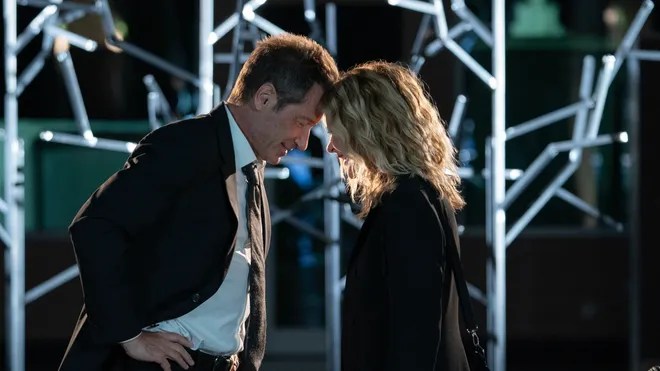
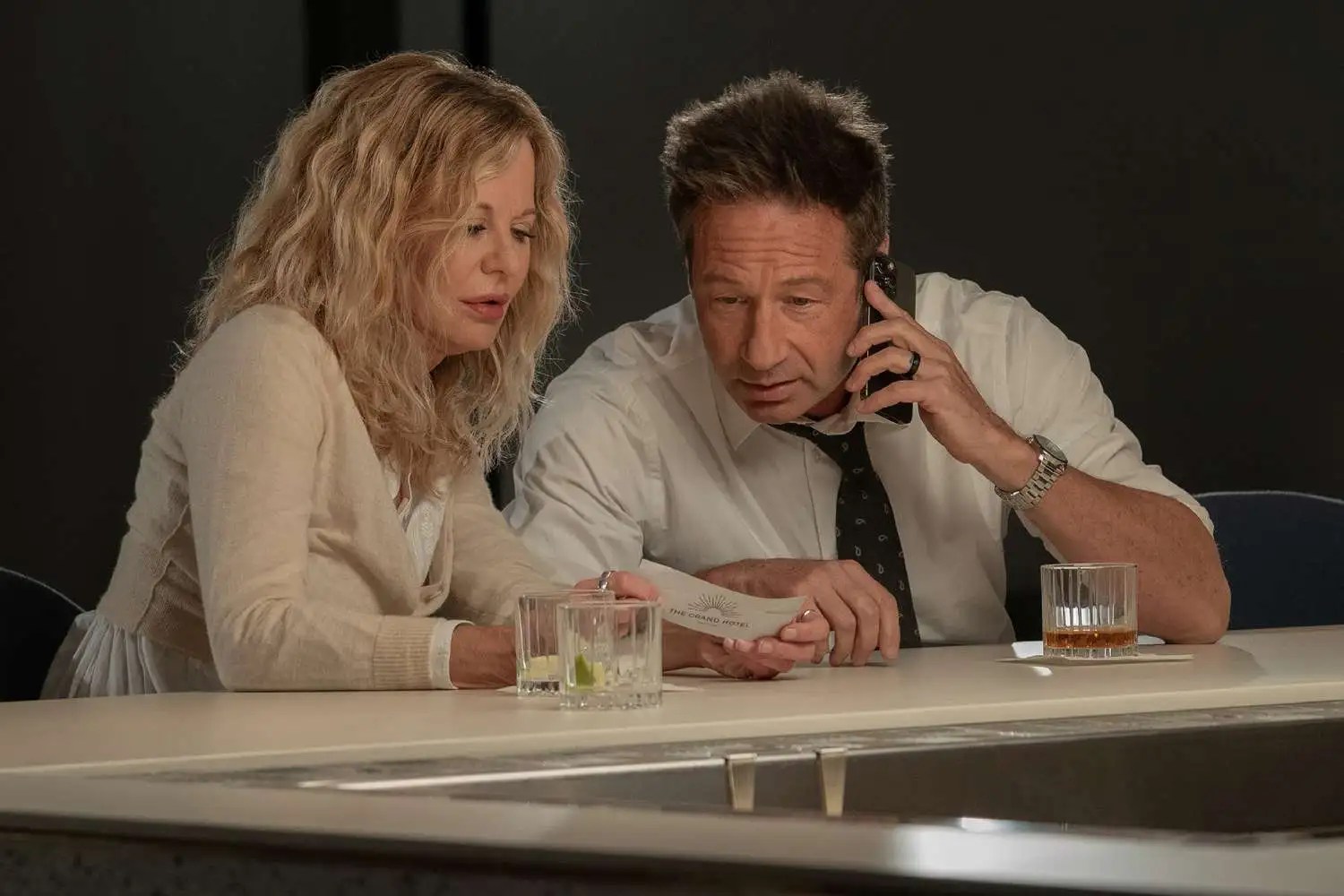
There’s undeniable pleasure in sitting back and taking in the witty, overlapping banter, the chemistry and the “history” — pleasant and uncomfortable — that screen veterans Meg Ryan and David Duchovny serve up in “What Happens Later.”
But that’s basically the lone pleasure in this thin, cliched “old flames” relitigating their past in yet another snowbound airport rom-com.
Ryan, who directed and co-wrote this, revives a version of Classic Meg — Meg’s greatest hits — as a flaky but soulful “healer,” “cleanser” and “woo woo business” purveyor of “lightweight New Age b-s,” as her college years ex (Duchovny) puts it.
But he was once a “poet,” now an anxiety-riddled “businessman” with an acerbic take on the “personality” that drove him away from her. Like we can’t see holes in that theory.
Duchovny, with a few rom-coms and the quasi-romantic “X-Files” in his past, is well-cast as Ryan’s foil here, a guy who spies her first in this unnamed midwestern “regional airport” where a “thunder snow” “bomb cyclone” has trapped them both on their way to someplace else.
He avoids her on first sight, and when she spies him, she does the same.
But William “Bill” Davis and Wilhlmena “Willa” Davis do “meet cute,” and as the airport shuts down and their plight becomes obvious, they reconnect, reminisce, open old wounds and cling to old guilts, old hurts and old rationalizations over the course of an evening.
“What Happens Later” is practically a two-hander, a play set in a closing-then-closed airport with pretty much no other human interaction, just a PA system alerting our two players on the weather and directly speaking to each as they bitch about their missed flights plight.
They’re in their 50s — well, she “just pulled over at 49” — and have lived a lot of life in the decades since they were together in “Madison” (U-Wisconsin). He’s married with a kid, and “some things” going on with his marital status. She’s a 50something version of who she was way back when.
Willa’s flying cross-country with her “rain stick” to “cleanse” a peer/friend who just went through a breakup. From belief system to diet, from her once fashionable faux work boots and hippy farm dress to her unruly-as-ever-hair, she seems trapped as her 24 year-old self.
Bill has “anticipatory anxiety disorder” brought on by family, a job that has him traveling constantly, well into his ’50s, with a “bro” half his age as his touchy-feely boss.
Their history includes feelings, and burnished memories.
“My mom always said ‘That Bill Davis is a good guy.'”
“I always liked your mom.”
“Somebody had to.”
She claims to “remember everything.” He has bits of blunt criticism that he uses to explain their splitting up…to himself, anyway. But of course, it’s more complicated than that.
The trouble here is that it’s not more novel than that. The complications are predictable, and the narrative steps up to the plate with characters who are trapped in the past and fenced in as “types.”
The “cute” touches — that airport PA, business with phones and running away from each other (IN the airport) — aren’t that cute.
Ryan still has exquisite timing and has come out the other side of her botox/possible surgery years looking like the AARP-age pixie we always expected her to be. And Duchovny’s lost little off his faceball, but maintains the conflicted charm he always got across.
There’s just not enough to this — sparks, heat, longing, regret or wit included.
Did I miss the explanation of how these two have the same last name having never married? Maybe that slipped by with a “how we met” story that doesn’t appear to be have been addressed either.
And it’s hard to take much heart out of the message here. It turns out that “What Happens Later” is we’re all stuck, each with our own version of our past, one that doesn’t allow us to learn much from it.
That won’t keep anybody warm at night.

Rating: R, (limited) drug use, profanity, sexual references
Cast: Meg Ryan and David Duchovny.
Credits: Directed by Meg Ryan, scripted by Steven Dietz, Kirk Lynn and Meg Ryan. A Bleecker St. release.
Running time: 1:43


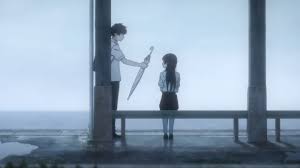

“The Tunnel to Summer, the Exit of Goodbyes” is a poetic, understated anime romance about “first love” and fulfilling your heart’s desire via a supernatural tunnel. That’s a place where time stands still as you reconcile yourself with your past, or discover whether you’re worthy of your heart’s desire.
It’s minimalistic, with little dialogue and lots of space for the viewer of this manga (graphic novel/comic book) adaptation to fill in one’s own interpretation of its cryptic intention and meaning.
The animation style is classic anime — lovely watercolorish pastel color palette, slightly under-animated movement and human characters reduced to simplified anime detail and standard manga “types” in a story that — due to its limited effects — can make one wonder why animate it at all.
The boy, Kauro Tono, is an archetypal mop top, an introverted uniformed schoolboy taking his fashion cues from boy bands and his life story from every Lonely Kid who dreams of handing the pretty new girl in school an umbrella, just when she needs it.
The teen girl, Anzu Hanashiro, is a shy, standoffish and bookish beauty who accepts that umbrella at the Kouzaki train station, makes the gesture of getting his number so that she can return it, and expresses relief when it turns out that they’re in the same class in the bucolic coastal suburb (No cars?) where they live.
Tono (voiced by Oji Suzuka in the subtitled version I saw) lets on that he lives with his alcoholic, abusive single dad (Rikiya Koyama) and we understand before Hanashiro (Marie Iitoyo) does that Tono suffered a loss — his beloved sister Karen (Seiran Kobayashi).
Hanashiro doesn’t have anything “like parents.” Convenient? Well, such is the way of anime romances. She’s an aspiring manga writer/artist who dreams of a career writing immortal works in that art form. He’d like to find some way to reconnect with his sister, maybe reset his family’s life.
That’s when he stumbles across “the tunnel.” It’s more of a cave actually, and notorious. Walk into “The Urashima Tunnel” and time stands still for you even as it continues to pass outside. You wade threw leaf-strewn waters under red maple trees and encounter things about yourself, your past, and maybe your hopes.
Tono tells Hanashiro about it, she deducts an interpretation of the magic and makes him join her as she resolves to lead them on a “joint operation,” investigating the tunnel, its effects, how time passes there, etc.
They’ll do this via text messages on their flip phones. The risk involed is of walking so deep into it that they age at different rates, disappearing from their current lives, with only the hope that Hanashiro’s manga will be read “1000 years from now” as consolation.
Will mastering this mystery, perhaps on summer break while other kids are at “the summer festival,” give them what they want?
“The Tunnel to Summer” begins with promise, heart and what almost passes for edge. Hanashiro may be quiet, but she is assertive, pushing Tono around, pinning him to the floor in every 15 year-old heterosexual boy’s fondest fantasy. And when the mean girls demand her attention in class and belittle her choice of reading material (“Old manga?”), she punches one out.
The abusive childhood Tono is living through may be a cliche, but at least it is emotional and right out there on the surface.
Tono’s first “disappearance” in the tunnel — with classmates blowing up his phone with “Are you dead? Did you die?” texts as he’s gone for a week — hints at a subtext ingrained in Japanese culture — suicide.
But the navel gazing here is so very Japanese and self-referential to an onanistic degree that I found almost nothing to grab hold of in this tale.
The dialogue is so banal the imagery has to carry the film. And it doesn’t. The story, from its anime Incel male wish fulfillment fantasy “meeting in the rain at a train station” to the new-in-town-and-thus-attainable fantasy girl (whose background isn’t so much as sketched in) is the hoariest of cliches.
How can you tell the author of “The Tunnel to Summer, the Exit of Goodbyes” was a man? Start with that, and work your way through the lonely mop top manga/anime tropes.
And making Hanashiro an aspiring artist who wants to obtain “special talent” is that myopic trap of “write what you know,” an aspiring manga writer writing about an aspiring manga writer.
Nothing in the “magic” of this tunnel, as adapted by Japanese TV anime veteran Tomohisa Taguchi, makes up for the spareness of the story, the low stakes or limited chances for engagement, which may be a hallmark of Japanese art but in this case adds up to a film seriously thin on meaning and entertainment value, I thought.

Rating: unrated, some violence, alcohol abuse
Cast: The voices of Oji Suzuka, Marie Iitoyo, Rikiya Koyama and Seiran Kobayashi
Credits: Scripted and directed by Tomohisa Taguchi, based on the manga/comic book by Mei Hachimoku. An IFC release.
Running time: 1:23

 Movie Nation