Movie Preview: Kate Mara goes “Fatal Attraction” — “The Dutchman”

Predatory? Sure. Nuts? Maybe. Supernaturally witchy? Could be.

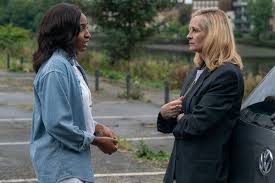
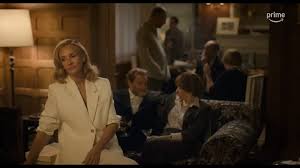
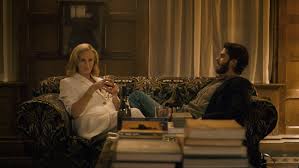
This Jan. 2 release stars André Holland (“”42,” “Moonlight,” “Selma”) as the husband seduced into revenge sex on his cheating wife (Zazie Beetz) by temptress Kate.

The formidable Stephen McKinley Henderson is the marriage counselor out of his depth with “The Dutchman,” based on a play by Amiri Baraka.

Posted in Reviews, previews, profiles and movie news | Comments Off on Movie Preview: Kate Mara goes “Fatal Attraction” — “The Dutchman”

Netflixable? “Jingle Bell Heist,” a Caper Comedy Crying Out for Cute

“Jingle Bell Heist” is an over-plotted, under-charmed rom-com about robbing from the thieving, unaccountable rich and giving to the under-insured.

In soft drink terms, it’s a Diet Coke that’s gone flat — familiar, not particularly surprising or the least bit fizzy or satisfying.

Olivia Holt of “Heart Eyes” and TV’s “Cloak & Dagger” stars as an American living abroad with her English mum, picking pockets and pilfering her posh department store in a sort of rough justice against the insufferably rich.

Cell-phone-fixer and tech “security” wannabe Nick (Connor Swindells of TV’s “Sex Education”) is the Brit who spies Sophia on the Sterling’s store security cameras lining her pockets and occasionally punishing rude customers with her light fingers.

But Nick isn’t supposed to see that. He’s hacked his way in. He’s got a heist planned. Sophia may be coerced into joining him.

He’s got a grudge against the irredeemable “a–hole” who owns the place (Peter Serafinowicz). And she’s got a sick mum who needs a pricey experimental treatment to save her life, and doesn’t have time to wait for the National Health Service to get around to treating her.

But but “We moved back here for the free health care!”

Our mutually-mistrusting thieves consider one scheme, and then another and then a third when the first and second are complicated by the shady business practices of the Sterlings (Lucy Punch plays the libidinous Mrs.).

Attempts at “suspense” in the heist itself are ineptly handled.

The script and the leads strain to wring the “cute” out of this, but that’s in short supply.

I’d quote a funny line or two except there aren’t any. The capers involve attempted seductions — stage managed via microphone and earpiece — that fall flat.

Punch, one of Britain’s funniest, has nothing to play and Serafinowicz (“Guardians of the Galaxy”) has too few scenes to ma\ke his cruel cad funny.

Perhaps there’s entertainment value in swooning over our attractive leads or the assorted needle-drops that make up the score (Tchaikovsky’s Violin Concert in D has a certain action/comedy kick here).

But come on. Dressing a bad caper comedy in Santa suits doesn’t solve anything.

Rating: TV-PG

Cast: Olivia Holt, Connor Swindells, Peter Serafinowicz and Judy Punch.

Credits: Directed by Michael Fimognari, scripted by Abby McDonald and Amy Reed. A Netflix release.

Running time: 1:36

Posted in Reviews, previews, profiles and movie news | Comments Off on Netflixable? “Jingle Bell Heist,” a Caper Comedy Crying Out for Cute

Classic Film Review: McDowell, Warner and Steenburgen Travel with H.G. Wells — “Time After Time” (1979)

The acid test for any beloved film from the past is “How does it hold up?”

In the case of the sentimental crowd-pleasing “Time After Time” from 1979, the answer is “pretty well.”

I remember being almost giddy leaving the theater after this one, a witty, well-acted romantic thriller wrapped in a sci-fi period piece package. The giddiness may be gone, but its old-fashioned-with-a-modern-edge charms endure.

The conceit — that science fiction novelist H.G. Wells built his “time machine” only to have Jack the Ripper rip it off and escape to the future — was quite clever. And of that era, perhaps Nicholas Meyer was the only writer/director who could have pulled it off — a smart, suspenseful, funny and touching date movie for a sci-fi filmgoing audience that had just experienced the old fashioned “gee whiz” delights of the Christopher Reeve “Superman” movie.

Writer-director Meyer would go on to an almost revered status in sci-fi fandom for his writing and directing work in the first generation of “Star Trek” movies. But he already had an Oscar nomination for scripting one period piece — the Sherlock Holmes “The Seven Percent Solution” mystery thriller — and an Emmy nomination for the great TV film about the Orson Welles radio broadcast of H.G. Wells’ “The War of the Worlds”(“The Night that Panicked America”).

Some of this film’s time-traveling-forward-to-modern-day San Francisco luster was lost when Meyer sort of repeated himself, giving the final script polish to “Star Trek IV,” a time travel romance that brought the U.S.S. Enterprise crew (in a Klingon ship) back to San Francisco. Co-star Mary Steenburgen echoed her performance here as a school marm love interest for Doc Brown in “Back to the Future III,” further watering down the novelty of “Time After Time.”

Doing a Q & A with screen legend Malcolm McDowell at a film school a few years back, he seemed put out that almost none of the aspiring moviemakers seemed to have caught this title from his resume. The star of “If…,” “A Clockwork Orange” and “Blue Thunder,” a mainstay in films, TV (“Mozart in the Jungle”), animation and video games and B-movies of every stripe rightly considers this one of the jewels of his resume.

McDowell plays a youngish H.G. Wells who gathers a few trusted friends for an 1893 “going away” dinner party in which the “free love,” religion-mocking socialist “futurist” shows off his time machine. He plans to depart Victorian England for a more civilized future. Humanity is no more than “three generations away from Utopia,” he figures.

His guests are skeptical, no one more than the late arriving Dr. Stevenson (David Warner), a surgeon who always beats Wells at chess “because I know how he thinks.”

The police break up the party, and the jolt of all involved realizing that that surgeon with the bloody white evening wear gloves tucked into his medical bag is in fact, Jack the Ripper, is nothing compared to Wells’ own shock.

Stevenson nicked the time machine to make his escape. Luckily, the capsule has a return to origin point mode, and it comes back. Wells must dash off because he has “unleashed Jack the Ripper on Utopia!”

Wells, hot on Stevenson’s trail, drops into 1979 San Francisco, where his time machine is part of an “H.G. Wells: A Man Before his Time” museum exhibit. Wells, a fish out of water dining at “that Scottish restaurant, ‘McDonald’s,” a Victorian English gentleman in spats and deerstalker hat, must turn Sherlock Holmes to track down his quarry.

That’s how he meets the modern liberated woman banker Amy Robbins (Steenburgen) who makes cracks about finding an interesting “straight” man in San Francisco, of all places, and comes on to Wells with purpose.

As the bodies pile up as the Ripper starts ripping through disco era San Francisco, nobody — not Amy and certainly not the SFPD (Charles Cioffi) — takes Wells’ story, when he finally dares to tell it, seriously. And even if he finds “Jack,” how can be best a murderous, unscrupulous cad who “knows how” he “thinks?”

Continue reading
Posted in Reviews, previews, profiles and movie news | Tagged , , , , , , , | Comments Off on Classic Film Review: McDowell, Warner and Steenburgen Travel with H.G. Wells — “Time After Time” (1979)

Documentary Review: Trapped in Gaza with Sport as a Possible Escape — “Yalla Parkour”

Everyday life in Gaza, pre-invasion, is vividly rememembered in “Yalla Parkour,” a documentary largely compiled from the climbing, backflipping and tumbling stunts of the Gaza Parkour Team, who captured their exploits on camera.

We see young Palestinian Arabs finding joy in a place of perpetual “death and destruction,” where Israeli reprisals and blunt oppression, occupation and violence were a miserable way of life and death long before the Oct. 7, 2023 lashout attacks on Israel, used as Israeli justification for the current slaughter, starvation and “ethnic cleansing” of Gaza.

The French-invented sport of “parkour” is this group’s means of escape. They practice their flips and backflips, beam-walking, clamboring and climbing among the ruins of this “war” or that one — a gutted, unfinished mall, an airport that never saw a take-off or landing, piles of concrete and rebar with only the sand surrounding them as a cushion should this latest climb or stunt go wrong.

They are “experts in turning pain into happiness,” Palestinian ex-pat filmmaker Areeb Zuaiter narrates from her Washington, D.C. home. She sampled years of clips of practicing stunts and actual stunts into her film, using a voice-over-narrated letter to her long-dead mother back in Nablus as the finished movie’s framework.

That hoary and sentimental framing device works against the movie’s impact, which is basically a story of young men taking risks with life and limb just to make attention-grabbing videos that will get them noticed and be their ticket out.

Zuaiter meets Ahmed Matar by phone, and their lengthy phone conversations over the better part of a decade tell the story of the Gaza Parkour Team — those who “got out,” those who wound up in the hospital, those who died (stay through the closing credits to see a shocking list of film crew and parkour athletes killed by Israeli violence) and Ahmed himself.

Ahmed longs to tour with the team, to get out at the invitation of people from outside countries, and battles endless red tape and near deliberate inefficiency as that “trip” — which could be one-way — is delayed again and again.

“There is no future in Gaza,” he says (in Arabic with English subtitles), stating the obvious.

In the early years of their phone calls, Zuaiter complains of her “outsider” status now, wishing she could return to her “magical place.” But the enormous risks of such a trip, even in the less conflict-torn intervals, kept her from seeing her late mother onele time and keep her from risking her status as an immigrant. Fear of being trapped back in a war-torn place with “no future” runs through the entire Palestinian diaspora.

But Matar’s footage from the early to mid 2010s captures the “beauty” of the beaches, neighborhoods and landscaped building developments. Endless conflict, periodic bombings and Israeli raids notwithstanding, those neighborhoods were teeming with life.

When Jinji, a ginger-headed Palestinian parkour climber gets badly injured in a fall, neighborhood life stops to get him help. And when he’s released from the hospital, he’s practically given a parade.

The parkour stunts that go wrong are more revealing than the underwhelming (by movie parkour standards) stunts they pull off. Painful, wind-knocked out or concussed “practice” is what it takes to learn these moves without helmets, safety nets or adult supervision.

Some will get out, some will stay and many will die when the vast escalation in violence of 2023 begins.

“Yalla Parkour” is most effective in showing us violence that has been visited upon these people for decades and the “toughness” it takes to survive and escape and even relocate to a place of relative safety and comfort.

Rating: unrated

Cast: Ahmed Matar, Areeb Zuaiter

Credits: Directed by Areeb Zuaiter, scripted by Areeb Zuaiter, Phil Jandaly and Johan Simonsson. A Kinana Films production

Running time: 1:30

Posted in Reviews, previews, profiles and movie news | Comments Off on Documentary Review: Trapped in Gaza with Sport as a Possible Escape — “Yalla Parkour”

Movie Preview: Skarsgard, Pacino and Colman Domingo in Gus Van Sant’s “Dead Man’s Wire”

A “Dog Day Afternoon” true story/period piece about a hostage situation with political and predatory lending overtones.

With that cast, I don’t see how this Jan. 9 release can go wrong.

Posted in Reviews, previews, profiles and movie news | Comments Off on Movie Preview: Skarsgard, Pacino and Colman Domingo in Gus Van Sant’s “Dead Man’s Wire”

Movie Preview: A24 Gets in the Glen Powell Business — “How to Make a Killing”

This February release looks more dark than comic, which its “Kind Hearts and Coronets” set up might have promised.

Guys want to inherit a fortune but he has relatives to kill off to get it.

Bill Camp, Margaret Qualley, Topher Grace and Ed Harris have their supporting parts to playing this one.

Powell could use a hit right about now.

  https://youtu.be/dYwtiPvI3E4?si=NkmprskxgaWbvuLE

Posted in Reviews, previews, profiles and movie news | Comments Off on Movie Preview: A24 Gets in the Glen Powell Business — “How to Make a Killing”

Movie Preview: One of Udo Kier’s final roles — “My Neighbor Adolf” — hits cinemas in January

The great German character actor Udo Kier died last weekend in Palm Springs, where many of the movie famous (Liberace to John Schlesinger to Janet Gaynor to Alan Ladd to Howard Hawks to Darryl F. Zanuck) end their days. He was 81.

A brooding but playful presence, he worked with Warhol and Van Sant and Von Trier, popping up in junk like “Bloodrayne” (by the infamous hack Uwe Boll) and “Surviving Christmas,” but also in the gonzo trailer to “Werewolf Women of the S.S.” directed by Rob Zombie for inclusion in “Grindhouse,” piling up over 280 credits, from films and TV to video games.

He dressed up horror films like “Skin Walker,” and “The Painted Bird” and indie dramas such as “The Mountain.”

But gems like “American Animals” and “Swan Song” decorated his later years, an indie film icon who had many films in the can and a few awaiting distribution when he passed away.

“My Neighbor Adolf” is one of those and makes its way to theaters Jan. 9.

Posted in Reviews, previews, profiles and movie news | Comments Off on Movie Preview: One of Udo Kier’s final roles — “My Neighbor Adolf” — hits cinemas in January

Movie Review: Pierce, Helena and Gabriel ensure a Young Irish Couple Receives “Four Letters of Love”

Pierce Brosnan, Helena Bonham Carter and Gabriel Byrne appear on screen together for the first time in “Four Letters of Love,” a lovely, sentimental and ever-so-Irish romance about fate, faith and the power of words to woo, especially when folded into those old fashioned envelopes we used to drop in the post.

It’s a ’70s period piece directed by Polly Steele (“Let Me Go”) and adapted by Niall Williams from his own novel about a couple “meant” to be together who take an entire film — with tragedies, missteps and missed connections — to find their way to one another.

From “Much Ado about Nothing” to “Serendipity” and “Four Weddings and a Funeral,” that’s been a formula that works. On some of us, anyway.

Young Nicholas (Fionn O’Shea of TV’s “House of Guniness”) narrates our story, about the day “God spoke to (his father) for the first time” and upended his and his mother’s lives. Dad (Brosnan) was a civil servant, toiling away at his Dublin job-for-life until the moment the sunlight hits his desk blotter in a way that tells him he was meant to paint.

William Coughlan abruptly walks out on the job, shocks his wife (Imelda May) and leaves his son confused and bereft. Dad may wander off to “the mythic West of Ireland” to paint impressionist seascapes of this one island he’s fixated upon. Nicholas loses his father and watches his mother come to pieces over this disaster.

Meanwhile, young Isabel or “Izzy” (Ann Skelly of Netflix’s “The Sandman”) is coming of age on that island when her Gaelic-speaking family is visited by a different tragedy. Her older brother Sean (Dó`nal Finn) has a stroke while playing a pipe for her to dance for by the sea. Her published poet father (Byrne) falls into writer’s block, and his wife and muse (Bonham Carter) is bereft.

There’s nothing for it but for Izzy to attend a distant Catholic girls’ school to get her away from their grief.

Nicholas, “a son who could not speak to his father,” must find and make a connection with a man who thinks “All this time I’ve been living the wrong life.” And the girl with the father who shouts at God over his stricken son’s fate will find her escape from the nuns in the form of a rakish slightly older mamma’s boy (Ferdia Walsh-Peelo) with a steady job, a roaming eye and a Triumph 2000 to whisk her away from her troubles.

The obstacles to love in this romance are both practical and ethereal. How does a broken-hearted son cope with a father who takes a bit of sunlight through a skylight as a “sign” from above? At least the distance between our two prospective lovers — the island is only reachable by ferry — offers some of the most beautiful scenery on Earth. The County Donegal in Ireland and Ulster and Murlough Bay in Northern Ireland settings will have romantics plotting their next cliffside vacation.

A longer cut of “Four Letters of Love” — the title’s a pun on the spelling of “l-o-v-e” — played festivals and was released in theaters. But losing 16 minutes before its streaming release was almost certainly for the best. Novelists who adapt their own books into scripts tend to avoid murdering “their darlings” and this lumbers during the early acts and the almost omnipresent novelistic voice-over narration grates — it’s an unnecessary crutch in most movies — until it finally pays off.

But Brosnan grows his hair out and shows off his painterly eye (he really paints). Byrne has spent most of his wide-range-of-roles career hinting at the fact that he was born to play an Irish poet.

And Bonham Carter lands all the laughs as she twinkles and casts side-eyes in the film’s utterly delightful and wholly charming third act, when her character’s morality demands that she try to keep Nicholas’s heartfelt written odes from reaching the fair Izzy.

Spoiler alert — her efforts come to naught. And this engaging make-work project for cherished older actors touches as they sparkle and remind us all, and the younger characters around them, that they know what it’s like to be young and in love and remember the blush of recieving the perfect love letter.

Rating: PG-13, adult themes

Cast: Pierce Brosnan, Helena Bonham Carter, Fionn O’Shea, Ann Skelly, Ferdia Walsh-Peelo, Dó`nal Finn and Gabriel Byrne.

Credits: Directed by Polly Steele, scripted Niall Williams. A Quiver release on Amazon Prime.

Running time: 1:49

Posted in Reviews, previews, profiles and movie news | Tagged , , , , , , , , , , | Comments Off on Movie Review: Pierce, Helena and Gabriel ensure a Young Irish Couple Receives “Four Letters of Love”

Documentary Review: A Horror Icon revisits His Many Touchstones — “Sangre del Toro”

Guillermo del Toro is not just the fanboy’s fanboy, a comic book collector (“Horror comics, mostly.”) turned Oscar winning horror director.

He rivals his idol David Cronenberg as the reigning intellectual of his genre, a thoughtful, philosophical Mexican who knows horror literature, horror iconography and horror cinema like the back of his hand.

“Sangre del Toro” is an affectionate and revealing dive into what made him who he is, a monster-obsessed movie maker who makes movies that give those monsters personalities, heartaches, fears and agendas that connect to the hallmarks and the failings of humanity.

Yves Monmayeur’s documentary is built around del Toro touring an exhibit — “En Casa Con Nos Monstruos,” “My House of Monsters” — that he co-curated and opened in his hometown Guadalajara’s museum. Walking through its childhood photos, collectible comic displays, gigantic props from his films and collected from others’ classics, he meditates on the nature of horror, his personal obsessions and the (privileged) childhood that informed “The Devil’s Backbone,” “Pan’s Labyrinth,” “The Shape of Water” and even “Hellboy.”

He sat down for chats and held public conversations about his work there, in which del Toro lays out the influences that made him and the threads of his monster horror/body horror filmography that point back to his childhood.

“The Mexican marriage of the sublime and the brutal,” he says of that country’s hybrid “Dia de los Muertos” form of Catholicism, “is very much in me.”

So in “Sangre del Toro” — a play on “Sangre de Cristo, aka Blood of Christ” — del Toro doesn’t just talk about his films and the Buñuel, Cronenberg and George A. Romero movies that shaped his art, or expound on his 15,000 comic book collection of “Tales from the Crypt” and many other legendary horror titles. He notes how the horrific is best experienced “through the eyes of a child,” like the child he once was and kind of still is.

The first time I interviewed him, I grilled del Toro about that, which was the focus of the earliest films he made in America (“Mimic”) or which were distributed here (“The Devil’s Backbone”). Children can be witnesses, victims and heroes in his horror. And once you’ve established you’ll “kill the dog,” (in “Mimic”), a world of horrific possibilities opens up.

Like Spielberg, del Toro obsessed about becoming a film director before he knew there was such a job. “I wanted to be a monster maker!” He designed monsters and makeup and dreamed up scenarios and shot and edited super 8mm films as a young child (age 8, in his case).

Unlike Spielberg, del Toro can talk about the grandmother who helped raise him’s faith, relating a painful, bloody, rending of the flesh horrific anecdote about his grandmother’s lessons about Catholic eternity and purgatory, which involved the injurious application of jagged bottle caps on his tiny feet.

Hey, better than eternal damnation, Granny figured.

“Most of my movies talk about…choice and sacrifice,” del Toro says. And they do, from his earliest works to his “Hobbit” films and “The Shape of Water” to his latest, Netflix’s “Frankenstein.”

We see the long-closed childhood comic book stand where he first tasted horror on the page, which he bought and installed in the museum exhibit. We visit Guadalajara’s Gothic cathedral and its catecombs below, and visit the cemetery in Belen that inspired every cemetery scene ever in a del Toro movie, from “Hellboy” onward.

“Sangre del Toro” is very much a documentary “in his own words,” and thus a portrait of how del Toro sees himself and the destiny he is sure he was born to fulfill. He comes off as introspective, someone who has given some thought to the sort of artist he became and how he got there.

Lacking more outside voices — we hear from Cronenberg and horror manga artist Junji Ito– the film dispenses with others singing del Toro’s praises or criticizing the occasional misstep, or family members, academics and childhood friends doing del Toro’s psychoanalyzing for him. That works for and against the film’s reach for a “definitive” portrait.

But if “Frankenstein” or his more recent series work since “The Shape of Water” has piqued your interest in this grownup cinematic version of R.L. Stine, “Sangre del Toro” makes a fine introduction to the sacrements and stations of the cross of this horror icon — who and what made him who he is.

That grandmother must have been some piece of work.

Rating: TV-MA, gruesome images, violence, nudity

Cast: Guillermo del Toro

Credits: Scripted and directed by
Yves Montmayeur. A Netflix release.

Running time: 1:26

Posted in Reviews, previews, profiles and movie news | Tagged , , , , | Comments Off on Documentary Review: A Horror Icon revisits His Many Touchstones — “Sangre del Toro”

Movie Review: “After the Hunt” prematurely looks at #MeToo and Cancel Culture in the Rear View Mirror

“After the Hunt” re-litigates the #MeToo/Cancel Culture wars and muddies the waters about what has and is being achieved by this latest rift along the gender and generation gaps.

It’s only mildly provocative and not at all satisfying. But it’s mysterious and Ivy League immersive enough to hold our interest until it settles into an anti-climax.

The film lacks the usual slap in the face shock that has become director Luca Guadagnino’s trademark. Whatever sharp storytelling with an edgy sexual subtext the director of “Call Me By Your Name” and “Bones and All” achieved with “Challengers” and “Queer,” you’d have to say this academic melodrama represents a step backwards.

Perhaps the subject matter is too distinctly American or just too slippery for him to get hold of. Or perhaps taking on a script by a young actress turned first-time screenwriter wasn’t the smartest decision of his career.

Julia Roberts stars as Alma, a Yale philosophy professor in “Hunt,” a smart, brittle but self-confident achiever who doesn’t suffer fools or thin-skinned Gen Z students gladly.

In her 50s, she’s not the careless smarty-pants her departmental bestie, rival for a tenure position and flirtatious “work husband” — perhaps “with benefits” — Hank (Andrew Garfield) is. But if he’s the sort of younger male associate professor who banters with and flirts with students at a faculty-students cocktail party, Alma’s the arrogant empress who figures she can throw such parties without repercussions.

Because inviting a couple of “favorites” among her students isn’t smart. Whatever they bring to the conversation, adoration of her and deference to Alma when she snippily cuts their assertions and arguments to ribbons is their chief function.

Her canny psychotherapist husband (Guadagnino favorite Michael Stuhlbarg) sees through Alma. He might have a sense of whatever “secret” she’s keeping from her past. He certainly suspects she’s had or is having an affair with Hank. But she’s keeping these bouts of gut pain from him.

That “secret” is something student Maggie (Ayo Ediberi of “Bottoms” and TV’s “The Bear”) stumbles into while poking around her hostess’s bathroom. But the risks of that evening’s mixer blow up in everybody’s faces when drunken Hank walks Maggie home.

Shaken Maggie skips class the next day, but confides to Alma what happened. Or her version of it. The calculating, tenure-track academic isn’t exactly a feminist shoulder to cry on.

“What are you saying happened?”

We know that she knows that no young woman is likely to make something like this up. Maggie’s “given your history” hint suggesting that they’re gender allies may get Alma’s back up, but she dodges Hanks frantic calls, is noncommital when he attempts to “explain” himself and goes straight to her dean as word races across campus. Alma is by the book.

Maggie may be a “mediocre” student. Maybe she plagiarized her dissertation-in-progress. She’s “rich and entitled.” That doesn’t invalidate what happened to her. Or it shouldn’t. But Alma maintains her spot sitting on the fence.

With little mystery about what happened, “After the Hunt” becomes a movie about what happens “after.” But there’s not much to that. So it becomes a delivery platform for protesting monologues and cutting digs at “kids these days.”

As in “These kids have had everything handed to them their entire lives,” blurted by Alma’s friend, a school psychotherapist (Chloë Sevigny). Hank’s plea that Maggie’s “word” will undermine “a lifetime of hard work and good deeds” may resonate with some sexual assault equivocaters.

Academia, the most direct intergenerational contact between The Old Guard (Boomers) and the “entitled” young (Gen Z) is “a minefield these days,” especially at a school that holds open public debates over “The Future of Jihadism is Female.” But that “minefield” line, like “the insane times we live in” and “this shallow cultural moment” are among the scripts’ many statements of the obvious.

“I can be cold sometimes” is practically Julia Roberts’ brand, in or out of character.

There are assertions meant to generate a knowing smirk to whichever generation’s character is delivering the hard truth to the other.

“Not everything is supposed to make you comfortable, Maggie.”

“Am I not OWED” the benefit of the doubt in such an accusation, Maggie demands?

Roberts is only somewhat convincing as a starchy academic and Garfield is more at home playing the tipsy cad struggling to justify his advances than either is in the many off-the-cuff debates among academics and between teacher-and-student over Foucault, Hannah Arendt and millenia of great thinkers. The names and lines feel read, not acted.

Ediberi lacks the fire and outrage we’d expect from someone in her situation, even a “mediocre rich” student.

The standout performance comes from Stuhlbarg, who gets across Frederick’s “We’re too old and too married to lie about anything so blatantly” wit and lets us see how comically passive aggressive a shrink can be when he’s reminded he’s the junior partner in this relationship with smart, brilliant beauty.

But as our screenwriter (Nora Garrett also plays Billie in the cast) paints her story into a corner and actors and her director can’t get her out of it, “After the Hunt” stumbles towards a finale that doesn’t satisfy, resolve anything or even make sense.

As current as these issues and this debate remains, a story meant to pass judgement after the dust settles just comes off as mediocre, murky, both-sidesing virtue signalling from a writer out of her depth.

Rating: R, “sexual content” and profanity

Cast: Julia Roberts, Andrew Garfield, Ayo Ediberi, Chloë Sevigny and Michael Stuhlbarg.

Credits: Directed by Luca Guadagnino, scripted by Nora Garrett. An MGM release on Amazon Prime.

Running time: 2:18

Posted in Reviews, previews, profiles and movie news | Tagged , , , , | Comments Off on Movie Review: “After the Hunt” prematurely looks at #MeToo and Cancel Culture in the Rear View Mirror