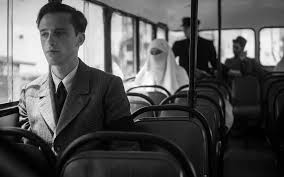
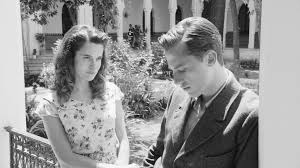
A “Dog Day Afternoon” true story/period piece about a hostage situation with political and predatory lending overtones.
With that cast, I don’t see how this Jan. 9 release can go wrong.
A “Dog Day Afternoon” true story/period piece about a hostage situation with political and predatory lending overtones.
With that cast, I don’t see how this Jan. 9 release can go wrong.
This February release looks more dark than comic, which its “Kind Hearts and Coronets” set up might have promised.
Guys want to inherit a fortune but he has relatives to kill off to get it.
Bill Camp, Margaret Qualley, Topher Grace and Ed Harris have their supporting parts to playing this one.
Powell could use a hit right about now.
The great German character actor Udo Kier died last weekend in Palm Springs, where many of the movie famous (Liberace to John Schlesinger to Janet Gaynor to Alan Ladd to Howard Hawks to Darryl F. Zanuck) end their days. He was 81.
A brooding but playful presence, he worked with Warhol and Van Sant and Von Trier, popping up in junk like “Bloodrayne” (by the infamous hack Uwe Boll) and “Surviving Christmas,” but also in the gonzo trailer to “Werewolf Women of the S.S.” directed by Rob Zombie for inclusion in “Grindhouse,” piling up over 280 credits, from films and TV to video games.
He dressed up horror films like “Skin Walker,” and “The Painted Bird” and indie dramas such as “The Mountain.”
But gems like “American Animals” and “Swan Song” decorated his later years, an indie film icon who had many films in the can and a few awaiting distribution when he passed away.
“My Neighbor Adolf” is one of those and makes its way to theaters Jan. 9.


Pierce Brosnan, Helena Bonham Carter and Gabriel Byrne appear on screen together for the first time in “Four Letters of Love,” a lovely, sentimental and ever-so-Irish romance about fate, faith and the power of words to woo, especially when folded into those old fashioned envelopes we used to drop in the post.
It’s a ’70s period piece directed by Polly Steele (“Let Me Go”) and adapted by Niall Williams from his own novel about a couple “meant” to be together who take an entire film — with tragedies, missteps and missed connections — to find their way to one another.
From “Much Ado about Nothing” to “Serendipity” and “Four Weddings and a Funeral,” that’s been a formula that works. On some of us, anyway.
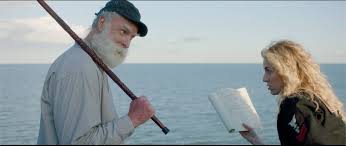
Young Nicholas (Fionn O’Shea of TV’s “House of Guniness”) narrates our story, about the day “God spoke to (his father) for the first time” and upended his and his mother’s lives. Dad (Brosnan) was a civil servant, toiling away at his Dublin job-for-life until the moment the sunlight hits his desk blotter in a way that tells him he was meant to paint.
William Coughlan abruptly walks out on the job, shocks his wife (Imelda May) and leaves his son confused and bereft. Dad may wander off to “the mythic West of Ireland” to paint impressionist seascapes of this one island he’s fixated upon. Nicholas loses his father and watches his mother come to pieces over this disaster.
Meanwhile, young Isabel or “Izzy” (Ann Skelly of Netflix’s “The Sandman”) is coming of age on that island when her Gaelic-speaking family is visited by a different tragedy. Her older brother Sean (Dó`nal Finn) has a stroke while playing a pipe for her to dance for by the sea. Her published poet father (Byrne) falls into writer’s block, and his wife and muse (Bonham Carter) is bereft.
There’s nothing for it but for Izzy to attend a distant Catholic girls’ school to get her away from their grief.
Nicholas, “a son who could not speak to his father,” must find and make a connection with a man who thinks “All this time I’ve been living the wrong life.” And the girl with the father who shouts at God over his stricken son’s fate will find her escape from the nuns in the form of a rakish slightly older mamma’s boy (Ferdia Walsh-Peelo) with a steady job, a roaming eye and a Triumph 2000 to whisk her away from her troubles.
The obstacles to love in this romance are both practical and ethereal. How does a broken-hearted son cope with a father who takes a bit of sunlight through a skylight as a “sign” from above? At least the distance between our two prospective lovers — the island is only reachable by ferry — offers some of the most beautiful scenery on Earth. The County Donegal in Ireland and Ulster and Murlough Bay in Northern Ireland settings will have romantics plotting their next cliffside vacation.
A longer cut of “Four Letters of Love” — the title’s a pun on the spelling of “l-o-v-e” — played festivals and was released in theaters. But losing 16 minutes before its streaming release was almost certainly for the best. Novelists who adapt their own books into scripts tend to avoid murdering “their darlings” and this lumbers during the early acts and the almost omnipresent novelistic voice-over narration grates — it’s an unnecessary crutch in most movies — until it finally pays off.
But Brosnan grows his hair out and shows off his painterly eye (he really paints). Byrne has spent most of his wide-range-of-roles career hinting at the fact that he was born to play an Irish poet.
And Bonham Carter lands all the laughs as she twinkles and casts side-eyes in the film’s utterly delightful and wholly charming third act, when her character’s morality demands that she try to keep Nicholas’s heartfelt written odes from reaching the fair Izzy.
Spoiler alert — her efforts come to naught. And this engaging make-work project for cherished older actors touches as they sparkle and remind us all, and the younger characters around them, that they know what it’s like to be young and in love and remember the blush of recieving the perfect love letter.
Rating: PG-13, adult themes
Cast: Pierce Brosnan, Helena Bonham Carter, Fionn O’Shea, Ann Skelly, Ferdia Walsh-Peelo, Dó`nal Finn and Gabriel Byrne.
Credits: Directed by Polly Steele, scripted Niall Williams. A Quiver release on Amazon Prime.
Running time: 1:49


Guillermo del Toro is not just the fanboy’s fanboy, a comic book collector (“Horror comics, mostly.”) turned Oscar winning horror director.
He rivals his idol David Cronenberg as the reigning intellectual of his genre, a thoughtful, philosophical Mexican who knows horror literature, horror iconography and horror cinema like the back of his hand.
“Sangre del Toro” is an affectionate and revealing dive into what made him who he is, a monster-obsessed movie maker who makes movies that give those monsters personalities, heartaches, fears and agendas that connect to the hallmarks and the failings of humanity.
Yves Monmayeur’s documentary is built around del Toro touring an exhibit — “En Casa Con Nos Monstruos,” “My House of Monsters” — that he co-curated and opened in his hometown Guadalajara’s museum. Walking through its childhood photos, collectible comic displays, gigantic props from his films and collected from others’ classics, he meditates on the nature of horror, his personal obsessions and the (privileged) childhood that informed “The Devil’s Backbone,” “Pan’s Labyrinth,” “The Shape of Water” and even “Hellboy.”
He sat down for chats and held public conversations about his work there, in which del Toro lays out the influences that made him and the threads of his monster horror/body horror filmography that point back to his childhood.
“The Mexican marriage of the sublime and the brutal,” he says of that country’s hybrid “Dia de los Muertos” form of Catholicism, “is very much in me.”
So in “Sangre del Toro” — a play on “Sangre de Cristo, aka Blood of Christ” — del Toro doesn’t just talk about his films and the Buñuel, Cronenberg and George A. Romero movies that shaped his art, or expound on his 15,000 comic book collection of “Tales from the Crypt” and many other legendary horror titles. He notes how the horrific is best experienced “through the eyes of a child,” like the child he once was and kind of still is.
The first time I interviewed him, I grilled del Toro about that, which was the focus of the earliest films he made in America (“Mimic”) or which were distributed here (“The Devil’s Backbone”). Children can be witnesses, victims and heroes in his horror. And once you’ve established you’ll “kill the dog,” (in “Mimic”), a world of horrific possibilities opens up.
Like Spielberg, del Toro obsessed about becoming a film director before he knew there was such a job. “I wanted to be a monster maker!” He designed monsters and makeup and dreamed up scenarios and shot and edited super 8mm films as a young child (age 8, in his case).
Unlike Spielberg, del Toro can talk about the grandmother who helped raise him’s faith, relating a painful, bloody, rending of the flesh horrific anecdote about his grandmother’s lessons about Catholic eternity and purgatory, which involved the injurious application of jagged bottle caps on his tiny feet.
Hey, better than eternal damnation, Granny figured.
“Most of my movies talk about…choice and sacrifice,” del Toro says. And they do, from his earliest works to his “Hobbit” films and “The Shape of Water” to his latest, Netflix’s “Frankenstein.”
We see the long-closed childhood comic book stand where he first tasted horror on the page, which he bought and installed in the museum exhibit. We visit Guadalajara’s Gothic cathedral and its catecombs below, and visit the cemetery in Belen that inspired every cemetery scene ever in a del Toro movie, from “Hellboy” onward.
“Sangre del Toro” is very much a documentary “in his own words,” and thus a portrait of how del Toro sees himself and the destiny he is sure he was born to fulfill. He comes off as introspective, someone who has given some thought to the sort of artist he became and how he got there.
Lacking more outside voices — we hear from Cronenberg and horror manga artist Junji Ito– the film dispenses with others singing del Toro’s praises or criticizing the occasional misstep, or family members, academics and childhood friends doing del Toro’s psychoanalyzing for him. That works for and against the film’s reach for a “definitive” portrait.
But if “Frankenstein” or his more recent series work since “The Shape of Water” has piqued your interest in this grownup cinematic version of R.L. Stine, “Sangre del Toro” makes a fine introduction to the sacrements and stations of the cross of this horror icon — who and what made him who he is.
That grandmother must have been some piece of work.
Rating: TV-MA, gruesome images, violence, nudity
Cast: Guillermo del Toro
Credits: Scripted and directed by
Yves Montmayeur. A Netflix release.
Running time: 1:26


It was more obvious 40 years ago, but we in America live in a MAD culture, a land of mockery, parody and running gags aimed at the institutions, pop trends, entertainment and “Americana” that we once thought of as “sacred cows.”
Generations grew up with MAD magazine, “Humor in a Jugular Vein” as it was billed in the early days. And many of those of us who grew up with it came to make a mocking mark on the culture in their own vein, from the ’60s, when that first generation of kids who grew up on it started pursuing careers in comedy, sketch and humor writing or cartooning, to today, when cultural mockery has spread from “Saturday Night Live” to “The Daily Show” to Tik Tok, Youtube and beyond.
“When We Went MAD!” is an affectionate documentary history of this magazine, taking us back to the prehistory — publisher and founder William M. Gaines was the son of pioneering comics publisher (“Wonder Woman,” “Green Lantern,” “Hawkman”) Max Gaines — on through the magazine’s 2019 demise, with a Quentin Tarantino “Time Warp Final Issue” conceived to provide set decor for “Once Upon a Time…in Hollywood.”
MAD was conceived as a venture in juvenile humor from a company (EC Comics) that had devolved from its “Education Comics” mission — with illustrated stories from The Bible as one of their titles — into tween/teen horror comics like “Tales from the Crypt” and “Vault of Horror.” The horror titles and violent “Two-Fisted Tales” had gotten EC into trouble with Congress during the “juvenile delinquincy” panic of the 1950s, an earlier version of the culture’s later panics — fear of TV, rock music, video games and social media’s impact on children.
The idea in house was to write for older juveniles so that the mag would appeal to younger ones.
“Things that go over your head make you want to life your head up,” writer Desmond Devlin reasons.
“When We Went MAD!” hits the red letter dates in that early history that gave the magazine its style, its mission and its cover-boy, Alfred E. Newman. Politics and social mores, movies and TV and pop culture phenomena were targets that worked their way into the comic book that transitioned into a “slick” (monthly magazine with better paper, sharper images) to hang onto an early editor.
“MAD went after EVERYone,” one and all marvel as Gaines & Co. assembled staff and contributors who came to be known as “The Usual Gang of Idiots” as they were credited on the masthead.
Early readers became aspiring writers, and the irreverent style was established with that blend of old art and gag writing pros and youth culture alumni who turned the magazine into a major force in America in mid- ’60s through the ’70s.
The testimonials here— Bryan Cranston, Howie Mandell in interviews and Jerry Seinfeld, Howard Stern and others in archival clips from TV appearances, are filled with performers and personalities needing “no other honor” in their lives after their show or shtick earned them a MAD Magazine cover.
Bernstein’s documentary revels in Baby Boomer nostalgia and the magazine that mocked much of what Boomers still get nostalgic over. And we get a hint of just how “out there” the mercurial personalities and wise-crackers who wrote it, drew and joked MAD up could be.
The man behind it all — Gaines — was a hands-off publisher who didn’t see any issue until it hit his desk at publication, with a staff that lovingly hated him awaiting his first belly laughs. Gaines is remembered as a bon vivant, generous cheapskate and “one of the biggest nuts who ever lived.”
But the genius of the magazine was its instinctive wrong-footing of the reader. Nothing was sacred. Capitalism and socialism were mocked in equal measure, politicians were punctured and smoking and faux “patriots” and “gun nuts” were relentlessly ridiculed.
“The curse of being a satirist,” former editor Nick Meglin opines, is “you laugh in the WRONG places.”
Continue readingThis Lav Diaz film is the Philippines’ entry on the Best International Feature Oscar race.
Epic, but hardly old fashioned, on the way it treats the “cost” of “discovery” and conquest


Considering that it’s on over 4100 screens, is the sequel/second half of a blockbuster that fans couldn’t get enough and it showing pretty much every thirty minutes at every cineplex in America, “Wicked: For Good” had better blow up at the box office. Every theater chain bet on that.
The film sold a staggering $30 million in tickets just Thursday afternoon and night, and added to Friday’s $38 million+, that totals into a $68-70 million or so “opening day. The Numbers verifies that it hit $150 million before midnight Sunday.
Pre-opening ticket sales were through the roof, so none of this is a shock. h “A Minecraft Movie” ($163 million opening weekend, raking in $423 million in North America alone) and become the year’s biggest hit? It’s within the realm of possibility for both this weekend, or by year’s end, and certainly will be the bigger hit by late January, when “Wicked” either finishes its run or gets an Oscar bounce.
It did my surpass”A Minecraft Movie” ($163 million opening weekend, raking in $423 million in North America alone) and become the year’s biggest hit? It’s within the realm of possibility for “Wicked 2” to pass Jack Black & Co by year’s end, and certainly will be the bigger hit by late January, when “Wicked” either finishes its run or gets an Oscar bounce.
I don’t see that “bounce” happening, but it may yet have box office “legs.”
I saw it at a matinee in a small Southern city where it was booked every 30 minutes after 230 and the only showing that was reasonably well-attended (I was in the cinema all day) was the one I caught at 7 Thursday night. But a trickle of fans was getting out to catch it opening day and night, even there.
Financially, it was canny to split the popular stage musical into two halves with the first film opening to $112 million last fall on its way to a $474 million take. Figure the two halves will clear a $billion when all is said and done.
But aesthetically and in terms of how the halves play, it was a mistake. I’m not the only critic to pan it. Whatever hopeful, accepting messaging the play had that the movie defiantly doubles down on under the current repressive American regime is all the viewer has to cling to as the story loses whatever heart and spark it had going for it at the outset. Fans will go and say they’re pleased, but I didn’t hear a laugh from the half-full house I saw it in.
Early projections had this film opening in the $175-200 million range, so Saturday’s take will be telling. Maybe that pre-release enthusiasm has cooled a bit. Or maybe not.
“Now You See Me Now You Don’t” is looking at a $9.1 million or so second weekend, a 55-60% falloff from its opening weekend. This lifeless reboot earned $27 million its opening week, but the word on that one is that it’s big in China and it’s still #2 at the U.S. box office.
“Predator Badlands” sticks around earning another $6.25 for third place.
“The Running Man” is falling off apace, and should clear $6 million and come in fourth on its sophomore outing. This heartless remake turned out to be a pretty big bomb, and Glen Powell isn’t as “box office” as everybody had thought. He isn’t the reason filmgoers flocked to “Twister.”
The first weekend of “Rental Family” in wide release cracks the top five at $3.2.
It’s the best movie in most cinemas at the moment.

“Sisu: Road to Revenge” did $575K Thursday for $2.6 million and the second five (sixth place) is all to expect from that. Reviews for this one have been more generous than mine. It’s basically an inferior followup with low stakes, slow pace and even more outlandish slaughter, I thought. Dead Russians play, though. Wildly overrated by splatter film fanatics.full top temn, visit The Numbers.
.
Mercenaries trying to carry out a rescue of some sort in the middle of an African civil war.
Sounds a lot like a Christopher Walken outing from the ’80s, “Dogs of War.”
The title “Lost Horizon” has been emblazened on Shangri La in the Himilayas fantasies for a century. Here, it’s slapped on a generic B-movie that feels like an ’80s throwback.
But maybe not.
This “Lost Horizon” hits theaters Nov. 28.