
Movie Review: Amy Winehouse, but not as a victim — “Back to Black”

A flawed pop icon earns a flawed but serviceable bio-pic in “Back to Black,” an Amy Winehouse portrait built around a nuanced take on the star and uncanny vocal impersonation by Marisa Abela.

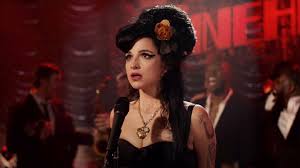
Abela, who was “Teen Talk Barbie” in last summer’s film phenomenon, looks more like Britney Spears (a shortish muscular dancer’s build) but matches Winehouse’s distinct tone and phrasing in song and in her unpolished, working class speech. She vamps up Winehouse’s blowsy personality and lets us see the vulnerability underneath a style icon who brought the “beehive” hairdo back and who transformed on the stage to a confessional, defiant street tough who shamelessly put all her business in her songs.

The film? It leaves a lot to be desired. Matt Greenhalgh’s script doesn’t utterly upend what the Oscar-winning 2015 documentary “Amy” suggested about her life and untimely end. But it does place the blame for her self-destruction at 27 on Winehouse herself, a mercurial personality and addict who never hid that fact, was hounded by the British press for it and paid the ultimate price.

Much respect to documentary filmmaker Asif Kapadia’s reasons for finger pointing at other “villains” in Winehouse’s life. Casting Britain’s best character actor, Eddie Marsan, as her villified father Mitch, pretty much removes the simplistic view of Winehouse’s chief “enabler” narrative and moves him more into a supportive working class dad guise, a character more in the background as she writes her own tragedy. Marsan, like Kapadia, has his reasons.

But “revisionism” aside, Sam Taylor-Johnson’s film frustrates in other ways. Winehouse’s creative process is glimpsed in only a scene or so. We know how she composed “Rehab” and “Back to Black” by “living” them. But they’re introduced abuptly.

We see her transition from singer-songwriter, accompanying herself on guitar, to Billie Holiday of her day, an R-rated, addiction-admitting chanteuse fronting a big band, a singer whose greatest obsession was the addict Blake (Jack O’Connell) she fell for.

She was an alcoholic who boasted about it from the stage before achieving her greatest fame.

“LY-dies don’t SIP,” she cracks onstage at one point. “We GULP.”

And we meet her biggest influence, her ex-jazz singer “nan,” played with heart and great empathy by Lesley Manville.

“You’ve got an eye for ‘bad boys,'” her grandmother scolds. And so she did. Having Amy dismiss the offer of a line of cocaine from the cocky charmer Blake with “Class A drugs are for mugs” seems a reach.

But most of the other characters in Amy’s story — from record execs to managers and bandmates — the enablers of her myopic Camden Town (north London) world, are barely sketched in.

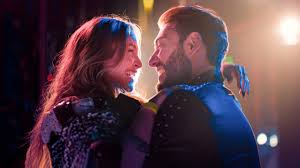
“Back to Black” manages to move us, showing us her triumph and leaning into her unmoored heartbreak at the end of a violent (she was the more violent one, here) marriage. But the biopic skips over much, letting Abela’s wondrous impersonation of Winehouse’s singing and stage presence do the heavy lifting.

There’s joy in these performances, and genuine charm in her “meet cute” with Blake. And the alterations to the accepted narrative of her downfall are challenging and illuminating, if a tad jarring.

But like a lot of musical bio-pics, from maudlin Whitney Houston stories to the overrated Oscar winners “La Vie En Rose” and the much more fun “Bohemian Rhapsody,” the filmmakers limit us to “the greatest hits.” And that’s a far from complete or wholly satisfying immersion in this life and her world.

Rating: R, some violence, drug and alcohol abuse, nudity, sex, smoking

Cast: Marisa Abela, Eddie Marsan, Jack O’Connell and Lesley Manville

Credits: Directed by Sam Taylor-Johnson, scripted by
Matt Greenhalgh. A Focus Features release.

Running time: 2:02
Posted in Reviews, previews, profiles and movie news | Comments Off on Movie Review: Amy Winehouse, but not as a victim — “Back to Black”

Movie Review: “Summer Camp” is an All-Star Bore

“Good will” is something an actor earns over the course of a long and storied career. It’s what makes a movie star, and what makes movie stars “bankable.”

And it’s the currency such stars spend when what they give their audience isn’t the film they might have hoped it would be.

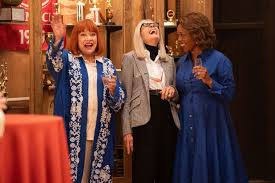
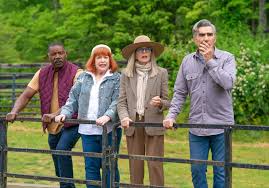
Alfre Woodard, Diane Keaton, Eugene Levy, Kathy Bates and Dennis Haysbert burn through some of their supply of good will on “Summer Camp,” an all-star comedy with AARP casting appeal and nothing else going for it.

We’ve loved Oscar winners Keaton and Bates, Oscar nominee Woodard, Emmy winner Levy and Golden Globe nominee Haysbert over decades of work. And as painful as this humorless-if-not-quite-heartless Castille Landon film is, we love them no less for signing on to do it.

OK, maybe a little less.

Perhaps writer-director Landon served Irish coffee at the pitch meetings. I don’t know. But this script is as dull as the direction is lifeless. She got her picture made with a winning “name” cast, but judging from the results, that’s the best you can say for her. The players deserved better.

Bates plays a “self-help guru” named Ginny Moon who apparently never got over being slightly older and wiser than the friends she made at Camp Pinnacle in Flat Rock, N.C., fifty years before.

Now she’s rounded up her two besties from those days, research scientist and entrepreneur Nora ( Keaton) and nurse, mother and grandmother Mary (Woodard), piled them into her book-and-lecture tour bus — Ginny’s books are the “Get Your S— Together” “boxed set” — and dragged them back to the place they all met.

The Camp Pinnacle reunion brings them and others their age back to N.C., where presumably they’ll all show how much they’ve matured, or how little they’ve changed.

“The Pretty Committee” of mean girls is still led by Jane (Beverly D.Angelo), with Judy and Evelyn (Maria Howell, Victoria Rowell) still in her posse.

“Whipsmart” camp hunk Stevie D. (Levy) still rolls with hunky Tommy (Haysbert), only now Stevie’s driving a 1960s Austin Healey and retired, and Tommy’s winding down a career as a globe-trotting surgeon.

Nothing and I mean NOTHING is done with the whole “mean girls” thing. The guys are here to present romantic possibilities for a couple of the ladies, and even that earns short shrift.

Bullying Ginny — who changed her name and got famous — micronamanages, criticizes and “fixes” one and all to such a degree that clothes-horse, widowed workaholic Nora and unhappily-married and put-upon Mary can’t make any headway with new flames.

The serious bits work better than the strained and depressing comical ones, and even they don’t entertain or enlighten. Woodard comes off the most “real,” her trademark. Levy is the least funny he’s ever been, thanks to a script his son should have taken a pass at. Describing someone as “still smells like patchoulie and lighter fluid” must be an improvised line, because it’s almost funny.

Bates grates and Keaton shows off her timeless beauty, fashion sense and favorite stunt doubles in a “camp” comedy where archery, river rafting, ziplining and pottery are played for “laughs.”

Nicole Richie is a camp counselor, blink and you’ll miss Arielle Kebbel. I did, but she’s in the closing credits. And Josh Peck is here as an ever-smiling hapless camp counselor who serves up most of the film’s pratfalls. Which aren’t funny.

The opening, featuring colorless voice-over narration by Bates, is tepid but competent. The finale is so abrupt that you’d think an irate studuio exec just shut off the lights. And nothing that comes between changes the sad “bad to worse” trajectory that “Summer Camp” was almost certainly fated to be.

Rating: PG-13, profanity, innuendo

Cast: Diane Keaton, Kathy Bates, Alfre Woodard, Eugene Levy, Dennis Haysbert and Beverly D’Angelo.

Credits: Scripted and directed by Castille Landon. A Roadside Attractions release.

Running time: 1:31

Posted in Reviews, previews, profiles and movie news | 1 Comment

Movie Preview: Clooney and Pitt are “not secret partners,” or grammarians — they’re “Wolfs”

Two competing “cleaners” in the parlance of hit man movies — and those who tidy up bloody messes — are forced to work together in this dark Action comedy slated for Sept 20 release.

Great chemistry, as always, dry put downs and eye rolls.

And Amy Ryan co stars.

Writer director Jon Watts did “Spider-Man: Homecoming.” Considering Clooney as director has kind of lost the thread…

What’s not to love?

Posted in Reviews, previews, profiles and movie news | Comments Off on Movie Preview: Clooney and Pitt are “not secret partners,” or grammarians — they’re “Wolfs”

Series Review — Experts, descendants and Idris Elba remember those “Erased: WW2’s Heroes of Color”

Some years back, there was a Hollywood dustup created when Clint Eastwood released a couple of films about the World War II Battle for Iwo Jima, one from the U.S. point of view, featuring scores of Marines who took part, and another seen through the eyes of the Japanese, most of whom died defending it.

“Where are the Black” participants in the battle, rival director Spike Lee wanted to know? Eastwood dismissed Lee’s complaint, saying “there were no Black soldiers” on Iwo Jima. Actually Clint, and your fellow whitewashing conservatives,  there were.

I was thinking of that dust-up when watching “Erased: WW2’s Heroes of Color,” an eye-opening new limited series from The National Geographic Channel. Lee was ahead of the curve, referring to what Eastwood did as “erasing” Black participation from his WWII epic.

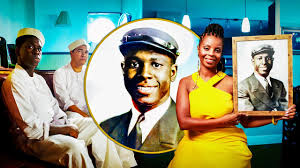
As the series details sometimes years-long efforts to cover-up, minimize and dismiss heroic deeds like those of seaman Doris Miller, Major Akbar Khan, D-Day medic Waverly D. Woodson and others, the name of it was changed from “The Color of Victory” to “Erased.”

“More than eight million people of color” — Indians, Pakistanis, Asians, Africans and African Americans — “served with the Allies,” Elba narrates in the opening to every episode of this excellent series. “My grandfather was one of these men.”

Like every other World War II documentary and doc series, the producers treat us to newsreel footage, reenactments, archival interviews with the participants, all of whom have now passed away, experts — authors and academics — and maps. But a novel touch here is that we hear from descendants of these heroes, talking about family lore, what their father, uncle or grandfather told their families, with actors reading from letters, diaries and memoirs by the men whose story is little known.

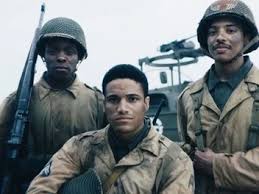
Episodes of this series focus on British Royal Indian Army participants in the Battle of France, which ended with the evacuation of “Dunkirk,” Black U.S. Navy mess attendants (cooks, servants) who saved sailors and rose to the combat occasion at “Pearl Harbor,” Black soldiers who went ashore as barrage balloon deployers or medics on “D-Day,” June 6, 1944, and the original Black Panthers, The 761st Tank Battalion, the first Black tank battalion in the U.S. Army, which fought in (racist) Gen. Patton’s Third Army in “The Battle of the Bulge.”

Elba, also a producer in the series, weighs in with opinions in his narration, noting how rare film footage was of any of these men or their combat units — a parade of Black soldiers in a British town, still photos, men in the background of other shots — and that much of what is reported in this film had to be dug out of “forgotten” archives.

But some of the historians seen here, and the filmmakers, went to the effort of digging this up. And while we might know of the heroics of seaman Miller, who took over an anti-aircraft gun on the U.S.S. West Virginia on Dec. 7, 1941 — “Dorie” Miller was portrayed by Cuba Gooding Jr. in the 2001 epic “Pearl Harbor” — few of us realize the efforts to deny him and others the commendations they deserved for their actions.

Miller was the first Black sailor to earn The Navy Cross, but many military historians feel he was denied the Medal of Honor by a racist Navy and Secretary of the Navy Frank Knox. Miller wasn’t alone. And the Navy wasn’t the only racist arm of the armed forces during the war. Just getting into combat was a civil rights struggle all its own.

“They didn’t want to see Black soldiers (and sailors) have the same access to heroism,” Dartmouth historian Matthew Delmont reminds us. Service members of color earning medals in combat didn’t fit the British or American official “narrative” of the struggle, then and for decades afterwards.

Many of the American soldiers trained at bases in the segregated, white supremacist South. Guys like tanker Johnnie Stevens, “our Humphrey Bogart,” one historian, referencing Bogie’s tank battle movie “Sahara,” says — “tough guy” — had to weather that racism before ever boarding ship for Europe.

Stevens’ diary noted that “We’re treated better here” (in Europe) “than back home.”

As one descendent and a few historians questioned in the series note, the men enlisting in these services — in India (and future Pakistan) and the U.S. — weren’t just looking for work away so that they could send money back home. They were seeking acceptance and advancement. “By serving, they could help change things.”

They did. The World War II generation of men of color returned to India to lobby for and help win its independence, and came back to America to integrate the armed forces, end lynching and stake their claim to equal rights.

Focusing on three or four service members in each episode, the series beautifully personalizes their experience. They and their families are quite moving as we hear old audio tapes of these “Greatest Generation” veterans recall their service.

There’s also an entire separate National Geographic documentary about the famed “Real Red Tails,” the “Tuskegee Airmen” fighter pilots of the European theater of conflict.

“Erased” doesn’t reinvent the WWII combat documentary. Family members aren’t the most reliable and objective keepers of memory and an ancestor’s place in it.

But “Erased” more than makes its case that this corner of World War II history has been downplayed, ignored or buried. After this, there’s no excuse for being as uninformed as Clint Eastwood once was about the vast cross-section of society that took up arms against fascism the last time it reared its racist head.

Rating: unrated, combat footage

Cast: Narrated by Idris Elba, with Dr. Diya Gupta, Professor Leah Wright Riguer, Dr. Ghee Bowman, Jack Gill, Professor Marcus Cox, Abdul Sulaiman, Doreen Stevens, Professor Matthew Delmont, Kyle Reese Bell, Wayne Robinson, Professor Yohoru Williams, Joshua Riley and others.

Credits: Directed by Adeyemi Michael. Premieres on the National Geographic Channel June 3.

Running time: Four episodes, @46 minutes each, plus commercials

Posted in Reviews, previews, profiles and movie news | Comments Off on Series Review — Experts, descendants and Idris Elba remember those “Erased: WW2’s Heroes of Color”

Movie Preview: The World Ends, but Entertainment lives on in Ireland, and all in one car — “Apocalypse Clown”

Dunno. Could be worse. Could be…mimes. French mimes.

David Earl, Natalie Palamides, Amy De Bhrún, Fionn Foley, Tadhg Murphy, Ivan Kaye and Shane is JAMES Joyce in the End Times farce from the Emerald Isle.

June 14.

Posted in Reviews, previews, profiles and movie news | Comments Off on Movie Preview: The World Ends, but Entertainment lives on in Ireland, and all in one car — “Apocalypse Clown”

Movie Preview: “Moana 2” takes our heroine even further

A “new adventure” sends Moana deeper into the Pacific at the invitation of The Ancestors. 

Looks a lot like an edge-free continuation of the first film, a few years down the road, older and wiser?

November. 

Posted in Reviews, previews, profiles and movie news | Comments Off on Movie Preview: “Moana 2” takes our heroine even further

Movie Preview: Nicole K. falls for Zac E. and irks daughter Joey King — “A Family Affair”

This June 28 cougar rom com also stars Kathy Bates.

King plays the daughter who works as assistant to the younger dude Mom is warming up to.

Veteran screenwriter and sometime director Richard LaGravenese directs.

Posted in Reviews, previews, profiles and movie news | Comments Off on Movie Preview: Nicole K. falls for Zac E. and irks daughter Joey King — “A Family Affair”

Netflixable? Rocker impersonates Country Music Star and drifts from “Zero to Hero”

“Zero to Hero” is badly-botched Brazilian “role switch” comedy about a flailing and failing rocker paid to impersonate Brazil’s most famous country music singer for a national tour when the vain, egotistical and alcoholic Sandro Sanderley lapses into a coma.

Titled “Rodeio Rock” in Brazil, and not to be confused with the Hong Kong paralympic athlete bio pic of the same “Zero to Hero” name, this romantic comedy fails via a script that can’t find the easy laughs, much less the smart ones, and lackluster direction that lets the script drift away from much that’s promising. And in casting a lead who is handsome, charismatic and potentially funny — but whose lack of stage presence make him the least convincing music star this side of Randy Newman — “Zero” slips under water and never comes back up for air.

Mauricio de Barros is “Hero,” a long-haired, tattoo-covered metal head whose shredding is limited to covering “Born to be Wild” in demonstation performances at a musical instrument store, with his childhood pal Pancho (Felipe Hintze) backing him on drums.

Hero’s failed to make a mark or make it big. And he’s convinced at least part of the reason is how much he looks like “you know who,” aka “that country music guy.”

That would be Sandro Sanderley, the handsome author of and singer of “insipid” ballads and the like as Brazil’s biggest country music star. Cut and dye Hero’s hair, apply makeup to his full-body tattoos and shave off the most unconvincing fake beard since Ted Turner’s “Gettysburg” and Hero could be a dead ringer for Sandro.

When events conspire to put Sandro into a coma — his latest plastic surgery and alcoholic binge come home to roost — prom cover band rocker Hero is “discovered” by a booking agent (Marcelo Flores) who works with the real Sandro. Hero is blackmailed into playing Sandro.

Sandro’s wily record company president (Felipe Folgosi) and panicked agent (Charles Paraventi) hire our “Hero” who is really a “Zero” to undergo a makeover, learn the songs and “cover” for the real star on tour.

Get the band to play in Hero’s key, not Sandro’s. Cut his hair, shave him and “I look like a Backstreet Boy.” And the “real” Sandro. By all means, don’t forget the cowboy hat and the pants.

“Do they have to be this tight?” he wants to know (in Portugeuse, or dubbed into English).

“Tight pants sell tickets!”

The picture shows us a bit of that first concert, how the “new” Sandro is humble, thanks the band, and can sing the songs (and not “put them over,” that whole “stage presence” problem). Then the story is driven off a cliff as the entourage travels to a remote cattle country city where Sandro is feted by the mayor and rejected by his concert production designer daughter (Carla Diaz), whose heart he broke years before.

“Can the ‘new’ Sandro win her back, and at what cost to his friendship with Pancho?” becomes the focus.

The “fish out of water” leap into stardom is toyed with, but never focused on in ways that win laughs. The real Sandro was fresh off a break up with a famous model, but we never meet her or get a scene or two of Hero faking that romantic history.

The plot contrives to send Sandro and Lulli (Diaz) on a cross-country trip by horseback where he can meet “real” cowboys and rural folk, the biggest fans of country music. There’s no “Ah, NOW I get it” epiphany from this.

The concert scenes, which the production avoids to a large degree, working around the shortcomings of their leads, are tepid affairs that don’t feel like the real thing.

The twists and predicaments are mild-mannered, with all the rough edges worn off.

About the best you can say about “Rodeio Rock” is that it takes us away from Rio and the beaches and into the interior of Brazil, lovely and rustic (if clear cut to make way for farms, etc.) and not the Brazil we typically see on the screen.

Other than that, “Zero to Hero” barely gets past “zero” and never comes close to “hero.”

Rating: TV-MA, alcohol abuse, near nudity, sexual situations

Cast: Mauricio de Barros, Carla Diaz,
Felipe Hintze, Marcelo Flores, Charles Paraventi
Serjão Loroza, Felipe Folgosi and Paula Cohen

Credits: Directed by Marcelo Atunez, scripted by Felipe Folgosi. A Netflix release.

Running time: 1:41

Posted in Reviews, previews, profiles and movie news | Comments Off on Netflixable? Rocker impersonates Country Music Star and drifts from “Zero to Hero”

Classic Film Review: Fritz Lang’s Campy, Violent Western morality play — “Rancho Notorious” (1952)

It’s always a little jarring to run across a Golden Age Western directed by the Austrian dabbler in the dark side, Fritz Lang. The director of “M,” “Ministry of Fear” and “The Blue Gardenia” always seemed “urban,” occasionally “futuristic” and often cynical. He made only made three sagebrush sagas once moving to Hollywood. The first two — “The Return of Frank James” and “Western Union” — were pretty forgettable.

By the time RKO gave him the budget and a Technicolor take on this most American of genres for “Rancho Notorious,” he’d made up his mind on its conventions and decided to apply The Lang Touch — savagely cruel characters, moral amorality, heartless violence — to a sort of commentary on Westerns.

The studio cast Marlene Dietrich, whose most famous Western was the James Stewart comedy “Destry Rides Again.” Lang decided to send it and her up, having her sing as another shady “dance hall girl,” this one aging out of her wandering, man-eating ways, even her paramour (Mel Ferrer) Frenchy — her name in “Destry.”

Like “High Noon,” this morality play would feature a title song woven into the fabric of the film, telling the story and passing judgement on the characters. But when your singer is crooning about “the old sad story of hate, murder and rage,” the effect is less “Threepenny Opera” and more, well, camp.

Consider the song’s title, which was almost the film’s title (studio owner Howard Hughes nixed it), “The Legend of Chuck-a-Luck,” and the camp’s out of the bag. The tune, the plot point and the location “Chuck-a-Luck” in the movie come from the sound a giant, standing roulette wheel makes when it spins, its pawl clattering away as it passes by numbers.

“Chuck-a-Luck” is a sound familiar to many a character in this populous, somewhat sprawling 90 minute thriller. But what Vern Haskell (Arthur Kennedy) wants to know is what “place” it signifies.

Vern is a Wyoming ranch hand all set to marry his shopkeeper sweetheart (Gloria Henry) when we meet him. But a couple of robbers (Lloyd Gough and John Doucette) end that dream. Beth was murdered, the old doc tells Vern, “and she wasn’t spared anything.” She was raped.

Mild-mannered Vern, who admits he’s a “raw hand with a gun,” is bug-eyed with rage. When the posse pursuing the bandits turns back, Vern presses on. He gets clues from the dying partner (Doucette’s “Whitey”), from strangers who give him other names, other towns to chase leads in all the way down The West, towards Mexican border country, towards the Spinning C Ranch.

It’s owned by this notorious retired “dance hall girl,” Altar Keane (Dietrich). The way to get to her is through her outlaw beau, Frenchy (Ferrer). Outlaws lay low there, lots of them (Jack Elam, Frank Ferguson, George Reeves, etc.).

It’s all fun and games and ranch chores and “good whisky, a bold song and an honest woman,” as far as they’re concerned. But Vern knows the consequences of their actions. He’s on the scent and close to his quarry. The corrupt Altar, who takes a cut from every bank robbery her violent boarders commit, is just another clue, one he may have to bat his eyes at to figure out who his quarry is amongst the desperados.

Altar, celebrating a birthday and lamenting that “every year is a threat to a woman,” might just return his affections when Frenchy’s not around.

I often marvel at how much “story” filmmakers of the past packed into 80-100 minute movies. Lang keeps this Daniel Taradash script on the move, trotting through episodes where Vern stops to ask this or that town about “Chuck-a-Luck” or “Altar Keane,” once he hears that name from a bad hombre who tries to kill him.

Chats lead to flashbacks as we hear the legend of “Altar Keane,” who cut a wide swath through saloons and the men who haunt them all over the West.

One novelty of the film is noting how many members of its cast became TV regulars, starting with “Superman” George Reeves. Sitcoms of the ’50s and early ’60s featured Russell Johnson (“Gilligan’s Island”), William Frawley (“I Love Lucy,” “My Three Sons”), Dick Elliott (Mayberry mayor in “The Andy Griffith Show”) who turn up as yarn spinners or roulette wheel spinners in the flashbacks and town interrogations.

Lang’s fistfights are furious even as his shootouts are somewhat pedestrian. But the big, colorful cast covers up a lot of shortcomings — the sound-staginess of many scenes, that cornball title tune, returning time and again, for starters.

Kennedy makes the transition from mild-mannered and moon-eyed to manic and furious with ease. There’s violence in the way he pursues Altar, bruising embraces and kisses. Dietrich makes this turn a sort of self-conscious farewell to her leading lady days. She’d appear in a half dozen more films, mostly vamping her past, over the next twenty years, not quite “closing the door,” like Garbo, but bowing out gracefully, letting us remember her for the fiery, androgynous beauty and song stylist she was.

Ferrer was cast against type here, but isn’t bad. Reeves has one of his most colorful supporting roles, playing a happy-go-lucky “petticoat chaser” with three big scratch marks across his face. He’d land “Superman” on TV that same year.

And Lang would follow up this Technicolor Western with some fine film noirs — “The Blue Gardenia,” “The Big Heat” — and melodramas, before making one last visit to his favorite villain, Dr. Mabuse (“The Thousand Eyes of Doctor Mabuse”) and easing into retirement.

He never had the sort of independence to tell stories his way in Hollywood that he did in Europe.

“Rancho Notorious” may not rank among Lang’s very best films. But when you made “Metropolis,” “M” and “The Big Heat,” you’ve set the bar pretty damned high. Whatever he thought of Westerns as an American genre and cultural obsession, this one stands out as a peak-era commentary on the form with an eye toward the violence and cruelty that accounts of a romanticized, largely lawless period of history often skipped over in between songs, shots of whisky and shoot-outs.

Rating: “approved,” violence, rape is referenced, smoking.

Cast: Marlene Dietrich, Arthur Kennedy, Mel Ferrer, Jack Elam, Frank Ferguson, John Doucette, Lloyd Gough, Dan Seymour, Gloria Henry and George Reeves.

Credits: Directed by Fritz Lang, scripted by Daniel Taradash. An RKO release in Technicolor, streaming on Tubi, etc.

Running time: 1:29

Posted in Reviews, previews, profiles and movie news | Comments Off on Classic Film Review: Fritz Lang’s Campy, Violent Western morality play — “Rancho Notorious” (1952)

Movie Review: A Polish parable about humanity, immigration and guilt — “Silent Land”

“Silent Land” is a brittle and biting parable about Europe and widespread attitudes towards the Third World problems of people “over there,” on the other side of the Mediterranean.

Director and co-writer Aga Woszcynska serves up a drama on low heat, ever so lightly simmering in the sun of an Italian island, long a favorite of tourists (Sassari, Italy was the filming locale) where a young Polish couple has come to vacation.

It is a tad too quiet and deliberate for its own good. But as a story of immigrant labor, an accident, and the indifference with which one and almost all treat what is by any measure a tragedy, it invites the viewer to test one’s own attitudes towards “The Other,” especially as it packs its biggest punch for the finale.

Anna (Agneiszka Zulewska) and Adam (Dobromir Dymecki) have a minor beef with landlord Fabio (Marcello Romolo). Their “first world problem” is that the seaside villa they’ve rented has a busted pool. And all of Fabio’s offers of “discount” and meals at “my trattoria in the village) won’t shake the Poles from their conviction that he simply get the pool fixed.

No worries, they all eventually agree. “Two days, tops” (in Polish, Italian and English, with subtitles) an it’ll be filled.

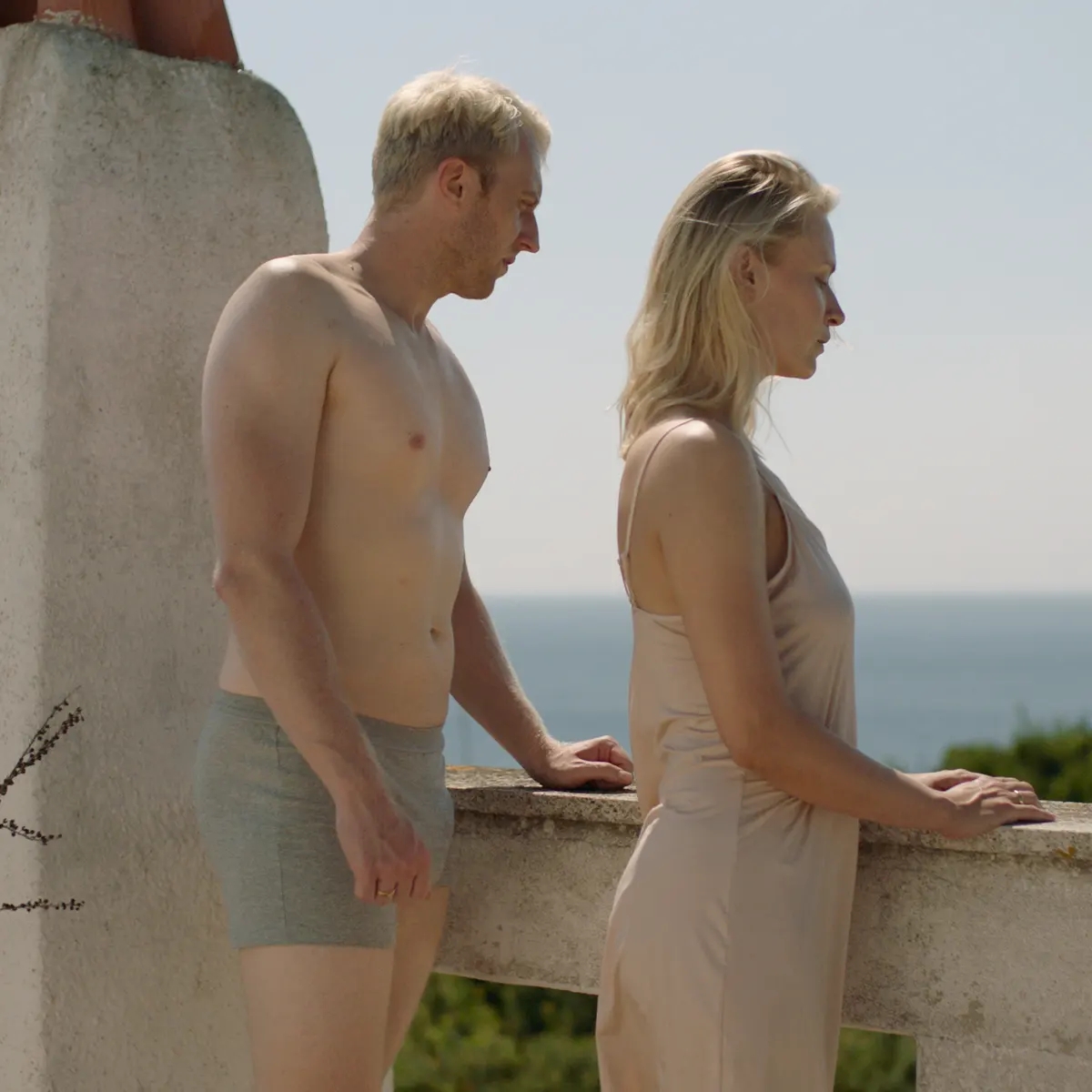
So their reverie of sun, isolation and sex gets interrupted by hunky, shirtless Rahim (Ibrahim Keshk) who starts the day with a jackhammer, and struggles with language barrier problems and not knowing where the hose to fill it is, etc.

And then we see Rahim take a tumble into the pool and not come out. Adam and Anna seem somewhat uptight, but otherwise unaffected. The cops who show up mutter about “no time for a case like this, now,” and do the bare minimum. Fabio just adds another apology to the clients.

But there was CCTV footage of the event. The police, lackadasical as they are, have questions. The marriage is strained as they try to get their stories straight.

Perhaps they should take the one English-speaking policeman’s advice. “Don’t worry” about it. “They don’t seem to care about anything around here,” Adam says to Anna.

There’s a hint of “Force Majeure” in this story of detached foreigners who do somewhat less than the humane minimum when something bad happens on their vacation. Marital discord ensues.

What version of “the story” will they tell the dive instructor couple (Alma Jodorowsky, Jean-Marc Barr) they befriend? Who is judging whom, and what are they covering up?

Woszczynska’s script, co-written with Piotr Litwin, throws in a stray dog to underscore the obvious. Everybody is nice to the dog, even the Middle Eastern immigrant laborer. The Poles might suspect him of eating off their table when their backs are turned.

But there’s a tolerance toward the canine that not everybody shares for the rest of humanity as tiny clues about the politics of the “haves” runs up against the inconveniences — “ruined” tourist destinations and vacations — of the desperate “have nots.”

Dymecki and Zulewska deftly convey a long connection, a couple “on the same page” until something happens to shake that up. That relationship, with its judgements, feels lived-in and real.

Woszczynska tell this story with a mesmerizing deliberateness that won’t be to every taste, and its subtlety mutes the movie’s impact, if not its message. But for a debut feature, she’s made a litmus test drama set in a stunningly scenic place, and dared us to really “see” it and those who live there and who visit, and wonder if we’re any better than they are.

Rating: unrated, violence, sex, nudity

Cast: Dobromir Dymecki, Agnieszka Zulewska, Alma Jodorowsky, Jean-Marc Barr and Marcello Romolo.

Credits: Directed by Aga Woszczynska, scripted by Piotr Litwin and Aga Woszczynska. A Film Movement+ release, also on Amazon Prime Video.

Running time: 1:53

Posted in Reviews, previews, profiles and movie news | Comments Off on Movie Review: A Polish parable about humanity, immigration and guilt — “Silent Land”