

Movie Review: Estranged Parents, Granddad and others just want what’s best for Autistic “Ezra”

An engaging, accomplished cast and an insistently light tone recommend “Ezra,” another road trip bonding tale about autism and loved ones struggling to understand it.

The audience is always in on the “teachable moments” in movies from “Rain Man” and “The Last Right” to “Ezra.” We learn about autisim just as parents and strangers do in the movie.

The autistic character in such films invariably is a “Hollywood” version of “on the spectrum” — funny in just the right doses, contrived to be “manageable” when its convenient to the plot, with meltdowns just as predictable. But as loved ones and the medical community learn and pass on more about autism, screenwriters take that as license to lean hard on variations of “cute.”

Bobby Cannavale stars as Max, a former comedy writer who has aged into an edgy, confessional stand-up comic. His act has its funny bits, but it takes on other tones when he stops talking about his cranky ex-chef Dad (Robert DeNiro) and starts talking about “my son, Ezra.”

Ezra, played by William A. Fitzgerald, is a bespectacled autistic tween, growing up in Manhattan with his realtor Mom (Rose Byrne) and “making progress,” from “not talking” to “never shuts up.” He still can’t stand to be touched, still struggles with manic attention to movies and TV he’s exposed to — mostly when he’s visiting his Dad.

Quoting “Breaking Bad” doesn’t go over well in middle school. But maybe all that funny profanity eases the bullying.

“Fire in the hole, bitch!”

Max is on the cusp of a “big break,” as his agent (Whoopi Goldberg) has talked a talent scout for Jimmy Kimmel’s show into checking out his act. Being a father of a child with uncertain health and special needs, she’s figured Kimmel will dig this. Being a devoted dad, Max isn’t sure he can work this “break” in.

And meeting with reps from Ezra’s latest Hoboken school shows mother Jenna’s negotiating skills, and Max’s volcanic temper. She won’t say it, but Ezra’s picked up on the idea that she thinks his condition is inherited from Max, and that Max takes after his old man, the short-tempered union doorman, Stan (DeNiro).

That agent may not know that. But she knows something’s self-destructive about Max.

“I really want you to fly. But you’ve GOT to stop blowing up the runway!”

Ezra gets yanked from school and earns further attention from The State. So Max lashes out by grabbing the kid and taking him on a road trip.

“I’m saving my son’s LIFE!”

And nothing Jenna or her new man (Max won’t sign the divorce papers) Bruce (played by director Tony Goldwyn) can do will stop the reckoning that will come when they or the authorities catch up to them.

Cannavale as a frustrated stand-up comic works, even if the material is more believably-acted and filmed than amusing. Byrne is wonderfully under control as a mother who perhaps understands her child better, even if his indulgent Dad — who takes him, in costume, to Lebowski Fest — is the boy’s truest bond.

And Old Man DeNiro suggests a tempestuous hardcase who has mellowed, just a little, in this grandfather figure.

Goldwyn peppers his supporting cast with great players who find fun things to do around the edges. Goldberg’s agent has a habit of taking towering, over-40 Max into her lap. Rainn Wilson plays an amusing ex-comic and old pal who runs a kids camp in Michigan. Jacqueline Nwabueze plays an adorable Sengalese nun working at the camp.

And Vera Farmiga brings her brand of warmth to an old flame.

“Ezra’s” perfectly agreeable, pretty much start to finish. But boy, do the contrived elements of this plot — the ongoing pursuit of “Kimmel,” the underage kid’s mouthy “stepping on the punchline” habit when he’s in the comedy clubs as Dad does his act — grate.

The struggle between “cute” and “cloying” is real, and tends to blunt the emotional impact of the story.

But Goldwyn’s light touch ensures that the picture is never less than watchable, even if “Ezra” does have its share of “give me a break” moments.

Rating: R, profanity, fisticuffs, sexual situations

Cast: Bobby Cannavale, Rose Byrne, William A. Fitzgerald, Tony Goldwyn, Whoopi Goldberg, Rainn Wilson, Vera Farmiga and Robert De Niro

Credits: Directed by Tony Goldwyn, scripted by Tony Spiridakis. A Bleecker Street release.

Running time: 1:41

Posted in Reviews, previews, profiles and movie news | Comments Off on Movie Review: Estranged Parents, Granddad and others just want what’s best for Autistic “Ezra”

Movie Preview — “Venom: The Last Dance”

Never much of a fan of these films. A few laughs, but not much beyond that. Slim pickings, even for a comic book adaptation.

A few pronoun jokes, a little of the old ultra-violence, and then we get our Tom Hardy back.

October.

Posted in Reviews, previews, profiles and movie news | Comments Off on Movie Preview — “Venom: The Last Dance”

Death to Prequels! Bring back “In Media Res!”

If you’re not old enough to remember the original, unadulterated opening credits crawl to “Star Wars,” I envy you your youth, and pity you not growing up in a cinematic era where the value inherent in the Latin phrase “In Media Res” was lost.

It’s the term we use for joining a “story” that’s already in progress.

In “Star Wars,” we’re told in that opening, that we’re joining a story already in progress, as in the old movie serials George Lucas was paying homage to, and that radio’s Firesign Theatre sent up with its contemporaneous audio cartoon, “Flash Bazbo, SPACE Explorer,” we’re picking things up “When we last left Flash…”

We’re hurled into action and ordered to make sense of it via dialogue with snippets of exposition, semiotics — villains clad in black, storm trooper minions in menacing sneering helmets, heroine and heroine dressed in white — and the instinct to root for the underdogs, those under attack.

The crawl tells us this is “Episode IV: A New Hope.” So we’ve missed three installments of this tale that would have gotten us to this point. And we were FINE with that.

George Lucas’s original script included lots of world-building and what became, in essence, backstories for Luke, the Skywalker clan, Ben Kenobi, Han Solo, Jabba and Gredo. Jump-starting the tale in the middle was one of the luckiest strokes of “We’ve gotta cut this” in the history of cinema.

A big lesson was learned with that blockbuster, one Spielberg and Lucas ran with for “Raiders of the Lost Ark.” We don’t need to see a child, wrapped in swaddling clothes, born on Krypton. Hurl us into the action, take our breath away, and put Indie on the run from Nazis, Natives and “Snakes. I HATE Snakes!”

Fangirl and fanboy mania for “origin stories” took over the movies in the ’90s and really hasn’t let go in the decades since. So we’ve been treated to “Young Indiana Jones Chronicles,” inane “Star Wars” prequels — “Rogue One” being the only one that works — and now a prequel that’s a sequel and a genuine box office bomb in the bargain, “Furiosa.”

We saw Mel Gibson become “Mad Max.” But only AFTER “The Road Warrior” blew up, a stand-alone thriller that didn’t need the no-budget origin story most of us missed in limited release, a tale of Mel’s highway patrolman losing his family and his civilization, but not his police pursuit vehicle, when The World Ended.

The dazzling “Fury Road” was set later in the saga, in this George Miller post “oil wars” “universe.” We didn’t need to see Charlize Theron’s character’s origin story, didn’t need to see how she lost her arm. “Unecessary” was a word that turned up in a lot of reviews, even the laudatory ones.

J.J. Abrams started his “Star Trek” saga with an origin story, and that’s been the rule for most of the big franchise pictures to come along since the ’90s. “Superman Returns” and the entire “Mission: Impossible” franchise were against the grain in starting their stories in media res.

Maybe “Furiosa” is a moment when one and all should remembering that Tolkien wrote a lot of backstory, back history and world building before starting “The Hobbit” in media res, that Lucas basically stumbled into the idea of joining that “galaxy far away,” and that Coppola got away with “Godfather Part 2,” and if you’re not Coppola, maybe asking yourself “Is this prequel really necessary?”should be your first order of business.

What “the studio suits” and accountants want isn’t always the easy money they think it will be. Let’s remember that prequels are “no brainers” just because fans say they want them, but that expecting fans to keep their word when you give them what the fickle dears claim they crave is not just a creative dead end. It can be a financial one, too.

Posted in Reviews, previews, profiles and movie news | Comments Off on Death to Prequels! Bring back “In Media Res!”

Film Distributor, Publisher admit Dinesh D’Souza’s “2000 Mules” is one great, big fat lie — pull the film and the book

Ex-con, con artist and beloved conservative “academic” Dinesh D’Souza’s latest wingnut documentary wasn’t his biggest hit.

But he’s made a pretty good living filming distortions of fact and history that play like Sean Hannity’s talking points on $787 million dollar settlement -Fox News. D’Souza, an Indian immigrant and election law violating felon, made an easy leap from academia to lecturing American conservatives on what they wanted to hear about our country, our history and our government — when it isn’t in the hands of felons.

However, as Rudy Giuliani found out when he started naming people and calling them election stealing “criminals,” when the facts don’t back to you, your lies will cost you a boatload of money.

D’Souza’s blathering blizzard of lies “2000 Mules” has been pulled from distribution as part of a settlement of a suit filed by someone D’Souza named as an election law violator.

Granted, he is an expert on the subject. But like most of what comes off his keyboard and out of his “Check my immigration status” mouth, it was a lie. “2000 Mules,” the “election fraud” alleging book and the film, will vanish. Will the Trump-allied con man ever get to make another movie?

His last “documentary,” like all the others, was a shameless distortion of the meaning of the word. All he’s ever “documented “was his smug willingness to pander to people gullible enough to believe his BS.

Great run while it lasted, eh Trumpling?

Posted in Reviews, previews, profiles and movie news | Comments Off on Film Distributor, Publisher admit Dinesh D’Souza’s “2000 Mules” is one great, big fat lie — pull the film and the book

Netflixable? “Bionic” athletes get mixed up in heists in the Brazil of the Near Future

A couple of good action beats and half-decent climactic fight don’t alter the impression of “Bionic,” a cheesy Brazilian thriller about the bionic future of sports, and the crime that can be carried out when there are literal super humans among us.

Shrug off the low-stakes involved, try not to notice its too-easy-to-guess “twist” and forget any notion of the moral ambiguity that might have been what this picture is about. It’s slick, but just too dumb to get into.

Jessica Córes is our heroine and narrator, Maria, a long jumper and daughter of a world champion at the sport. When we meet her, she’s half-resigned to being second best to her younger sister (Gabz). She’ll never be as good as Gabi.

But it’s 2035, the “revolution” in sports is that bionics are competing in their own Olympics, and taking all the prize money and endorsements. Gabi lost a leg to cancer and was given a replacement that’s “faster, stronger” and metallic.

As athletes are willing to dive into “the new doping,” injuring themselves to get bionic improvements, that’s been made illegal. But Heitor (Bruno Gagliasso) is trying to do something about that. That’s why his bionic ex-boxer brother visits a safe deposit vault, assembles a bionic arm from a couple of boxes he opens, and raids the vault of diamonds after beating up the banker and a bunch of cops.

They’ll be able to buy black market NIMS chips that will allow athletes to make themselves bionic without permission, “freeing” them. Or so Heitor says.

The boxer brother dies, but Heitor seeks new bionics to help him achieve his aims. Maria gets his attention, and when she has a convenient accident, she takes on a bionic leg that will give her an athletic edge and Heitor an ally in whatever he’s got cooked up.

We and she figure out the obvious when she’s called into service.

“You’re supposed to HELP people, Heitor! Not MURDER them!”

Generic bionic training scenes set up the parameters. You don’t want to exceed “the chip’s capacity.” Sibling rivalry on the track is given a whiz-bang TV coverage holographic element as each outleaps the other.

The production design team gives the film a “Blade Runner” neon holography sheen, entire buildings turned into commercials and animated billboards shimmering on the rainy streets.

But the capers are generic, the stakes low, the characters thinly-developed and the odd cool effect can’t overcome how uninteresting this entire story and those facing off in it are, start to finish.

Rating: TV-MA, violence, sexual situations

Cast:Jessica Córes, Gabz, Bruno Gagliasso and Christian Malheiros

Credits: Directed by Afonso Poyart, scripted by Josefina Trotta. A Netflix release

Running time: 1:50

Posted in Reviews, previews, profiles and movie news | Comments Off on Netflixable? “Bionic” athletes get mixed up in heists in the Brazil of the Near Future

Movie Preview: Saoirse Ronan on Orkney — “The Outrun”

An alcoholic’s memoir becomes a Saoirse Ronan drama.

Looks scenic and dreamy, sounds literary, if a tad overfamiliar.

Keep an eye out for this one.

Posted in Reviews, previews, profiles and movie news | Comments Off on Movie Preview: Saoirse Ronan on Orkney — “The Outrun”

Movie Review: Kevin Hart Stops Trying — “Die Hart: Die Harter”

Just when you thought Kevin Hart was maybe figuring out that the “action star” shtick wasn’t really meant for “the little man.”

Just when you figured Netflix was the only sucker to buy into this wildly successful comic and product pitchman, a walking, joking “brand” who moved into reality TV about his “life” (or a fictionalized version of it), that “Lift” was his nadir, here comes Amazon to throw more money at him for a sequel to his “Die Hart” wet dream.

That series, about Kevin Hart hellbent on making that “action star” thing happen, ended up with him starring in a violent, action-packed reboot of “The Jeffersons,” just a comic actor realizing his dream. By the time it morphed into a “Die Hart”feature film, he had the likes of John Travolta, Josh Hartnett and Jean Reno in on the joke.

Of course, that experience only made him cockier, in front of and behind the camera. For the streaming feature film “Die Hart 2: Die Harter,” Kevin Hart plays Kevin Hart as a stupidly-rich, in-demand comedy star who decides he does his own stunts and pays a price for firing his stunt man.

Whatever virtues there are in the fights and chases here, and there aren’t many, the fact that there’s maybe one laugh in this sequel should be telling.

You USED to be funny, man. You used to make jokes, play funny characters and act in movies. This? This is just “content” pouring out of your make-another-buck-quick brain stem.

Nathalie Emmanuel plays Jordan, his reluctant co-star when Hart can’t get a studio to buy into his “improvised script” action extravaganza. Making a lunch-date pitch to a studio chief at a tony restaurant where Hart hires legions of bad guy stuntmen to take all the patrons hostage so he can show how badass he is by fighting his way out doesn’t work.

A mysterious Euro-backer has him convinced that the tranquilizer dart kidnapping of himself and Jordan is “part of the movie.” He’s “acting” for cameras that he’s sure are there.

Wait, that wasn’t scripted. “Rewrite? Pink pages?”

Very “Bowfinger.” Until first blood is drawn. Then they’re scrambling for their lives to figure out who’s out to kill them. Maybe the guy who trained the fired stunt man (also played by Hart) has some insight. He’s played by John Cena. He, too, can be funny. Just not here.

Cena’s the only big name star to sign on for this barely-scripted sequel. Ben Schwartz plays the over-eager assistant who lands that lone laugh. And he has to get tased to accomplish that.

The script is slapdash to the point of half-assed. It’s more of a concept, with added one-liners (meh) than a plotted picture. The direction, by “Die Hart” and “Weird: The Weird Al Yankovich Story” helmer Eric Appel, is as generic as all the TV he and Hart have made together.

Hart jokes about the arc of the movie-within-a-movie’s unfolding “plot,” how it’ll take a moment to show “This is me, now” and lecture him on how he’s “forgotten who you are, where you come from.”

Nope. That’s not it at all. Hart’s the same guy he’s always been — eager, grabbing every opportunity, even the ones not worthy of someone with his standing and bank account.

Hart’s a workaholic, so much so that keeping track of all the stuff he’s got in the works, online or wherever has got to be several assistants’ full time jobs. But he’s not the least bit selective. He’s lost the plot, and is just cashing in as fast as he can.

A former child star (“Freaks & Geeks”) who transitioned to ensemble comedies (“Think Like a Man”), buddy pictures galore (“Ride Along,” etc.) and blew up the stand-up world with stadium shows and self-financed films of those shows which made him a mint, Hart has long made bragging about his success his brand.

That stopped being funny before the closing credits of the first stand-up film where he trotted that shtick out. It’s way beyond “played” now. And he’s still doing it. And he’ll keep doing it until Netflix and Amazon see evidence that nobody’s watching him play and product-placement-plug “Kevin Hart” any more.

Rating: TV-16, violence, profanity

Cast: Kevin Hart, Nathalie Emmanuel, Ben Schwartz and John Cena.

Credits: Directed by Eric Appel, scripted by Tripper Clancy and Derek Kolstad. An Amazon Prime release.

Running time: 1:32

Posted in Reviews, previews, profiles and movie news | Comments Off on Movie Review: Kevin Hart Stops Trying — “Die Hart: Die Harter”

Classic Film Review: De Palma’s homage to Antonioni and Analog — “Blow Out” (1981)

Brian De Palma was the undisputed king of thrillers in his heyday, with a run of hits, classics and near-misses that began with “Carrie” and ended when his take on Tom Wolfe’s “Bonfire of the Vanities” became one of the greatest flops of its era.

But “Carrie,” “The Fury” and “Dressed to Kill,” “Scarface,” “The Untouchables” and “Casualties of War” was a spectacular run of critically-acclaimed successes. A filmmaker who cultivated a “New Hitchhock” reputation by paying showy homage to the master had most film fans ready to name him the replacement “Master of Suspense.”

“Blow Out” (1981) was a rare box office failure in the middle of that run, with audiences perhaps not inclined to take star John Travolta that seriously — yet — and slow to connect to a movie with hints of The Kennedy Assassination, Chappaquiddick and Watergate in its plotting.

The nods to Hitchcock were still there. But here, he’s more directly borrowing from Michelangelo Antonioni’s “Blow Up,” a ’60s New Wave thriller about a photographer who accidentally captures a murder in the background of a snapshot in the park.

Reviews were decent at the time of release, but in recent years “Blow Out” — about a horror movie soundman who captures audio of a political assassination via a sniper shooting out a politician’s tire — has come to be regarded as perhaps De Palma’s masterpiece.

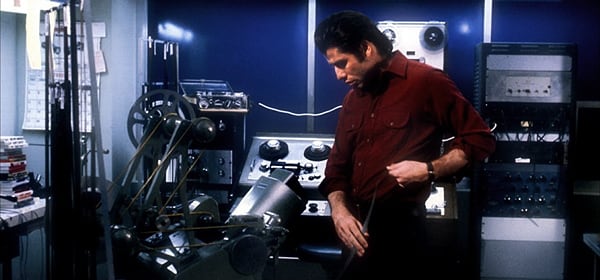
As I originally saw it as a college student all about public radio and “getting great nat (natural) analog sound,” it’s always been my favorite. Seen now, with its retro technology of celluloid “film” and audio recorded via NAGRA portable reel-to-reel recorders on quarter inch magnetic tape, which was then sliced with razor blades and spliced onto mix tapes for a sound track, it’s an adoring relic for a near forgotten craft.

I remember being dazzled back then. I don’t know if it tops “Dressed to Kill (1980)” or the cultishly adored “Scarface (1983).” But it’s decently-acted, tough, stylish and pitiless, and stands out for a lot more than its pioneering Steadicam (hand-held heavy 35mm film cameras) and famed two minute “360 degree pan” of an editing lab as Travolta’s character frantically searches for “evidence” that has been “magnetically” erased.

Travolta is Jack Terry, a soundman in the horror B-movie market in Philadelphia, a cynic who is sent in search of a more perfect “scream” by his longtime director, and for “fresh” sound effects of wind and the like.

That’s how he’s under that bridge late at night, with its riverside walkway, taping wind and owls and frogs and canoodling lovers. That’s where his all-hearing (exaggerated) “shotgun mike” picks up the sound of a rifle shot just before a sedan blows a tires and careens into the river.

Jack tries to rescue the driver, but finds only a woman (Nancy Allen), gasping for breath as the car sinks. Jack saves her. But in the hospital, this simple heroic act is overshadowed by the dead driver of the car.

“That stiff on the stretcher was probably the next president of the United States!”

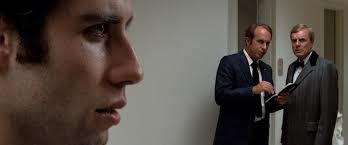
Jack comforts the sedated Sally (Allen), and then finds himself strong-armed by the aid (John McMartin) of the dead governor and rival to an unpopular president. The girl “was never there.” Jack won’t “talk.” Etc.

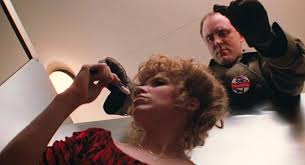
But with her cloud of curls and kewpie doll voice, Sally is irrestible to Jack. As he tries to connect with her, their pact of silence comes under question. The cops and politicos might be willing to hush this all up. The shooter (John Lithgow at his most menacing)? He’s sure to be fretting over “loose ends.”

De Palma allegedly based this James Bond wannabe on Nixon’s aid G. Gordon Liddy, and Lithgow oozes menace and an almost mechanical, on-the-spectrum idea of tidiness. He will kill a few women (starting with the accidental murder of the wrong person), convince the media there’s a “Liberty Bell” serial killer on the loose, and get around to Sally. Eventually.

Jack? He’s smart enough to see the rising threat level and the dangers of anonymity and keeping the story quiet.

The twists are more conventional than Michael Caine in a dress (“Dressed to Kill”), with Dennis Franz as a sleazy private eye, John Aquino as a lazy, paid-to-be-disinterested cop. Jack’s flashback-told back story includes a stretch working — via secret recordings — to help catch crooked cops.

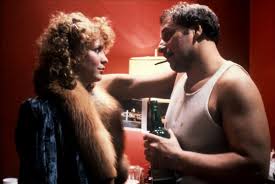
Travolta and Allen, who was married to De Palma at the time, reteam for the first time since “Carrie” to good effect, even if Allen’s character is pretty much a caricature of a “dim” Debby.

The set-pieces they’re hurled through, a Jeep chase through a parade, a mad dash to save a wired-for-sound Sally from the assassin, still pop.

But what blew young film fans away back in the day is the same thing cinephiles still embrace about this homage to Antonioni and Analog. The film’s technique is packed with sizzle, from those hand-held sequences and 360 pans to split screens and split focus (diopter lens) capturing an actor in the background or forground, and something caught in extreme close-up in the other half of the lens-captured image.

Film buffs are often techno nerds, diving into how Kubrick did this, Lucas did that or Hitchcock managed his effects in a simpler “in camera” or “practical” effects era. We went nuts over “Blow Out” when it came out, with or without the fun, inside-film-fandom “Blow Up” connection.

But rewatching it after many years, I had my own flashbacks about my initial reaction. The picture explodes out of the gate, starts to slow as the conspiracy becomes obvious, and peaks at the one hour mark, where that famous 360 degree circling pan turns up.

Everything between there and the Big Finish is relatively forgettable, low-heat “unraveling the plot” exposition and the like.

“Blow Out” is still great, still a classic and still has a bit of the sizzle it came into the world with. But as a pulse-pounding picture, De Palma lets the air out of that tire too soon, and takes a little too long to pump it back in.

Rating: R, graphic violence, sex, nudity, profanity, smoking

Cast: John Travolta, Nancy Allen, John Lithgow, Dennis Franz, John Aquino and John McMartin

Credits: Scripted and directed by Brian De Palma. An MGM release streaming on Tubi, Amazon, et al.

Running time: 1:47

Posted in Reviews, previews, profiles and movie news | Comments Off on Classic Film Review: De Palma’s homage to Antonioni and Analog — “Blow Out” (1981)

Movie Preview: A faith-based movie about faith tested by fascism — “Bonhoeffer”

Interesting subject for Angel Studios, those “Sound of Freedom” jackpot winners, to put out in an election year.

But remembering the politics of their fan base, they’ve timidly decided to release this AFTER the election, on Nov. 22.

There’ve been documentaries and even other feature films on Diedrich Bonhoeffer, a Christian hero martyred by the Third Reich.

That’s because Germans and the rest of the world remember a selfless preacher znd theologian who stood up to racism, xenophobia, genocide and other crimes against humanity.

We rarely remember the toadies who joined in the hate-mongering Nazis from the pulpit. There were plenty of those, then and now. Or cowardly film distributors who mute the message of an anti fascist preacher by holding their film’s release until after the mob has already voted.

Jonas Dassler has the title role in a film written and directed by the screenwriter of “The Professor and the Madman” and “Sully,” Todd Komarnicki.” This could be good. Holding it until after the election isn’t good.

I thought there was a newer trailer to this, as I saw one among the previews before catching “Summer  Camp.” When I find it I will replace this one.

Posted in Reviews, previews, profiles and movie news | Comments Off on Movie Preview: A faith-based movie about faith tested by fascism — “Bonhoeffer”

Documentary Review: Ron Howard’s “Jim Henson: Idea Man,” pays homage to a “once in a generation genius”

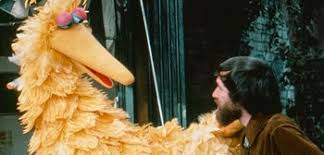
It’s no surprise that Ron Howard turns out to be the perfect filmmaker to conjure up an affectionate, admiring and moving documentary on the Man behind the Muppets, Jim Henson.

“Jim Henson: Idea Man,” gets at the creative mind, the work process and the work ethic of a Walt Disney level innovator and entertainer. This sweet, nostalgic and thorough documentary taps into Henson’s wide-ranging curiosity and lifetime of invention, new challenges and collaboration.

There’s a special emphasis on his wife Jane’s role in that Big Idea — the puppet/marionettes they named Muppets, and on Frank Oz, his employee and protege and work “other half.”

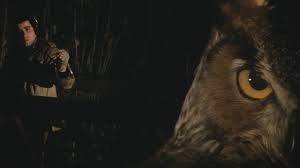
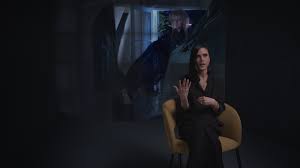
And Howard takes care to find just the right people to sing Henson’s praises — EGOT winner Rita Moreno, one of the most memorable “Muppet Show” guests, Oscar winner Jennifer Connelly, who as a child actress co-starred in Henson’s film fantasy “Labyrinth,” and the great Orson Welles, a “genius” of his generation who interviewed Henson for a failed pilot for a TV chat show, and who might have been the first to label Henson a “genius.”

Welles also joked about Henson’s resemblence to “Rasputin,” which fits in with Howard’s other agenda for the film, playing up the sense of fun that drove everything Henson did. There are a lot of laughs in this documentary, all of them provided by Henson’s puppet creations.

What’s freshest about the film is exploring Henson’s determination to experiment, innovate and take big financial risks on his Next Big Thing. He made experimental films — animated and playful live action shorts — almost all of his life. He planned a wildly cinematic kaleidoscopic chain of ’60s discoteques before “Sesame Street” came calling. He did full-body puppet costume screen tests for a possible Broadway show.

“When you get an idea,” Henson narrated in one experimental short, “you have to look at it from every direction.” This, in turn “gives you other ideas.” Henson had a lot of ideas and, collaborating with others, took the time to explore them.

“His inner life must have been sparkling,”marvels Oz, who knew him better than most.

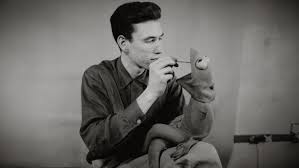
“Idea Man” skips through Henson’s Mississipi childhood (son of a Dept. of Agriculture agronomist) and his childhood fascination with this new gadget, television. As a college freshman (as the University of Maryland), a call went out for a puppeteer on a local Washington, D.C. TV station. Henson, fresh out of a puppetry class at university, grabbed the job.

He was 18 years old, and as those DC “Muppets,” also performed by his upperclasswoman classmate and future wife, Jane Nebel, caught on, the die was cast. Henson had stumbled into his life’s work.

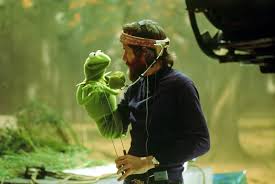
Howard’s film covers most of the bases of Henson’s rise to fame, his accidental embrace of “getting television to teach” with “Sesame Street,” creating the first Kermit the Frog out of his mother’s old coat, his first “star” character, Rowlf the Dog, and the triumph of “The Muppet Show,” a ’70s TV variety series that became, “for its day, the most watched television show in history.”

If you’ve forgotten how funny those shows still are, “Idea Man” refreshes your memory. It speaks to Henson’s ever-curious mind that he ended the British-produced syndicated series — no American TV network wanted it — after five seasons, still very much on top, beloved by children and adults alike for its corny “music hall” comedy and slapstick and inventiveness.

Henson’s life has been explored in books and an award-winning Youtube channel devoted six episodes to sampling the long career the “Idea Man” packed into a too-short life.

But Howard’s terrific film doesn’t just hit the highlights — Big Bird and Bert & Ernie to Kermit, “The Dark Crystal” and “Fraggle Rock.” It gets at the essence of an “Idea Man,” who was all set to try some Next Big Thing when he sold his company to Disney. I was at Disney World, covering the Henson/Michael Eisner press conference where Henson explained the sale, and remember wondering how that partnership would play out.

Months later, he was dead at 53. “Idea Man” takes pains not to blame Henson’s Christian Science upbringing for his reluctance to see a doctor about the strep infection he neglected until it killed him.

That connects to the film’s real subtext. Real “geniuses” are often workaholics. Henson’s puppetry was grueling work, discussed in detail by Oz, who voiced and performed Miss Piggy and scores of other characters, and shown in rare behind the scenes footage of Henson crawling into a space underneath the hull of that flat-bottomed swamp rowboat that we see Kermit the Frog row in “The Muppet Movie” — a boat sitting in a real swamp.

Henson didn’t live long. But his restless mind and energy were devoted to sweet-natured and sometimes challenging entertainment — he never wanted to be a “children’s puppeteer” — that he produced with almost every waking second. “Idea Man” reminds us that the ideas he explored live on after him.

Rating: PG

Cast: Jim Henson, Frank Oz, Fran Brill, Brian Henson, Lisa Henson, Cheryl Henson, Orson Welles, Bernie Brillstein, Rita Moreno and Jennifer Connelly.

Credits: Directed by Ron Howard, scripted by Mark Monroe. A Disney+ release.

Running time: 1:48

Posted in Reviews, previews, profiles and movie news | Comments Off on Documentary Review: Ron Howard’s “Jim Henson: Idea Man,” pays homage to a “once in a generation genius”