Few movies about getting sober are as brilliant at conveying the allure of drowning, wallowing in alcohol, the emotional and physical liberation it seems to offer, as “The Outrun.” And rare is the story told within this most personal of experiences that exults in its trials, the gut check of “one day at a time” and the exultant release from the trap of addiction.
Saoirse Ronan is mesmerizing in this film, based on journalist Amy Liprot’s memoir (she co-wrote the script), which in director Nora Fingscheidt’s hands becomes an Orkney Islands travelogue, a healing-through-isolation-in-nature drama and a tour de force for Ronan, a great actress who gives herself over to this part to a degree we’ve never seen before.
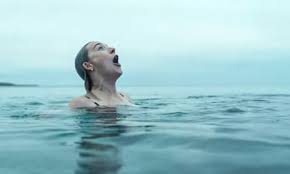
A film that immerses us in the out-of-control, drink-your-blues-at-bay blur of addiction, filmed in the staggering, extreme closeups of a series of Hackney, London benders, “Outrun” contrasts that with being alone in a harsh environment, cornered into a confrontation with who you are, shocked by the ice-cold North Sea, the bracing, omnipresent wind and wildlife that take you out of yourself, your problems and your head.
It’s a tone poem of recovery, a windswept ballet of “choosing life,” and one of the best pictures of the year.
The story’s simplicity is framed within that one simple question addicts on the mend ask one another.
“How long you been sober?”
The movie tracks the answer to that from “0” days through “63 days,” “the steepest bit,” and beyond via that question and onscreen graphics. Through flashbacks, we see what 29 year-old Rona’s illness and the accompanying impulse control has cost her — dignity, a love affair, focus and physical and psychological injuries.
Ronan narrates the story of Rona through poetic observations about the differences in the islands, local lore and myth, and of her life there. She grew up on a 150 acre farm, helping her parents with the sheep. They’ve split up now, with Mom (Saskia Reeves) retreating into religion and dad (Stephen Dillane) reduced to living in a battered trailer.
Her father, we learn, has medically untreated manic episodes which alcohol abuse exacerbates. It’s through understanding her own issues that Rona will come to see her father in the cold light of knowing.
We meet Rona after grad school, an unemployed biologist who needs further schooling to actually do anything with this direction she’s taken. Moving back and forth through her life, we see the constant close-down-the-clubs/pubs habit, the ugly drunk she becomes at the end of the night, emptying every abandoned glass and bottle in the place as the staff tries to get this staggering last “regular” out the door.
She is a violent drunk. But somehow, she found love, and the film shows us — for the umpteenth time — how an alcoholic hides her bottles, if not her drunken behavior, from an increasingly despairing partner, here named Daynin (Paapa Essiedu).
Mom’s prayers for her smart trainwreck of a daughter include a suggestion. A wildlife conservation group needs monitors on the islands to count the shrinking local population of Corn crakes, which she can only find by listening for them. And she might be good at talking to her fellow farm folk about improved practices that will aid the wildlife population.
We see Rona get the job, witness how she fits into her place on “Mainland” island, and how that’s uprooted as she travels by ferry and puddle-jumper airplane to one of the Papa islands for this new work.
“I have a life to get back to in London” fades as the days sober add up, Rona joins meetings large and on the smallest island, tiny — just four older, burly men and her.
Her headphones blast the techo beat of her club cruising/dancing past, but the music of the howling wind drags her to awareness.
“I study my personal geology,” is how the budding scientist puts it. She swims with the seals. And she faces up to her lowest of the low moments, and what it cost her.
Continue reading →











 Movie Nation