Classic Film Review: Gable, Gardner and Grace switch partners on Safari — “Mogambo” (1953)

Every classic film fan has her or his go-to stars, just as film fans did back when the movies were young, or stepping into middle age. I’ll watch most anything with Bogart and/or Bacall, William Powell, Gary Cooper, Joel McRea, Dick Powell, Stanwyck, Fonda, Cary Grant, Jimmy Stewart or Gregory Peck in it.

Any film John Wayne did with Howard Hawks or John Ford is worth watching and re-watching. Glenn Ford? Alan Ladd? Take’em or leave’em, depending on the subject, the setting, the director and the studio the movie was made under.

But to my tastes, life is too short to waste on movies starring Robert Taylor, Spencer Tracy, Randolph Scott or Van Johnson.

And I never warmed to “The King,” either. Clark Gable, who made most of his pictures for big-budget, high-gloss MGM, had his moments — “It Happened One Night” and “Red Dust” stand out. But maybe it was the gloss MGM packaged him in, his acting style, which isn’t aging as well as more “natural” performances by many of his peers (Peck, Stewart, Fonda and Ford especially). But something always feels “off” in his Hemingwayesque posing and posturing, the starchy machismo he clung to as if he had no greater fear than being perceived as “soft.”

“Mogambo” (1953) gave the ageing star in one of his last macho hits, an on-location-in-Africa spectacle that paired The King of MGM with one of the greatest American directors for a romantic thriller of “The Great White Hunter” school.

It’s old fashioned, as more evolved generations see Big Game hunting — even just to capture animals for zoos and circuses — as barbaric and destructive. The greying, 50something Gable doesn’t just “get the girl,” he all but has his choice of two leading ladies in this love triangle story set on a safari.

Grace Kelly was less than half his age. Ava Gardner was 20 years his junior and too much woman for him, or almost anybody any studio paired her up with.

But off we, he and legendary Western filmmaker John Ford go into the wilds of British colonies that became Uganda, Tanzania and Kenya for the story of a bachelor safari leader tempted by two women who fall under his gaze.

Vic Marswell (Gable) runs a business where he has to maintain good relations with the natives as he leads well-heeled customers on hunts or expeditions, often capturing wild animals with one competent subordinate (Philip Stainton) and one malevolently incompetent one (Eric Pohlmann).

Then this blast of blowsy, showgirl sex appeal shows up. Gardner plays Eloise “Honey Bear” Kelly, a brassy broad summoned by her “old pal,” a maharaja, only to discover the rich twit left days before.

Vic doesn’t like having women around, but he’s knocked-down and kept on his heels by this dame.

She calls him “Mister whoever-you-are” and “my little white hunter,” and when she sees him in safari shorts, gives him a “Bless your big bony knees.”

Her “Look, Buster, don’t you get overstimulated with me!” warns him off.

As she cuddles with the caged critters — some of them not that cuddly — he sizes her up. He knows her “type,” he says — “not an honest feeling from her kneecap to her neck.”

It must be love. Or would be, if she wasn’t anxious to catch the first boat back out of the middle-of-nowhere. And when Vic’s scientist-client (Donald Sinden) and his very young wife (Grace Kelly) arrive as Vic’s next clients, only an Act of God, or engine trouble on the boat, could trap Honey Bear here with Vic’s next woman of interest, the beautiful Brit blonde married to a sickly anthropologist.

That manly Gable always needed an Ashley Wilkes he could show up in movies like this. But worldwise Honey Bear sees Vic as he really is.

“This is no Sir Galahad who loves from afar. This is a two-legged boa constrictor.”

Unspoiled African scenery (mixed with a lot of soundstage shots), wild animals in cagees, or in second unit nature footage inserts aside, this is Gardner’s picture. It’s not quite lifeless when she’s not on camera, but Gable’s posturing and posing — the fodder of generations of comic impersonators — gets old after a bit.

Kelly’s winsome protests meant to hide animal lust because “Women always fall for ‘The Great White Hunter'” are little more than a plot device. But our leading man was still picking his leading ladies up — literally — when the need arose.

Movies in this setting during that era make one all but expect racism, but despite filming in the middle of the Mau Mau Uprising in Kenya, or perhaps because of it (Gable had bodyguards, Ford had to change locations due to threats) there’s little of that nature here — just a generally patronizing American and European attitude towards the sometimes servile natives, some of it conveyed by the mere presence of a Catholic missionary-priest (Denis O’Dea).

It’s the animal stuff that’s more likely to carry a cringe these days.

There’s very little action, but it’s ably conveyed by Gable’s glowering take on his character’s shoot-from-the-hip experience with this world.

This was Gable and MGM’s second take on this story, as 1932’s “Red Dust” was the picture that made his name with the studio, with the same screenwriter (John Lee Mahin) adapting the play it’s based on anew, transplanting it from pre-WWII Vietnam to post-war Africa.

That film, a “pre-code” drama co-starring Jean Harlow, was lusty and virile and transgressive, with Gable’s adulterous rogue walking a finer line between likable and loathsome. Ford’s take on this tale is more scenic, but the adultery is tame and aside from Gardner, the whole enterprise is humorless.

Howard Hawks took John Wayne to Africa for the more rambunctious men-among-men Big Game (trapping) safari comedy “Hatari” a decade later, and got a better picture out of it, even if the attitudes in it are little more enlightened.

“Mogambo” isn’t all that, but it isn’t bad. And it says something for audience’s long-standing love for Gable that it became a good-sized hit, despite coming out less than a year after the similar and edgier Peck/Gardner and Susan Hayward Hemingway adaptation “The Snows of Kilimanjaro.”

Today it’s most interesting as a lesser picture in the Ford canon, and a movie that prolonged Gable’s leading man career long enough for him to joke around in Doris Day’s limelight in “Teacher’s Pet,” get upstaged by the scenery-chewing Burt Lancaster in the sub thriller “Run Silent, Run Deep” and earn a nice grace note for his long career by sacrificing what was left of his health enduring Marilyn Monroe and John Huston in the desert of “The Misfits.”

It was always good to be “The King of Hollywood,” even if too much of the time, you watched Gable and wondered who else could have done that part, and maybe given it another dimension or two.

Rating: PG, violence, adultery, smoking

Cast: Clark Gable, Ava Gardner, Grace Kelly, Donald Sinden, Philip Stainton, Eric Pohlmann and Denis O’Dea.

Credits: Directed by John Ford, scripted by John Lee Mahin, based on the play “Red Dust” by Wilson Collison. An MGM release on Tubi, Amazon, etc.

Running time: 1:53

Posted in Reviews, previews, profiles and movie news | Tagged , , , , , | Comments Off on Classic Film Review: Gable, Gardner and Grace switch partners on Safari — “Mogambo” (1953)

Movie Preview: Michael Cera,  a Spielberg and a Scorsese celebrate  “Christmas Eve in Miller’s Point”

Elsie Fisher and Gregg Turkington also star in this offbeat romp.

A multi generational Italian family holiday gathering in the ancestral home turns testy? Go figure.

Throw in a couple of Hollywood “nepo babies” and you get financing.

This hits theaters Nov. 8.

Posted in Reviews, previews, profiles and movie news | Comments Off on Movie Preview: Michael Cera,  a Spielberg and a Scorsese celebrate  “Christmas Eve in Miller’s Point”

Movie Preview: Dylan for the Holidays, a new trailer for “A Complete Unknown”

Any dude with the barest hint of a singing voice and a lot of adenoids can manage a Bob Dylan impression with just a little practice.

The bigger test in this Dec. 25 release will be if Monica Barbero can summon up the ethereal range and soul of Joan Baez, if indeed they’re letting her sing like Joan.

Love the casting of Boyd Holbrook atsJohnny Cash, badass. That works. Director James Mangold (“Walk the Line”) knows a good Cash when he sees him.

Edward Norton’s Pete Seeger, Norbert Leo Butz is folklorist/record producer Alan Lomax, Dan Fogler becomes agent Albert Grossman, Scoot McNairy is aged legend Woody Guthrie and, for Dylan fanatics, Charlie Tahan plays guitarist turned first-time-ever organist Al Kooper on that legendary “Like a Rolling Stone” recording session.

It may dazzle, and I can’t imagine it won’t at least occasionally thrill fans of the Bard of the Iron Range.

Posted in Reviews, previews, profiles and movie news | Comments Off on Movie Preview: Dylan for the Holidays, a new trailer for “A Complete Unknown”

Netflixable? A Colorless Cast reminds us that a body-switch thriller is not just “It’s What’s Inside”

“It’s What’s Inside” is a high-concept body-switch thriller that relies on performances to convince us that this or that little-known to utterly-anonymous actors has switched roles to come off.

They don’t and it doesn’t.

While writer-director Greg Jardin does his level best to bowl us over with “technique” (split screens, endless 360 degree handheld pans, etc.) and does a decent enough job at complicating his role-playing-game-run-amok plot, a somewhat bland cast of players can’t manage to convince us that they’re possessed by the mind and spirit of someone else.

Making all of the characters “types” — the influencer, the tech nerd, the Buddist hippy chick, the rich dude, the hothead — and the other three so uninteresting as to barely qualify as “types” doesn’t help. Because these college pals meeting years after school at the mansion of the richest member of their ranks aren’t distinct enough as characters and aren’t good enough actors to “suggest” that some other colorless character is under their skin.

The best-known among this crew is “White Lotus” alumna Brittany O’Grady, playing the seriously sexy but shy Shelby who can’t interest her not-in-her-league beau Cyrus (James Morosini) to role-play revive their years-together-and-no-ring sex life.

That doesn’t keep them from showing up at the pre-wedding fete rich Reuben (Devon Terrell) is throwing himself at his artist/mother’s country estate.

Reuben also invited pretty advice-to-the-lovelorn vlogger Nikki (Alicia Debham-Carey), artist Brooke (Reina Hardesty), hippy Maya (Nina Bloomgarden) and blustery “bro” Dennis (Gavin Leatherwood).

And as a wild card, he’s summoned the guy whom he and Dennis had a hand in getting expelled from college. Forbes (David W. Thompson, whose credits go back to “Win Win”) went West and became a tech success. Is he still holding a grudge?

The “edge” of his arrival is taken off by this gadget he brings in a green suitcase. You just tape a couple of electrodes on your skull and those skulls around you and this thingy (VERY analog looking) will “download” your “brain files” into whoever, with other “brain files” uploaded into your head.

This gadget is basically an electronic aid for “role playing,” as characters body-switch and act on impulses — cheating, tricking, betraying, or in the case of Cyrus and to some degree Shelby, “avoiding” that outcome.

“Call me Nikki!” “Nikki.” “Say it AGAIN.”

The conceit doesn’t work because nobody in this in crew is convincingly switched to another body. The cast is a pretty and pretty generic lot stuck playing a forgettable collection of types. And even the more outgoing characters, the easiest ones to “switch,” make little impression in that regard.

And then there’s an “accident” and the party turns to chaos as characters blackmail one another to achieve some goal — a sexier life, a richer life, a better pairing, avoiding jail, etc.

The final act works much better than the earlier ones because the performances finally achieve some level of “out there,” with bigger emotions, higher stakes and evil twists that arrive in a seriously confusing blur.

But even then, the cast doesn’t manage to adequately convey a new persona inside someone else’s body. A lame joke about whether Dennis has license to use “the N-word” when he’s inside Reuben is about as far as that goes.

The title “It’s What’s Inside” demands that we buy in to the switches. But the cast’s inability — pretty much to a one — to manufacture the externals necessary to make their transformations believable does in writer-director Greg Jardin’s superficially showy feature film debut.

A little less camera blocking and a lot more rehearsal could have worked wonders on this set.

Rating: R, sex, violence, profanity

Cast: Brittany O’Grady, James Morosini, Alicia Debnam-Carey, Devon Terrell, Gavin Leatherwood, Reina Hardesty, David W. Thompson and Nina Bloomgarden

Credits: Scripted and directed by Greg Jardin. A Netflix release.

Running time: 1:43

Posted in Reviews, previews, profiles and movie news | Tagged , , , , | Comments Off on Netflixable? A Colorless Cast reminds us that a body-switch thriller is not just “It’s What’s Inside”

Movie Preview: Brit fools find “Time Travel is Dangerous”

Megan Stevenson, Ruth Syratt, Jane Horrocks and Sophie Thompson are in the cast, Stephen Fry narrates, much as he did the “Hitchhiker’s Guide to the Galaxy” movie.

But this looks 1963 “Doctor Who” cheap, goofy and sure to be a festival darling (it’s just now starting its fest run) if it’s any good at all. It premieres in Austin, if you’re heading for the only tolerable corner of Texas.

Posted in Reviews, previews, profiles and movie news | Comments Off on Movie Preview: Brit fools find “Time Travel is Dangerous”

Movie Preview: Zoe Saldana, Karla Sofía Gascón and Selena Gomez star in Gender-Bending Cartel tale “Emilia Pérez”

Edgar Ramírez and Adriana Paz also star in this edgy tale of a cartel kingpin who wants to retire…as a queen.

Audacious Jacques Audiard wrote “A Prophet” and “Rust & Bone” and this comic thriller/musical.

Limited theatrical release as this could be an awards contender, Netflix Nov. 13.

Posted in Reviews, previews, profiles and movie news | Comments Off on Movie Preview: Zoe Saldana, Karla Sofía Gascón and Selena Gomez star in Gender-Bending Cartel tale “Emilia Pérez”

Movie Review: Joseph Gordon-Levitt braves the “Killer Heat” to solve a Crime on Crete

Joseph Gordon-Levitt gets to play a detective’s “Eureka” moment in “Killer Heat,” a new mystery thriller from the French director “Night of the Kings.”

As ex-NYC cop (Aren’t they all?) Nick Bali, he rolls his eyes, paces the crime scene and holds his arms open wide in his best “How did I miss this?”

And we, the viewers, wonder the same damned thing. Because Nick’s epiphany comes one hour and eight minutes in this scenic but generic private eye tale. The average viewer figured all this out an hour (or more) earlier.

The film is set in the Zorba the Greek corner of the Med, the under-filmed island of Crete, which is a plus. Beaches by “the wine dark sea,” an ancient, fortified harbor, twisty, scenic roads winding into the the rocky hills to the edge of even rockier cliffs, this picture is a postcard from a trip you’ll want to take, regardless of the muddled murder mystery that is the movie’s reason for being.

Gordon-Levitt’s got the private eye hat and world-weary gumshoe narration down. The script has him go on and on about “the myth about the guy who flew too high.” What was his name? Oh yeah, “Icarus.”

“Sometimes you use a carrot,” Nick growls in Gordon-Levitt’s best film noir PI voice-over, “Sometimes you use a stick. Sometimes you just lie your ass off.”

He does this all the way through the picture. And considering what the screenplay has Shailene Woodley play, JGL got off easily. Almost every line from the formidable Woodley is exposition, back-story or “explanation.” Actors look at scripts loaded with that for dialogue and mutter “Oh yay. But at least I get a free trip to Crete.”

Woodley plays Penelope, an American with a name from Homer’s “Odyssey” who married money. But the the young director of the family shipping concern (Richard Madden) has died in a free solo climbing accident up those cliffs. Penelope married the dead man’s twin brother, and has her suspicions about what really happened.

So does the viewer and by extension, the reader of this review. But let’s soldier on no matter what we instantly start to “think.”

Continue reading
Posted in Reviews, previews, profiles and movie news | Tagged , , , , , | Comments Off on Movie Review: Joseph Gordon-Levitt braves the “Killer Heat” to solve a Crime on Crete

Movie Preview: Coming of age, “Escaping Ohio”

She’s ready to flee the nest and move to California. He’s determined to make the case that staying in the Buckeye State is her first, best destiny.

Alas, he doesn’t turn on the weather channel and show her the wide swath of 105 degree+ days assaulting the climate-changed West Coast. Might have sealed the deal.

Then again, she could point to Ohio politics, the Gym Jordans and J.D. Vances, and say “Sayonara.”

Jessica Michael Davis directed, and co-wrote and co-stars in this with Collin Kelly-Sordelet.

“Escaping Ohio” has finished its festival run and Gravitas Ventures has it. Release date? The dears didn’t put that on the trailer, which suggests straight-to-streaming.

Posted in Reviews, previews, profiles and movie news | Comments Off on Movie Preview: Coming of age, “Escaping Ohio”

Movie Preview: Thomasin McKenzie, James Norton and Bill Nighy deliver “Joy” as the scientists who developed In Vitro Fertilization

I interviewed Dr. Patrick Steptoe, who pioneered “test tube babies,” when he traveled America for a lecture series some years back.

Netflix holding back this British film about a hot button political subject seems like cowardice or worse.

Nov. 22. By which time the dunderheads here could have voted this procedure out of existence.

Posted in Reviews, previews, profiles and movie news | Comments Off on Movie Preview: Thomasin McKenzie, James Norton and Bill Nighy deliver “Joy” as the scientists who developed In Vitro Fertilization

Classic Film Review: As Glimpsed in “Joker: folie à deux” — a Minnelli, Astaire and Charisse musical, “The Band Wagon” (1953)

Nothing in a movie is there by accident.

So it’s worth pondering why the 1953 screen musical “The Band Wagon” is the movie that patients/inmates at the Arkham Hospital for the Criminally Insane watch in “Joker: Folie à Deux.”

The musical, one of the last hurrahs of MGM’s “Freed Unit” golden age, inspires the smitten future Harley Quinn (Lady Gaga) to torch the mental institution so that she and Arthur “Joker” Fleck (Joaquin Phoenix) can attempt their escape. Or perhaps they’re just bored. The movie’s as old-fashioned as they get.

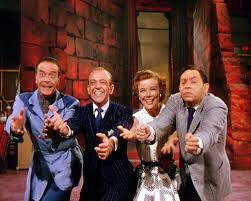
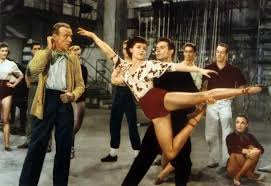
“The Band Wagon” is a show about putting on a show, a “42nd Street Lite” song-and-dance about the process of rewriting, staging and rehearsing a big Broadway show. The film emphasizes the messiness of that process.

But despite having musical auteur Vincent Minnelli behind the camera, and veteran hoofer Fred Astaire, along with Cyd Charisse, Nanette Fabray and piano prodigy and famed wit Oscar Levant on camera, it stumbles and struggles to come together before choreographer Michael Kidd’s dance and the stars who dance it blow us away for a big finish.

Perhaps “Joker” director Todd Phillips took inspiration as he struggled to find a tone, shape and form for his Great American Songbook jukebox musical riff on the darkest comic book franchise of them all. Maybe he sees in “Band Wagon” the quintessence of how musicals work and worm their way into memory and only truly come into their own years later via staying power.

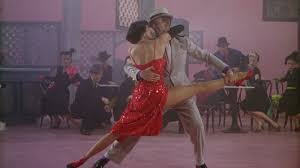
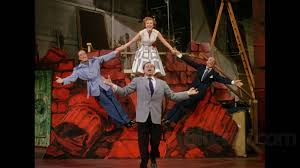
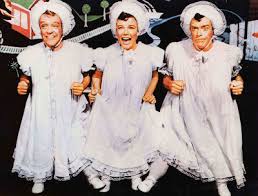
It’s not the “story” or filler numbers that we remember from this 1953 classic. It’s the show-stoppers, the famed “Triplets” song and stunt featuring Astaire, Fabray and scene-and-picture-stealing Jack Buchanan dressed and photographed as tiny toddlers, the noirish, sexy-as-all-get-out big dance “Girl Hunt” finale, the “signature tune” that one and all put over that matters.

“Band Wagon’s” “That’s Entertainment!” was used as the title to an epic 1974 film-clips documentary about MGM’s long history of musicals, which I remember being broken into two parts for airing on TV back then. That doc was nothing but “the most memorable” moments from musicals, which is how many of them endure, “the great parts,” and which may be how “Joker 2” finds an afterlife.

“Band Wagon” already endures, one of the most highly-regarded late period MGM musicals. But there’s a case to be made for how corny and clunky the story is, how strained the laughs, how inane more than one of the song and dance numbers seems 70-plus years later.

Whatever its “memorable moments,” it’s no “Singin’ in the Rain” or “An American in Paris.”

The story concerns fading Hollywood song-and-dance man Tony Hunter (Astaire), a dapper dude still wearing straw boaters in a decade where even fedoras were becoming passe. He’s traveling to New York on the down low, hoping to give his career a lift by doing a musical play instead of waiting for another movie, which may never come.

 “He was good 12, 15 years ago” a couple of gents on the train allow, and Tony — overhearing — agrees.

“That Tony Hunter’s a has-been.”

“I’ll go my way by myself,” he sings, on the station platform, a faded star seeing all the reporters waiting for Ava Gardner (playing herself).

But old friends the Martons, Lester and Lily (Levant and Fabray) have a new show for him, a musical about a respected illustrator who moonlights writing and illustrating lurid crime novels. It’ll be a hoot, they assure Tony.

The director they have in mind is a Broadway tyro, starring in “Oedipus Rex” and directing two other shows at the same time. We and they meet Jeffrey Cordova as he takes his many bows at the end of “Oedipus,” correcting co-stars and stage-hands in between curtain calls, and he bowls over “has-been” Tony. Almost.

Tony’s got to change with the times, and Cordova (Buchanan) is just the man to make him do it. The show? He hasn’t read the script. And hearing it summarized, he fixates on the “sells his soul” aspect of a respected artist making pulp.

“It’s ‘FAUST!'”

“Let’s get this straight, I am not Nijinsky,” Tony protests. “I am not Marlon Brando. I am Mrs. Hunter’s little boy, Tony, song and dance man.”

But his protests are to no avail, as Cordova charges the Martons to rewrite the show into genre-bending “art.”

We will follow this production through rushed rewrites, casting call and rehearsal montages, a disastrous tech rehearsal, busted full dress rehearsal, opening night “out of town,” and afterward.

We only get a blast of the new “musical revue” (songs from previous shows, often reimagined) that comes from all this “Faust” fiddling and abandoning in the film’s killer third act. That all by itself ensured “The Band Wagon” merited preservation by the Library of Congress’ National Film Registry.

For me, catching up with this film after many years, the struggles to find laughs and novelty and charm in the early acts reminded me of why I rarely stopped on this film when channel surfing, and had little burning desire to sit through it again in the Golden Age of Streaming.

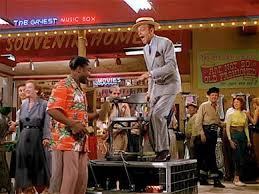
But soundstage-bound or exterior “establishing” shots, it’s Technicolor gorgeous, even as Astaire is prancing through a pre-Civil Rights Era “A Shine on My Shoes,” a song and (studied but still limited) dance that wouldn’t amount to anything but filler, even without the cringy Black shoeshiner (Leroy Daniels) as “audience” to Tony’s dance around his shoeshine station.

The funniest player in the movie and a “discovery” for most American film buffs is the Great Scot Jack Buchanan, turning this Broadway “type” — fey and full of ideas, some of them brilliant — into flesh and blood fun. Cordova is brilliant and convinced of his brilliance, an incisive multi-tasker who gets to the core of why something works or doesn’t work in a flash.

He’s also a blowhard, always hectoring his manager (Robert Gist) to “write down” his witticisms and insights for his next college lecture or, you know, posterity. The manager notes how he’s already used his best lines in earlier lectures, especially this one.

“In my mind, there is no difference between the magic rhythms of Bill Shakespeare’s immortal verse and the magic rhythms of Bill Robinson’s immortal feet.”

Buchanan is funny in every scene, every song and every dance and he simply steals the movie from the top billed MGM royalty leading man. Astaire only really “gets it back” in the finale.

Buchanan is the lead singer and character in “That’s Entertainment!”, the ultimate musical argument for blurring the lines between highbrow and lowbrow entertainment. Because aside from his “Faust” “Eureka” moment, Cordova’s other great gimmick is to cast a ballet star, Gabrielle Gerard (Charisse), as Tony’s co-star.

Minnelli makes the most of this comic whirlwind by having the principals see and overhear, in snippets, Cordova’s wild, extravagant pitch for the musical-to-be to investors. Every time the door opens to the drawing room where he’s extemporizing, Cordova is more and more over the top.

Buchanan makes Cordova’s manipulation of Gerard’s manager/choreographer/lover (James Mitchell) an obvious but still hilarious laugh. And Charisse, a “giantess” dancer with legitimate ballet chops, makes a formidable dance partner and rebuffing, insulting romantic foil for the 23-years-older Astraire/Tony.

She makes their “age difference” cracks sting.

“I’d audition my own grandmother” before dancing on stage with her, he insists.

“Then why don’t you audition mine? She’d be just about right for you!”

Who could resist?

Alas, when “The Band Wagon” opened, audiences resisted it. The film, opening as the Korean War wound down and music and cinema were drifting away from Tin Pan Alley and Broadway and MGM, underwhelmed.

But over the decades, Minnelli’s picture has grown in stature. Once you get past the stodgy, over-familiar and laugh-starved opening scenes, it’s easy to understand why. Once you see the great set pieces, you remember how many musicals, including “LaLaLand,” and Michael Jackson music videos were influenced by or simply borrowed from this film’s most visually brilliant touches.

That’s almost certainly why Todd Phillips shoved this not-wholly-forgotten gem into his challenging, difficult and at times flailing and grim “Joker” sequel. Critics and audiences aren’t rallying to it, but the pushback from contrary voices is already evident on social media.

Perhaps someday, “Joker: Folie à Deux” will earn the sort of post box office mortem respect that “The Band Wagon” eventually did (it collected three Oscar nominations and didn’t win any). Perhaps “That’s Entertainment!” will no longer be the ironic punchline to the violent and “experimental” comic book movie musical.

For “The Band Wagon,” that title and that song became the movie’s reputation and brand, perhaps for all time. Whatever else this show-about-a-show is, “That’s Entertainment!”

Rating: G

Cast: Fred Astaire, Nanette Fabray, Cyd Charisse, Jack Buchanan, James Mitchell and Oscar Levant

Credits: Directed by Vincent Minnelli, scripted by Betty Comden and Adolph Green, songs by Arthur Schwartz and Fred Dietz . An MGM release on Tubi, Amazon, etc.

Running time: 1:52

Posted in Reviews, previews, profiles and movie news | Tagged , , , , , , , , , | Comments Off on Classic Film Review: As Glimpsed in “Joker: folie à deux” — a Minnelli, Astaire and Charisse musical, “The Band Wagon” (1953)