As history, “Saturday Night” is the ultimate exercise in “OK, Boomer” nostalgia for “the first generation to grow up on TV.”
As entertainment, Jason Reitman’s putting-on-a-show comedy about the chaotic 1975 opening night of “Saturday Night Live” is a breathless 109 minute sprint through the names and familiar (ish) faces scrambling to make something funny and “new” and get it on the air — live.
If you want to know who’s who, you kind of had to be there, or at least remember those “Not Ready for Prime Time Players.” The show just started its 50th season, after all. Sorry, Millennials.
But for those on its wavelength, the generations who saw it live or caught its landmark sketches and parody commericials via decades of reruns or streaming samples, it’s an immersive, memory-teasing delight.
Because there’s nothing quite like chaos roiling towards a make-or-break deadline for creating comic suspense, nothing like seeing the unruly mess that went on behind the scenes to make you appreciate just what it took to get this show on the air, at least some of which those making “Saturday Night Live” now still endure on a weekly basis.
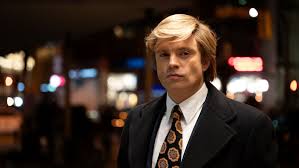
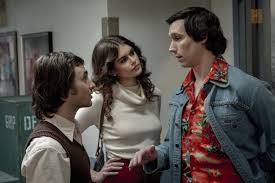
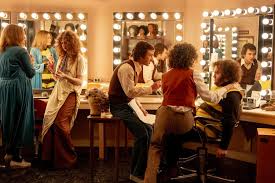
The cast of the film is played by game but mostly under-heralded look-alikes. Cory Michael Smith is the young and already insufferably arrogant Chevy Chase. Ella Hunt captures Gilda Radner at her most winsome. Emily Fairn is coquettish, out-of-her-depth trouper Laraine Newman. Kim Matula is the damned funny “hot one,” Jane Curtin, Matt Wood is the volatile, impulsive and explosively funny John Belushi and Dylan O’Brien plays that Arctic blast of manic Canadian patter, Dan Aykroyd, the MVP of that original series.
The first clever stroke of the script (by Gil Kenan and Reitman) is to have Lamorne Morris, playing the lone Black cast member Garrett Morris (they’re not related) — older, an operatic tenor, R & B singer, actor and playwright — wryly stand apart from the cast. He smokes and asks everybody within earshot, but especially the short tyro in charge, Lorne Michaels (Gabriel Labelle), variations of that one existential question eating at him on this opening night.
“What am I doing here?”
The film sets Morris up as the “token Black guy,” a casting issue the series has wrestled with since its inception, and then gives the underrated Garrett the spotlight as one of the heroes of that opening night.
Labelle’s Lorne is overwhelmed with sketches, musical guests, parody commercials and stand-up comics, practically a whole season’s worth packed onto the lineup. He is storming around 30 Rock putting out fires, soothing egos and avoiding making the MANY necessary cuts as sets are being finished, rehearsals are going badly and “suits” are closing in.
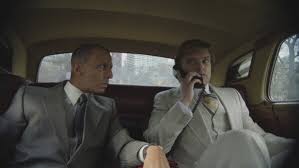
An NBC “talent” excec (Willem Dafoe) is alternately bucking Michaels up and threatening his future, as it’s his business to ensure that Johnny Carson’s latest contract negotiations end happily and this series pilot is merely a ploy in that “Tonight Show” reruns scheme.
Michaels’ not-quite-ex-wife (Rachel Sennott, perfect) is sleeping with Aykroyd — her latest conquest — keeping Belushi mollified (he hasn’t signed his contract) and making the backstage trains run on time. But what last name will she be billed under in the credits?
Producer Dick Ebersol (Cooper Hoffman) is whining about advertisers fearing the “parody” commericals, and trying to jam live Polaroid camera ads into the cast’s hands the way they did them on “The Tonight Show.”
Host George Carlin (Matthew Rhys, ferocious) is already close to a stand-up “legend,” with the raging ego to match.
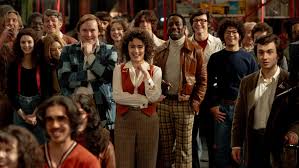
And writers (Al) Franken and Davis, Michael O’Donahue (Tommy Dewey) and stand-ups Billy Crystal and Valri Bromfield are begging for Michaels’ ear, trying to get something on the show as long-suffering director Dave Wilson (Robert Wuhl) and a Greatest Generation union crew copes with crashing light rigs, set and costume changes that have to happen in an instant and impertinant “punks” taking over Studio 8H and the National Broadcasting Company for the night.
Children’s television muppet creator Jim Henson (Nicholas Braun) is very out of place here, protesting every indignity the writers and cast members put his puppets through before rehearsal.
So many pieces of this story pass by at a blur that, like Michaels way back when, Reitman and Kenan struggle to thin this “piece of SNL lore” down to something easier to follow.
Did we really need to see insufferable TV legend and future “SNL” host Milton Berle (J.K. Simmons) and his infamous penis, whipped out to shut up Chevy Chase? Well, yes we do. It emphasizes the “old guard” that “SNL” would displace, once and for all.
And over-populating this maelstrom is kind of the point. Inventing this new thing meant throwing a lot of ideas from Lorne’s roundup of “orphaned comics” at the wall, on and off camera, and seeing what might stick.
“We can’t expect people to recognize something they’ve never seen before,” Michaels complains, extolling the “post-modern Warhol” absurdist nature of what they were trying. But some folks had seen “Monty Python’s Flying Circus” on PBS stations the previous year, so maybe we were ready after all.
The villains include a network censor as well as “Uncle Miltie” and network brass.
What will give fans of this first iteration of the long-running “SNL” their biggest thrills are the “heroes” set up here.
The wildly eccentric comic Andy Kaufman (Braun again) keeps wandering in and out of the building, in character. But when the chips are down, Andy serves up his Mighty Mouse lip-sync bit — “Here I come to save the DAAaaay!”
Chase’s ballooning ego may be stroked and stoked as network brass gives him “the tap on the shoulder” about there being a bright future for a funny “handsome Gentile” in this business. But he knows how to comically work a room full of (old white male) network affliliate managers, and when Lorne realizes he’ll never be the “on camera” guy and gives up “Weekend Update,” Chase steps in and makes it an instant institution.
Drug abuse aside, Belushi rises to the occasion, Aykroyd stops grabbing every woman in sight long enough to stand out as a star, and as a team player, wearing those short shorts for the ladies of the cast to harass in a famous “women construction workers” sketch.
Anarchic Mister Mike (O’Donahue) insults all the people who make the decisions, but the “Prince of Darkness” is humbled just before making that first-ever “live open” a memorable one.
And musical guest Billy Preston (an infectiously joyous Jean Batiste) and his band serenade in that first live audience, giving the crowd in-studio and at home that last piece of the goal here, to give viewers a taste of “a New York all-nighter” — a rock concert, lots of comedy and city-wise sex-and-drugs edge every Saturday night.
“Saturday Night” won’t be to every generation’s taste. The look-alike cast is generally good, if hardly substitutes for “the real thing” in some cases. But if you were “there,” or at least caught the show in those birthing years, it’s still cool and it’s a lot of fun, with or without the stimulants.
Rating: R, fisticuffs, drug abuse, nudity, profanity and “sexual references”
Cast: Gabriel Labelle, Rachel Sennott, Lamorne Morris, Cory Michael Smith, Ella Hunt, Emily Fairn, Kim Matula, Dylan O’Brien, Willem Dafoe, Brad Garrett and J.K. Simmons.
Credits: Directed by Jason Reitman, scripted by Gil Kenan and Jason Reitman. A Sony/Columbia release.
Running time: 1:49
















 Movie Nation