Movie Review: Post Partum Truths, Tears and Laughter through the Tears — “Another Happy Day”

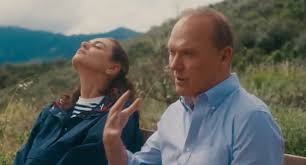
In “Another Happy Day,Lauren Lapkus plays a new mother who knows she’s no good at mothering, a frustrated, sleep-deprived young woman feeling lost and alone until she meets that not-quite-relative who says what she most needs to hear.

“I hope you’re not going to be talking about your baby because I am truly not interested.

Writer-director Nora Fiffer’s debut feature shows us the tears and hopes that we understand them. And she finds humor amid the insights about this particular version of post partum depression.

Joanna (Lupkus) tracks via her phone timer how little baby Alma is sleeping and weeps at the little sleep she herself is. She’s learning to let the phrase “You have poop on you” roll off her back and can’t process that her newborn still isn’t looking at her.

This is “the loneliest I’ve ever been.”

Partner Lucien (Jean Elie) works. Her mom won’t come “help” despite her fervent pleas/ And her peers either don’t have kids and just don’t get it, or expose her to the insipid mewling that is every baby shower she’s invited to.

Visiting her old graphic design workplace just triggers her mood swings, as she leaps from relieved to finally be talking with other adults outside of her apartment, to craving getting back to work to paranoid to permanently unemployed there thanks to finally crossing a line with a boss (Carrie Coon of “His Three Daughters”) who at least starts the conversation with sympathy because she’s “been there.”

But Mom remembers this one relative. Well, she USED to be a relative. Miriam also lives in Chicago. She used to be married to your Uncle Leonard, but that was years ago. You won’t remember. Go see her!

Miriam is quite old, but still a working actress, she insists. She has a big, rambling apartment and little to no interest in “family,” “babies” or even Joanna.

“But you can come here,” they eventually decide. Just yank out an unused dog bed — “It’s for babies!” — and sit together, keep the “chit chat” to a minimum and maybe run lines with the self-absorbed older woman.

Fiffer uses this dynamic — of course Miriam has her own secrets and “issues” — to guide Joanna to insights about her own adulthood and her child, whom she jokingly refers to as “this parasite.”

“She doesn’t love. She just needs.”

Lapkus does a mercurial turn here, serving up a young mom who is manic and panicked, exhausted and depressed, and who still remembers what it feels like to be funny and even witty “in my real life.”

Every generation experiences this trial of child-bearing anew, but Fiffer and Lapkus (“Orange is the New Black,” “Crashing” and “The Big Bang Theory”) show us the phone-search-what-that-white-spot-on-my-nipple-is parents, lost and struggling with the art of “adulting.” Joanna is still prattling on about her ambitions and her “dream” when Lucien, cradling their child, is here to remind her that “This IS the dream,” at least to some people, those who don’t prefer dogs or cats and travel and a career.

None of it could be called “deep.” But there are grins and laughs of recognition in all these sweet, unassuming “It’s your turn to think you’re reinventing parenthood” insights.

And yes, hospitals still give out lots of helpful pamphlets and website addresses, all of which have but one message to every new mom and dad.

“Don’t shake the baby!”

Rating: unrated, profanity, scatological humor

Cast: Lauren Lapkus, Jean Elie, Marilyn Dodds Franks, Tim Kazurinsky and Carrie Coon.

Credits: Scripted and directed by Nora Fiffer. A Gravitas Ventures release.

Running time: 1:30

Posted in Reviews, previews, profiles and movie news | Tagged , , , , , , | Comments Off on Movie Review: Post Partum Truths, Tears and Laughter through the Tears — “Another Happy Day”

Movie Review: Edie Falco’s a Helicopter Mom to her adult kids in “I’ll Be Right There”

Edie Falco has her best role since “Nurse Jackie” in “I’ll Be Right There,” a dramedy about an over-extended mom still dropping everything for everybody’s else’s needs well past the point she should.

Screenwriter Jim Beggarly (“Free Samples,” “A Country Called Home”) must have tailor-made this part for Falco, one that honors her screen baggage as the mistress of unconventional mothers.

Wanda is another Nurse Jackie, a juggler everybody feels the need to lean on, but who barely has the energy and personal space to keep herself upright. All her amusing-but-needy mother (Jeannie Berlin), “addiction issues” son (Charlie Tahan) or very pregnant daughter (Kayli Carter) have to do is pick up the phone and “I’ll Be Right There.”

She’s a helicopter parent in a ’90s Buick station wagon, bopping through daily freelance-bookkeeping jobs but only after taking her mother to the doctor for a Big Diagnosis, sitting in with her drug-addict son as his therapist cans him for lying and trying to help her daughter get this rush wedding planned, performed and paid for, pretty much on her own.

She’s got an ex-husband (Bradley Whitford) with new kids, a ’60s Pontiac convertible he won’t part with and no great desire to help pay for Sarah’s nuptials, and a pub owner/bookkeeping customer beau (Michael Rapaport) who adores her but whom she’s cheating on with a college professor.

That teacher, BTW, is a vivacious younger woman (Sepideh Moafi of “The L Word: Generation Q”), who’s always dropping by for a quickie.

“I have everything under control,” she insists in her most brittle Nurse Jackie voice. But long before she says “What about what I want?” we’re wondering that very thing.

The kids? “They’re at a very vulnerable time in their lives,” now. And is all that hovering helping? “Your son’s a (lying) crackhead and your daughter’s an unwed mother.”

Her mother’s got her “poker gals” and a gambling problem. And that Big Diagnosis has to be “the Big Casino.”

“I’ve had a good run, haven’t I,” Mom jokes.

The beau? He wants to help pay for her daughter’s wedding. And the side piece? She never invites Wanda to HER place, never introduces her to her friends and colleagues.

Something’s got to give, so it does.

The bland predictability of this barely-amusing-enough rural New York (Pearl River) tale takes a back seat to some winning performances, with Falco setting the tone as another overbooked stoic mother, lover, counselor and secrets-keeper.

And she’s the reason this cast, with some roles little more than cameos, showed up for work.

Director Brendan Walsh — he directed eight episodes of “Nurse Jackie” — knows the drill as Boss Falco puts another put-upon mom through her paces, one “crisis” at a time, one more ball juggled into the air, one more cell call that she answers with “I’ll Be Right There.”

Rating: unrated, adult subject matter, profanity

Cast: Edie Falco, Jeannie Berlin, Charlie Tahan, Kayli Carter, Bradley Whitford, Sepideh Moafi, Michael Rapaport and Michael Beach

Credits: Directed by Brendan Walsh, scripted by Jim Beggarly. A Brainstorm Media release.

Running time: 1:38

Posted in Reviews, previews, profiles and movie news | Tagged , , , , , , , | Comments Off on Movie Review: Edie Falco’s a Helicopter Mom to her adult kids in “I’ll Be Right There”

Movie Preview: Nicole Kidman’s a CEO who likes a younger man to call her “Babygirl”

A sexy thriller of the “I tell you what to do and you do it” persuasion. An older woman fighting back time with botox, etc., a younger man who gets her attention and then REALLY gets in her head, etc.

Harris Dickinson plays the dangerous tempation represented by a barely legal — generations apart — younger man.

And Nicole’s CEO is cheating Antonio Banderas.

This Christmas, A24 invites you to get your kink on with this thriller from actress turned writer-director (“Bodies Bodies Bodies”) Halina Reijn.

Posted in Reviews, previews, profiles and movie news | Comments Off on Movie Preview: Nicole Kidman’s a CEO who likes a younger man to call her “Babygirl”

Movie Preview: Lou Diamond Philips in Bad Guy Beard and  Drawl — “Get Fast”

James C. Clayton also stars in this B Movie action pic about robbing from the wrong guys.

The shoe and the movie drop Nov. 15.

Posted in Reviews, previews, profiles and movie news | Comments Off on Movie Preview: Lou Diamond Philips in Bad Guy Beard and  Drawl — “Get Fast”

Netflixable? Navajo hoops team Overcomes Obstacles on and off the Court — “Rez Ball”

“Rez Ball” is a feel-good sports dramedy tailor-made for teens and tweens.

It may be groaningly predictable in its adherence to formula, as most any adult sports film/basketball drama viewer knows what’s coming and when, and can even be bark out lines of dialogue before characters state the too-obvious. The ending is anti-climactic, and an excuse to pad on anti-climaxes after the anti-climax.

But this Sydney Freeland (“Drunktown’s Finest”) feature, based on a Michael Powell novel, is a sports drama that at least touches on some of the most widely known problems of Indian reservations — grinding poverty, pervasive alcoholism and a suicide-rate outstripping the rest of the population.

Its likeable, relateable characters may be sketched-in and never really understood at their own level. But decent performances parked in a striking setting — a Navajo Reservation in rural New Mexico — make it a genial, entertaining Native American run through the “Hoosiers,” “Coach Carter” and “Glory Road” playbook.

Two Chuska High School pals have big plans for their senior season on the Warriors basketball team. Nataanii (Kusem Goodwin) is the bigger star, but high-scoring Jimmy (Kauchani Bratt) isn’t exactly in his shadow.

They go together “like diabetes and frybread,” and are so good they can showboat through the ending of their season opener, irking their ex-WNBA star coach (Jessica Matten).

But the uncomfortable post-game interviews, radio coverage and a simple roadside memorial hint at what weighs on Nataanii’s mind. He lost his mother and sister in an off-season drunk driving accident. Jimmy’s back-home issues begin and end with his unemployed alcoholic mother (Julia Jones), who expects him to be a bread-winner as well as a possible college basketball recruit.

Their teammates may be a happy-go-lucky collection of “types” — one’s named Warlance, Bryson already has a “baby mama” — barely more than sketched-in as characters. But there’s enough in this lineup to challenge for a state title.

Then the worst happens, and Nataanii won’t be there for them to lean on. As the team struggles on the court (“grief” is a bit shortchanged), tempers flare and there’s nothing for it but to go beyond their normal “Rez Ball” style — “Run fast, shoot fast, don’t ever stop.”

They’ll need “The Old Ways,” a sagebrush smudging from their “new” assistant coach, Benny (Ernest Tsosie III), who ran the girls’ team when Coach Heather was a player there. They might benefit from a little teamwork training on a tiny sheep ranch out on the rez.

And they’ll need screenwriting magic to survive a string of cliffhangers and an avalanche of second chances.

The movie gets the job done, but I have to say does it rather clumsily. A big deal is made out of that “Hoosiers” assistant coach addition, but little is done with the character. Alcoholism is addressed, with nothing said about the teen drinking that goes on.

The picture’s early scenes hint at some splashy play, and racist on-court trash talk from their bitter white Catholic school rivals in Sante Fe — “You look like the guy that mows my yard. You guys related?” The trash talk turns funny when the depleted and downhearted boys’ team gets schooled and taunted by their own girls’ team in a scrimmage.

“Ever heard of DEODORANT?”

But the energy flags as the movie devotes most of its screen time to games. The novelties of this milieu — hearing “The Star Spangled Banner” in Navajo, players who don’t know their native language learning it so that they can “code talk” plays on the court — aren’t enough to overcome the script’s many trite shortcomings.

Yes, there are (occasionally) funny play-by-play/color announcers (Dallas Goldtooth and Cody Lightning) who cover the games and joke about “cultural appropriation” and “frybread.”

The cast is uneven, but game, with young Bratt (nephew of Benjamin Bratt) standing out, and Jones and Goodwind and Devin Sampson-Craig, as the hotheaded baby daddy point guard, make impressions.

But aside from a couple of genuinely touching moments, “Rez Ball” is dramatically flat. Heartache and heartbreak are suggested but never plumbed or embraced.

The whole ends up being is somewhat less than the sum of its players, characters and the unusual setting, a “Hoosiers” that fails to find the necessary heart to come off.

Rating: PG-13, suicide, fisticuffs, alcoholism, teen drinking, profanity

Cast: Kauchani Bratt, Jessica Matten, Devin Sampson-Craig, Julia Jones, Ernest Tsosie III and Kusem Goodwind.

Credits: Directed by Sydney Freeland, scripted by Sydney Freeland and Sterlin Harjo, based on a novel by Michael Powell. A Netflix release.

Running time: 1:51

Posted in Reviews, previews, profiles and movie news | Tagged , , , , , , , , | Comments Off on Netflixable? Navajo hoops team Overcomes Obstacles on and off the Court — “Rez Ball”

Movie Preview: Clint Eastwood directs Kiefer, Collette, Zoey and J.K., with Nicholas Hoult as “Juror #2”

Hoult’s on the jury of a trial of a drunk driving case he knows is bogus.

Nov. 1.

Posted in Reviews, previews, profiles and movie news | Comments Off on Movie Preview: Clint Eastwood directs Kiefer, Collette, Zoey and J.K., with Nicholas Hoult as “Juror #2”

Movie Review: A Dash or Two of Daft comes with a serving of “Daaaaaali!”

As his entire public life was a performance — grandiose, extravagant and self-important to the point of silly — it’s no wonder actors have a lot of fun portraying the flamboyant surrealist Salvador Dalí.

Sir Ben Kingsley chewed the canvas if not the scenery itself of “Daliland,” with Ezra Miller taking on nearly-as-narcissistic younger version of the painter. Adrien Brody underplayed him and pretty much stole “Midnight in Paris” as just a bit player. Robert Pattinson had a go at a gay-and-conflicted (and not nearly as much fun) Dalí in “Little Ashes,” and “Trainspotting’s” Ewen Bremner had a funny go at him in a British TV movie.

Imagine what the surrealist filmmaker we first met when he showed us a sentient, murderous runaway tire (“Rubber”), and went on to dazzle and puzzle viewers with “Mandibles,” “Smoking Causes Coughing” and “Incredible But True” could do with Dalí.

French filmmaker Quentin Dupieux serves up six Dalís for his brisk, bracing burlesque “Daaaaaalí!” That’s one Dalí for every “a” in the title, which is taken from the way the various players perform the way the affected, over-the-top and hilariously narcissistic Catalan said his name, always speaking of himself in the third person.

As in “Do you really think Daaaaaalí needs people other than himself to imagine in his stead?” And “Daaaaaalí no longer wishes the make the film! Period! NEXT paragraph!”

His driver brings him to an interview, and doesn’t want to take the Rolls Royce onto the beach because “A Rolls (Royce) is not made for sand?”

“John Lennon has one JUST like it! Drive on! Daaaaaalí has decided!”

You can’t always tell which actor — Edouard Baer,
Gilles Lellouche, Pio Marmaï, Jonathan Cohen
, with Boris Gillot, and Didier Flamand as the most aged version of the painter – is playing Dalí, as they all sport the overlong and wildly-waxed mustache, the flowing hair and comically mad, penetrating eyes. They’re all fun and having serious fun with the character and the material.

The clever conceit here is a sort of “Waiting for Godot” riff on “My Dinner with Daaaaaalí.” A pharmacist turned journalist (Anaïs Demoustier of “Smoking Causes Coughing”) has landed an interview with greatest living artist. (I’m assuming the setting is the mid-70s, just after Picasso’s death).

She awaits him in a hotel room, and then he makes his entrance. She is summoned to the hotel hallway to watch as the caped crusader of melting clocks sweeps down a corridor of almost surreal length, prattling on about how “ill-conceived” this building is, his signature posh cane in hand, double-breasted suit under all that hair, that mustache and that cape.

“Where are your cameras, your microphone,” he wants to know (in French with English subtitles)? She has none. She has pitched this “portrait” to a magazine. No, this will never do. “How can you interview Dalí without a camera?” How can anyone hope to capture the performance that is Dalí with just “your little notepad.” He is “not the least bit interested.”

He grandly and gallantly kisses her hand and storms out.

Thus begins poor Judith Rochant’s immersion in the surreal, as she re-pitches the story as a documentary to a film boorish film producer (Romain Duris, hilarious) and struggles, time and again, to set up and conduct an interview with a larger-than-life figure who “hasn’t a minute to spare.”

Judith has hallucinations about these encounters, but as she struggles to get him on camera and on mike and to keep the old master from making the interview about her, the film becomes a film within a film within other films.

Dalí takes dinner with the family of the groundskeeper of his seaside villa in the South of France. A priest (Éric Naggar) has coerced their host to set up this simple meal of “ragu” — which Dalí envisions is made of worms — so that he can relate a dream to the artist and his wife Gala (Catherine Schaub-Abkarian).

As the movie progresses, the interview keeps going wrong and the priest’s “dream” comes to encompass the narrative, taking the story further into the surreal.

One can assume that every time the artist is shocked at seeing the aged version of himself (Flamand) that we are seeing the elderly Dalí as he saw himself, as younger and vibrant and creative and dashing, even into his dotage.

There’s madness afoot, and Demoustier ably captures how overmatched a mere interviewer would always be with Dalí. And the various actors playing Dalí indulge in grand vamping of the genius in a script that only occasionally hints at his sense of his own mortality.

Dupieux has fun with Dalí’s working methods, suggesting he was using artist models who look as bizarre as he imagines them. The surreal filmmaker has the surrealist painter take a call with an “I cannot speak now! It’s raining dead dogs!” And so it is. Who could talk on the phone over such a “diabolical din?”

This short, clever-but-truncated dip into Dalí reminds us that there have been decades of talk about making a proper film biography of this charismatic, colorful and influencial rock star of 20th century art. Al Pacino was to play him at one time.

But one does wonder, after all the documentaries with Dalí as Dalí, after Oscar-winners Kingsley and Brody had their shots, and now a genuine surrealist and half a dozen actors have given us a humorous glimpse of how he saw the world, and how he hilariously carried himself in it, what would be the point?

Rating: unrated, profanity

Cast: Anaïs Demoustier, Edouard Baer,Gilles Lellouche, Pio Marmaï, Jonathan Cohen, Didier Flamand, Boris Gillot, Catherine Schaub-Abkarian, Éric Naggar and Romain Duris

Credits: Scripted and directed by Quentin Dupieux. A Music Box release.

Running time: 1:17

Posted in Reviews, previews, profiles and movie news | Comments Off on Movie Review: A Dash or Two of Daft comes with a serving of “Daaaaaali!”

Movie Preview: Holiday fun for the whole family! “Nosferatu”

Horror for the holidays (a Dec. 25 release) comes in the form of a new Robert Eggers (“The Witch,” “The Lighthouse,” “The Northman”) version of the classic vampire tale “Nosferatu,” starring Aaron Taylor-Johnson, Emma Corrin, Lily Rose-Depp and Bill Skarsgård, with Nicholas Hoult, Simon McBurney, Ralph Inesen and Willem Dafoe.

Sure, it’s the 1300th vampire movie to come down the pike. But hey, Robert Eggers!

Posted in Reviews, previews, profiles and movie news | Comments Off on Movie Preview: Holiday fun for the whole family! “Nosferatu”

Classic Film Review: Kurosawa’s “Rashomon” changed the Cinema and the way the World Views It

Few classic films have had the impact that “Rashomon” had on the world cinema when it premiered at the 1951 Venice Film Festival, and when it opened in the United States the day after Christmas that same year.

Much of the movie world became familiar with and enraptured by Japanese cinema. Japanese filmmaker Akira Kurosawa‘s career was transformed, making him a “legend” overnight, a director whose future films — including”Seven Samurai,” “Ikiru,” “Hidden Fortress,” “Yojimbo,” “Ran” and “Kagemusha” — would take on gravitas as most becapme landmarks in cinema history.

Filmmakers all over the world became fans, and Kurosawa’s movies became templates for classic Westerns, dramas and George Lucas’s sci-fi dreams of “A long time ago in a galaxy far away.”

Kurosawa muse Toshirô Mifune was turned into an “international star,” so iconic that he’d eventually become the comic obsession of a Danish film fan in the 1999 comedy “Mifune.”

And Hollywood, according to legend, realized once and for all that international features shouldn’t be overlooked among the elite films of any given year. The “Best Foreign Language Film” category was launched, eventually renamed “Best International Feature.”

In past eras, one had to haunt college or city film societies to experience Kurosawa’s compact murder mystery. A great library video collection is where I tracked first it down. Now, the free streamer Tubi is showing a collection of early Kurosawa films that lead up to and include “Rashomon,” as well as works by his contemporary Yasujirô Ozu, who gained much of his acclaim in the wake of Kurosawa’s international fame.

Tubi’s pristine print of this bucket list film reveals the stark monochromatic beauty of “Rashomon,” with perhaps 100 images among its 407 different shots worthy of being gorgeous stills hung on the walls of a museum or a film buff’s home.

The locations — the Komyoji Temple in Kyoto, and forests and river near Kyoto and Nara — vividly recreate the Heian-era of this tale of a murder, and four different points of view meant to tell us what happened.

A priest, a woodcutter and a commoner meet under the half-ruined gate to the city of Rashomon to get out of the rain. They’re all absorbed by a murder that’s happened in their midst. But the woodcutter (screen legend and Kurosawa favorite Takashi Shimura) is most shocked by “the horror.”

There was an arrest and there’s been a trial. Three different points of view were presented. But was “justice” done?

So they relate the story of the trial, and flashbacks present four distinct versions of what happened that day in the forest.

The bandit Tajômaru (Mifune) admits he killed a samurai right in front of the warrior’s wife, cackling and blustering as he does, staring straight at his unseen interrogator (the camera). But why and how?

The wife’s (Machiko Kyô) fraught testimony offers a conflicting version. A medium is consulted to contact the dead samurai (Masayuki Mori) for his testimony.

And a supposed eyewitness will offer yet another take on the killing.

Honor, greed, rape and guilt drive the conflicting accounts.

As the priest (Minoru Chiaki) ponders the morality of it all — “If men don’t trust each other, this earth might as well be hell,” (in Japanese with English subtitles), the Commoner (Kichijirô Ueda, another Kurosawa favorite) gets something like the last word with a simple piece of folk wisdom — “It’s human to lie. Most of the time we can’t even be honest with ourselves.”

Kurosawa’s technique included rare (for the era) hand-held shots that heighten the action, frantic versions of the swordfight and hand-to-hand struggle that led to the murder.

The plot, similar in structure to “Citizen Kane,” led the mere title “Rashonom” to become cinematic shorthand for any tale that relates differing points of view, related in flashbacks.

The most striking thing about the film seen nearly 75 years after its release is the startling “dabbled” light, searing shots of the sun through the trees, shadows underscoring the forest floor setting of the crime.

The film and Mifune’s legend (he stood out in “Seven Samurai” a few years later) muddle the memory and the reputation of the film among those who haven’t seen it and even those who have. The internet can amplify the misconceptions. No, Mifune wasn’t the samurai…this time.

Recent criticism written about “Rashomon” plumbs for added meaning, Kurosawa reflecting on the post war/post atomic bombed Japan so many of his films of this era directly reference. That may be a stretch, as the tale is based on a 1922 story by Ryûnosuke Akutagawa.

But the filmmaker has a reason for throwing the viewer with its image of “samurai” cut down to size, how cowardice and feminine malice and manipulation play into the story and how the characters telling the tale in the framing device of three men hiding from the rain might very well be reflecting on recent Japanese history — traditional class, gender and racial attitudes, ignominious defeat and WWII immorality and barbarism — when they weigh their opinions of “men” and mankind.

That’s very much in sync with Kurosawa’s prior “Scandal,” “Stray Dog” and “The Quiet Duel” in terms of theme.

The beauty of this enduring film, the things that make it a must-see for any person who claims to be a film lover, have nothing to do with that time-of-its-release historical resonance. It’s the striking setting, the iconic performances and stunning images artfully cut into a tale with suspense, mystery and morality folded into every scene that endure.

Seeing Kurosawa’s masterpiece again after many years had me searching for framed frames suitable for a filmlover’s decor. Maybe it will do that for you, too.

And if you haven’t seen it, you can’t be called a “cinefile” until you do.

star

Rating: TV-PG, violence, rape is discussed

Cast: Toshirô Mifune, Machiko Kyô, Masayuki Mori, Kichijirô Ueda, Minoru Chiaki and Takashi Shimura

Credits: Directed by Akira Kurosawa, scripted by Akira Kurosawa and Shinobu Hashimoto, based on a story by Ryûnosuke Akutagawa. A Daiei production, now on Tubi, Amazon, et al

Running time: 1:28

Posted in Reviews, previews, profiles and movie news | Tagged , , , , | Comments Off on Classic Film Review: Kurosawa’s “Rashomon” changed the Cinema and the way the World Views It

Kris Kristofferson, Singer, Songwriter and movie star –1936-2024

His weathered voice and high mileage good looks made it seem almost miraculous that he made it around the sun 88 times. 

And what did Kris Kristofferson do with those 88 years? An Army Air Corps brat (Dad eventually became a general), he was a published short story writer and a “Sports Illustrated” featured athlete (rugby) at Pomona college, a Rhodes Scholar who then studied at Oxford, enlisted and served his country as a helicopter pilot, earning the rank of captain and leaving the military just as Vietnam was heating up.

Because the man was a born poet and songwriter. He took several stabs at music stardom, flew choppers out to oil rigs, living off and on in Nashville, where he got a tape to Johnny Cash via his wife, June Carter. And when Cash didn’t respond to “Help Me Make It Through the Night” and “Me and Bobby McGee,” Kristofferson landed a chopper on Cash’s farm to “get his attention.”

As his songs became famous Cash remained his greatest champion. Here they are dueting on my favorite KK composition.

His bearded looks so personified the ’60s that Hollywood grabbed hold of him, seeing him as a rugged, more masculine version of the “hippy” image in a lot of ways. He was cast as a musician in “Cisco Pike” (1972), and the movies made him a star with Sam Peckinpah’s “Pat Garrett and Billy the Kid” (He played William Bonney, aka “Billy the Kid”).

He stood out in Scorsese’s “Alice Doesn’t Live Here Anymore,” starred in the last movie I ever remember walking-out on (“The Sailor Who Fell From Grace with the Sea”), and created one of Hollywood’s greatest anecdotes when he co-starred with Barbra Streisand in “A Star is Born” (1976).

Tangling with Streisand’s volatile, bullying hairdresser/lover-turned-novice-producer Jon Peters on the set, Kristofferson informed Peters that “Any time I need sh-t from you, I’ll squeeze your head.”

I interviewed him a couple of times, much later in life, about his evolving politics and protest music and about a rare kid-friendly film he did (“Dreamer”). He was folksy, modest as hell, and he never ever lost that twinkle.

If you want a quick appreciation of his film work, skip past the career-killing (almost) “Heaven’s Gate,” the three bloody-minded Peckinpah pix he made, and track down the most “rambunctious” Nashville music city comedy of them all.

“Songwriter” was his second job for director Alan Rudolph, an Altman protege who’d directed him in “Trouble in Mind.” Pairing Kris with Willie Nelson and making the formidable Rip Torn their antagonist proved inspiring.

Kristofferson spoke his mind, stood up for Sinead O’Connor when it mattered, and even though he played a few tasty villains over the years (“Lone Star”), he was at his best playing a version of himself — a smart, laid-back stand-up guy who didn’t take sh– from anybody, especially Jon Peters.

Ask anybody. Kris Kristofferson was one of a damned kind.

Posted in Reviews, previews, profiles and movie news | Tagged , , , , | Comments Off on Kris Kristofferson, Singer, Songwriter and movie star –1936-2024