
Nothing in a movie is there by accident.
So it’s worth pondering why the 1953 screen musical “The Band Wagon” is the movie that patients/inmates at the Arkham Hospital for the Criminally Insane watch in “Joker: Folie à Deux.”
The musical, one of the last hurrahs of MGM’s “Freed Unit” golden age, inspires the smitten future Harley Quinn (Lady Gaga) to torch the mental institution so that she and Arthur “Joker” Fleck (Joaquin Phoenix) can attempt their escape. Or perhaps they’re just bored. The movie’s as old-fashioned as they get.
“The Band Wagon” is a show about putting on a show, a “42nd Street Lite” song-and-dance about the process of rewriting, staging and rehearsing a big Broadway show. The film emphasizes the messiness of that process.
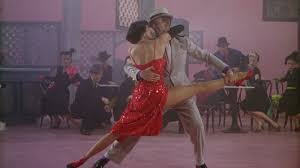
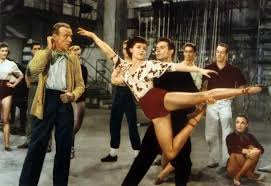
But despite having musical auteur Vincent Minnelli behind the camera, and veteran hoofer Fred Astaire, along with Cyd Charisse, Nanette Fabray and piano prodigy and famed wit Oscar Levant on camera, it stumbles and struggles to come together before choreographer Michael Kidd’s dance and the stars who dance it blow us away for a big finish.
Perhaps “Joker” director Todd Phillips took inspiration as he struggled to find a tone, shape and form for his Great American Songbook jukebox musical riff on the darkest comic book franchise of them all. Maybe he sees in “Band Wagon” the quintessence of how musicals work and worm their way into memory and only truly come into their own years later via staying power.
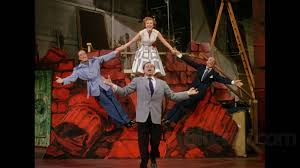
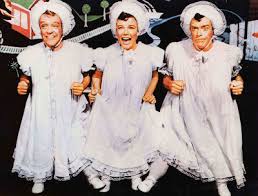
It’s not the “story” or filler numbers that we remember from this 1953 classic. It’s the show-stoppers, the famed “Triplets” song and stunt featuring Astaire, Fabray and scene-and-picture-stealing Jack Buchanan dressed and photographed as tiny toddlers, the noirish, sexy-as-all-get-out big dance “Girl Hunt” finale, the “signature tune” that one and all put over that matters.
“Band Wagon’s” “That’s Entertainment!” was used as the title to an epic 1974 film-clips documentary about MGM’s long history of musicals, which I remember being broken into two parts for airing on TV back then. That doc was nothing but “the most memorable” moments from musicals, which is how many of them endure, “the great parts,” and which may be how “Joker 2” finds an afterlife.
“Band Wagon” already endures, one of the most highly-regarded late period MGM musicals. But there’s a case to be made for how corny and clunky the story is, how strained the laughs, how inane more than one of the song and dance numbers seems 70-plus years later.
Whatever its “memorable moments,” it’s no “Singin’ in the Rain” or “An American in Paris.”
The story concerns fading Hollywood song-and-dance man Tony Hunter (Astaire), a dapper dude still wearing straw boaters in a decade where even fedoras were becoming passe. He’s traveling to New York on the down low, hoping to give his career a lift by doing a musical play instead of waiting for another movie, which may never come.
“He was good 12, 15 years ago” a couple of gents on the train allow, and Tony — overhearing — agrees.
“That Tony Hunter’s a has-been.”
“I’ll go my way by myself,” he sings, on the station platform, a faded star seeing all the reporters waiting for Ava Gardner (playing herself).
But old friends the Martons, Lester and Lily (Levant and Fabray) have a new show for him, a musical about a respected illustrator who moonlights writing and illustrating lurid crime novels. It’ll be a hoot, they assure Tony.
The director they have in mind is a Broadway tyro, starring in “Oedipus Rex” and directing two other shows at the same time. We and they meet Jeffrey Cordova as he takes his many bows at the end of “Oedipus,” correcting co-stars and stage-hands in between curtain calls, and he bowls over “has-been” Tony. Almost.
Tony’s got to change with the times, and Cordova (Buchanan) is just the man to make him do it. The show? He hasn’t read the script. And hearing it summarized, he fixates on the “sells his soul” aspect of a respected artist making pulp.
“It’s ‘FAUST!'”
“Let’s get this straight, I am not Nijinsky,” Tony protests. “I am not Marlon Brando. I am Mrs. Hunter’s little boy, Tony, song and dance man.”
But his protests are to no avail, as Cordova charges the Martons to rewrite the show into genre-bending “art.”
We will follow this production through rushed rewrites, casting call and rehearsal montages, a disastrous tech rehearsal, busted full dress rehearsal, opening night “out of town,” and afterward.
We only get a blast of the new “musical revue” (songs from previous shows, often reimagined) that comes from all this “Faust” fiddling and abandoning in the film’s killer third act. That all by itself ensured “The Band Wagon” merited preservation by the Library of Congress’ National Film Registry.
For me, catching up with this film after many years, the struggles to find laughs and novelty and charm in the early acts reminded me of why I rarely stopped on this film when channel surfing, and had little burning desire to sit through it again in the Golden Age of Streaming.
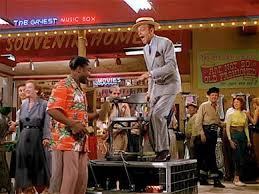
But soundstage-bound or exterior “establishing” shots, it’s Technicolor gorgeous, even as Astaire is prancing through a pre-Civil Rights Era “A Shine on My Shoes,” a song and (studied but still limited) dance that wouldn’t amount to anything but filler, even without the cringy Black shoeshiner (Leroy Daniels) as “audience” to Tony’s dance around his shoeshine station.
The funniest player in the movie and a “discovery” for most American film buffs is the Great Scot Jack Buchanan, turning this Broadway “type” — fey and full of ideas, some of them brilliant — into flesh and blood fun. Cordova is brilliant and convinced of his brilliance, an incisive multi-tasker who gets to the core of why something works or doesn’t work in a flash.
He’s also a blowhard, always hectoring his manager (Robert Gist) to “write down” his witticisms and insights for his next college lecture or, you know, posterity. The manager notes how he’s already used his best lines in earlier lectures, especially this one.
“In my mind, there is no difference between the magic rhythms of Bill Shakespeare’s immortal verse and the magic rhythms of Bill Robinson’s immortal feet.”
Buchanan is funny in every scene, every song and every dance and he simply steals the movie from the top billed MGM royalty leading man. Astaire only really “gets it back” in the finale.
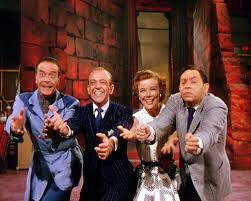
Buchanan is the lead singer and character in “That’s Entertainment!”, the ultimate musical argument for blurring the lines between highbrow and lowbrow entertainment. Because aside from his “Faust” “Eureka” moment, Cordova’s other great gimmick is to cast a ballet star, Gabrielle Gerard (Charisse), as Tony’s co-star.
Minnelli makes the most of this comic whirlwind by having the principals see and overhear, in snippets, Cordova’s wild, extravagant pitch for the musical-to-be to investors. Every time the door opens to the drawing room where he’s extemporizing, Cordova is more and more over the top.
Buchanan makes Cordova’s manipulation of Gerard’s manager/choreographer/lover (James Mitchell) an obvious but still hilarious laugh. And Charisse, a “giantess” dancer with legitimate ballet chops, makes a formidable dance partner and rebuffing, insulting romantic foil for the 23-years-older Astraire/Tony.
She makes their “age difference” cracks sting.
“I’d audition my own grandmother” before dancing on stage with her, he insists.
“Then why don’t you audition mine? She’d be just about right for you!”
Who could resist?
Alas, when “The Band Wagon” opened, audiences resisted it. The film, opening as the Korean War wound down and music and cinema were drifting away from Tin Pan Alley and Broadway and MGM, underwhelmed.
But over the decades, Minnelli’s picture has grown in stature. Once you get past the stodgy, over-familiar and laugh-starved opening scenes, it’s easy to understand why. Once you see the great set pieces, you remember how many musicals, including “LaLaLand,” and Michael Jackson music videos were influenced by or simply borrowed from this film’s most visually brilliant touches.
That’s almost certainly why Todd Phillips shoved this not-wholly-forgotten gem into his challenging, difficult and at times flailing and grim “Joker” sequel. Critics and audiences aren’t rallying to it, but the pushback from contrary voices is already evident on social media.
Perhaps someday, “Joker: Folie à Deux” will earn the sort of post box office mortem respect that “The Band Wagon” eventually did (it collected three Oscar nominations and didn’t win any). Perhaps “That’s Entertainment!” will no longer be the ironic punchline to the violent and “experimental” comic book movie musical.
For “The Band Wagon,” that title and that song became the movie’s reputation and brand, perhaps for all time. Whatever else this show-about-a-show is, “That’s Entertainment!”

Rating: G
Cast: Fred Astaire, Nanette Fabray, Cyd Charisse, Jack Buchanan, James Mitchell and Oscar Levant
Credits: Directed by Vincent Minnelli, scripted by Betty Comden and Adolph Green, songs by Arthur Schwartz and Fred Dietz . An MGM release on Tubi, Amazon, etc.
Running time: 1:52



