Weekend movies: Praise for “Peanuts,” Bond’s “Spectre” is shaken, but not slammed

pean1“The Peanuts Movie” is the beneficiary of a year’s worth of lowered expectations.

Hey, you mention “From the creators of ‘Ice Age'” and score the commercials and trailers with modern hip hopped pop, and share nary a joke…well, what’re we to think?

But the movie turns out to be a pleasant surprise — voices closely resembling the TV special voice actors of the ’60s, music mostly recycled from Vince Guaraldi’s lovely and beloved “Peanuts Jazz…”

It’s more charming than funny, and critics seem to be almost universal in that assessment, with it sitting in the 85% approval range on Rottentomatoes and somewhat less on Metacritic.

I’m still not sure how this will go over with kids, but as parents buy the tickets and it’s nostalgia and sentimentality will appeal to them, this should be a slam-dunk opening. Big.

“Spectre,” the fourth Daniel Craig as James Bond film, is earning the weakest reviews of his tenure in the role. Recycled bits from earlier films, self-conscious comedy, a weak on-the-nose villain (Christoph Waltz) and beautiful but charmless love interest. Middling reviews from the Metacritic crowd, slightly more positive from the Rottentomatoes sample.

It’s critic proof and should make a bundle. But let’s hope Craig gets his wish and gets out of the series and that he’s not merely playing hard to get in a contract negotiation to do one more film. He’s backed his career into a corner and he and the series would be better off (as he has hinted in interviews) with a change.

Posted in Reviews | Comments Off on Weekend movies: Praise for “Peanuts,” Bond’s “Spectre” is shaken, but not slammed

Movie Review: “Spectre”

2stars1

Bond1

James Bonds, like great athletes, rarely exit the stage gracefully. Bonds always seem to go out on stinkers, like Michael Jordan playing for the Wizards.

“Spectre,” set up to be the Daniel Craig finale as Bond, isn’t a terrible installment in the franchise. It’s the lightest of the Craig Bonds — no sin in that. But like the end of Connery, the exit of Roger Moore and the layoff notice given Pierce Brosnan, it’s a tired, trite “greatest hits” re-packaging of stunts, chases and fights from earlier, better Bonds.

It’s terrible only in that it’s a terrible fall off from “Skyfall.”

The new M (Ralph Fiennes) may not approve of Bond’s epic shoot-out/blow-up/chopper chase in the middle of Mexico City’s Dia de la Muerta (Day of the Dead), one of the most heavily populated set pieces (with a doozy of a long-take tracking shot) in Bond history.

But his old boss, the last M (Judi Dench) would approve. She’s sent him after one last foe, of a conspiracy of foes.

“Kill him,” she says on her video after death. “And don’t miss the funeral.”

That sends Bond after The Pale King, and his daughter (Lea Seydoux), from Rome to Austria, London to Morocco. The context here is “global security,” a vast intelligence gathering collective that will be the end of privacy as we know it.

And since you’ve heard about the casting you know who the villain is — Christoph Waltz, a stretch. You have heard who he plays, and what his character likes in a pet.

Cliches abound, from the “From Russia With Love” heavy (Dave Bautista of “Guardians of the Galaxy”) battled in exactly the same set piece that Sean Connery battled Robert Shaw in that film, to the villain’s Nehru jacket and loafers without socks.

If you’re not laughing at the hero and the “Bond Girl” unpacking their evening wear for dinner on board an overnight train through Morocco, it’s only because you’re not in on the joke.

Waltz is introduced, and disappears for two thirds of the movie. For the first time ever, he simply phones it in when he’s on screen.

Monica Bellucci turns up as the bed-able widow MILF (Moll I”d like to…) Bond entices early on.

Most of the weaker Bond films are the ones that make a little too much use of the quizzically comical Q, played to amusing effect by Ben Whishaw in this series. He doesn’t hurt the movie so much as indicate that six credited screenwriters couldn’t think of anything else for their McQueen-ish tough guy Bond (who wears his suits and vests a size too small) to do.

The best lines are given to peripheral characters, which must have irked Waltz no end.

“You’re a kite dancing in a hurricane, Mr. Bond.”

Director Sam Mendes cut corners on sound effects, which kills the joy of an Aston Martin DB-10 being chased by a Jaguar C-X75 through the empty streets of Rome, two hulking behemoths tearing through narrow alleys in near silence.

At least the ingrate Craig, rightfully dismissing this role in some recent interviews, learned to drive a stick shift doing this.

A brawl that ends with the damsel in distress asking, “What do we do NOW?” may be the biggest howler in the script. Post near-death coitus is the answer.

Epic explosions that aren’t (epic), big set-pieces that don’t dazzle and attempts at wrapping this entire series into one neat, limp package aren’t assets.

Even the Sam whathisname theme song just hangs there over the arty/erotic opening credits, instantly forgettable.

You can’t say that about the Craig-Bond years. The action amped up, and the tough-guy seriousness worked, even if he never quite had the Connery-Brosnan blend of sadism-plus-silly that makes the character work.

But “Spectre” doesn’t make us long for Craig taking another shot at Bond (he is contracted to do a fifth, should he so desire), or puzzle over who might get the World’s Greatest Secret Agent Role next. It just makes you wish you had those last two and a half hours back, so you could watch “Thunderball” and “Live and Let Die” and “Goldeneye” again, and at least enjoy the theme song.

Bond2

MPAA Rating:PG-13 for intense sequences of action and violence, some disturbing images, sensuality and language

Cast: Daniel Craig, Lea Seydoux, Christoph Waltz, Ralph Fiennes, Naomie Harris, Ben Whishaw, Davve Bautista
Credits: Directed by Sam Mendes, script by John Logan, Neal Purvis, Robert Wade, Jez Butterworth. A Sony/MGM release.

Running time: 2:28

Posted in Reviews, previews, profiles and movie news | 4 Comments

Movie Review: “The Peanuts Movie”

pean1It’s all here. From the kite-eating tree to that football Lucy never lets him kick.

“You blockhead!” and “Curse you, Red Baron!” to “Good grief.”

“The Peanuts Movie” is “Peanuts Greatest Hits.” The little profundities — “It’s the courage to continue that counts” — the swinging jazz stylings of Vince Guaraldi, the warm fuzzies, all carry over from the many “Peanuts” TV specials to the computer-animated 3D movie screen.

The Blue Sky (“Rio,””Ice Age”) filmmakers pay homage to the scribbly, DIY-looking original Charles M. Schulz comic strip and those 1960s TV specials with hand-drawn flashbacks and thought-balloons. And if they never achieve the sublime sentiment of “A Charlie Brown Christmas,” they still manage to make this timeless source material utterly charming.

Generations removed from the newspaper comic strip — or newspapers in general — and from the family gathering to watch oft-repeated TV specials, may wonder what the fuss is about. That lovable loser Charlie Brown still can’t fly a kite, still can’t pitch a one-two-three inning, still can’t screw up the guts to chat up that Little Redhaired Girl. His beagle steals his thunder at every turn. His “friends” take advantage of him and disparage him when they aren’t ignoring him.

But the bald kid with the yellow shirt with the black stripe keeps getting up, dusting off the dirt of the pitcher’s mound, and tries again.

The story here takes place over an entire school year — touching on the seasons that marked those long-ago TV specials. A new girl is in school. She doesn’t know Charlie Brown (voiced by Noah Schapp) or his tortured history. It’s his chance to start fresh,  make a great impression. But he stumbles, as always. The blockhead.

Snoopy, giving dance him dance lessons when he isn’t off fighting the Red Baron in sharply-animated dogfights in his Sopwith Camel doghouse, also has a love interest.

pean2

Lucy (Hadley Belle Miller) is still full of nickel-a-session psychotherapy, Linus still soulful enough to recognize his friend’s heart. And Charlie’s sister Sally (Mariel Sheets) still assumes Linus is her “Sweet Baboo.”

It’s more an exercise in adult nostalgia than a re-invigoration of a valuable animated “brand.” The sound effects (squawky adults) are the same, and the new voices closely resemble the old. Schulz’s darker, deeper touches never really made it into the TV specials, and certainly have no place in this cartoon for the very youngest viewers.

But the character’s EveryBoy humanity still shimmers through in “The Peanuts Movie,” especially when another line drive’s knocked the cap off that shiny, baldish noggin. Whatever children take from it, adults may find themselves choking up, just a bit, at the realization that you’re still a good man, Charlie Brown.

3stars2

MPAA Rating: G

Cast: The voices of Noah Schnapp, Hadley Belle Miller,  Alexander Garfin, Anastasia Bredikhina, Mariel Sheets
Credits: Directed by Steve Martino, script by Bryan Schulz, Craig Schulz, Cornelius Uliano. A 20 Century Fox/Blue Sky release.

Running time: 1:33

Posted in Reviews | Comments Off on Movie Review: “The Peanuts Movie”

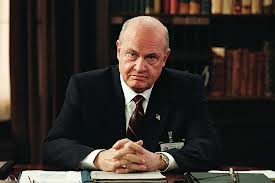
Fred Dalton Thompson: 1942 -2015

DaltonI got to know Fred Dalton Thompson when I worked at a newspaper in Tennessee — after the Watergate hearings and the movie “Marie,” where he played himself as a politician who helps a woman stand up to corruption — right around “Die Hard 2” and movies where he played generals, admirals, police chiefs and “Any authority figure you can think of. That’s what Hollywood wants me to do.”

An accomplished Republican politician, opposite number (Minority Counsel) to Hillary Rodham Clinton on the Senate Watergate committee, Senator from Tennessee and one-time candidate for president, he died of cancer this weekend.

I tracked him down for that “Die Hard” sequel appearance, and a few years later when he played an over-compensated banker in over his head during the heady days of takeover mania in “Barbarians at the Gate.”

He’s turned up in horror films and a few Christian movies in recent years. And on TV in those cynical “Sell Reverse Mortgages to the Elderly by Pandering to Aged Veterans and Mentioning Ronald Reagan” TV ads.

A nice guy. An opportunist, to be sure, pandering to the Tea Party wing of the GOP. I recall mentioning to him “If you ever run for office again, SOMEbody is going to pull up that footage (of an overweight Fred foolishly dressed in a Superman suit for a super-rich Manhattan costume party) and beat you over the head with it.”

He laughed, and said, “You know, you’re probably right. So I probably should keep those Democrats guessing.”

A sophisticated slicker, he bought a pickup and flannel shirts and played a good ol’ boy to win his Tennessee Senate seat. What a hustler. Good actor. Presence to burn.

Posted in Reviews | Comments Off on Fred Dalton Thompson: 1942 -2015

Movie Review: “Suffragette”

sufIn the best picture of 2015, Carey Mulligan is the stoic, long-suffering sweatshop worker radicalized into action. Helena Bonham-Carter the pharmacist who would have been a doctor had women in Britain been allowed into that profession. Brendan Gleeson is the police inspector tasked with keeping women in their place.

And Meryl Streep is the regal, fugitive icon of the movement in “Suffragette,” a long-overdue film treatment about the early 20th century tipping point struggle to win women the right to vote, and through it, the chance to control their own bodies, their own lives and their own destiny.

“Long overdue?” Think of the scores of films about the American civil rights movement, the long catalog of gay rights films. Even India and “Gandhi” earned film treatment before a serious movie about the global movement to emancipate and grant suffrage (the political franchise-right to vote) to “the fairer sex.”

“Women do not have the balance of mind” to deal with complex and important tasks like voting, the argument went. So in 1912 Britain, the government might pay lip service and hold hearings on women’s plight — horrific work conditions, inferior pay, “controlled” by husbands through repeated pregnancies, beatings and the like. But nothing would come of it, and a compliant British press either ignored or was censored from covering the women’s suffrage movement.

Mrs. Pankhurst (Streep) might make the occasional headline, an elusive agitator on the lam from the law, making pronouncements about the “50 year struggle,” firing up the faithful with secretive, rare public speeches to women.

But to women like the fictional Maud Watts (Mulligan) and Violet Miller (Ann-Marie Duff), whose world was a daily struggle of grueling labor in a laundry (“women’s work”), abusive sexism in the workplace, sometimes abusive spouses and the exponential increase in hardship caused by every unplanned pregnancy, “suffrage” was just an idea. Suffering was what they had to deal with.

Violet has already figured this out and is sneaking out to meetings, taking part in civil disobedience. The female flash-mobs of their day would congregate on crowded streets and start hurling rocks through shop windows. Newspapers and government ignoring us? Let’s see if interrupting commerce will get their attention.

Even though she has a somewhat sympathetic if dull husband (Ben Whishaw) to come home to, and a little extra responsibility at the laundry thanks to her submissive good looks, Maud is curious about this secretive movement.

Maud is reluctantly drawn in, impressed by women like Edith Ellyn (Bonham Carter), smart, in liberated marriages, and determined to do whatever it takes to get the government to take action for equal rights for women. “Whatever it takes” included bombing mailboxes, cutting telegraph and telephone lines — crimes against property, not against people.

Director Sarah Gavron (“Brick Lane”) and screenwriter Abi Morgan (“The Iron Lady”) keep emotions close to the surface here. A profound sadness hangs over “Suffragette,” thanks to the seeming hopelessness of the cause and the violence hurled at the women in it.

Gleeson puts aside his Irish cuddliness as the police inspector charged with infiltrating, turning and subduing this rebellion. His quiet menace is in the powers at his disposal. Mass arrests, night-stick mass beatings on the street (police riots, in essence) and arbitrary jail sentences are his threats. Will Maud buckle?

Mulligan’s ability to suggest flinty nerve underneath a willowy frame is of great service, here. Maud is a doting mother of a little boy, plainly loves her husband and is stricken when he is bullied into doing what the men folk encouraged each other to do — “keep your woman in her place.” Maud won’t have that, and Mulligan lets her growing boldness show in tiny increments. She’s absorbing the suffragette message.

“If you want me to respect the law, then make the law respectable!”

Streep’s presence here is limited, and electric.

If you know the rough outlines of history — the signature act of civil disobedience in this movement — you cannot help but shrink from the suffering and injustice hurled at them, and we viewers, here. Sensitive souls will find themselves on the verge of tears from start to finish in “Suffragette.”

History and film buffs may find themselves puzzled over the late arrival of this screen story, 100 years after the events that inspired it. And ponder the idiotic “outrage” over the film’s tag-line, “I’d rather be a rebel than a slave,” as if slavery’s definition has so narrowed that it’s owned by anyone.

“Suffragette” is an important story, handled with sensitivity and brio, performed with a distinctly British reserve that cannot contain the feminist outrage and moral courage so evident in its characters. In a reasonable “Downton Abbey” era, they only became real when they stopped being reasonable.

3half-star

MPAA Rating:PG-13 for some intense violence, thematic elements, brief strong language and partial nudity

Cast: Carey Mulligan, Helena Bonham Carter, Anne-Marie Duff, Brendan Gleeson, Ben Whishaw, Meryl Streep
Credits: Directed by Sarah Gavron, script by Abi Morgan. A Focus release.

Running time: 1:46

Posted in Reviews, previews, profiles and movie news | Comments Off on Movie Review: “Suffragette”

Movie Review: “Beasts of No Nation”

beasts1

The Commandant is carefully tutoring his boy soldier, Agu. He teaches him discipline. He inflames the child’s rage at the government troops who summarily executed his father and gunned down his fleeing brother.

Final test? Draw blood.

“Agu,” the silky-sinister Idris Elba tells little Agu (Abraham Attah), “you are going to kill this man.” He caresses a machete, and passes it over. Hack away, boy.

“Like chopping wood.”

“Beasts of No Nation” is a justly-celebrated boys-eye-view of civil wars of Africa, where children are taught to hate and kill, and ruthlessly do what they’re told by warlords like Joseph Kony and Abubakar Shekau. Writer-director Cary Joji Fukunaga, working from a novel by Uzodinma Iweala, does for Africa’s failed state conflicts what he did for North America’s migrant crisis in “Sin Nombre” — he puts human faces on it.

In an unnamed country (it was filmed in Ghana), Agu narrates his tale. War has torn his country, so “We are having no more school.” He and his mates — most look to be 10 or so — goof around, have burping contests, try to palm off a gutted TV to the indulgent Nigerian peace keepers.

“3D — Imagination TV” they shout, acting out music videos and fight scenes for the amused soldiers.

But then the factional government (NRC) troops storm in, the peacekeepers are gone. And even though the unarmed “buffer zone” folks want to resist, they are helpless against men with guns. Shockingly, the soldiers massacre the menfolk who haven’t fled.

Agu escapes. Until he’s captured by by the NDF, a leading rebel group.

The Commandant is in charge, but he’s leading children — a colorfully attired (or nearly naked) crew of kids, Agu’s age to upper teens. Traumatized by war, many of them orphans, they are open to Commandant’s sermons. And he is wise to their impressionable usefulness.

“The boy has hands to strangle…and fingers to pull the trigger. The BOY is very dangerous.”

Agu will learn. And he will tell us his story as he does.

“God, I have killed a man. It is the worst sin!”

The firefights are visceral experiences, the African settings beautiful, the situations almost beyond The most chilling thing about Fukunaga‘s film is how little it surprises us, how muted the shocks are. We’ve heard all about child soldiers, the mass kidnappings, the bitter blood feud nature of the wars. Joseph Kony became Africa’s most wanted man. For a while.

With subject matter this familiar, brisker pacing was called for. “Beasts” has more back story than it needs, more movie after its dramatic climax than is necessary. “African Civil War Fatigue” isn’t just a problem for TV news.

The kid is terrific, but from the moment he shows up, the movie is Elba’s. His easy charisma fits neatly with Commandant’s manner. He is fearless, perhaps a little stoned. Bullets whiz by but he stands tall, sizing up the situation, directing the action. He willingly sacrifices chunks of his battalion for his objectives, and he hides his true motives with ease.

“Beasts on No Nation” makes a terrific vehicle for Elba and a grim reminder that even if we’re tired of hearing of it, the Third World is in turmoil. States failing, refugees sweeping across borders.

And the cynical leaders of many a revolution are turning a generation of children into warriors, or cannon fodder.

3stars2

MPAA Rating: unrated, with graphic violence, sexual violence, profanity

Cast: Abraham Attah, Idris Elba, Francis Weddey
Credits: Written and directed by Cary Joji Fukunaga, based on the novel by  Uzodinma Iweala. A Participant Media/Netflix release.

Running time: 2:17

Posted in Reviews, previews, profiles and movie news | Comments Off on Movie Review: “Beasts of No Nation”

Box Office: “Burnt” bombs, “Crisis” in crisis, “Scouts” tap out

boxofficeKind of a dismal fall at the box office, for those bothering to take notice.

Since most people aren’t going to the movies, that “take notice” seems to be a rare quality, relatively speaking.

“Burnt” is a star vehicle for Bradley Cooper, and while it didn’t manage good reviews and didn’t utterly humiliate him, this romance in the kitchen dramedy will have managed only $5 million or so, based on Friday’s number, when the final tally is sorted Sunday night.

No shame in it. Even if the movie had been terrific, the tone and the setting and the cast wasn’t going to sell a lot of tickets. Even the far lighter and bigger-name-cast (overall) “Chef” took a few weeks to make serious cash. But Cooper cannot open a movie on his name alone.

“Our Brand is Crisis” is not typical Sandra Bullock fare. Her core audience has aged out of moviegoing — waiting for her on Netflix. So the ambitious political dramedy “Our Brand is Crisis” was never going to blow up. Not without Melissa McCarthy co-starring. It’s looking like a $3-3.5 million opening, which won’t cover her makeup bills. Think that’s mean? See the movie. Few others have.

“The Scouts Guide to the Zombie Apocalypse” is comical horror counter programming that could have pulled some numbers, had it been funnier, had it had some sort of fanboy tie-in or push. It won’t even crack the top ten. It opened Thursday and will barely clear a million.

So, yes, “The Martian,” is still on top — closing in on $200 million (next weekend?)

Yes, “Goosebumps” is going gangbusters — a surprise hit of the fall.

“Bridge of Spies” is closing in on $50, and feels like an Oscar nominated picture. “Steve Jobs,” spiraling down the drain, does not.

“Last Witch Hunter” and “Paranormal Activity: The Student Film” are flopping. Bill Murray is headed back to supporting roles, as “Kasbah” is not making any cash. It’s about to drop out of the…wait for it… top 20.

Posted in Reviews, previews, profiles and movie news | Comments Off on Box Office: “Burnt” bombs, “Crisis” in crisis, “Scouts” tap out

Movie Review: “Labyrinth of Lies”

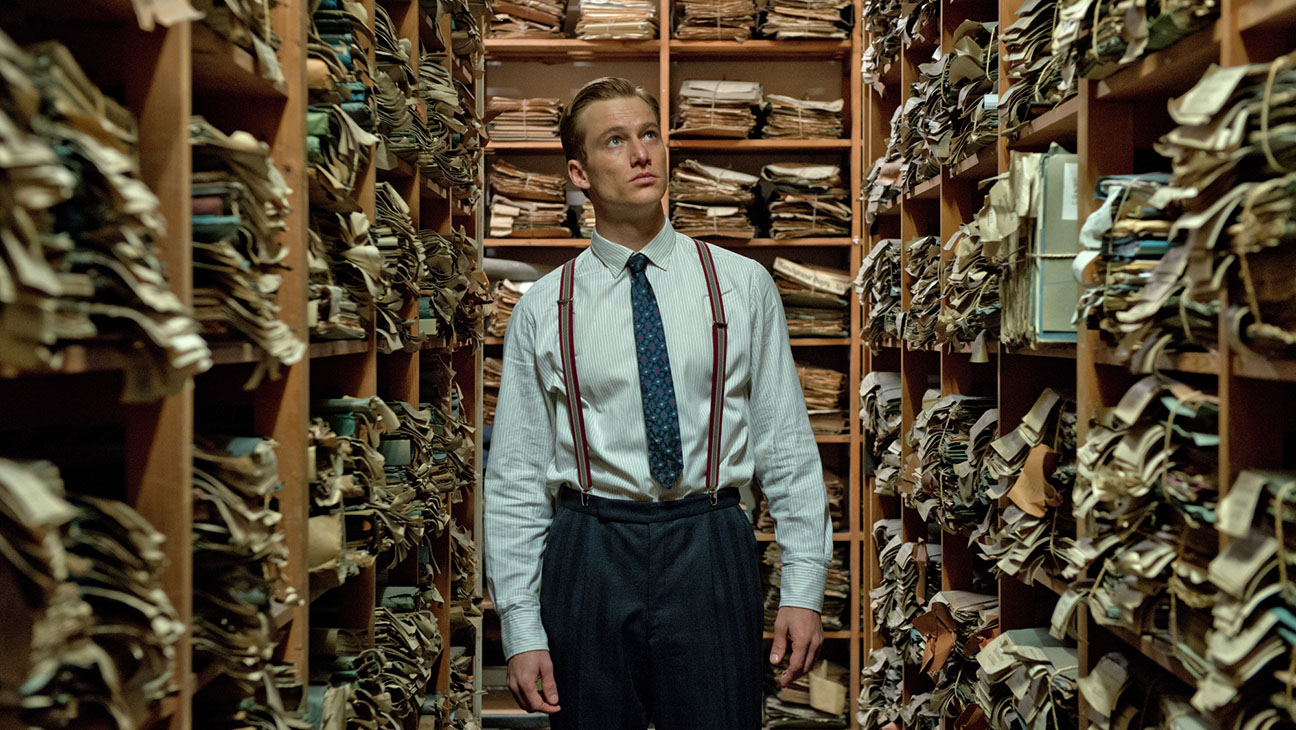
Alexander Fehling (Rolle: Johann Radmann)

The first time I visited the Holocaust Museum in Washington, D.C., it was on a school day. And whole classes of teenagers filled the chilling exhibits — the halls of photos, prison clothes and uniforms, the railcar full of shoes, whose scent is among the most vivid memories anybody takes from the place.

And in the room where the barracks from a concentration camp were set up, I saw a couple of teenage boys picking at the wooden supports. Looking for a souvenir? A little wanton destruction of property on school time? Their classmates snickered until I barked  at them. “What the HELL are you doing?”

It was all meaningless to them, just another boring field trip, just another chapter in history that they had no interest in learning or learning from.

So it comes as no great shock to hear, in the fine German drama “Labyrinth of Lies,” that Deutschland did its best to hide its recent past from the kids raised after World War II.

The unspeakable, the film suggests, became the nation’s open secret and open wound — ordinary men and women who did despicable things to unarmed civilians and POWs, “just soldiers” and “just following orders,” they would say. Not that anybody asked the butcher, the baker, the mayor or autoworker “What did you do in the war?” Nobody wanted to hear it. The kids? They just didn’t know.

One of those younger people is Johann Radmann (Alexander Fehling, earnest and solid), a state’s attorney. His father went MIA on the Russian Front. It’s 1958 when the film opens. His mother is remarrying, but she reminds him to do his father proud each day when he heads off to work. He worships the law, so much so that a young woman who commits a minor offense shrieks “You stickler, you monster!” at him.

It sounds even more hateful in German (with English subtitles). But somehow, the hip and artsy young designer Marlene (a spunky/radiant Friederike Becht) becomes smitten with Johann.

A school teacher is recognized as a guard from Auschwitz by a survivor, and a tabloid journalist, Gnielka(André Szymanski), tries to get the man some justice, to interest the authorities. Radmann’s boss, his entire office, doesn’t want to hear it.

“Is there an actual victim?”

“Proof” is an eyewitness seeing this fellow or that one bayoneting a child, loading the gas canisters of Zyklon B into the gas chambers. Harder to come by than you think. More war criminals than victims survived.

Radmann, being curious and ambitious, digs around. The American military is safekeeping the records of German activities during the war, and the American officer in charge can’t figure out why Radmann wants to have a look.

“You were ALL Nazis.”

Gnielka schools Radmann that this isn’t far from the truth.

“They came home, hung up their uniforms and went on as if nothing happened.”

Only the attorney general, Fritz Bauer, gives Radmann free rein. Played by the late, great German actor Gert Voss, Bauer is a cagey figure whose motives we question. Is he letting “the kid” tackle this because be wants nothing to come of it, or because someone his age is untainted? What did HE do in the war?

And so the young lawyer and his journalist accomplice plunge into the labyrinth, hunting for proof this or that actual war vet committed this specific crime. Temptations are hurled Radmann’s way — from a private sector firm with connections that could get Marlene started in dress designing. Higher ups, and the Americans, are more concerned about the Cold War than criminals from the last one.

German police, from town to town, refuse to cooperate. Only the Israelis seem interested.

A big fish who keeps close ties to Germany, perhaps even returns for visits, emerges. Dr. Joseph Mengele? Just another guy Radmann has never heard of. He grows more distressed and more outraged, the deeper he digs.

“Labyrinth of Lies” is based on the real-life events surrounding a pivotal moment in (West) German history, a big 1960s trial that rounded up many of those who ran Auschwitz and the nation started coming to grips with its past.  Watching the film unfold and the story drive toward that reckoning, you realize anew how important it is to remember this happened, the scale of it all, the barbarity.

And as an aside, you recall this German reckoning was one that the nearly-as-barbaric Japanese never pursued, given the cover of victimhood by Hiroshima and a rug to sweep their crimes against humanity under by MacArthur.

“Labyrinth” wanders into melodrama — of course Radmann, Marlene and others will find out about relatives, colleagues and higher-ups with unsavory pasts. And while the film mercifully stops short of the actual trial, it does meander a bit as it takes us into records, legal rabbit holes and oddly muted confrontations with the accused.

But it’s a fine film, and a surprising history lesson — not because the Germans don’t remember the Holocaust, but because we’re reminded that there was a time when they didn’t want to.

3stars2

MPAA Rating:R for a scene of sexuality

Cast:André Szymanski, Alexander Fehling, Friederike Becht, Gert Voss
Credits: Directed by Giulio Ricciarelli, script by Elisabeth Bartel, Amelie Syberberg and Giulio Ricciarelli . A Sony Pictures Classics release.

Running time: 2:04

Posted in Reviews | Comments Off on Movie Review: “Labyrinth of Lies”

Movie Review: “Woodlawn”

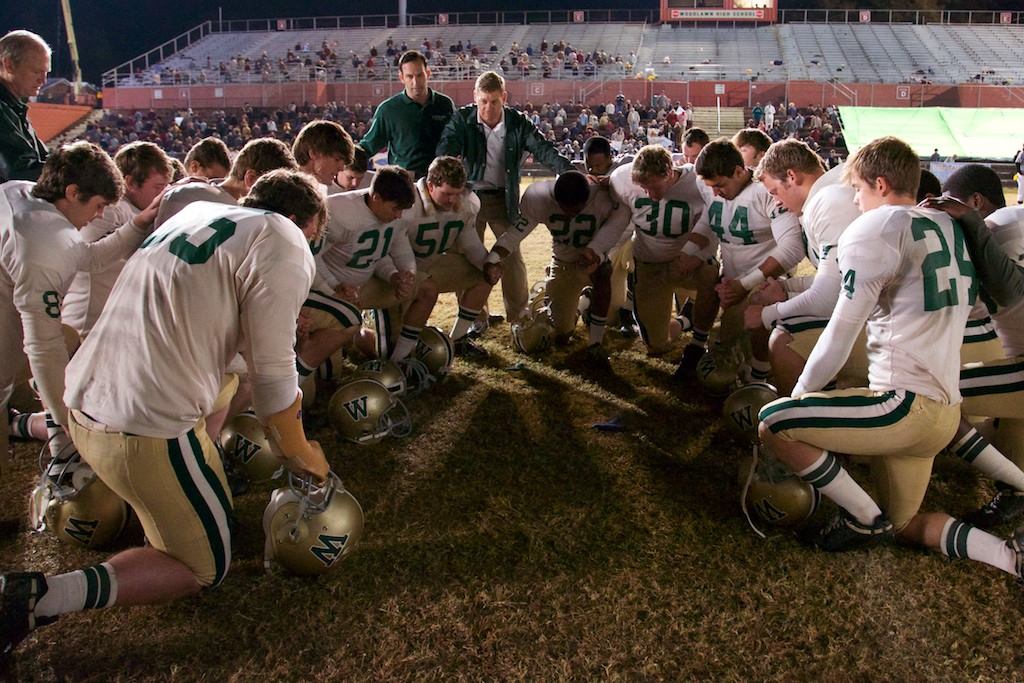
wood1“Woodlawn” is a formulaic football film with some meat on it. It’s a faith-based “Remember the Titans” built on solid performances, the occasional feel-good (inspirational) moment and a script that lacks focus, if not ambition.

Woodlawn was a newly-integrated high school in troubled Birmingham, Alabama in the early 1970s. Its football team helped the city overcome its nickname — “Bombingham,” earned by the church bombings and other violence against civil rights activists — by ever-so-gently breaking segregation.

And the way they did this, the film tells us, was through faith and football.

Tony Nathan (Caleb Castille, good) is a shy teen, the hardest working athlete in town. He endures the racism of his new school’s fans, and his Woodlawn Colonels teammates, just for the chance to break through in this overwhelmingly white/newly integrated high school.

Coach Gerelds (Nic Bishop, stoic) isn’t overtly racist. He’s gone along with the way things always have been. But a couple of people bend his attitudes. One is his little boy, who wonders why he won’t do what it takes to win (play the black guys). The other is this self-identified sports chaplain who talks the coach into letting him address the team.

Sean Astin has his best role since “Rudy” as Hank, a preacher with a limp, a guy who sometimes uses a baseball bat as a cane. He gets the kids’ attention. And he ties their football fate to their common Southern Protestant Christian heritage. “Jesus Christ” is the way to win.

So while the rest of the school in “the most segregated city in America” is a boiling cauldron of racial rage — racist white kids, militant black ones — the football team starts doing prayer meetings, showing up at Christian Athletes events. Together.

They still lose, but Hank reassures them that losses “are God’s way of testing us.”

And then Tony gets to play and Woodlawn starts winning.

The Erwin Brothers, who gave us the anti-abortion drama “October Baby,” took a simple “Big Game/Integrate the Game” sports story of the “Glory Road” genre and worked too hard to place it in its “Jesus Generation” context. There’s a Billy Graham Crusade, Time Magazine’s “The Jesus Revolution” cover, the whole “Godspell/Jesus Christ Superstar/Joseph and the Amazing Technicolor Dreamcoat” era subtext rattling around the edges, tugging the picture away from its core story. “The Fifth Quarter” and “Facing the Giants” were more focused and more on-message.

That “This is bigger than football” message is hammered home, something you expect in a faith-based film. The sense of Christian martyrdom and  just a hint of Christian militancy of such films (the principals run rampant over church-and-state separation) are here, too.

Tony refuses to have his photo taken with “Segregation Forever” Gov. George Wallace. He’s in love with a militant girl (Joy Brunson, delightful), creating a “You’re just these crackers’ trophy” conflict. The Graham crusades are glimpsed, and University of Alabama Coach Bear Bryant (Jon Voight) takes a growing interest in young Nathan. After all, Bear finally got around to integrating his football team after the film’s opening scene, a 1970 Crimson Tide loss to USC.

All this peripheral detail clutters “Woodlawn,” even if the Erwins and the faithful don’t see that. It undercuts their message. What integrated Alabama wasn’t so much Christian brotherhood as the REAL state religion — football. ‘Bama doesn’t lose to USC, who knows how long before Bear quietly admits “It’s time?”

But “Woodlawn” still has its pleasures, and unlike so many faith-based films, it’s not just  has-been actors in the pandering, sappy leading roles, but the occasional big laugh and the sheen of a polished production. The games and on-field footage are well-shot and cut, the emotional scenes have some real power.

The soundtrack is peppered with pricey, period-perfect (if a tad too on-the-nose) classic rock songs, from “Sweet Home Alabama” (of course) to “Knocking on Heaven’s Door” (ditto), “Jesus is Just Alright” (ahem) to “Spirit in the Sky” (amen).

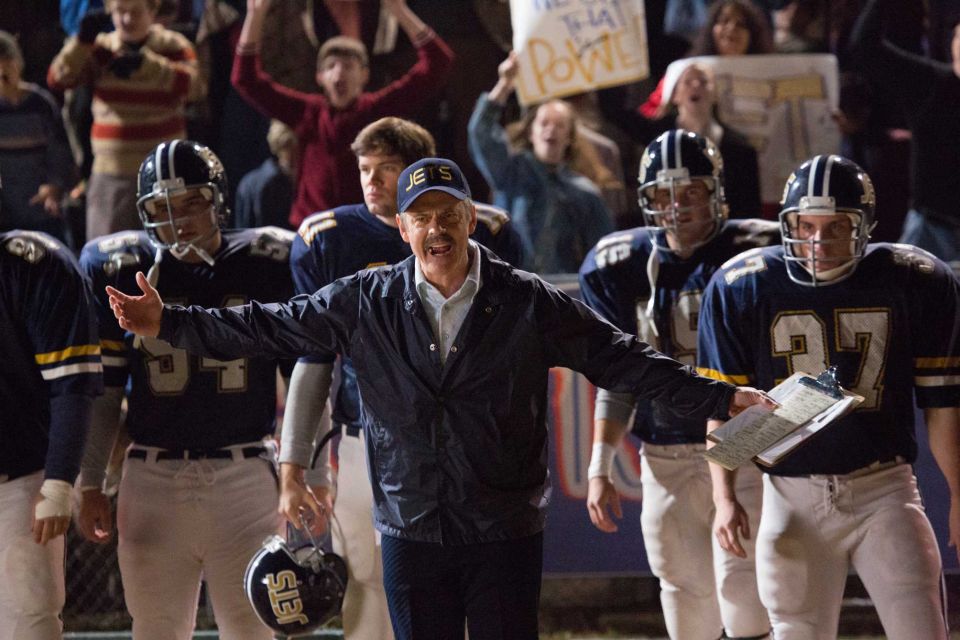
And C. Thomas Howell, no stranger to race-based tales (Remember “Soul Man”? He probably wishes you didn’t.) all but steals the picture, playing a snickering, trash-talking arch rival, Coach Shorty White.

howell“Jesus cain’t save ya’ now!”

When Woodlawn plays Shorty’s Banks High School, the black running back gets targeted. And then it rains. Divine intervention? Not to Shorty.

“That’s angels cryin’!”

The whole enterprise is  very much a mixed bag, but as films that cater to this audience go, “Woodlawn” isn’t half bad. Like a lot of pastors in the pulpit, the Erwins could use a little editing, somebody to tap their shoulder at the 100 minute mark and say, “Preacher, maybe that’s enough for today.”

2stars1

MPAA Rating:PG for thematic elements including some racial tension/violence

Cast: Caleb Castille, Sean Astin, Nic Bishop, Joy Brunson, Jon Voight, C. Thomas Howell
Credits: Directed by Andrew Erwin, Jon Erwin, script by and Andrew Erwin, script by Quinton Peoples. A Pure Flix release.

Running time: 2:03

Posted in Reviews | 3 Comments

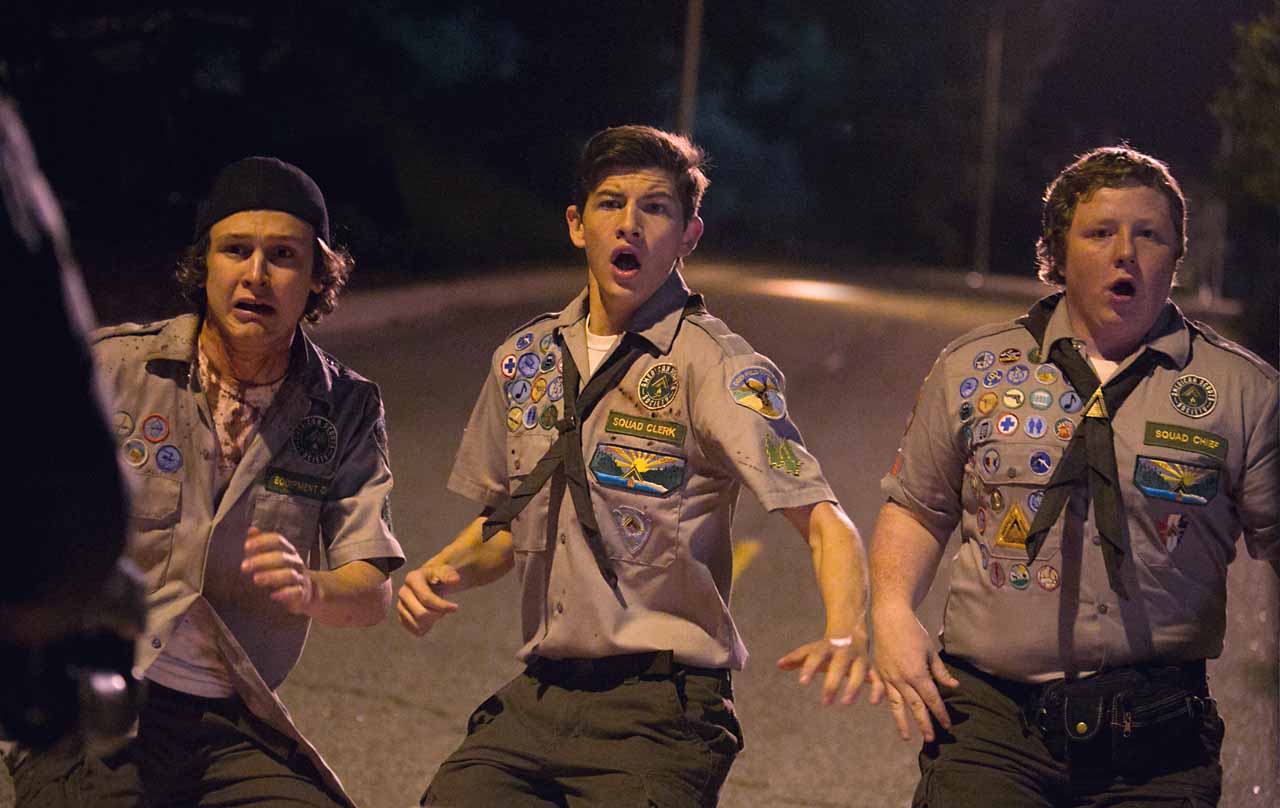
Movie Review: “The Scouts Guide to the Zombie Apocalypse”

SCOUTS VS. ZOMBIES

2stars1

The Scouts Guide to the Zombie Apocalypse” takes the Living Dead/Walking Dead/Brain-eating Dead as seriously as this worn-out genre deserves.

Which is to say, not very seriously at all. You poor stay-at-home shut-ins parsing every scene in that AMC soap opera about zombies can suck it.

This is “Superbad” with Scouts. And zombies. And superhot supermodel thin actresses.

They’re not BSA (Boy Scouts of America), BTW, but Associated Scouts of America (ASS). Better prepared, perhaps, for the zombie apocalypse.

It doesn’t have the laughs or the killer cast of “Superbad,” but there are gory giggles aplenty in this B-movie addition to the horror genre that displaced vampires once Edward impregnated Bella.

Ben, Carter and Augie (Tye Sheridan, Logan Miller and Joey Morgan) have held onto their uniforms and Scouting values into their driver’s license years. Bad move. That neckerchief, that shirt and sash covered with merit badges?

“Like a male version of a chastity belt.”

But Ben and Carter stuck with it, for Augie’s sake. He grew up without a dad, with only Troop Leader Rogers (David Koechner, of course) for guidance.

Ben and Carter will go through one last cookout/campout, one last ration of beans and weiners,  “welfare food.” Then they’ll skip off to a party full of high school seniors, including Carter’s t00-hot sister Kendall (Halston Sage, that’s really her name).

But there’s been an accident at the biolab near their California town. The dead are reanimated, and recruiting new brain-eaters with every bite. The boys miss the worst of it, camping out and all. But very quickly, they’ll need all their knots and knives and MacGuyver-improvisation skills to survive the Scout Leader who has turned, the cat-hoarding lady ) Cloris Leachman who is undead, and all her carnivorous kitty cats to boot.

Fortunately, there’s also help from the former classmate turned stripper at “Lawrence of Alabia,” the hot club in town.

“It’s got good Yelp reviews!”

Denise (Sarah Dumont) is handy with a shotgun. And an erotic dream vision in Daisy Dukes.

As my fellow Eagle Scout, David Lynch, could tell you, the jokes should have been centered on various Scouting skills — fire making, whittling, knot-tying — which come in handy when you’re trying to survive the Living Dead. And the movie sets those up nicely, depicting the Scouts as outdated and uncool as they’re largely regarded in this Mormon-dominated, homophobic era in Scouting.

But the film meanders from set-piece to set-piece, with the (accurately) foul-mouthed teens often being rescued by others. It takes entirely too long getting to the finale that we’ve foreseen an hour before.

Only Koechner stands out in the cast, unfortunately. Sheridan is adequate, as are Miller and Morgan. But you’re left wondering how much more a Jonah Hill, Michael Cera and Christopher Mintz-Plasse might have made of these characters. They’d have certainly goosed the jokes a bit.

Still, as zombie comedies go, falling short of “Zombieland” and “Warm Bodies” is no crime. The yuks and yucks add up to close, but no cigar. At least it’s still better than TIVOing that recycled undead half-hearted satire and its prequel that TV is serving up Sunday nights.

MPAA Rating: R for zombie violence and gore, sexual material, graphic nudity, and language throughout

Cast: Tye Sheridan, Sarah Dumont, Logan Miller, Joey Morgan, David Koechner, Cloris Leachman
Credits: Directed by Christopher Landon , script by Emi Mochizuki, Carrie Lee Wilson, Christopher Landon and Lona Williams. A Paramount release.

Running time: 1:33

Posted in Reviews | Comments Off on Movie Review: “The Scouts Guide to the Zombie Apocalypse”