Next screening? In Quebec, she’s a “Slut in a Good Way”

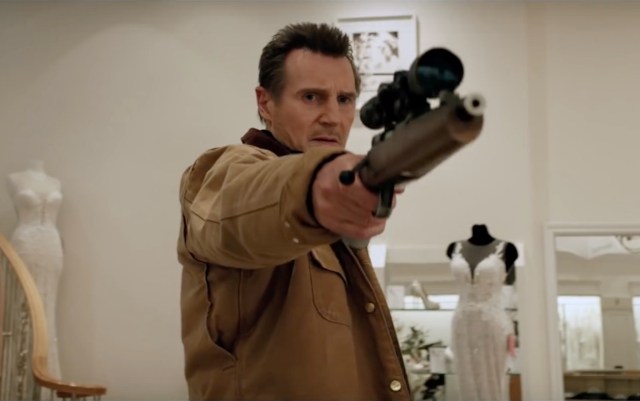
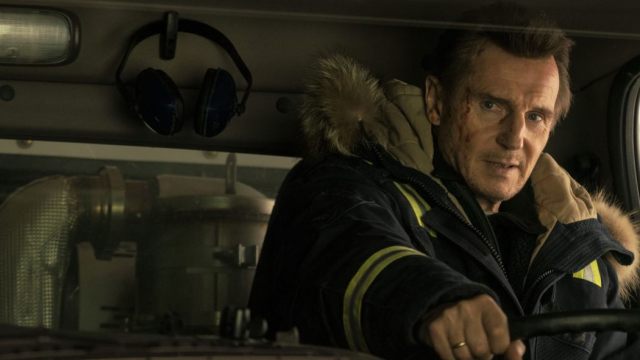
The French-Canadian sex comedy, “Slut in a Good Way”   three rebellious teen vulgarians who take jobs in a toy shop.

And romance, or something damned near like it, ensues.

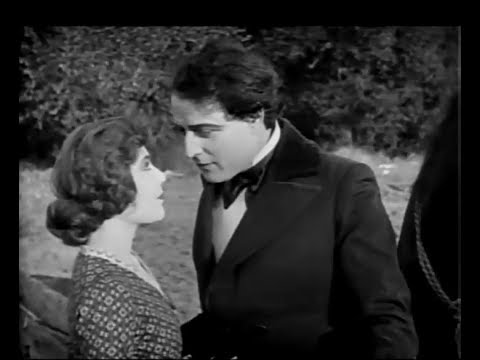
It’s black and white, therefore it must be “art,” as those raving up “Roma” and “Cold War” can attest.

“Slut in a Good Way” opens March 22.


Posted in Reviews, previews, profiles and movie news | Comments Off on Next screening? In Quebec, she’s a “Slut in a Good Way”

Silent Movie Review: “The Covered Wagon”

covered1

In cinema history it is the Ur Western.

Yes, “The Great Train Robbery” was the first “film” and it is fitting that it too, was a Western. But “The Covered Wagon” established the tropes, the conventions, the action beats and archetypes that carried John Ford and John Wayne, Howard Hawks and Henry Hathaway, Clint Eastwood and the Coens through a century of Western cinema.

The stoic Westerner — a good-bad man with a tainted past, looking for a reset on the American Frontier — the dewy Eastern flower, soon to be hardened her odyssey across The Plains — the scheming rival, the colorful comic “trailblazer” — cattle and horses and oxen pulling Conestoga wagons across dry, dusty flatlands, over mesas and up mountains, from Westport Landing (Kansas City) to Oregon — it all began with “The Covered Wagon.”

There’s a wide river to ford, buffalo, Indian raids, fistfights and gunplay and the distraction of “Thar’s GOLD in them thar Hills!” (California)

It’s all here in a film released in 1924.

I caught James Cruze’s jaunty “The Covered Wagon” in a Florida cinema that opened in 1924. No, I wasn’t there on opening night, thank you. Accompanied by a pianist rattling through a repertoire that included classical music snippets, “Oh! Susanna!,” “Bonanza” and “Rawhide” themes — and “Mighty Mouse” — it was a presentation that showcased the film’s dazzling, almost documentary-real detail and production design, its vast scope and dated humor and startling, chaotic action.

And the damned thing still works.

We see two massive wagon trains, white canvas tops stretching out into the distance, forming up for the joint crossing — one led by Wingate (Charles Ogle, born just after the Civil War), the other by Will Banion (J. Warren Kerrigan, who starred in the silent version of “Captain Blood,” and had the title role in “Samson”).

They’re under the ostensible “command” of Sam Woodhull (Alan Hale), who has earnest designs on Wingate’s pretty daughter Molly (Lois Wilson, who worked into the TV soap opera era).

It’s obvious that Mexican War vet Banion and his trusty/ornery trailblazer Jackson (The Scot Ernest Torrence, a veteran heavy in silent films) is the one who will get this train through, obvious that Molly will fall for his manliness and obvious — by his raccoon eye-makeup that Woodhull will do whatever he can to keep them from coupling.

Little Jed Wingate (Johnny Fox) is along for the ride, picking at his banjo, offering a “chaw” to any pioneer what needs it.

I’ve seen scores of silent films in such settings — accompanied by a pianist, organist or local symphony raising funds with a special benefit showing. “Phantom of the Opera,” “The General,” Chaplin, Keaton and Lloyd, Fairbanks — all impressive.

But while “The Covered Wagon” isn’t a silent John Ford Western or directed by one of the acknowledged masters of the medium, isn’t one of the widely known antecedents to the most American of movie genres, it’s impressive in ways that any film buff can appreciate.

Just 75 years removed from the events of the 1848 setting of the film, Paramount was able to shoot this movie in Utah by asking to borrow any covered wagons still in the families of the state’s second and third generation Latter Day Saints.

That “recent history” and authenticity carries over to the costumes — worn, lived in leathers, a wide assortment of hats, rough homespun fabrics.

The hero doesn’t wear a gun, as that practice was more a Civil War era innovation.

The script is corny by modern standards, lots of talk of “Empire Builders” heading West, the implied Manifest Destiny that came with that and showing off what would become known as “The Plow that Broke the Plains.”

But real Native Americans are seen inveighing against such a plow in their encampments, this “monster weapon” that would take their land, fence off their lifestyle and chase away the buffalo. The tribes are given their motivation for fighting back, reinforced by wagon train treachery, even in a movie filmed in 1923 and released in 1924.

The fights aren’t photographed in close-ups, but in wide, chaotic tumbles, dust clouding the screen as brawlers or settlers circling the wagons and fighting off a tribal attack, all with the feel of silent newsreel footage.

The only “name” in the cast that most film fans will recognize is Hale, 15 years before playing Little John to Errol Flynn’s definitive Robin Hood. He gives fair value as a solid villain, not even close to the over-the-top such characters were played in B-movies.

The acting has its share of swooning, glowering and mugging for the camera — close-ups are paler than the somewhat contrast-free and washed out wide shots.

It’s a talky silent movie — too many intertitles giving us exposition we can figure out with the visuals, lots of pauses for jokes — most of them in Jackson’s drawling argot.

“A fight now would disorganate this here train!”

But here’s an “opening of the West” Western that captures the immense challenges of such a quest, almost by accident. The “forts” were adobe built, not wooden stockades seen in so many later Westerns (no trees). The world was small in this pre-49er era. Jim Bridger and Kit Carson make appearances.

The movie doesn’t dwell much on just how terrifying a river crossing could be to humans and the livestock they often drowned in the attempt.

Such scenes, and a couple of early cinema stunts — no camera tricks, just good horsemen pulling off daring japes — keep the fact that while this pre-Production Code romance was chaste in the extreme, it was also pre-oversight by the now somewhat discredited Humane Society. I grimaced at every hint that something bad might have happened in the assorted animal melees.

It’s not high cinematic art, but very few were making movies of that standard in the early 20s, not in genre pics for mass Midwestern, Western and Southern consumption.

But “The Covered Wagon” is much more than merely “the first” to show us the West this way. It has a freshness about it that belies a movie upon whose frame almost every genre pic that followed was built on. And if Utah native and “Great Gabbo” director James Cruze isn’t one of the acknowledged geniuses of the early cinema, he at least can be remembered for insisting on an authenticity that later filmmakers drifted further and further from as the genre matured.

3stars2

MPAA Rating: Pre-code violence, alcohol abuse, child tobacco use

Cast: J. Warren Kerrigan, Lois Wilson, Alan Hale, Ernest Torrence, Tully Marshall

Credits: Directed by James Cruze, script by Jack Cunningham based on the Emerson Hough novel. A Kino Classics/Paramount release.

Running time: 1:38

Posted in Reviews, previews, profiles and movie news | Comments Off on Silent Movie Review: “The Covered Wagon”

Silent Movie Night in Scenic Cocoa Village, FLA.

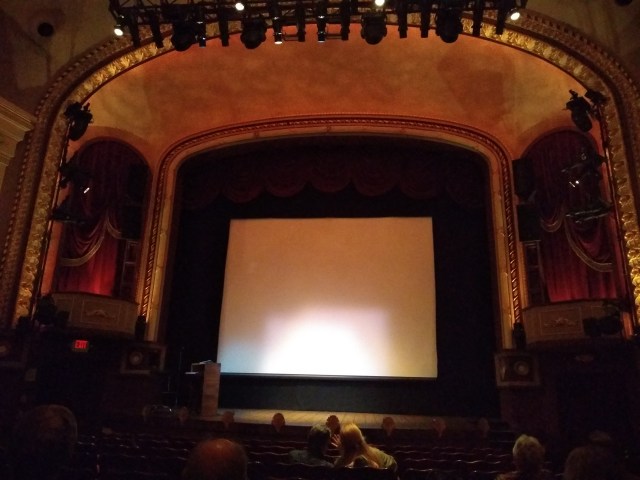
The Cocoa Playhouse started life as the Aladdin, a picture emporium which opened in tiny-not-tony Cocoa Village (the inland town of famed Cocoa Beach) in 1924.

They host musical performances and put on a regular season of theater. The thing that gets me here every year is when this old moving picture house hosts a silent movie of the type it would have shown in the years before their installed air conditioning in it.

J. Thomas Black Jr. is the pianist and enthusiast who lends the whole enterprise the feeling of what small town (no pipe organ, just a piano, although the Aladdin USED to have a pipe organ) movie going was like during the silent film era.

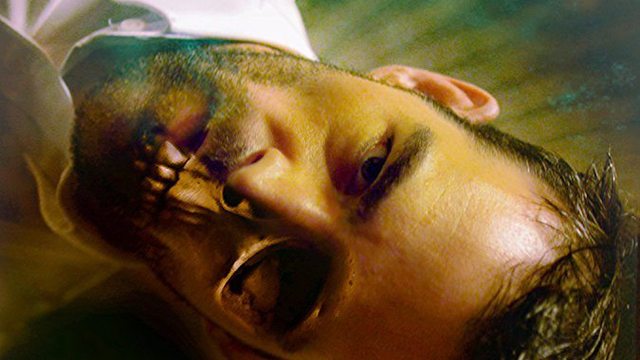
IMG_20190210_182034353.jpg He will accompany and provide the score to what many regard as the Ur Western, the template from which every other Horse Opera, oater and Cowboys and Displaced Native Americans picture emerged. A 1923 film that premiered the year the Aladdin opened. See if you can guess it before I review it.
Posted in Reviews, previews, profiles and movie news | Comments Off on Silent Movie Night in Scenic Cocoa Village, FLA.

Movie Review: “A Brilliant Monster”

monster2.jpeg

Every author gets this question in interviews or meeting the public — his or her fans.

“Where do you get your ideas?” And as a variation on that, there’s “Who is your muse?”

Author Mitch Stockridge has several answers he gives to these, but none hint at the truth. He has a muse he keeps locked in an upstairs bedroom of his house. He gets his ideas from a monster he has to keep sated with the taste of human flesh.

That’s the dark and clever conceit at the heart of a thriller shot in Tallahassee, a reasonably well-acted and tightly-plotted slice of horror lite.

The title “A Brilliant Monster” refers to that toothy blob of raging “id” — and to the guy who depends on it. Because whatever this beast is that keeps eating people and spitting out pearls of self-help book wisdom, it’s turned Mitch (Dennis Friebe) in a psychopath.

The opening credits of F.C. Rabbath’s indie film note that “Steve Jobs was  a ‘monster’ in real life” and DaVinci and other creative people had “monster” attached to their reputation at one time or another.

We meet Mitch wearing gloves and immaculate paint shop coveralls as he “cleans” a pickup truck which could link him to some unexplained crime. He has a somewhat elaborate modus operandi  — a mute driver (dressed like a member of the chorus from “Guys and Dolls”) picks him up and covers his tracks.

Mitch is locally famous thanks to his ability to grind out “life changing self-help books,” collections of stories around a redemptive theme with titles like “All is Forgiven” or “Your Life is Beautiful.”

Fans tell him “Your book changed my life/saved my friend’s life,” etc. He can get touchy about the “where you get your ideas from” thing.

And when he gets home, the love — from his “more PAGES” editor (Susan  Morgan) ends and the prickly criticism from his aged invalid father (David Raizor) begins.

“I would’ve been proud of a son who became a DOCTOR,” dear old Dad drawls. That’s the nicest of his insults.

We’re learning about Mitch through the flashbacks and descriptions of his ex, Sophie (Alea Figueroa) who has quite a story to tell the detectives (Joy Kigin, Bill Kelly).

“He’s done things, terrible things to others. Even terrible things to me.”

When she gets to the punchline, that there’s a blobby beast who gives Mitch his ideas in exchange for being fed bar pick-ups, hated childhood bullies who come back into his life and others, only the female detective, Abby, takes her seriously. The guy?
But but…”his books are on POSITIVITY!” As if Oprah and Doctor Phil couldn’t be serial killers.

mons2

The investigation sends Abby to visit Mitch more than once as men and women from town go missing, with just a hint of a connection to Mitch linking the possible crimes.

“A Brilliant Monster” is more a film festival “calling card” picture than one polished, funny and suspenseful enough to hold its own in the movie marketplace — even in the expanded universe of Netflix, Amazon and other streaming means of distribution.

But Rabbath creatively hides the monster from the camera for much of the film, putting his camera inside the toothy maw in scenes where Mitch introduces his muse to his victims.

Friebe, a testy-stubbly dead ringer for Zachary Quinto or Eli Roth, gets across the deadline pressure Mitch is under, his bitter relationship with his disapproving dad AND his profane resentment and annoyance at the growls and grumbles from the hungry muse — cursing through the door at the darned thing.

Dad’s put-downs are blunt and biting, delivering the only real laughs in what this dark comedy. His son mentions that the author his father is reading used to share agents with him,

“You know this guy? That’s a shame. I USED to like him.”

Kigin does generic police obsession with a quarry well. And Mick Leali has a Seth Rogen/Adam Devine lightness to his turn as Mitch’s married lifelong best friend.

Horror that avoids showing us as much as this one does may be cost effective, but without the gore, “A Brilliant Monster” would be a hard sell to the fanbase.

The gore could have been over-the-top and hilarious, and with more jokes and testy-amusing exchanges between Mitch and the cop, the editor, his pal, his father and his ex, this “Monster” might have lived up to its title.

As it is, it never clears the “rough draft” stage, rising occasionally to the “clever” level, always well short of “brilliant.”

1half-star

MPAA Rating: unrated, implied violence, sexual situations, profanity

Cast: Dennis Friebe, Joy Kigin, Alea Figueroa , Mick Leali, Jason Fusco

Credits: Directed by F.C. Rabbath, script by F.C. Rabbath and Adam Bertocci. An F.C. Rabbath Creations release.

Running time: 1:26

Posted in Reviews, previews, profiles and movie news | Comments Off on Movie Review: “A Brilliant Monster”

The Best Take on Liam Neeson’s “confession?” This one.

I agree with pretty much everything Trevor Noah says in the video excerpt below, in his “off air” response to a question about Liam Neeson’s mid-interview admission to a knee-jerk racist reaction to a dark moment in his and a friend’s past.

Context spoiled whatever Neeson’s intent was in making this admission. He needed to be saying this to somebody who would push him and push back and get at what he intended his message to be.

That’s why canceling your appearance on Colbert, Liam, was a mistake.

I’ve interviewed Neeson once or twice, but such situations don’t let you really “know” the movie star/filmmaker you’re talking to. Can’t say if I think he’s racist or not. Actors are, broadly speaking, not idiots but wholly capable of sticking their foot in it in a clumsy moment “off script.”

But as he was speaking about a low point in a friend who had been raped’s past and his reaction to it 40 years ago, trying to suggest what blind revenge is like, I was hearing a not just a monstrously hateful thought that wasn’t acted on, and racist to boo, but a fellow trying to give fair value in an interview by confessing to how blinding the rage impulse can be.

I wasn’t forgetting the actor used to be a boxer, a man of violence and brutish belligerence.

So I’m inclined to give this my Samuel L. Jackson Touchstone Test.

How would we react if this had been the outspoken Samuel L., recalling the race-based rage he needed to summon up for say, his character in “A Time to Kill?” I”ve picked up the odd bit of race baiting/tetchiness from Samuel L. a few times (in interviews) over the years.

Suppose it was Samuel L. saying something racist and murderous about dark thoughts from his distant past in an interview? This story would have had a half-life of 15 minutes, or a full day’s attention on Fox News.

Listen to Noah’s off-the-cuff response and decide whether or not this is a “Let’s move on” moment. I think it is.

Posted in Reviews, previews, profiles and movie news | 1 Comment

Movie Review: “The Glorious Seven” updates “Seven Samurai” — again

seven1

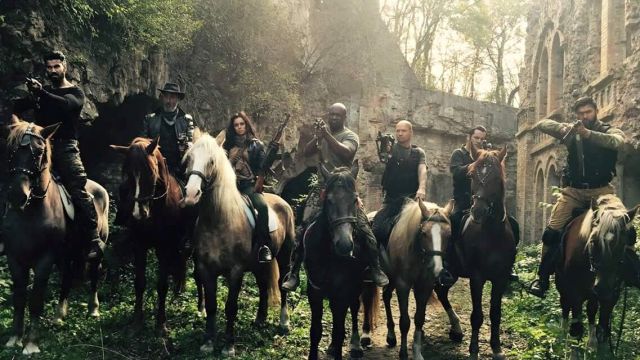
Producer-writer-director Harald Franklin didn’t want any confusion about the inspiration for his movie, ” “The Glorious Seven.” He put images from “Seven Samurai” and “The Magnificent Seven” right in the opening credits of “Glorious.”

Quick question though, Harald. Have you ever watched either film? Because aside from the fact that there are (roughly, give or take, maybe more) “seven” hero/mercenaries in your Nicaraguan-set action epic, there’s virtually nothing else that connects with the earlier films.

These seven are mercenaries who take $2 million to go rescue a kidnapped trophy wife (Julia Mulligan) of a ruthless Latin American land baron (Fernando Carrera). As we’ve seen the kidnapper (Fernando Corral) freed from a chain gang by cutthroats who killed the police who guarded him, and we’ve witnessed the “massacre” that was a part of that kidnapping, and we’ve ALSO seen the sexual assaults that the brutish land baron uses to keep his imprisoned wife in line, the viewer faces a quandary.

Who exactly do we root for here?

We’re no longer in the hands of impoverished warriors of feudal Japan or the Old West fighting for their next meal, fighting for embattled, helpless villagers against rapacious bandits.

So “The Glorious Seven” starts with no real point of view. Then it dallies and stumbles and takes forever to get underway as Guerra (Jerry Kwarteng) and his mixed martial arts partner Ryan (Maurice Nash) are hired and  re-assemble their team.

Even that’s wrong. The way every movie from the assorted “sevens” to “The Expendables” introduces the principals is in showcase moments where, say, Toshiro Mifune shows off his character’s untrained fighting style or James Coburn demonstrates skills with a knife.

Here, we go to Russia to round up an old friend who has an old beef with Guerra (Maksim Kolesnichenko), or visit the bar/club where Dennis (Ilker Kurt), a sometimes arms-dealer ogles his pole dancer.

She’s the most heavily-clad pole dancer in the history of poles, dressed as a flamenco or belly dancer.

After the opening kidnapping, the team-formation and everything after that which we’d call “story” is sluggish, slapdash, stuff and nonsense — none of it entertaining, or even ridiculous enough to be any fun.

The shootouts are OK — well-staged and shot. And the collection of firearms…interesting. One underling is running around with a WWII vintage Thompson submachine gun. The prop house must have run out of pump shotguns and AK47s to rent.

They filmed this thing in Spain, Costa Rica (passing for Thailand), Ukraine and Rome.

And the dialogue sounds like the sorts of grating, clumsy usages that would earn you a C in ESL (English as a Second Language) class.

“More than five years before, he took five millions dollars from me!” Before, what? “We haven’t heard a thing from him. And nor from her.”

It’s so…off that you start listening to the voices and looking at the mouths to see if the whole enterprise is Eastern European and dubbed.

Far too many of the voices of supporting players sound like one guy did all the looping. Not a cardinal sin in itself, as the earliest James Bond movies were looped to death — one actor’s voice covering a slew of bit players.


But in “The Glorious Seven” (also titled “The Glorious Seven Reloaded” and opening March 12), it’s just another sign that what we’re watching is somewhere between an exceptionally sloppy B-movie and a very slick D-movie.

C?

1star6

MPAA Rating: unrated, with violence, a suggested rape

Cast:  Jerry Kwarteng, Marina Kinski, Fernando Carrera, Ilker Kurt, Julia Mulligan, Maurice Nash, Sara Sálamo, Ender Atac, Fernando Corral

Credits:  Directed by Harald Franklin. An Uncork’d Release.

Running time: 1:33


Posted in Reviews, previews, profiles and movie news | Comments Off on Movie Review: “The Glorious Seven” updates “Seven Samurai” — again

BOX OFFICE bust? “LEGO” underwhelms, “What Men Want” under-performs

LEGOConsider this — the “second” “Lego” movie isn’t the second one at all. “Lego” has licensed plenty of direct-to-video titles using their toys, and there was that “Ninjago” thing and “Lego Batman.”

So “The Lego Movie 2: The Second Part,” even if it isn’t as giddy as the first big screen Warner Animation Lego film, is a part of a franchise that’s over-exposed.

That helps explain how “The Second Part” is not reaching its projected $50 million opening weekend. Deadline.com is now saying that $33 million is more in line with where it will end up by midnight Sunday.

“Lego Batman” did $53, opening in early Feb., “Lego Movie” did over $60.

Even taking into account Deadline’s notorious underestimation of Saturday  takes on kiddie movies, (maybe $40 is within reach), it’s still falling short. And others are projecting even lower — $31.

As I said, they’ve over-exposed and Warners and Lego have watered

down the brand.

Taraji P. Henson is having a hard time in star vehicles built around her. “What Men Want” is a winner, a better picture than “Proud Mary” and a genre that more suits her talents. It’s managing $18-19 million, per Deadline. Not as much as one might have hoped.

wantIt could have a nice long run if it holds audience next weekend, but $25 would have been more in line with what this picture should have produced.
As I said earlier this week, I think Paramount Players/BET left money on the table by suppressing reviews until the day of release. It’s not bad, the laughs land and she plays the hell out of her part. Funny.  Marketing let Taraji down.

“Cold Pursuit” doesn’t seem to have suffered inordinately from Liam Neeson’s confession of dark, racist thoughts 40 years ago — a $10 million weekend. It might have reached $12-14, but a Summit/Lionsgate non-franchise thriller? $10 is all you could hope for.

“Green Book” is starting to get possible “Best Picture” legs, with its re-release pushing it well into the top ten and staying there.

“Miss Bala” is plunging, number 10 with a bullet. Pointed downward.


Posted in Reviews, previews, profiles and movie news | Comments Off on BOX OFFICE bust? “LEGO” underwhelms, “What Men Want” under-performs

Series Review: Jordan Peele produced “Lorena” revisits a woman who became a penis-snipping punchline

lorena1.jpg

It was a case that made headlines around the planet, that set up a million punch lines and led to a thousand stand-up bits and numerous “Saturday Night Live” sketches.

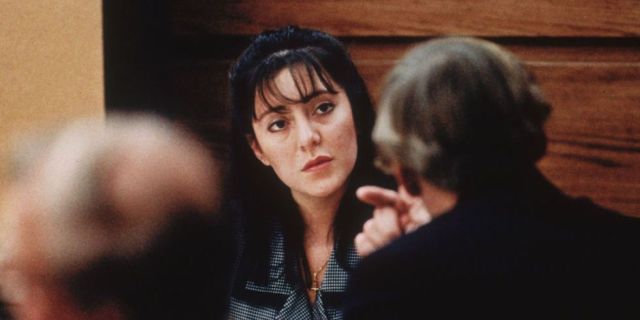
But we do we really know or more importantly remember about June 23, 1993, when Lorena Bobbitt took an eight inch carving knife and lopped off and then discarded the penis of her husband, John Wayne Bobbitt?

Veteran documentary producer/director Joshua Rofé directed “Lorena,” the new Amazon Originals four-part documentary (available to stream Feb. 15). But Jordan Peele produced it, and the film reflects the sensibilities of the comedian and sketch performer turned director and Oscar-winning screenwriter.

It’s dark. It’s a tad horrific. It’s cautionary, even. And it’s funny.

Best line? John Bobbitt noting the frantic police search for his missing member. “Good thing they found it. Would’ve looked funny on a milk carton.”

“Lorena” begins with “The Night Of,” lets us meet (then, and now) the married couple whose tumultuous marriage ended that night, and follows them through the roller coaster of their individual trials.

Did she attack her unemployed, drunken husband for being a selfish lover in a fit of irrational rage? Or was the ex-Marine abusing her, finally pushing Lorena to the point where she snapped, causing her to lash out?

The film is generously peppered with context as we are led first to one conclusion, then another, back and forth over the four episodes.

Here’s Steve Harvey joking about with her recently on his chat show about “the one act every man every man fears the most.”Back then, we hear Hugh Downs on ABC’s “20/20” describing Bobbitt as “the woman who did the unthinkable.”

Howard Stern hosted a beauty pageant/fundraiser for John Bobbitt, casting him as a judge for the 1994 event, chat shows invited him and his outraged brothers on to vent at “that woman.” Back then, we see Andrew Dice Clay, Robin Williams and others working the act of violence into their own acts.

And yet, even then, women took a decidedly different view of what happened that night and who the real victim was. As a nurse on duty at the hospital that night remembers, “I thought, ‘God, what did he do to make her do something like that?”

The four part film introduces us to reporters and lawyers, jurors and the surgeon who did the “re-attachment.”

A chuckling urologist laughs about the penis which was “lost in action” as we hear about the police search for the “member,” and testimony and real transcripts about hospital and police dispatchers using euphemisms about needing to “salvage this man’s dignity” to keep from alerting the news media about what had just happened in Manassas.

An “extremely drunk” victim, a crime scene spattered with blood, with domestic abuse pamphlets, an Ecuadoran native whose English wasn’t great telling police that she did it because her husband had an orgasm and she didn’t — there’s a lot to chew on (ahem) here.

As we meet and hear from the principals, then and now, “Lorena” gives us an appreciation for the times — post Clarence Thomas/Anita Hill and “Tail Hook” and the William Kennedy Smith rape trial. And we start to see what a cultural watershed this heinous and yet laughed-about act was.

lorena2

The word “penis” made it into the mainstream media, “He said/she said” was further cemented into the national psyche, “marital rape” and domestic violence attracted attention anew (the O.J. murders occurred a year later).

As we track the ebb and flow of reputations, legal jeopardy, public opinion and the sort of discourse the case attracted back then and over the years, “Lorena” — which can seem too flippant at times — reminds us of what we’ve forgotten and how far we’ve come even as we ponder if the juries, way back when, got it right or got it wrong.

But as it does it answers the question most fundamental to long-form true crime series. It keeps you involved and piques your interest just enough to keep you watching, from “The Night Of” the crime to its chronicle of America’s understanding of “The Cycle of Abuse.”

2half-star6

Bobbit, John Wayne Bobbit, Whoopi Goldberg

Credits: Directed by Joshua Rofe. An Amazon Originals streaming series.

Running time: 1:00 per episode

Posted in Reviews, previews, profiles and movie news | Comments Off on Series Review: Jordan Peele produced “Lorena” revisits a woman who became a penis-snipping punchline

Movie Review: “The Prodigy”

prodigy1

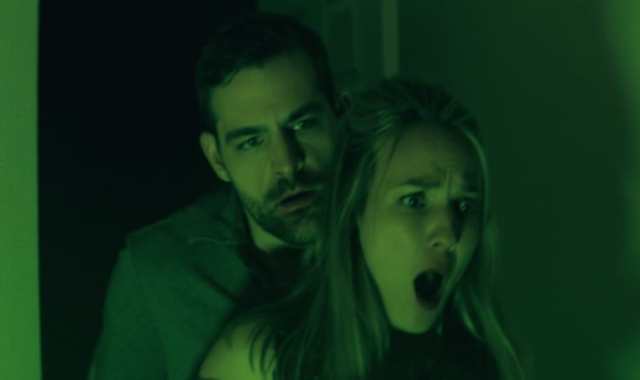
The best you can say for “The Prodigy” is that it’s an efficient shock-and-fright delivery device.

Cold, clinical and mechanical, the jolts — cheap shocks created via a quick edit and sudden SHRIEK on the soundtrack — are timed out, 8-10 minutes apart.

The scenario is strictly horror boilerplate — a brutal serial killer dies at the same time a little boy is born prematurely. “Reincarnation,” says the shrink-approved expert (Colm Feore) to the boy’s increasingly desperate mom (Taylor Schilling of “Orange is the New Black”).

And she, uh, buys it. Few questions asked.

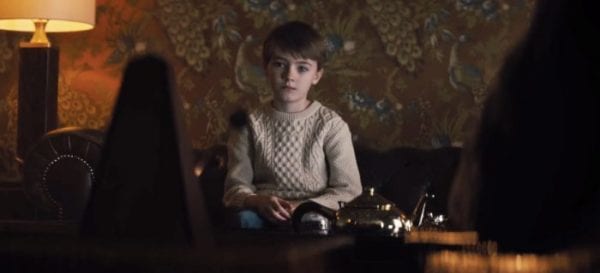
She was so proud. Her baby, Miles, has “David Bowie eyes” (two different colors). “He’s special” with intelligence “off the charts,” the experts tell her and husband John (Peter Mooney).

Yes, he’s a tad anti-social and creepy. But when he hits age 8, Miles (Jackson Robert Scott) is taking a monkey wrench (literally) to classmates, booby-trapping the baby sitter and getting growled at by the family dog, who doesn’t know WHO is in that kid’s body.

prodigy2

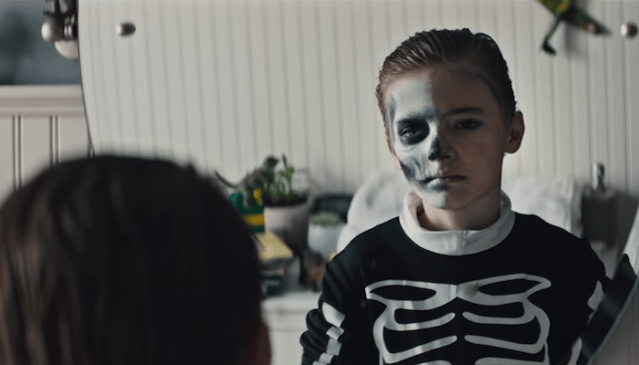
A dead giveaway in such movies about malevolent kids? Miles is a little too “into” Halloween.

The various children playing Miles, with Jackson Robert Scott being the main one but younger David Kohlsmith making an exceptionally creepy impression, are convincing.

Schilling has to carry the picture, and she doesn’t give us much in the line of pathos, empathy, terror or love, the emotional gamut her character runs.  That turns “The Prodigy” heartless. No wonder her kid’s a mess.

I found “The Prodigy” to be a pitiless experience, maddeningly illogical in the ways the parents (Mom more than Dad) accept the abrupt “treatment” and “study” changing to “This kid’s a killer reincarnated” “science” and excuse the kid’s moments of violence and amorality — “It’s OK. It was an accident.”

Still, the frights, with Mom seeing the hand-chopping serial killer’s face (Paul Fauteux) on her little boy’s body, the stabbings and threats of worse to come (hilariously foreshadowed to death) deliver the requisite pulse-stopping punch.

If that’s all you’re hoping for in a horror picture, fine. If not, you’ve been warned. Yes, there’s a dog in the cast.

1half-star

MPAA Rating: R for violence, disturbing and bloody images, a sexual reference and brief graphic nudity

Cast: Jackson Robert Scott, Taylor Schilling, Colm Feore, Brittany Allen

Credits: Directed by Nicholas McCarthy, script by Jeff Buhler.   An Orion release

Running time: 1:32

Posted in Reviews, previews, profiles and movie news | Comments Off on Movie Review: “The Prodigy”

Movie Review: “Cold Pursuit,” a chilly, sadistic watered-down remake

cold1

So what’s Liam Neeson’s MOVIE like?

“Cold Pursuit” was the subject he was supposed to be talking up when the ex-boxer revealed his deepest, darkest thoughts about revenge and race at an awful moment in his distant past. Everybody’s weighed in on that.

I’m from Virginia. I’m just relieved he wasn’t photographed in blackface.

The movie? Well, it’s earned raves from people reviewing it before he cast that pall over it, but more importantly, by reviewers who apparently never saw the superior Norwegian version of this morbidly mordant tale of creative, bloody revenge in the snow.

I’m a huge fan of the original film, “In Order of Disappearance,” which was one of the ten best movies of 2016 I thought. So I was keenly aware of being at a disadvantage seeing “Pursuit.”

It’s not just that remembering the story — a sturdy, steady rural snowplow operator’s son is murdered, and so he kills his way up the mob ladder to get to the gangster who ordered the hit — weighs on the picture and makes the film play slower. From its generic title to the forced, over-reaching laughs (the biggest failing) and the sadistic bent Neeson gives a character who seemed to be more buttoned down, making it up as he went and getting in over his head repeatedly when Stellan Skarsgard played “the snowplow Man,” “Pursuit” feels like an inferior knock-off.

Hell, I even mentioned Neeson in my review of “Disappearance,” way back when, suggesting how NOT to cast/remake this. The Irish man-mountain is too often cast as someone with “particular skills,” when the glory in Skarsgard’s out-of-his-depth turn is how it takes on a DIY whimsy even as he’s going down a deadly path of no return. Conversely, it’s no surprise that the gigantic ex-boxer is capable of violence.

Still, it’s not a terrible thriller and Neeson is solid, as always, in it.

The same director, Hans Petter Moland, shows up to put Neeson through his “Taken” paces. The setting is in the mountains outside of Denver instead of Norway. The character’s name has been changed from “Nils Dickman” to “Nels Coxman,” a limp joke (ahem). We see more of what happened to the son, unraveling that mystery more readily.

Laura Dern plays the wife/mother who is broken by their son’s death. The wife’s madness over that loss is what drives the snowplow man over the edge as well, grabbing his hunting rifle and considering suicide before figuring revenge is a dish best served ice cold. Here, that wife motivating the husband hook is watered down.

“We didn’t know our son!”

Coxman gets a name from a surviving friend of his son’s. From Dante he goes after Speedo, Speedo to Limbo, Limbo to Santa.

Each is commemorated, post mortem, with a black screen inter-title topped by a cross (or Star of David), their “real” name, upon their death or as the first film succinctly put it, “In Order of Disappearance.”

“What IS it with the nicknames?” he asks his brother (William Forsythe), a rich and retired made man from the local mob scene. Windex and Mustang and Bone have yet to be contended with. The Eskimo is the nickname of an African American hitman (Arnold Pinnock).

“You want somebody ‘iced,’ you call The Eskimo.”

The villain in chief is Viking (Tom Bateman, not bad), who inherited the mob which Coxman is picking off. He’s a micro-managing “businessman” going through a divorce (Julia Jones) as he obsesses on his bullied son’s (Nicholas Holmes) diet.

Emmy Rossum plays a young cop who sees a gang war erupting in tiny Kehoe, Colorado, which her grizzled partner (John Doman) doesn’t want to see.

The cleverest ingredient in the adaptation is changing the rival gang that gets mixed up in this slaughter from the Serbian mob to a local Native American drug gang. Tom Jackson is White Bull, their leader, who issues a thunderous call to arms when his son, too, is killed in the mayhem. It’s the most emotional moment in the movie, pretty much the only one.

I laughed all the way through “Order,” but barely found an amusing moment in “Pursuit.” The first film was dry and kind of droll in its over-the-top the violence and ways Skarsgard’s Dickman stumbled into it. This is just business as usual for a Neeson film, savage bloody violence with teeth-and-nose-busting fists, bloody streaks on the snow as he hauls corpses to the raging river to make them disappear.

cold2

A favorite early moment, Nels Coxman has beaten all he can out of a low-level mobster, and with just a look, Neeson lets us see what Coxman is figuring out. He can’t leave this guy to ID him, can’t have that sort of unfinished business interrupting his hunt. He decides to strangle him, and not being accomplished at that, struggles and makes a hash of that.

The terror of being chased through a canyon of snow banks by a snowplow is shown, but underdeveloped. The murders come in bursts, turning the middle acts of the movie into a sagging bore.

I didn’t hate “Cold Pursuit,” but it’s not the giddy darker-than-dark murder-comedy that “In Order of Disappearance” was, and that this film’s trailers (Memorably choreographed to “Don’t Fear the Reaper,” a MUCH better title, BTW) promised.

Fans of Neeson, who has no flair for comedy, even deadpan death comedy, will find this perfectly tolerable. But if you REALLY want to see this story done right, pursue the Norwegian original, “In Order of Disappearance.”

2stars1

MPAA Rating: R for strong violence, drug material, and some language including sexual references

Cast: Liam Neeson, Laura Dern, Tom Bateman, Emmy Rossum, William Forsyth, Tom Jackson.

Credits: Directed by Hans Petter Moland, script by Frank Baldwin, based on the Kim Fupz Aakeson script to the Norwegian movie, “In Order of Disappearance.” A Lionsgate release.

Running time: 1:58

Posted in Reviews, previews, profiles and movie news | Comments Off on Movie Review: “Cold Pursuit,” a chilly, sadistic watered-down remake