
World War II inspired Italian cinema to reinvent itself through Neo-Realism.
The sharp decline of The British Empire after the war caused playwrights and filmmakers to plunge into “Kitchen Sink” dramas with working class grit and adult themes.
The French found even more grit and sex and brio via the youth movie movement that became “Nouvelle Vague,” the French New Wave.
But while Hollywood sobered up for a bit after the war as the public finally lost its taste for musicals, the studio system went to war with TV by diving into widescreen spectacle and embracing the too-taboo-for-TV subjects of sex, depravity, alcoholism, family dysfunction and mental illness.
The late ’50s and early ’60s had their share of Westerns and war movies. But “serious” films from the mainstream studios grappled with disaffected youth and juvenile delinquency, race and sex sex, sex.
It was grand time to adapt Tennessee Williams plays and William Faulkner novels. And that’s where “All Fall Down” (1962) came into the picture, a John Frankenheimer melodrama based on a critically-acclaimed novel by James Leo Herlihy, scripted by the Pulitzer Prize-winning playwright William Inge.
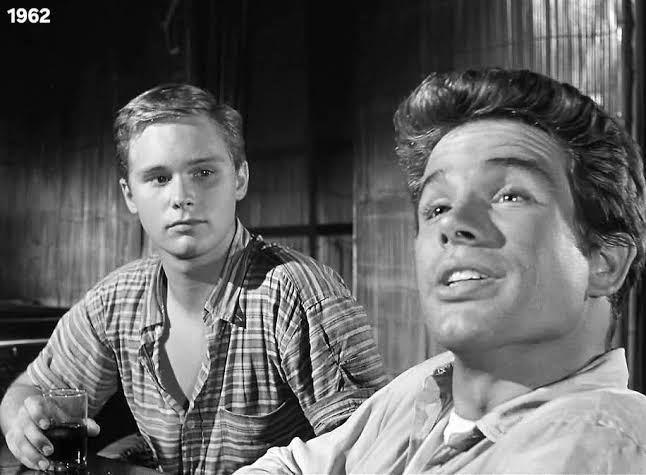
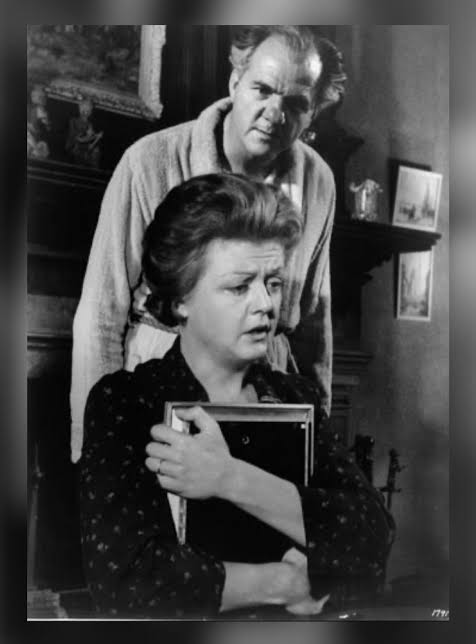
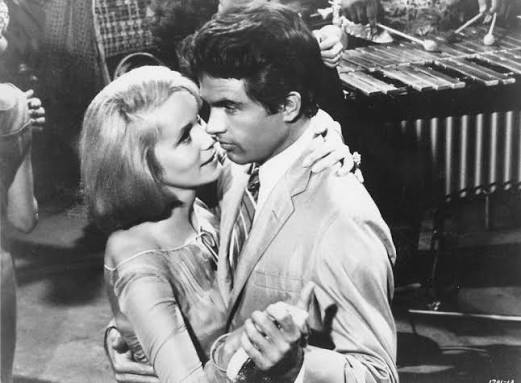
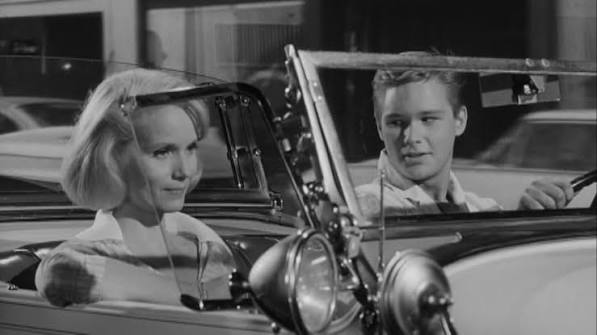
“All Fall Down” is an all-star hand-wringer about a too-handsome-to-ignore wayward son (Warren Beatty), the family that created-“indulged” him and which he avoids, and the younger sibling, played by Brandon de Wilde, who idolizes him.
In cinematic shorthand, it’s “Hud” (1963) without horses, “Psycho” without the shower. It’s just not nearly as good.
The film begins with cliches and great promise and winds down until it ends with another cliche, this one almost comically indefensible. But the cast and the sordid “Peyton Place” undercurrent, Belle Epoch Americana with the soiled sheets pulled back, makes it worth a look.
Aspiring writer teen Clinton (de Wilde) gets off a bus in the Florida Keys, coincidentally a favorite haunt of Tennessee Williams at the time. He’s come there to be with his older brother, to buy into a fishing boat the sibling mentioned in a letter or phone call. But asking around this sordid, slowly-rotting world of fishermen, sailors on leave, strip joints, tourists and hookers about brother Berry-Berry earns rebuffs and “nothing to brag about” warnings.
Berry-Berry is in jail. Clint learns that from the prostitute his brother beat-up to land himself in the clink.
Coincidentally, the $200 Clint brought with him is exactly the bail Florida law enforcement decides will spring Berry-Berry, who barely thanks the kid before he’s attracted the attention of an older woman who invites him to join her for a yachting cruise to the Bahamas.
Berry-Berry is a head-turner, and the women who don’t salivate on first sight at him are the ones who merely gawk and flirt and invite him places.
Next thing we know, the black and white melodrama’s abandoned its most colorful setting — Marathon Key and the old Seven Mile Bridge are among the locations fleshing out “Key Bonita” (Key West) — as Clint is sent back home to Cleveland.
The sons were encouraged by their old leftish agitator turned realtor dad (Karl Malden) to call them by their first names. Father Ralph’s a gregarious drunk. Mother Annabel (Angela Lansbury) dotes on both and smothers them with her mothering, a favorite filmed “social ill” of the era.
They talk longingly of the prodigal son, who we see drift from job to job, woman to woman, Florida to Kentucky to his old Ohio home as the idolizing younger brother ditches school and scribbles scribbles scribbles in notebooks.
And then the daughter. Echo (Eva Marie Saint), of mother’s dearest friend, a pretty and pretty unconventional 30something “spinster,” comes to visit and modern viewers start the mental countdown to where this tawdry tale is sure to be going.
One feature that leaps off the screen watching this stodgy (especially for Frankenheimer) and old fashioned movie today is how often almost every character refers to “Berry-Berry” by name. Don’t try making a drinking game out of every time you hear it, it’ll kill you.
Clint alone calls him Berry-Berry to his face scores of times. Was novelist Herlihy making some pun on the disease beriberi? Was the screenwriter paying homage to Tennessee Williams or Faulkner and their “gentleman caller” “Big Daddy” repetitions? It’s damned theatrical and removes any “reality” from any film or play where one sees this clumsy crutch.
Lansbury’s Annabel is given to inane prattling about anything and everything — especially when her husband is on the phone. But when her wayward son is the subject, she’s Saint Joan staring beatifically into the light, rhapsodizing her love and devotion to the pretty boy “no matter what” he is, is accused of or has no doubt done.
Beatty’s performance is magnificently unlikeable, an arrogant gigolo in all but profession, using women, letting them use him and suggesting “mommy” issues that “made me” become this or do that. The character makes little rational or psychological sense, just an easily-triggered monster with Neanderthal attitudes and a pretty face.
Malden chews the scenery with his bluster and Lansbury tunes up for her “Manchurian Candidate” mom with undertones she suggests as this mother-who-made-a-monster (a stupid trope of the times).
Young de Wilde gives his most mechanical performance here, making his character’s “coming of age” touches, logical though they have to be, abrupt and inorganic.
And Saint’s turn as the lonely receptionist on the dark side of 30, innocently flirting with “I could eat him up” young Clint, silently submitting to Berry-Berry the moment they lock eyes, is inadequately fleshed-out. Playwright (“Picnic,” “Bus Stop”) turned Oscar winning screenwriter William Inge (“Splendor in the Grass”) was not in top form here.
The pairing of Inge and Frankenheimer might have made sense, seeing as how Frankenheimer made the “delinquency turned deadly” melodrama “The Young Savages” the year before. But this plays like a mismatch the moment the steamy, sordid southernmost Florida settings are abandoned for soundstagey Ohio.
It’s only when watching “Hud” that we see how this story and de Wilde’s performance (he co-starred in both) were supposed to work, and did, just one year later.

Rating: TV-14, violence, sexual content, smoking
Cast: Eva Marie Saint, Warren Beatty, Brandon de Wilde, Karl Malden and Angela Lansbury
Credits: Directed by John Frankenheimer, scripted by William Inge, based on the novel by James Leo Herlihy. An MGM release on Tubi, other streamers
Running time: 1:51