
Every era deserves its own take on Jane Austen, and 2026 gives millennials and Gen Z a go with a new “Sense and Sensibility,” revisiting the oft-revisited novel that Emma Thompson starred in and won an Oscar for scripting in 1995.
The new “Sensibility” is darker, as suits our times. “Natural lighting” dims the frothiness, indoors and out. The poverty is more acute, the desperation to marry and marry money more overt.
And still those darned Dashwood sisters are determined to “marry for love.” Well, one of them is, at least. Unless both are doomed to have their dreams dashed.
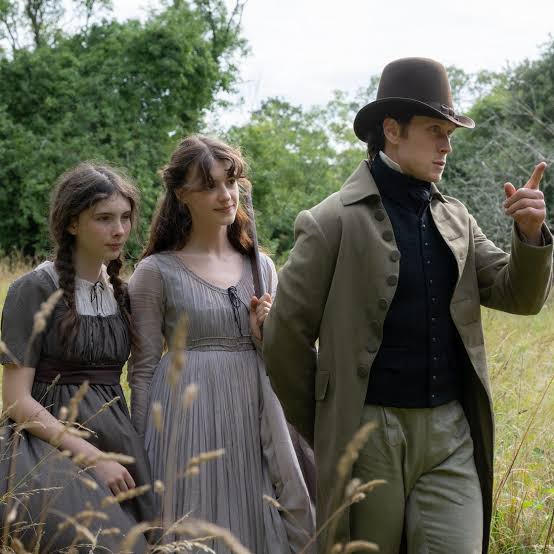
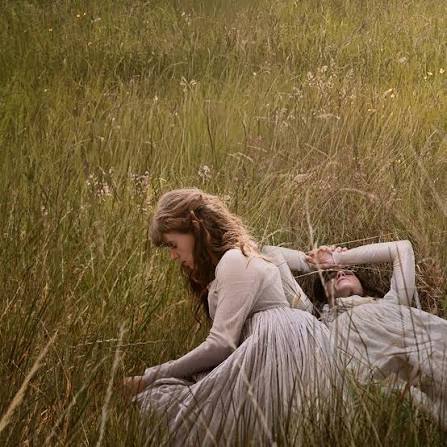
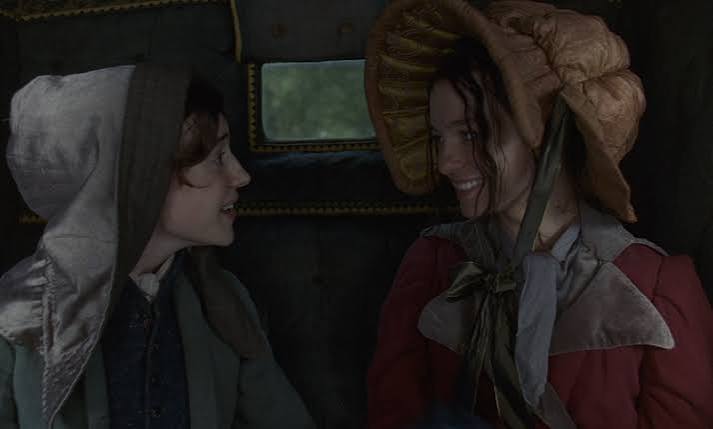

Daisy Edgar-Jones of “Where the Crawdads Sing” is pragmatic, restrained and “always right” sister Elinor. Esmé Creed-Miles (“The Thicket”) earns her Kate Winslet-sized big break as headstrong and “passionate” younger sibling Marianne.
Where Emma Thompson found humor in the “poverty” of the entitled and beautiful, screenwriter Diana Reid and director Georgia Oakley (“Blue Jean”) forsake fun and plunge right in with the family awaiting their late father’s (Caitríona Balfe plays the woe-is-me/woe-is-us mother) will.
In a flash, it’s there, as is son from Mr. Dashwood’s first marriage (Tom Brooke) and his venomous mean-girl-blonde wife, Fanny (Stacy Martin). Tom decrees, at Fanny’s insistence, that the Dashwood women (Bodhi Rae Breathnach plays third sister Margaret) must turn over their beloved Norland estate and find lower-cost digs elsewhere.
Fanny makes sure that husband Tom does as little to “provide for them” as his loyalty to his late father allows.
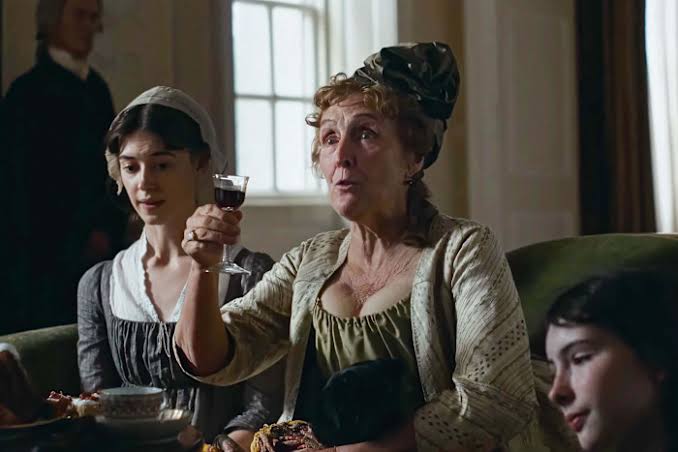
The coastal Devonshire cottage that their distant, tactless chatterbox of a cousin (Fiona Shaw, delightfully gauche) arranges is “modest” in the extreme — Tudor, tiny, with unfinished stone walls and low ceilings and exposed beams indoors.
What’s worse, it’s isolated. How will Mrs. Dashwood find proper, propertied mates for her girls?
Elinor has met and become smitten with stepsister-in-law Fanny’s dashing brother, Edward (George MacKay). But sister Fanny can’t wait to get Elinor of the picture. At least Marianne has a dashing man to sweep her off her feet the moment she twists an ankle in the Devonsire surf.
Frank Dillane plays Mr. Willoughby, who suggests the “passion” that Marianne craves. There’ll be no “making a match” for her with the “dull,” haunted, Heathcliff widower Col. Brandon (Herbert Nordrum).
Reid’s script leans hard on “the man on whom all my happiness depends” plotting, and that “man.” That’s a wise choice, as MacKay (“1917”) is the film’s one serious upgrade from the most famous “Sense and Sensibility,” in which Thompson talked her chum Hugh Grant into playing Mr. Ferrars.
Love Hugh Grant, but he himself has grumped at what a lovely stiff he was in the 1995 film. MacKay brings guilt and heartbreak to the role and makes us feel his hesitation in allowing himself to fall for Elinor.
Edgar-Jones is properly spunky, showing flashes of temper and a “reserved” young woman determined not to be “embarrassed” by her heartbreak.
Creed-Miles offers a darker, more furious and more sensual take on Marianne, whose loss of control was subtler back when Winslet played her. When Creed-Miles recites, “If I am to fall, I prefer it to be from a great height,” we believe. Marianne will have her man or die like a proper Empire-waistlined tragic heroine
I fretted a bit over poor Nordrum’s impossible task of playing the most dashing role on the late Alan Rickman’s formidable resume, his Col. Brandon in the ’95 “Sensibility.” But damned if Nordrum doesn’t keep it all under control until he just breaks our hearts and Dashwoods’ hearts when his moment comes.
Grey, overcast and stark west Buckinghamshire locations help underscore the grimmer, higher-stakes tone the filmmakers were going for.
There are novelties to the screenplay, deviations from the novel with events both invented and that Austen kept off-stage that Reid and Oakley decide to show us. And I have to say that I miss the humor that Thompson so deliciously leaned into.
Shaw’s daft and over-the-top turn as Mrs. Jennings half-steals the picture. And Turlough Convery’s take on Sir John Middleton, the hale fellow/hunter-landlord of Barton Cottage (Mrs. Jennings’ son-in-law), always showing up with pheasants, ducks or hares he’s shot for their kitchen, and Chloe Pirrie’s church mouse turn as Lady Middleton, daughter of a blowhard who married a blowhard, are the only other hearty laughs here.
But this “Sense” makes daring and defensible choices and turns into a more-than-serviceable adaptation, as romantic as any of its big screen or TV serial predecessors, well-acted and more pointed in its depiction of the genteel poverty Austen herself endured.
And this Marianne speaks not just for Austen’s generation of women in perhaps the clearest voice of any Austen heroine. Marriage, “comfort,” and money in the same man, but without “passion?”
“I simply cannot content myself with so little.”

Rating: PG
Cast: Daisy Edgar-Jones, Esmé Creed-Miles, George MacKay,
Caitríona Balfe, Stacy Martin, Herbert Nordrum, Frank Dillane and Fiona Shaw.
Credits: Directed by Georgia Oakley, scripted by Diana Reid, based on the Jane Austen novel. A Focus Features release.
Running time” 2″:16