

Maria Bamford‘s been stand-up comedy’s “next big thing” off and on for decades.
She’d have a break-out tour, TV or film appearance, a chat show guest spot that went viral. And then, crickets.
The offers might be there. Netflix loves her. Just ask CEO Ted Sarandos.
But she’d “go dark,” disappear, take a “hiatus.” For months.
Watching her act, her frank joking about manic depression, “suicidal ideation,” and hearing her often manic speech, even showbiz types should have been able to figure things out.
For Maria Bamford, every day is “a mental health day.”
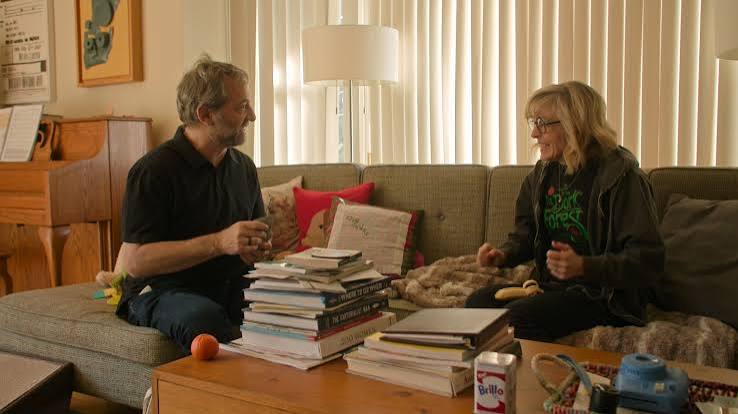
Ex stand-up, comic filmmaker and showbiz mogul Judd Apatow follows his more-questions-than answers “Norm” Macdonald doc with the far more revealing, engaging and hopeful “Paralyzed by Hope: The Maria Bamford Story.”
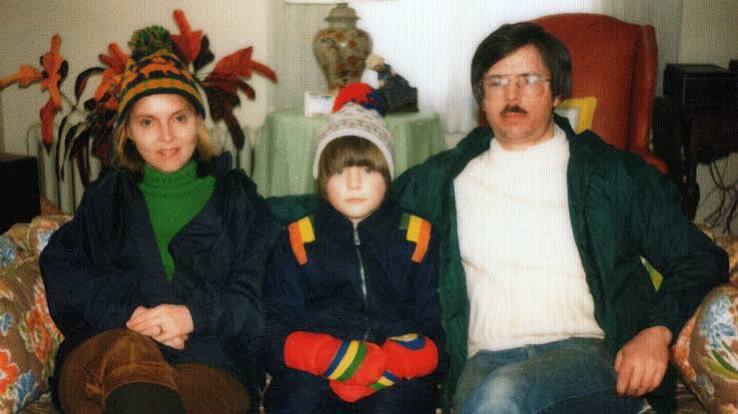
Maria Bamford’s not going to lie or evade or cover up huge periods of her life. She’s been putting it on stage for decades — her cornucopia of “mood” calming medications, her early life realization that something was wrong, her therapy, her checking into mental health facilities and the loving, supportive and damaged parents.
We hear from those parents, and from her sister Sarah in “Paralyzed by Hope,” people who take a mocking and try not to take it personally, or take it to their graves.
‘Mom, you do know that even if a coffin is tight around the hips, eventually it fits.’ But the joke’s on me because she got herself cremated, and now she’s just a pound!”
Little is out of bounds and everything is revealed and subject to a set up for a joke.
Funny folks from Patton Oswalt and Zach Galifianakis, who also broke-out on the “Comedians of Comedy” (Netflix) tour that made Bamford a star, to Conan, Sarah Silverman and Steven Colbert sing her praises.
“She’s my favorite stand-up comic,” Colbert decides.
“Paralyzed by Hope” is the sort of film that lets us meet Bamford’s husband, artist Scott Marvel Cassidy, hear about their their romance and relationship, shared manias and phobias, coming right up to the point where Maria’s about to tell us of the impending divorce (finalized in Jan.), with Apatow interrupting to suggest saving that “for the sequel.”
Because this latest “big break” won’t change anything. It’s a career, life and search for wellness in progress.
“My therapist says I’m afraid of success. I guess I could understand that because, after all, fulfilling my potential would REALLY cut into my sitting-around time.”
The crux of her stage performances is a conversation between herself and people like her and the outside world of medical professionals and misunderstanding or under-informed people she meets.
Bamford’s act is truly one-of-a-kind. There’s that early “Ellen” likability bathed in the angst that made Richard Lewis famous, a Sandler/Silverman/Carrey parade of funny voices — from therapists and family members to showbiz types and every boss she’s ever had — and a lot of dark dips into despair, mental health problems introduced in sets that can be riotous as well as healing in the “I’m going through that too,” sense.
In her mid-50s, she’s had a busy career as a guest star, voice actress, series star, stand-up and “clown school” mascot and star attraction, as well as memoirist — “Sure, I’ll Join Your Cult: A Memoir of Mental Illness and the Quest to Belong Anywhere.” So if she never gets any bigger than she is right now, with a feature-length documentary laying out her journey from Duluth to Hollywood, from mental illness to medicated wellness, that’s fine.
“Look at me, look at ME,” she declares. “I’m deteriorating as I speak. And still I go on.”

Rating: TV-MA, near nudity, profanity
Cast: Maria Bamford, Judd Apatow, Sarah Silverman, Zach Galifianakis, Sarah Bamford Seidelman, Marilyn Bamford, Joel Bamford, Ted Sarandos, Tig Notaro, Conan O’Brien and Steven Colbert
Credits: Directed by Judd Apatow and Neil Berkeley. A Netflix release.
Running time: 1:56