

Why not? He has rarely done anything but brood on the big screen. He’s good at it. And his choice of roles and films post “Twilight” is ambitious and impressive.
“I’m…………….Batman!”
So he’ll be a younger Bat, and in the cowl and cape as of 2021.
Why not? He has rarely done anything but brood on the big screen. He’s good at it. And his choice of roles and films post “Twilight” is ambitious and impressive.
“I’m…………….Batman!”
So he’ll be a younger Bat, and in the cowl and cape as of 2021.

It is to weep.
At the insanity of it all — the excess, the staggering amounts of cash, the cynical actors all collecting a paycheck even though they could see the script was crap and knew a very profitable movie studio had put a no-budget horror hustler in charge of the enterprise.
Because all “Godzilla: King of the Monsters” was ever going to be was the priciest B-movie in history. But what’s the rule with B-movies, kids?
“Don’t forget the cheese.”
Without the B-movie laughs, without a pear-shaped guy lumbering about in a lizard suit, that’s all that’s left to us — weeping.
I don’t know which is worse, the endless “Godzilla” reboots or this homage to the Japanese series (taking its title from the Raymond Burr starring 1956 film) with all the monsters on the Warners’ payroll deposited into one “universe.”
They included the cautionary parable, monsters awakened by “atomic testing, the lesson that “history shows again and again how nature points out the folly of man,” to quote Blue Oyster Cult — which the film does.
All they forgot was the fun.
In “King of the Monsters,” we’re a long way from “The Day the World Discovered Monsters are real.” That was back in 2014, and now monsters are popping back to life, from the South Pole to Skull Island.
It must have something to do with that heartless corporation, Monarch. But surely not. Not with Sally Hawkins, Vera Farmiga, Bradley Whitford, Kyle Chandler, Zhang Zuyi and Ken Watanabe on the payroll!
And let’s not forget Thomas Middleditch. He’s got a one liner or two.
“Is it just me, or has ‘He’ been working out?”
Millie Bobby Brown spent a “Stranger Things” vacation shooting this, a movie that’s pretty much instantly awful, in large part due to the efforts of the screenplay to work a headstrong and company-connected kid (daughter of feuding scientists Farmiga and Chandler) into the heart of the action.
“Maddie” steals this and escapes that, argues with Mom and For Dad…and for Godzilla.
Because all these monsters being awakened need a counter-balance, and that’s what the Lizard King is for, at least in these movies. He is our protector from, oh, Mothra, Rodan and that hydra-headed thing, Ghidorah.
That’s the “thinking,” anyway.
The military (David Strathairn is an admiral, with Aisha Hinds and O’Shea Jackson Jr. are the fighting elite) is inclined to shoot first and ask for budget increases later.
“Admiral, you MUST have faith in Godzilla!” Watanabe, a holdover from the last “Godzilla” movie, declares. “Poor Watanabe” is all I could think. Almost the only thing American audiences see him in is Godzilla movies.
Charles Dance shows up as a villain, the kid is put in jeopardy here and there, characters die; off-camera, as if their agent knew this was going to be a stinker, or nobly, in self-sacrifice, because that is a favorite trope in such Save the World spectacles.
And the picture travels from green screens meant to mimic Antarctica to Mexico, China (got to appease the Chinese in every blockbuster) to Fenway.
We see lots of V-22 Ospreys, the favorite vehicle of sci-fi set in our time, a flying wing (ditto) and a sub.
All just fillers — the locations, the explosions, the debates, the attempted one-liners. Because we know even without seeing the trailer that this is headed towards a Monster Sumo Mash finale.

The parable, that humanity has been Earth’s “dominant species for thousands of years, and look what happened,” stings.
As in the classic “Godzilla” sequels, the fate of the monster is supposed to get us all choked up. Right.
The idea that some might see the deliverance of The Titans (what they call these monsters) as a good thing, a cleansing “reset” for Planet Earth, is straight out of Bond villainy. Cynical and heartless, perfectly in step with the rest of the picture, in other words.
They went with a bargain basement director (Michael Dougherty of “Krampus,” lessening their cost, if not their risk. How’d that work out?
At least the effects houses that digitally rendered Godzilla & Friends (Frenemies?) got paid for hurling radiation-zapping kaiju at me and you, usually brawling in the rain, often in edits that make even the lumbering slow motion a monstrously murky blur.
Warners is going to make a buttload of bucks with this, and I don’t usually begrudge the business side on the hard decisions they take a flier on — $200 million for this, or four much better human stories with few special effects?
But as the truism “If you’ve seen one ‘Godzilla’ movie, you’ve seen them all” still applies, I kind of hope they choke on the cash from this one.

MPAA Rating: PG-13 for sequences of monster action violence and destruction, and for some language
Cast: Millie Bobby Brown, Sally Hawkins, Ken Watanabe, Vera Farmiga, Kyle Chandler, Zhang Ziyi, O’Shea Jackson, Jr., Charles Dance, David Strathairn
Credits: Directed by Michael Dougherty, script by Zach Shields and Michael Dougherty. A Warner Brothers release.
Running time: 2:11

The battle for gay civil rights in the United States really began when those rights were abruptly taken away in the 1950s.
President Dwight Eisenhower presided over a sweeping purge of homosexuals in the Federal government, which opened the floodgates for discrimination across a wide range of fields, in large parts of American life.
Careers were derailed, lives were ruined and some of those thus discriminated against began the long campaign, in the courts and in the court of public opinion, to get this injustice reversed, public recognition for their cause and the media to stop participating in the name calling, scapegoating and persecution.
“The Lavender Scare” is the title of a new documentary about this “Red Scare” era assault on a vulnerable minority. It’s a film built around the letters and public pronouncements of a pioneer, a reluctant but combative, persistent and successful leader in this fight.
Dr. Franklin E. Kameny was a Harvard-educated astronomer whose dream was to work in America’s nascent space program, a dream interrupted when he was abruptly fired from the Army Map Service as a security risk in 1957. That began a life long battle to right this live-shattering wrong and turned Kameny into “The Father of the Gay Rights Movement.”
In letters to his mother (read by David Hyde Pierce), Kameny pre-echoes Dr. Martin Luther King, Jr. when he notes that “Every American citizen has the right to be considered in the light of his own personal merit.” It took guts to make this fight, to refer to himself, in public at that time, as “a homosexual American citizen” when America’s gay community was hardly a community at all — underground, closeted pretty much from coast to coast.
Josh Howard’s eye-opening film captures the context of the times and the birth of many government sanctioned gay stereotypes
In “the panic of the Cold War,” the idea was homosexuals, forced to live secretive lives, were suddenly believed to be security risks. Even as “The Kinsey Report” came out, 1950s America was largely in the dark about this minority and its practices. It was much easier to just dismiss “them” as “perverts.”
The “Red Scare” notion that, as Senator Joseph McCarthy declared, “perverts could be blackmailed into betraying national secrets,” caught hold. And when Eisenhower took office, he eagerly took action on this McCarthy whipping boy.
David Johnson, the author of “The Lavender Scare” book on this piece of gay history, notes pointedly on camera that in this country, this sort of blackmail never happened. A Senate “Perversion” inquiry run by Republicans fails to find an instance of a security breach by a gay employee of the government. That didn’t stop “a systematic campaign…to identify and fire homosexuals.”
A retired government official of the day notes how homosexuals were “easy to identify,” and how it was “just as easy to get them to go away.” The mere threat of exposure made “them quite happy to resign quietly.”
That’s how Madeline Tress, then a 24 year-old economist with the Dept. of Commerce, lost her career. Questioned by the FBI, “the most demeaning thing,” she faced insults that she was “not at all feminine, “”manish” wearing “no lipstick” — all documented in her file with J. Edgar Hoover’s F.B.I.
“My career was over before it began.”
The interrogators worked with “tables” that made “guilt by association” accusations. The accused were routinely railroaded the way Navy veteran Carl Rizzi was, outed by a “confidential informant,” confronted with photos of a drag performance he did at a local club.
If you want to know how far “Transamerica” has come, take a gander at the officials and official documents here discussing “mentally ill perverts, fond of little mustaches…sodomites…C-S-ers” (“suckers” is the second word they abbreviated) shown here.
“The Lavender Scare” lays out how official Washington’s treatment of gays was promptly aped by local law enforcement across the country, which began the litany of raids on gay bars and round ups of homosexuals wherever they cruised.
People got their names in the paper for being arrested, and some killed themselves.
Those arrested in government were strong-armed into naming “five other people you know” in true McCarthy Era blacklist fashion.
One bit of context that Josh Howard’s film points out was the vast human mobilization of World War II, when isolated gays from all over America found out they weren’t alone when they were drafted into the service or enticed to various cities for government work.
We see the camera panning over scads of snapshots of gay couples, in and out of the service, read the headlines about “deviates” as protests began in the late 50s, when even the ACLU refused to fight on their behalf.
“Pickets call Nation ‘Unfair’ to Deviates”
One important contextual sin of omission is worth noting. There was a precedent, glaringly obvious, for fearing that homosexuals working with sensitive information could be compromised. It was happening “across the pond,” gays being blackmailed into spying or continuing to spy for the Soviet Union against Britain and NATO. Much of what was known about the Cambridge Spy Ring did not become public until years later, but in espionage circles it was suspected or recognized at about the time The Lavender Scare became policy.

All the public attention and call for “action” against “commies” and “queers,” began in 1948, “the year America worried about homosexuality,” and didn’t officially end until Bill Clinton overturned the last of the edicts of that age, and pushed “Don’t ask, don’t tell” as a military enlistment policy he thought he could sell the public on.
All of which is important history to remember, with the speed of social change today such that the first openly gay politician to run for president and be taken seriously is a part of the day’s conversation.
And straight America can finally get to know the name of Dr. Frank Kameny, a very smart man with a very big grievance against the government, one he was willing to endure mockery and the loss of his original career to settle.

MPAA Rating: unrated
Cast: Narrated by Glenn Close, Joan Cassidy, Carl Rizzi, John D’Emilio, Lillian Faderman, with the voices of David Hyde Pierce, Cynthia Nixon, T.R. Knight and Zachary Quinto
Credits: Directed by Josh Howard. A Full Exposure release.
Running time: 1:14

“Wonders of the Sea” is an undersea “Isn’t nature amazing?” documentary that manages to find new sights to dazzle us, decades and decades after Jacques Cousteau introduced us to “The Undersea World.”
Narrator Arnold Schwarzenegger calls this film, co-directed by Cousteau’s son, “a declaration of love” because “you always save the things you love.”
It’s not an environment-in-crisis film, although that’s a given. The filmmakers have conjured up a picturesque underwater travelogue, an “eight thousand mile” tour of all that we’ll lose if we don’t do something about plastic, seafood consumption and carbon-burning-driven climate change.
It starts on the coral reefs of Fiji, drops in on a vast squid orgy off coastal California, in the kelp forests there, moves down to “the world’s aquarium,” The Sea of Cortez where fisheries have been depleted but the mangrove marshes could provide the base for bringing everything from tuna to snapper back.
With so many other films using the same general setting, “Wonders of the Sea” wisely zeroes in on smaller life and odder creatures with exotic names — The Mermaid’s Wineglass, The Christmas Tree Worm, The Crown of Thorns Starfish, The Stone Scorpion Fish, “the most dangerous” venomous fish on Earth.

It’s all lovely to look at, and you gain an appreciation for the new tech the crew mention in the opening moments of the film, cameras and gear that allow such dazzling (often minute) images to be captured.
But as I listen to the quartet of narrators (Cousteau’s son and two grandchildren share flatly-voiced speaking duties with him and Schwarzenegger, a poor decision), I wonder about things like why they didn’t use a “greener” ship to make the voyage, something Jacques was constantly heralding.
With the oceans in such awful shape, setting an example is important.
Perhaps the Cousteau family has forgotten the mockery the patriarch’s cloying French-accented narration (he had his own series on ABC in the ’70s) became a cultural punchline, back in the day. You’d think they’d avoid precious banter among themselves — “Okay, Papa!” — and leave most of the narrating to the Austrian-accented movie star.
Oh. Right.
Still, we have never seen how gorgeous a giant clam is when it opens its mouth.
“Behold, the humble flatworm…the multi-colored magic carpets of the reef.”
And it’s helpful to be shown the bum rap sharks have gotten and the vast array of threats the sea’s top predator faces, from shark fin soup slaughter to “by catch” waste that kills 100,000,000 of the them every year.
“Wonders of the Sea” doesn’t break much in the way of new ground. We’ve seen slow-motion sting-rays, spiny lobsters, hermit crabs, octopi and moray eels before.
But the extreme close-ups, vivid colors of the various habitats the Cousteaus take us are worth the price of admission. And if ever there was a time we need to be reminded of what we need to save in the briny blue, it’s now.

MPAA Rating: G
Cast: Jean-Michel Cousteau, Celine Cousteau, Fabien Cousteau, narrated by Arnold Schwarzenegger
Credits: Directed by Jean-Michel Cousteau, Jean-Jacques Mantello, script by David Chocron, Francois Mantello and Jean-Jacques Mantello. A Screen Media release.
Running time: 1:22
Not blown away. Yet.
I mean, c’mon. It’s elves. Smurfs by any other name?
March of 2020, “Onward” opens and we find out.
Two of the three may be known for comedy, but put them in ’70s togs and give them a little New Yawk drug-trade dialogue, and these three just might own the streets.
Looks promising. Looks like a fall thriller, which indeed “The Kitchen” is.
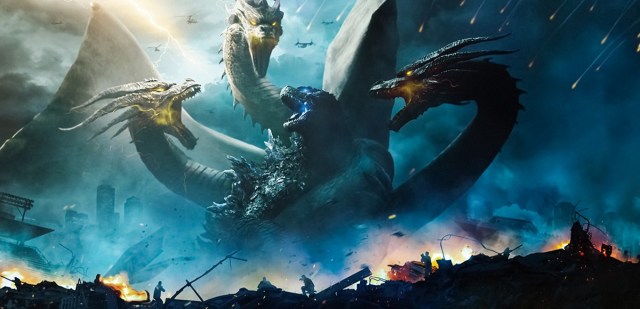
For all the years-long Internet hype around “Godzilla: King of the Monsters,” largely due to the inclusion of fanboy/girl heroine Millie Bobby Brown, the umpteenth version/incarnation/reboot in Kaiju creature features about the avenging post-Atomic dinosaur isn’t going to be anybody’s idea of an around-the-block lines “blockbuster” this weekend.
Box Office Mojo says low $50s for this latest Warner Brothers’ “Think we can get Ken Watanabe…AGAIN?” epic.
That’s a middling “Monsters Inc.” Pixar sequel number, not all that impressive. My guess that it covers no real new ground will be tried out in an hour or so when I get around to seeing it. They previewed it the same night as “Ma” in Orlando, and I’m all about Octavia.
“Godzilla” will do big money overseas, with that sprawling cast and all those monsters, so no worries in WB circles.
The musical cartoon remake “Aladdin” should manage another $35-38 million, but as they under-predicted its opening weekend by 20%, we will see.
“Rocketman” promises to do a tepid $25 (Deadline.com) very healthy $32-35 (Box Office Mojo), riding some good reviews (not mine) and the same generational “Classic Rock” nostalgia that made “Bohemian Rhapsody” a blockbuster. I’d hate to be around Sir Elton if it doesn’t out-perform “Bohemian,” and that seems possible, if not downright likely. It’s not nearly as much fun. More “honest,” about his sexuality and everybody who done Elton wrong. But it’s pretty much a joyless slog of a movie.
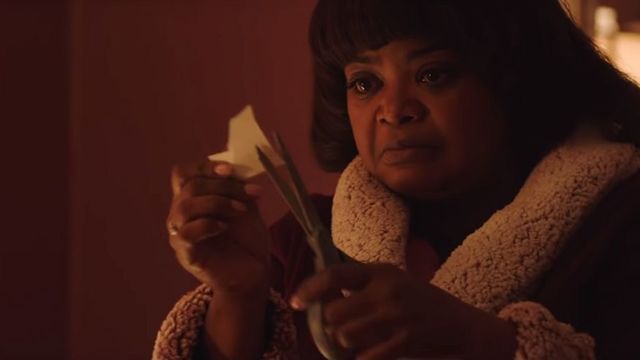
“Ma” earned mixed reviews, a well-cast, well-acted but clumsily plotted and timidly directed affair. It’s not a brand-name horror pic, save for the BH Tilt studio branding. So it could earn in the upper teens (Mojo) or as high as $20 (Deadline, Variety et al).
Among the holdovers, everybody will be looking at the “Booksmart” numbers, as this week has been all about how Annapurna might have overplayed its hand by opening this SXSW darling, directed by fanboy pinup Olivia Wilde, wide. A platformed release might have helped. It’s a good movie and has more than a few laughs.
It didn’t clear $9 million on its opening weekend. Will it manage half of that on its second weekend? The weekday take wasn’t that impressive, either.
It screened in Greater Orlando half a dozen times to build word of mouth. I’m guessing that happened all over the country. And guess what? Those 2,000 or free tickets? That was most of your audience. Their word of mouth didn’t help.
I took my moviegoing companion to see it last weekend, after reviewing it some while back, and here’s what struck me about it on second viewing.
It’s empowering, witty and all that. Wilde gave her young female stars a safe space to let it all hang out.
But it’s slow. The leads aren’t a laugh riot, and the supporting characters — save for Gigi the party girl — are weak.
A formula picture built on the “Sixteen Candles/Can’t Hardly Wait/House Party” framework HAS to move faster than this.
I’m sitting in a small town Florida theater with a 1/4 house, and NOBODY else is laughing, and I’m not laughing as much, second time around.
Maybe it was never going to be “Superbad.” Because “Superbad” assaulted you, pummeled you. The characters got humiliated and genuinely threatened (same with Kid’n Play’s “House Party”). The stakes were higher, and funnier.
“Booksmart” has few funny adults (Kudrow/Sudeikis/Williams/Forte), all of them supportive as opposed to testy-funny obstacles to our heroines. I get that you want to bend that John Hughes “The Adults are Clueless Idiots” template, but we needed more out of the proven players because the young ones weren’t all that –funny lines, edgy in that whole lesbian’s-never-been-kissed way. Flat.
I’m thinking that $25-30 million by the end of its run was all “Booksmart” was ever going to earn. It’s not “the best picture of the year” so far, it’s just got the most empowering message, politically correct characters. And it’s not the comedy smash of the summer because it ain’t playing in the provinces.
Interesting experiment, but casting younger versions of these screen icons isn’t impossible and is probably still the best way to do a movie like this. https://www.independent.co.uk/arts-entertainment/films/news/irishman-martin-scorsese-netflix-release-date-robert-de-niro-al-pacino-a8936116.html?amp
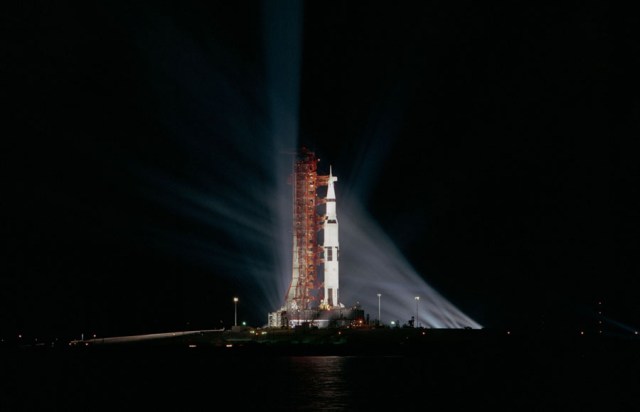
“First to the Moon” is a delightful new “in their own words” account of America’s first actual mission to the moon — Apollo 8.
No, the crew — Frank Borman, Jim Lovell and William Anders — didn’t land on the surface. That was Apollo 11, and in truth, the narration-free “Apollo 11” documentary is the new gold standard for spaceflight history in film form.
But the three astronauts provide personal history, wry commentary about lots of context in their discussion of this rare upbeat moment from 1968, the most roiled year in American history since the Civil War.
It was the height of the Vietnam War, a year rocked by political assassinations and protest marches.
And here were these three guys from the Brylcreem generation, racing to beat the Russians to the moon, a race that very much seemed like a toss-up from this side of the Earth.
In droll anecdotes about their early years, the differing paths each took to NASA, accidents and near-accidents as children, barely missing combat as Navy pilots (Anders and Lovell), flunking this astronaut test, back for another try, missing out on getting into Annapolis, the trio weave an interesting tale of “The Right Stuff: The Second Generation.”
Borman reminds us that the USSR had just done a dry run of their heavy-lift lunar rocket, sending a spacecraft into lunar orbit and bringing it back to Earth. Borman and his crew were moved up from Apollo 9 on the schedule in a rushed mission to at least achieve that same feat, testing most of the Saturn V/Apollo systems for an orbital flight.
Borman admits that they were all “So oriented towards beating the Russians, so absorbed” in their work that the assassinations, the war and the protests of that tumultuous year “didn’t have a large impact on us.”
He takes more than a little satisfaction in recollecting that “The Cold War had three battles. Korea we tied, Vietnam we lost, in Space we won.”
The Apollo 1 fire that killed three astronauts was fresh on everybody’s mind. Two of the men, Lovell and Borman, were Gemini program vets, and in describing his Gemini mission, Lovell brings up the workmanship at NASA’s contractors (North American Aviation among them) at the time, the loose washers and leftover parts floating into view when they hit weightlessness in Gemini 7.


Later, director Paul J. Hildebrandt has fun contrasting the spaceflight veterans’ experience of Apollo 8’s liftoff to that of the understated, outspoken Anders.
Saturn V was “an old man’s booster,” no more than 6Gs, Borman muses.
Anders: “I felt like I was being catapulted through the instrument panel.”
It was a bit loud, Borman remembers.
Anders: “It was so noisy, you couldn’t speak…couldn’t communicate. Couldn’t think.”
Later, we hear them comically bicker over who gets what camera as they come around the moon and scramble to get one of the most famous photographs in history, Anders’ “Earthrise.”
Cute anecdotes about the two Annapolis (Naval Academy) guys (Lovell, Anders) giving the West Point man a hard time for getting space sick, then sea sick (on landing) give “First to the Moon” a little comical color. Anders describes, in lurid detail, the weightless ball of vomit Borman upchucked and slowly floated “right towards Lovell, SPLAT, split up like a fried egg RIGHT on his chest.”
“First to the Moon” isn’t the first film on this subject — PBS did a “Nova” episode on it a few years back. And it isn’t the best Apollo moon mission doc ever.
But it’s still valuable oral history, capturing three of the most articulate astronauts while they’re still alive, still able to summon up what they recall, still the red-blooded All American embodiment of “The Right Stuff.”
MPAA Rating: unrated
Cast: Bill Anders, Frank Borman, Jim Lovell
Credits: Directed by Paul J. Hildebrandt. A Gravitas Ventures release.
Running time: 2:01
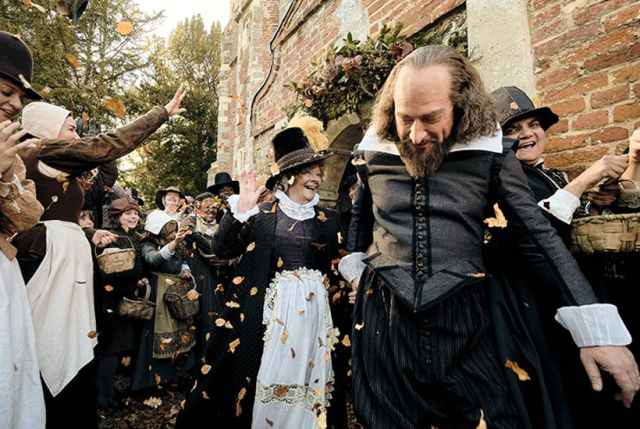
“All is True” is not all true, as we know precious little about the personal life of one William Shakespeare of Stratford-upon-Avon.
But if anybody in the movies has the license to speculate on that life, it’s Sir Kenneth Branagh, whose “Much Ado About Nothing” and “Hamlet” and “Henry V” and “Othello” and other adaptations make him this generation’s Olivier, or better still, Orson Welles when it comes to passing on his love of the Immortal Bard to the movie-going masses.
So here’s a speculative film; stately, handsome — Wellesian, even — about Shakespeare in Retirement. And if it’s not a witty dazzler or moist-eyed appreciation, it’s still a warm homage to the Greatest English speaking playwright, and lovely to look at, to boot.
The title comes from the “alternate” title of “Henry VIII,” the last play Shakespeare produced in London, an opening title reminds us. After the fire that a prop cannon caused that burned down his beloved Globe, the poet and playwright gave up writing, and although not yet 50, retired to the little town where he was born.
Will (Branagh) is resigned to resting on his laurels and his profits.
“You tell stories?” a boy asks.
“I used to.”
He returns to a woman he left at home, his older wife, Anne Hathaway (the peerless Dame Judi Dench, the heart of the film), his two daughters, Judith “the spinster” (Kathryn Wilder) and the married Puritan Susannah (Lydia Wilson).
He returns to mourn the little boy, Hamnet, who died decades before, to settle his affairs (having no male heir) and create a garden for the child, an aspiring poet.
The conflicts that greet him and us are over the family’s reputation in these Puritanical times, a scandal that might engulf Susannah and the insults and accusations hurled at Will by Hamnet’s surviving twin.
Judith describes herself as “an angry bitch,” and wails “Why did the wrong twin die?” as if she believes that’s what her father has always thought.
Hadley Fraser plays Susannah’s pious to the point of self-righteous husband, a Puritan’s Puritan who almost appreciates the irony that a man who does not condone acting or the theater stands to inherit most of his father-in-law’s estate.


Shakespeare plays with his granddaughter and the neighbor’s dog, and plays at being a gardener, digging and planting flowers in memory of a son whose funeral he was too busy to leave London to attend.
It’s all rather dry and seriously mundane dramatic material, and all of Branagh’s Wellesian scene-compositions — deep focus shots placing characters in pools of candlelight at different points-of-focus — cannot spice it up.
The best scenes pair Branagh with Dench, for brittle reminiscences over a marriage that lost its fire long ago, and with Sir Ian McKellan and Gerard Horan.
McKellan plays Henry Wriothesley, the Earl of Southhampton, a patron of Shakespeare, the person to whom several of his most romantic poems are dedicated. He was much younger than Shakespeare in real life, the “fair youth” of his love sonnets.
But even though McKellan is thus miscast, their fireside chat has the warmth of intimacy and wit that much of “All is True” lacks. The Earl wants to know why “the greatest man in the Kingdom, after His Majesty, of course,” is “so small,” why he has “lived the smallest life.”
That’s a perfect commentary on this under-educated man who in truth, lived large and cast a giant shadow, but who left London and retired to a life that was everything the Earl said it was — small. His genius, revealed in his irritated answers to “How” and “Where” questions from a fan, was his imagination and his ability to read widely and adapt history and earlier plays freely in creating a stunning string of timeless comedies, dramas and tragedies.
Horan plays Ben Jonson and brings a nice twinkle to their fireside scene, two great writers, friendly rivals, with Jonson freely admitting to being the lesser of the two “equals.”
None of those grand moments are enough to remove the air of disappointment the whole affair wears, the sense that screenwriter Ben Elton (“Blackadder”) should have found a few more crackling exchanges, given Shakespeare more of the wit we hear in the plays.
But as funereal as it all can feel, “All is True” manages the wistfulness that must have been Branagh’s design, the director of “Thor” and “Murder on the Orient Express” returning to his first love, his idol, for an affectionate if somewhat perfunctory portrait.
Perhaps he has “King Lear” in him, and perhaps the upcoming “Artemis Fowl” and “Death on the Nile” will give him the capital he needs to attempt it. Until then, he’s managed a perfectly pleasant if not wholly satisfying Bard in Winter, and that’ll have to do for now.
MPAA Rating: PG-13 for thematic elements, suggestive material and language
Cast: Kenneth Branagh, Judi Dench, Ian McKellan, Jack Colgrave Hirst, Kathryn Wilder
Credits: Directed by Kenneth Branagh, script by Ben Elton. A Sony Pictures Classics release.
Running time: 1:43

 Movie Nation