Preview: “Tolkien” reveals the man who forged “The Lord of the Rings”

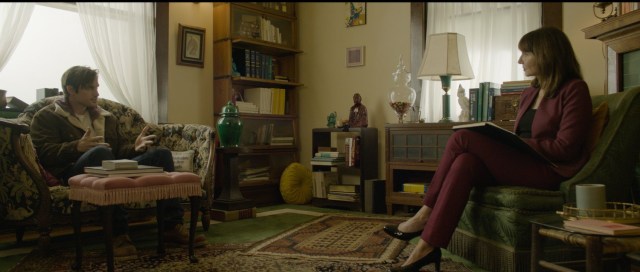
Nicholas Hoult, who has a fun turn in “The Favourite,” has the title role here — a possible “serious actor” break-out moment for him in a picture that has  prestige and fangirl/fanboy appeal built into it, sort of in that “Professor Marston and the Wonder Women” way.

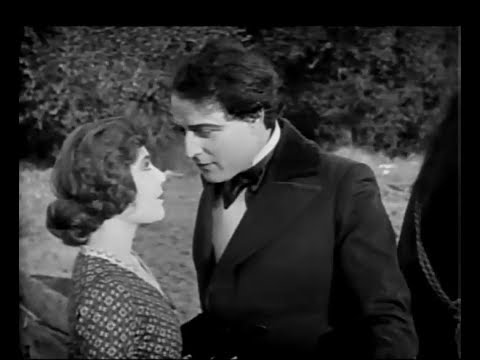
Here, we’re given a love story (Lily Collins co-stars) and a taste of the events that gave J.R.R.’s imagination room to roam, and a woman he’d love to impress by writing the blockbuster fantasy trilogy of all time.

“Tolkien” opens in limited release May 10.


Posted in Reviews, previews, profiles and movie news | Comments Off on Preview: “Tolkien” reveals the man who forged “The Lord of the Rings”

Movie Review: For this Icelandic eco-caper to come off, we need a “Woman at War”

war4.jpeg

Oh, that every dark comedy to come down the pike was as playful as “Woman at War.”

It plays around with expectations, setting us up and tripping us — time and again.

It toys with conventions and worn comic tropes — identical twins, mistaken identity, running gags.

And Benedikt Erlingsson’s Icelandic caper comedy has fun with music, installing an offbeat trio (tuba, drums and accordion or piano or organ) who score the movie, live on set, standing behind our “Woman at War” as her odyssey is by turns serious, possibly tragic or — more often — just plain strange and whimsical.

When Halla finds out her adoption of a Ukrainian orphan might come through, a Ukrainian trio — in native garb — shows up, her very own Greek Chorus, an ironic commentary on Halla’s newly-complicated plight, singing in Ukrainian.

In “Woman at War,” Halla (Halldóra Geirharðsdóttir) is quintessentially “quixotic.” But unlike Don Quixote, famed tilter at windmills, this 50ish chorus director is tilting at power line pylons. Halla is an Icelander at war with the government’s high-handed plans to bring more work to the nation’s polluting smelting industry — “Chinese money” and all. Her way of fighting it? Take down the power lines that keep the metals and ores melting.

We meet Halla in full warrior princess mode. She’s hiked out across the lava fields that form Iceland’s terrain, brought her bow and arrows and has shot a cable across the power lines, shorting out the works.

When the black helicopter pops up to track her down, she’s resourceful enough to get away, but only as far as the nearest farm.

“If you want to help me, it has to be now.”

Her pitch, that this, her fifth act of sabotage, does not make her a criminal, that “I’m trying to stop crimes against us,” is unnecessary. The farmer (Jóhann Sigurðarson) figures they’re cousins, not a far-fetched guess on the tiny rock on the edge of the Arctic Ocean.

Halla has just made her first getaway, a skin-of-her-teeth escape back to her solitary life of bike-commuting to work, leading a chorale, maintaining contact with her government “mole” who updates her on the whole smelting conspiracy and covering her tracks as she single-handedly throws a spanner into the works.

Her latest sabotage has netted a suspect, a convenient Spanish tourist (Juan Camillo Roman Estrada) who becomes a running gag, always in the wrong place at precisely the wrong time. The cops jail him and let him go, but not without a jaunty “Welcome to Iceland!” — one of the few times anybody here speaks English.

Co-writer/director Erlingsson (He did “Of Horses and Men.”) loses himself in Halla’s cunning and resourcefulness. She’s not just handy with a bow and arrow. She knows she’s risking electrocution, messing with high tension lines. She’s got her rubber gloves.

And she’s careful in other ways, too — right on the edge of paranoid. Seriously, how easy would it be to catch an eco-terrorist on a remote island with only 350,000 people on it — especially an island with the omnipresent CCTV “security cameras” popping up in every corner of Reykjavik?

Erlingsson has her raise an eyebrow at questions Halla’s asked about the getaway car she parked on the street. The questioner is blond, wearing black, his eyes hidden behind Ray Bans. It’s only a moment or two later than she and we see he’s pushing a stroller. NOT a cop.

She wants to get her message out to the public, and when cutting up newspapers to create a lengthy “ransom note” styled “manifesto” proves impractical — she needs a typewriter, untraceable, preferably. Check out the way Halla procures it and then distributes her “message.”

Through it all, Geirharðsdóttir gives Halla this inscrutable poker face — until, that is, she gets the news that her long-ago filed-for adoption (a Ukrainian war orphan) has come through. She lets us see the shock, and later the delight that this news — in the middle of all the drama she’s filled her life with — gives her.

The deadpan whimsy spills out of many scenes in this “War” film. Halla’s farmer “cousin” lives alone with his sheep dog. He’s named the dog “Woman.” As in “Woman, STAY.” “Woman! BARK!” “SHUT UP Woman!”

But I can’t say enough about the way Davíð Þór Jónsson’s music and musicians are incorporated into “Woman at War,” setting the picture’s tone, having fun with scoring the film and providing visual/musical commentary to Halla’s adventures.

It’s not just that the simple rhythms — a snare drum march in some scenes, a folkish accordion or oomphs from a tuba in others — that tickle. We see the percussionist impatiently clicking his sticks together behind Halla as she reasons through her next plot and watch the ensemble perform as she sprints by, running from drones or police helicopters.

When Halla faces a decision, she makes eye contact with this or that performer before she — and they — decide what course she is taking, by virtue of the music that the performer scores it with.

When you see the source producing music in a scene in a movie, that’s called “diegetic sound.” Several movies have played around with this, but “Woman at War” has the best diegetic placement of music and musicians in a story since “There’s Something About Mary.” It’s just delightful.

Erlingsson takes a fairly cut-and-dried caper comedy and tosses twist after twist into it, letting “Woman at War” surprise us just as often as it repeats a running gag (the poor, cursing bicycle-camping Spaniard).

And as predictable as this might have been and sometimes is, Erlingsson and his stoic, poker-faced star save the best twists for the finale, letting this genial lope across the lava flows finish with a flourish and leave you with a big grin.

3stars2


MPAA Rating: unrated, locker room nudity

Cast: Halldóra Geirharðsdóttir, Jóhann Sigurðarson, Juan Camillo Roman Estrada, Jörundur Ragnarsson

Credits: Directed by Benedikt Erlingsson, script by  Ólafur Egilsson, Benedikt Erlingsson. A Magnolia release.

Running time: 1:40

Posted in Reviews, previews, profiles and movie news | Comments Off on Movie Review: For this Icelandic eco-caper to come off, we need a “Woman at War”

Preview: One musician is the last Man on Earth who remembers The Beatles in Danny Boyle’s fantasy, “Yesterday”

It’s a little sci-fi, and a lot “Love Actually.”

Danny Boyle directed and Richard Curtis scripted this musical romantic fable.

Lily James, Ed Sheeran, Kate McKinnon and others are among the “names” that surround star Himesh Patel, who plays a struggling musician who could, you know, cash in. If, you know, nobody remembers The Beatles or holds those copyrights.

Just saying. Maybe our hero can afford to get his teeth fixed when, you know, he becomes the star that they were — in equally sudden and overwhelming fashion.
“Well, it’s not Cold Play…”

Stay all the way through it — two teases to the trailer are followed by the trailer proper.

“Yesterday” opens Sept. 13.


Posted in Reviews, previews, profiles and movie news | Comments Off on Preview: One musician is the last Man on Earth who remembers The Beatles in Danny Boyle’s fantasy, “Yesterday”

Next Screening? An Icelander takes on High Tension Power Lines in “Woman at War”

This “Woman at War” has the potential for whimsy, I must say.

A quixotic figure who is tilting, like the Don Quixote who inspired “Quixotic,” not at windmills but at power lines.

Reminds me of this TV movie for the last millennium — “Ohms.” Remember that one?

“Woman at War” opens March 1.

Posted in Reviews, previews, profiles and movie news | Comments Off on Next Screening? An Icelander takes on High Tension Power Lines in “Woman at War”

Preview, New “Aladdin” trailer has Will Smith in Blue

The first thought — and perish that thought, if you can — that popped into my head was “impressive, in a ‘Prince of Persia’ way.”

But the source material here is a can’t-miss Disney musical, a cartoon classic given a live action remake.

Will Smith and a cast of mainly lesser-knowns here in the West bring “Aladdin” to the screen on May 24.

The trailers aren’t selling me, I have to say. This could go either way. But we’ll see.


Posted in Reviews, previews, profiles and movie news | Comments Off on Preview, New “Aladdin” trailer has Will Smith in Blue

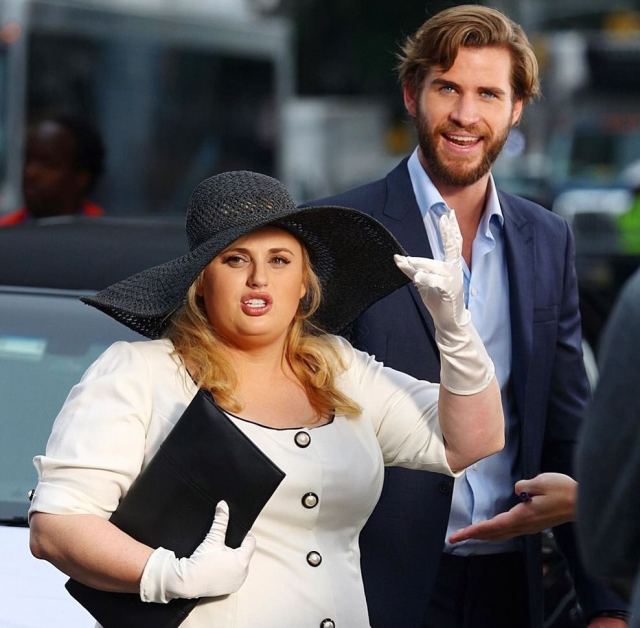
Movie Review: Rebel Wilson looks for laughs in rom-com cliches in “Isn’t It Romantic”

rom2

Rebel Wilson’s niche in the cinema is an enviable one.

She’s the quintessential “funnier best friend” the ultimate icing on the ensemble comedy (or musical) cake. The Aussie has made a career out of sharing the screen in “Pitch Perfect” or “How to Be Single” or “Bachelorette” — packing a lot of comic value into her moments and stealing virtually every scene she turns up in.

But being a leading lady isn’t about showing up on set and riffing your way to the funniest take, doing that for a few days or weeks, and moving on. It involves a lot more heavy lifting, a lot more range and in the case of “Isn’t it Romantic,” providing all the laughs when the supporting players aren’t in the Rebel Wilson league.

And if this rom-com that’s a send up of romantic comedy conventions and cliches and doesn’t definitively show she’s not up to the demands, it underlines how even Rebel Wilson can’t save a script this joke-starved or direction this uninspired.

Still, we could see why this was pitched, financed and filmed with every trailer for it. The idea, a rom-com that sends up rom-coms, is a winner.

Wilson plays a woman who was always taught that romantic comedies are fables, that as her mother (Jennifer Saunders) put it, “there is no happy ending” for women “like us.”

As in not svelte, beautiful with perfect hair and makeup from the moment they wake up like the star of virtually every romantic comedy ever.

Adulthood reinforced that. Natalie might be a Manhattan architect, but the plump pushover from Oz is treated like the office doormat, even by underlings. Only her adoring colleague Josh (Adam Devine, still not funny) and assistant Whitney (Betty Gilpin of “GLOW”) support her.

And Whitney’s a bit of a dope, endlessly watching rom-coms like “The Wedding Singer” on her work PC. Natalie cannot set her straight often enough.

“All these movies are terrible lies set to pop songs!”

Natalie’s just proven how “invisible” she is to men like their “He’s CW hot!” new client (Liam Hemsworth) when she takes a blow to the head during an NYC subway mugging on the way home. As she wakes up in hospital, something isn’t right. The doctor’s a contender to be the new “McDreamy.”And the decor…

“This isn’t an emergency room! This is a Williams SONOMA!”

She’s dressed in “Pretty Woman” (post-makeover) wear, sent out into the street, where seagulls fly in heart-shaped flocks and “New York doesn’t smell like s–t any more!”

Much bleeped profanity later, Natalie figures it out.

“I”m trapped in a f—–g PG-13 romantic comedy!”

She rages at her cliched interior monologues, is slack-jawed at the over-the-top interest Mr. “CW hot” shows in her (He writes his phone number on a rose. Don’t try this at home.) and sort of loses it at all the insipid pop that underscores every “Thousand Miles” step she takes on these fantasy-New York streets, into her now luxurious apartment and its over-stocked walk-in closet and makeup vanity.

Her testy neighbor (Brandon Scott Jones) has been turned into “an offensive version of a gay guy,” offensive and funny. Before she knows it,”I think we’re being dragged into some dumb ‘makeover montage.'”

And on and on it goes. First we identify the exhausted cliches of romantic comedies — gay BFF, every woman is a cutthroat rival (Priyanka Chopra takes after Adam Devine’s Josh), every New York streetside shop sells cupcakes, flowers or wedding gowns and when the right song pops up — random strangers all work with the same choreographer. Then we try to make something amusing out of sending up those cliches. And fail.

rom3

A “My Best Friend’s Wedding” gag repeated in too many rom-coms to number almost works — “karaoke night.” But just when you think “That’s it. ‘Pitch Perfect’ Rebel just needs a few more production numbers,” the movie provides them. They don’t help.

Hemsworth turns out to be the less funny sibling to brother Chris, although, truth be told, nobody here gets much of a break from the trio of screenwriters.

Waiting around for that first giggle is like sitting through a teetotalers’ Irish wake — death itself. And Wilson, letting the strain show the way a hundred other funny folks expected to “save” a flimsy comedy built around them have before her, has never seemed more out of her depth.

Here, she’s a Rebel without a laugh.

1half-star

MPAA Rating: PG-13 for language, some sexual material, and a brief drug reference

Cast: Rebel Wilson, Liam Hemsworth, Adam Devine, Priyanka Chopra, Betty Gilpin and Jennifer Sanders

Credits: Directed by Todd Strauss-Schulson script by Erin Cardillo, Dana Fox and Katie Silberman. A Warners/New Line release.

Running time: 1:28

Posted in Reviews, previews, profiles and movie news | 1 Comment

Movie Review: Love might be found in the “vintage” trade of “Antiquities”

ANT4

There are worse sins than “trying too hard” in a romantic comedy.

With twee (precious) characters, a twee setting — the world of antiques and vintage dealers in small town Arkansas — and twee subject matter, as in getting to know your late alcoholic daddy by living in his house and taking a job at the antiques mall where he worked — “Antiquities” tries too hard on too many levels.

It’s so tart and sweet it makes your teeth hurt. But it’s cute enough to more or less come off, in a featherweight sort of way.

Walt Prior, played by Andrew J. West of TV’s “Once Upon a Time,” has come “home” to the small town where his late daddy lived, loved, worked and died. Walt’s not making a big deal out of it, but he’s in town to “live in his old house, work in his old job, go through his old things and know the people that he knew.”

So, issues? Maybe.

It’s a place with a jovial surface to it, everybody naturally assuming that the son from the big city (Little Rock) will move back here and take up Dad’s old booth at the antiques mall. Walt surprises us and possibly himself when he rejects that booth idea, but he takes on a job at that mall — which as in small towns all over America, is a long-closed department store in a half-dead downtown.

Cue the colorful cast of eccentrics that populate the place. If you’ve ever spent any time in such emporiums, you’ve seen the “types.”

There’s the bullying, oversharing unreconstructed Confederate Blundale (Roger Scott) entirely too into his Civil War dioramas.

“My Daddy…he used to WHUP me…he’d put his foot about RIGHT there on my neck and HIT me with a shovel. He was a good man.”

Dolores Jr. (Michaela Watkins) dresses in vintage accessories and drawls through her planned surgeries — nose, or a boob job first? Whatchathink, hon?

Old Coach McGee (Ryk St. Vincent) sells sports training cards and will bend your ear about the athletic exploits of anybody he played with or coached.

Jimmy Lee (Graham Gordy, who co-wrote this and is quite funny in it) is flamboyant and just closeted enough to effeminately talk up the sex appeal of any woman entering the store, like he’s fooling anyone. Or selling to anybody who visits his elaborately detailed recreation of a childhood Christmas in his home growing up. That’s his booth.

“Women like that can’t have nice things. Did you see her shoes?”

Stocky Delaney (Michael Gladis ) insists that he’s on the same training regimen as his brother, a Navy SEAL. Delaney downs those little energy drinks you find at service stations and lies like a sealskin rug.

Presiding over everyone in Sticky Vicky’s Antiques Mall is manager and antiques trader Dewey (Troy Hogan of TV’s “Queen Sugar,” an absolute stitch here). He went to high school with Blundale, and ended up marrying the crank’s mother. But back in the day, he assures Walt,  he was “gettin’ more Tang than Buzz Aldrin.”

Everybody over-shares. Everyone is a trapped in their past. Everyone is presents equal degrees of difficulty when it comes to extracting yourself from a conversation with them.

You’d have to include Ellie (Ashley Greene of TV’s “Rogue” and “Pan Am” and a lot of iindie movies) in that group. Because even though she’s a world traveler and pretty enough to have never been told “no” by a guy, she’s there selling pottery in Sticky Vicky’s, sizing up and pulling the new guy’s leg.

“Delaney’s parents? First COUSINS…When I was little, I didn’t think fat people could feel things.”

Even though culture-shocked Walt “can’t tell the difference between a nice girl being flirty and a flirty girl being nice,” he takes her bait and takes his shot.


Even though he’s only been in Vicky’s mere minutes, Dewey gives him the “You’ve got that look…the look of management,” pitch. He should take over all this and let Dewey and his elderly wife Vicky retire to a life of second-hand RV travel.

“Antiquities” has the feel of a tale that’s been researched. Having dated Southern women deep into collecting and even joined them in estate sales and auctions, in “picking,” restoring and re-selling this stuff, I recognized every “type” here in an instant.

The “malls” inevitably have more clients running booths than customers, with those booth folks enjoying having each other to talk to about their specialties, their “picking” and their obsessions. There’s competition, gossip and a whole lot of reluctance to unload their most precious treasures.

And I’d swear I’ve overheard this very line (courtesy of Dolores Jr.) at an Oak Hill, Florida flea market.

“I’ve taken so much ginko I think I can hear what my neighbors are thinking.”

The hangup that all these people in the movie share is their big smiles and surface enthusiasm for the past, for their DOA business and for keeping up appearances, is all just goofy glossing over for their pain.

That’s a bit of a reach, and “Antiquities” has no business shooting for “deep” for even one second. Sentimental? Sure. The filmmakers pull that off.

It’s the goofy gloss that director and co-writer Daniel Campbell and Gordy absolutely nail — Delaney sucking on helium because it “makes me feel better when I’m depressed,” the native cunning of a small town pole dancer who knows how to take a tip when it’s not being give, the entertainment value of a small town Japanese cook-at-your-table steakhouse. He’s clumsy, and there’s a bit of the insult comic in him (David An).

“Hey stringbean, show over here. I killing myself for you.”

Mary Steenburgen has a two scene cameo as the local shrink Walt consults with, someone who keeps a chatty parrot to help her narcissistic patients hear their self-absorbed words hurled back at them in mockery.

But the standouts in the cast are Gordy, Scott, Watkins and especially Hogan, who makes every singeing admission, every stinging insult sing.

“The only toes you need to worry ’bout steppin’ on are under this desk — covered in athlete’s foot.”

Greene has a lot more to play than West, but truthfully, the leads seem like bemused anchors for the funnier characters to bounce off of. That’s sitcom writing.

With CBS exploring the revival of “Northern Exposure,” I could totally see “Antiquities” as an hour-long character comedy. “Trying too hard” doesn’t seem like a shortcoming in that format.

2half-star6

MPAA Rating: unrated, some profanity

Cast: Ashley Greene, Andrew J. West, Michaela Watkins, Michael Gladis and Mary Steenburgen

Credits: Directed by Daniel Campbell, script by Graham Gordy, Daniel Campbell . An Orchard release

Running time: 1:33

Posted in Reviews, previews, profiles and movie news | Comments Off on Movie Review: Love might be found in the “vintage” trade of “Antiquities”

Next screening? In Quebec, she’s a “Slut in a Good Way”

The French-Canadian sex comedy, “Slut in a Good Way”   three rebellious teen vulgarians who take jobs in a toy shop.

And romance, or something damned near like it, ensues.

It’s black and white, therefore it must be “art,” as those raving up “Roma” and “Cold War” can attest.

“Slut in a Good Way” opens March 22.


Posted in Reviews, previews, profiles and movie news | Comments Off on Next screening? In Quebec, she’s a “Slut in a Good Way”

Silent Movie Review: “The Covered Wagon”

covered1

In cinema history it is the Ur Western.

Yes, “The Great Train Robbery” was the first “film” and it is fitting that it too, was a Western. But “The Covered Wagon” established the tropes, the conventions, the action beats and archetypes that carried John Ford and John Wayne, Howard Hawks and Henry Hathaway, Clint Eastwood and the Coens through a century of Western cinema.

The stoic Westerner — a good-bad man with a tainted past, looking for a reset on the American Frontier — the dewy Eastern flower, soon to be hardened her odyssey across The Plains — the scheming rival, the colorful comic “trailblazer” — cattle and horses and oxen pulling Conestoga wagons across dry, dusty flatlands, over mesas and up mountains, from Westport Landing (Kansas City) to Oregon — it all began with “The Covered Wagon.”

There’s a wide river to ford, buffalo, Indian raids, fistfights and gunplay and the distraction of “Thar’s GOLD in them thar Hills!” (California)

It’s all here in a film released in 1924.

I caught James Cruze’s jaunty “The Covered Wagon” in a Florida cinema that opened in 1924. No, I wasn’t there on opening night, thank you. Accompanied by a pianist rattling through a repertoire that included classical music snippets, “Oh! Susanna!,” “Bonanza” and “Rawhide” themes — and “Mighty Mouse” — it was a presentation that showcased the film’s dazzling, almost documentary-real detail and production design, its vast scope and dated humor and startling, chaotic action.

And the damned thing still works.

We see two massive wagon trains, white canvas tops stretching out into the distance, forming up for the joint crossing — one led by Wingate (Charles Ogle, born just after the Civil War), the other by Will Banion (J. Warren Kerrigan, who starred in the silent version of “Captain Blood,” and had the title role in “Samson”).

They’re under the ostensible “command” of Sam Woodhull (Alan Hale), who has earnest designs on Wingate’s pretty daughter Molly (Lois Wilson, who worked into the TV soap opera era).

It’s obvious that Mexican War vet Banion and his trusty/ornery trailblazer Jackson (The Scot Ernest Torrence, a veteran heavy in silent films) is the one who will get this train through, obvious that Molly will fall for his manliness and obvious — by his raccoon eye-makeup that Woodhull will do whatever he can to keep them from coupling.

Little Jed Wingate (Johnny Fox) is along for the ride, picking at his banjo, offering a “chaw” to any pioneer what needs it.

I’ve seen scores of silent films in such settings — accompanied by a pianist, organist or local symphony raising funds with a special benefit showing. “Phantom of the Opera,” “The General,” Chaplin, Keaton and Lloyd, Fairbanks — all impressive.

But while “The Covered Wagon” isn’t a silent John Ford Western or directed by one of the acknowledged masters of the medium, isn’t one of the widely known antecedents to the most American of movie genres, it’s impressive in ways that any film buff can appreciate.

Just 75 years removed from the events of the 1848 setting of the film, Paramount was able to shoot this movie in Utah by asking to borrow any covered wagons still in the families of the state’s second and third generation Latter Day Saints.

That “recent history” and authenticity carries over to the costumes — worn, lived in leathers, a wide assortment of hats, rough homespun fabrics.

The hero doesn’t wear a gun, as that practice was more a Civil War era innovation.

The script is corny by modern standards, lots of talk of “Empire Builders” heading West, the implied Manifest Destiny that came with that and showing off what would become known as “The Plow that Broke the Plains.”

But real Native Americans are seen inveighing against such a plow in their encampments, this “monster weapon” that would take their land, fence off their lifestyle and chase away the buffalo. The tribes are given their motivation for fighting back, reinforced by wagon train treachery, even in a movie filmed in 1923 and released in 1924.

The fights aren’t photographed in close-ups, but in wide, chaotic tumbles, dust clouding the screen as brawlers or settlers circling the wagons and fighting off a tribal attack, all with the feel of silent newsreel footage.

The only “name” in the cast that most film fans will recognize is Hale, 15 years before playing Little John to Errol Flynn’s definitive Robin Hood. He gives fair value as a solid villain, not even close to the over-the-top such characters were played in B-movies.

The acting has its share of swooning, glowering and mugging for the camera — close-ups are paler than the somewhat contrast-free and washed out wide shots.

It’s a talky silent movie — too many intertitles giving us exposition we can figure out with the visuals, lots of pauses for jokes — most of them in Jackson’s drawling argot.

“A fight now would disorganate this here train!”

But here’s an “opening of the West” Western that captures the immense challenges of such a quest, almost by accident. The “forts” were adobe built, not wooden stockades seen in so many later Westerns (no trees). The world was small in this pre-49er era. Jim Bridger and Kit Carson make appearances.

The movie doesn’t dwell much on just how terrifying a river crossing could be to humans and the livestock they often drowned in the attempt.

Such scenes, and a couple of early cinema stunts — no camera tricks, just good horsemen pulling off daring japes — keep the fact that while this pre-Production Code romance was chaste in the extreme, it was also pre-oversight by the now somewhat discredited Humane Society. I grimaced at every hint that something bad might have happened in the assorted animal melees.

It’s not high cinematic art, but very few were making movies of that standard in the early 20s, not in genre pics for mass Midwestern, Western and Southern consumption.

But “The Covered Wagon” is much more than merely “the first” to show us the West this way. It has a freshness about it that belies a movie upon whose frame almost every genre pic that followed was built on. And if Utah native and “Great Gabbo” director James Cruze isn’t one of the acknowledged geniuses of the early cinema, he at least can be remembered for insisting on an authenticity that later filmmakers drifted further and further from as the genre matured.

3stars2

MPAA Rating: Pre-code violence, alcohol abuse, child tobacco use

Cast: J. Warren Kerrigan, Lois Wilson, Alan Hale, Ernest Torrence, Tully Marshall

Credits: Directed by James Cruze, script by Jack Cunningham based on the Emerson Hough novel. A Kino Classics/Paramount release.

Running time: 1:38

Posted in Reviews, previews, profiles and movie news | Comments Off on Silent Movie Review: “The Covered Wagon”

Silent Movie Night in Scenic Cocoa Village, FLA.

The Cocoa Playhouse started life as the Aladdin, a picture emporium which opened in tiny-not-tony Cocoa Village (the inland town of famed Cocoa Beach) in 1924.

They host musical performances and put on a regular season of theater. The thing that gets me here every year is when this old moving picture house hosts a silent movie of the type it would have shown in the years before their installed air conditioning in it.

J. Thomas Black Jr. is the pianist and enthusiast who lends the whole enterprise the feeling of what small town (no pipe organ, just a piano, although the Aladdin USED to have a pipe organ) movie going was like during the silent film era.

IMG_20190210_182034353.jpg He will accompany and provide the score to what many regard as the Ur Western, the template from which every other Horse Opera, oater and Cowboys and Displaced Native Americans picture emerged. A 1923 film that premiered the year the Aladdin opened. See if you can guess it before I review it.

Posted in Reviews, previews, profiles and movie news | Comments Off on Silent Movie Night in Scenic Cocoa Village, FLA.