
As a critic and film journalist, you couldn’t help but feel sorry for Don Bluth.
He was a young animator who’d left his dream job when he realized Disney Feature Animation had lost the plot, risking everything for an early ’80s studio start-up bearing his name.
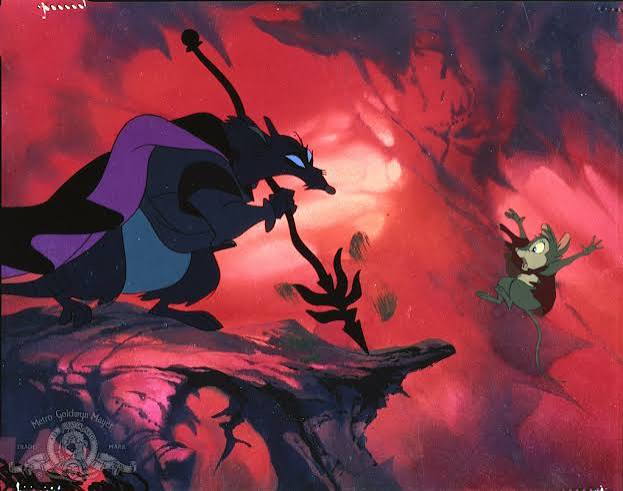
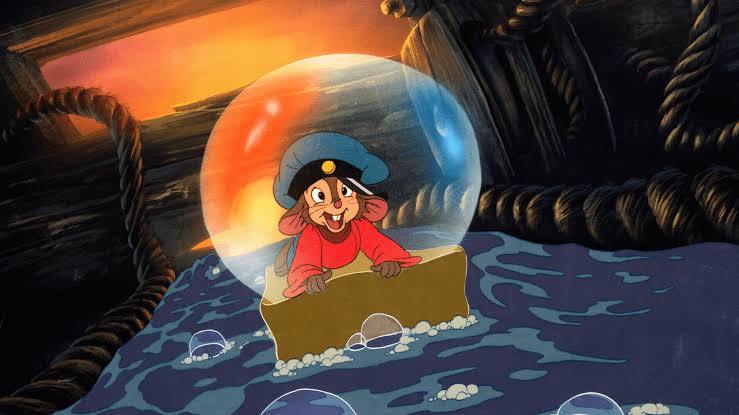
Bluth directed an animated children’s fiction adaptation, “The Secret of NIMH,” recognized as a classic right out of the gate. He partnered with producer Steven Spielberg in directing “An American Tail” and a second hit, “The Land Before Time,” only to break up that partnership and doom his own Irish animation studio.
Then he finally scored a late career hit under his own name with “Anastasia.” But Disney dogged his every move and every film release every step of the way, dampening the box office and the fervor for his films even before “The Little Mermaid” kicked off Disney’s second Golden Age and raised the bar too high for Bluth to challenge.
And don’t get him started on Pixar or Dreamworks’ Animation’s Jeffrey Katzenberg. Actually, you could. But the mild-mannered Mormon from Payson, Utah, a visionary filmmaker who never married and never wavered in his commitment to his “classic Disney-style animation” ethos, never really complained to the press.
Still, one could always sense disappointment as his Big Chance evaporated and he was stuck promoting “Thumbelina” and other mid-to-late career flops in interviews with folks like me.
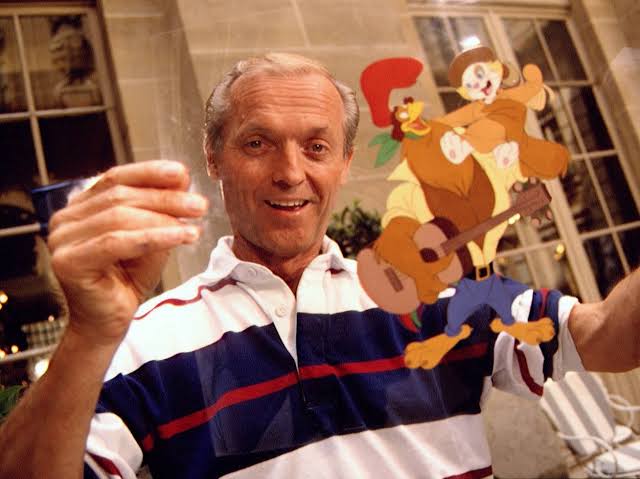
“Don Bluth: Somewhere Out There” is an animated “In his own words” doc about Bluth.
He gave us “All Dogs Go to Heaven,” “Titan A.E.,” “Rock-a-Doodle,” “The Pebble and the Penguin” and “A Troll in Central Park” and struggled to head a studio that would rival the Disney of old in its beautiful, hand-animated films and challenge the struggling Disney of the ’80s to renew its own commitment to animation, or lose out.
New wrinkles to the Bluth story pop up in “Somewhere Out There,” which takes its title from the tune from “An American Tail.” Over a series of interview-chats edited into one long voice-over, he talks about dreams and inspiration and finding “joy” in your art, come what may, and in his uncompromising commitment to excellence.
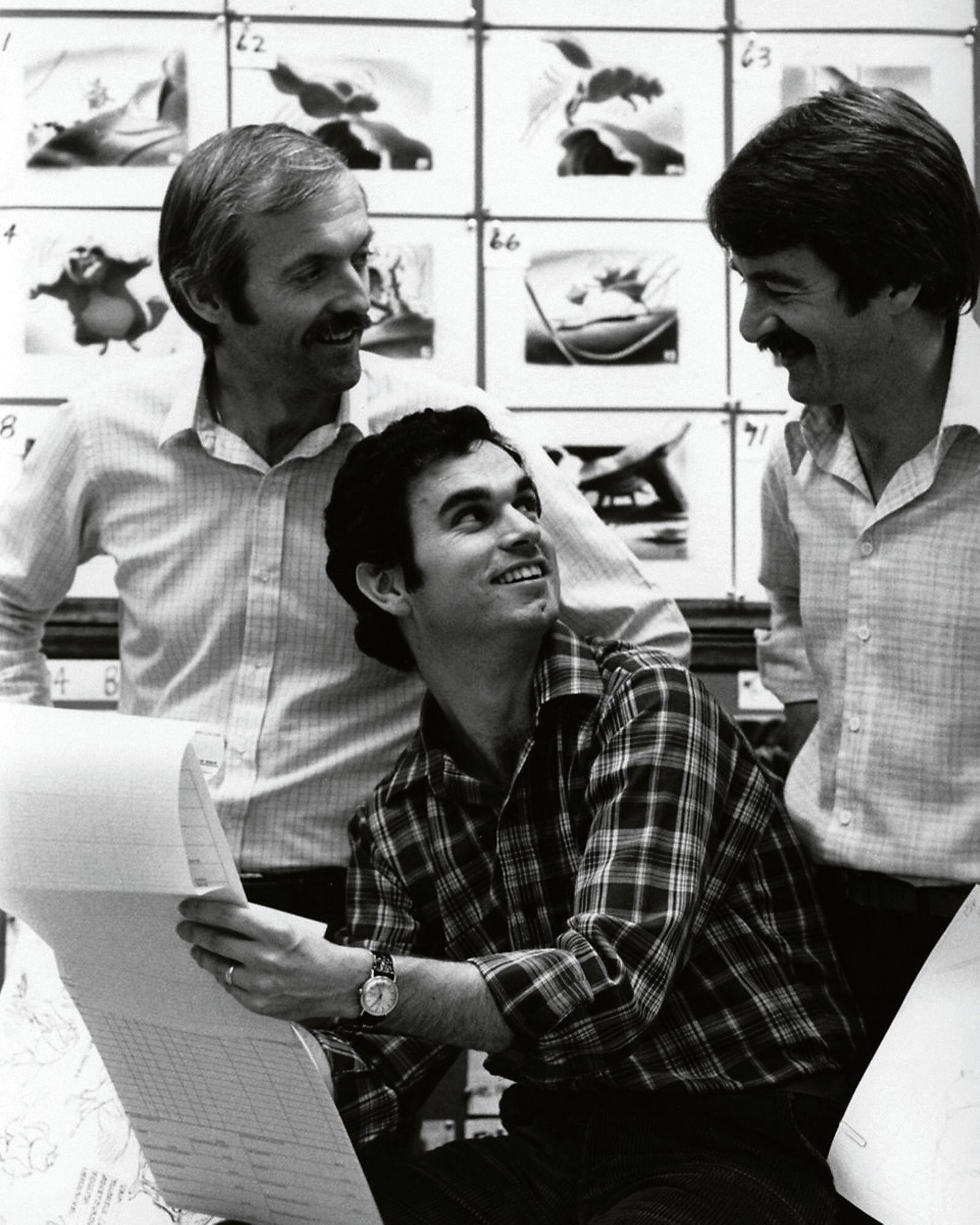
We hear psychobabble, his “ego” and “alter ego” theories about how he tripped himself up by not cutting corners on “An American Tail 2,” which led to the break with Spielberg, who got more than his share of credit for the “American Tails.” We hear how hurt he was when the Don Bluth trio of Disney refugees — Gary Goldman and John Pomeroy were the rest of the braintrust — split up.
And we get a sense of Roy Disney Jr.’s efforts to rebuild Disney animation, offering Bluth the chance to return just a couple of years before “The Little Mermaid,” and Disney’s determination to “destroy you” when Bluth turned him down.
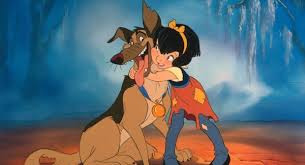
Bluth has a sweet kids’ comedy, “All Dogs Go to Heaven,” with Burt Reynolds and Dom DeLuise in the voice cast coming out? Disney releases “The Little Mermaid” at the same time. And when another big Bluth film is released, there’s “Little Mermaid” again — re-released just to kill it.
“Somewhere Out There” is peppered with archival video interviews, “promotional” films (and outtakes) that Bluth took part in to sell his films to reviewers and audiences and his studio to potential investors. Old “Siskel & Ebert” TV reviews track the early triumphs and later failures.
We’re reminded that Bluth’s biggest successes might have been his impact on animated interactive video games (“Dragon’s Lair,” etc.), but feature films like Disney’s “Snow White,” which he was awed by as a child, would not let him change his focus from the big screen.
But a whole lot is left out of the story, other failings and stumbles and some of the worst luck any filmmaker not named Orson Welles could possibly experience. The Irish animation house he opened had its success and its messiness.
And I’ll never forget the look that animator Pomeroy, like Bluth, a co-owner of their work who traveled and did press interviews, gave me when I asked about the wonderfully childish voice that little Judith Barsi managed for “All Dogs Go to Heaven.” Pomeroy winced and stammered as he related that tragically, she and her mother were murdered by her father just before the movie came out.
Events like that, and gossip about the studio, the dubious gambles so many of his titles seemed to be, the Disney comparisons which Bluth basically begged for, often made his efforts seem quixotic at best, cursed even when he had a success, Roy Disney’s machinations be damned.
“In his own words,” self-criticism and psychoanalysis included, still allows Bluth to shape his myth. This documentary is not so much an inaccurate portrait as a futile one. He was his own brand of genius, but his instincts failed him too often to keep a film studio going and his ego got in the way often enough to matter.
Filming labor-intensive animated movies, years in the making, you can’t afford a misstep. Bluth made plenty. He owns up to some of them in “Somewhere Out There.”
The video and then streaming eras rendered past releases easy to access, and ignore. I was reminded of something Frank Oz said when I noted how little kids still seemed amused by the original “Muppet Show,” released and re-released on video over the years.
“Do they?” he wondered. Does anybody show their kids Bluth’s back catalogue of animated efforts?
What matters is that he helmed “The Secret of NIMH,” “An American Tail,” “Anastasia” and “All Dogs Go to Heaven,” and did it the laborious, drawing by drawing, cell by cell way that his hero Walt did it almost 100 years ago.
His oeuvre may not have the cachet that classic Disney films, the shelf life of later animated Disney musicals or beloved Looney Tunes, or generate the devotion of anime fans. But they’re hand-crafted marvels, to a one, and his best works hold up as well as Walt’s. That’s all a monomaniacal artist could hope for.

Rating: unrated, general audiences
Cast: Don Bluth, with (archival footage) Meg Ryan, Roy Disney, John Cusack, and John Pomeroy.
Credits: Directed by Dave LaMattina and Chad N. Walker. A Copper Pot Pictures release.
Running time: 1:28