
Brie and Franco, married in real life, play a couple drifting apart until something rural and supernatural intervenes.
August 1, this romantically werewolfy horror comedy comes out.
Brie and Franco, married in real life, play a couple drifting apart until something rural and supernatural intervenes.
August 1, this romantically werewolfy horror comedy comes out.
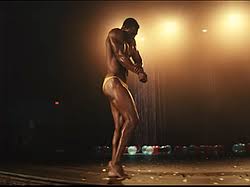

Labeling Jonathan Majors‘s turn in “Magazine Dreams” “deeply disturbing” is the epitome of understatement.
He plays a body builder whose on-the-spectrum awkwardness and his obsession with building his body and competing with it, an obsession augmented with mood-altering steroids, puts the viewer on edge from start to finish.
We know this guy’s a ticking time bomb, and the movie has the explosions to prove it.
Taking into account Majors’s recent past, violence against a woman proven in court, we can’t help but feel we’re watching a wound-too-tight artist flirting with the most dangerous corners of his personality as he descends deep into The Method.
Now this 2023 Sundance sensation is finally in theaters, a movie that could play a part in launching a Majors comeback. Based on the work, that could certainly happen. But who knows how the public and Hollywood will take to him leaning into a darkness that might not have been his healthiest role choice ever?
Killian Maddux is a bulked-up Angelino whose back story is barely sketched-in. He lives with his infirm Vietnam vet grandpa (Harrison Page), consumes 6000 calories a day, works out in a local gym and practices his poses in his garage gym/rehearsal space.
Killian is a body builder, “the most demanding sport,” when it comes to constant muscle development and body sculpting, and yet very much a beauty pageant — highly-strung narcissists on parade.
An introvert like Killian, who can’t smile naturally, has an even greater mountain to climb.
Killian has a plan — “place” in a regional competition, get his “professional” card to compete for big money and “get on magazine” covers.
“This is the most important thing I will ever do,” he insists to himself. He’s always looking up “How to make people remember” him, because he hasn’t achieved his “magazine” dream. He’s nobody. He’s not famous. Yet.
The question writer-director Elijah Bynum (“Hot Summer Nights”) asks in “Magazine Dreams” is “How far will Killian go” to achieve that dream?
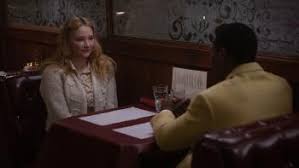
As we see him sit in sessions with a court-ordered therapist (Harriet Sansom Harris from “Frasier”), as we hear Killian recite a mantra as he tries to control his temper when confronted — “I control my emotions. My emotions don’t control me.” — as we watch his clumsy-to-the-point-of-pathetic attempts to video his “Fundamentals of Body Building” lecture for Youtube, and sit on the edge of our seat watching the most uncomfortable first date ever (with Haley Bennett), we wonder.
When we hear him read his increasingly desperate, unanswered fan letters to his body building idol (played by Michael O’Hearn) we wonder some more.
Those comments on his posted video aren’t that far from the truth — “incel vibe,” and “Why hasn’t he killed himself yet?” As Killian lashes out against rude, cheating house painters and others, we wonder if it’s “himself” we have to worry about him killing.
Majors is a coiled knot of muscle and barely-contained fury in this performance, playing up the twitchy awkwardness, immersed in the mania of a single-minded pursuit, able to play “calm” to the therapist but not really fooling her, us or himself.
It’s a brilliant turn and worth all the “Oscar contender” hype that was attached to this film when Searchlight had it, preparing to campaign it in 2023 when Majors’s temper and legal problems overwhelmed it.
That gives the film is curious, prurient appeal that won’t make it a hit and probably won’t officially relaunch Yale School of Drama alum Majors’s career. But it’s fascinating to watch an onscreen “Nightcrawler” sort of unraveling like this, even if we wonder how much was “Method,” how much was steroids (Did he? To get “into” the part and the body it required?) and where the real Jonathan Majors ends and the “acting” begins.

Rating: R, graphic violence, drug abuse, nudity, sexual situations, profanity
Cast: Jonathan Majors, Haley Bennett, Taylour Paige, Harriet Sansom Harris and Michael O’Hearn.
Credits: Scripted and directed by Elijah Bynum. A Briarcliffe release.
Running time: 2:04


Is the fact that they cast a Latina actress, Rachel Zegler, as “Snow White” scaring off racist parents?
Does knowing Disney chose to CGI its way around casting actual dwarf actors — there are many, and Peter Dinklage is merely the best known and most acclaimed from their ranks — give anybody considering going to see Disney’s latest pause?
Maybe. Because these movies have proven to be a Disney money-printing machine. And “Snow White” is doing Tim Burton’s “Dumbo” numbers on its opening weekend, as Deadline.com points out. And that’s not good.
Another “fun” Deadline comparison? “Snow White and the Huntsman,” a non-musical “action” fairytale with Kristen Stewart, opened at over $56 million back in 2012.
A $3.5 million Thursday night for a “family” film wasn’t terrible, but wasn’t anything to write home about either. But adding a mere $12 million on Friday (a $16 million opening “day”) tells Disney and the world that something’s gone wrong.
Scads of showings at every cineplex in America, spread out over 4200 screens, including most of the IMAX ones (how I saw it), and now the results are in — per The Numbers — $43 million, earning $10,000 or so per theater over four (Thursday afternoon and evening) days.
“Family” films do their business Sat. and Sunday, so that may be lowballing it a bit. And while that figure is big, big enough to win most weekends of any given box office year. “Captain America” still opened at more than double that.
“Awareness” was high, but controversy kept “interest” in “Snow White” low. It’s a pretty bad film, and in any event, that’s just more bad news for an already embattled box office.
Americans have not been going to the movies this year.
The other big opening this weekend is the far less hyped “The Alto Knights,” a Barry Levinson (“Rain Man”) real history mob thriller starring Robert De Niro in two roles — will only manage $3 million.

It’s “an old man” movie, as I pointed out in my review, and De Niro’s not the draw he was 20 years ago. Co-star Debra Messing was never a big screen star. Levinson’s not a “name” director with any box office pull of his own any more.
It’s not bad and yet it’s bombing. It finished sixth, pulling in over $3.165 million.
But before the MAGAs, who don’t go to movies that aren’t made by Dinesh D’Souza or that star Mel or Jim Caviezel, take credit for killing a “woke” Snow White (Really “News” week?) and a picture by Trump-bashing Bobby De Niro, let’s grasp at a more accurate straw.
The country’s in shock and misery over the fate most of us saw coming. America’s misery index is spiking and national “happiness” is at an all time low.
If you watch the box office, weekend by weekend, you can see this play out in tickets that aren’t sold this year. Even horror movies aren’t drawing, and it’s not like ticket prices have spiked that much, in relation to inflation in general.
A dissonant, tone deaf Oscar season that didn’t really anticipate the moment didn’t help.
A new “national malaise” has taken hold — hopelessness in the face of corruption, a “rigged” system, an ill-informed, even willfully ignorant and myopic electorate and a government intent on making things worse for everybody to appease a dictator, his oligarch pals and his Russian “handler.”
The holiday smash “Wicked” was hope-engendering escape for some, but that was last fall and winter. “Wicked” may have been a bloated bore, but it was “woke as F” as the kids say. And it was a genuine blockbuster.
“Captain America: Brave New World” drew big numbers for one weekend, and is still in the lower reaches of Marvel movie box office takes. Even with inflated ticket price numbers, this big screen bummer won’t crack Superherodom’s’ Top Fifty at the box office. It earned another $4.1 million this weekend.
Movies that don’t promise escape from thoughts that our democracy has ended and the rule of law failed to protect us from predators like Trump and Musk, Zuckerberg and their billionaire pals and tech bro minions and bigoted voter base, aren’t dragging anybody out to spend $12-22 dollars at the cinema.
The best of this weekend’s new films, Jonathan Majors‘ “Magazine Dreams” thriller, is opening in limited release and earned $700k. And there’s a fresh sci-fi horror film, “Ash,” playing on enough screens to get some traction ($717k).
In more encouraging news, “Black Bag” is getting enough word-of-mouth/glowing reviews bounce to perhaps manage a second place finish, pulling in over $4.4 million. Discerning viewers often find a good film. Eventually.

Last week’s loser of a “winner?” “Novocaine” is falling off a box office cliff, a 70%+ “Tyler Perry Picture Swoon,” so-named for the way his theatrical films sold all their tickets their first weekend and died on the vine the second.
“Mickey 17” ($3.9 million) is still in the top five but dying, and keeping “Alto Knights” from doing better than sixth.
“Snow White” may prevent “Dog Man” (another $1.5) from hitting the $100 million mark this weekend, but it could pass that line next weekend.
“The Last Supper,” a faith-based release from indie Pinnacle Peak distributors, cracked the top ten with $1.335.
And the new family film from Disney is certainly impacting the fading turnout for the far-more-charming “Paddington in Peru,” which celebrates its last weekend in the top eleven with the news that it ($1.3 million this weekend, pushing it above $43) won’t crack the $50 million mark at the U.S. box office.
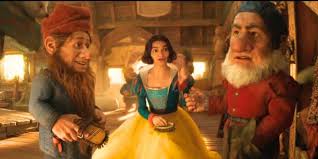
There’s nothing inherently wrong with Disney’s recent practice of remaking its animated musical classics as live action films. Reviving a timeless story for a new generation and getting more value out of a long-treasured piece of intellectual property is to be expected, and good business practice.
And Walt Disney’s hand-drawn breakthrough animated hit of 1937 “Snow White” is probably the stodgiest and most old-fashioned of the master’s masterworks.
But the new “Snow White” dishonors the original film by being such a half-hearted cash grab as to call attention to its utterly mediocre script, generally colorless cast and stale, soundstagey look.
Like the recent animated “Moana” sequel and the “Mufasa” “Lion King” prequel, there’s a corporate joylessness that weighs on most every scene.
Updating “Heigh Ho” and “Whistle While You Work” with lines line “shoving it where the sun don’t shine” may be “how we talk these days” and “on brand” for the CGI dwarf “Grumpy.” But as thrilling as hearing these cultural touchstone tunes anew might have been, the magic is gone in this recycling.
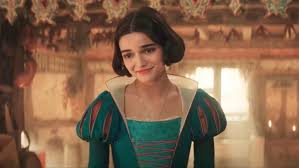
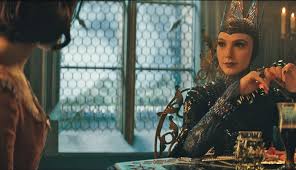
Rachel Zegler plays Snow White, a princess whose evil queen/stepmother (Gal Gadot) is a sorceress who has killed her father. The “West Side Story” starlet does what she can with this squeaky clean but pro-active Disney Princess. And Gadot gamely tries to vamp up a character and talk-sing a character who is mainly a creation of wardrobe and makeup to life.
Check out those Cybertruck fingernails!
Andrew Burnap of TV’s Mormon mini-series “Under the Banner of Heaven” is as bland a romantic lead as Disney has trotted out in years, playing a forest “bandit” who allies with and protects Snow White, and whose sarcastic song “Princess Problems” is pretty much the highlight of the musical updates Jeff Morrow brought to the party.
But as everyone suspected the moment word got out how Disney and director Marc Webb were casting “Snow White,” the blunder of blunders was deciding to cast actors to motion-capture perform the Seven Dwarves, and use CGI to render them into (not so) little people.
It doesn’t work. “Wicked” may have gotten away with erasing dwarf actors from Munchkinland in “The Wizard of Oz” universe. But here, with these inexpressive digital dwarves, there is no more “performance” to these creations than there is to the digital forest creatures who also gather round Snow White to save her from that evil queen.
Without real live actors playing the dwarves, there is no “party.” What could have frolicked falls flat. Even having Dopey look like Mad Magazine’s Alfred E. Newman (or George W. Bush), even getting Titus Burgess to voice Bashful, doesn’t help.
“Game of Thrones” featured player George Appleby is only member of the cast who seemed to get the tone they should have been going for — light and jaunty. He’d have been better served leading the corps of dwarves — good actors, like himself, listed with OhSoSmall.com actor’s registry.
Whatever was behind that decision at Disney, and the many obviously digital settings served up, it’s just another sign that this generation of bottom-line-obsessed execs at the House of Mouse has lost the thread. Nobody there seems to “Whistle While You Work,” and the evidence is turning up on screen.

Rating: PG
Cast: Rachel Zegler, Andrew Burnap, Emilia Faucher and Gal Gadot
Credits: Directed by Marc Webb, scripted by Erin Cressida Wilson, based on the fairy tale by Jacob and Wilhelm Grimm and the Walt Disney animated film. A Walt Disney Studios release.
Running time: 1:49


For his latest feat, Oscar winning screen legend Robert De Niro plays two roles, as rival Mafia leaders Frank Costello and Vito Genovese at the mob’s late 1950s peak.
Another word for “feat” might be “stunt” or “gimmick” in the case of “The Alto Knights.” But what’s the movie rule for “gimmicks?” How good would the picture be without them?
Oscar winner Barry Levinson (“Rain Man”) and “Casino/Goodfellas” screenwriter Nicholas Pileggi cook up a pretty good mob history lesson to immerse the Two De Niros in. The gimmick doesn’t make the picture, but it does add to something to it, as DeNiro makes these two characters as distinct as young Vito Corleone from “The Godfather Part 2” and Paul Vitti from “Analyze This” and “That.”
In the 1950s, America was still living under the illusion that “The Mafia,” aka “La Cosa Nostra” aka “organized crime” didn’t exist. The apparently-closeted FBI chief for life J. Edgar Hoover sold that lie as part of his self-mythologizing. “No such thing as ‘organized’ crime.'” “The Alto Knights” is about the nation waking up from that stupor of corruption and realizing that the West Coast mob, the Northeastern Mob, the Chicago mob and the Miami mob, and all the big Italian-led mobs in between, were indeed “organized.”
Frank Costello was the mafia don above the dons, an ex-con and criminal figure who’d bought and bribed his way into charitable respectability and New York politics. He passed himself off as a modest Everyman who “takes taxis” lives well but not at all lavishly.
His childhood running mate Vito Genovese was an impulsive, never-polished goon who grew up with Costello in The Alto Knights Social Club in Hell’s Kitchen, New York. Vito’s efforts to manipulate the press and the “system” are more obvious and often ridiculed.
The movie’s about how Genovese tried to kill Costello, and the ripple effects of that which exposed the mafia and brought a reckoning for the “families” and the pugnatious mugs who ran them.
Even if you don’t know mafia history, and you could be a little lost in this if you are, a lot of the surnames will register in the memory — Gigante, Genovese, Anastasia, Bonanno, Lucchese, Costello and Gambino among them.
Pileggi’s script, voice-over narrated to death by De Niro as Costello, details the chain of events that connected “professional gambler,” “racketeer” and “Prime Minister of the Underworld” Costello to still-trigger-happy Genovese, whose idol had been Lucky Luciano, back in the day.
And through their feud, the career-making Kefauver Mafia Hearings in Congress and an infamous mob summit in Apalachin, New York, America and the world learned of the wide reach of the mafia and started to do something about it.
The story opens with an assassination attempt, which Costello survives.
“I got the message. That’s it. I’m done…I don’t wanna get killed over something I don’t want no more.”
He won’t speak of revenge, won’t endorse hotheaded underlings like Albert Anastasia (Michael Rispoli, very good) who want Vito “taken care of.”
But how can he manage that, with Genovese berating underlings who didn’t “finish the job” in ranting English and Italian complaints.
“The Alto Knights” is an old man’s movie, featuring old comrades and rivals, fat and rich and if not “happy,” at least carried to and fro in thebiggest, most luxurious American made sedans of the era. Even the state trooper who tracks them to their “commission” meeting is long in the tooth.
Genovese’s ex (Katherine Narducci) drags him to court. She drags Frank and his wife’s (Debra Messing) names into the public record.
Mobsters will die and Costello’s canny exit strategy is matched against Genovese’s terminal paranoia.
De Niro’s Costello is every inch the mob kingpin in winter, and exactly as you’d expect him to play the man — reserved, meditative and maybe even cunning. But his Genovese, in omnipresent hat and sporting a prosthetic chin, is one of his great creations — loathesome, simple and instinctual, a murderer who gets others to do his murdering for him these days.
Levinson and De Niro find humor in that lethal paranoia, and in how small a gang of gray-haired (mostly), pot-bellied (generally) underworld kings look when they’re cornered, out of their element, their Caddys, Lincolns and Imperials stuck in the Upstate New York mud.
The film needed more flashbacks to justify that “Alto Knights” of their youth title. And old pro Levinson knows voice-over narration is the lazy filmmaker’s creakiest crutch.
But De Niro’s the reason to see this, and whatever the De Niro Derangement Syndrome crowd may say, he carries “Alto Nights” as high as it goes. It’s not on a par with Scorsese or Coppola’s best statements on this history, but it’s not bad. And twice the De Niro at the same price makes it a bargain.

Rating: R, graphic violence, profanity
Cast: Robert DeNiro, Debra Messing, Kathrine Narducci, Michael Rispoli and Cosmo Jarvis
Credits: Directed by Barry Levinson, scripted by Nicholas Pileggi. A Warner Bros. release.
Running time: 2:00
A 1954 romance by Françoise Sagan is what inspired actress and sometime producer Durga Chew-Bose to become a first time writer-director.
Otto Preminger made a film out of “Hello Sadness” (the title’s translation) in the ’50s, with Jean Seberg, Deborah Kerr and David Niven.
Here, it’s McInerny (“Palm Trees and Power Lines”) and Claes Bang (“The Square,” “The Northman,””The Burnt Orange Heresy”) as the father and daughter and Dad’s latest lover (Nailia Harzoune) whose vacation is disrupted by the arrival of the challenging friend of the late wife and “godmother” (Chloë Sevigny) to the somewhat innocent teen. Greenwich Entertainment has this slated for May 2 release.

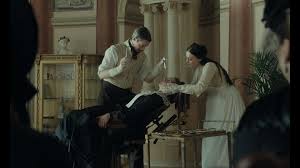


Yes, let’s have a “Cinderella” without the spin. Pound home the “princess” as beauty bias messaging with body horror driven by body dysphoria.
And make it splatter film bloody, sexually explicit and occasionally funny — laughs with a grimace of pain and a touch of turn-away gruesome. Nothing “Wicked” about that.
“The Ugly Stepsister” is a dark dissection of a classic fairy tale, a Norwegian horror comedy about how “Real beauty comes from inside” is a lie and “beauty is pain” is what “they” never tell you.
Lea Myren stars as Elvira, a moon-eyed romantic who reads the poetry of the kingdom’s prince and dreams of one day marrying him. Her mother (Ane Dahl Torp) remains a great beauty, her younger sister (Flo Fagerli) is cute, so perhaps one day she’ll blossom, too and her wish will come true.
First, though, widowed mom has to marry a man with money. Sure, his only daughter (Thea Sofie Loch Næss) may be a classic blonde Nordic beauty who turns heads. But Agnes is smitten with the handsome stableboy (Malte Gårdinger) with nary a thought of Prince Julian (Isac Calmroth) in her head.
But when the elderly groom doesn’t make it through one slice of wedding cake, all bets off. It seems mother Rebekka was relieved to be marrying money, while her elderly titled intended was certain she was the one who was loaded.
“They have no money!” sounds even more dire and disappointing in Norwegian (with English subtitles). Now, marrying money becomes the entire household’s obsession.
A royal ball for all the “noble virgins” of the kingdom, thrown for the benefit of Prince Julian? That could be their golden ticket.
Agnes and Elvira are in the dance class that’s to perform a little number for the prince, but Rebekka conspires to fix it so that Agnes doesn’t get the spotlight. As the blonde is cruel to plain and somewhat simple Elvira, we sympathize with that.
But what mother puts poor Elvira through — baroque braces, a nose job and baroque fairy tale eyelash surgery — via callous Queer Eye for the Straight Girl Dr. Esthétique (Adam Lundgren)– tells us no one here gets off lightly.
Weight loss? Two words to turn your stomach come to mind.
“Tapeworm egg.”
Myren walks a fine, funny line with this performance, making Elvira by turns pitiable and sympathetic, and crazed and cruel and laughable.
Loch Næss — let’s assume that’s a stage name — likewise upends expectations for the young noblelady who finds herself knocked on her entitlement and forced to do menial work. She makes sympathizing for Cinderella a hard sell.
Writer-director Blichfeldt’s debut feature is more cringe-worthy than laugh-out-loud funny. She picked obvious targets.
But there’s a lot to be said for having the audicity to “go there” and go gory when you’re sending up the ugly open secret that “Beauty is pain,” that it’s a trap and that it’s well past time to stop taking fairy tales with princes and “Sleeping Beauties” at “children’s story” face value.
Which is one reason among many why “The Ugly Stepsister” will never play on The Hallmark Channel.
Rating: unrated, graphic, bloody violence, explicit sex, nudity
Cast: Lea Myren, Thea Sofie Loch Næss,
Isac Calmroth, Adam Lundgren, Flo Fagerli and Ane Dahl Torp
Credits: Scripted and directed by Emilie Blichfeldt. An IFC/Shudder release.
Running time: 1:45
Screen veteran Embeth Davidtz (just seen in “Retribution,” in “Old” and a regular on “Ray Donovan”) moves behind the camera for this adaptation of an Alexandra Fuller novel. The South African Davidtz would seem to be an apt choice in remembering the racist, minority governments that ruled Southern Africa in a repressive colonialist manner in the allegedly post-colonial 1960s and ’70s.
Zikhona Bali plays an African servant, Levi Venter the white landowner’s curious child — “Are we African?” “Are we racist?” — and Davidtz takes on the part of the armed, obstinate mother hellbent on hanging onto land her ancesters “acquired” by nefarious means.
This premiered at Teluride, and if Sony Pictures Classics has a release date, I’m not seeing one. Straight to streaming?
A mother and daughter grow their own to make ends meet, then a cop moves in downstairs.
It’s 2008, and paranoia was totally justified in “Grassland.”
They’re playing up the fact that Oscar winner Common produced this. Rachel Ticotin, Mia Maestro, Jeff Kober and Quincy Isaiah are in the cast of this William Bermudez and
Sam Friedman film, which streams via VOD on April 18.




The departure of a beloved giant panda, sent home from Koreo to China to propogate this endangered species, becomes a most touching farewell as we mourn her leaving with the two zookeepers who cared for her in “My Dearest Fu Bao.”
Pandas are among nature’s most adorable creatures, and this documentary by Shim Hyeong-jun and Thomas Ko encourages the viewer to overdose on cute. But it’s also about loss, solitude, intimate grief and very public group grieving and the connection humans feel with animals, which those animals often acknowledge.
Fu Bao was born in Korea, and as she reaches four years of age, she’s to go home to her natural breeding place, where the bamboo is sweeter and the gene pool is larger, ensuring the survival of this rarest of bears.
Her leaving hit the staff of the Everland Zoo — which is all but built around housing and letting the public see pandas — hard. They still have Fu Bao’s parents, and her two adorable baby sisters, as a draw. But the years of care, attention and interaction with Fu Bao makes this loss lead to grieving, especially to her chief caregivers, Kang Cheol-won and Song Young-kwan.
The two men have tended gardens raising food for the zoo, improved her playground, cleaned her night time enclosure, and catered to Fu Bao’s every need. Learning that she was leaving, Kang even arranged for a heavy duty hammock to be sewn and he himself installs it in a tree in her compound. She and her mother played and napped in one when she was a toddler, he explains.
Both men acknowledge openly-expressed male grief and even male hugging aren’t the social norm in Korea. But this departure hits Kang so hard he weeps and it makes Song recall an earlier on-the-job loss that he only just got over, thanks to the lovable Fu Bao, who let him “love again.”
Surrounded by a park emblazoned with slogans playing up the countdown to Fu Bao’s departure the two — Kang especially — struggle to cope, and to comfort the mobs that pour in to see her before she leaves. People endure 400 minute wait times, and wait outside the panda enclosure for Kang or Song to reassure them and comfort them, a sort of “Elvis has left the building” gesture that plays as incredibly sweet.
The two men have tended gardens raising food for the zoo, and catered to Fu Bao’s every need. Learning that she was leaving, Kang even arranged for a heavy duty hammock to sewn and he himself installs it in a tree in her playground compound. She and her mother played and napped in one when she was a toddler, her explains.
Both men acknowledge publicly expressed male grief and even male hugging aren’t the social norm in Korea. But this departure hits Kang so hard he openly weeps and it makes Song recall an earlier on-the-job loss that he only just got over, thanks to the lovable Fu Bao, who let him “love again” (in Korean with English subtitles).
Surrounded by a park emblazoned with slogans playing up the countdown to Fu Bao’s departure —
“You’ll always be our baby panda!” — the two, Kang especially, struggle to cope, and to comfort the mobs that pour in to see her before she leaves. People endure 400 minute wait times, and wait outside the panda enclosure for Kang or Song to reassure them and comfort them, a sort of “Elvis has left the building” gesture that plays as incredibly sweet.
One is tempted to ask what psychologists and sociologists might have to say about this public grief and human connections with affectionate and adorable animals. But when the departure comes and goes, and Kang travels to visit Fu Bao in her Chinese home some while later, we have our answers. And you’d have to be made of stone to not be moved.

Rating: unrated, G-worthy
Cast: Kang Cheol-won, Song Young-kwan and Fu Bao.
Credits: Directed by Shim Hyeong-jun and Thomas Ko. A Well Go USA release.
Running time: 1:36

 Movie Nation