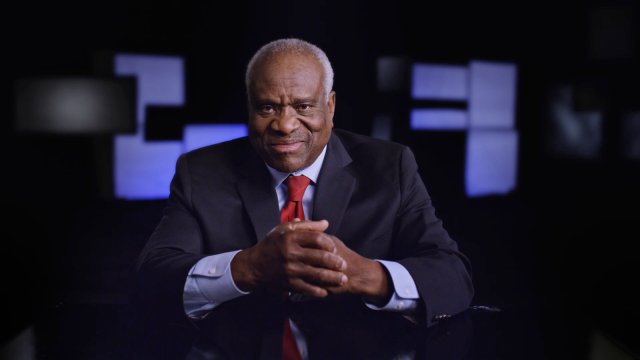
Documentary Review — “Created Equal: Clarence Thomas in His Own Words”

ct1

Is there any point at all in reviewing an “in his own words” documentary biography of Supreme Court Justice Clarence Thomas?

Visit Metacritic or Rottentomatoes and you can pretty much guess who will pan “Created Equal: Clarence Thomas in His Own Words” — the liberal NY Times or Washington Post — and who will endorse it — reliably right wing critics from the NY Post and elsewhere.

If you’ve read other reviews on this site, you know which way this is going, too.

The first wicked thought to cross the mind thanks to “in his own words” is that he has been very credibly accused — shown through video store records, etc. — to have perjured himself in 1991 confirmation hearings, which he, in high dudgeon, labeled “a high tech lynching.”

But as his grandfather, who was the biggest influence on his young life he says in his autobiography and in the film (some of which is Thomas reading/narrating from that book) must have taught him, a man’s good name is only as good as his word. And he lied, as a Federal judge just one year into the job thanks to grooming by President George H.W. Bush, to win a lifetime appointment to the U.S. Supreme Court.

“In his own words” loses something when you’re dealing with a liar.

Still, as Thomas rarely speaks in public, and infamously went over ten years on the Court without ever asking a question or uttering during cases brought before the justices, he’s worth hearing out. Demonized and marginalized, characterized as “lazy” and worse he’s got a story and a point of view. Why not hear it out?

“Created Equal” lets Thomas paint a portrait of a Georgia childhood of hard work and struggle, if not outright want. He grew up in a South where “you assume you’re going to be discriminated against.”

He talks about his grandfather’s conversion to Catholicism, his adoration of the Irish nuns at a Savannah Catholic school he attended, his years in seminary studying to become a priest, his “radical” leftist pro-civil rights politics of the day, and even the day seminary “ended for me.”

That was in April of 1968, when he and his fellow seminarians learned the Rev. Martin Luther King Jr. had been murdered. A classmate muttered how happy that news made him, and Thomas was out.

“Racism and race explained everything” to him, he says. “It became my new religion.”

Something happened to take him from his pre-law Holy Cross years with “my radical friends” to the radical conservative ideologue he became. He says the conversion started while he was at Yale Law, puzzling over the insistence on “busing” in Boston.

“Someone has a theory,” he hypothesizes about that form of integration, “and then they insert human beings into that thesis.”

Post-law school, he took on the only decent job he could land, with the Republican Missouri Attorney General’s office. His conversion, abrupt as it might seem, is complete, “Road to Damascus” moment included. So he says.

He went on to work at Monsanto, one of the most villainised companies on the planet.

His Federal Government/Equal Employment Opportunity Commission years consisted of weak defenses of laws that had helped him get ahead and were colored by his hiring of two speechwriters from the conservative think tank, the Claremont Institute.

By coincidence, conservative filmmaker Michael Pack, heard occasionally off-camera hazarding a respectful question, is also from the Claremont Institute.

But having this “friendly interrogator” does Thomas no favors in making a movie about him. The cherry-picked news footage of this or that “liberal” or “women’s group” in the film’s long LONG passage on his 1991 Supreme Court confirmation hearings, the fact that we only hear Thomas and his wife as expert “witnesses” to the event, with Thomas sneering at the accusers and the accusations, playing dumb about his questioning, still a man “done a great disservice,” makes you wish somebody a little tougher was behind the camera.

Oscar winner Errol Morris made a fine foil for Robert McNamara and many others. He’d have made a movie more probing, more challenging and less of an ad for the judge’s book. But then, Morris is very good at getting admissions, at getting at the truth. If there’s one thing this week and these past few years have taught us, “truth” is a worrisome concept to Republicans these days.

With every Huck Finn banjo on the soundtrack, every snippet of “To Kill A Mockingbird” or Louis Armstrong singing “Moon River,” with every softball question, Pack backs away from inconvenient truths about Thomas and creates a version his rightwing fan base will adore.

This is just one side of the whole Clarence Thomas story. We get a sense of how he regards himself as thinking outside of the stereotype of what a black man of his era is expected to think, as never ever needing “equal opportunity.” But we’ve also heard how bitter he still is over the Anita Hill testimony at his hearings, the near-run thing that his nomination — underqualified (again, a Bush judge for just a year), tainted — was.

Pack doesn’t challenge Thomas on that or anything else. This portrait cries out for that, for other voices.

Whatever his intellectual bonafides, as a filmmaker Pack makes videos for the faithful — “Hollywood vs. Religion,” “Inside the Republican Revolution” and possibly edgier, but probably just as partisan — “The Fall of Newt Gingrich.”

Filmmaker Pack is a partisan hack and this is artless political agitprop.

That said, Thomas reminding the aged white conservative base of the Republican Party of what growing up under Jim Crow was like, even in the papered-over fashion Thomas presents it, even as he votes time again to dismantle voting rights or equal opportunity laws, is useful.

He made it, why can’t every other African American? You know, with a series of powerful white sponsors grooming him for a lifetime of decisions that protect the rich and the racist on the highest court in the land?

He may not say a word about the giant — Thurgood Marshall — whom he replaced on the court. His wife may hiss about how “the demons were loose” when Thomas came under harsh scrutiny. But hearing where and what he came from, and all the civil rights, voting rights and poverty programs he has helped undo — writing opinions, rarely speaking out — is still helpful to understanding why he is so hated today, even if he himself can’t see it.

MPAA Rating: PG-13 for thematic elements including some sexual references

Cast: Clarence Thomas, Virginia Thomas

Credits: Directed by Michael Pack. A Blue Fox release.

Running time: 1:55
Posted in Reviews, previews, profiles and movie news | Comments Off on Documentary Review — “Created Equal: Clarence Thomas in His Own Words”

Movie Review: Another student-teacher affair, this one “Before the Dawn”

dawn1

This is how a fellow gets a reputation.

You review a Netflix movie, “My Teacher, My Obsession.” Yeah, you know what it’s about. But hey, any chance one gets to toss the phrase “Hot for Teacher” into a review, right?

The producers of “Scarborough,” a troubling British psychological drama that deals much more honestly with the very touchy/politically-and-morally-incorrect sort of “romance,” suggest you review their film.

And then comes the pitch for “Before the Dawn.” It’s another student-teacher love affair, more sordid titillation dressed up with weak attempts to “doing the right thing,” strictly pro-forma, all the way.

Making out in the rain, sex in the ol’swimmin’ hole, etc.

And then it gets worse.

It’s the sort of movie you make with the idea that “There’s no such thing as bad publicity.” Australian actress Alana de Freitas stars in it and scripted it. Nice way to “break into” the American market with.

She plays Lila Kendy, the new English teacher at Westbury Catholic. She’s moving on from an unhappy past, ready to start over.

“Troubled” teen Jason (Jared Scott) needs a fresh start, too. He’s just transferred there, with his mother (Kelly Hancock) fervently hoping that he’ll get straightened out and not “turn out like your brother.”

Jason may look like every other mop-topped preppie at Westbury. But he knows “every spot where there’s no security camera,” one of his clients declares. He’s the campus drug dealer. And he’s getting bad grades.

Mom may cry “You’re wasting God’s money, Jason.” But with a little extra attention in English class, and a little after-school tutoring, he just might turn things around.

Or not.

It begins with the personal questions, tilts towards “That would be inappropriate,” and the next thing you know — INTIMACY!

That comes before “We can’t do this again/Stop thinking/You’re just being paranoid.”

Things progress even though she knows it’s wrong, even if she picks up on his side hustle, even if the PE teacher (Houston Rhines) who is interested in her might catch on, and the catty colleague across the hall (Carissa Dalton) is certain to.

dawn2

You can toss two good looking actors together and mandate “chemistry” in your story, but that doesn’t mean it shows on the screen. The usual way these movies play out — yes, I am now an expert on the genre — is fire by friction, white hot passion. ”

There’s no sign of that, here. The film backs away from being overly explicit, a laughable lapse into “demure.”

The clinginess, the rising fear of discovery, the naive/idiotic “mistakes” that will trip them up? Those by-the-book ingredients are here.

Along with the escalating drug dealer problems, and rape. As I said, “It gets worse.”

Time has run out on this genre, thanks to #timesup. There can’t be any more of these “inappropriate” romances in the production pipeline, right? Outside of porn, I mean.

1star6

MPAA Rating: unrated, drugs, violence and sexual content, profanity

Cast: Alana de Freitas, Jared Scott, Houston Rhines, Kelly Hancock, Carissa Dalton

Credits: Directed by Jay Holden, script by Alana de Freitas. An Indie Rights/Amazon Prime release.

Running time: 1:45

Posted in Reviews, previews, profiles and movie news | Comments Off on Movie Review: Another student-teacher affair, this one “Before the Dawn”

Netflixable? Taylor Swift talks about growing up as “Miss Americana”

miss3

It’s quite late in the game for Taylor Swift to be expecting anybody to change his or her opinion about Swift as a performer, celebrity, icon and influencer.

But this new documentary takes its shot, a somewhat revealing distillation of her life and career, literally “growing up” under the intense spotlight of her fame and her image as “Miss Americana.”

The film captures the willowy, unutterably gorgeous blonde during and after the “Reputation” tour, about to turn 29 and experiencing a political awakening — the risks she took speaking out against Trumpism and its Senate proxies during the 2018 midterms.

Lana Wilson’s film — with Swift narrating in a sort of Q & A format — succinctly and thoroughly sums up the full spectrum of attitudes, the controversies, the blizzard of attacks that Kanye West, Fox News (when she endorsed Democrats in 2018) and others have waged against her, the nasty coverage of her “calculating” high-profile, gossip-friendly/very public “relationships” and the lawsuit she fought and won against a scumbag disc jockey who groped her.

Even winning that suit took a toll.

“You don’t feel a sense of victory when you win, because the process to so dehumanizing.”

If nothing else, the film forces you to add “respect” to your opinion, thanks to the revelations about her experience of the world, which has been both her oyster and her tormenter since she was 16. “Calculating” she may be, but she’s good at math.

Not being in her target demo, that “fanbase that’s grown up with me,” I go back and forth over Swift’s music, her talent and the carefully-cultivated “good girl” image, the one she admits she’s been trapped in because celebrities are preserved in amber the way they came off the moment they became famous.

I’ll think, “She’s not much of a lyricist” and then a song will pop up and make a decent case that lightning strikes (She taps out lyrics on her cell phone in the recording sessions in “Miss Americana.”) on occasion. I wonder if she’s all that as a singer, and then stumble — impressed — into a Youtube video of just her and her guitar, singing and playing in quieter interludes during her epic stadium “extravaganzas.”

But “Cats” is the most recent evidence that she has a lot of trouble with pitch, that she tends towards flat, and there are moments in “Miss Americana” where we can hear this as well. Her singing, like her playing and her songwriting, is a craft where we can see the effort and grimace when effort and production and autotuned are not enough. Which is fine, not everybody is a “natural.”

As a public person, she’s played the “victim” card a bit too often. But she didn’t invite to be groped, or to be a party to the first public proof that Kanye West is unstable. And even if some creep has control of your music catalog, some acknowledgement that her level of fame can make you look like the bully in such a tussle would be nice.

Persistent, undying rumors about her sexuality make you figure that whatever Brit actor she’s connected with today, if coming out is in her future, she’s got an “Apology Tour” to plan. Taking back all those songs she wrote about guys who’ve “wronged” her would be the “nice girl” thing to do.

That goody goody image is why I was a little surprised at hearing all that profanity pop out of her and her mother’s mouths in “Miss Americana.” That ties into the theme of the film, that Taylor Swift was raised to seek “the approval of strangers,” to “be thought of as ‘good,” to “do the right thing and be a ‘good girl.” To not make “trouble.”

When she’s surfing public popularity at the level she’s enjoyed it, any setback can seem personally shattering — Kanye at the Video Music Awards, in court, a Fox or Trump target, more Kayne kerfuffles.

“Do you know,” she asks, how many haters it takes for “#TaylorSwiftisOverParty” to be the top trending Twitter hashtag worldwide?

Stuck in a celebrity bubble, having only her mother to confide in about most things (She’s had friends since childhood, but being famous since childhood circumscribes who those friends are.), she’s been slow to grow up and develop perspective. Mom helped with that, too.

“Do you really care if the Internet doesn’t like you today, if your Mom’s sick from chemo?”

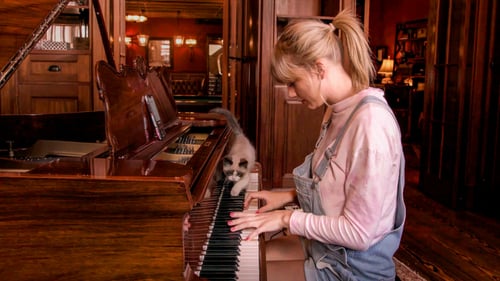
The film opens with a potential meme — Taylor playing the piano with a“kitten on the keys.” Adorbs.

The “big moment” is that decision to tweet her support for candidates who stick up for women’s rights, stand for protections from violence against women and put a premium on kindness. Yes, that rules out Republicans, even if her Dad has been one forever. The moment may be a hotly-debated and considered (before release) tweet. But the impact was huge, if not big enough to flip a Tennessee Senate seat.

The meanest thing a critic could say about “Miss Americana” is that whatever we get to “know” about Swift and her evolution in the documentary, she’s never out of makeup and never remotely as vulnerable as Katy Perry came off in the equally self-promoting but more raw and revealing “Part of Me” documentary of 2012.

But all that said, all the faintly cringe-worthy fan “meet and greets” (One proposes to his girlfriend in front of “Tay Tay,” to make it more memorable.), all the elaborate, anthem-filled stage shows that don’t really give a definitive answer to her singing talent, Swift comes off as likeable as anybody who frets over controlling her resting “mean-face” (while performing on stage or in music videos) can be.

Every album has to be an event that tops the previous “event.” No Grammy nominations for this or that LP is “fine. I just need to make a better record.”

Knowing she’ll be sent to “The Elephant Graveyard” (for forgotten pop starlets) at 35 is a burden she’s trying to carry, and delay.

A mob greets her as she leaves for the recording studio — “So this is my front yard. And I am HIGHLY aware that this isn’t normal.”

Pressure, pressure and m more pressure.

It’s hard getting to be “Miss Americana.” It’s almost impossible to stay “Miss Americana.” This semi-intimate film gives mere mortals an appreciation of the personal cost of getting there, staying there and staying reasonably sane and happy as you do.

2half-star6

MPAA Rating: TV-MA, skimpy costumes, lots of profanity

Cast: Taylor Swift, Andrea Swift, Scott Swift, Tree Paine, Brendon Urie and of course, Kanye West.

Credits: Directed by Lana Wilson. A Netflix release.

Running time: 1:25

Posted in Reviews, previews, profiles and movie news | Comments Off on Netflixable? Taylor Swift talks about growing up as “Miss Americana”

Next screening? “Before The Dawn”

Ok, maybe not NEXT next. Got to get to that Tay Tay Swift doc on Netflix, after all.

But soon, very soon I’ll get to this indie drama with largely unknown cast, a take of a high school teacher falling for her “troubled student.”

Seems a little icky and pre “woke,” but we will see what we see.

Posted in Reviews, previews, profiles and movie news | Comments Off on Next screening? “Before The Dawn”

Movie Preview: Billy Crystal and Ben Schwartz are “Standing Up, Falling Down”

Failed comic moves home and gets inspiration from an alcoholic dermatologist.

Because Billy Crystal’s mother always wanted a doctor in the family?

“Standing Up, Falling Down” earns limited release in mid February.

Posted in Reviews, previews, profiles and movie news | Comments Off on Movie Preview: Billy Crystal and Ben Schwartz are “Standing Up, Falling Down”

Movie Review: “Gretel & Hansel” or Hansel & Gretel, they still have a witch problem

gretel1

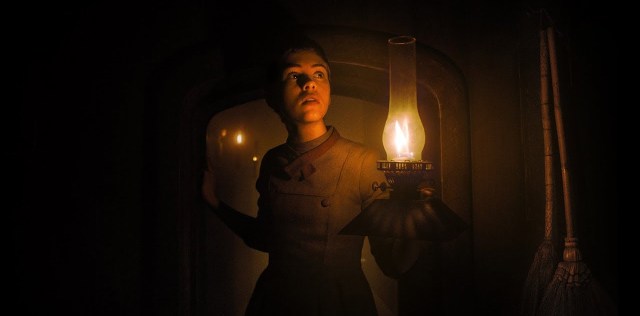
The thing that bowls you over, straight off, about “Gretel & Hansel” is how beautiful the damned thing is.

Art director Christine McDonagh (TV’s “Into the Badlands”), production designer Jeremy Reed (“Hard Candy”) and lighting cinematographer Galo Olivares (“Roma”) have conjured up a stark fairytale-scape with glowing, supernatural red fog, stylized black witchwear (Leonie Prendergast did the costumes) and buildings that are Bauhaus meets Lovecraft’s “Necronomicon.”

At times, the eye candy nightmares and waking nightmares of this grim twist on the Grimm’s fairytale will make your jaw drop.

Casting the regal horror queen Alice Krige (“Ghost Story,” “Silent Hill,” Borg leader in “Star Trek”) is another coup. The florid dialogue of Rob Hayes takes on poetic undertones as the South African actress delivers lines of chilling menace or spooky empowerment in an Irish accent.

“Women often know things we’re not supposed to know,” she purrs to Gretel — the heroine of this version of the story. “I’d hate for you to start something you can’t stop.”

All that’s missing from this sinister exercise in creepy cuisine is, well, frights. “Gretel & Hansel” are wrapped in a chiller with no thrills, a thriller with few chills.

In a time of pestilence and famine, Gretel (Sophia Lillis of “It”) struggles to feed herself and her little brother Hansel (Samuel Leakey). But the options for a young woman in era are the grimmest thing she may confront. A pervy housekeeping job interview with “Milord,” cast out of a foodless house by their mad mother, even a chance rescue and meal from The Hunter (Charles Babalola) leaves her suspicious.

“Is it safe to trust someone who arrives just when you need them?” she narrates.

Deep into the forest, what is she to make of that black A-frame with the table set for a perpetual banquet, sweets and meats and fresh milk?

“Nothing is given without something else being taken away,” she counsels her little brother.

The kindly, black-fingered crone who lives there seems warmed by their presence. That scent of cakes baking that lured them there? Nothing suspicious about that. Not at all.

“Guests? I’d rather have ROACHES!”

But she keeps busy stuffing Hansel and taking a motherly teaching folkways/witchy ways tack with Gretel, “a girl with action in her power.”

Actor turned director Osgood “Oz” Perkins (“The Blackcoat’s Daughter”) keeps the period piece detail even as the design takes on modernist gigantic sound-stage dimensions.

But all this beauty and detail serves a heavily-narrated, dramatically-thin war of the wills tale, where we and Gretel figure out that there’s no such thing as a free dessert cart.

The framing prologue, about “the most perfect little girl” is colorful but has such a tenuous connection to the main story as to be pointless.

Krige, with her cadaverously unworldly eyes and Irish burr, never takes on the terrifying tone we keep waiting for.

Lillis never seems frightened, just curious.

And when the credits roll, we cast our eyes about the theater at all the other paying patrons casting their eyes around the theater, all of us wondering the same thing.

“Wait, that’s it?”

MPAA Rating: PG-13 for disturbing images/thematic content, and brief drug material

Cast: Sophia Lillis, Alice Krige, Jessica De Gouw

Credits: Directed by Oz Perkins, script by Rob Hayes. An Orion Pictures release.

Running time: 1:27

Posted in Reviews, previews, profiles and movie news | Comments Off on Movie Review: “Gretel & Hansel” or Hansel & Gretel, they still have a witch problem

Movie Preview: Patrick Stewart, Katie Holmes, “Coda”

Stewart is a concert pianist coping with stage fright, Holmes is a “agree spirited music critic” who helps him cope.

Giancarlo Esposito also stars in “Coda.”

Posted in Reviews, previews, profiles and movie news | Comments Off on Movie Preview: Patrick Stewart, Katie Holmes, “Coda”

Documentary Preview: “Surviving SuperCon”

Ever been to a fan convention? Comic-Con, MegaCon, SuperCon or “Star Wars Celebration?”

“Surviving” it takes a lot more than stamina and an ability to ignore strong BO, I tell you what. Here’s a doc that goes beyond the “Big Bang Theory/Fanboys” treatment, maybe a “Comic-Con Episode IV: A Fan’s Hope” for our times?

Posted in Reviews, previews, profiles and movie news | Comments Off on Documentary Preview: “Surviving SuperCon”

Movie Review: Call these “VFW” geezers “old” at your own risk, Millennials

vfw4

“VFW” is a spatter film, a “Hobo With a Shotgun” meets “From Dusk Til Dawn.”

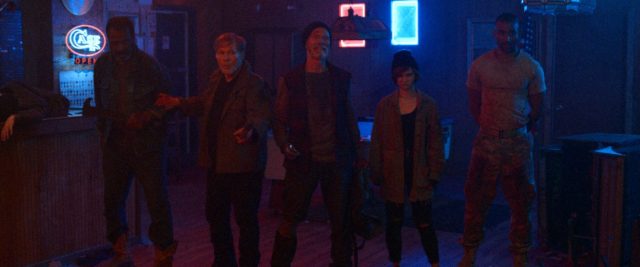
It’s built on that “Fort Apache/Zulu/Assault on Precinct 13” formula that most zombie and more than a few vampire onslaughts use as a template. Pack a few people in a “fort,” surround them with savages, pick those savages off and try to look or sound cool doing it.

For my money, it needed to be a lot more “Shaun of the Dead” and a lot less “Hobo.” If it isn’t funny, it’s just a “Who gets it next?” slaughterhouse, a gruesome video game of a movie for the violence-inured.

Stephan Lang, having a career renaissance thanks to “Avatar” and “Don’t Breathe,” plays a Vietnam vet bartender at a VFW post under siege by drug-crazed junkies doing the dirty work of a ruthless drug dealer (Travis Hammer) who has lost his stash.

It’s a picture that sinks or swims on swagger, “creative” killings, some noble — if misguided — sacrifice and surviving un-survivable injuries just long enough to get off a one-liner.

The country is in the grip of this new drug, “hype,” which is so craved by its addicts that they have no control over what they have to do to get it. Order is breaking down. We never see a cop.

Not on the side of town where VFW Post 2494 clings to life. Fred and his post buddies Abe (Fred “The Hammer” Williamson), a Korean War era vet, and Walter Reed (teehee) played by William Sadler, open the joint every noon and close it down every night.

Fred is having little luck fending off the birthday wish that he join his veteran pals (George Wendt. David Patrick Kelly, Martin Kove) for an excursion to “a t—y bar” when an interloper arrives. Lizard (Sierra McCormick) has stolen the drug-dealer’s supply. She has her reasons.

It’s just that Boz (Hammer) then hurls his druggies at Post 2494 to get that “hype” back.

“An army of brain-dead animals is still an army,” Boz reasons.

The slaughter begins, in earnest — crazed attackers, desperate old or “oldish” men fighting back, cursing the “f—–g hippies” and “g–d—-d junkies” as they do. Car salesman Lou (Kove) is pissed. At Lizard.

“That trash comes in here, all of a sudden it’s like Khe Sanh ALL OVER again!”

vfw1

That’s it for plot, the wizened veterans muttering “Cavalry ain’t coming, Lou,” the men’s bizarre, undeveloped motivation for sticking up for the under-scripted young woman who caused all this, the drug punk and his minions refusing to treat veterans with respect.

“Soldiers? Good. Soldiers are good at dying.”

A little DIY weaponizing of the bar, using old Viet Cong tricks and hockey sticks. Some tough talk between the old guys and the still-serving young GI (Tom Williamson) who came in to drink with men three-four times his age.

“Don’t kill’em all at once, now.”

I had higher hopes for this, based on the trailer, the players — Lang, Wendt from “Cheers,” Williamson the Elder (Is Tom a son, or grandson?), Kelly from “The Warriors” and Sadler from “Shawshank Redemption” and a far better-executed version of “VFW” titled “Trespass.”

But while director Joe Begos (“Bliss,” “The Mind’s Eye”) might know how to film brawls and bloodbaths, his track record is poor, and here he didn’t have much to work with. The screenwriters have lots of credits in film and TV, none of them involving writing. And it shows.

They made a promise, with their cool trailer, that their dull, bloody movie couldn’t keep.

1half-star

MPAA Rating: Unrated, graphic violence, profanity throughout

Cast: Stephen Lang, Martin Kove, Sierra McCormick, Fred Williamson, William Sadler, George Wendt, David Patrick Kelly, Dora Madison, Travis Hammer and Tom Williamson

Credits: Directed by Joe Begos, script by Max Brallier and Matthew McArdle. An RLJE/Fangoria release.

Running time: 1:32

Posted in Reviews, previews, profiles and movie news | Comments Off on Movie Review: Call these “VFW” geezers “old” at your own risk, Millennials

Netflixable? “Die Ontwaking” is one long “spoiler alert” of a thriller

ont.1jpeg

How much is “too much” to reveal in a movie review?

Ordinarily, you relate just enough of the plot and characters to set the story in motion, and everything else is value judgements — how good the acting, writing, production design etc. are, how original the entire enterprise might be.

But in movie reviewing, we’re always using analogies — “comps.” What movie does this one borrow from/compare to, use as its inspiration?

With “Die Ontwaking,” I dare say translating the Afrikaans (It’s a South African serial killer thriller) title will give away the game, to the movie-savvy.

“The Collector” is what it translates to, an adaptation of the first of a series of novels about a African/Aboriginal artifacts dealer. And Hell’s Bells, even that gives away more than it should.

“Series” of novels about a “collector.” What do we know about the killer and the film’s finale from that description?

If I mention “Psycho” and “Silence of the Lambs,” you can infer even more about it, the movies/books that novelist Chris Karsten was dabbling in as he cut-and-pasted this story.

But I’m not going to sweat the “spoilers” here, as I can sum this one up in just two words — grisly and perfunctory. It begins with an unseen cutter gutting and skinning a rabbit and quickly escalates into human slicing, people grabbed and tied up for butchery as the cops try to figure out what’s going on.

Grisly. Perfunctory.

The subtexts here are almost more interesting than the “We’ve got ourselves a collector, slicing off pieces of peoples’ skin” that the police will quickly conclude.

The title character, played by Gys de Villiers, runs an antiques gallery. He’s an elderly creeper who specializes in masks from around the world.

No no, he can’t sell that roll-top desk, it’s his mother’s. He talks about his mother a lot.

No, that tribal mask isn’t for sale either. Only men can wear it.

That’s the other subtext of interest, here. The men, to a one, are committed sexists — womanizers, harassers and bullies.

Deputy Nesa (Juanita de Villiers) takes jabs from the boorish Fred (Gérard Rudolf ) on the first crime-scene, where the first body is dumped. Here are your rubber gloves, “just in case you break a nail” (in Afrikaans, with English subtitles).

The coroner is equally contemptuous — “Such an important case, and you make an amateur the investigating officer!”

Her boss, the Colonel (Paul Eilers) is there, which is why she has to let this crap roll off her back.

But when a reporter (Jaco Muller) shows up and begs for a date, mid-interview, North American viewers of this 2015 film might wonder what century this is.

The Colonel burns through cigarettes, has hints of corruption and is dismissive of protocol.

“SCREW motives!”

The pathologist has his Dr. McCoy moment — “I’m a pathologist, not a psychologist” dammit.

The deputy acts like “an amateur” more than once.

And the collector? He keeps on collecting, even as red herring suspects are dredged up AFTER we’ve been given a good, solid EARLY taste of who is doing this and what he’s obsessed with.

The South African setting is “novel,” except when you realize there’s only one black person in the entire South African movie.

The interrogations, the slow pace of piecing together a “puzzle” that’s all but given away right from the start, underscore that “perfunctory” knock I made earlier. The crimes, the criminal, the story beats and the victims are all recycled from the two films I mentioned at the outset.

But if you’re going to steal, maybe understanding what you’re stealing and why these ingredients and archetypal characters WORKED in the earlier films is a must.

MPAA Rating: TV-MA, graphic violence, sexual situations

Cast: Gys de Villiers, Juanita de Villiers, Gérard Rudolf, Armand Aucamp, Jaco Muller and Paul Eilers.

Credits: Written and directed by Johnny Breedt, based on a Chris Karsten novel. An Indigenous/Netflix release.

Running time: 1:29

Posted in Reviews, previews, profiles and movie news | Comments Off on Netflixable? “Die Ontwaking” is one long “spoiler alert” of a thriller