
The theatrical release for this festival award winner has been c anceled, so VOD it is.
The theatrical release for this festival award winner has been c anceled, so VOD it is.
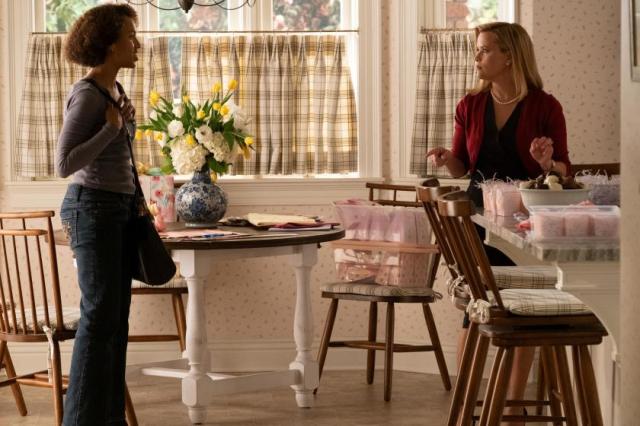
You’d be hard pressed to find better examples of “on the nose” casting than having Kerry Washington play a proud, sensual but stand-offish artist and Reese Witherspoon an obnoxiously over-organized control-freak queen of an affluent “planned community.”
Add “single mom” and “controlling mom” to those character descriptions and you might think you’ve seen “Little Fires Everywhere” before, maybe with these two in similar roles. The fact that each is talented enough for them to have flipped characters in the casting doesn’t shake that.
But “Little Fires,” based on Celeste Ng’s novel, uses their acting baggage, that familiarity in the casting, to trip us up, surprise and sometimes touch us. Over the eight episodes of the series, the characters and their very sympathetic performances of them build expectations that the next episode, next frosty or understanding encounter, upends.
The upper hand shifts back and forth. The women they play show white liberal guilt and African American anger at “profiling,” but also underhandedness, pettiness, intolerance and inattention. And then we’re bowled over by the little kindnesses they’re capable of, seemingly wholly out of character, the things each — as an artist and a locally-connected journalist — sees that others around them might not.
Washington plays a single mom/artist who drags her bright and pretty teen daughter Pearl (Lexi Underwood) to yet another new town in her battered early ’80s Chevette. Sure, they spend their first night in that car in tony “planned” Shaker Heights, Ohio. But this is a place Mia (Washington) has picked out for studying and making art about. The kid just smiles and rolls with it.
Model-citizen Elena (Witherspoon) is the sort of woman this HOA (home owner’s association) Hell was made for, where the houses are McMansions, the grass height is uniform and mandated and the schools filled with bright, rich Ivy League-bound over-achievers.
It’s 1997 and Elena lives her on a rigid schedule, insisting that her prosperous family of six adhere to the vast calendar covering the fridge. “Four ounces of wine” is all she ever allows herself. Sex (Joshua Jackson plays her husband)?
“It’s not Wednesday or Saturday!”
She writes part-time for the local newspaper, has a book club (Rosemarie DeWitt is a pal), knows and charms everybody. She’s all about “doing kind things for kind people who appreciate the kindness.”
The sheen of perfection hangs over Shaker Heights, from Elena’s absurd over-dressing for work, the perfectly-manicured yards and every beautiful child we meet. This has a gloss that’s more “Desperate Housewives” than Witherspoon’s similarly affluent but grittier “Big Little Lies.”
Ah, but we’ve seen the first “fire” in the opening image of the series, a “big” fire that burns down Elena’s huge house. “Little fires everywhere” are how it was set, and that’s what the two women notice over the course of the series — all these “little fires” — hurting people, situations that need tending, nurturing of smothering.
Elena’s problem child is Izzy (Megan Stott), a rebellious 14 year-old whose name comes up at that first fire. She’s acting out, alienated from her “wear this/study that” mother, teased by her three siblings and bullied at school.
Mia’s Pearl? She just wants stability, a home, a room she can paint more than one wall in because “sample size” cans only cover one wall. In Elena’s brood she sees nuclear family normality.
That’s a clever if obvious dynamic to play with up — Mia’s “We artists gotta stick together” connection with Izzy, Elena’s “I like to hug” bond with Pearl.
The series treats us to other “fires” going on in this idyllic, monied community, the “secrets” each woman keeps and a lovely back and forth, see-sawing between the two leads “having a moment” juxtaposed with many scenes where they’re rubbing each other the wrong way.
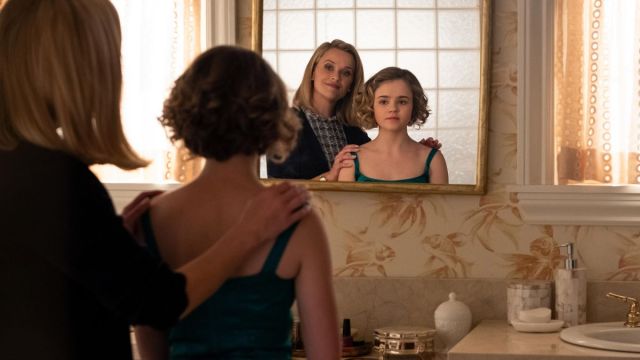
Brief flashbacks allow us to pass judgement on who someone is, only for another scene to come up undercutting that judgement.
The ’90s nostalgia for Beck and “The Real World” may connect with some.
Suspense shows up in the “secrets” that are inevitable in stories this soap operatic. Because that’s what this is, mysteries, conflicts and relationships teased out over eight hours — no cliffhangers — building back towards that opening blaze.
And “on the nose” or not, even if the parts don’t much in the way of “She’s really stretching here,” there’s something to be said in very good actresses taking a pitch, right in their wheelhouse, and belting it.

MPAA Rating: TV-MA, sexual situations, alcohol and marijuana use, profanity
Cast: Reese Witherspoon, Kerry Washington, Joshua Jackson, Rosemarie DeWitt, Megan Stott, Lexi Underwood
Credits: Created by Liz Tigelaar, based on the book by Celeste Ng. A Hulu original.
Running time: Eight episodes, @1 hour each
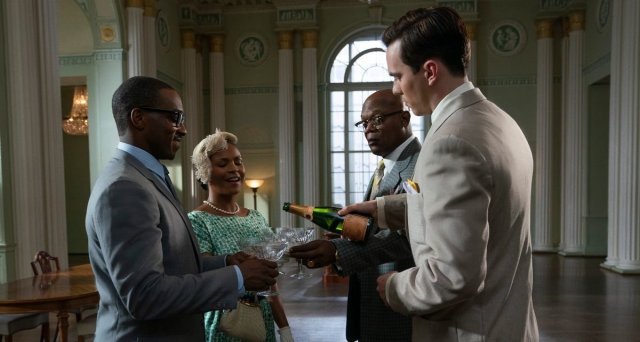
“The Banker” is a sturdy, entertaining period piece about a little known episode in civil rights history, an effort to open the door to “The American Dream” by a couple of real estate tycoons who took over two banks.
The tycoons? Black men who made their fortunes in Los Angeles in the 1950s and ’60s. The film follows their struggles to get their businesses up and thriving in racist 1950s LA. And it climaxes with the problems that spun out of their efforts to get into banking in 1960s Texas, of all places.
The movie is framed within a 1960s Senate hearing over that attempt.
Anthony Mackie plays Bernard Garrett, a “genius” fascinated by the mathematics of “How to get rich in real estate,” practically from birth. We see the teenage Bernard listening to all the business men’s conversations as they’re carried on in 1930s Willis, Texas, and he’s shining their shoes.
By the 1950s, he’s sold one business, married (Nia Long plays wife Eunice), had a little boy and moved them to the greener, supposedly more tolerant pastures of California.
Bernard scouts rental complexes, ignores the overt racism and the half-whispered comments about his suits — “pretty fancy for a colored guy.” He is rebuffed, blown off by bankers, not taken seriously by his first big seller (Colm Meaney). And he’s loathe to accept help from a nightclub owner, Joe Morris, his wife used to know and who remains entirely too flirtatious with her, even now.
But Morris is a hard guy to avoid, and impossible not to like. He is played by Samuel L. Jackson with all the bemused, brassy and profane bravado the man can muster.
“I don’t trust white people,” Joe counsels. “Truth be told, I don’t even trust black people.” But he’s intrigued by what Garrett isn’t letting anybody see in his eagerness to accumulate properties and build a real estate empire — “the thrill of STICKING IT to the man!”
All they need is somebody to “front” for the business, when officialdom, finance or racist customers present a problem. That’s how they turn failed businessman turned laborer Matt Steiner (Nicholas Hoult) into the face of their partnership.
The movie’s lighter moments are the crash-course montage of Bernard drilling Matt on real-estate math by night as Joe gives him “keep your effing HEAD DOWN” lessons on the golf course, which is where a lot of business connections are to be made.
Any time there’s a big meeting, a “silent partners” purchase that Matt has to bluff his way through, Joe dresses up as his chauffeur to listen in, oversee and maybe provide a little silent coaching. Bernard starts off too dignified to do that, but finds himself in custodian clothes, his wife dressed as a maid, just to make these deals happen.


The pleasures “The Banker” are the easy rapport of the cast and underdog tale the film tells. Equal rights, equal rights to housing and equal access to capital (loans) were all years away when these two crunched the numbers and made the deals, behind the scenes, that pointed towards change.
Mackie’s Garrett keeps his cool at every hassle from the cops, every racist renter who lights into him, and takes pains to dress the part every time he’s got to meet and negotiate with “the man.” Jackson’s Morris is the older, cynical pragmatist, who isn’t the man you say “You wouldn’t understand” to.
“Oh, I’m sorry. Did I not wake up BLACK this morning?”
Veteran screenwriter (“Ocean’s Eleven,” “The Adjustment Bureau”) turned director and co-writer George Nolfi doesn’t dazzle us with technique, flash or pace, here. It’s a straight-forward tale given a period gloss but pedestrian pacing, thanks to a script a lot of hands typed out.
“The Banker” was being pitched as Apple’s bid for Oscar consideration last fall, which seems an over-reach. That doesn’t taint it, nor does the knowledge that the given reason it was pulled, sexual abuse allegations about Garrett’s son, who signed on as a producer on the movie.
It’s an earnest film graced with surprising glimpses of humanity amid persistent racist venality. The great value is in showing us a piece of history we don’t know but should, and as a terrific showcase for Mackie, Jackson, Long and Hoult.
MPAA Rating: PG-13 on appeal for some strong language including a sexual reference and racial epithets, and smoking throughout
Cast: Anthony Mackie, Nicholas Hoult, Nia Long, Colm Meaney and Samuel L. Jackson.
Credits: Directed by George Nolfi, script by Niceole R. Levy, Stan Younger, David Lewis Smith, and George Nolfi. An Apple TV release
Running time: 2:01


“The Virtues” is a stylish, visually-arresting four-part British series about adults haunted by the traumas of their youth. Unblinking in its its detail, compellingly-acted, it immerses you in working-class life in Britain and Northern Ireland, life with a healthy dose of dysfunction. And then it grabs you by the throat for a finale that is shocking, all the more so in that it feels somewhat inevitable.
Joseph McCarthy, given a heart-on-his-sleeve lilt by veteran character actor Stephen Graham (“Tinker, Tailor, Soldier Spy”), is a sad-faced house painter in Sheffield when we meet him. He’s pushing 40, divorced, and he chokes up when he has dinner with the ex (Juliet Ellis), her new husband and his little boy Sean.
They’re above to move to Australia with the nine-year-old. The boy can’t understand — “Why can’t you come?” Joseph can barely hold back the tears as he tries to comfort him.
We’ve barely adjusted to “he’s just emotionally available” when more layers of Joseph’s lonely life peel away. He knocks back a couple down’t pub. Makes new friends, and downs many, many more. The handheld camera captures his boozy stagger, the lens simulating the “Guinness goggles” he sees the evening through.
Next thing we know, Joseph’s tapped out his bank account, bought a ferry ticket and headed “home.” He has a problem with alcohol, “issues” that his emotions give away. And there’s nothing for it but to pass out in front his the home of the Ballybraigh/County Louth home of his sister Anna (Helen Behan).
She’s married with three kids. And his “Can’t you remember me?” doesn’t answer her “How’d you know me?” They haven’t seen each other since they were separated after the death of their parents 30 years before.
What follows is a tearful but fraught reunion, with more layers of their past peeled away, each finding the other’s deep-seated hurt in a search for healing, closure, something to end this ache that keeps life from making sense.
Anna’s the truly shocked one. She moved on with her life because “I thought you were dead.” She’s got a marriage, kids, responsibilities. She’s got to be a rock.
Because Joseph is just the latest truckload of “hot mess” dumped at her doorstep. Her sister-in-law, Dinah (Niamh Algar) is a 30ish blonde trainwreck we meet as the family watches her manhandled by her “fiance” through the front window. Nobody intervenes. “Wait,” her brother, Anna’s husband (Frank Laverty) counsels. “Wait.”
Sure enough, Dinah punches the guy square in the jaw. Then a second time. Third punch, she lays him out. Whatever else she’s on about, Dinah’s not to be trifled with.
Director and co-writer Shane Meadows made his mark on film and TV with “This is England,” his raw, nervy dramas — first a film, then three sequel TV series — about skinhead teens in the ’80s “growing up,” after a fashion, into the ’90s.
These were “kitchen sink dramas,” an intimate, unsentimental British genre invention of the ’60s, given a brutish, violent edge. “The Virtues,” which features a couple of actors from that film and those TV shows, is of a piece with them.
It’s a slow-building mini-series of artful, briefly-glimpsed, home movie-quality flashbacks. We get tiny hints of what’s happened to these hurting people. We can guess the rest.
Stretching the story out over three and a half hours lets the series flesh out family life, hint at Ireland’s dark orphaned secrets and the great weight that burdens Joseph and that fires Dinah’s fury.
Anna’s struggle to be supportive and keep control over these impulsive dangers to her happy home is tested in the most Irish terms imaginable.
“What in the name of JAYZUS? Boxing the jaws off him one minute, chewing the jaws off the next! Very Liz TAYLOR of ye!”
And the difference between British and Irish barmen is glimpsed, in handling unruly drunks and in the pride of pouring the perfect pint of Guinness.
“The color’a the first, you’d tink the POPE was comin’!”
This is gripping TV with a harrowing story and a vivid sense of place, a “kitchen sink” portrait of lives and struggles in a land where getting the “color” of a beer-pour right may not matter to a drunk, but it does to the man pouring it.
“The Virtues” premieres on Topic.com streaming April 2.

Cast: Stephen Graham, Niamh Algar, Helen Behan
Credits: Directed by Shane Meadows, script by Shane Meadows and Jack Thorne. A Topic.com release.
Running time: 4 episodes, 3:30 total
It’s coming in May. May 20.
Rob and Coogan in I guess, a Range Rover that looks like a Kia Soul, covering Greece. And “Grease” in this clip.


The New York “artist type” is so ingrained in the culture that we don’t need more of a prompt than that phrase to get a mental picture.
But it’s not all young, ambitious, pretentious strivers — hipsters from hither and yon — who comprise the scene. What about the old timers, the academics still struggling to make a mark, on summer break in their 60s?
Laurie Simmons takes that spin on a stereotype and the world that films from “Slaves of New York” and “Basquiat” to “Tiny Furniture” have shown us and gives us “My Art,” a dry but droll riff on The Artist at 65 — still inspired, still out there working that inspiration, and still pretentious and gushy and self-absorbed, too.
She plays Ellie, a conceptual artist and college professor who will house-sit in the Woodstock area of upstate New York and use that time to work on a some videos.
Ellie keeps up the facade of enthusiasm, even as one former student (Lena Dunham, her “Tiny Furniture” director and co-star) humble-brags about “having” to go to (Venice) “The Bienalle” (art show) and a peer (Blair Brown) gushes “love your art mind…LOVED your last show, which was a while ago.”
Whatever the value, or burden, of her support system, Ellie piles herself and her aged Airedale into the car and into the country, where a big house, a stocked (pot and wine included) fridge, a studio space and her video camera await.
To say nothing of the artsy locals. EVERYbody is an actor, it seems — even the landscapers (Robert Clohessy, and “Uncut Gems” director Josh Safdie) for starters.
The menfolk pay her entirely too much attention — sometimes tactlessly. But she soldiers on, fiddling around with her old movies ideas — collages covering up old posters, video re-stagings with herself — and eventually many local co-stars — of scenes from Dietrich’s “Morocco,” Kubrick’s “A Clockwork Orange,” Gable and Monroe in “The Misfits,” “Some Like it Hot” and “Jules et Jim.”
It feels for all the world like indulgent, narcissistic nonsense, and Simmons milks the pose for all it’s worth. “I’m in my PROCESS…I need my SPACE.”
Simmons as filmmaker lets us see Ellie’s “inspiration,” picking up on who this waitress could mimic as a model, on the oily dance-floor smarm possibilities (William Powell movies!) of a blind date (John Rothman) she was set up with by her student assistant, the guy’s stepson.
The interpersonal entanglements don’t amount to much. But Simmons makes Ellie feel real — shallow, but real — and surrounds Ellie with interesting bit players (Parker Posey plays one actor/landscaper’s shrill wife) and the art-movies-within-the-movie are kind of amusing.
“My Art” is now streaming on Film Movement+ and Amazon Prime Video.

MPAA Rating: unrated, pot use, smoking, sexual situation, profanity
Cast: Laurie Simmons, Parker Posey, Blair Brown, John Rothman, Robert Clohessy, Josh Safdie and Lena Dunham
Credits: Written and directed by LAurie Simmons. A Film Movement+ release.
Running time: 1:26
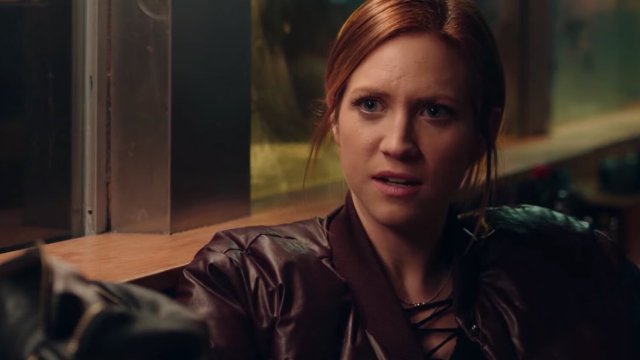
Brittany Snow plays a sex addict/sex columnist who drags a guy she just met on a cross-country “revisit every place I’ve had sex” romp in “Hooking Up.”
Which is as crude as it sounds, and a description that works for about half of this generally unamusing road trip romance.
It’s the film’s attempted pivot into seriousness, after making light of sex addiction and –oh — the guy’s reluctant “bucket list” participation in all this before taking one last shot at treatment for his testicular cancer, that the degree of tone deafness the screenwriters suffer from becomes obvious.
“Pitch Perfect” Snow is Darla, whose craving for coitus has her grabbing a quickie in an elementary school classroom on her way to a “Managing Your Sex Addiction” support group meeting down the hall. Her partner? You guessed it, the guy running the group.
Sam Richardson (“Veep”) is Bailey, the support group seeker who stumbles into the wrong room. He’s busted up, at 30, over losing his high school sweetheart (Anna Akana) because, he believes, she is turned off by the testicle-free future.
Darla’s brusque, remote and flippant about everything — her court-ordered support group, sex with an intern on the boss’s desk (Jordana Brewster). After all, her Atlanta magazine column makes her “the Oprah of orgasms! EVERYbody gets one!”
It isn’t concern for her well-being, the perverse idea of an addict writing a column that feeds her addiction, that gets her fired. “Your stories lately just aren’t worth fighting for.”
So she bum’s-rushes Bailey into taking a trip with her. The support group gave her a map as a means of documenting her sexploits and perhaps making amends. She’ll use that map to retrace her steps, reenact her couplings and give Bailey a little dose of what Mr. “One Woman Man” has been missing.
That tacky tale barely holds your interest, even if Snow goes at this with a kind of bug-eyed mean-girl-turned-mean-woman gusto. “This one’s a predator,” as Bailey warns off one guy.

Richardson ably plays the straight-man role in this comic couple, the mopey “All my sexual history could fit on a bar napkin” sidekick and less-than-eager-“assistant” in this stunt that Darla hasn’t told him will make it into a blog and probably into a magazine.
The “Sex Trip” part of the picture never for one second feels giddy, although the stars give it their best in service of screenwriters who can’t manage any better.
But stopping to see Bailey’s parents (Vivica A. Fox and Bryan Pitts), stumbling back into the ex and taking stock of what’s really been wrong with his life turns the picture into something just as dissatisfying, but supposedly serious.
We also get a load of Darla’s gene pool (Amy Pietz, making a mark), too.
A politically-incorrect comedy about sex addiction isn’t the freshest idea, but at least that one had some possibilities. Darla, opening the map in the ancient Cavalier convertible she’s bought for the drive, looking at an “X marks the spot” covered map and catching Bailey’s dismay.
“You’re either judging me or under-ESTIMATING me!”
The limp start and depressed finish make “Hooking Up” a sex comedy in which you can like the cast even as you give up on the movie. Early.

MPAA Rating: R (for sexual content and language throughout)
Cast: Brittany Snow, Sam Richardson, Jordana Brewster, Vivica A. Fox, Amy Pietz and Anna Akana
Credits: Directed by Nico Raineau, script by Nico Ranineau and Lauren Schacher. A Saban Films release.
Running time: 1:43


In a semi-seedy New York apartment, an actress mutters her lines, referring back to the text as she does.
“Receive the blood: and when that they are dead,
Let me go grind their bones to powder small…”
She’s prepping a monologue from Shakespeare’s “Titus Andronicus.” But this pale young (Annarosa Mudd) isn’t just deep into character. She’s…off. If doing a DIY tongue piercing doesn’t tip you off, the light wrist-cutting might, the lipstick she wipes away the blood to cover her lips with firms up the idea. And there’s the body cam and microphone she’s taping to her torso.
There’s an audition, a dozen or so young women, fresh and naive, eager to get their careers started with a reading for a reality show. The handsome casting director, Lux (Tarek Bishara of HBO’s “The Tale”), is charming and buzzy, feeding on their enthusiasm.
Forget acting school, he preaches. “The real world is about connection, chemistry and socialization!”
Our tongue-pierced observer strikes up a chat with Pearl (Isabelle Fuhrman of “The Orphan”) who echoes everybody’s “I’m VERY excited!”
Pearl chatters through her meeting with Lux, insecurely filling his silences with “I need to learn to market myself.” But even if it doesn’t land her the part, Lux purrs, there’s the promise of a management contract. With him. “I’m silently asking you to PROVE” his “hunch about your talent!”
“Silently?” Never mind.
But in weepy phone calls home, Pearl gives away how depressed and distressing this struggle to get her foot in the door is. Lux’s “management” offer entails meetings at a coffeehouse, and then another audition — this one private — just the two of them, performing a scene.
“Tape” is about how icky that obvious set-up and come-on is, and how it’s turned on its head by a third observer. “Rosa” (Mudd) has spy cams and a tablet they feed into. When she mouths along to the lines Lux and Pearl exchange in the “scene,” we know she’s been through this herself. She knows what’s really going on. What will she do about it?
Writer-director Deborah Kampmeir, who gave us the queasy exploitation of “Hounddog,” has created a master showbiz villain, a slick-talking salesman who doesn’t apologize for “the real world,” or give away what this casting couch “audition” is going to be. He phrases his oozy stage directions and pep talks in literary and empowerment terms.
USE “those secret powers that are so intrinsic to the female gender,” he coaches. “SEDUCE me with your poise!” He references the 16th century “The Book of the Courtier,”which he knows the recent NYU grad read as part of her curriculum. He refers to what he’s up to as “this exercise.” He shames her for “self-deprecation,” insists that she “OWN the room.”
Yeah, he’s kind of a naive person’s idea of what a world-wise “mentor” would sound like.
Rosa? She’s storing clips on her tablet, listening in through earbuds, muttering occasionally at what’s going on as she plots whatever action she has in mind.
“Tape” is an intensely myopic experience, with much of what we’re seeing caught via Rosa’s tablet-eye-view. The suspense comes from our fear of what Pearl has gotten herself into, what Lux is capable of and what Rosa — with her thing for blood and self-injury, might be cooking up.
The performances are spot-on, with Fuhrman, no longer a child actress, well-cast as someone with that fresh-faced but not-a-knockout hunger of an actress who will need help standing out and getting ahead. Screen newcomer Mudd is just plain disturbing.
And Bishara is terrific playing the seducer as salesman and drill sergeant — knocking Pearl down then building up, perfectly polished in his patter, patient in his step-by-step approach to sexual harassment and “consent.”
Kampmeir’s made a lean, disturbing #MeToo tale that should be the last thing any acting class shows its students before graduation, if not on enrollment day as well.
MPAA Rating: unrated, violence, sexual situations, nudity
Cast: Annarosa Mudd, Isabelle Fuhrman, Tarek Bishara
Credits: Written and directed by Deborah Kampmeir
Running time: 1:38
Coming in May, or whenever, the Scooby Doo prequel.
Idris Elba (@idriselba) Tweeted:
This morning I tested positive for Covid 19. I feel ok, I have no symptoms so far but have been isolated since I found out about my possible exposure to the virus. Stay home people and be pragmatic. I will keep you updated on how I’m doing 👊🏾👊🏾 No panic. https://t.co/Lg7HVMZglZ https://twitter.com/idriselba/status/1239617034901524481?s=20

 Movie Nation