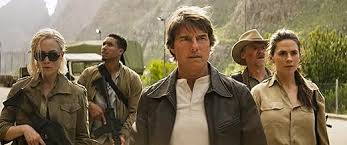
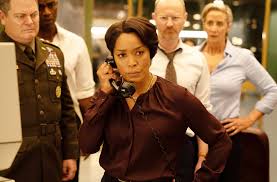
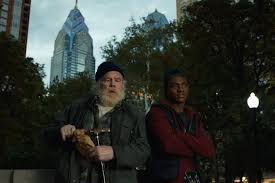
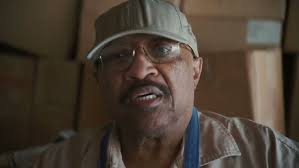
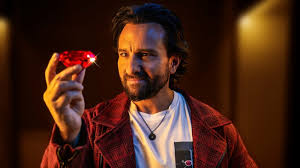
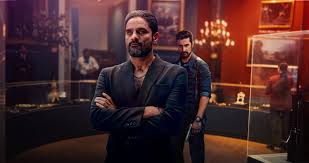
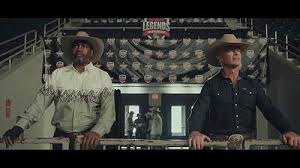
Mary McDonnell, Tom Skerritt and Auden Thornton also star in this direct-to-streaming modern day Western from the director of “The Signal.”
May 6.
Mary McDonnell, Tom Skerritt and Auden Thornton also star in this direct-to-streaming modern day Western from the director of “The Signal.”
May 6.
A pointed political parable about the schism that’s caused America’s downfall, a microcosm of hate, violence and decline set in “Eddington,” New Mexico.
“Coming soon?” Sure. But as the fact that it’s set in 2020 makes clear, it’s already here.
They’re celebrating their anniversary and the arrival of their baby. Things go deathly wrong. More than once.
Nick Kroll and Rannells, of “The Prom” and “The Intern,” make it work.
This is one cute looking dark comedy. Look for it June 6.

Maybe you’ve got to be a car guy-or-pronoun-of-your-choice to notice it.
But Thursday afternoon, I couldn’t help but notice that the first-date/widowed mom under threat who’s got to make a dash home to save her kid and her babysitting kid sister in “Drop” and Rami Malek’s cryptanalayist in “The Amateur”‘s choice of late film getaway vehicle were one and the same.
The “safety” pioneers, a cool ride famous for engineering survivable crashes, Saabs were the car of the screenwriters/director’s choice in both films.
For years, Saabs were what real college professors, and that academics in the movies drove. It was the quintessential “car with character,” a “you are what you drive” indicator that said a lot about movie character when you saw them driving one.
Hip, go-your-own-way quirky, quick and sporty, “safe” but not entirely practical.
They were expensive to maintain, and the moment Saab went out of business, you ceased seeing them on the roads — almost instantly. I see one or two a year, now. Tops.
I test drove Saabs a couple of times, and regretted not buying them both times, “torque steer” be damned.
Dead and gone but not forgotten, the “tenured professsor” car of choice for decades of movies has another moment.


A tony, high-rise restaurant filled with potential suspects, any one of whom might “airdrop” the threats and blackmailed instructions for a murder onto our shocked and frantic heroine’s cell phone, is the setting and plot of “Drop,” a middling horror thriller from the director of the “Happy Death Day” movies.
Dark, bloody humor is director Christopher Landon’s brand (Remember that Netflix kneeslapper “We Have a Ghost?”), so brace yourself for murderous blackmail, domestic violence, terrorizing a child and suicide giggles in this thriller, which is in the “Sorry, Wrong Number” and “Phonebooth” tradition.
Unseen villain is close-by making villainous threats by phone. Who could it be?
It’s predictably suspenseful, talky-texty and glib. But it’s got Emmy-nominated “White Lotus” star Meghann Fahy in the Jessica Rothe role, so let’s see what she’s got.
Violet is a Chicago counselor whose speciality is treating abused women. A violent opening scene tells us she was the victim of such abuse herself, surviving an attack by her husband (Michael Shea) who ended up turning a gun on himself.
A few years later, she’s finally ready to dip back into the dating pool. She’s got her sister (Violett Beane) close-by, ready to babysit Violet’s five-year-old son Toby (Jacob Robinson) and give Big Sis a sexy makeover before she heads out to her date at posh Palette, a trendy fine dining eatery encased in glass on the side of a sidescraper.
Her date Henry is late, so she throws herself into meeting or checking out the setting’s various “suspects” within “AirDrop” range of her iPhone. Because one of them will threaten her freedom, her future and her son if she doesn’t agree to murder on the first date.
The film’s sickest joke might be casting bearded Brendan Sklenar as “Henry,” because he’s almost a dead ringer for the dead husband. So, abused women have a…type?
Over the course of 90 or so cat-and-mouse minutes, Violet will try to outwit and outmanuever if not outtalk our very talkative villain as we learn what this person wants and why.
“I’m playing CHESS, here,” bad guys always say before we figure out that they’re not as smart as they keep telling us.
Fahy does a decent job conveying vulnerability, even if the desperation that should figure in seems a tad tame until the third act. Sklenar is mostly just a hunky paw here.
The set-ups are somewhat obvious in The Foreshadowing and the Furious. The not-so-big-twist climax could not be more talkative. But the screenwriters would be lost without their “talking villain” in a movie built on photos, babysitter cameras, texts and cell calls.
Still we’ve got a child and babysitter and unsuspecting date in danger, a room full of fine diners and staff suspects and a decent leading lady. Maybe it’ll all work out in the end. Or not.
If only she’d bought an Android.
Rating: PG-13, violence, profanity, sexual content
Cast: Meghann Fahy, Brendan Sklenar, Reed Diamond and Violett Beane
Credits: Directed by Christopher Landon, scripted by Jillian Jacobs and Chris Roach. A Universal/Blumhouse release.
Running time: 1:34


A good cast and a clever variation of the man with “particular skills” revenge thriller formula make “The Amateur” an often entertaining slice of spy games hokum.
Rami Malek stars as a CIA crypto analayst and tinkerer who becomes obsessed with tracking down and executing the terrorists who murdered his wife (Rachel Brosnahan). He’s determined to get “The Agency” to train him to do that. And he’s willing to blackmail his bosses to get his way.
The boss (Holt McCallany) may contemptuously discount thin-boned Charlie Heller as someone who couldn’t “beat a 90 year old nun in an arm wrestling match.” The trainer (Laurence Fishburne) assigned to give this blackmailing spook killing skills wants may give him almost no chance of success, even if he’s “overestimating the odds to give you confidence, son.”
But Charlie’s love is strong, his fury runs deep and while his “special skills” may not extend to firearms and fisticuffs, he does know his spytech. He can CCTV ID, track down and find his quarries. He can dream up ingenious ways to off them. And he can spoof his identity, keeping the bad guys and his blackmailed (“cover-up”) CIA bosses in the dark about his travels to London, Marseilles, Istanbul, Spain and Russia.
Screenwriters Ken Nolan (“Blackhawk Down”) and Gary Spinelli (“American Made”) turn the Robert Littell source novel into a tale of coincidences and random connections that can misdirect the viewer into thinking this may upend the formula for such narratives. No such luck.
The day after Charlie “may have looked somewhere I shouldn’t have” on the job, revealing possible wrongdoing at “The Company,” his wife is killed in a terror attack in London.
The CIA isn’t interested in Charlie’s after-hours “puzzle solving” which IDs the four attackers. Like the star “Bear” agent at Langley (Jon Bernthal), they dismiss unimposing Charlie and discount his fervent desire for justice and accountability, and his ability to get it himself.
But since he’s got something he can hang over their heads, they humor him…a little. They can’t have the new head of the agency (Julianne Nicholson) knowing about their assorted “black ops.”
Fishburne’s trainer, Henderson, assures the shrimpy analyst that he’s “no killer.” But we’ve seen Charlie’s “particular” hacking, puzzle solving and mechanical skills. He knows what Charlie’s learned and what he brought to the table beyond an inability to shoot straight.
As Charlie goes rogue and off the grid and terrorists turn up dead, Henderson gets to deliver the movie’s tagline.
“Maybe y’all misjudged this individual.”
Looooove that Fishburne.
There’s always a hacker-helper in such movies. Here, she’s (Caitríona Balfe) a mysterious contact who steals secrets and helps bait Charlie’s prey, one of whom is given all the cunning and cold-blooded calculation Michael Stuhlbarg can give him, with a hint of humanity underneath the calculus.
Bernthal is barely in the picture and Adrian Martinez is introduced as a nerdy work ally and then forgotten. Brosnahan (“The Marvelous Mrs. Maisel”) is kept in the story via flashbacks and Charlie’s imagination.
But Malek makes a riveting lead, an ordinary, unimposing man resolving to break character and do something few of us would attempt, much less stomach.
“The Amateur” may be a mixed-bag of coincidences, not-quite-plausible technological traps and narrow escapes, and a tad old fashioned feeling in this post-justice/post-accountability world. But Malek keeps us invested and interested in this quest, putting us in Charlie’s shoes and even in Charlie’s headspace, at times, as he crosses line after line in pursuit of closure than involves a whole lot of killing.
Rating: PG-13, violence, profanity
Cast: Rami Malek, Rachel Brosnahan, Holt McCallany, Jon Bernthal,
Caitríona Balfe, Michael Stuhlbarg, Julianne Nicholson and Laurence Fishburne.
Credits: Directed by James Hawes, scripted by Ken Nolan and Gary Spinelli, based on a novel by Robert Littell. A Twentieth Century release.
Running time: 2:03


The big selling point of “Warfare” is its recreation of the “reality” of combat in the Middle East by a former Navy SEAL who was there.
But there have been scores of documentaries made by embedded filmmakers who detailed the grim, workmanlike but hi-tech nature of house-to-house searches and firefights of combat in Iraq and Afghanistan. And there have been a wide range of combat films capturing many angles of the nature of the service there.
Co-writer/director and combat veteran Ray Mendoza, aided by “Civil War” writer-director Alex Garland, in essence pays tribute to his comrades in remembering his own service and the trauma of a 2006 “op” in Ramadi with vague goals that shift from infiltrating an area of the city to simply getting each other out of there alive.
It’s a small scale “Blackhawk Down,” paying every bit as much attention to detail as that film, but barely sketching in “characters,” limiting its field of view to what the men on the ground saw and experienced and recollected and undercutting the viewer’s connection with all of this by everything that it leaves out dramatically.
It’s more an experiment in immersive “experience” than a movie.
Dozens of soldiers — it’s not well-established that they’re SEALs — deployed in platoon-strength units, work their way through the empty, silent streets at night. They find their target building — no, we don’t know why it’s targeted — infiltrate and quietly rouse the residents and hold them, smashing through walls to get to every apartment in it.
Daybreak has them using the structure as an observation post. The sniper (Cosmo Jarvis) and his spotter (Taylor John Smith) eyeball a building across the street, where unfriendlies are watching them. They make note of vehicles and how the suspects are clothed and pass it on via radio to other units nearby.
The Americans, with two nervous Iraqi soldiers who interpet and fear that they’re to be treated as sacrificial lambs, have communications gear that allows them to see infrared images of their location and the white heat signatures of their comrades down the road and the insurgents massing around them.
They have air support — aircraft providing those infrared pictures and fighter-bombers standing by for intimidating extremely low-level “show of force” flyovers. And there are Bradley armored personnel carriers nearby, ready to be summoned if they need to get casualties or get the entire unit out of there should things escalate beyond their ability to control.
Will Poulter (“Death of a Unicorn”) plays the commanding officer on the ground, and “Reservation Dogs” alumna D’Pharaoh Woon-A-Tai is Ray (Mendoza), in charge of communications with HQ, one of the many men there tasked with taking notes about what they see and the shifting situation which they’ve been ordered into.
The suspense builds as they watch and wait for what they’re sure is coming, with the viewer not clear on their “rules of engagement.” Spying a guy with a “PKM! PKM!” going into a building across the street raises the alarm but doesn’t trigger the first fusillade of fire.
There are civilians on the street, until a PA system urges one and all to join the “jihad,” which clears it. As the battle is joined, men with mismatched levels of experience and professionalism will undergo shock, fear and the endless screams of grievously wounded comrades — the part of “combat” that more swaggering military movies often leave out.
It’s that unblinking, pointilistic dissection of this one almost real-time 2006 firefight that recommends “Warfare.”
But from the familiar combat situations and over-familiar jargon, slang and acronyms used by men in uniform, “Warfare” adds no new insights or cinematic flourishes to that history and this genre of movie. The foe is faceless, and Iraqi allies are mistrusted and treated like cannon fodder.
The overt racism and carelessness with civilian “collateral damage” captured in “Mosul,” “The War Tapes” and other fly-on-the-wall documentaries made by embedded journalist/filmmakers is scrubbed out of this account of “our boys” under duress and the effort it takes to extract them from a jam.
The dull tinnitus and concussed dizziness that comes from an IED or grenade exploding too close to human ears, the “swarming” nature of Al Qaeda ambushes, the training that kicks in when professionals, from “new guys” to veterans of this dangerous duty, are tested under extreme conditions, we’ve seen it all before.
Mendoza’s pitch, to “get it right” and have “real combat vets” have their story told, might be noble in its intent and the tribute (stay through the credits) to their service the film represents. But he and Garland emphasize authenticity over empathy, accuracy over dramatic connection.
That makes for a solid account of a firefight as-it-happened, but a dull movie with too much “We’ve seen all this before” about it to be novel and eye-opening.
Rating: R, graphic violence
Cast: Will Poulter, Cosmo Jarvis,
D’Pharaoh Woon-A-Tai, Finn Bennett, Michael Gandolfini and Charles Melton.
Credits: Writen and directed by Ray Mendoza and Alex Garland. An A24 release.
Running time: 1:35


“Sarogeto” is a cryptic, morose and meandering wander around grief, death and dying and “past lives” that’s only as mysterious as its title. Once you know what “Sarogeto” means in Japanese, it’s easier to understand that “icky” was probably not the intention of writer-director Nico Santucci.
Santucci made his feature directing debut with this Japanese-flavored fumble through big themes and weary tropes, projecting entirely too much of the “action” in voice-over-narrated slow-motion for his own good.
A little girl loses her mother and gets bawled out by her father when she spills mom’s ashes at the cemetery/shrine where she’s to be interred.
A poetic voice-over has adult Grace (Ikumi Yoshimatsu) questioning that father after his death, years later.
“How can I continue my journey without understanding the destination?”
Grace grew up to marry well and live in luxury in LA. But showing up at your doctor’s (Eric Roberts) office in a Rolls Royce doesn’t lessen the sting of “tumor next to your aorta” and “melanoma” death sentence.
Getting a second opinion from a retired Japanese doctor (veteran charater actor Aki Aleong) who was a friend of her late father’s is no help. Her “Maybe my past lives are catching up with me” joke lands flat. Dr. Tano’s “inner peace” speech is small comfort.
“A soul’s journey…is about the souls that surround it.”
Grace resolves to keep this secret fom her husband (Winsor Harmon) and little boy (Tyler Ghyzel).
“You’d think they’d have found a cure for asthma by now” is all she’ll say to them about her health. She resolves to hire a nanny to be her “sarogeto” (say it out loud), if only she can find one prospect who isn’t seriously put off by her extremely personal questions.
“Do you have a boyfriend? Do you want kids of your own? What is your emotional intelligence like?”
The much much younger Miki (Ruby Park) is who she hires to take over reading her little boy the battered old Japanese children’s book her mother left her, the tale of the kitten and the dragon.
The script is diffuse, unfocused, emphasizing the airy and the dreamlike. Slow motion shots of Grace walking on an empty beach or through a Japanese forest have her musing poetically and forgettably in voice-over about the past and the future.
Yoshimatsu, a bit player and stuntwoman getting a rare leading lady role, is only as good as the material, which has the consistency of vapor. Whatever the title, whatever lip service is paid to grief, past lives or facing one’s fate, Santucci has a hard time getting around to making a point. And when he does, it’s so dated as to play like a slow motion cringe.
Rating: unrated
Cast: Ikumi Yoshimatsu, Winsor Harmon, Ruby Park, Aki Aleong and Eric Roberts.
Credits: Directed by Nico Santucci, scripted by Nico Santucci and Timothy Michael Hayes. A Gravitas Ventures release.
Running time: 1:31


We’ve been warned for decades that the next “war” between the world’s haves and have-nots is going to be over water.
From hydroelectric dams pushed by outside profiteers to mineral interests that need water for mining to just plain “let’s buy up the rights to people’s drinking water” megacorporations, the threats have been piling up in much of the world since the 1990s.
It’s such a threat that even James Bond took on a villain with water control in his sights in “Quantum of Solace” some seventeen years ago.
“Water for Life” is a documentary account of this years-long struggle in the Americas. Filmmakers Will Parrinello and Sarah Kass take us to Chile, where the indigenous Mapuche people march, agitate and even sabotage companies their government has sold lumber and hydro power rights to, threatening “sacred” rivers they depend on.
We meet El Salvadoran farmers and others whose government made deals with a multi-national gold mining concern to dig and drain their rivers to do it.
And we go inside the fight against destructive hydro projects in neighboring Honduras, where the region’s history of poverty, violence and official corruption hangs over high-handed decisions, which can only be resisted at the risk of one’s own life.
Chief Alberto Curamil of the Mapuche complains about a Chilean government that refuses to recognize its Indigenous people, which is a handy stance to take when you want to exploit lumber and rivers in the nation’s “empty” interior, the very “lifeblood of our territory,” Curamil declares (in Spanish with English subtitles).
How Chief Curamil is treated is something of a template for corporate interests and governments determined to cash in on them in the Americas. He and his fellow protestors are labeled anti-progress “terrorists,” which puts anyone who takes part in a protests in danger. Over his years long fight, he is sent to prison on trumped up charges.
In El Salvador, farmer/protestor Francisco Pineda can opine that “all we need is clean water and clean air and land to farm,” but with China looking to sell dams abroad, and multinational mining interests with World Bank connections leaning on poor countries, that’s a big ask. Fighting back may be imperitive, but the game seems fixed against them.
When you name your company Pacific Rim, and you make your “suit” CEO named Shrake the face of the company, you’re all but giving away the supervillains-after-your-resources game.
In Honduras, the violence is more direct, the corruption more naked and the stain of U.S. interference in the region is harder to wash out as Indigenous activist Berta Cáceres takes up the cause of saving rivers from damming by local interests with Chinese ties.
“Water for Life” can be hopeful as it shows up people power standing up to Big Business and its over-compensated lawyers, bought-and-paid-for-politicians and “foreign” threats in an effort to save Indigenous people and beautiful natural spaces. The relentless nature of the threats and the chilling presence of the First World operated World Bank in all of these conflicts make one wonder how long the powerless can keep up the struggle.
But with the world’s politics devolving into might-makes-right and greed gets its way governance, it’s still encouraging to see those directly threatened uniting and rising to meet the challenge.
Rating: unrated
Cast: Narrated by Diego Luna, with Berta Cáceres Alberto Curamil, Francisco Pineda and others.
Credits: Directed by Will Parrinello, scripted by Sarah Kass. A release Mill Valley Film Group/JustFilms release on PBS “POV” beginning April 21.
Running time: 1:31


“The King of Kings” is a compact, cute Life of Jesus served up in animated form for parents to take their kids to this Easter.
An all-star voice cast decorates a beautifully animated offering from Angel Studios, produced as the first animated feature film from South Korea’s Mofac Animation.
The clever conceit here is to frame this story within a tale told by Mr. “Christmas Carol” himself, Charles Dickens. Dickens’ children’s book “The Life of Our Lord” is the pretext for that, and the movie give us Dickens, voiced by Kenneth Branagh, setting a King Arthur obsessed son Walter (Roman Griffin Davis) straight about who the “true” “King of Kings” was — Jesus.
Dickens, Branagh and writer-director Seong-ho Jang take us from “swaddling clothes, lying in a manger” to “He is Risen” in a reasonably brisk and tidy 103 minutes, no small feat.
The impish kid Walter interjects everything from “Wait, what’s a ‘manger?'” to pleas of get to “the part where Jesus draws his sword and slays the mighty dragon” as he imagines himself and his pet kitty as eyewitnesses to all that his father and mother (Uma Thurman) narrate and act-out for him, the story that “inspired” the legend of King Arthur.
Birth to “fleeing to Egypt,” adolescent preaching to “40 days in the wilderness” on through cleaning out the business enterprises in The Temple to walking on the raging sea to Gethsemane, The Most Familiar Story Ever told is related in ways meant to appeal to small children. We meet Wise Men who alarm King Herod (Mark Hamill), Jesus (Oscar Isaac) recruiting his first “fisher of men” Simon Peter (Oscar winner Forest Whitaker), the threatened High Priest Caiaphas (Oscar winner Ben Kingsley) and Pontius Pilate (Pierce Brosnan).
Dickens and “King of Kings” hit the high points in a story with touchstone events, “miracles” and other feats achieved by a man “who didn’t need a (magical) sword.”
Isaac brings a refreshing casualness to the vernacular dialogue this Jesus delivers. No, he doesn’t need a boat ride across the Sea of Galilee.
“Go ahead,” he assures his disciples. “I’ll wait” until a storm comes to test them and he can walk out to them to challenge them further.
That adulteress you plan to stone?
“Fine. I tell you what. Anyone here who has NEVER sinned can throw the first stone!”
The villains are well cast and Branagh and Thurman are perfectly relatable as Victorian parents passing on their religion to one of their children (they had ten) via the story of “a king born in the lowest and humblest of places.”
The animation ranges from impressive to a tad plastic. That extra computing power, effort and expense it takes to make human facial expressions “alive” and mouth movements realistic isn’t in evidence here.
It’s inoffensive and not particularly challenging, and truth be told, “The King of Kings” drifts from “cute” to “cutesie” here and there. But as faith-based entertainment for children, you could do worse than having Kenneth Branagh summarizing the Old Testament (“Passover,” “Exodus”) and breezing kids through “no room” at the inn to Jesus delivering health care, feeding the hungry, staring down his fate on Palm Sunday followed by a betrayal, a crucifixion and resurrection.
Rating: PG
Cast: The voices of Kenneth Branagh, Oscar Isaac, Uma Thurman, Forest Whitaker, Pierce Brosnan, Mark Hamill, Roman Griffin Davis and Ben Kingsley.
Credits: Scripted and directed by Seong-ho Jang, with additional writing by Rob Edwards and Jamie Thomason, inspired by the Charles Dickens book “The Life of Our Lord.” An Angel Studios release.
Running time: 1:43