
Classic Film Review: Ferrer, Huston and the Can Can — “Moulin Rouge” (1952)

The American master John Huston was an Oscar winning director and screenwriter, and no slouch as an actor. A bon vivant, boxer, horseman and at his richest, a member of the Irish landed gentry, he became Hollywood’s most famous Renaissance Man.

But the one thing he studied, academically in Paris and not from watching his father and learning to act on-the-job appearing in plays with the old man, was painting. You can see that painterly eye in just a few of his films — “Fat City,” “The Dead,” “The Red Badge of Courage” and most famously “Moulin Rouge.” Most of his movies are best remembered for the casting, clever plotting and classic performances.

In “Moulin Rouge,” the French-trained painter turned playwright, writer, director and actor and his art director (Paul Sheriff) and production designer/set-director Marcel Vertès turned Technicolor loose on a tale of Henri de Toulouse-Lautrec, the brilliant painter and illustrator who documented Belle Époque Paris — its lurid street life and gaudy night life, most famously in posters and paintings of the notorious nightclub and its habitues.

“Moulin Rouge” (1952) is an adaptation of a fictionalized biography of Toulouse-Lautrec, a picture both hopelessly conventional in the ways of 1940s and ’50s bio-pics, and garishly and gloriously “painted” in strokes and colors the disabled, diminutive painter worked in.

The emphasis is on the melodramatic arc of the Toulouse-Lautrec’s life — a child of privilege and nobility injured in a fall which, coupled with the fact that his “noble” parents were first cousins, left him with barely functional legs, stunted in their growth due to bone breaks that never “knitted.”

That marked him for life and in the script’s telling, left him a loner, an artist moved by the lives spinning around him, but bitter that the women who made time for him were almost certainly “using” him.

“Oh, Henri why can’t you be tall and handsome?”

One or two more drinks, Henri cracks, and “I will be.”

Jose Ferrer’s Oscar-nominated performance as Toulouse-Lautrec (and as Henri’s disapproving father) is mostly remembered for the little man stunt of it all — trick shots, walking in ditches, seen standing on his knees with his feet strapped behind his thighs. But nobody of his era managed oversized performances quite like Ferrer. His “Cyrano,” the towering defense attorney turn in “The Caine Mutiny,” the man’s florid baritone and steely gaze made him perfect for “larger-than-life.”

“Marriage is like a dull meal with the dessert at the beginning,” the sad but witty loner insists. “I have it on the very highest authority.

Colette Marchand plays the street-walker Marie, a woman who turns gratitude for his gallant “rescue” of her from the police into something resembling love. But muse or not, she’s almost certain to be faithless and sure to use him and leave him even more broken.

Suzanne Flon portrays a Myriamme, a more soulful and warm flirtation, but one treated by him with the same bitter cynicism that she’ll choose another, first chance she gets.

Huston treats us to the spectacle of Zsa Zsa Gabor as a beautiful, vain blonde chanteuse, a star of the Moulin Rouge (Red Windmill) club. Her character, Jane Avril, was famous for her Can Can. Here, she’s a singer, with her singing voice dubbed by dancer/actress Muriel Smith, whom Huston and Co. cast (along with an unnamed Black male dancer) to remind viewers that Paris nightlife was more integrated than it was in 1950s America.

The scenes in the club are the life of this movie, with Toulouse-Latrec at his customary table, effortlessly sketching the whirl of legs, petticoats and dancer’s bottoms, with various strata of Paris society ogling, whistling and caught up in the gay maelstrom kicking, splitting and spinning around the dance floor.

The first third of “Moulin Rouge” plunges us into this milieu, showing us faintly caricature-worthy faces (Tutte Lemkow, wearing prosthetics that make him almost grotesque) that the painter immortalized, introducing amazing dancers (Katherine Kath and Muriel Smith) and their petty, venal (and racist) rivalry.

The flashbacks to the artist’s childhood and domestic scenes of him drinking and bickering with Marie dominate the middle acts, overwhelming a brief encounter with his painting contemporaries (Christopher Lee plays the pointillist Georges Seurat) and the late-life breakthrough for the artist is lost in the lonely “dissipation” that is the film’s dominant theme.

“I drink. A little more each day. Thus, I forget my loneliness and my ugliness and the pain in my legs.”

Every scene in the club crackles with bawdy, PG-13 life, and the best hope for most of those scenes not set in the colorful chaos of what became — thanks to Henri’s posters (the movie insists) — the hottest club in Paris is that they be witty. About half of them rise to this challenge.

“The wise woman patterns her life on the theory and practice of modern banking. She never gives her love, but only lends it on the best security, and at the highest rate of interest.”

At some point, the generic melodrama of an alcoholic artist drinking himself to death fails to move, even if we sympathize with his plight, even if Ferrer gives us a glimpse of the despair and simple disappointment of being born rich and titled, finally earning fame on your own merits and not getting any satisfaction — romantic or otherwise — out of it.

But Huston and his production crew still managed to create a film of saturated colors that pops off the screen, with any given scene in the club worthy of a still frame all its own, suitable for hanging in a museum or in any chic home.

Rating: PG, prostitution, alcohol abuse

Cast: Jose Ferrer, Zsa Zsa Gabor, Colette Marchand, Suzanne Flon, Peter Cushing,
Claude Nollier, Muriel Smith, Tutte Lemkow and Katherine Kath.

Credits: Directed by John Huston, scripted by Anthony Veiller and John Huston, based on the book by Pierre La Mure. An MGM release on Tubi, other streamers

Running time: 1:57

Posted in Reviews, previews, profiles and movie news | Tagged , , , , , , , | Comments Off on Classic Film Review: Ferrer, Huston and the Can Can — “Moulin Rouge” (1952)

Movie Preview: Mobsters meet Japanese Puppeteers — Tim Roth, Takehiro Hira, Jack Lowden and Kôki star in “Tornado”

You had me at…puppeteers?

Director John Maclean did “Slow West,” and used to play in a couple of pop bands. We’ll see what we see that comes out of all this and that May 25.

Posted in Reviews, previews, profiles and movie news | Comments Off on Movie Preview: Mobsters meet Japanese Puppeteers — Tim Roth, Takehiro Hira, Jack Lowden and Kôki star in “Tornado”

Movie Review: Payback’s a B–ch in “Revolver”

“Revolver” is a Korean “Payback,” another version of the and the Lee Marvin/John Boorman thriller that’s based on, “Point Blank.”

Somebody went to jail, did the time. They get out. They’re owed money. They’re damned sure going to collect it.

The most interesting wrinkle in writer-director Oh Seung-uk’s variation on a theme is that the ex-con is a female detective, that the cops she was involved with are dirty, to a one.

The smartest thing Oh did was cast the star of his 2015 thriller “The Shameless,” the veteran actress Jeon Do-yeon, as the lead. She’s got the gravitas, carrying herself like an ex-cop, wearing boots because you never know when you’re going to have to step on somebody’s toes.

Less smart? Not paying attention to the pace and the violence that drives money-owed/vengeance thrillers like “Point Blank.” “Revolver” is slow, littered with characters, flashbacks and near-confrontations that delay and delay that moment when our anti-heroine turns violent and things get interesting.

Jeon plays Det. Sgt. Ha Soo-yeong, whom we meet the day she finishes her sentence. She shrugs off the scars and the fresh bruise near her eye. She survived two years of being a disgraced cop in prison. That’s enough.

Two people greet her at the gate. Prosecutor Hong (Kang Eui-shik) reminds her that her mob and dirty cop accomplices “forgot you,” that her lover, the ring-leader, Capt. Lim (Lee Jung-jae) is dead. Good luck collecting that cash she must have been promised for her silence.

Flashbacks show Ha and Lim inspecting her new apartment, before prison. That was part of the deal.

The other person greeting her upon release is the bubbly mob-connected “hostess” who goes by Madame Hung (Lim Ji-yeon). As soon as Ha figures out she isn’t there to take her to her payoff, she gets out of her Land Rover and sets out to ensure payment.

But her old blackmailing “evidence” doesn’t work out, and she doesn’t even know who among the surviving members of this “slush fund” conspiracy owes her the money. She accepts a revolver from a broken down cop (Jeong Jae-yeong) and sets out to get some answers.

Veteran thriller fans know the drill. She’s got to go through Madame Hung to get to the manager of the Blue Oyster Club to find out who these “gangnam” (upscale neighborhood) Eastern Promises Ltd. folks are that arranged the payment. She has to deal with a punk (Ji Chang-wook) who made that promise to get to the People Higher Up with the Cash.

Matinee idol Ji and the mercurial Lim bring plenty of color to their characters. Jeon Hye-jin makes a creepy/scary impression as the late Captain Lim’s partner, who has a stake in all this. Leading lady Jeon establishes her character’s tough broad bonafides in the open scenes.

“What’s with your tone?”

“This is how I talk to thugs,” she growls, in Korean with English subtitles.

But waiting for all of this to pay off requires more patience than even Ha appears to have. Flashbacks muddy up the past and complicate the present.

And the viewer, remembering Chekhov’s Gun maxim, know that there’s a revolver, and a deadly retractable police baton that Ha carries with her. We keep waiting for her to use one or both.

The narrative never strays from the formula/quest that Ha is on. But writer-director Oh isn’t shy about boring us half-to-death as we wait for that inevitable connecting of the dots, resolution of the search and the inevitable brandishing of the “Revolver.”

Rating: unrated, violence, profanity

Cast: Jeon Do-yeon, Ji Chang-wook, Lim Ji-yeon, Jeong Jae-yeong,
Kim Jun-han, Jeon Hye-jin and Lee Jung-jae

Credits: Scripted and directed by Oh Seung-uk. A Well Go USA release.

Running time: 1:54

Posted in Reviews, previews, profiles and movie news | Tagged , , , | Comments Off on Movie Review: Payback’s a B–ch in “Revolver”

Movie Preview: Scarjo & Benicio, Cumberbatch & Cranston, Wes Anderson’s “The Phoenican Scheme”

You can tell it’s an Anderson picture within five seconds.

The kitschy production design and graphics, the voice over, the Michael Cera/Jeffrey Wright/Rupert-Riz riffs?

May 30. Expect to be tickled to death by a tale of oligarchs and terrorists and bystanders in the Cinematic Wes Andersonscape.

Posted in Reviews, previews, profiles and movie news | Comments Off on Movie Preview: Scarjo & Benicio, Cumberbatch & Cranston, Wes Anderson’s “The Phoenican Scheme”

Classic Film Review: Stoppard has His Way with “Hamlet” for laughs — “Rosencrantz & Guildenstern are Dead” (1990)

In search of some vintage laughs among the “classic” collections of my favorite streamers, I stumbled back into the great British playwright Tom Stoppard’s lone directing credit, his star-studded big screen adaptation of “Rosencrantz & Guildenstern are Dead.”

I saw this when it was in theaters, and I’ve seen it and a couple of Stoppard’s lighter plays (“The Real Inspector Hound” comes to mind) on stage over the years. I love Tim Roth, Gary Oldman and Richard Dreyfuss, and bits of droll dialogue getting at the existential/absurdist point of it all linger in the memory.

“What are you playing at?”

“Words!”

But the funny thing about it now is that, wordplay or not, it’s quite slow, almost cumbersome. Perhaps I’m conflating pleasant memories of it with brisk and bright stage versions I’ve seen, but the 1990 film is not subtle about underscoring why one of our great playwrights and screenwriters (“Shakespeare in Love,” “Brazil,” “Empire of the Sun,” “Enigma,” “The Russia House”) only stepped behind the camera to direct once.

On screen, “Rosencrantz & Guildenstern are Dead” is something of a drag. Stoppard could have used an editor who cut the film into something quicker and flashier. “Period detail” is nice, but lingering on shots of our tragicomic heroes in vast Elizabethan ballrooms and “Waiting for Godot” bleak exteriors slows the pace and waters down the wit.

But at least Dreyfuss seems to be having the time of his life, hamming it up and even adding tragi-comic depth to the leader of the troupe of players who figured in the Danish Prince Hamlet’s scheme to unmask his possibly murderous uncle, and who entertains and enlightens the doomed heroes of Stoppard’s career-making 1966 play.

“Generally speaking, things have gone about as far as they can possibly go, when things have gotten about as bad as they can reasonably get.”

Stoppard’s timeless conceit was in taking these peripheral figures from “Hamlet” and deconstructing the play, the plot, the themes and the psychology of it all through the eyes of two witty but not clever enough layabouts.

Hell, they can’t quite decide which of them is Rosencrantz (generally speaking, Oldman) and which is Guildenstern (Roth, mainly by default).

We meet them on Samuel Beckett’s existentially empty road, endlessly flipping a gold coin Rosencrantz finds, gambling on the stunning succession of “heads” that turn up and its relation to “the laws of probability,” “the law of diminishing returns” and “the redistribution of wealth.”

They have received a royal “summons,” and are making their way to Elsinore to meet with newly-crowned King Claudius (Donald Sumpter) and newly-married to Queen Gertrude (Joanna Miles), a wedding which has driven Hamlet (Iain Glen), her son by the newly-dead former king, mad.

Stumbling across a band of “tragedians,” our duo is subjected to a lot of banter of the “love, blood and rhetoric” in the hopes that they’ll pay for a performance — or a sexual dalliance, for pay — with a member of the single-sex cast.

Would they like to see “The Rape of the Sabine Women…or woman, or rather ‘Albert?‘”

Slipping away, they arrive at Elisnore and are given their charge by the king — renew their old friendship with the prince, find out what’s eating at him and let Claudius know what he’s planning.

Stoppard masterfully weaves this script into the Shakespeare play, with its scant Rosencrantz & Guildenstern scenes and their lone scene with Ophelia’s father, the faintly doddering Polonius (Ian Richardson). They watch the touring theatre troupe’s direction (by Hamlet) in their production of “The Murder of Gonzago,” transformed by Hamlet to play up what he suspects Claudius and his mother did to his father. And they’re even unwitting participants in the way Polonius meets his end.

The film may have a somewht lumbering quality, with even the smooth transitions feeling drawn-out. But the back-engineering of the play is brilliant, and forshadows Stoppard’s similarly clever touches in “Shakespeare in Love.”

And that wordplay tickles in every incarnation of this show.

“I think I have it! A man talking to himself is no matter than a man talking nonsense not to himself.”

“Or just as mad.”

“OR just as mad.”

“And he does both.

“So there you are.”

“Stark raving sane.

Oldman gives Rosencrantz depth beyond the befuddlement that seems his main character trait when first we meet him. And Roth quickly disabuses us of the notion that Guildenstern is the cagier, the more paranoid, “the smart one.”

And Dreyfuss, finishing up his peak years of stardom, leans into the theatricality of it all, and what grated in excessive performances such as his Oscar-bait turn in “Whose Life Is it Anyway?” is indulged to a delightful degree. He gets to sum up acting, Shakespeare and the theater’s obligations to audience expectations and whatever contrivances cooked up by the writer, reminding us “the play’s the thing.”

“We are tragedians, you see? We follow directions. There is no choice involved. The bad end unhappily, the good, unluckily. That is what tragedy means.”

The generations of horror stories writers tell of what a director, a studio or “Hollywood” did to one’s script explains Stoppard’s determination to get the play that made him on the screen the way he wanted it. But one cannot help but wonder if another set of eyes and ears — or two other sets — might have juiced the supporting cast, freshened the line readings (which can be perfunctory), tightened the transitions and given the players that most hated of stage and screen directions actors, but one which would have given this more pace, urgency and life.

“OK, let’s try that again. But FASTER.”

Rating: PG, bare bottoms, hither and yon

Cast: Gary Oldman, Tim Roth, Iain Glen, Joanna Roth, Ian Richardson, Donald Sumpter, Joanna Miles and Richard Dreyfuss

Credits: Scripted and directed by Tom Stoppard, based on his play. An MGM release on Tubi, other streamers.

Running time: 1:57

Posted in Reviews, previews, profiles and movie news | Tagged , , , , , , , | Comments Off on Classic Film Review: Stoppard has His Way with “Hamlet” for laughs — “Rosencrantz & Guildenstern are Dead” (1990)

Movie Preview: Portman and Krasinski, Gleeson and Tucci seek Guy Ritchie’s “Fountain of Youth”

Seriously? OK. Sure.

Note the musical touch, an instrumental of U2’s “Still Haven’t Found What I’m Looking For” in this trailer.

May 25 Apple takes a shot at what looks to be a “National Treasure,” Brendan Fraser “Mummy” kind of overdone action goof.

Posted in Reviews, previews, profiles and movie news | Comments Off on Movie Preview: Portman and Krasinski, Gleeson and Tucci seek Guy Ritchie’s “Fountain of Youth”

Movie Preview: Leslie Nielsen or Liam Neeson, it’s still “The Naked Gun”

There’s a laugh or two in this trailer for Seth MacFarlane’s reunion with Neeson (“A Million Ways to Die in the West”) for a remake of Leslie Nielsen’s comical triumph.

And there’s something fitting in MacFarlane’s “stretch” of putting aged avenger Neeson in a revival of a beloved comedy franchise.

MacFarlane produced this and didn’t direct the August release. And yes, the trailer does feel like a gag he might have had animated as a one-off for “The Family Guy.” But we’ll see.

Posted in Reviews, previews, profiles and movie news | Comments Off on Movie Preview: Leslie Nielsen or Liam Neeson, it’s still “The Naked Gun”

Netflixable? First Love faces the test of “arranged marriage” in “Promised Hearts (Niyala)”

One of the best reasons to take the occasional Around the world with Netflix trip is getting the pulse of another culture through its cinema.

It’s a great way recognize one’s own biases and Western ideas of “cultural progress” and see how the rest of the world lives, and how those lives are evolving, perhaps in part due to exposure to “foreign” ideas that much of the world takes as “modern.”

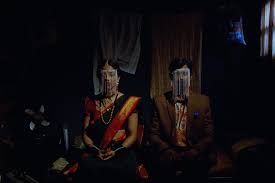
“Promised Hearts” is another tame, chaste romantic melodrama from Muslim Indonesia. It’s practically a faith-based film as characters counsel one another with suggestions of “prayer” and constant vocalized “by God’s grace,” “Did you tell God your problems” and mentions of the teachings/traditions of “The Prophet” in lives of varying degrees of religious piety.

A little of that counts as cultural seasoning in a movie. A lot of it turns the picture, its characters and its plots puerile.

But what this film, based on a novel by Habiburrahman El Shirazy, is getting at ever-so-cautiously is the notion that romantic love pays a price in a patriarchal world of arranged Islamic marriages, where dowries are openly discussed in the ceremony and where some men are still comfortable saying “Women, they’re nothing but commodities.”

Maybe arranged marriages aren’t the best way for college educated young people to pair-up for life counts as a pretty bold statement for an Indonesian film.

We meet Niyala and her closest friend Faiq as schoolchildren, with him protecting her from Roger, the school bully and middle schooler Niyala treating Faiq’s scrapes with first aid, a role she’s taken on at school.

Yes, she’s heading for a career in medicine, something the abrupt death of her mother underscores. Yes, her father sends her off with Faiq’s family to school in Jakarta, where they grow up as “almost siblings.” And yes, this screenplay (by Oka Aurora) is that contrived.

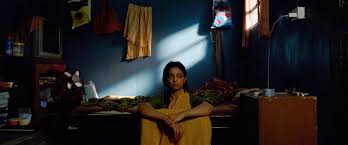
Years later, Niyala is working through med school in Jakarta as she says her good-byes to Faiq, who is going to Cairo to study whatever he’s going to need to know for his career. That’s practically the same moment doctor-to-be-Niyala learns that dad and her brother took on loads of debt to keep her in school, that setbacks have put them “millions” in the hole.

Embittered Herman (Imran Ismail) is the one who spits the news to her (in Indonesian, with subtitles, or dubbed).

Their debtor, the predatory entrepreneur Cosmos (Kiki Narendra) has given them one way out of this “debt or prison” trap.

“He wants you to marry his son.”

As that son is the same Roger (Dito Darmawan) who used to bully her as a child, Niyala is shocked. Her would-be husband’s assurances that “The Roger you knew has changed” notwithstanding, this wasn’t her plan. Not that she’d ever said anything to anyone about a “plan.”

And when Faiq at last comes home with a beautiful, sophisticated and worldly fiance, Diah (Caitlin Halderman), it really does seem Niyala has “no choice” or say in her future.

Perhaps The Prophet’s seventh century words about “learning to love” that arranged spouse will comfort Niyala her and the Iman’s explaining to Faiq (and the audience) how “dating,” which is about physical love and is thus forbidden, is inferior to Islam’s emphasis on “Kafa’ah”  (compatibility), which is not just “traditional,” but the better way of coupling up for life will win him over.

Director Anggy Umbarara has made a fairly conservative movie that takes pains not to offend sensibilities within the Islamic world. But it’s a slow, ponderous and obvious affair, with even the ugly twists taking on an “Of COURSE that’s what happens” inevitability. And “inoffensive” is a pretty low bar to set for your movie.

If you’re unfamiliar with Islamic cinema, you might not know about”milk kinship” (riḍāʿa) as a melodramatic device sometimes used in such films for deciding who is actually related to whom. Breastfeeding/wet nursing matters.

The acting is reserved almost to the point of drab, although subtle moments peek through, and there’s something to be said for the stylish Asian version of the hijab, a tudong, for beautifully framing an actress’s face and allowing that subtlety, despite the “Handmaid’s Tale” look and implications of it.

“Promised Hearts” never for an instant lets us lose hope that true love will find a way, which is a universal message every romance hews to. But the film requires too much patience and relies on too many hoary plot devices to have a prayer of coming off, at least in much of the rest of the world.

Rating: TV-14, violence, crime

Cast: Beby Tsabina, Deva Mehanra, Caitlin Halderman, Imran Ismail, Kiki Narendra and Dito Darmawan.

Credits: Directed by Anggy Umbarara, scripted by Oka Aurora, based on a novel by Habiburrahman El Shirazy. A Netflix release.

Running time: 1:54

Posted in Reviews, previews, profiles and movie news | Comments Off on Netflixable? First Love faces the test of “arranged marriage” in “Promised Hearts (Niyala)”

Movie Preview: Jeffrey Dean Morgan knows Jack Quaid is the least reliable witness in this “Neighborhood Watch”

An abduction, a “Screw Loose” nobody takes seriously, except as a suspect.

April 25.

Posted in Reviews, previews, profiles and movie news | Comments Off on Movie Preview: Jeffrey Dean Morgan knows Jack Quaid is the least reliable witness in this “Neighborhood Watch”

Movie Preview: Disney checks back in with “Tron: Ares”

Greta Lee, Jared Leto, Gillian Anderson and Jeff Bridges, of course, star in this super slick looking sci fi updating of the inside gameverse thriller franchise.

Posted in Reviews, previews, profiles and movie news | Comments Off on Movie Preview: Disney checks back in with “Tron: Ares”