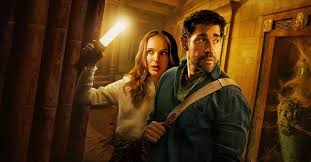
Foster plays a man obsessed with saving drivers from themselves as they try to take the intersection where he lives at dangerous speeds.
Smulders is the wife trapped in this obsession.
This thriller drops April 23.
Foster plays a man obsessed with saving drivers from themselves as they try to take the intersection where he lives at dangerous speeds.
Smulders is the wife trapped in this obsession.
This thriller drops April 23.
The end of feudalism, the rise of imperialism and 11 convicts stand guard over a frontier fort, facing modernized infantry and artillery.
It’s “Seven Samurai” with 11 “bandits,” a touch of “47 Ronin” and “The Last Samurai” inspired by a “true story.”
June 10, this one drops.


“Squad 36” is a ponderous Parisian police procedural that never seems to get out of its own way. Staggering from cliche to contrivance, there’s little doubt what climax the stock characters who inhabit it are headed to, and that there’ll be an anti-climax after that.
Dirty cops, dangerous gangs, intrasquad romance and police who take care of their own, it’s a French variation of that tried and true hook of American cop pictures since “Colors.” That truism “The police are just another gang” bears repeating as much of the world seems indoctrinated to the “Law & Order/Bluebloods” myth of those who “protect and serve.”
It’s a milieu where French actor turned writer-director Olivier Marchal (“Rogue City”) has found a home. Perhaps he’s too comfortable in that home for his own good.
We meet the titular six-member Anti-Crime Ssquad as Sami (Tefix Jallab), Vinny (Guillaume Pottier), Walid (Youssef Ramal), biker Hanna (Juliette Dol), Richard (Soufiane Guerrab) and Antoine (Victor Belmondo) chase canny and tough-looking mob figure Karim (Jean-Michel Correia) all over the rainy streets of Paris.
A couple of things leap to mind in this opening sequence. Why are they pursuing this armed gangster, when they won’t arrest him? Why have Hanna — the lone woman on the team — lose control of her bike so that star Belmondo (the grandson of you-know-who) can take over?
And aren’t ALL police squads “anti-crime?”
Sami is the on-task boss of them all, answering to an impatient, CYA/C-his-A higher up (Yvan Attal). But Antoine is meant to be the “colorful” one. He’s seeing Hanna on the sly. And he takes out his over-the-top aggression on foes in underground, no-holds-barred brawling for bucks.
That’s what gets Antoine kicked out to the suburbs to “a department with less confrontation.” His colleagues may insist he got a raw deal, but we know better.
Months later, when members of the squad turn up dead and one goes missing, Antoine is lured back into this lurid world of nightclubs, overlapping jurisdictions, suspect cops and suspect mobsters. Because come what may, cops take care of their own.
Adapting a novel by Michel Tourscher, Marchal fills the screen with assorting police units with varying agendas with Antonoine running afoul of some and secretly supported by others.
The violence can be sudden and random and visceral. But once we get past the “cop in fight club” first act, the narrative settles into duller shoe-leather police work, following this tip, making that contact, working outside the law because the insiders don’t want him messing around in all this.
“You mind your own business and there won’t be any repercussions” is as menacing in French (with subtitles) as it is dubbed into English.
I like the suggestions of and open displays of corruption — stealing cash from an evidence locker, higher-ups shuffling wayward cops from job to job like pedophile priests.
At least in French cop movie funerals they don’t trot out bagpipes.
But when a picture bogs down into talky, relationshippy middle-acts like this one, the viewer gets ahead of it. The big mystery is easily guessed, and early. Characters don’t have motives or relationships that aren’t contrived, simply ordained by screenwriterly convenience.
Belmondo is convincingly tough and flinty, but has a generic screen presence that suggests “supporting player with a famous last name.”
Correia, as the 50ish mobster, brings weight and charisma and layers to his role. Everybody else here is just a cog in the clumsy collective presented here, cops and killers doing what they do the way they’ve done it in hundreds of pictures just like this, many of them better than the sedentary “Squad 36.”
Rating: TV-MA, bloody violence, nudity, profanity
Cast: Victor Belmondo,
Tewfik Jallab, Yvan Attal, Juliette Dol,
Soufiane Guerrab,
Jean-Michel Correia,
Lydia Andrei, Guillaume Pottier and Youssef Ramal
Credits: Directed by Olivier Marchal, scripted by and Olivier Dujois and Olivier Marchal, based on a novel by Michel Tourscher. A Netflix release.
Running time: 2:08
An all star cast includes Oscar winners Olivia Colman and Allison Janney, Andy Samberg and Kate McKinnon.
And Benedict Cumberbatch in a straight up dysfunctional marriage comedy.
Yes, it’s a remake of the Kathleen Turner/Michael Douglas farce, both films are based on Warren Adler’s dark dark novel.
These Roses” bloom at the end of August.
The premise has promise. Your kid’s had an accident, you’re racing to help, or do damage control.
“Don’t let her DIE Alice!”
Parents dash to carry out a coverup to protect their daughter?
What’s odd about this May 16 horror offering is that Universal picked it up from budget-thriller distributor XYZ Films.
Looks tense, and Pike always delivers.
Dopey horror about a gathering on an idyllic island which one person can win as their very own if they catch or “bag” the most feral dogs who escaped a movie shoot there years before.
Hayden Panatierre, Grace Caroline Currey and Virginia Gardner are the “names” in the cast. The murderous doggies are the stars.
May 16
Festival buzz for this June release has been pretty good. Pretty pretty pretty good.
Festival Groupthink? It’s totally a thing. But we’ll see. In June.


There’s ambition and a dollop of intellectual heft to the indie dramedy “Daddy.” Even if it misplaces characters, shortchanges its goals and fails to deliver much in the way of a satisfying conclusion, you can appreciate the attempt and the effort involved.
Arch, dry and dark, it’s an alt-future version of “testing” a quartet of candidates in their suitability for fatherhood. Toxic masculinity, religious dogmatism, hapless, hope-for-the-best slacking and daddy dilettantism come into play in co-writers/co-directors/co-stars’ Neal Kelley and Jono Sherman‘s not-quite-funny satire.
Jeremy (Sherman) sits for an AI interview with FRANN, the Fatherhood Research Aptitude Neural Network, who gives him a word association test to determine his fitness for fathering. Somehow, he hems and haws and insists “I’m ready, I’m TOTALLY ready” his way past this first quiz.
That means he gets to go on a Dept. of Procreating’s fatherhood retreat, where his final fitness will be determined.
Hapless, “fatherhood is a feeling” Jeremy is parked in a remote, mountain valley house with guitar playing cynic and possible INCEL Mo (Pomme Koch), piously religious and married Andrew (Kelley), and paranoid, pushy biz bro Sebastian (Yuriy Sardorov of “Argo” and TV’s “Chicago P.D.”).
They’re deprived of their cellular devices and dropped off. They meet and wait for their “monitor” to show up and evaluate them. They wait some more. And then they start to wonder if they’re simply being “watched” to decide if they’re fit to be fathers.
A couple of guys have a touchy edge, one uses his religion as comfort and rationalization for how he behaves and Jeremy just sort of steps into it and wings it as they prep meals, play cards, chat and make up their own DIY exercises (save your baby from a mugger and/or an earthquake) using a baby doll they figure was left there for that purpose.
They’re starting to fray, tensions are flaring and Sebastian’s bossy paranoia has put them all on edge. And then a “lost” woman (Jacqueline Toboni) shows up.
The performances work even if the deadpan “jokes” never quite land.
“I’m a runner.”
“Oh. I used to run track.” Pause. “800 meters.” Pause.
“OK.”
The dumbest Battle of Waterloo discussion/allegory ever is passed over for a debate about whether they should stay, try to hike out or whether indeed they’re being “watched.”
The players make their assorted character “types” somewhat distinct caricatures. But the choices the script has characters abruptly make or nonsensically dismiss doesn’t give the narrative manuevering room to settle someplace interesting.
The payoff is kind of predictable, and not in a good way.
But it’s worth dipping into the many “Daddy” issues here just to figure out what our first-time writer-directors were trying to say, even if they never actually say it.
Rating: unrated, profanity
Cast: Yuriy Sardorov, Neal Kelley, Jono Sherman, Pomme Koch and Jacqueline Toboni.
Credits: Scripted and directed by Neal Kelley and Jono Sherman. An Anchor Bay release (streaming)
Running time: 1:38


Ken Loach built his career on films of protest, depicting the oppressed of many places and many eras in their struggle against their oppressors.
The Brit’s “socialist realism” was obvious from his breakthrough English working class classic “Kes,” with the Irish Republican thriller “The Wind that Shakes the Barley” and the Spanish Civil War” drama “Land and Freedom” among the career highlights as he’s bounced from socially aware documentaries (“McLibel”) to working class exposes (“I, Daniel Blake” and “Sorry We Missed You”) and comedies (“Jimmy’s Hall”).
Loach announced his retirement a couple of years back. But that just gives his fans and cineastes a chance to finally catch up on all the good films he made that we’ve missed.
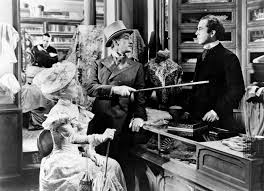
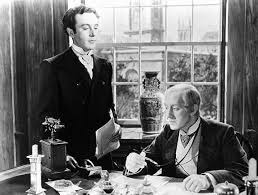
“Black Jack” seems, on first glance, a little out of character. A Dickensian drama of the “Great Expectations” school, it’s set pre-Dickens, a sharply-observed thriller of working class trials and tests of the pre-Industrial Revolution child labor era — 1750.
It’s modest and downright primitive, with period-correct Cockney that almost requires subtitles, and yet it’s a beautifully realized period piece, a reminder that somebody had to be serving, waiting on and driving the carriages of all those Jane Austen heroines and their landed swells suitors.
The carriages and stagecoaches get muddy, the predatory rich are preyed upon by the just-as-clever predatory poor and the entire picture, with its “unimproved” roads, rough trade and roughly-clothed characters, feels lived-in and thanks to the spring shooting schedule, dewy and verdant.
And the more the story unfolds, the more this adaptation of a Leon Garfield novel resembles “Great Expectations.”
Jean Franval plays the title character, a Frenchman named “Black Jack” “because nobody could pronounce his real name.”
We meet him as he’s prepped for the gallows, a murderer about to meet justice. But we don’t get to know him until his body is delivered to the business of Mrs. Gorgandy (Pat Wallis), a widow who makes her living providing corpses for scientific-minded surgeons.
A draper’s apprentice, Bartholomew (Stephen Hirst) is charged with “watching over” the corpse while Mrs. Gorgandy goes out to complete the sale, so the boy of about 12 is the first to realize Black Jack has ingeniously cheated the hangman.
The kid is kidnapped, forced to help the hulking Black Jack flee the city and escape to the country. Young “Tolly” may not be the thug’s conscience. But he finds ways to thwart Jack’s criminal intent, collecting cash for helping push a coach out of the mud when Jack’s first instinct was to clobber and rob the passengers and coachmen.
Their picaresque odyssey takes a turn when Jack contrives a way to ensnare a second coach. A twelve year old girl (Louise Cooper) escapes her trip to a “retreat” (“the madhouse”) and Jack is offered money to track her down. That means the job falls to Tolly.
Tolly finds the girl Belle, and realizes that she might be “savable,” as she’s being shipped off to hide a wealthy family’s “shame” over her (non-hereditary) illness so that her older sister can marry a lord. Tolly becomes her protector as he and Belle tumble into a traveling fair and its “miracle elixir of youth” “doctor” (Packie Byrne) and join their ranks.
But Black Jack still wants the reward for the girl. And a fellow hustler with the fair, Hatch (Andrew Bennett), sees pounds and guineas in the lass and whoever might be looking for her.
The snake-oil pitches to the gullible are one source of chuckles in this dark yet often sentimental “comedy.” But young Hatch’s audacity is Artful Dodging at its best — blackmailing the shady “madhouse” doctor (Russell Waters) who “lost” the mentally disturbed girl from a well-off family, and then blackmailing the child’s father (William Moore) about the family “secret.”
The youngest players have a whiff of “amateur” in their performances. But the supporting cast isn’t entirely made up of unknowns or little knowns. Waters and a few others were veteran character players. And the fair’s troupe of little people dancers — Mike Edminds, Malcolm Dixon and David Rappaport — would soon achieve screen immortality for their hilarious turns in Terry Gilliam’s “Time Bandits.”
Loach’s early career was filled with modestly-budgeted films that punched above their weight, and “Black Jack” is an exemplar of that. It may not be the most original picture on his resume, as that source novel leans a tad too heavily on Dickens to surprise us.
But it’s a lovely immersion in how the other three quarters of Britain lived in the days when “The Empire Silhouette” was what the well-dressed Austen contemporaries aspired to and “poor” wasn’t just a term reserved for English roses with no dowry and limited “prospects.
Rating: R, violence
Cast: Stephen Hirst, Jean Franval, Louise Cooper, Packie Byrne, Joyce Smith, Russell Wallace, William Moore, Pat Wallis, Mike Edmunds, Malcolm Dixon and David Rappaport.
Credits: Scripted and directed by Ken Loach, based on a novel by Leon Garfield. A Kestral Films/Cohen Media group release streaming on Tubi, et. al
Running time: 1:44


“Frozen Hot Boys” is a Thai “Cool Runnings,” a cringy goof of a fish-out-of-water comedy about tropical trouble-makers who make a name for themselves in competitive ice and snow sculpting.
Natapohn Tameeruks is Miss Chom, a bored vocational wood-carving teacher at the juvenile prison her mother runs. She’d love to get to Sapporo, Japan. And when one miscreant named Jab (Nuttawat Thanataviepraserth) with a gift for woodcarving shows up among her new “saplings,” ready to be reformed, she sees her chance — competitive ice sculpting.
Chatchai Chinnasri, Sadanont Durongkavarojana, Punnanon Treewonnakil and Piyaphong Dammunee play the rest of the team, characters whom four screenwriters word-processed into stock “types.”
There’s Toom (Dammunee), roly poly enough to consider a career in sumo wrestling, the nerdy assistant Boy (Chinnasri) to Miss Chom whom everybody underestimates, the kid (Durongkavarojana) who knows the prison’s cliques and rules for survival and the hunky, hotheaded kid (Treewonnakil) from a rival clique whom we see — in flashback — stabbing his stepfather to death.
Yes, there are murderers in this crew. And you have to be more than a little drunk to find editing between a kid jabbing a bloody knife into an unseen victim and that same kid turning his stabbing into ice chiseling cute or funny.
The picture adheres to the “Big Contest” comedy formula, but two directors and four screenwriters make little of the comic possibilities of kids who’ve never seen snow experiencing the cold of Winter Olympics host city Sapporo.
Training for the weather in Sapporo by shoving the kids into a refrigerator truck is almost funny.
“Shirts OFF!” in Thai, or dubbed into English is meant to be a laugh line.
Most every character has daddy or step-daddy issues. The picture hints at a possible attraction between the mature-for-his-age Jab and immature for her age Miss Chom, but avoids that trap.
The pollyannaish “Everybody deserves a second chance” and “Let’s carve a PHOENIX” to symbolize that messaging is just weak. The pace of this comedy, a film of near laughs and long interludes before anything else remotely funny happens, is too slack to pass muster outside of Thailand.
Still, the cast is game, which always counts for something. It wasn’t a hard movie to watch, as blandly predictable as it is. But reviewing movies from several Around the World with Netflix cultures is a real chore because of cultural traditions re: movie credits.
“Frozen Hot Boys” doesn’t ID the leads by the characters they play, a simple step in making your homegrown cinema suitable for export.
And breakout Thai star Tony Jaa or his agent had the right idea. Shorten that 10-12 syllable Thai name. No, you don’t have to “Anglicize” it. But a shorter name makes for a punchier brand.
International audiences, and especially movie critics, are going to pull their hair out typing Nuttawat Thanataviepraserth, Sadanont Durongkavarojana et al without a typo.
And if I misidentified an actor playing a character, my apologies. Since the film IDs supporting players with the characters they play, how about paying the leads the same courtesy?
Rating: TV-MA, violence, smoking, profanity
Cast: Natapohn Tameeruks, Nuttawat Thanataviepraserth, Chatchai Chinnasri, Sadanont Durongkavarojana, Punnanon Treewonnakil and Piyaphong Dammunee
Credits: Directed by Tanakit Kittiapithan and Naruebordee Wechakum, scripted by Rangsima Aukkarawiwat, Tanakit Kittiapithan, Alinda Peerakat and Pruch Neamsri