
It isn’t just funeral homes that get caught ripping off the grieving. Cemeteries do it, too.
It isn’t just funeral homes that get caught ripping off the grieving. Cemeteries do it, too.
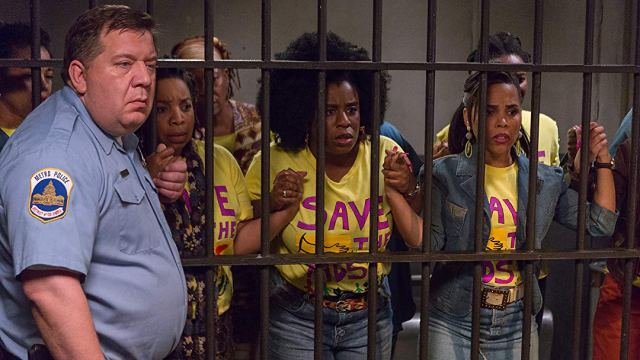
“Miss Virginia” is a thinly-scripted, flatly-directed feel-good movie about mothers organizing to do better for their children than Washington, D.C.’s school system.
“Inspired by a true story,” it recounts the way a working class Washington mother figures out that the schools there aren’t starving for cash and that their symbolic Congressional representation only has the power to stand in the way of change.
It’s a soft and squishy picture built on a soft and squishy performance of the title character by Uzo Aduba of “Orange is the New Black.” She has to carry this film, but her decision to play her overwhelmed single mom struggling to do rescue her teen son passively — not raising her voice, saving her lose-her-cool moments for the third act — never gives this movie a chance.
Miss Virginia’s son James (Niles Fitch) is a distracted, artsy 15 year-old who cuts class with the local thugs, and when he’s in class he just inattentively doodles. Mom doesn’t have a clue until the principal warns her.
She sees the classroom environment, teachers past the point of caring, punks beating up the “smart” kids on principle, as the reason James is failing. So the call-center operator takes on a second job cleaning her Congresswoman’s (Aunjanue Ellis) offices.
Virginia loves her Congresswoman. Until she sees how she operates, who she answers to and how she manipulates her constituents. Showing the representative a study that details the staggering amounts D.C. pays per student for failing schools and failing students is no way to get on her good side.
And taking the matter up with the flaky, entrenched Midwestern Congressman (Matthew Modine, wild-haired, whiskey-sipping and whimsical) who authored that “reactionary” study seems like a non-starter, too.
“I have a date with a nine iron!”

But eventually, they team up and a “movement” to create private school scholarships for the District’s kids begins. Petitions, public meetings, protests (and arrests) follow, as James and his running mates dabble in drug dealing for “cool kicks (sneakers).” That’s what finally gets Virginia’s dander up.
“Selling your SOUL for clown shoes!” does it.
Unfortunately, that’s too little, too late for the character and the movie. The problem is as obvious as Aduba’s every scene with Modine, Ellis, with Vanessa Williams (as a chat show hostess) or with Amirah Vann, playing a neighborhood ally and organizer.
“This a movement, honey. It don’t stop just because you caught the vapors!”
They all take over their scenes with her, overwhelming the star with acting sparkle and simple charisma. Abuda is a talented actress, but her limited range and dull acting choices turn “Miss Virginia,” the movie and the character, into a shrinking violet.

MPAA Rating: TV-14, violence, drug content
Cast: Uzo Aduba, Amirah Vann, Aunjanue Ellis, Niles Fitch, Vanessa Williams and Matthew Modine.
Credits: Directed by R.J. Daniel Hanna, script by Erin O’Connor. A Vertical release.
Running time: 1:42
Bikers take over town to rob the bank. Marshal Guy Pearce isn’t having it.
Didn’t Oprah have a hand pumping this pseudo scientific wish fulfillment fantasy nonsense?
The book came out during a particularly goofy period in American gullability, back when that con man “psychic” had a syndicated TV show.
Katie Holmes and Josh Lucas wish themselves into a relationship.

Disney no doubt appreciated the “Lion King Remake” ethos behind newly-purchased 20th Century Studios’ (formerly Fox) take on “The Call of the Wild.” It’s a story starring a dog, and for the first time in a century of films of this classic Jack London tale, the dog/hero has been digitally rendered, not living and breathing, trained and furry.
But as with that soulless CGI blockbuster “The Lion King,” the larger lesson should be “Just because you can doesn’t mean you should.”
It’s absolutely valid to attempt a serious, hard-nosed treatment of the oft-sentimentalized and anthropomorphized novel about the house dog turned working dog turned leader of the pack in the Yukon. Harrison Ford signed on for a role that Clark Gable, Rutger Hauer and Ethan Hawke have taken before him.
But this is seriously misguided, and anybody ever inclined to click on a shared youtube video of a cuddly canine will get that within seconds of this computer-generated collie/St. Bernard mix popping up on screen.
No, no dog “was harmed in the making of this picture.” A real dog isn’t dognapped or beaten with a club.
“He was beaten, but he was not broken,” Fords’ grizzled Yukon narrator intones.
No real dog was imperiled by an Alaskan avalanche, attacked by pack dogs and wolves, either. And we can feel that in every single frame.
The story — huge dog Buck has the run of the house and the Santa Clara County town where he’s owned by a local judge (Bradley Whitford). But it’s the Alaskan Gold Rush era (1898). Big dogs bring big bucks in the Yukon.
Buck is nabbed, beaten to keep him in line and taken north, where eventually he becomes a sled dog for the Royal Canadian Mail, where he’s told (Omar Sy is the mailman who talks to his dogs),” We don’t just carry the mail. We carry lives!”
That’s where old prospector Thornton (Ford) first sees him. Buck is half again as big as any dog on the (digital) team, so he’s hard to miss. Thornton?
“I’m not looking for gold,” he grouses. He’s there for the solitude, the reflection and a lot of mourning. If only this rich jerk (Dan Stevens of “Legion”) didn’t get his hands on the dog, hoping to strike it rich in the gold fields. He’s not good enough for the dog, Thornton figures. He’s going to get himself and the dog killed.


The story of “Call of the Wild” is always bent and contorted to add melodrama and Hollywood thrills, so there’s no quibbling about any of that, or the human performances in this.
Maybe you and yours kids won’t mind the dog “acting,” and the occasional unnatural gesture, romp or movement of the animal.
In that case, have at it. I found this a perfectly handsome and literarily defensible mounting of a well-known tale that was far and away the most bloodless version of it. Ever.
MPAA Rating: PG for some violence, peril, thematic elements and mild language
Harrison Ford, Omar Sy, Cara Gee, Dan Stevens, Bradley Whitford and Karen Gillan.
Credits: A 20th Century release.
Running time: 1:40
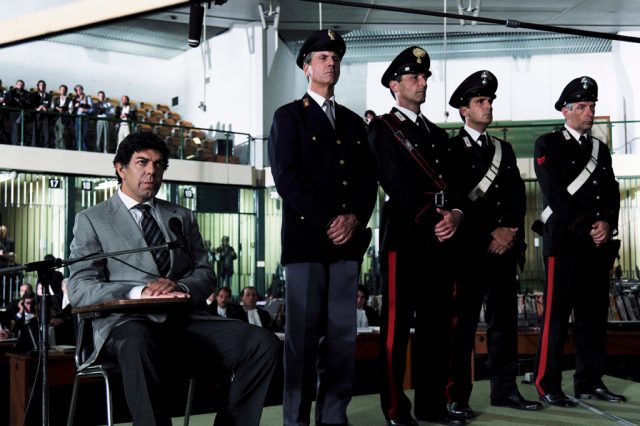
The Italian mob thriller “The Traitor (Il traditore)” is more time than most of us would ever care to spend in an Italian courtroom.
It’s not all adversarial court testimony, bickering mafiosi waving their hands and insulting each other, sometimes face to face. And not all those scenes are limp and dramatically flat. The third act of this very long film has some genuinely shocking violence and a paranoid grace note or two.
But the movie is like waiting for an elderly relative to get to the point of a very long anecdote they’ve elected to recount. It starts well enough, but drones on and on and on before it we get a payoff.
“Basta” the Italians would yell at such a time-suck. “Enough.” Get to the damned point.
Pierfrancesco Favino of “World War Z,” “Angels and Demons” and other Hollywood films stars as Tommaso Buscetta, a smooth mob leader whom we meet at a big mob party in 1980.
“Masino” realizes that the game is up. He’s been in and out of prison, made the move from cigarette smuggling to drugs and got rich, got a third wife and is ready for a new life in Brazil. He figures he can bow out and the family he leaves behind in Sicily and the rest of Italy will be fine. He has two adult sons, among others, still “connected.”
“You can’t take money to the grave with you,” he growls (in Italian, with English subtitles).
He’s barely gotten off the plane with the mayhem starts. Co-writer/director Marco Bellocchio, for reasons never explained, ticks off numbers counting up as the hits begin.
Is he keeping a count of kills? Or the seconds it takes for these to be carried out?
A first assassination leads to a funeral, a woman biting the ear and drawing blood from the wife of a man she holds responsible. There’s a priest, chased down by mobsters dressed as monks, a hit in a mirror warehouse (clever…ish), a 20 year old who has vowed revenge, but is caught and has his trigger-hand lopped off.
And even as Masino, the “boss of two worlds,” mulls over what actions to take, with “all the heroin going through Palermo,” it’s obvious that this is beyond his grasp. That’s when the Brazilian police seize him, ransack his house and torture him for information about where all that money is hidden.


The bulk of “The Traitor” is about his slow-turn from “man of honor” who is “not an informer,” to a man who might be willing to talk to crusading/prosecuting judge Giovanni Falcone (Fausto Russo Alesi).
He reminisces to the judge — “In those days, La Cosa Nostra had rules.”
The judge isn’t buying his rose-colored glasses, his spin or his BS about “code” and what not. Masino and a fellow capo (Luigi Lo Cascio) start to sing. Yeah, they’re both gambling with their lives with this testimony, but Falcone is depicted as fatalistic — “Death is always with us.”
“I want to die on my bed,” Masino sighs. “That would be a victory.”
“The Traitor” has many unfamiliar faces and less familiar (outside of Italy) names peppering its cast that make it a bit hard to follow for non-Italians. Bellocchio aims to present atmosphere, the vibe of the times, where every mob death of a “rat” is celebrated in Palermo, where every judge is hated and must travel with bodyguards.
The courtroom scenes are chaotic, fractious and go on entirely too long. The “men of honor” face off against each other, witness vs. witness, in front of a line of judges at the “Maxi Trial” of the many mobsters Bruscetta fingered with his testimony.
There’s a cage filled with mafiosi, faking seizures, stripping to fake madness, screaming at the judges and at the witnesses, who sit in a bullet proof cubicle.
It was a trial of great consequence, not merely for those accused, but for the star witnesses who were spirited away to the U.S. witness protection program afterwards.
There have been other movies touching on these trials, these mobsters and Falcone. Solid, if not-that-compelling performances and the moments of high drama or shocking violence that veteran director Bellucchio — his credits extend back to the ’60s — serve up don’t compensate for all the filler he fleshes this flaccid film out with.
“The Traitor” is important Italian Cosa Nostra history rendered in boring, leisurely strokes.

MPAA Rating: R for violence, sexual content, language and brief graphic nudity
Cast: Pierfrancesco Favino, Luigi Lo Cascio, Fausto, Russo Alesi, Maria Fernanda Cândido, Fabrizio Ferracane and Nicola Cali.
Credits: Directed by Marco Bellocchio , script by Marco Bellocchio, Valia Santella, Ludovico Rampoldi, Francesco Picollo and Francesco La Licata. A Sony Classics release.
Running time: 2:28
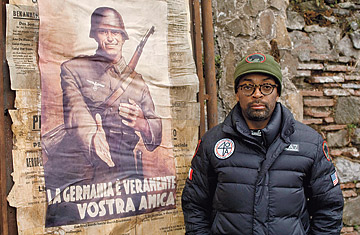
Spike Lee’s next picture is to be a “Vietnam War” drama, but with a twist. It’ll be more of a “Last Full Measure” variety, veterans remembering their service, looking for the remains of a fallen comrade.
And in“Da Five Bloods,”they’ll also be searching for treasure left behind “in country.”
Chadwick Boseman and Delroy Lindo are in the cast. And limiting the combat screen time in the picture can’t help but do Lee a big favor. Remember “Miracle at St. Anna?” One of Lee’s worst pictures, exposing his great shortcoming as a filmmaker, one that stands out every time a movie goes terribly wrong for him.
He knows nothing of combat movies or military service (most of us don’t). But he didn’t appear to have used a combat veteran as consultant on that film, and it was laughably wrong in ways any casual viewer of war movies can pick up on. He probably didn’t want anybody on set “correcting” what he was doing.
You can’t tell Spike anything. It’s his MO. It’s why it took Jordan Peele’s producing and supervising to make “BlackKklansman” an Oscar contender.
So feel free to hold your breath on “Da Five Bloods.”
An Oklahoma pastor took this rarer than rare footage shortly after D.W. Griffith put actors in blackface so that the KKK could chase them away from the South of his youth.
Eye opening.

It is, in many ways, the Original Hate Crime, Conspiracy Theory Number One. The fact that it hasn’t gone away suggests that AntiSemitism is the hate crime that can evolve, mutate to match the conditions and shift in groups that buy into it and revive it.
“Viral: AntiSemitism in Four Mutations” is a brisk primer on the modern faces of hatred for “the Jews,” the “viral” way it spreads at the speed of the Internet, and the consequences of this renewed outbreak.
Documentarian Andrew Goldberg takes us into American hate crimes and visits with an outspokenly anti-Semitic N.C. politician. He then travels to Hungary, Britain and France for chapters titled “The Far Right,” “Blaming the Jew,” “The Far Left” and “Islamic Radicalization” — the four “mutations” this social ill has adapted in recent years.
We hear from survivors of the 2018 Tree of Life Synagogue shooting in Pittsburgh. Experts then relate how Donald Trump’s nationalism, embraced by the far-right/”Alt Right,” amped up the anti-Semitic rhetoric, with Trump’s own “dog whistle” use of tropes that Jews have “conflicting loyalties” and therefore aren’t patriotic Americans, set the stage for violent harassment nationwide, and attacks on synagogues in Pennsylvania and California.
A rabbi laments the end of America’s post-war “Jewish golden age” that events like this signal. Racial slurs all but disappeared, opportunities widened. But even now, “We will always be ‘the other’,” he says.
Goldberg visits a rural N.C. candidate for the State House, Russ Walker, who seems reasonable — liberal even — in his repeal drug laws, end “stop and frisk” platform. Then he gets into his feelings about Jews and other folks who aren’t White Like Him.
We’re treated to a history, in quick brush strokes, of the major anti-Semitic conspiracy theories of the recent past that have not gone away — from the “Rothschilds” as manipulators of capitalism, conflicts and even the weather, to the loony, fictional “Protocols of the Elders of Zion,” made famous when Henry Ford published a newspaper and pamphlets that spread the idea of a global Jewish conspiracy to control politics and the world’s wealth.
And we see how that has become official policy and out-in-the-open campaign rhetoric in modern day Hungary. If you think philanthropist George Soros is a boogeyman only as a Fox News talking point, you are mistaken. Hungary’s de facto dictator, elections manipulator and court-stacking Viktor Orban, has been running against Soros (a native of Hungary who has given billions to Hungary since the collapse of communism) in every election campaign since 2010. “Blaming the Jew” is his favorite stump speech.
Britain’s ongoing Labour Party (“far left”) version of anti-Semitism ties into hatred of capitalism, and of Israel and its Apartheid-like policies toward the Palestinians whom Israeli Jews have been displacing in Palestine for a century.
Then there’s France, where millions of Islamic immigrants from former French colonies have been raising children who feel limited, dispossessed and are ripe for Islamic radicalization and anti-Semitic violence.

Goldberg knows the lay of the land, even if the perpetrators are a little different. This is his second film on the subject. He did “Anti-Semitism in the 21st Century,” and has made films on Jewish culture and Jerusalem as well as the Armenian Genocide and “Out in America.”
The experts he rounds up for interviews range from Tony Blair and Bill Clinton to journalists, academics and those left behind after a murderous hate crime attack in the U.S. and in France.
The film has informal “personal” touches — visiting a Goldberg relative in the UK to hear why he left the Labour Party — which lighten the parade of expert witnesses and their grim tidings. But the lack of news footage taking us more back to those terrifying crimes in a more immersive way is felt.
It’s not the deepest dive into the subject, either, barely hinting at the tribalism that’s red meat to anti-Semites looking for stereotypes that ring true and feed the “powerless” impulse that drives the conspiracies people buy into. Just a “perhaps we’re over-represented in the financial services industry” and “a bit better off” from one interviewee. One British Jewish media personality appears on camera, none from America, where that disproportionate presence is a constant criticism of the Alt Right.
But “Viral” is a sobering reminder that hatred of “the other” didn’t disappear after Pogroms and The Holocaust, and that it isn’t limited to jihadists and skinheads.

MPAA Rating: Unrated, disturbing, racist images
Cast: Tony Blair, Bill Clinton, Deborah Lipstadt, Fareed Zakaria, George Will, narration by Juliana Margulies and Andrew Goldberg.
Credits: Written and directed by Andrew Goldberg. A Dark Star release.
Running time: 1:23
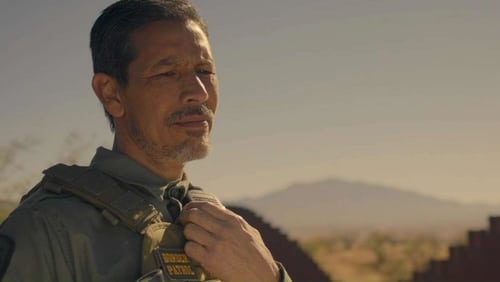
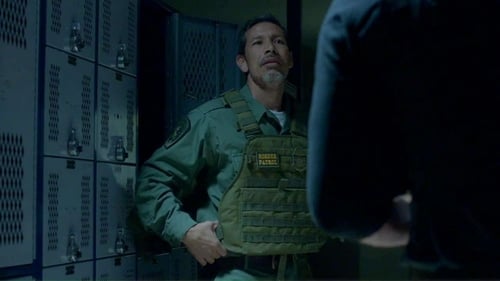
“Fronteras” is a stunningly stupid, talky, meandering Border Patrol thriller set in Arizona, a movie that sets itself up as a war of wills between a righteous Mexican-American agent and the racist, rogue “Ends Justify the Means” special team that he is assigned to.
That could have been interesting, a man conflicted by the many fronteras (frontiers) he must cross, personally. But first-time writer-director Andrew Dean couldn’t decide which side he was on, or where to take this slow-walk/lots-of-talk tale.
And first-time leading man Steve Oropeza isn’t any more up to the task at hand than Dean.
It sets up well, even if it begins in a heavy-handed “Mexicans stick together” ambush staged by smugglers against the “traidor” (traitor) that they see when Reyes Abeyta confronts them in his Border Patrol Agent uniform.
And then we hear about this new drug, “Kroc,” that the bad guys are bringing into the American Southwest. As a bonus, it carries “flesh-eating bacteria,” and there might be no cure.
Give me a break.
The writer-director’s sympathies lie with the out-of-control, murderous “any means necessary” special agent Ivan (Steven Sean Garland) who makes speech after speech about how “patriotic” he is and what “these people” are doing to “MY country.”
Him? He’s just “protecting our country from those who threaten our way of life.”
Reyes is needed for their team because he knows the lay of the land “and you speak ‘bean’ better” than any of the other trigger-happy psychopaths. He bristles at every shortcut they take, every drug they “sample,” every prisoner they kill rather than bring back for questioning.
He stands up to Ivan and the gang repeatedly, only to cave because well — he’s picking his spot? Gathering evidence as um, children are murdered? Looking for his cajones?
There’s a lot of Spanish spoken here — by the assorted Chacal Cartel functionaries, by the agents questioning them, by the boss of the cartel (Larry Coulter). It’s all spoken so slowly and deliberately that I could understand it.
Even the charisma-starved leading man, cast as a native speaker, sounds like he’s just learned the lingo. Garland has the most conversational fluency, on camera.
There are all these speeches ladled into all this slow-walking action, trash talk that’s slow-talked too.
“That hole in your chest hasn’t affected your ability to cut me down!”
Man, who talks like that, much less thinks that’s good dialogue?
Andrew Dean, that’s who. Take a bow, pal. This smells like a first-and-LAST feature film writing/directing job.

MPAA Rating: R, graphic violence, drug content, profanity
Cast:Steve Oropeza, Steven Sean Garland, Wade Everett, Randy Green and Larry Coulter
Credits: Scripted and directed by Andrew Dean. A Vertical release.
Running time: 1:44


