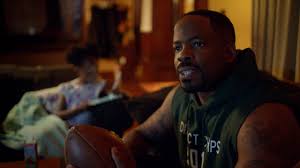
Netflixable? German couple can’t conceive, can’t conceive a life without “Just What We Wanted”

“Just What We Wanted” is a compact and quietly compelling German drama about a couple teetering towards a break-up because of their desperate desire to have a child.

Ulrike Kofler’s film, based on a Peter Stamm short story, wrestles with what people do when they start to grapple with a changing concept of the detailed plans they’ve built their entire lives around, and how a marriage where this is the core of their shared experience together is frayed when that connective tissue breaks.

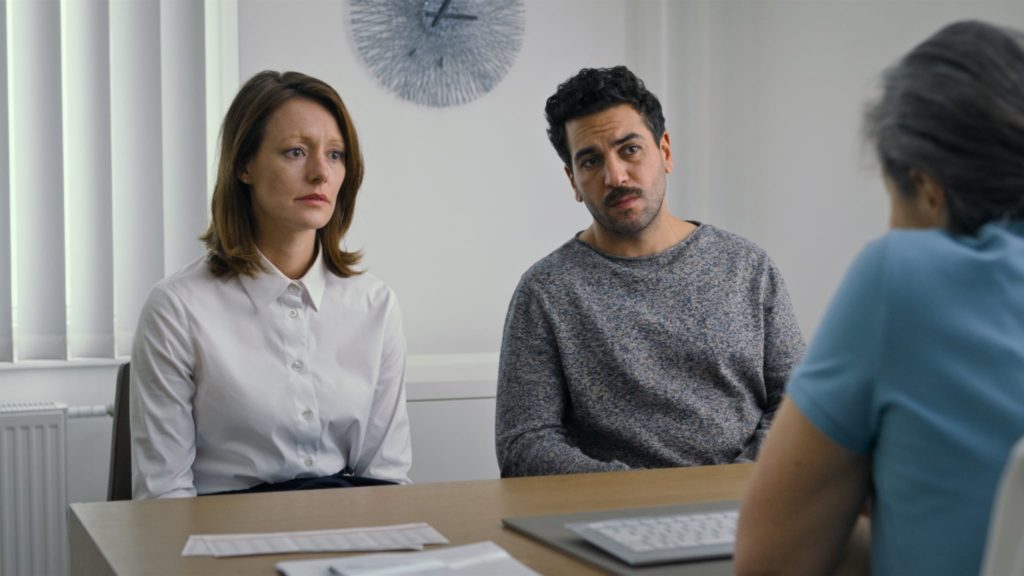
All that is set up and laid out in the opening scene, coping with the bad news that their latest attempt at a pricey fertility clinic has failed. The doctor supervising their treatment quietly suggests “rethinking” things as they juggle which credit card can withstand the payment for this latest throw of the dice.

But the whole point of Alice (Lavinia Wilson) coping with endless expenses and contractor issues is that they’re building a house, one big enough for their planned family.

Niklas (Elyas M’Barek) can apologize, make the most tentative suggestions about other options, but that’s to no avail. The disappointment is still too fresh. Maybe a vacation to an Italian isle will do the trick.

That’s where they’re roomed right next door to a noisy, fractious family of their fellow Germans. Boundaries break down as their little girl (Anna Unterberger) gets underfoot, especially with Alice, the loud, gregarious father Romed (Lukas Spisser) chats them up and Christl (Iva Höpperger) the often-topless mom (Germans, amIright?) shoves her amateur astrology at them as a couple and her semi-careless parenting at Alice in particular.

What might have been an intimate healing/decision-making vacation turns into a broadening schism as Alice struggles with her pain, her husband “noticing” the half-naked blonde next door and the pesky but adorable child that reminds her of what she can’t have.

As the brittle union starts to crack, we wonder if the temporary “neighbors” and their “good life” will be the force that finally tears Alice and Niklas apart.
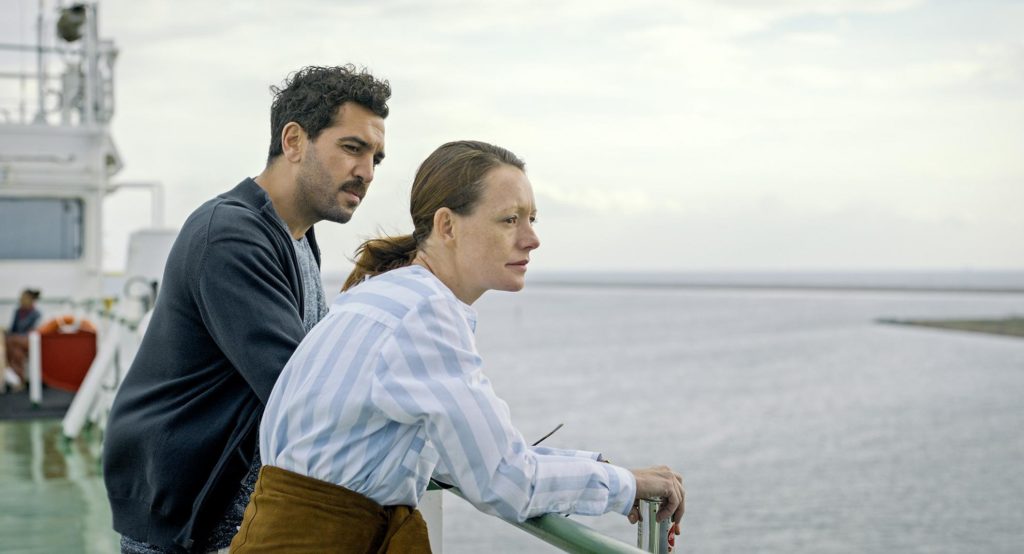
Wilson underplays Alice’s increasing uncertainty, and she and M’Barek are convincing as a loving, supportive couple and as one where that support erodes as it endures its most severe stress test.

Editor-turned-first-time director Kofler keeps the tension on simmer and gradually draws us into the most intimate rifts marriages can face. German reserve — Alice doesn’t tell Niklas she watched him watching the outdoor love-making of the boors next door — cracks a little on the tennis court, breaks in heated exchanges with contractors and erupts when wife and husband blurt out exactly what they think — never a good idea.

Kofler can’t avoid the melodramatic minefield that the third act serves up, but she deftly humanizes the calamities that play a decisive role in how this fraught, understated Scenes from a Marriage turns out.

MPA Rating: TV-MA, nudity, adult themes

Cast: Lavinia Wilson, Elyas M’Barek, Anna Unterberger, Lukas Spisser and Iva Höpperger

Credits: Directed by Ulrike Kofler, script by Ulrike Kofler, Sandra Bohle and Marie Kreutzer, based on a short story by Peter Stamm. A Netflix release.

Running time: 1:33
Posted in Reviews, previews, profiles and movie news | Comments Off on Netflixable? German couple can’t conceive, can’t conceive a life without “Just What We Wanted”

Netflixable? “Dolly Parton’s ‘Christmas on the Square'”

County music icon and national treasure Dolly Parton’s having a moment, thanks to being a paragon of tolerance and exemplar of COVID vaccine philanthropy.

So there’s no being churlish about her new holiday Netflix musical, “Christmas on the Square.” None.

The choreography — Debbie Allen directed the film and oversaw that — sparkles in a few big production numbers.

We forget what a big voice comic actress Jenifer Lewis has, and that she can sing. We don’t remember Treat Williams sang in the film of “Hair.” And while we’re always being reminded that Christine Baranski can sing (“Mamma Mia!”), it bears repeating that she could make a script consisting of a “Do No Remove This Tag” mattress label funny.

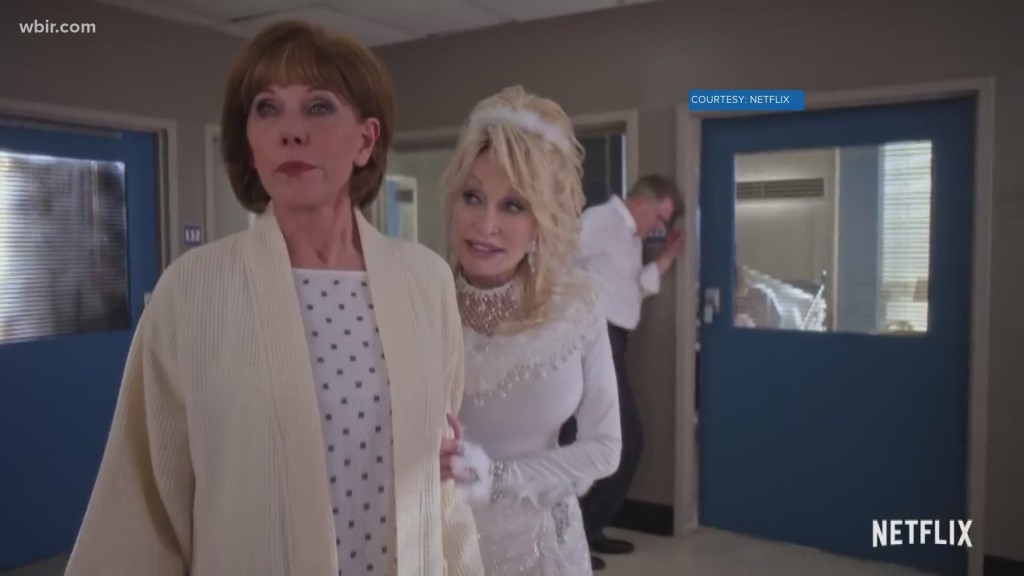
And if Saint Dolly — I am NOT using that sarcastically — wants to cast herself as a singing bag lady/angel, we GO with it. Got it?

The vast majority of musicals are packed with pleasant-enough/instantly-forgettable songs. “Square” falls into that category. And the “book” here is a play that I dare say never progressed beyond small town community theater/holiday “church” productions.

It’s a “Wonderful Life,” with songs, a heartless, rich FEMALE villain and an angel already has HER wings. That’s it.

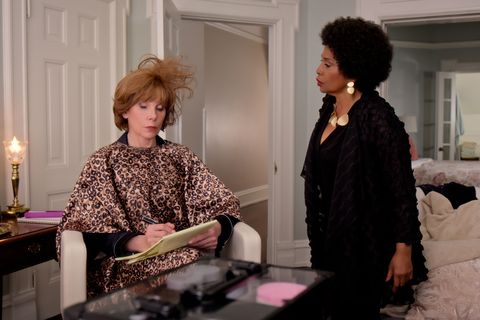
Baranski plays the “wicked witch of the middle” (not Oz’s “East” or “West”) in tiny Fullerville, a postcard/soundstage-perfect village that she’s decided would be better off bulldozed to make way for her planned Cheetah Mall. Mass evictions ensue.

“Who’d do that during the holidays?”

“Rich people…with TAX breaks!”

As the town rallies to “resist” her high-handedness, led by Preacher Christian (Josh Segarra) and the wife (Mary Lane Haskell) he’s hoping to start a family with, old friends (Lewis) and old flames (Williams) aren’t enough to sway /Regina/Cruella’s lust for redevelopment. Even a possible cancer diagnosis won’t sway her.

Dolly’s the angel who tries to help her “change,” by gentle nagging, haunting and singing.

“Everybody needs an angel…” “Oh my God, I DO have a brain tumor!”

“Looking at life in the rear view mirror reveals your destiny…” “I hope if I have another hallucination, it won’t be wearing rhinestones!”

Parton’s hand in the script, beyond the music, might be the story’s Christian message of charity and the directness and squeaky clean nature of the songs — a church “resist” rally where everybody poor-mouths Regina with “rhymes with ‘witch'” lyrics.

“Christmas on the Square” isn’t much, but what’s here is a pleasant enough time-killer, which is more than you can say about the vast majority of holiday-themed Hallmark/Hulu/Netflix et al fare this season. Holiday “classic” it may not be, but Dolly always has been and deserves our thanks and attention accordingly.

MPA Rating: TV-PG

Cast: Dolly Parton, Christine Baranski, Josh Segarra, Mary Lane Haskell, Treat Williams, Jenifer Lewis,

Credits: Directed by Debbie Allen, script by Dolly Parton and Maria S. Schlatter, based on Schlatter’s stage play. A Warner Media/Netflix release.

Running time: 1:38

Posted in Reviews, previews, profiles and movie news | Comments Off on Netflixable? “Dolly Parton’s ‘Christmas on the Square'”

Netflixable? “The Christmas Chronicles Part 2” is two hours of the holidays your kids will never get back

What insipid, digitally-augmented elvish drivel is this?

Rhetorical question, like asking “Who let the Dogs Out?” Because unimaginative kids’ comedy would be complete without A) a belch or two, B) fart jokes and C) a “zany” montage set to that kid-friendly sing-along.

We’re talking “The Christmas Chronicles Part Two,” the one where Kurt Russell as Santa is joined by Goldie Hawn as Mrs. Claus, a partner so faithful that it’s about time they renamed the workshop town “Mrs. Claus’s Village.”

“That’s uh, not been finalized yet.”

This “kids save Christmas” tale brings back young “true believer” Kate (Darby Camp) , accompanied by the son (Jahzir Bruno) of the guy (Tyrese Gibson) is her mom’s new fella. Jack (Bruno) tags along when not-as-little-as-last-time Kate flees Cancun, because that’s where the united families are spending a most un-Christmas like Christmas.

Kate plays right into the hands of Elf-Gone-Bad Belsnickel (Julian Dennison), a gadget and gas-the-elves villain who wants to get back at Santa for banishing him from the village and his tribe. He’ll steal the Christmas Star with his drones, gas canisters and “gravity glove” and make the old bearded guy bend to his will.

The Veil of Borealis that conceals the “real” North Pole and powers the 300,000 shops there, the whole operation is in jeopardy. There’s nothing for it but for Santa, the few healthy reindeer left and the kids to travel to Asia Minor (Turkey) where Saint Nicholas got his start, consult with the “wood elves” there (Malcolm McDowell is their chief) and bring back the Spirit of Christmas.

“This is worse than I thought. We just opened a tear in the fabric of time!”

Chris Columbus, the director responsible for the early, weaker “Harry Potter” pictures directed and co-wrote this. Never would’ve guessed. Ahem.

There’s an interlude where Mrs. Claus tells the story of Saint Nicholas and folds him into the toy maker/joy-bringer that Santa became that is the better movie hidden in all that high-tech treacle.

Here’s the highlight — Santa and a ticket agent played by Darlene Love serenading Logan Airport’s irate, snowbound passengers in the not-terribly-distant-past with a sax-heavy “Spirit of Christmas.” Yeah, that’s really Kurt singing and it’s fun. And yes, even that goes on too long.

Aside from that, this is more a contraption than a movie — all Santa logistics (the hallmark of many a crappy kiddie Christmas movie), effects and digital sets, elves and other creatures.

“Christmas isn’t about where you are, but who you’re with.”

Even during a pandemic, that message matters. Spending Christmas with this sequel makes you realize why almost every Netflix holiday film is padded to reach that magic two hour mark. It’s Netflix as babysitter, nothing more.

MPA Rating: PG

Cast: Kurt Russell, Goldie Hawn, Darby Camp, Julian Dennison, Jahzir Bruno, Kimberly Williams-Paisley, Darlene Love, the voice of Malcolm McDowell, and Tyrese Gibson

Credits: Directed by Chris Columbus, script by Chris Columbus and Matt Liberman. A Netflix release.

Running time: 1:52

Posted in Reviews, previews, profiles and movie news | Comments Off on Netflixable? “The Christmas Chronicles Part 2” is two hours of the holidays your kids will never get back

Movie Review: Kate and Saoirse shimmer in the titillating but torpid “Ammonite”

“Ammonite” is an explicit and seriously sexy sex scene wrapped in a dull period piece that illuminates neither the characters nor the titular fossils that bring them together.

It’s a fine acting showcase for Oscar winner Kate Winslet and future Oscar winner Saoirse Ronan. But writer-director Francis Lee’s speculation on the sexuality of a famous 19th century British fossil collector and spinster trumps all other considerations. That results in a film of over-familiar soap operatic tropes and abrupt, illogical turns that play like a screenwriter’s lapses.

You can still find nautilus (Ammonite) fossils that Mary Anning was the first to find, study and identify in the British Museum. She was a solitary proto-paleontologist, prowling the beaches and cliffs of Lyme Regis in the first half of the 19th century, collecting and selling fossils to support herself and her widowed mother in the Age of Victorian splendor and discovery, and Dickensian poverty.

Winslet plays Anning late enough in life that the die has been cast. She eschews company, indulges her mother (Gemma Jones) and ventures out each day to find rocks that hide the remains of ancient creatures.

We don’t need a close-up of her fingernails to see the dirt crammed under them. We see the simple meals, the chores and routines of two women just scraping by, their only customers gentlemen “scientists” in an era when amateur enthusiasm could park you in that elite class of thinkers.

She’s already in the British Museum, which is why a budding paleontologist named Murchison (James McArdle of “Mary Queen of Scots,” which starred Ronan) comes to her wanting to “learn all I can” from this “impressive deity of Lyme.” He’ll pay her to take him fossil hunting.

His morose, quiet and overshadowed wife Charlotte (Ronan) is with him. Withdrawn after losing a baby, unhappily dismissed by a husband who has her on a tasteless diet and boring trip, he may say “I want my bright, funny, clever wife back.” But we wonder.

And as she’s such a drag on his travels, might he pay the reluctant Annings to “care for an invalid” and keep her while he traipses through the continent? Grumpy Mary agrees.

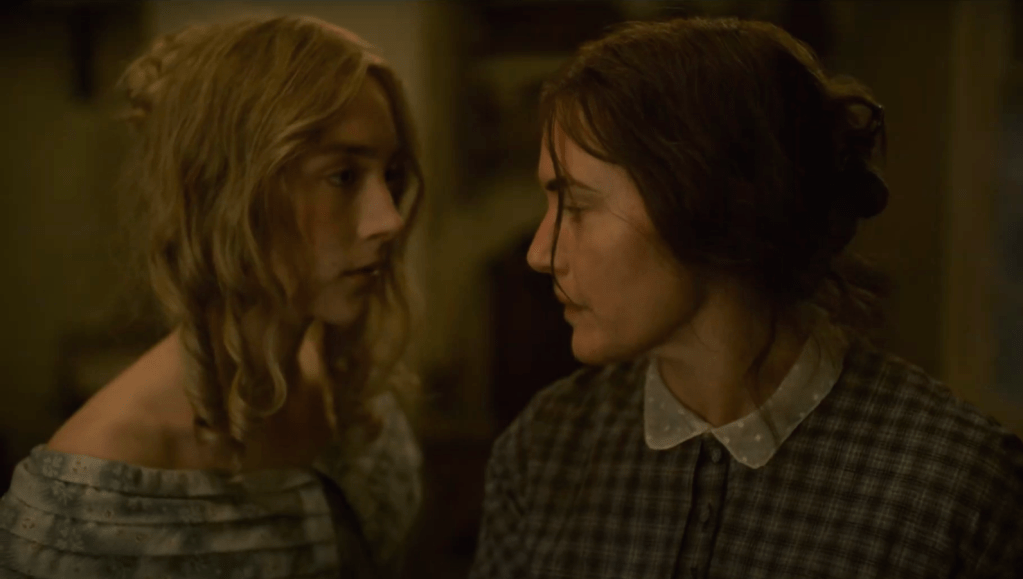
Charlotte has no clue about domestic chores, and hasn’t the strength for them, at first. They rub each other the wrong way until the day the “invalid” gets her hands dirty and starts to contribute. And we all know what’s coming when frail Charlotte forgets the class differences, turns considerate over Mary having to watch over her from a chair each night and says “We should share the bed.”

Lee, who directed the gritty rural gay romance “God’s Own Country,” incorporates plenty of period detail into this grey landscape with its grey seas, grey cliffs and grey skies. Charlotte’s been encouraged (by her husband) to “bathe in the sea.” That entails a “bathing machine” (an open-floored wagon eased into the surf, preserving a lady’s modesty) and of course leads to that 19th century malady above maladies — “a fever.”

The blossoming of a love affair isn’t all naive and innocent. We get the idea that this isn’t Mary’s first outing (Fiona Shaw is a local woman of property and “experience”), and that curdles into jealousy.

The sex scene is “Blue is the Warmest Color” explicit, so explicit that it’s the centerpiece of the film and considering how little we learn of the women’s lives and the state of the science, basically its entire reason for existing.

Of course, the entire affair is not proven, which is no fatal failing to anyone but a historian. But what comes after the passion is abrupt, irrational and obviously the hamfisted efforts of a screenwriter trying to “explain” how this didn’t endure or become more public and provable, and failing miserably.

The rare pairing of talent this esteemed in a project tailor-made for them makes the blundering “Ammonite” a singular disappointment of the season, awards bait without a hook to dangle from.

MPA Rating: R for graphic sexuality, some graphic nudity and brief language

Cast: Kate Winslet, Saoirse Ronan, Gemma Jones, James McArdle and Fiona Shaw

Credits: Written and directed by Francis Lee. A Neon release.

Running time: 1:57

Posted in Reviews, previews, profiles and movie news | Comments Off on Movie Review: Kate and Saoirse shimmer in the titillating but torpid “Ammonite”

Movie Review: Pixar dabbles in jazz, speculates on the “Soul” in this engaging dramedy

“Soul” is Pixar’s intellectually ambitious companion piece to “Inside/Out,” a whimsical “Outside/In” take on what makes us human.

It’s comical, but not really a comedy, spiritual without being all that deep. But as it grapples with what drives a creative person, paints the “after life” and “before life” eternity in Picasso-with-a-light-pen strokes and questions what makes life worth living, it can be quite touching.

As to “answers” about The Meaning of Life and the concept of “soul,” let’s just say it’s a Zen koan where the punchline is “Whatever we say it is.” Parent and preacher, mystic and guru — all seekers are all legitimized as those with answers for those with questions.

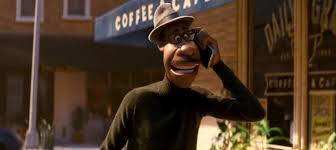
Jamie Foxx is the voice of Joe Gardner, 40something and single, a New Yorker and middle school music teacher who’s just been offered the chance to switch to full time.

But he is another “Mr. Holland,” and this wasn’t the “opus” he imagined for his life. Mom (Phylicia Rashad) may be relieved he’s moved beyond that “dead end gigging” that’s been his life.

But a former student (voiced by Quest Love of The Roots, “The Tonight Show’s” house band) hooks him up. The kid grew up to be a drummer for a star sax player (Angela Bassett, regal in form, regal in voice) and they need a piano player. It’s Joe’s shot at a Big Break.

If you’re old enough to have seen “Heaven Can Wait,” you know that’s the very day Joe dies, and that his first words on realizing his fate will be “I can’t die NOW!”

He finds himself in an officious afterlife where “The Great Beyond” is at the upper end of the escalator. But he wants off, and he stumbles across loopholes in the bureaucracy. He’s mistaken for a Nobel laureate in the mentor program for “new souls” and assigned the incorrigible future human #22.

She sounds like Tina Fey because that’s a “voice that annoys people.” And she is hellbent on not living a life, and even if she’s never actually lived one and thus has no serious experience to draw on. Famous souls, from Mother Teresa to Copernicus, the Greeks to Gandhi, have taken a shot at mentoring/convincing her to come to Earth. No dice. Joe realizes this will be “soul crushing” work.

“You can’t crush a soul here. That’s what life on Earth is for!”

But Joe’s determined efforts take them to the sea of lost souls, and a pirate ship captained by a whimsically spiritual seeker/guide to getting Joe back to his life to fulfill what he figures is his destiny. Moonwind (Graham Norton, a hoot) may be a captain here. On Earth, he’s a sign spinner on 14th and 7th, an aged hippy guru.

That’s one of the best conceits of “Soul.” Musicians, artists and creative people who get “in the zone” are experiencing the divine, as are mystics of every stripe. They are living corporeal lives on Earth, occasionally venturing into the very afterlife Joe’s been sentenced to. They’re teachers and go betweens — literally.

Will Joe will learn what he’s really seeking, what his real destiny might be? Will #22 find her bliss, what makes life worth risking on Earth?

I found the whole afterlife business here more derivative and somewhat less comforting than perhaps the film’s creators (writer-director Pete Docter of “Monsters, Inc.,” “Up,” “Wall-E” and “Inside/Out” is the guiding force) intended. This is supposed to be a child’s guide to spirituality, right?

The afterlife/before-life animation is original, but amorphous and aside from the Picasso homages, mostly a drab palette in shades of blue. A Who’s Who of pointlessly-famous voices rush by as various officials, all named “Jerry” or “Gerel” (Alice Braga, Wes Studi, June Squibb,Richard Ayoade).

Rachel House is “Terry,” the accountant who chases Joe’s missing soul hither and yon, determined to balance the supernatural books and thus is the half-hearted villain of the piece.

But the jazz scenes, where Joe falls into an almost ecstatic trance, the explanations of jazz improv as “a conversation” in an elite language that people strive their whole creative lives to master, are some of the most glorious and transcendent in Pixar history.

Another late-night band leader, Jon Batiste of “The Late Show with Stephen Colbert,” created the jazz here. I want the soundtrack.

And the jazz is how the viewer should approach “Soul.” Simplistic and derivative it may be, it’s still not something you’re meant to wholly understand. It’s a film that you feel.

MPA Rating: PG

Cast: The voices of Jamie Foxx, Tina Fey, Graham Norton, Angela Bassett, Quest Love, Rachel House, Phylicia Rashad, Alice Braga, Daveed Diggs, Wes Studi

Credits: Directed by Pete Docter, Kemp Powers, script by Pete Docter, Kemp Powers and Mike Jones. A Disney/Pixar release on Disney+.

Running time: 1:41

Posted in Reviews, previews, profiles and movie news | Comments Off on Movie Review: Pixar dabbles in jazz, speculates on the “Soul” in this engaging dramedy

Movie Preview: Olivia Cooke, Jack O’Connell, memory loss and love — “Little Fish”

Chad Hartigan, who gave us the understated “Martin Bonner,” directed. This Feb. release from IFC also stars Soko.

Posted in Reviews, previews, profiles and movie news | Comments Off on Movie Preview: Olivia Cooke, Jack O’Connell, memory loss and love — “Little Fish”

Movie Review: Seventeen year-old girls, strangers in a strange land — “Antarctica”

On a sliding “quirky tales about teenage girls” scale, “Antarctica” is a lot more “Ghost World” than “Booksmart.” Not that it’s in either of those films’ league.

It’s another self-consciously odd, almost surreal “smirk” of a comedy about two misfits who aren’t just BFFs in Morgansfield High, they’re each others only friends. And how you take it depends on how easy a laugh you are.

Chloë Levine (“The Ranger”) plays Kat — clever, cute and too-cool for this school, a smart aleck who wastes too much of her time stifling laughs at the quite-elderly “health” teacher’s “hip” admonitions to “check your head and believe the hype” about the dangers of premarital sex and consumable hallucinogens .

Janet (Kimie Moruya, making her feature film debut) is busier ignoring the wingnut history teacher praising the “entrepreneurs” who benefited from Reagan’s 1980s CIA/cheap cocaine smuggling policy and invented crack.

Janet’s typing “fire and forget” missiles, college application forms online where her flippant answer to “describe the world 100 feet from where you are right now” is an unfiltered blurt about her father’s aging urinary tract, the proximity of her new vibrator and the self-described “sweaty fat chick” bothering to fill out this form.

Kat’s coping with the “healthy” kiddie snack diet Mom (Clea Lewis) foists on her so that her slovenly Slavic creep of a latest-husband (Laith Nakli) can gorge on what HE likes and lecture Kat and her younger siblings to “chew food. Otherwise, expand in intestines!”

Boys? Janet isn’t dealing with that, and Kat is forced to rebuff the advances of boorish mook B-boy Stevie (Steve Lipman) who has figured out why there are no Black serial killers, even though he doesn’t know any Black people.

“You know, we should be lesbians,” Janet shrugs.

“Can’t do the wardrobe.”

The inciting incident in “Antarctica” is Kat’s Halloween hook-up, leading to “slut shaming” at school, leading to Janet beating the hell out of the offender and getting put on this mood-altering/weight controlling medication, FemTrex. Kat? She just gets pregnant.

That leads to a schism as Kat is “sent away” (a sex addict, her mother figures) and drugged Janet wonders what is real and what she’s hallucinating — like the new neighbor teen (Bubba Weiler) who seems to know all about her, is into her, and walks the streets in a space suit.

Writer-director Keith Beardon’s (“Meet Monica Velour”) dialogue is glib and somewhat current. “What makes insane people always want to talk to me? Should I scowl more?” But it’s the situations that give “Antarctica” the feel of surreal.

An OB-GYN who puns “At your cervix” and makes duck puppet jokes with a speculum as he gets down to business, Kat in rehab with a bunch of adult sex addicts for having unprotected sex (he lied) one time, Janet’s new “boyfriend” who may not be real, and even if he is he’s wearing a SPACE SUIT — all kind of nuts.

The sitcom jokey high school entrance marquee — “A friend is a stranger you haven’t alienated yet.” — group therapy in rehab where everybody learns “It’s not HOW you have sex, but how sex has you” — almost every joke here is aimed at the smirk bone, not the funny one.

I didn’t laugh at anything until Kat’s mother takes her on a “four hour and 29 minute” drive and chat on their way to the mental health rehab hospital. Sitcom and screen comedy veteran Lewis — she’s been around since “Friends” and “Mad About You” — punches through all the “trying too hard” and delivers.

“Don’t you wish we’d had this conversation sooner?”

Yes. Yes we do.

MPA Rating: unrated, violence, sex, profanity

Cast: Chloë Levine, Kimie Moruya, Clea Lewis, Bubba Weiler, Ajay Naidu, Laith Nakli, Steve Lipman, Chil Kong.

Credits: Written and directed by Keith Bearden. A Breaker release.

Running time: 1:21

Posted in Reviews, previews, profiles and movie news | Comments Off on Movie Review: Seventeen year-old girls, strangers in a strange land — “Antarctica”

Netflixable? Holidays are for triggering — “Hillbilly Elegy”

We are all heroes of our own story. And if we’re white and Southern, some of us are happy to throw in a little Tennessee Williams-styled “martyr” to the tale.

Netflix and Ron Howard serve up a lot of both in bringing J.D. Vance’s “up by my redneck bootstraps” memoir “Hillbilly Elegy” to the screen.

For some viewers, it’s 116 minutes of triggering — abused childhood, addicted parenting, impulse control, bad decisions, self-destructive politics, ingrained failure and violence.

Others — conservatives, one suspects — will grab its “poverty porn” as evidence that “anyone can make it in America,” when of course Vance’s lurid autobiography is the exception that proves the rule, anecdote as “evidence.”

But astute viewers with some connection to its geography and class could have a moment of empathy over Vance’s broad caricature of Kentucky/Ohio “poor white trash.” Oh. THIS is what Black and Hispanic filmgoers feels when they see entire culture painted with a stereotypical brush.

I’d say Howard, who grew up on “The Andy Griffith Show,” should know better. But he’s second generation Hollywood. What would he know about the real Appalachia?

Still, it’s easy to see what he and screenwriter Vanessa Taylor (“The Shape of Water”) saw in the material. This is a far rougher “The Prizewinner of Defiance, Ohio” or “The Glass Castle.” The narrator’s point of view is male, the toxic parenting here is matriarchal.

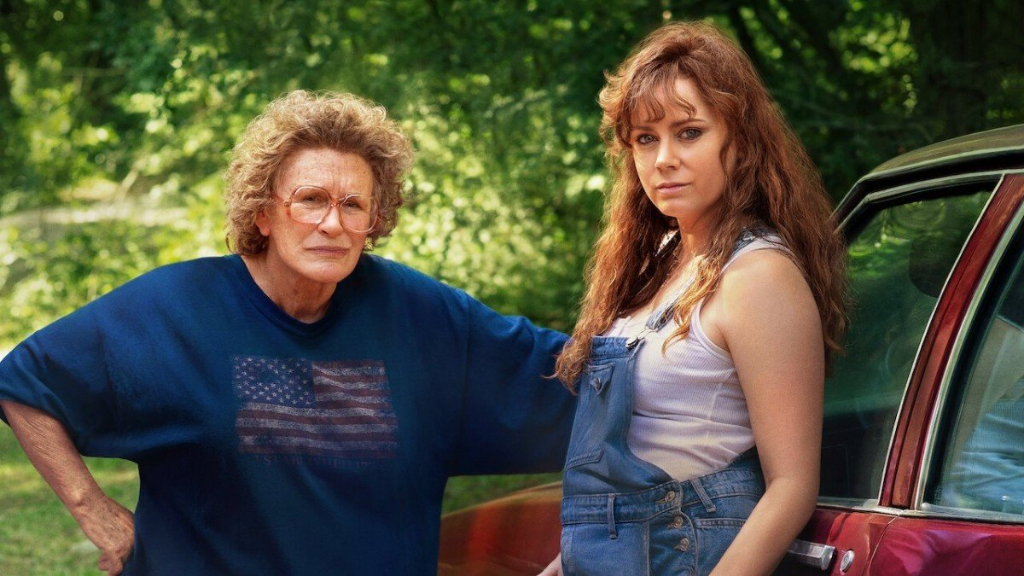
And the leading ladies could see the Oscar bait in dressing down and cussing up. Amy Adams, Glenn Close and Haley Bennett let go and embrace the working class struggle of generations of the Kentucky diaspora who didn’t win LBJ’s “war on poverty” and realize his “Great Society,” even after moving to Ohio.

Howard’s film only gives us a cursory look at where Vance’s “people” came from, a prologue in Jackson County, Kentucky where a teenage J.D. (Owen Asztalos) visits the family homestead, gets a beating from the locals and an earful from his foul mouthed Mamaw (Close) and fouler-mouthed Momma (Adams) that offers a glimpse of his history.

His family was uprooted when granny got pregnant at 13 and she and her new husband (Papaw, played later by Bo Hopkins) fled to factory work in Middletown, Ohio.

The first of the film’s two timelines follows teenaged J.D. as he struggles to better himself as his hellion nurse-mother lurches from one bad relationship, one addiction to another.

Martyrdom point one — Mom cannot control her temper, her language or her appetites. Her kids bear the scars.

The other timeline is J.D. (Gabriel Basso) as an adult, finishing up Yale Law after stints in the Marines and an undergrad degree from Ohio State. He’s got an Indian girlfriend (Freida Pinto) from law school, and slim chance of landing a plum internship because he’s gauche and unsophisticated. A mixer/dinner with potential law firms prompts a panicked phone call to Usha (Pinto).

“What am I supposed to do with all these f—–g forks?”

And heaven forbid some smug to-the-manner-born Eastern lawyer drop the word “redneck” into conversation. Mom and Mawaw aren’t the only ones with anger management issues.

Martyrdom point two, “class” and not being raised with it matters. All those teenaged “Can I watch ‘Meet the Press'” pleas (said no fourteen year-old EVER) didn’t give him the polish to succeed. He had to grab it with his own two hands.

“Hillbilly Elegy” teeters back and forth between timelines, giving Adams at her frumpiest plenty of chances to go manic and martyred — “I never had a life where I wasn’t ‘thinking about the kids!” –and Close lots of chances to drawl through Southern-fried insults.

“Wouldn’t spit on her ass if her guts were on fire.”

Vance and Howard depict a childhood (late ’90s) where the kid’s entire environment pointed to a dead end. Violent, bickering neighbors — stoner, vandalism-prone peers and her mother always distracted by some new crisis, some new man or some fresh variation of “dependency.”

Everything will come to a head with an overdose, just as J.D. reaches his make-or-break Yale moment.

Even the story’s grace notes, the noble “salt of the Earth” traits attached to Vance’s family, are stereotypes — standing in tribute when a funeral cortege passes by.

“We’re hill people, honey. We respect our dead.”

In performance, the actresses never quite cross over into country-fied camp. But Adams and Close flirt with it. Bennett, as J.D.’s long-suffering older-sister, comes off as the most real. Former child actor Basso (“Super 8”) may have relied too much on the real Vance for his performance — passive, flashes of genetic (the film implies) rage, uncharismatic.

Howard doesn’t make awful films, and as somebody who spent much of my earlier life in Appalachia, I’m not inclined to write this problematic portrayal off entirely.

But self-satisfied people on both ends of the political spectrum will see what they want to in this story, and that’s not a compliment. The smug liberals who declare “There’s no talking to/helping THOSE people” and the smirking conservatives who grab onto “There’s no such THING as ‘white privilege'” are all feasting on sloppy, simplistic, stereotype-stained storytelling.

Perhaps this is all Howard could have gotten out of this best-seller. But his “Hillbilly Elegy” is cinematic comfort food for the prejudiced.

MPA Rating: R for language throughout, drug content and some violence

Cast: Amy Adams, Glenn Close, Gabriel Basso, Haley Bennett, Freida Pinto and Owen Asztalos

Credits: Directed by Ron Howard, script by Vanessa Taylor based on the memoir by J.D. Vance. A Netflix release.

Running time: 1:57

Posted in Reviews, previews, profiles and movie news | 4 Comments

Movie Review: A Deadly, Panicked Police Shooting, the definition of “Blindfire”

“Blindfire” is the (fictional) account of a deadly police shooting that sets out to demonstrate such situations are “complicated.” But as it tells its story from the “troubled” cop’s point of view, the film’s problematic agenda clashes with its clumsy, unrealistic narrative. And like too many “cops shoot an unarmed Black man” tales, it leaves nothing but harm in its wake.

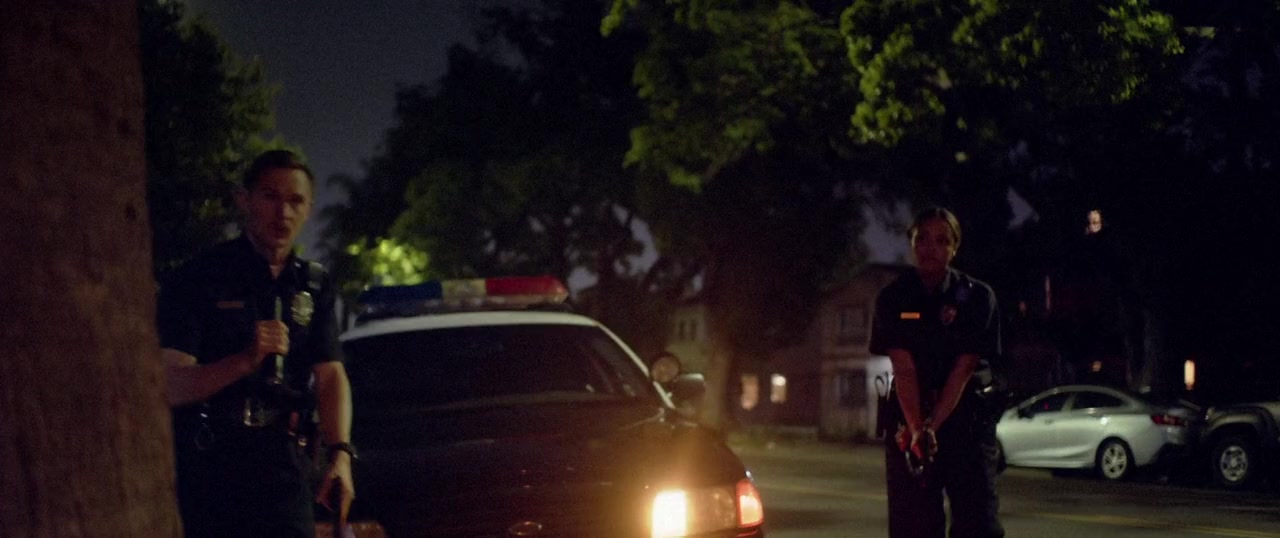
Still, give this to writer-director Michael Nell. The term “Blindfire” could describe an awful lot of police shootings that prompt the word “murder” to be chanted at protests. Officer Bishop (Brian Geraghty) fires blind in an instant misread of a “threat.” The “shoot in self-defense” excuse won’t stand up to any scrutiny.

The victim (Chiké Okonkwo), whose story is barely glimpsed here, is not just a big 30something Black man with tattoos and a pullover hoodie. He’s a high school football coach, watching a ball game with his little girl. The call, a “hostage situation” with a distraught suspect threatening his family, was a case of “swatting,” a prank that informed the police of a non existent “crime” created an incorrect set of expectations.

Oh, and Officer Bishop, like most human beings, has “problems.” He’s living in a motel at the start of a divorce. He’s drinking more, off duty we hope.

Sure, that’s “complicated.” But nothing the script throws at us distracts the viewer from the notion that race, callous stereotyping and carelessness killed a man in his own house, minding his own business, while his screaming little girl watched him bleed-out.

Writer-director Nell doesn’t have Bishop’s Black and (checkbox screenwriting) lesbian partner, Officer Wilkins (Sharon Leal of “Dreamgirls”) show her doubts and question Bishop’s motives and state of mind, at least not in this cut of this too-brief-for-a-serious-subject film. No, another officer (comic Wayne Brady) blurts out the “You get a prize for every brother you kill?” accusation.

The victim’s nurse-wife (Edwina Findley Dickerson) melts down, his stoic father (Charles Robinson of “Night Court”) stares Bishop down.

But Nell’s interest here is in the “real victim” (to him). It’s the swatting and Bishop’s semi-sober efforts, as an untrained detective, to track down the person the writer-director seems to regard as “the REAL criminal” here. The polite term for that is somebody who “doesn’t GET it.”

The performances don’t elevate the material, and the lack of names in the cast suggest there wasn’t much more to this, even if there are longer cuts of this script. The flaws are in the very conception of “Blindfire,” in its point of view.

We’ve heard or read the stories, or seen the videos — when police chiefs or law-unto-themselves-sheriffs haven’t suppressed it. A situation goes from routine to shoot-to-kill in a flash. The excuses are a litany of “he/she didn’t respond to commands” or “I thought he had a gun” or what have you. Police departments are letting armed, armor-plated and institutionally-immunized officers shoot in fear or shoot because they’re provoked, and get away with it.

Race is an overwhelming tipping point in such incidents. There’s a serious movie in this subject, one that sticks closer to reality and reaches for balance.

First-time director Nell isn’t the person to make that movie. He limits the focus here and shrinks the population of people who’d be involved when a case like this blows up. The highest ranking cop Bishop faces is a sympathetic-to-his-plight/”get your mind right” (stick to your story) sergeant.

Yes, “accidents” happen. Funny how they almost always end with a dead Black person. No, the police in St. Anthony, Minnesota, Brevard County, Florida or Louisville, Kentucky or elsewhere don’t admit to their lethal mistakes. And no, as the comedian Chris Rock says, we can’t tolerate “accidents” like that any more than we’d tolerate careless and union-protected from any punishment airline pilots.

Nell isn’t interested in the victim, and he isn’t even interested enough in the cop to make a case that he’s not a racist. Is Nell saying that “He can’t be racist, because he has a Black/gay partner?” I wouldn’t be surprised.

Making a movie more interested in “But but but” explanations, that doesn’t acknowledge the repeated racial reality of police shootings, is like saying “Blue Fairytales Matter.”

MPA Rating: unrated, violence, alcohol abuse, profanity

Cast: Brian Geraghty, Sharon Leal, Chiké Okonkwo, Edwina Findley Dickerson, Bethany Joy Lenz, Charles Robinson and Wayne Brady

Credits: Scripted and directed by Michael Nell. A Kandoo release.

Running time: 1:23

Posted in Reviews, previews, profiles and movie news | Comments Off on Movie Review: A Deadly, Panicked Police Shooting, the definition of “Blindfire”

Movie Review: A Homeless fantasy, “Princess of the Row”

If you can look on homeless person and not instinctively turn away, you know the last thing this human condition needs is sugar-coating sentimentality.

Everybody in that situation has a story and none of them are pretty. So a homeless kid who imagines herself a fairytale princess with a pet “magic animal,” a unicorn? That’s worth a skeptical raising of the eyebrow.

“Princess of the Row” lets Alicia have her fantasy. She’s 12, after all. But it insists on showing us the calamity that put her here, the brain-injured combat vet of a father she won’t abandon, the impulsive, ill-considered decision-making, incapable of caring for a potentially dangerous and delusional man.

Because, again, she’s 12.

The new feature from the editor/director of “Ninja Apocalypse” is a drama about the homeless that doesn’t blink. “Princess of the Row” may lapse into sentiment, here and there, and reach for melodrama at times.

But the reality of the situation pulls you in, the compelling portrayal of tweenage reasoning is spot on. The leads — Tayler Buck (of “Annabelle: Creation”) and Edi Gathegi of “Twilight” and TV’s “The Black List”) — are real in the most understated ways. The warm moments never come close to maudlin.

“So, what’s your plan, Alicia?” one of the adults she interacts with asks her. She has no good answer, but the movie shows it to us in many ways.

Her “plan” is to get through just another day, get her dad, Sgt. Bo Willis through another night on LA’s skid row. Sometimes his one-good eye is fixed in a “thousand yard stare.” At others, he “comes back” to her. A birthday cupcake and night in a nearby junkyard’s rusted Trans-Am is the best she can do for him.

Alicia is in and out of The System, giving her aunt (Tabitha Brown) a reason to give up, keeping her social worker (Ava Ortiz) exasperated. Alicia won’t leave her father, whose demons keep him out of a group home or shelter.

“He’s dangerous,” the social worker the other residents of “the row,” who won’t say where they’ve gone. “She’s a little girl. He can’t take care of her.”

And she, as we see, can’t take care of him. Sgt. Willis, glimpsed as “Dad” back before the combat duty that gave him his injury, is easily triggered. He may be a walking, dysfunctional wreck. But he has the muscle memory of a warrior, which shows up more than once in their travels.

Alicia needs an escape, one that doesn’t involve dreaming and writing about unicorns.

Might the new foster home arranged for Alicia with a Northern California writer (Martin Sheen) and his wife (Jenny Gago) be her salvation? They have a horse, after all.

Don’t bank on it.

The waypoints on this journey, co-written by A Shawn Austin and director Van Maximillian Carlson, may be over-familiar. We sit and wait for the “a pretty girl like you” speech.

But “Princess of the Row” mostly confines itself to the limited world Alicia is buying into — a tent, which is the only housing her father can tolerate, emergency trips to the VA when he runs out of his meds — her options for “saving” him at 12 neither obvious nor recommended.

The alternative, when she’s not with him, sees her dad face homeless-beating jocks, the threat of arrest and a million other things that could injure or kill someone not all there and on the streets.

Buck gives a performance impressive enough to call “break out,” but Gathegi, in a largely non-verbal role, utterly loses himself in the makeup, the wardrobe, the environment and the character.

He and “Princess of the Row” will move you, if you give them the chance, if just this once, you can make yourself not turn away from the troubled people right in front of you.

MPA Rating: TV-14, violence, some of it directed against a child

Cast: Tayler Buck, Edi Gathegi, Ana Ortiz and Martin Sheen.

Credits: Directed by Van Maximilian Carlson, script by A Shawn Austin and Van Maximilian Carlson. A Gravitas Ventures release.

Running time: 1:25

Posted in Reviews, previews, profiles and movie news | Comments Off on Movie Review: A Homeless fantasy, “Princess of the Row”