
Netflixable? “Midnight at the Magnolia” is Hallmark Channel bland

“Midnight at the Magnolia” is a holiday romance as tasty as bargain-shelf whitebread and edgy as a butterknife. It’s Example One in that age-honored adage that America is filled to the brim with competent actresses and actors, but “star power” and “screen charisma” are what count, and are still as rare as Tanzanite.

Maggie and Jack are lifelong friends who’ve realized a lifelong dream. They co-host “The Windy City Wakeup” onFM98.8 in Chicago. And all we need to know about the movie is right there, in the sparkling banter between perfectly pretty Maggie (Canadian Natalie Hall, of “You’re Bacon Me Crazy”) and unshaven/snarky Jack (Canadian Evan Williams, of “A Date by Christmas Eve”). As in, there isn’t any.

These two couldn’t host a podcast from Paducah, much less an energy-ratings driven morning show in the Second City.

But gosh, here’s their boss, telling them they’re up for a satellite radio promotion thanks to the legend “Judd” someone or other.

They chat, frankly but benignly, about their love lives on the air. Their families, who’re close, don’t mind. But their latest romantic partners? The ones they haven’t allowed to “meet” their respective families? They’re a bit put off. Nice about it, but…

Telling a radio audience they’ll relent and introduce them to their (united) extended families over the holidays in the legendary jazz bar/restaurant their dads co-own isn’t considerate or discrete. EVERYbody can see their friendship stands in the way of new love.

Who WILL they share a New Year’s kiss with on “Midnight at the Magnolia?”

I mean, their siblings and parents have all expected them to make a love connection, Maggie’s “If something were going to happen, it would have” notwithstanding.

Jack’s fecklessness and Maggie’s eagerness to accommodate show history, but can they “fake it” convincingly enough to fool their radio audience with a surprise “We’re TOGTHER” announcement, on the air and online, New Year’s Eve?

There isn’t a single line in the script pithy enough to bother quoting. “The Man Who Came to Dinner” this isn’t.

There is nobody in the supporting cast colorful enough to steal a scene, much less the movie.

And the leads? Competent, attractive, with no chemistry and zero sizzle or spark. G-rated or not, this “romance” should make us feel the longing they’re denying, the hurt they feel if things don’t pan out.

Hall and Williams would have trouble standing out in this blase supporting cast, much less as leads.

When everyone and everything is this low-heat, even a Hallmark level holiday romance faces that dreaded two-word review every actor and filmmaker fears.

Who cares?

MPA Rating: TV-G

Cast: Natalie Hall, Evan Williams

Credits: Directed by Max McGuire, script by Carley Smale. A MarVista movie, a Netflix release.

Running time: 1:27

Posted in Reviews, previews, profiles and movie news | Comments Off on Netflixable? “Midnight at the Magnolia” is Hallmark Channel bland

Netflixable? “Jingle Jangle: A Christmas Journey”

The choreography by Ashley Wallen sparkles and dazzles.

Madelen Mills, Anika Noni Rose, Ricky Martin and Lisa Davina Phillip sing, but so do Forest Whitaker and Keegan-Michael Key — who sings the villain’s show-stopper, “Magic Man G.”

The settings are baroque, brass-burnished and gorgeously detailed, creating a Dickensian city (Cobbletown) with a far more diverse populace.

“Jingle Jangle: A Christmas Journey” has the makings of a film kids get into, colorful and cute (ish) and tuneful — “Hugo” and “Short Circuit” mashed up with “The Greatest Showman.” If only it wasn’t so…long.

And the message of this “Christmas Journey?” Um, protect your copyrights, lest your assistant cash in on them? Toys will only work if kids truly “believe?” Because the holiday is all about the toys?

“Jingle Jangle” may be a giant step up in ambition for writer-director David E. Talbert (“Almost Christmas”). And while it never offends, this shiny, empty-headed musical bauble doesn’t cut the mustard, pleasantly-forgettable songs notwithstanding. The arrival of its show-stopper is jarring, because of how boring the first half hour has been. The fact that little that follows comes close to that highlight further dulls the senses.

A not-quite-pointless framing device has a grandmother (Phylicia Rashad) reading the kids a whole new story, something a little more up to date than Clement C. Moore’s “A Visit from Saint Nicholas,” she promises.

She tells of a great toy inventor, Jeronicus Jangle (Justin Cornwell) whose Jingle Jangle toyworks/shop is where the magic happens.

His greatest gadget of all is his new automata, a tiny metallic matador (voiced and sung by Ricky Martin) who develops a mind of his own with a dollop of magical elixir. “Every child in the world” will get one,” Jeronicus declares.

But the toy and the shop assistant, aspiring inventor Gustafson (Justin Cornwell) conspire to steal away with the master’s master blueprints, and Jeronicus is lost.

Years later, he’s just a widowed old man (Oscar winner Whitaker) keeping his banker (Hugh Bonneville) at bay, fending off the advances of delivery-lady Johnston (British actress Lisa Davina Phillip), dismissing his visiting granddaughter (Madalen Mills), desperate to come up with something unique and spectacular.

Once the granddaughter and nerdy new shop assistant Edison (Kieron L. Dyer) set their minds to helping, you know that’ll come, and that the older Gustafson (Keegan-Michael Key) will want to get his hands on it.

I’m not the age-range Talbert is shooting for here, but I laughed maybe once. The only songs that tickle are Martin’s matador number (a grin) and Key’s big mustache-twirling ego trip “Magic Man G.”

I liked the granddaughter Journey’s aspirational (“longing”) song, the “Square Root of Possible (is me).” The rest? Meh.

The dancing crackles, and even Whitaker gets into it (to a reggae-ish tune). There’s no slapstick to speak of, the new automata is a little “Short Circuit” and a lot of “Wall-E.” Aborbs, but come on.

The whole affair has a touch of “Polar Express” about it, kind of holiday heartless. Even “Toy Story” isn’t just about the toys.

Maybe the gadgets, the cute kids and the dancing will hold younger kids’ attention. But if they wander out of the room at the 75 minute mark, at least you’ll know why.

MPA Rating: PG for some thematic elements and peril

Cast: Forest Whitaker, Madalen Mills, Anika Noni Rose, Keegan-Michael Key, Ricky Martin, Lisa Davina Phillip, Phylicia Rashad and Hugh Bonneville

Credits: Scripted and directed by David E. Talbert. A Netflix release.

Running time: 1:58

Posted in Reviews, previews, profiles and movie news | Comments Off on Netflixable? “Jingle Jangle: A Christmas Journey”

Documentary Review: “Museum Town” tracks a dying city’s attempts at revival via a Big Museum

The largest museum of contemporary art in the world, acres and acres in size, was opened in a dying industrial town in The Berkshires of Western Massachusetts.

MASS MoCa was the most “out there” and yet doable pitch thrown at North Adams, Mass. locals and state officials when the one factory in their “one factory town” closed in the 1980s.

And getting it in there, obtaining state backing and the support of artists and the “arts community” which dumpy, industrial North Adams is pretty far removed from and gauging its impact (or the lack of it) on the city is the story of “Museum Town.”

This engaging documentary and labor of love from one of those instrumental in giving the facility its start, its first development director, now a first-time documentary filmmaker, Jennifer Trainer.

Trainer, a journalist by training, tells the industrial story of North Adams, which first industrialized as a print and dye works in the Industrial Revolution, a company that help on for nearly a century, providing employment even as it polluted the town.

“You could tell which dye they were using by the color of the river that day,” one older local remembers.

An electrical parts factory moved in afterwards, another vast workforce in a huge collection of spaces, putting most of the women of the city to work during World War II and the decades after. And then Sprague up and moved out.

Trainer’s film tells its story in three threads. There’s the history, and the efforts of local officials and boosters to find something to stop the city’s utter collapse (soaring unemployment, social services strained, etc). We meet the nearby artist/dreamers who pushed the idea and deal with its successes and failings to this day.

Then there’s artist Nick Cave — NOT the icon rock icon. We see this contemporary artist install, in a huge space, an exhibit quite typical of today’s MASS MoCa. “Until” was huge in scale, splashy, pushing the museum’s fabrication shop — where craftspeople help an artist “realize his vision” — to its limits. It is a show designed to draw a crowd, at least at the opening.

It took years of pushing, navigating the shifting currents of Massachusetts politics to obtain the huge amount of start up funding. Trainer and those she interviews take us through that, and serve up this delicious anecdote. The plans, approved by then-governor Michael Dukakis, needed further support from the incoming Republican governor William Weld. We hear how the skeptical Weld visited the place to make his mind up about it, treated to an edgy installation by art student turned rock star David Byrne.

“Who knew our Republican governor was actually a huge Talking Heads fan?”

Famous visual artists (Robert Rauschenberg) and artists who gained fame in other media (Laurie Anderson) are a signature of MASS MoCa, which has room for performance spaces, as well as performance art. Wilco shows and metal sculptures can vie for your attention on a given week.

Meryl Streep reads from Henry David Thoreau’s “Walden,” from letters between staff and artists, and from a scathing New York Times review of a museum low point, when a Swiss diva abandoned an ever-growing planned show because of problems of “vision,” exposing MASS MoCa to ridicule and vast losses.

What’s sobering about the film is how plainly this experiment in high culture re-purposing could never work any where else on this scale. Thomas Krens, the nearby college museum curator and co-founder who first came up with the of putting a museum in the Sprague factory points to the Guggenheim Museum in Bilboa, Spain, as akin to MASS MoCa. But whatever the violent history of Basque country, Bilboa’s landmark has a famous architect, a gigantic foundation and a scenic coastal city and waterfront property to recommend it.

Smaller scale versions of industrial buildings turned into galleries have worked all over the world. But try to replicate this grand experiment anywhere outside of The Berkshires, home to colleges, Tanglewood and affluence, and see how far you get.

“Museum Town” still makes makes for a fine recounting of one instance where “thinking big” in the always-strapped-for-cash museum world paid off in post-industrial North Adams. Trainer lets us meet bold thinkers who found a way to put a modern twist on what a museum — “an eighteenth century idea (stuck) in a 19th century box” — could be.

Credits: Directed by Jennifer Trainer, script by Noah Bashevkin, Pola Rapaport and Jennifer Trainer. A Kino Lorber release.

Running time: 1:16

Posted in Reviews, previews, profiles and movie news | Comments Off on Documentary Review: “Museum Town” tracks a dying city’s attempts at revival via a Big Museum

Netflixable? Bruce Willis in his C-movie twilight, “Hard Kill”

We always knew how Bruce Willis would spend his celebrity dotage — Shakespeare in the Park, maybe a spirited farewell tour as “Bruno” with his band.

OK, maybe we didn’t. But seeing him in — BARELY in — C-movies like “Hard Kill” is just another reminder that some guys can’t let go, can’t change a lifetime of piss-poor movie choices and don’t know, the way Garbo and Cary Grant did, when it’s time to “close the door” and leave with their screen image intact and immortal.

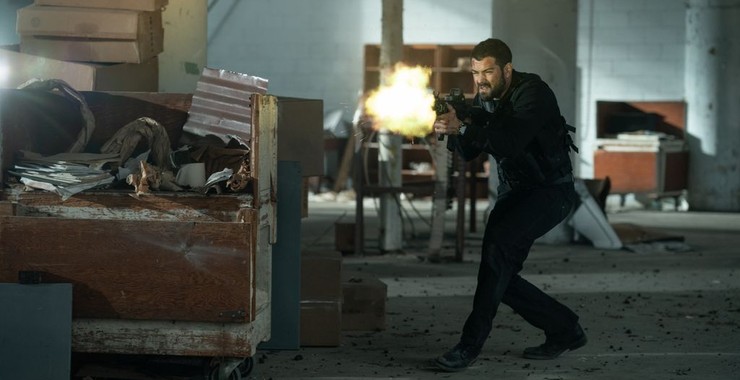
“Hard Kill” is a garbage thriller made because the producers had access to an abandoned factory complex, a lot of tac gear to dress their color-coordinated “terrorist” minions in and Bruce Willis’s name.

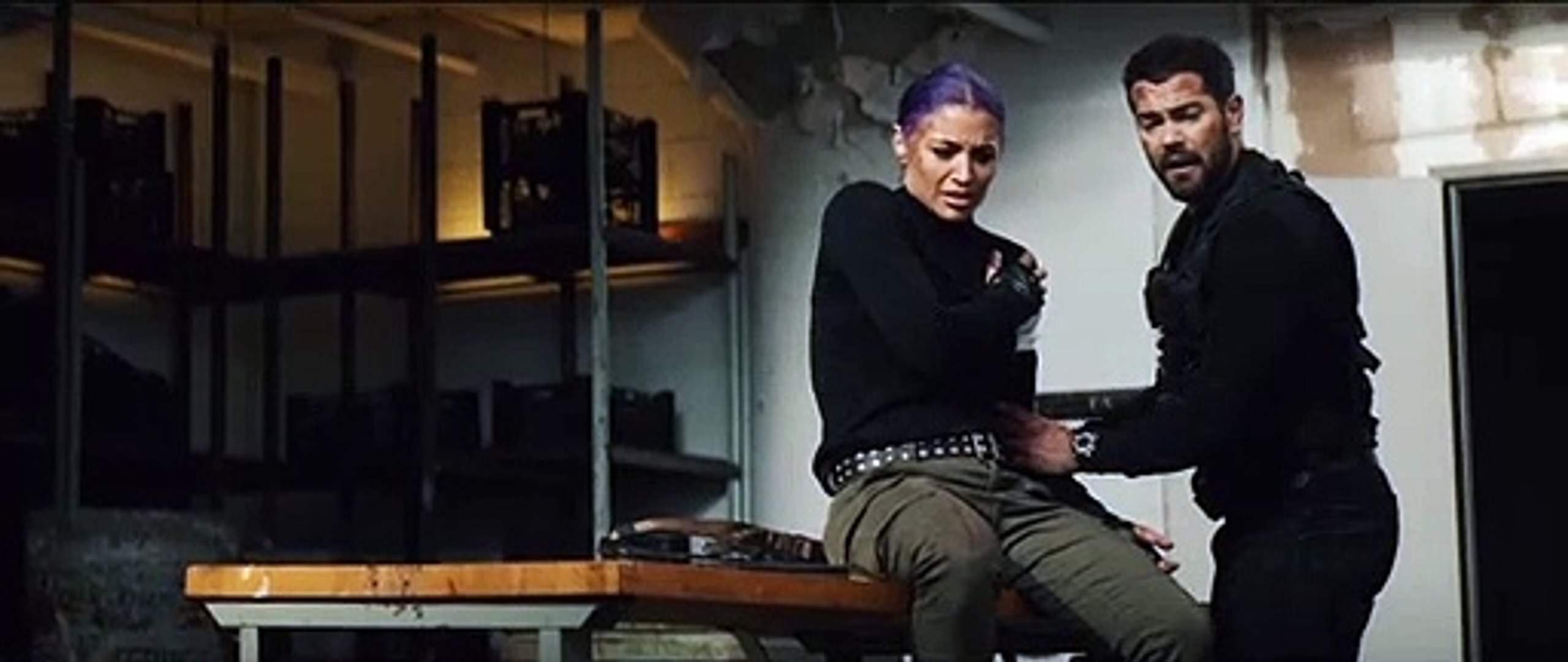
Willis plays Chalmers, the billionaire ex-military chief of a tech empire who hires/tricks an elite mercenary team led by Derek (Jesse Metcalfe of “Desperate Housewives” and “Chesapeake Shores”) and Sasha (WWE minx Natalie Eva Marie) into helping him recover not just the story’s “MacGuffin,” a magical artificial intelligence gadget that “in the wrong hands” could doom us all.

And it’s in the wrong hands, those of the terrorist named “The Pardoner” (Lamest villain name ever, lamely played by Sergio Rizzuto).

Another thing in the wrong hands? Chalmers’ daughter Eve, the tech genius behind his Charterhouse Industries, is being held hostage. And I didn’t have to look up Lala Kent, who plays her, to realize she’s a no-talent, either a model or reality TV creation.

The fights and shootouts are fine, basically commandos taking out one helmeted minion after another.

The dialogue is limp as week-old Ramen, and the performances give “perfunctory” a bad name.

Willis? He’s just a wizened, pistol-packing bald guy who used to spend his holidays flying to LA, “having a few laughs,” a very long time ago.

MPA Rating: R for violence and language throughout

Cast: Jesse Metcalfe, Bruce Willis, Lala Kent, Natalie Eva Marie, Texas Battle and Sergio Rizzuto.

Credits: Directed by Matt Eskandari, script by Joe Russo and Chris LaMont. A Vertical release on Netflix.

Running time: 1:38

Posted in Reviews, previews, profiles and movie news | Comments Off on Netflixable? Bruce Willis in his C-movie twilight, “Hard Kill”

Netflixable? A SWAT team goes rogue in the ruins of their Iraqi city, “Mosul”

For my money, the best action picture on Netflix right now is a grim combat thriller set in the bombed-out ruins of the Iraqi city, “Mosul.”

It’s an intimate “Blackhawk Down” meets “Saving Private Ryan” tale of a mission and “attrition,” grizzled professionals battling the murderous “on a medieval scale” soldiers of ISIS, or “Daesh” as they’re called in the Middle East.

The film feels like you’re trapped in a first-person-shooter video game where the stakes are real, the learning curve is steep and the peril — house-to-house fighting where every building is mostly ruined, and a potential threat. It feels like you’re in Mosul, when they filmed it in Morocco. And it’s so inside the combat zone and the culture — Arabic is the only language spoken — that it plays like an Iraqi war memoir, even though this “inspired by true” events tale was written and directed by the guy who scripted “The Kingdom” and “World War Z.”

“Mosul” is set in the last days of the city’s “latest” occupation, when Daesh is “fleeing.”

“Do THEY know that?” Major Jasem (Suhail Dabbach, in a breakout performance) growls.

He leads the Nineveh SWAT team, what’s left of it. They’ve survived the various occupations, they still have enough men and battered Humvees to carry the fight to Daesh. They show up just as young policeman Kawa (Adam Bessa) has fired his last round in the firefight that saw his unit — including the uncle who got him the job — all but wiped out, pinned down in a ground floor storefront.

Jasem sizes him up and brings him aboard. There’s no arguing. Just take your uncle’s hat, change shirts and you’re “one of us.”

He has no idea of “the mission” these guys are on in the “wrong side” of Mosul. But he can use a gun, and he’s kept himself alive.

“Lift your weapon and keep your eyes open” are Jasem’s only instructions.

Matthew Michael Carnahan’s story is a journey through the inferno of a city that could be Warsaw in 1945, Beirut in 1979 — bombed-out, littered with corpses, rife with murderous snipers who “punish” civilians trying to flee the dying remnants of Daesh.

It’s a movie of gritty details and jaw-dropping surprises. The well-equipped SWAT commandos keep small pickaxes and chisels with them. Yes, they can be weapons, but their main use it punching holes in walls so that they can shoot through them.

They work their way down streets, through hallways, with the worn remnants of well-taught and much-used military precision. But when Kawa sees what they’re clearing this one corpse-ridden apartment complex for, he’s a bit taken aback. As are we.

It’s midday, and their favorite “Kuwaiti soap opera” is on. They had to find a building with power and a working TV.

That’s a rare light moment in an otherwise relentless tale of hunt and be hunted, ambushes, with every firefight reducing their number.

Kawa is young, but a quick study.

Jasem is jaded, but hopeful. He rescues children when he can, pays to impose them on families (they rob the dead of their cash at every turn) and urges them to care for the child so that “the rebuilding” can begin. Every room that they stop in, he stoops to pick up trash, tidy up, as if for that eventuality.

“We have to rebuild everything,” he sighs. “But first, we have to kill every one of them.”

They can’t ask for help, for reasons that are both clear and obscured. “Don’t talk about the Americans, we’re beyond that” is the extent of Jasem’s politics, until he has to haggle with one of the Iranian “militias” that’s come in, an enemy “faction” fighting on their side. Jasem and his team bicker with the Persian commander (Waleed Elgadi) over history, British vs. French occupation, the works.

And when these little grace notes — tense as they are — end, there’s more blood, more street-level strategizing, anything to further this rogue unit’s “mission” which Kawa doesn’t want to know about until he absolutely has to.

No one in their right mind would want to go there, but for the viewer, “Mosul” is a combat thriller that passes on an appreciation of professionalism and patriotism in a different language, in different uniforms, but with a universal focus on “mission” and “hope.”

MPA Rating: TV-MA, graphic violence, constant smoking, profanity

Cast: Suhail Dabbach, Adam Bessa, Is’haq Elias, Qutaiba Abdelhaq, Mohimen Mahbuba, Thaer Al-Shayei and Waleed Elgadi

Credits: Written and directed by Matthew Michael Carnahan. A Netflix release.

Running time: 1:41

Posted in Reviews, previews, profiles and movie news | Comments Off on Netflixable? A SWAT team goes rogue in the ruins of their Iraqi city, “Mosul”

Movie Review: “Deadhead Miles,” an abandoned Alan Arkin film scripted by Terrence Malick

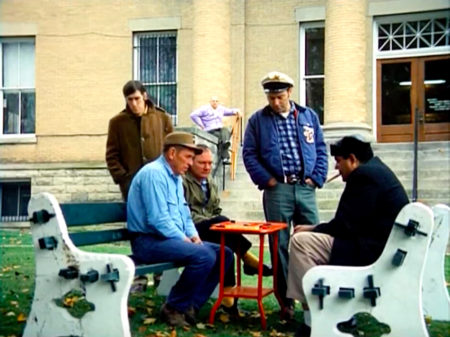
A friend pointed me to an Internet appreciation of this “lost” 1972 Terrence Malick-scripted road comedy, a movie partially-filmed in a city where I used to live — Knoxville, Tennessee.

“Deadhead Miles” is a loosely-organized, largely-improvised long-haul trucking tale that ventures from the Tennessee/Virginia line to the desert Southwest. Oddly enough, when I was living in Knoxville, Ridley Scott came through scouting for this road picture he was about to shoot about two women on the lam in a T-bird. He ended up limiting that one to the desert Southwest and environs. Perhaps some Knoxvillian warned him about “Deadhead Miles,” which was shelved, then barely released (Drive-ins, maybe?) and lost.

As hard as it was to get any movie made in the late ’60s and early ’70s, you saw more than one version of this pseudo-existential road picture during that era, this one riffing on “Easy Rider.” “Odd” and “indulgent” misfires were everywhere as Hollywood tried to figure out the new formula for success. Robert Altman’s nearly-unwatchable “Brewster McCloud,” “C.C. & Company” and loads of B-movies came out with a “quirky” bent, the romance of the open road their only organizing principle, a “name” or two in the credits and limited audience appeal.

Sam Peckinpah’s “Convoy,” Eastwood’s “Every Which Way But Loose” and assorted TV series and C.W. McCall’s novelty hit song “Convoy” celebrated the modern loner “cowboys” behind the wheels of tractor trailers. Steven Spielberg sent that genre up with “Duel.”

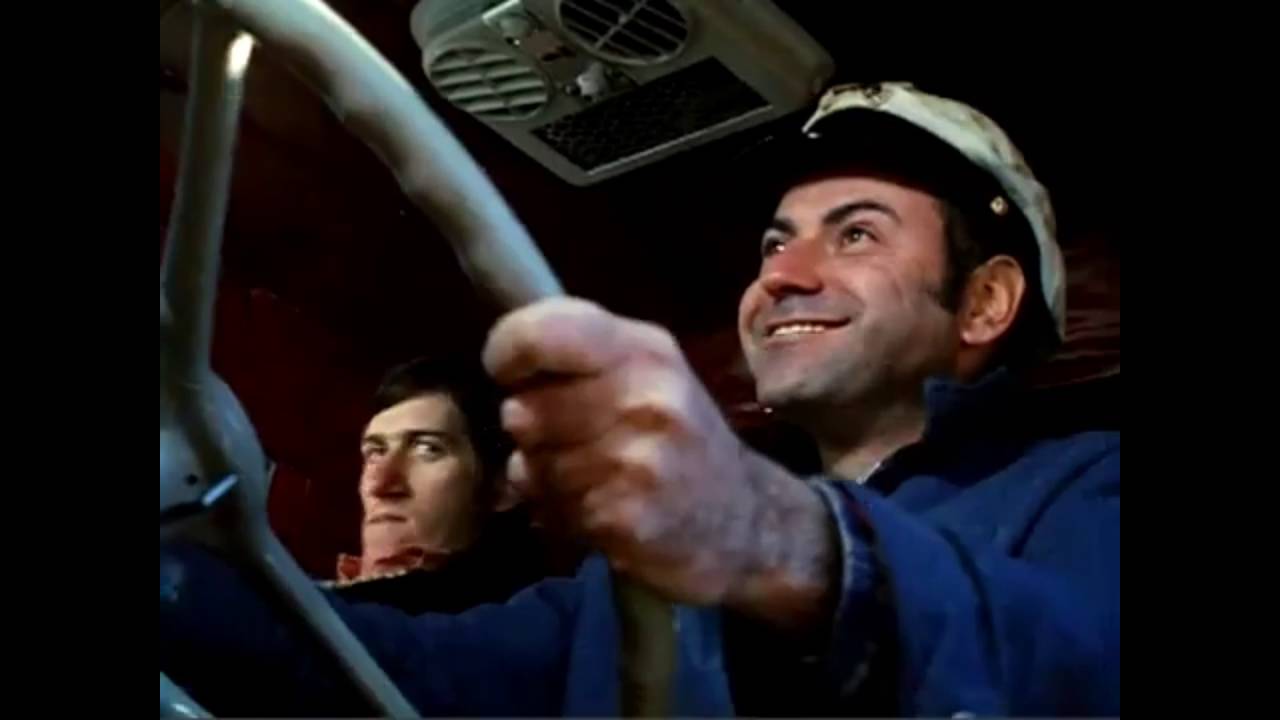
“Deadhead Miles” — that’s a trucking term for empty (no profit, lost money) trips between loads — begins with a simple but labor-intense hijacking organized by Durazno (veteran character actor Oliver Clark), a guy with some unknown beef with the trucking industry. He and his crew stage a crash, tear-gas a trucker and Cooper (Alan Arkin, beginning a long career disappearing act from his ’60s peak) is their designated driver.

The rig is repainted, re-licensed, re-labeled and run down the road so that they can sell its cargo — thousands of carburetors. That’s what ran American cars before the magic of “fuel injection,” kids. The unsellable load is bad enough. But when Cooper slyly ditches the gang (Avery Schreiber is among the character actors in it), he’s on his own.

Until, that is, he’s badgered by a couple of hitchhikers and their dog. He’ll only take one, so Paul Benedict (“The Jeffersons”) it is, his somewhat boon companion for a cross-country odyssey to New Mexico.

“It’s hard work,” the hitcher remarks, making small talk. “What you mean is that it ain’t IN-ter-estin’ work,” Cooper replies, in perhaps the only Southern drawl in Alan Arkin’s (eventual) Oscar-winning career.

Roadhouses where they run into the likes of fellow drivers like “The Duke of Interstate 40” (Hector Elizondo, a decade before “Pretty Woman”), surface roads lined with farm stands, Double Bubble Cola and Schlitz signs, a stop at a drive-in to watch “Samson & Delilah,” a bizarre brothel (a hooker tied to a wood stove, so she can’t flee), an overnight encounter with a rolling brothel (a Ford “woody” wagon with a naked “road whore” advertising her wares), they see it all.

Cooper lets “bennie take the wheel” (popping uppers to stay awake), and brags about getting out of tickets (which he never does) every time the cops pull him over.

“Ok, Buddy, you’re gonna see a man step in a bucket of s–t and come out with his SHOES shined!”

The direction, by drive-in trade mediocrity Vernon Zimmerman, is competent, but haphazard and pedestrian. If you’re looking for something resembling a Terrence Malick script here, good luck. The road and caper comedy tropes served up include double crosses, bungled efforts to unload the carburetors and an encounter with a trucking myth — a helpful repair in the middle of nowhere by a ghost (Bruce Bennett) dressed in cowboy black, driving a jet-black rig.

If Malick researched this trucking script, my guess is that it began and ended with listening to country music radio in the “Phantom 309” “Six Days on the Road” era. Dave Dudley, who sang that last classic, sings several songs on the soundtrack.

The best you can say about “Deadhead Miles” is that it’s a fascinating Alan Arkin-tries-to-improv-a-movie artifact, indulgent and screwy and not funny, not profound — with cameos by George Raft, Ida Lupino, Loretta Swit, Charles Durning and future Bond villain Richard “Jaws” Kiel dressing up the roadside tour of America before the Oil Embargo and the completion of the Interstates turned us into the highway monoculture you see today.

MPA Rating: R, nudity, sexual situations, profanity

Cast: Alan Arkin, Paul Benedict, Oliver Clark, Avery Schreiber, Hector Elizondo, Charles Durning, Loretta Swit, George Raft and Ida Lupino

Credits: Directed by Vernon Zimmerman, script by Terrence Malick. A Paramount release on Youtube.

Running time: 1:27
Posted in Reviews, previews, profiles and movie news | Comments Off on Movie Review: “Deadhead Miles,” an abandoned Alan Arkin film scripted by Terrence Malick

Movie Review: Aubrey Plaza finds inspiration in “Black Bear”

“Everything is copy,” the late novelist, screenwriter and filmmaker Nora Ephron preached. Anything that happens to you or someone you know, everything that you overhear — fair game for a creative person. Especially one who’s “blocked.”

That might describe Allison, the character played by Aubrey Plaza in “Black Bear,” a sexy and edgy deep dive into “creatives” and their creativity, and conflicts we can see from a long way off because introducing stress into a situation is how you get drama out of it, on or off the screen.

Allison has rented a room in a couple’s house in a lakeside forest. Gabe (Christopher Abbott of TV’s “Catch-22”) picks her up and proceeds to ask a lot of questions and admits, eventually, to doing more research on their “guest” than he initially lets on.

She’s a movie director. She used to be an actress.

“People sort of stopped hiring me,” she says, explaining the switch because he’s asked. Because she’s “difficult?” “Maybe I’m just not attractive enough” is easier for her to own.

Once at the house, the third party — Blair (Sarah Gadon of last year’s run of “True Detective”) is pregnant, outspoken in her feminism and unfiltered in her reaction to Allison’s opinions (she alternately embraces and mocks feminism). A little wine, which Allison indulges in over Gabe’s objections, loosens everybody’s tongue.

The filmmaker is “waiting for something meaningful to happen to me.” Does she mean in her personal life, or her creative one? Because with the way Blair and Gabe start going at it, it’s obvious both could happen, and at the same time.

We know where this little third-wheel situation is going long before the metallic bickering delivers that line, worn out in “the other woman” tales since the beginning of time, is uttered.

“I SAW the way you were looking at her!”

And after the melodrama — contrived, preordained, sexual — has played out, the second movie begins, the movie about the making of a movie called “Black Bear.”

On a set filled with attractive film professionals unprofessional enough to let their flirting, hooking up and indulging get in the way, Gabe is now the filmmaker manipulating his distraught, diva wife (Plaza) by pretending to be carrying on with “the other woman” (Gadon) in this lakeside house in a forest where black bears roam.

“Write what you know” they tell you in creative writing classes, and actor turned writer-director Lawrence Michael Levine (“Wild Canaries”) is better prepared than most to turn the camera back on the people making the movie.

The intimacy of an indie film set, with a small — usually young because they’re cheaper to hire — crew, creates its own sexual tension. And filmmakers aren’t shy about lying, seducing or bullying their actors to get what they think they want out of them.

Plaza makes good use of her reputation for deadpan. But she doesn’t let us see Allison’s wheels turning. Is she giving in to passion, truly at a crossroads and lost, or is she just playing everybody to get a rise out of them and stir up something she can “use?”

That cinematic sage Val Kilmer, in his new memoir “I’m Your Huckleberry,” gives away the secret of why so many people in the acting/filmmaking profession are magnets for discord, divas and drama queens on and off sets, in and out of marriages. They feed off it, need it. It’s their “normal.” That’s what Levine taps into here.

Gadon plays two quite-different characters in the movie and the movie-with-a-movie, and makes both fascinating. Abbott makes Gabe an argumentative reactor in the first act, a cruel puppeteer in the second and is believable in both guises.

It’s not the neatest film-dissecting-filmmakers story, with rough edges, lurches in tone and trite tropes and dialogue. But the characters make us wince in recognition and the situations, even the ones we know are coming, are real enough to cringe over.

And all along, we ponder if anything and everything we see might be happening because somebody is playing somebody else, just for effect.

MPA Rating: R for language throughout, sexual content, drug use and some nudity

Cast: Aubrey Plaza, Sarah Gad, Christopher Abbott

Credits: Written and directed by Lawrence Michael Levine. A Momentum release.

Running time: 1:44

Posted in Reviews, previews, profiles and movie news | Comments Off on Movie Review: Aubrey Plaza finds inspiration in “Black Bear”

Movie Preview: Streep and Corden try to “fix” Indiana at “The Prom”

Netflix has this cute, woke activist Ryan Murphy musical comedy.

Posted in Reviews, previews, profiles and movie news | Comments Off on Movie Preview: Streep and Corden try to “fix” Indiana at “The Prom”

Netflixable? “The App that Stole Christmas”

Sometimes, you have to wonder if anybody in Netflix acquisitions even bothers to look over a lot of the junk they buy.

Sometimes, you realize that content providers know this and slide quick-and-junky projects in under the door that way. Just slap “Christmas” in the title, and you’re in.

Sometimes, you wonder why four screenwriters would want their names attached to anything as lame as “The App That Stole Christmas.”

A crew of bit players, newcomers and obscure rappers showed up for work on this 63 minute toss-off, a movie with no laughs, no wit and nothing to recommend it.

It’s about Felix (Jackie Long), whose company created a “time thieving app that keeps people apart.” That’s not how he advertises “Bomazon.” But with its animation (amateurish, like the acting) and “buy this/order that” instant gratification, everybody’s hooked on it.

Not that Felix or his hair salon-owner wife (Diane Howard) are enjoying it. They’re glued to their phones, ignoring their son and shrugging off his dad (Miguel A. Núñez Jr.) who lives with them, and who remembers when Felix “played outside” as a boy, and when he “made things with his hands” — durable, wooden toys father and son would whip up in Dad’s workshop.

Felix has a Come to Jesus moment, via rapper JayQ. “Life as you know it” is about to change, the stranger says. Sure enough, Felix has an accident, and he wakes up from his coma in a giant rustic cabin, some busy folks in red and green costumes and the sounds of “Rudolph the Runny-Nosed Reindeer” on the soundtrack.

Say what now?

Our workaholic has to pitch in making toys for a Megyn Kelly-triggering Santa (J. Anthony Brown) and “learn” the error of his ways before he can wake up back home.

The acting’s bad, the dialogue a clutter of cliches, banal affirmations, half-hearted jokes and vocalized pauses — those words all of us use while we’re trying to think of what to say. “You know what I’m saying?” Filler like that should never show up in a script, and this script is almost ALL filler.

Looking for an inclusive Christmas movie after seeing “Jingle Jangle: A Christmas Journey?” This isn’t it.

MPA Rating: TV-G

Cast: Jackie Long, Ray J, JayQ, Diane Howard, J. Anthony Brown, Miguel A. Núñez Jr., Anthony McKinley and Julia May Wong

Credits: Directed by Monica Floyd, script by Peter John, Monica Floyd, Miriam Bavly and Jenifer Rapaport. A Netflix release.

Running time: 1:03

Posted in Reviews, previews, profiles and movie news | Comments Off on Netflixable? “The App that Stole Christmas”

Netflixable? “Operation Christmas Drop”

He’s pretty, she’s prettier, a gorgeous under-filmed Pacific isle location, a true story about a tradition of service members doing humanitarian work — “Operation Christmas Drop” has all the ingredients of a lightweight Christmas romance of the “fun for the whole family” school.

But its perfunctory script does little more than move characters from point A to point B. The writing has all the charm of an Air Force procurement budget and sets up no romantic sparks, so the leads are left on their own. And the location — Guam, and its surrounding atolls — is rendered so Air Force Base generic that I honestly wondered if they shot two days of second unit there, and filmed the rest in Pensacola.

Kat Graham of “Vampire Diaries” and “All Eyez on Me” stars as Erica, a Congressional aide working for a no-nonsense Congresswoman (Virginia Madsen) who needs to find “efficiencies” and savings in the military budget. In other words, she’s looking for a base to close.

A newspaper article picturing an Air Force pilot in a Santa hat playing a ukulele suggests “Guam.” Erica finds herself giving up her holidays and flying out to inspect the base, which seems to be spending taxpayer money and using military planes and crew on a charity.

She’ll also have to check out “Major Eye Candy in the Santa Cap.”

That would be her tour guide, the pilot who put his base in the Congressional bullseye. He’s not a major, but a Captain. Andrew (Alexander Ludwig of TV’s “Vikings”) will try to distract the Congressional hatchet-lady, Code Named “Blixen,” and explain how this 70 year tradition of making low-altitude supply drops of Christmas cheer isn’t done on the taxpayers’ dime.

Their first exchanges, delivered with a smirk or a smile, are totally geared to generating friction. She is a “bean-counter,” a “condescending pencil pusher.” He’s just a pretty boy “with a big heart and a nice smile.”

The dialogue is a bland blather of “putting it in my report” and “Does that line work on all the girls?”

The “local color” consists of beaches, snorkeling, shots of Andrew’s Jeep cruising the coastal road and the barely-glimpsed natives they’re helping.

Don’t chase that gecko out of your bungalow, Miss. It’s good luck. And CGI.

There’s nothing here to hate, but even less to love. The titular holiday tradition — the flights — is impressive and lump-in-the-throat righteous. But that seems to have given everybody in the production the excuse to phone it in.

Erica meets Andrew not on the tarmac, setting up her officious efficiency and the obstacles to saving the base and romance. No. They meet on the beach. I guess that necessary transitional scene got slashed. This sort of obvious boner happens more than once. Rare is the movie that does a worse job at hiding its budgeted shortcuts.

The Hallmark Channel, Netflix, Hulu and everybody else will carpet bomb us with Christmas movies this holiday season. There’s little sense wasting 100 minutes on stale fruitcake like this.

MPA Rating: TV-G

Cast: Kat Graham, Alexander Ludwig, Virginia Madsen, Trezzo Mahoro and Bethany Brown

Credits: Directed by Martin Wood, script by Gregg Rossen, Brian Sawyer. A Netflix release.

Running time: 1:35

Posted in Reviews, previews, profiles and movie news | Comments Off on Netflixable? “Operation Christmas Drop”