A romantic comedy built around these two seems…dicey. He has no screen presence and she’s yet to prove she’s more than a pair of model’s eyebrows. But here we go.
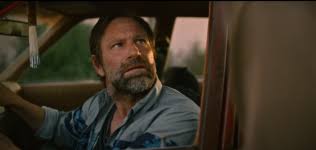
The limp is pronounced, the crazy eyes pop out here and there. But the twitchy-tic that has long been cinema-speak for “cracking?” That’s implied, more something you feel than what Aaron Eckhart actually shows the camera in “Wander.” Because you can’t have a “paranoid thriller” without the hero’s paranoia.
Eckhart gives a tour de force turn as an ex-cop and conspiracy podcast co-host who chases a case to a desert town named Wander where an awful lot of what he’s believed all this time seems to be proven true.
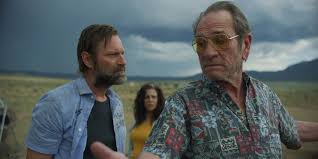
It’s a solid enough thriller about video “monitoring,” implanted tracking/controlling chips, “compromised” phones and people who die from bullet wounds, but without the bullet. That’s all part and parcel of the “Deep Web Podcast” that Arthur and his accomplice Jimmy (Tommy Lee Jones) run from the remote travel trailers “compound” they’ve named “Middle of Nowhere.”
“Big Brother” and “MK-Ultra” and the “Illuminati” and “White Sands/Alamogordo” dominate their nightly ramblings in this a world they and their listeners have checked out of, a world out of time woven in a dark web they unravel for eager listeners.
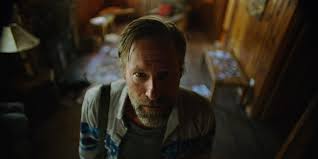
Arthur’s a guy living in flashbacks, broken by the night two years ago when a car crash killed his daughter. He keeps her fortune cookie fortune in a Lucite block dangling from his keychain. His wife was rendered catatonic and left in full-time nursing home care. Arthur is the walking wounded, getting “worked up” by Jimmy, given a little private eye work by a lawyer (Heather Graham) who might be his sister-in-law.
A young woman’s execution is what drew Arthur to Wander, where he decorates his motel room in that photos-and-newsclippings “connect the dots” style favored by the movie investigators and copied by the “Beautiful Mind” crowd. He digs around, breaking into the morgue, getting anonymous tips, having his worst fears confirmed at every turn.
We remember, even if he doesn’t, Jimmy’s podcast mantra about the way “whistle-blowers” like them wind up — “pawn, patsy or dead.“
Is he onto something here? Was he “lured?” When you live by “There ARE no coincidences,” anything is possible.
The cast is top notch across the board, with Kathryn Winnick and Raymond Cruz as vivid caricature versions of a town medical examiner and sheriff.
Director April Mullen’s film doesn’t hide its secrets well enough (note the vehicles) and makes more of the story’s politics than the film delivers. The actress-turned-director is Canadian Anishinaabe Algonquin with mostly TV credits and does well by this simple yet convoluted story.
Tom Doiron’s first produced script lapses into a long series of over-explained “expository endings” which spoil the mystery of what’s come before.
But Eckhart reminds us of how good he can be when given a showy role, and a supporting cast worthy of his talents.
MPA Rating: R, violence
Cast: Aaron Eckhart, Tommy Lee Jones, Heather Graham, Kathryn Winnick, Raymond Cruz
Credits: Directed by April Mullen, script by Tim Doiron. A Saban Films release.
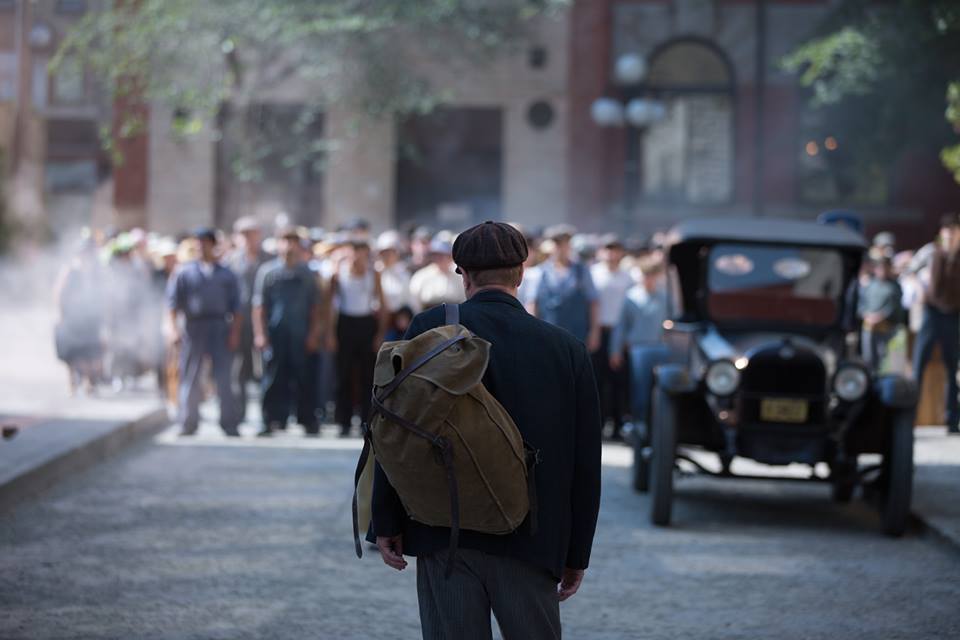
Ambitious, sprawling, sluggish and bland, “Stand!” is a Canadian musical about Winnipeg’s general strike of 1919.
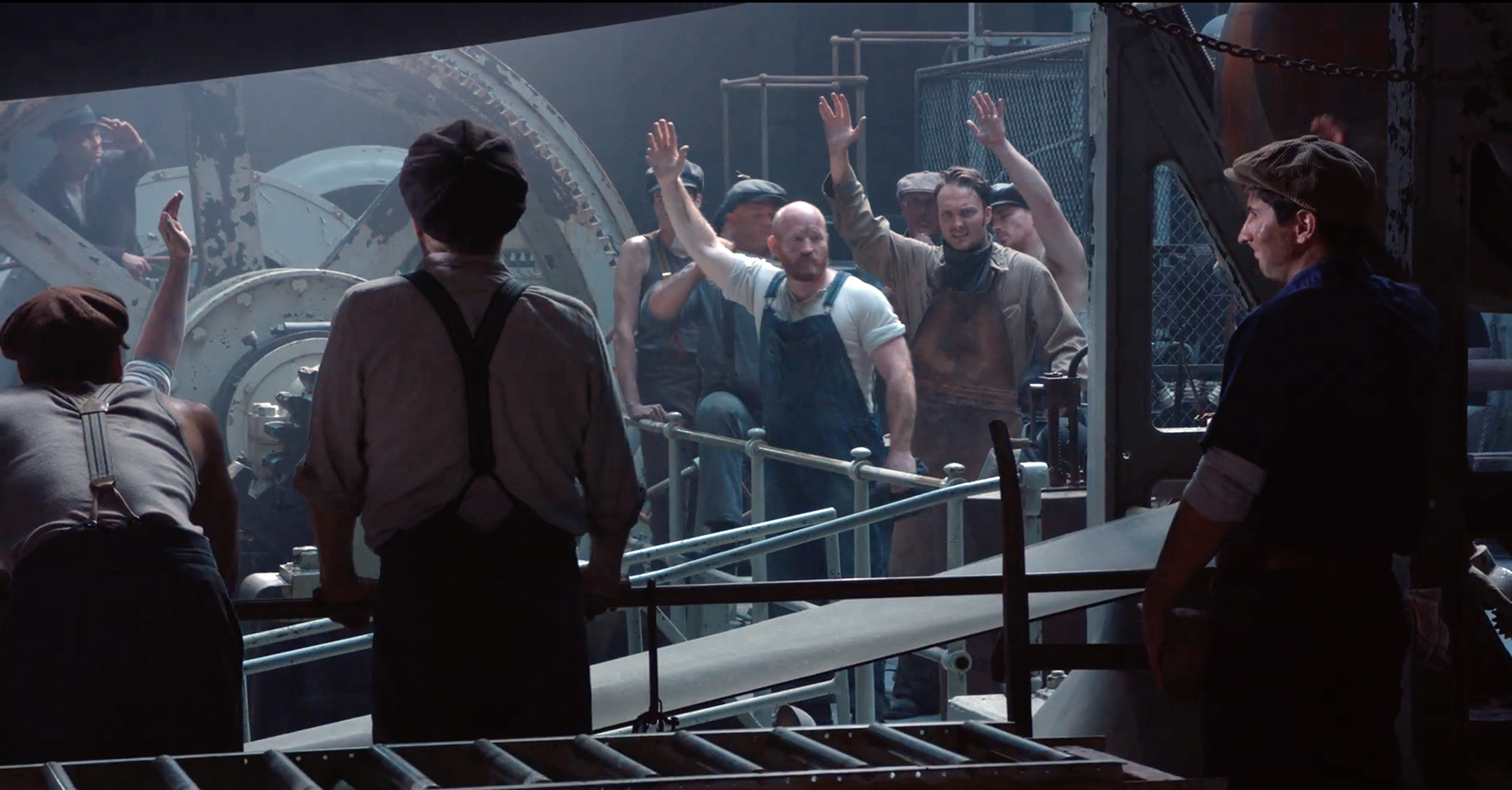
The director of “Stomp the Yard” can’t get this stagey, stodgy and history-set-to-song up on its feet any more than the screenwriters can turn a this story about immigrants and veterans, sweatshop-laboring women and foundry and dairy-working men, whites and Natives and African Americans finding common cause for one brief moment into a coherent, compelling narrative.
And a generally underwhelming cast, playing an array of archetypes, can’t animate it.
I used to live just south of Winnipeg, and drove up a few times to a city known for its hockey, Randy Bachman and jelly donuts. This “general strike” isn’t something you hear about in American history textbooks. Like strikes broken up by soldiers in West Virginia and Colorado in the same era, it’s too big a deal to be ignored like that.
The story threads follow father-son Ukranian immigrants Mike (screen veteran Gregg Henry) and Stefan (Marshall Williams) as they slave away for low WWI wages to earn enough to book the rest of the family passage to the city, fleeing “the Bolsheviks.”
Stefan is smitten by a Jewish neighbor (Laura Wiggins) in their tenement. Rebecca and her brother Moeshe (Tristan Carlucci) are labor organizers, agitating in a time of postwar unrest.
White “English” veterans — and a First Nation vet (Gabriel Daniels) — are returning from World War I to no jobs and low wages for the ones to be had. Discontent was widespread, but immigrants feared deportation and all feared violence.
And the “Citizen’s Committee” of capitalist power-brokers (Paul Essiembre, Blake Taylor) was quick throw those threats out there.
Troops deployed or deploying themselves to intimidate workers, goons hired, cops whose loyalties shift back and forth, a government pushed to change laws overnight to make protesting and striking illegal, racism and anti-Semitism dividing the strikers — that’s a lot to cover in a film. And every so often, a song comes up.
The tunes, by Danny Schur, rhyming “immigration” and “cancellation,” lamenting that sweat-shop sewing is where “repetition promotes attrition,” have to carry plot and do almost all of the emotional heavy lifting.
They aren’t up to it. A riot is lamented in a feeble ballad, “This Saturday in June.” Others decry racism or plot their villainy in tunes that are forgotten before they’ve concluded.
Director Robert Adetuyi’s camera is mostly static. As there are no production numbers to speak of, some movement and whizbang editing is desperately needed to give the film pace, raise the stakes, pump up the passions and give the story the urgency that the flat performances and tepid tunes do not.
The “dramatic climax,” and its climactic song don’t do justice to the phrase.
I was reminded of several boilerplate historical regional musicals I’ve seen and reviewed on the stage over the years. I never saw “Strike!,” the stage show that it’s based on. But middling songs can convey more power in live performance, and a show about local history always generates more local interest and enthusiasm.
“Stand!” has great historical underpinnings and potential universal appeal in its messages and its take on the labor and immigrant experiences. But as a labor musical, it feels “small town.” It should never have been dragged off the stage and filmed. It’s strictly a Winnipeg thing.
MPA Rating: unrated, violence
Cast: Laura Wiggins, Gregg Henry, Marshall Williams, Hayley Sales, Gabriel Daniels, Tristan Carlucci, Blake Taylor, Paul Essiembre
Credits: Directed by Robert Adetuyi, script by Rick Chafe, Danny Schur, music and lyrics by Danny Schur. A Fathom Events release, in theaters Dec. 1.
A “buddy picture” is a lot like a romantic comedy. The “couple” must clash, bicker or even box each other’s ears, and do it adorably. Their arguments should snap, the more stinging the wit the better.
And the leads? They absolutely positively have to have chemistry.
“Half Brothers” is a bilingual buddy picture/road comedy that fails to tick off the check boxes, starting with chemistry and stumbling through attempted jokes. And then it turns all sentimental, as if that too-sappy/too-late twist will save it.
It’s a PG-13 effort from the director of “Let’s Be Cops,” and plays like it — start to finish. Luke Greenfield seems as at a loss about how to make this funnier as he did directing Rob Schneider’s PG-13 bomb “The Animal.” This feels half-hearted, muzzled. And it’s not the least bit amusing.
Renato (Luis Gerardo Méndez) is a Mexican aircraft manufacturing tycoon who’s triggered every time somebody mentions the United States. Suggest he “expand into the US” and you’ll get an earful about “ignorant,” prejudiced, “entitled…and fat” Americans.
He has his reasons. He had a Dad (Juan Pablo Espinosa) who doted on him, built him radio-controlled airplanes even. Then the ’90s currency collapse sent Dad hiking north for work in the US. He never came home. Renato never even heard from him.
Then Dad’s American wife (Ashley Poole) tells him his father is dying. Renato reluctantly leaves his fiance (Pia Watson) and flies to Chicago, where the old man half-apologizes and, being fond of riddles, leaves his son a dying clue — “Eloise” — to explain his life.
He leaves it to his two sons, actually. That redheaded dolt Renato stumbled into in a doughnut shop? The one who so enraged him that the rich guy bought all the doughnuts so that the jerk and other “fat Americans” couldn’t have any? That’s Asher (Connor Del Rio).
Renato is more than happy to fume his way back home, his “duty” to an estranged parent done. But the fiance’ figures he could learn a few things about patience and parenting from a cross-country search for clues with the childish Asher. Renato will have a stepson after he gets married.
Renato is an aeronautical engineer. Asher is a “lazy America” stereotype, clueless about how clueless he is, mispronouncing words left and right, as a barista named “Beat Rice” (Beatrice) can attest.
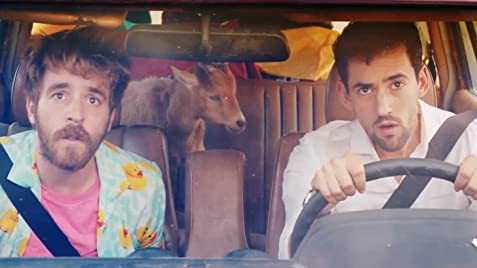
Their odyssey, taken in Asher’s ancient orange ethanol-repowered Mercedes wagon, will lead them to old acquaintances of their father, from a pawn shop to convent, with Asher committing one “screw up” after another along the way.
He slips off to visit a petting zoo/goat farm, and swipes a kid, prompting irate farmers to rain shotgun pellets upon them.
“Where ELSE are you going to see goats wandering around, free?”
“I don’t know! ALL of MEXICO?”
“Hey, stop BRAGGING about Mexico!”
At every stop of their journey, they learn more about their father, the “reasons” for him abandoning his family and why he had no patience for his second son. The screenwriters, reaching for maudlin sentiment, never for one second make that case for him.
The early goat theft — they keep it for the trip — promises a more madcap romp than this script provides. I grinned at a little of the culture-clash stuff. It’s just that there’s VERY little of that. The slapstick promised by encounters with redneck bullies and the like doesn’t develop. At all.
Méndez, seen in the last “Charlie’s Angels” remake and Mexico’s “Cantinflas” bio-pic, works up a fine lather as the irate straight man here. But Del Rio, a veteran of the “Key and Peele” sketch comedy series, goes for Zach Galifianakis-annoying here. But he isn’t comic enough to turn a dull script witty and can’t make his scenes with Méndez set off sparks.
I’d say “Half Brothers” half works, but that’s unjustifiably generous.
MPA Rating: PG-13 for some violence and strong language
Cast: Luis Gerardo Méndez, Connor Del Rio, Pia Watson, Vincent Spano, José Zúñiga, Bianca Marroquin, Ashley Poole and Juan Pablo Espinosa
Credits: Directed by Luke Greenfield, script by Jason Shuman and Eduardo Cisneros. A Focus Features release.
The opening voice-over narration of “Elyse” has a clumsy “English as a Second Language” wince about it.
“People would rather live in homes, regardless of its grayness.” “‘If we walk far enough,’ says Dorothy, “we shall sometime come to someplace.”
But the title character in this Stella Hopkins film is quoting from “The Wizard of Oz.” So you can’t blame the director and co-writer, wife of Anthony Hopkins, for the clunky usages.
The clumsy efforts at marrying a story of mental breakdown and treatment with L. Frank Baum’s children’s parable of 19th century monetary policy? That’s on Stella.
And yes, every other clunky line is hers. Even if she didn’t write them, she approved them. Every pretentious, empty directorial flourish — black and white scenes with splashes of color here and there — every amateurish performance, every second of this dithering, dull and pointless affair can be parked at Mrs. Hopkins’ feet.
Only her husband, playing the psychotherapist summoned to treat the bipolar/borderline personality disorder and possibly alcoholic “spoiled, entitled narcissistic little brat,” acquits himself with his usual immersive professional aplomb.
He’s indulged her — that’s the only word for it — and she’s parked her Oscar-winning spouse in a singular debacle, 94 minutes of almost uninterrupted ineptitude of a first-year-film-school-student level.
Elyse (Lisa Pepper, not good) is a rich lawyer’s (Aaron Tucker, dull) wife, daughter of “a lying b—h” of a mother (Fran Tucker, embarrassingly bad), mother of a nannied little boy, is unhappy and unstable, and the last one to realize it.
That first visit to Dr. Lewis (Hopkins) is shrouded in shadows and meanders between revelations, “Jungian or Freudian,” and discussions of the art of illustrator Maxfield Parrish.
And then Elyse, she of vivid dreams and hallucinatory idylls while she’s awake, gets drunk and breaks down. She’s catatonic, and not just over the party.
A hospital, medication and electroshock therapy are on the menu.
Inane snippets of conversation, an over-sharing reverie by a French-American (male) nurse, brittle, off-putting and stiff performances seemingly molded from single-use plastic, a story that goes nowhere and does so at an excruciating pace — “Elyse” is a quiet, shiny and empty catastrophe.
At least there’s a badly-scripted dream-memory of a trip to Joshua Tree by vintage MGA roadster back when Elyse was pregnant. The car is lovely. The light and staging? Incompetent.
And at least this won’t be the great Anthony Hopkins’ last film. “The Father” is due out in a couple of weeks. By then, this will be passed off as a husband’s Christmas present to a spouse out of her depth.
MPA Rating: unrated, alcohol abuse, profanity
Cast: Lisa Pepper, Anthony Hopkins, Aaron Tucker, Tara Arroyave, Julieta Ortiz and Fran Tucker
Credits: Directed by Stella Hopkins, script by Stella Hopkins and Audrey Arkins. A Margam release.
Every film in Steve McQueen’s five-film series “Small Axe” has interesting characters, and a couple of them are strictly character-driven.
But it’s the milieu and the passing parade of history — real events, pivotal moments in British social justice — that grabbed me. And the further I get into it, the more convinced I am that the whole enterprise is best appreciated in a weekend long binge. Get through “Mangrove,” the densely-packed two hour opener. Adjust your ears to the dialect, the storytelling style and the overarching themes — Londoners from Jamaica, Trinidad, Grenada and The Bahamas overcoming virulent racism to become a vital part of British culture — and the later films just float by on a curry-scented Caribbeans-in-London breeze.
“Alex Wheatle,” the penultimate film, is about a much-honored British writer who overcame an orphaned childhood spent in the child welfare system, prejudice and imprisonment to find his voice and his place as one of his generation’s greatest authors of children’s and young adult fiction.
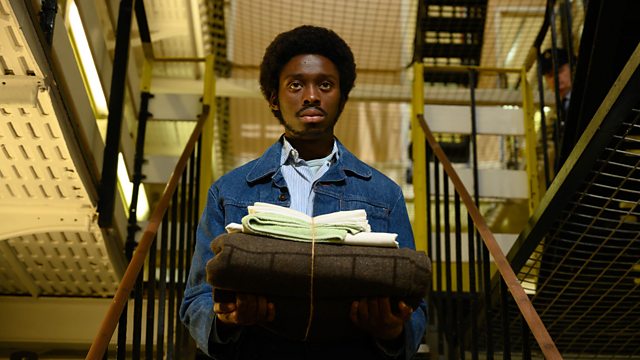
We meet Alex, born “Alfonso” (riveting screen newcomer Sheyi Cole) on incarceration day. He is shocked and sullen, a skinny waif settling into a cell with a friendly, helpful but oh-so-smelly convict he calls “a nasty rasta” (Robbie Gee, terrific).
As the kid lashes out at his new circumstances in rage, the great bear of a cellmate, the Rastafarian Simeon literally hugs the hate out of him.
“My ears is fully woken,” he says. Tell me your story and “start at the beginning.”
We see the abusive foster care Alfonso endured, the staid conformist attire and dialect he emerged from that system with, and his total immersion in all things Caribbean when he emerges, “on the dole” (“G-checks”) as a teen, taking a room in Brixton.
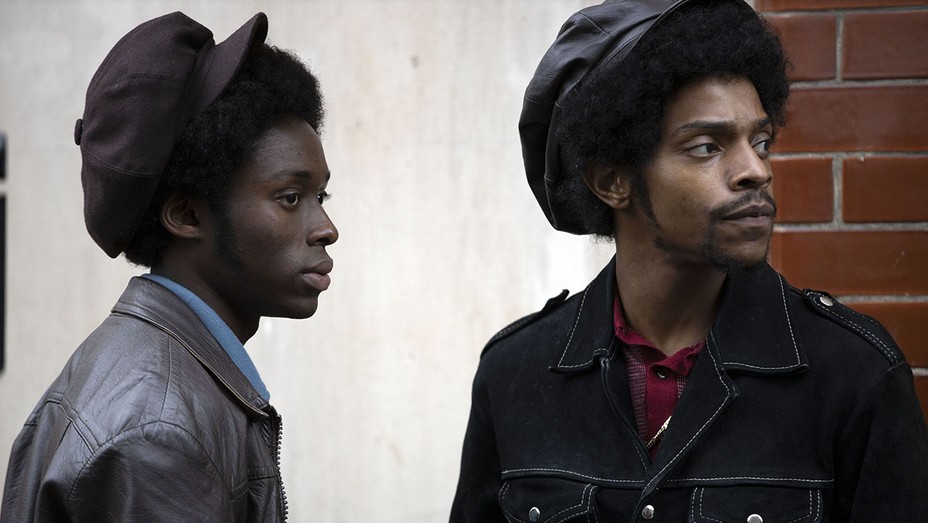
There’s something to be said for watching this entire series of movies with the subtitles on, which wouldn’t spoil Alfonso’s first meeting with his first mentor, the beret-bedecked hipster Dennis (Jonathan Jules, a delight). The kid is as mystified by the slangy, musical patois as any newcomer would be, as indeed any North American must be.
But not to worry. Dennis will set him up. First, get him out of those “PVC” clothes. I have no more idea what he means than Alfonso did.
A big step? “Learning the proper Black man’s strut…You always hunching like a Storm Trooper hunting the Jedi. You got to be the JEDI hunting the Storm Trooper!”
As the kid masters that, the dialect and getting by — “G-checks” and selling “a little kush” — he finds his first outlet, DJing.
And as all this is going on, the culture clash/racial-strife history we saw “begin” with “Mangrove” in the late ’60s comes to a head. An infamous house party fire — remember, we dove into community house parties with “Lovers Rock” — is on everybody’s lips — “New Cross Massacre” they call it.
That leads to protests, a street march becomes “a riot” and that’s how Alex ends up in prison, taking stock of his life and not even 20 years old.
McQueen makes the viewer work towards understanding the themes and subtexts of these films. He gloriously recreates the jaw-dropping delight the bullied, racially-taunted kid experiences the first time he sees the shops and colorfully-attired street life of “his” people on moving day.
But the state-provided ride there has a wonderful clue about Alfonso’s transition to Alex. The kid hears the long-running BBC radio series “Desert Island Discs” and he catches one of its decades of guests, a writer, talking about hearing music so obviously the product of greatness that he listens to it “just hoping some of that would rub off.”
That first visit to a record store furthers Alex’s transformation. It’s 1980 and he’s just been introduced to yet another whole new world, the one the viewer’s already been shown in “Lovers Rock.”
Departing from the formula or your typical streaming series, McQueen has created five stand-alone movies that intersect, and as they do further illuminate aspects of the culture, characters who shaped it and people like Alex Wheatle and yes, Steve McQueen who emerged from it.
Born in West London in 1969 to parents from Trinidad and Grenada, today a Turner Prize-winning artist, Oscar-winning filmmaker and Commander of the British Empire, no character in McQueen’s “Small Axe” could possibly have seen the day his success would be possible. But they could dream.
MPA Rating: TV-MA, violence, drug use, profanity
Cast: Sheyi Cole, Robbie Gee, Jonathan Jules
Credits: Directed by Steve McQueen, script by Steve McQueen, Alastair Siddons. A BBC Films/Amazon release.
“Mangrove,” the first film in Steve McQueen’s “Small Axe” quintet of movies revisiting the London of McQueen’s youth, is both the establishing film of the series and the most challenging to approach.
The movies, about the first generations of the Caribbean diaspora from former British colonies (Jamaica, Trinidad, The Bahamas, etc.), all paint a colorful picture of these Black “outsiders” with their own music, way of dress and cuisine, and how difficult it was to gain acceptance in the rigid, racist UK of the ’60s and ’70s.
“Mangrove,” built around the community’s “Stonewall/Chicago 7” event, hurls us into the thick accents, the overt police harassment and violence and the politics of the times. And while it establishes McQueen’s style of immersive filmmaking for these movies, it’s of a denser texture and more trying length, forcing the viewer to adapt to the islands’ patois (accents softened with assimilation) in ways that the following films (“Lovers Rock,” “Red, White and Blue,” “Education” and “Alex Wheatle”) do not.
And it’s the most directly-historic film of the series, tracing Britain’s acceptance of one of the many cultures that make up the country’s fabric today to the last-straw-moment when that culture demanded acceptance.
The Mangrove was a landmark “Black Owned” restaurant that opened in Notting Hill in the pre-gentrification ’60s. The film captures the contagious optimism of Frank Crichlow (Shaun Parkes of TV’s “Lost in Space”) as he opens this Caribbean cuisine diner and brings “spicy food” to meet the demands of people who grew up with jerked chicken, goat curry and the like.
He could never have known it would start a culinary revolution that would reach full flower in the “Cool Britania” of the ’90s. But the opening of a place the diaspora could call its own was greeted with joy, a steel-drum band street party and success.
To keep it, Frank would have to fight. People would have to march, protest, be arrested and have their day — 55 days — in court.
McQueen builds the escalating cycle of police harassment and violence around the actions of one street cop, the racist de facto “sheriff” of Notting Hill, Frank Pulley. We see the seething resentment Pulley (Sam Spruell of “Legend,” “Sand Castle” and “The Informer”) embodies and passes on to his colleagues. The police department of the day was all white and racist enough to have stationhouse card games where the objective was to force the PC (police constable) who drew the Ace of Spades to “arrest (and beat) the first Black bastard we see” on the beat.
Pulley knows who Crichlow is from an oft-raided coffee shop, The Rio, he’d attempted to run earlier.
“He’s just got to know his place,” Pulley growls. And so the many visits and raids on The Mangrove begin.
Crichlow knows exactly what’s happening and what’s coming, and is furious and defiant from the start.
“We pay we taxes! We pay we bills! This a restaurant, not a battleground!”
But he’s wrong. The self-policing — we see his customers chase would-be drug users/dealers out — won’t be enough. Their mere presence is an affront to the white supremacist cops and “the system.”
Soon Crichlow will have to accept the offers of help from the Black Panthers, in the form of Altheia Jones (the wonderful Leticia Wright of “Black Panther”), and the poet laureate of neighborhood resistance, Darcus Howe (Malachi Kirby of the recent “Roots” remake). In truth, Crichlow was an activist himself and thus didn’t need persuading.
Soon they’ll be printing up fliers in the upstairs offices, despite cops busting in and smashing their mimeograph machines.
And soon after that, they’ll be taking to the streets, a dozen unprovoked “raids” later. That march leads to the police riot, and that’s what lands “The Mangrove Nine” in court.
The trial dominates “Mangrove,” and what’s striking in McQueen’s recounting of it is how effective the activists were at questioning cops and prosecution witnesses (some represented themselves), how fiery they came off, despite angry rebukes from the judge (played by Alex Jennings) and how quickly the mostly-white jury accepted both their decorum-shattering behavior, and their point of view.
It’s as if white people knew what was going on with an out of control, racist police force, and were ready to be embrace “enough is enough.”
“Mangrove” isn’t the most emotional film in the series, nor the easiest way to be eased into this world. Courtroom dramas are predisposed to bogging down on the screen. But McQueen makes its history come alive, and lets us see the importance of this restaurant and its place within the events, lives and culture that emerge from every other movie in the series.
“If you are a big tree,” Bob Marley sang in the allegorical anti-white supremacist song that gives its title to the series, “We are the small axe, Sharpened to cut you down (we shall), Ready to cut you down…”
MPA Rating: TV-MA, violence, profanity
Cast: Shaun Parkes, Letitia Wright, Malachi Kirby, Sam Spruell, Rochenda Sandall and Jack Lowden
Credits: Directed by Steve McQueen, script by Alastair Siddons, Steve McQueen. A BBC film on Amazon
Korean filmmaker Chung-hyun Lee makes a splashy K-horror debut with “Call,” which Netflix has unhelpfully retitled “The Call” for North American purposes.
Lee takes a simple supernatural premise and runs it to death and then some in this sinister tale of a land-line that cuts through time, if not space, in a Korean village.
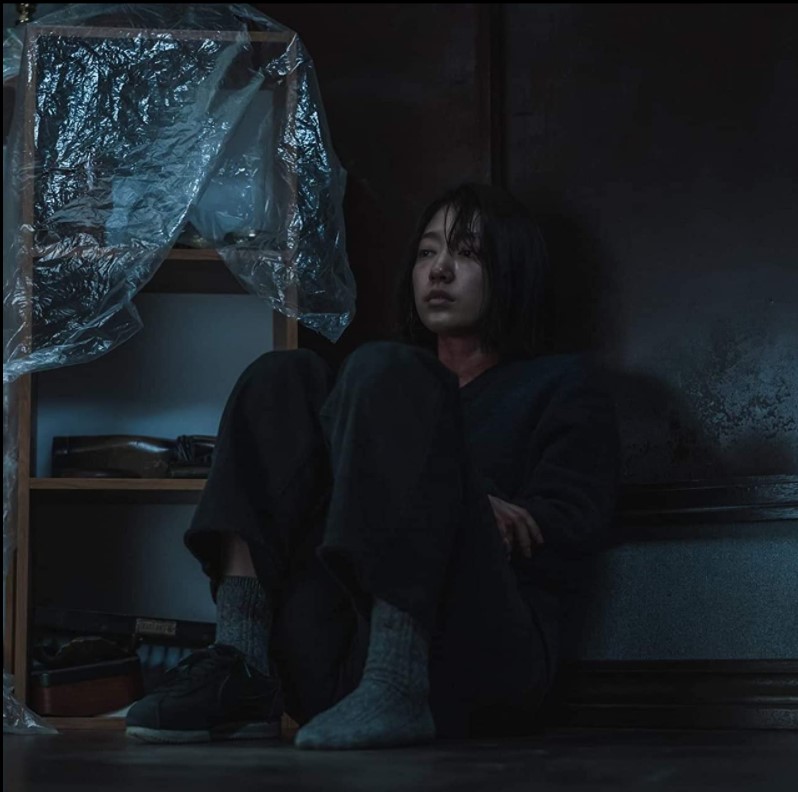
Two young women of 28 who lived at the same address, in the same house, but decades apart, connect on an old cordless phone.
Seo-yeon (Park Shin-Hye) has had a bad day, resentfully visiting her sickly mother in the hospital, nagged to visit her father’s grave. To top it off, she lost her phone on the train back to the village where she grew up and the big old house Mom (Kim Sung-Ryung) has held onto all these years.
Luckily, she tracks down the cordless phone. But when it rings, she hears a frantic, confused voice that doesn’t make any sense. It takes her a while to figure out that the voice is that of someone who used to live there. It takes her a longer while to convince the voice on the other end, Young-sook (Jong-seo Jun) that her 1999 “present” isn’t Young-sook’s present.
“No Walkman? You listen to music on your ‘smart phone?'”
And it isn’t long until Seo-yeon realizes that Young-sook’s “present” is hellish — kocked indoors, tortured and subjected to occult rituals by her adoptive “shaman” mom (El Lee). Poking around the house Seo-yeon finds evidence of a secret basement room where some of this took place.
The late fall of 1999 was a fateful month in both their lives. And when Young-sook hears how Seo-yeon lost her beloved father, she makes a pitch (in Korean with English subtitles).
“Maybe I could bring your Dad back to life!”
If you know the date, time and means of accidental death, and it’s coming right up on the calendar, why not? Seo-yeon barely has time to get used to this miracle (Ho-San Park plays her dad) that transforms her life when, digging around, she uncovers Young-sook’s upcoming date with death.
“The Call” becomes a story of what comes afterward, the obligation, shared guilt and intertwined destinies of these two. Because one of the them is a lot more twisted than the other and saving her isn’t quite as simple as preventing a house fire.
The script cleverly hides the Mobius Strip engineering built into this tale of salvation, murder and woe. Young-sook, from the past, has an easier path to impacting the future. Seo-yeon has to do more research and up her game to 3D chess to fight back.
Pathos and suspense compete for screen time as the party line from Hell consumes them both, and others become collateral damage. Writer-director Lee taken that haunted phone/phone-calls-through-time gimmick from “Don’t Let Go” and other films and made the stand-out movie in the genre out of it. The effects — showing scars, and then people and automobiles vanishing as history is altered, are first-rate.
The leads aren’t given much time to soak in this incredible turn of events they’ve fallen into, and the script is at its trickiest in making us guess just how much info each has on what’s happening or about to happen that first time they connect via phone.
El Lee, in cadaverous makeup that gives her the look of a murderous manikin, stands out in support. Jun, playing an under-socialized naif with boundary and self-preservation issues, is a manic fright. And Park ably suggests an “innocent” dragged into this who isn’t all that innocent, and has inner resources of her own.
There have been too many movies titled “The Call,” so when Hollywood remakes it they’ll have to tweak that. But Chung-hyun Lee has delivered a tight, surprising and moving thriller good enough to ensure that they will.
MPA Rating: TV-MA, graphic violence
Cast: Shin-hye Park, Jong-seo Jun, El Lee, Ho-San Park and Sung-Ryung Kim
Credits: Scripted by directed by Chung-hyun Lee. A Netflix release.
He looks to be 50ish, balding, tattooed and showing his miles. Troubled. And when his doctor asks what would help, his request is direct and simple.
“Up my dosage,” he says, in Italian, with English subtitles.
Captain Riva has his demons, and we see little flashes back to their source. He was in the service for 30 years. He saw things. He did things. And awful things were done to him.
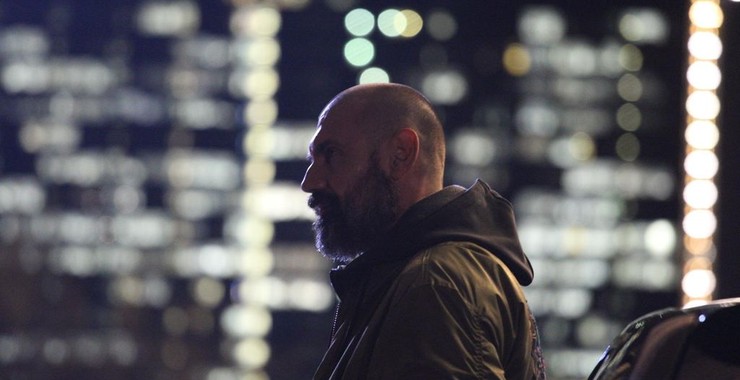
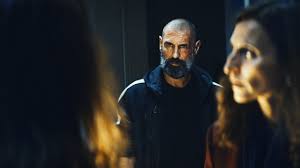
You don’t need subtitles to read “post traumatic stress disorder” into the title character in “La Belva (The Beast).” And you don’t need our anti-hero (Fabrizio Gifuni) to mutter, into a phone, that he’s an “uomo con particolari capacità,” a “man with particular skills,” to see this thriller for what it is — an Italian “Taken.”
He’s haunted. He’s divorced. He has two children, a teen son who’s never forgiven him for being too wrapped up in his own mess, and a six year old daughter who adores him.
Guess who’s “Taken?” Guess what he does about it?
Director and co-writer Ludovico Di Martino (“Il Nostro Ultimo”) gives us a violent man who takes a horrific series of beatings, stabbings and shootings, all in a frantic pursuit of a person or persons who might be settling some old score with him or might just be into very little girls.
“The Beast” may hit its climax a solid thirty minutes before the movie ends. But the grit, the grim violence and the surprises — in a story that is as naked a “Taken” ripoff as Liam Neeson’s legal team could tolerate — make it a gripping, grueling ride, start to very very VERY drawn-out finish.
Gifuni (“The Cezanne Affair”) makes a properly hulking and stoic lead, traumatized, desperate for that “dosage” just so he can be close to “normal” and have his kids over to dinner. Mattia (Emanuele Linfatti) isn’t having it. Whatever he told their mother (Monica Piseddu), he and little Teresa (Giada Gagliardi) are ducking into a burger joint and ducking the crazy old man.
He only steps outside “for a second.” That’s all it takes to be “Taken.”
Leonida Riva isn’t waiting to tell his wife how their son screwed up. He’s not waiting for the cop (Lino Musella) to get results from the department’s frantic dragnet. He steals a police radio and we’re off– tracking the kidnapper, then the drug dealers who might know the kidnapper, then checking in with old contacts to see who might be responsible for all this.
The fights are savage and in-your-face, with the best set-piece an homage to that famous, furious brawl in the Korean classic “Oldboy.” The climax is more anticlimactic, and the third act goes on well beyond that, settling into something far more sentimental.
But no matter. We’re happy to be taken along on the chase and taken through showdowns showcasing our tough old guy’s “particolari capacità.”
MPA Rating: TV-MA, graphic violence, drug content
Cast: Fabrizio Gifuni, Lino Musella, Monica Piseddu, Emanuele Linfatti, Giada Gagliardi and Andrea Pennacchi
Credits: Directed by Ludovico Di Martino, script by Claudia De Angelis, Nicola Ravera and Ludovico Di Martino. A Warner Media film on Netflix.















 Movie Nation