Netflixable? “Angela’s Christmas Wish” lacks the warm narration, and the warmth of “Angela’s Christmas”

The McCourt family’s “Angela’s Ashes” brand finally produces one offshoot too many with the animated sequel, “Angela’s Christmas Wish.” It’s an inferior and longer follow-up to “Angela’s Christmas” of a few years back, with a little sentiment but barely enough warmth to be worth the bother.

Still, if your kids are into wee children with wee brogues, it’s only 47 minutes of TV-worthy (far short of feature film) animation. They’ll have time left over to watch “Angela’s Christmas” all over again.

What’s missing is the charming voice-over narration of Malachy McCourt, brother to family memoirist Frank McCourt, who told the story of their mother’s hard Irish upbringing in “Angela’s Ashes.” Malachy provided the twinkle and context in the first film, about their mother’s infatuation with the baby Jesus doll in their local church’s Nativity scene (creche).

“Angela’s Christmas Wish” is set after their father goes off to Australia “for work,” and mother (voiced by Ruth Negga) has to keep spirits up for the holidays two long years later.

Angela’s (Lucy O’Connell) still talking to Baby Jesus, and making wishes. But to make this Big Wish come true — getting Da’ home for Christmas — she’ll need bother Pat (Brendan Mullins) to pitch in. I mean, a girl can’t dig all the way to Australia by herself — in winter, no less.

The story’s got a couple of things Angela wants to happen, the one closer to home being that neighbor McGinty’s new calf survive the holidays. A visit from the vet (Jared Harris) would make all the difference. But he can’t be persuaded. Perhaps his daughter Dorothy (Lola Metcalfe) can use her influence.

The shenanigans this time include attempts to book passage — or stow-away — on a departing ship (World War I, underway in 1915, impacted Ireland indirectly and is never mentioned).

There are songs, as the kids try to earn money singing for the men down t’the pub, and there’s a bit of lump in the throat sentiment for the finale. The funny stuff isn’t as funny, the cute moments not cute at all, and the humor?

Not enough, alas. The animation seems malnourished even if the kids don’t, and the laughs are in short supply.

You’re better off re-watching the first film, to be Frank. Or Malachy.

MPA Rating: TV-Y

Cast: The voices Lucy O’Connell, Ruth Negga, Lola Metcalfe, Brendan Mullins and Jared Harris.

Credits: Scripted and directed by Damien O’Connor. A Brown Bag Films production, for Netflix.

Running time: :47

Posted in Reviews, previews, profiles and movie news | 3 Comments

A Death Knell for Cinemas? “Matrix 4,’ ‘Dune,’ 2021 WB Slate Debuting on HBO Max

Warners is moving its entire 2021 film lineup, big titles all, to a theatrical and HBO Max simultaneous release schedule. Pandemic or not, will anybody go out to a theater if they can watch new releases at home? Not likely.

https://variety.com/2020/film/news/warner-bros-hbo-max-theaters-dune-matrix-4-1234845342/

Posted in Reviews, previews, profiles and movie news | Comments Off on A Death Knell for Cinemas? “Matrix 4,’ ‘Dune,’ 2021 WB Slate Debuting on HBO Max

Netflixable? Filipino drama “Finding Agnes” is mopey and soapy

Having trouble sleeping?

Here’s a maudlin Filipino melodrama set mostly in Morocco that has scenery and very little else going for it save for the promise of a nap it prompts.

Flat performances, feeble attempts at humor, heartless grabs at sentiment, “Finding Agnes” is a terrible representative of an industry that produces poignant dramas and spectacular action pics — many of them for Netflix.

This is the dullest film Netflix has ever made in the Philippines.

It’s about a wealthy businessman (Jelson Bay) who flies to Marrakech to fulfill his mother’s dying wish. Virgilio, who renamed himself “Brix,” is as emotional as he is interesting — as in, not at all.

His mother ditched him as a child, twisting up his Rubik’s cube and assuring him (in Tagalog, with English subtitles) that “I will come right back when you’ve solved this.”

She didn’t. Over 25 years later she shows up, meets him, but he can’t set aside much time for her. And then she promptly dies of a stroke.

At the B & B Mom ran in Marrakech, there’s a young woman named Cathy (Sue Ramirez) who shares Brix’s last name now in charge of the place. Brix takes his sweet time asking her the Big Question. Everything in this movie takes its sweet time about everything.

Cathy and Brix have to undertake a get-to-know-each-other quest to carry out Mom’s final wishes, and as they do, they’ll get an idea of why Mom came here and what she did in the intervening 25 years.

Every single thing about this, every scene, has the pace of pandesol (Filipino bread) batter slowly dripping out of the mixing bowl.

Mom’s activities have a bland, predictable righteousness. Brix’s reactions to each revelation and meeting each person who knew his mother are stunningly unemotional and insipidly scripted.

“Too bad she had a heart attack,” he quips.

Too bad all around.

MPA Rating: TV-PG

Cast: Jelson Bay, Sue Ramirez, Sandy Andolong

Credits: Directed by Marla Ancheta A Netflix release.

Running time: 1:46

Posted in Reviews, previews, profiles and movie news | Comments Off on Netflixable? Filipino drama “Finding Agnes” is mopey and soapy

Documentary Review: The definitive biography of Lady Day? “Billie”

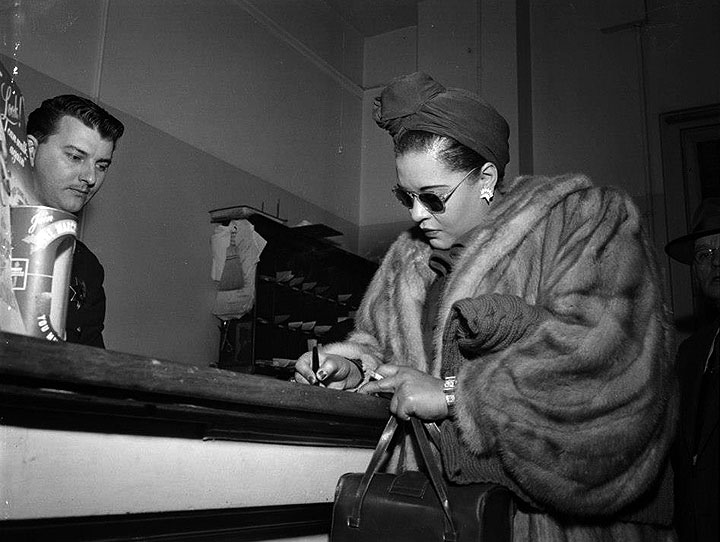
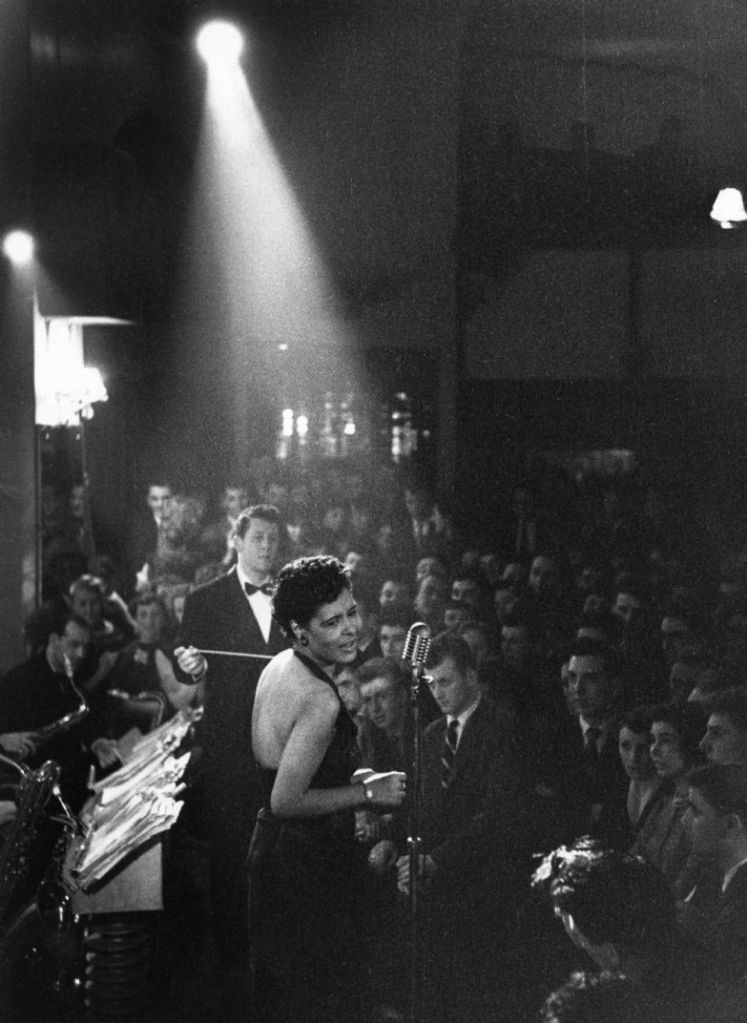
“Billie” is the far and away the most definitive Billie Holiday biography ever put on screen, a film that celebrates her magic and examines the demons that haunted her, chemical and human.

It’s a film built out of two tragedies, Holiday’s — she died at 44 in 1959, at the end of a long, drug-fueled decline — and that of a dogged reporter hellbent on telling her story in a book which she never got around to writing. Linda Lipnack Kuehl, a school teacher and widely published freelance writer, spent eight years interviewing Holiday’s friends, family and generations of colleagues before they were gone and their often-frank memories of this singular talent were lost forever. Kuehl recorded those interviews on cassette, but died in 1978, having struggled to wrestle all this material into a book she never finished.

Veteran sports documentary filmmaker James Erskine (“The Battle of the Sexes,” ” The Ice King”) builds his film around those tapes of Kuehl’s hours and hours of interviews — some friendly, some that turned testy as she dug into dark parts of Holiday’s saga. Legions of jazz legends who worked with her were still around in the ’70s and agreed to talk for the book. Count Basie, Billy Ekstine, Barney Kessel, Tony Bennett and music impresario John Hammond are here, with friends, one-time roommates, comics and sidemen who knew and played with her or appeared on the bill with her at The Apollo, Cafe Society, Club Hot-Cha and the like.

There’s even a snippet of singer Carmen McRae giving her compelling reason for not doing an interview.

Early champions talk of her instinctive use of her voice as a version of a horn or reed instrument. Paired up with trumpeter Louis Armstrong early on and sax player Lester Young later, they turned many of her solo vocal recordings into the most sophisticated duets in jazz history.

Kuehl’s interview recordings are a beautifully-preserved treasure trove of opinions, eyewitness accounts and frank adulation, and equally frank assessments of Holiday’s tastes in drugs and sexual partners (actress Tallulah Bankhead was linked with her for a while), all heard through a 1970s filter. Narcotics agents who pursued her and colleagues who acknowledge how much “she liked being high” sat down for chats.

Kuehl also found a psychotherapist who evaluated her at one point (she was arrested for drugs twice, served a year in prison) and refers to as a “psychopath” in a clinical sense. Interviewing an early pimp, from back when the Baltimore girl born Eleanora Fagan was just a child, puts that into perspective.

Raped, a sex worker at 13, with all manner of interview subjects talking about music business types using her by becoming sexual partners when they thought Kuehl’s recorder was off (Benny Goodman is among those named) paints a sad picture.

Hearing the many dated suggestions that “she liked it rough” and was beaten by more than one lover — publicly by her last husband — is chilling.

Erksine intercuts Kuehl’s intereviews with generous helpings of Holiday performances (live TV, and on film) and radio and TV interviews she gave during her short, storied career. You can make out the voice of Mike Wallace among those asking the questions.

But unlike those talking to Lady Day while she was alive, Kuehl didn’t need to dance around the hard questions. Her pugnacious challenging of music legend Hammond with the accusations that he tried to make her into a “colored mammy” stuck singing only blues and fired her from Basie’s band, bandmates’ stories of her being forced to wear dark makeup to appease Southern venues that booked that band, Artie Shaw’s failed efforts to integrate his ensemble with her, anecdotes about the drug dealer who’d attach heroin or coke packets to her dog’s collar for delivery to her New York apartment, it’s no wonder Kuehl got blocked when she tried to organize this treasure trove into a book.

Erskine’s film does that work for her, no doubt leaving much out, but painting a moving portrait of a tormented artist who made great art as she slowly and steadily self-destructed.

MPA Rating: unrated, drug content, profanity, off camera violence

Cast: Billie Holiday, Count Basie, Billy Eckstine, John Hammond, Sylvia Syms, Tony Bennett, Barney Kessel, Harry “Sweets” Edison, “Pigmeat” Markham, Linda Lipnack Kuehl, many others

Credits: Directed by James Erskine. A Greenwich Entertainment release.

Running time: 1:37

Posted in Reviews, previews, profiles and movie news | 6 Comments

Netflixable? Polish teen is “Fierce (Jak Zostac Gwiazd)” singing in front of the star who doesn’t know he’s her Dad

The generic nature of international pop songs, pop stars and “American Idol” TV shows is the been-there/voted-him-out subtext of “Fierce,” a Polish dramedy about a teen who competes in a singing competition to get back at the father who ran out on her mother before she was born.

Skinny young things who can sing on key (more or less) are a universal commodity — apparently. The language they sing in is less important than the skin they flash and the runway-ready look they put out there.

“Fierce” doesn’t give us much of the context that its “Music Race” TV show thrives in, because it doesn’t need to. Such shows are a smash around the globe because of the formula that Simon Cowell perfected. Singers give their all, the “right” ones are pre-destined for glory and those deemed unworthy are trashed by The Hanging Judge on the three-judge panel — humiliated.

On “Music Race,” that’s one-hit-wonder Olo, played with the attendant surly superiority necessary by Maciej Zakoscielny.

“You’re all WET,” he taunts each loser, whereupon a watery deluge is dumped on the sad runner-up on live TV.

But years ago, before his one-hit, he was just another boy with a girlfriend back in the village of Rozalin. And now, the smart-ass/conflict-seeking producer of “Music Race” (Tomasz Karolak) has decreed that they’ll take the show to his “hometown” on a talent hunt. And Olo is irked. With reason.

Marta (Katarzyna Sawczuk) grew up knowing who Mom (Anita Sokolowska) always maintained was her father — her high school love. Now’s their chance to confirm this, at least have the satisfaction of telling Olo off, maybe on TV.

But when that doesn’t go according to plan, Marta, an ill-tempered would-be Goth who goes by “Fierce,” has to enter the competition just to get close to and to “humiliate” him the way he’s humiliated her and her mother.

The players are probably better than the soppy script they’re forced to muddle through. Hard to tell, though. Leaning so heavily on the show within the movie turns the film into a “Poland’s Got Talent” episode. Not sure who wants to see that, even though Sawczuk is a winsome presence with a pleasant-but-thin singing voice.

Teasing that single solitary idea out for nearly two hours takes some doing. The script manages this by diverting most of the attention away from Fierce, her mom and the kid (Adrian Majewski) who is sweet on her. So we see the sordid drama of Olo’s life, a loveless love affair with PR benefits with co-judge singer/social media influencer Ewa (Julia Kaminska), the spirited manipulations of the producer and the lame only-one-singer-performs “competition” segments.

As the contest goes on and Olo and Ewa try to sabotage her, Marta/Fierce becomes a viral sensation. Shockingly.

How will all this play out? Unamusingly, unsurprisingly and sentimentally.

You don’t need 30 minutes to figure this out, much less 118.

MPA Rating: TV-MA, profanity and sexuality

Cast: Katarzyna Sawczuk, Maciej Zakoscielny, Julia Kaminska, Anita Sokolowska, Tomasz Karolak, Adrian Majewski, Urszula Dudkiak

Credits: Directed by Anna Wieczur-Bluszcz, script by Piotr Jasek, Julia Kaminiska, Wojciech Nerkowski. A Netflix release.

Running time: 1:58

Posted in Reviews, previews, profiles and movie news | Comments Off on Netflixable? Polish teen is “Fierce (Jak Zostac Gwiazd)” singing in front of the star who doesn’t know he’s her Dad

Movie Review: Austrian ex-pat grows up stateless in Britain — “Where I Belong”

British theater cinema of the 1950s was famed for its “kitchen sink” realism, working class movies that showed how people really lived . “Look Back in Anger” and “Saturday Night and Sunday Morning” and the like set their stories against the struggles of coping with post-war austerity in Broke Britannia.

And it wasn’t just the Brits who survived the war who endured those years. The only novelty of writer-director Fritz Urschitz’s “Where I Belong,” his homage to “kitchen sink” cinema, is that the young woman living with her old, unemployable and deluded father is Austrian. They were expats who fled their homeland when Hitler’s Germany annexed the (mostly) willing Austrians in the 1938 “Anschluss.”

If you’ve ever wondered at the plight of Austrians not named Von Trapp, who only got as far as Britain in fleeing the Nazis, here’s your answer. Rosemarie (Natalie Press of “Suffragette”) and her father Friedrich (veteran character player Matthias Habich of “Downfall,” “Enemy at the Gates” and “The Reader”) spent the war interned as “enemy aliens,” stuck in a camp from 1939-45.

Now it’s 1959, and 20something Rosemarie is still struggling to find her place and plan her future. She works in a haberdashery during the day and attends secretarial school at night, but loves dancing to the newfangled rock’n roll with her few friends.

But time has stood still at home. Her father is obsessed with being compensated for the big house they fled in Vienna. He has no lawyer, and is getting nowhere with an Austrian government that tried to pretend they were an “occupied” country, and that they didn’t turn a blind eye to properties that illegally changed-hands when people fearing fascism or the coming Holocaust fled.

“I will not give in,” her father assures Rosemarie (in German with English subtitles). “I will get our property back!”

Rosemarie isn’t counting on it. She has the vague outline of a plan — pass her exams, get a job in London, start her life…finally.

Then an old acquaintance of her father’s, an old “friend” from the camp, shows up at their door. Anton, given an oily Old World charm by Johannes Krisch (“A Hidden Life,””In the Fade,” “The Tobacconist”), was younger than her father, and has made something of himself. He has a car. He has means.

And it’s not coincidence when he shows up to buy fabric for a tailored suit at the shop where Rosemarie works. Unlike the English boy she’s half-interested in, Anton can show her things, maybe even buy her things.

Unpolished and plain, she is flattered by the attention.

Urschitz’s debut feature takes a sharp turn into straight melodrama from that point on, with every obstacle, pitfall and poor choice pre-ordained. The drab interiors and exteriors mirror the dramatically flat odyssey that our heroine embarks on.

There’s more to stories told in this era than just milieu, and that’s where Urschitz comes up short. The performances are fine, but trapped within the parameters of a script that lacks imagination and spark. Urschitz, who hasn’t made a film since this 2012 release, leaves promising avenues unexplored, lapsing into over-familiar plot turns.

Take away the citizenship status of the principals, and “Where I Belong” could be any other late ’50s slice-of-life melodrama with only the German conversations separating it from decades of far more compelling and novel stories.

MPA Rating: unrated, sex, nudity

Cast: Natalie Press, Johannes Krisch, Matthias Habich

Credits: Written and directed by Fritz Urschitz. A Corinth Films release.

Running time: 1:30

Posted in Reviews, previews, profiles and movie news | Comments Off on Movie Review: Austrian ex-pat grows up stateless in Britain — “Where I Belong”

Netflixable? Ryan Phillipe takes “The 2nd” amendment seriously

Get a load of that image above. That’s Ryan Phillippe as a Delta Force commando, shooting, punching and brawling his way to the rescue of his son, and that Supreme Court Justice’s daughter the kid crushes on — kidnapped as part of a pro-gun control conspiracy in a movie with the catchy title “The 2nd.”

Battered and bloodied, and armed with an assault rifle, he’s in need of a ride. So he’s written a sign in his own blood to indicate his intentions to anybody who might drive by.

That’s the cleverest touch in this pig-headed, ham-fisted “Die Hard” on a closed college campus.

Put Phillippe in the hero role, cast C-movie villain Casper Van Dien (“Starship Troopers”) as the suited, sunglassed heavy and dress screen newcomer Lexi Simonsen in cut-off shorts as the damsel in distress, and here we go!

It’s the sort of movie where the hero’s bonafides — his resume — is read out over the walkie talkie by the villain once they realize “who we’re dealing with.”

It’s the sort of movie where the kidnappers/terrorists are professionals in everything but slinging the accent of the country they’re supposed to be from. James Logan‘s character is Russian agent and a a master of dialects — Southern drawl to (Southern?) Russia?

“I ate man in GULAG!”

It’s a place where longtime heavies like Richard Burgi move up to “the heavy’s boss” roles, so that the next generation of bad guys can wear the shades.

It’s a film where all the baddies take dramatic sips from their whisky glass before and after delivering a line.

And it’s the sort of movie where I’d tell you to fast forward to the 77 minute mark, where our damsel — first seen in Posh SouCal College’s fencing class — throws down with a villainess, with swords.

En garde, BITCH!”

I’d tell you that if that scene and that fight held any interest at all. But it doesn’t.

That’s the problem with “Die Hard” knockoffs. We’ve seen too many versions to be surprised. The brawls are paint-by-numbers. The bad guy “escapes” require hilarious “pauses” in the hero’s pursuit.

We’ve been treated to too many actors-turned-screenwriters (Paul Taegel) who might as well have “FOREshadowing!” in a flashing title on all the scenes where this character shows her swordplay or that one — the son (Jack Griffo) — lists all the martial arts his Delta Force dad has taught him over the years.

But hey, give a guy credit for some decent villain trash talk.

“I see subterfuge is pointless. Put the a—–e on!” “You know, three people can keep a secret, if two of them are dead.”

Phillippe has found more interesting work on TV in recent years, with “Secrets and Lies” and “Shooter” giving him a career second wind.

But there’s no “acting” here, the shootouts and fistfights are OK but nothing special.

Films like “The 2nd” — quite aside from this one’s loopy “afterthought” politics — don’t burnish anybody’s resume.

MPA Rating: unrated, graphic violence

Cast: Ryan Phillippe, Casper Van Dien, Lexi Simonsen, Jack Griffo, Richard Burgi, William Katt and James Logan

Credits: Directed by Brian Skiba, script by Paul Taegel. A Voltage film on Netflix.

Running time: 1:33

Posted in Reviews, previews, profiles and movie news | 2 Comments

Movie Preview: Cumberbatch, Jodie Foster and Shailene star in “The Mauritanian”

A drama about a Guantanamo prisoner, this Feb. release also stars Zachary Levi.

Posted in Reviews, previews, profiles and movie news | Comments Off on Movie Preview: Cumberbatch, Jodie Foster and Shailene star in “The Mauritanian”

Movie Review: Unhappy holiday awaits an Ad-Man in “King of Knives”

Actors are always encouraged to “make work for yourself” — start a theater group, put on shows, write a story with a plum part in it for yourself.

So there’s no such thing as a “vanity project” in that world, not in a general sense.

Still, when you’ve written yourself that part, when the film is self-distributed, and when there’s a young woman in the cast with the same surname (His daughter?) as the character actor who co-scripted himself a leading role, well…

“King of Knives” is a melancholy late-midlife crisis holiday comedy built around Gene Pope. If you’ve ever seen him in anything, you might’ve thought “Oh, he’s Mark Ruffalo’s older brother.”

Pope plays a well-heeled 60something ad-man whose biggest gripe is losing an account because a younger colleague has “rebranded” the mascot of a toilet paper company client. Sammy the Squirrel has gone “urban.” Yeah, it’s offensive.

Frank’s biggest fear is that he’ll be canned for that, or for being old in a profession that loves “young.” And he’s still making payments on that Maserati convertible.

There’s the hint of something sad, a loss, that happened not that long ago in Frank’s life. It’s his wedding anniversary, and there’s a family party. So on this day, of all days, he decides to be late getting home, stopping to smoke himself a J on the way.

His buttoned-down daughter (Emily Bennett) might not approve. Kaitlin, her just-go-with-it-sister (Roxi Pope) laughs it off. Kathy, his wife? You haven’t lived until you’ve heard prim, earth momma Mel Harris of TV’s “thirtysomething” deliver this insult.

“I don’t want you driving high.” “YOU do!” “Yeah, but I handle that s–t better than you do!”

The “loss,” which everybody dances around, was of Danny, the other adult child in their family. And over the course of a weekend, Frank and Kathy — mostly Frank — will deal with all that’s gone wrong, their part in it and “Where does life take us from here?”

The “holiday” ingredients are mostly a suburban neighbor’s over-the-top Christmas decor. Frank gets blitzed and buzzed and talks a would-be groom out of the “trap” of marrying his wife’s niece — at their engagement party. He begs his way into a Bushwick (Brooklyn) party Kaitlin’s been invited to, gets drunker and hits on her (girl)friend Darla (Kara Young) and then submits to a sensitive sprite’s (Justin Sams) offer of a tarot card reading.

That scene is touching, life-altering for Frank, and gives the film its title. Frank is a sad soul braced for a cruel world, the King of Knives (Swords, actually). Frank starts to take action and take responsibility for his mistakes, sort of.

There are single scene grace notes in this that almost make it worth your while. Frank meeting the woman who hosted that party the next day, an athletic and sexy aerialist who shows off her trade (the Spanish Web), Frank having half-hearted heart-to-hearts with his daughters and wife.

It’s not a bad movie, even if there isn’t a lot to it or Pope’s laid-back, roll-(stoned)-with- the-punches performance — even if there’s a whiff of “vanity project” about this “write a good part for myself” indie dramedy.

Hey, it’s better than being confused for Mark Ruffalo’s older brother.

MPA Rating: unrated, drug and alcohol abuse, profanity

Cast: Gene Pope, Mel Harris, Roxi Pope, Justin Sams, Emily Bennett and Kara Young.

Credits: Directed by Jon Delgado, script by Lindsay Joy, Gene Pope. A Pope III release.

Running time: 1:33

Posted in Reviews, previews, profiles and movie news | Comments Off on Movie Review: Unhappy holiday awaits an Ad-Man in “King of Knives”

Movie Review: A Jewish Argentine girl is radicalized by “The German Friend (El amigo aleman)”

Argentina’s troubled past is the backdrop of a lifelong personal connection to “The German Friend,” a romantic drama from Argentine filmmaker Jeanine Meerapfel.

It’s about a Jewish girl who becomes infatuated with her new neighbor in 1940s Buenos Aires, a relationship that takes them both through decades of Argentine shame and activism.

Sulamit, played by Julieta Vetrano as a child and Celeste Cid into adulthood, is quite taken with Friedrich (Juan Francisco Rey, later Max Riemelt) when he and his family move in across the street. It may be the fact that he’s blond, or that he has a cute dog.

When that dog is taken by the dog catcher, she tries to get her parents to help recover it. But they’re a little leery of the Burgs. Yes, the neighbors speak German as well as Spanish, like the Lownesteins. But Dad (Jean Pierre Noher) goes so far as to snub them in the street.

To Sulamit — who has to go by “Susana” on official forms in Peronist Argentina — “He’s Argentine, just like me.”

The parents tolerate the kids’ budding friendship, Sulamit’s eagerness to celebrate Christmas with the Burgs instead of Chanukah with friends and relatives at home, Friedrich’s “soul mate” connections to the “interesting girl” his parents allow him to take up with.

Friedrich figures things about his family out as he gets older. And as he turns against them and against the ideas they represented — fascism was still in full flower in South America well into the 1960s — he becomes an activist and then a revolutionary.

Sulamit shares that enthusiasm, writing radical pieces for the school newspaper in their early college years (and beaten up for it), following Friedrich to Germany where his 1960s radicalization is completed.

Meerapfel makes the relationship the heart of the story, and then loses track of it for several stretches. The tale is told mostly from Sulamit’s point of view, quarreling with her parents (Noemí Frenkel plays her mother) over her devotion to Friedrich, who seems more devoted to “The Cause” than her by the time they’re studying in Germany.

Radical political action turns to violence as The State — many states — start responding in kind during the Castro/Che era. Sulamit finds herself in the meetings where the “revolution” is talked up, and at later meetings with the Mothers of the Plaza de Mayo — women protesting children who “disappeared” in 1960s and ’70s Argentina.

The film is inelegantly-framed within a train trip Sulamit takes later in life, and she remembers the ebb and flow of their love affair on her journey. The characters may be archetypes, but they’re vividly played by the leads, turned into flesh-and-blood representatives of their generation in those turbulent years.

This 2012 film, new to video, isn’t a lost masterpiece. There’s very little of the “history” that plays out behind our lovers actually shown on screen. But “The German Friend” still manages to tell a compelling love story showing a generation rejecting much of what their parents represented, loving each other and “the struggle” almost equally as they grew up in an age when disillusions died hard and the generation gap was never wider.

MPA Rating: Unrated, violence, nudity, sex

Cast: Celeste Cid, Max Riemelt, Benjamin Sadler, Hartmut Becker, Noemí Frenkel and Jean Pierre Noher

Credits: Scripted and directed by Jeanine Meerapfel. A Corinth Films release.

Running time: 1:40

Posted in Reviews, previews, profiles and movie news | Comments Off on Movie Review: A Jewish Argentine girl is radicalized by “The German Friend (El amigo aleman)”